Quotulatiousness

April 27, 2026

Tolerance

Filed under: History, Media, Politics — Tags: , — Nicholas @ 03:00

On the social media site formerly known as Twitter, InfantryDort explains why tolerating people who want to kill you is a fatal mistake:

There is no such thing as coexistence in a scenario where people want to murder you.

The side that is the least tolerant of the other, wins. Every time.

Intolerance is the mindset of the victor.

Therefore the leftist ideologue will win in this scenario, barring some renewed resolve.

You see the signs every day.

> Their “politicians” dog whistle for murder and jail
> Their “media” dog whistles for murder and jail
> Their “protestors” will scream DEATH TO TYRANTS at you while you’re fleeing an active assassination attempt against you

You forget, we all seem to forget, that THIS ideology during the Spanish Civil War in 1936, caused people to dig up the bodies of dead nuns for very public desecration.

You can’t comprehend the level of hate that it takes to do something like that. None of us can. But they can.

So they will win, because we tolerate it.

And tolerance is a poisonous virtue when intolerance is pointing a gun at your head.

Tolerance is a noble thing among the civilized. Against the butcher, it is only a prettier name for death. When violence enters the room, tolerance becomes surrender.

We get what we tolerate. And we tolerate everything.

He’s quite right about the exhumation and desecration of the bodies of nuns during the Red Terror in Spain:

Pillaging and desecration of Catholic church institutions by supporters of the Republicans; the corpses of nuns from a monastery in Barcelona were ripped out of graves and displayed on a wall.

Celina wrote about the Red Terror recently.

UOTCAF – EP 003 – PPCLI (Patricias)

Filed under: Cancon, History, Military, WW1, WW2 — Tags: , , , , , , , — Nicholas @ 02:00

Stormwalker Group
Published 5 Dec 2025

Join Mario Gaudet, former Army Reservist and military brat, in Episode 3 of “Units of the CAF” as we delve into the legendary Princess Patricia’s Canadian Light Infantry (PPCLI).

Discover their early history, unique uniform quirks and cap badge story, plus their valor in WW1, WW2, the Cold War, and Afghanistan — featuring the most decorated soldiers from each era.

Sources:
•General PPCLI History: https://www.canada.ca/en/department-n…
•Sgt. George Harry Mullin VC (WW1): https://vcgca.org/our-people/profile/…
•Maj. John Keefer Mahony VC (WW2): https://veterans.gc.ca/en/remembrance…
•Sgt. Tommy Prince MM (Cold War/Korea): https://en.wikipedia.org/wiki/Tommy_P…
•WO Patrick Tower SMV (Afghanistan): https://en.wikipedia.org/wiki/Patrick…
•Additional Regimental Details: https://ppcliassn.ca/ppcli-the-regime…

#PPCLI #CanadianArmy #MilitaryHistory #CAF #WW1 #WW2 #KoreanWar #Afghanistan #VictoriaCross #Veterans #CanadianForces

QotD: The false economy of reducing plastic packaging for food products

One morning in 1996, I sat with a class of fifth-graders in Manhattan as they gazed mournfully at a photo of a supermarket package of red apples. It was part of a slide presentation by the director of environmental education for the Environmental Action Coalition, the guest lecturer at that day’s science class.

“Look at the plastic, the Styrofoam or cardboard underneath,” she told the class. “Do you need this much wrapping when you buy things?”

“Noooo,” the fifth-graders replied.

It was all so obvious to them, the fifth-graders as well as their lecturer. She was barely out of college, but she thought that she knew more about selling produce than supermarket executives and packaging engineers who had spent their careers studying this question. She was sure that plastic wrap and Styrofoam were wasteful and harmful to the environment because she had never seriously considered the alternative or wondered why those products were introduced.

To merchants and shoppers in the late 1920s, there was nothing wasteful about the revolutionary packaging material introduced by DuPont. Cellophane seemed miraculous because it was not only moisture-proof but also transparent. “EYE IT before you BUY IT,” DuPont advertised, and shoppers welcomed this new feature enabling them to judge the quality of produce and meat before they paid up. Cellophane kept things fresh much longer, an advantage advertised to everyone from homemakers to soldiers. During World War II, a DuPont ad showed a German soldier looking on enviously as American prisoners of war opened packages of cigarettes from home that were wrapped in cellophane: “The prisoners who have better cigarettes than their guards.”

Soviet citizens in the 1980s were similarly envious of Westerners’ new plastic grocery bags, which sold for $5 apiece on the black market in Moscow. The bags were coveted partly as a status symbol (a hard-to-get imported product) and partly because they were so light and compact. In a shortage-plagued economy, Muscovites never knew when a scarce item would suddenly become available in a nearby store, so they wanted to have an empty bag with them, just in case.

American merchants and shoppers switched from paper to plastic packaging because it reduced waste. Plastic was cheaper because it required fewer resources to manufacture. It required less energy to transport because it was lighter. Plastic took up less space in landfills than paper, and it further reduced the volume of household trash because it preserved food longer. The typical household in Mexico City, for example, generated more garbage than an American household because it bought fewer packaged products and ended up discarding more food that had spoiled.

But activists eager to find some reason to oppose disposable products have ignored these advantages. They blame America’s throwaway society for polluting the oceans with plastic, though virtually all that pollution comes from either fishing vessels or from developing countries with primitive waste-management systems — mostly the Asian countries that were importing plastic recyclables from America. Instead of castigating American consumers, environmentalists should blame themselves for creating the recycling programs that sent plastic to countries where it was allowed to leak into rivers. The best way to protect marine life is to throw used plastic into the trash, not the recycling bin, so that it goes straight to a well-lined local landfill instead of ending up in the ocean.

And instead of campaigning to ban plastic grocery bags, green activists should be promoting their environmental advantages. Banning them results in higher carbon emissions because the substitutes are thicker and heavier, requiring more materials and energy to manufacture and transport, and these paper bags and tote bags typically aren’t reused often enough to offset their initial carbon footprint. Greens may feel virtuous lugging groceries home in a paper or tote bag, but the shoppers choosing plastic are actually doing more to combat global warming and reduce consumption of natural resources.

John Tierney, “Let’s Hold On to the Throwaway Society”, City Journal, 2020-09-13.

April 26, 2026

Rightists think leftists are stupid and leftists think rightists are evil

Filed under: History, Media, Politics — Tags: , , , , — Nicholas @ 05:00

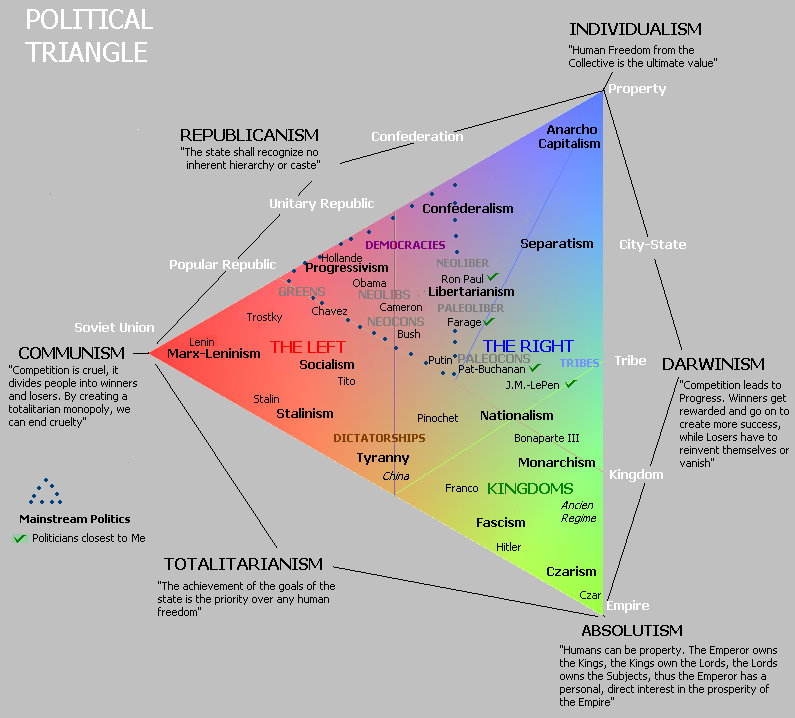
Lorenzo Warby discusses political categories and explains why they aren’t the same as moral categories:

A lot of people who class themselves as being on the Left clearly feel that there is some automatic moral kudos from being on the Left. As a direct implication of this sense of moral kudos, they also clearly think that there is some moral deficiency from being on the Right.

Yes, there are difficulties in defining Left and Right. Nevertheless, even without that difficulty, any such claim of moral kudos is ridiculous. The Left includes Lenin, Stalin, Mao, Kim il-Sung, Pol Pot, Mengistu … Indeed, by far the most important historical impact of Left politics on world history is precisely the actions of this succession of mass-murdering tyrants and their regimes.

If you think that somehow the Left does not include said mass-murdering tyrants, you are simply wrong. It is very revealing that there are clearly many folk on the Left who somehow edit out this history. They are not looking at the Left as it is in history, but as some set of noble aspirations that morally ennoble themselves.

Folk not of the Left absolutely associate the Left with those mass-murdering tyrants. Moreover, if you edit out that history, you are editing out how the political tradition you identify with can go horribly wrong. That is not a reassuring pattern. On the contrary, it is a deeply worrying pattern.

Of course, if you are happy to be associated with some or all of those mass-murdering tyrants, that is even more of a worry.

Clearly, Left is not a moral category. It is a political category, not a moral one.

The same point applies, of course, about the Right. After all, the Right includes Hitler.

Thus, neither Left nor Right are moral categories. They are political categories, and political categories that people can get very tribal about. But they are not moral categories.

This point applies to other political categories: Socialist, for example. Hitler was a socialist. He called himself a socialist, he did socialist things, intended to do more socialist things after the war. In his writings, he argued in socialist ways.

The aforementioned mass-murdering tyrants were all socialists. They were implementing socialism on the way to communism, except for Hitler, who was using socialism as a tool to forge an Aryan super race worthy and able to dominate others. So, Socialist is not a moral category.

If you stop regarding broad political categories as also being moral categories, a lot of silly arguments go away. Such as, for example, whether Hitler was a socialist. Or, whether Hitler was of the Right. Yes, Hitler was a both a socialist and of the Right—which points to how diverse a range of political traditions Right applies to.

Even when there are grounds to attaching moral valence to political categories, that is something to be done carefully and sparingly, otherwise it can seriously get in the way of understanding.

Thus, using Fascist as a boo! word but Communist as a neutral, or even hurrah! word, is ridiculous. It is even more so when Fascist is used to obscure Nazis being National Socialists.

How to Stage (and Win) an International Crisis – Death of Democracy 13 – Q1 1936

World War Two and Spartacus Olsson
Published 25 Apr 2026

In early 1936, Adolf Hitler took one of the greatest risks of his rule — sending German troops into the demilitarized Rhineland in direct violation of the Treaty of Versailles and the Locarno Pact. It was a gamble that could have triggered immediate war. Instead, it became a turning point that transformed Hitler from a powerful dictator into a figure many Germans saw as a national savior.

In this episode of Death of Democracy, we examine how the re-militarization of the Rhineland, combined with the propaganda spectacle of the 1936 Winter Olympics in Garmisch-Partenkirchen, helped cement Hitler’s popularity at home while exposing the paralysis of Britain and France abroad. Through contemporary voices like William L. Shirer and Victor Klemperer, we explore the uneasy mix of fear, relief, and growing enthusiasm among ordinary Germans — alongside the continued escalation of repression against Jews and political opponents.

This quarter reveals a crucial dynamic: how foreign policy success, propaganda, and public sentiment fused to elevate Hitler into something approaching a political messiah — while simultaneously closing the space for resistance.

History is not inevitable — but moments like this show how easily it can be shaped.

South Korea’s switch from an exporting heavyweight to a cultural juggernaut

Filed under: Asia, Economics, Government, Media — Tags: , , , , — Nicholas @ 03:00

In the latest SHuSH newsletter, Kenneth Whyte looks at the importance of a South Korean government report to changing the structure of the South Korean economy and making the country far more visible culturally on the world stage:

South Korea, in the latter half of the twentieth century, was building its economy almost entirely by exporting manufactured goods, everything from home electronics to ships to automobiles. That changed, as the story goes, when the country’s Presidential Advisory Board on Science and Technology released a report on digital technology in May 1994. It noted that a single Hollywood film, Jurassic Park, with its computer-generated dinosaurs, generated the same amount of foreign sales as 1.5 million Hyundai cars. The darling of Korean industry, Hyundai was exporting 640,000 cars a year in 1994. So one film was worth more than two years of heavy industrial production requiring enormous plant, equipment, capital investment.

The report stunned Koreans — “literally sent shock waves across the country”, writes Doobo Shim, a Seoul-based professor of media and communication. At the time, culture and entertainment were viewed as ephemeral and unlikely to contribute to Korea’s core mission of “improving the material conditions of the people”. The country decided it needed to change its game in order to thrive in the twenty-first century economy.

It wasn’t a straight line from the Presidential Advisory Report to Parasite, Squid Game, BTS, Blackpink, and Han Kang’s Nobel prize, but it’s straighter than you might think. Seoul is now a top-five world cultural center, and arguably top two if we’re talking pop culture and anything that appeals to under-thirties. How it happened tells us a great deal about Canada’s relative failure to develop home-grown cultural and entertainment industries.

The Presidential Advisory Board report alone did not alter Korea’s strategy. The country was starting from way behind. First came democratic reforms and media deregulation. That birthed new commercial TV channels and a variety of independent publications. Now with an independent (from government) domestic media sector, Korea tried to protect it by limiting the amount of foreign cultural product in its market. That didn’t work. In 1993, 90 of the top 100 video rentals in the country were from Hollywood; only five were domestic. Sound familiar, Canada?

Protection wasn’t going to work, anyway. Another factor at play was the Uruguay Round, an international accord negotiated between 1986-1994 that decisively liberalized the global economy, forcing all 123 signatory countries to open their markets for a vast range of goods and services, including communications services and entertainment product. It was clear to Korea that efforts to protect heritage and culture by shutting out the world had no future. It needed to upgrade its efforts in the cultural sphere if it wanted to avoid being swamped by content from multinational companies, and not just American ones. Satellite television services out of Japan and Hong Kong were already making inroads in Korea.

Another thing: Korea had noticed that Japan, its nearest rival in the home electronics sector, was making investments in content. Sony had bought Columbia pictures and CBS records. It was the nineties, the age of synergy, or vertical integration. Companies making devices — video players, portable music players — also wanted to own what played on them. Korean firms such as Samsung and Daewoo, makers of TVs and VCRs, felt a need to be vertically integrated, too.

So the Presidential Advisory Report landed on fertile ground. Korean businesses felt an imperative to pay attention to content. The Korean government felt itself under siege from foreign cultural and entertainment product. “Gone are the days”, said one expert interviewed in the newspaper Dong-A Ilbo, “when the government could appeal to the people to watch only Korean programs out of patriotism”.

All that notwithstanding, the report mostly resonated because it presented culture as an opportunity. It asked Koreans to recognize the potential of arts and entertainment to improve the material conditions of the people. Instead of resisting the emerging global marketplace, the power of multinational corporations and platforms, and the free movement of talent, it needed to master this new system, compete commercially, and take Korean culture to the world.

The Ancient Greeks: 01 – What Made Them Special? (a): Origins, Collapse, and Reinvention

Filed under: Europe, History — Tags: , , , , , , — Nicholas @ 02:00

seangabb
Published 31 Jan 2026

This section introduces the Greek world and challenges common assumptions about Greek civilisation.

It examines who the Greeks were, where they came from, and how fragmented their political and cultural world was. It then explores the collapse of Bronze Age Greece around 1200 BC and the long Greek Dark Age that followed, during which writing disappeared, monumental architecture ceased, and long-distance trade declined.

When Greek civilisation recovered around 800 BC, it did not restore the Mycenaean world. Instead, it reinvented itself, drawing on epic poetry and myth rather than historical memory.

A central argument of this section is that the later Greeks knew less about their own early history than we do, and that Greek civilisation was rebuilt not on continuity, but on reinvention.

QotD: College Town, USA

Filed under: Education, Quotations, USA — Tags: , , , , — Nicholas @ 01:00

Everything human changes, but Nature does not change. That’s “conservatism”, I guess, and for lack of a better term. And that’s what causes Noticing, I’m coming to believe. It’s not that we dislike “change” — that would be as absurd as disliking the seasons. We dislike change qua change; change for change’s sake, and that instinctive distaste for change qua change is why we Notice. We have that sense of Impermanent Permanence, so we can’t help but Notice that today’s Current Thing is the exact opposite of yesterday’s.

It’s not “change” in the sense we understand, and instinctively accept — it’s not “change” in the way the seasons change. It’s directed change — somebody decided to do it. And if it’s not immediately apparent who, or why, we are naturally suspicious. We are “based”, if you will, in the Permanent, so we are acutely aware of the deliberate aspects of the Impermanent.

City life gives you the opposite, indeed overwhelming, sense of Permanent Impermanence. Nothing stays the same; the only constant is change. I remember seeing it in College Town, which was not particularly large, population-wise, but had almost all the “amenities” you’d expect from a major metro. Bearing in mind, as always, that “College Town” is a composite of several different places … but they’re all basically the same, and that’s the point.

The first thing that struck me about College Town — that you see in every College Town, coast to coast — was how shabby it was. Even the brand-new apartment complexes (of which there were many, Higher Ed being a growth industry at that time) all looked dilapidated. The next thing I Noticed was the lack of institutions. College Town had every imaginable “amenity” — exotic cuisine, 24 hour everything — but no playgrounds, no ball fields, no churches. Hardly any schools, despite being pretty good size relative to the surrounding area, because why would there be? All that stuff is for people who actually live there, as opposed to the transients, or even the “permanent residents”, if you will, on the faculty (what an unconsciously telling phrase that is!).

Nobody’s from there, and nobody stays there. Not even the faculty — they always have one foot out the door, no matter if they’re Department Chairs with 30+ years’ seniority. It is crucial to their amour-propre to believe that they’re always about to get the call from Harvard, which in part explains the weird phenomenon of the “faculty ghetto”. They’ll spend a zillion dollars “restoring” a frankly tiny house in the “historic” district, by which is meant “gutting it, and making it as close to a Current Year McMansion as the physical infrastructure can bear”. Then they’ll spend a zillion more on yearly maintenance, when they could’ve gotten twice the house, with the latest and greatest everything, built to spec on the outskirts of town …

… which is five minutes away; it’s not like they’re facing some huge commute (and it’s not like they walk or even bike to campus, and God forbid they take the bus. No, they’d much rather gut or knock down another old building, just to have a garage in which to park the huge gas-guzzling SUV they drive the 45 linear feet to “work”, because how else would they show off how important they are, without parking in their designated space in the one fucking lot in the entire town?).

In other words, they don’t want to admit that they live there — they are, at most, “permanent residents”. There are no public playgrounds, because their one designer baby isn’t going to rub elbows with the children of the few greasy proles they grudgingly tolerate in the absolutely necessary service industries — you know, the mechanics and plumbers and snow plow drivers and such. There are no churches, just one or two Temples of the Current Thing, and only to the extent that a few of them have paraphilias involving clerical vestments. No ball fields, no Cub Scout packs or Elks Lodges or American Legion posts, because c’mon man. A town that size anywhere else would have a Walmart and a Minor League team and a big rivalry game between the local high schools; College Town has head shops and Egyptian-Thai fusion cuisine and DoorDash.

Permanent Impermanence, in other words. Deliberate impermanence. Nothing lasts, nothing can last, nothing should last. There are some people who find that attitude — which I would call straight-out, shit-flinging nihilism — deeply appealing, and … well … there it is.

Severian, “Transience”, Founding Questions, 2026-01-19.

April 25, 2026

Can a genuine Canadian launch capability grow from a sketchy concrete pad in Nova Scotia?

Filed under: Cancon, Government, Space — Tags: , , — Nicholas @ 05:00

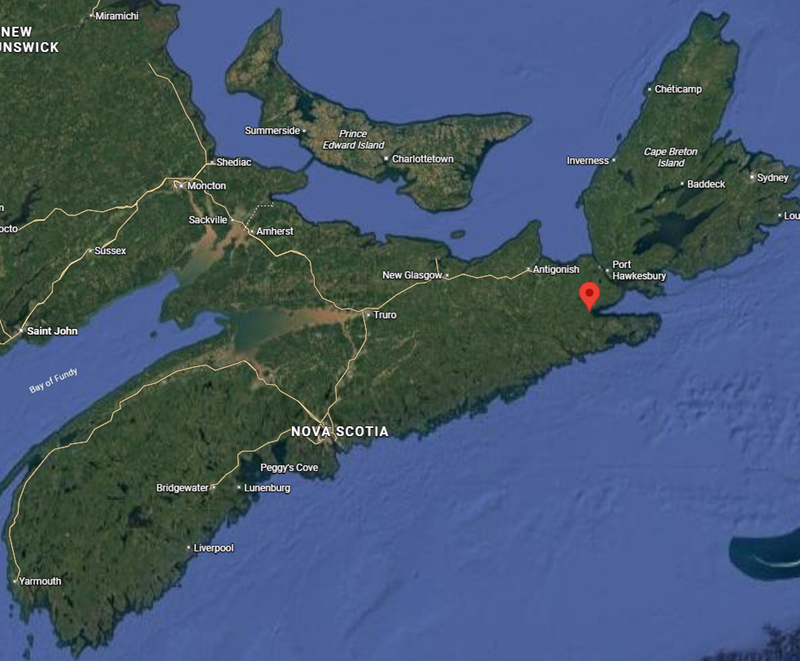
Along with many others, I was boggled to hear this week that the Canadian government was spending $20 million per year to lease a “launch facility” — photos show a pretty rudimentary concrete pad surrounded by gravel and not much else — which the Ukraine-connected lessor itself is leasing from the Nova Scotia for $13,500 per year. John Carter is somewhat more optimistic than I am that there’s a path from the dubious patch of land to a real maple-flavoured space program:

Guysborough, Nova Scotia, site of the MLS “spaceport”
Image from Google Maps.

It would be a gross exaggeration to say that Canada doesn’t have a space program. The launch of the Alouette 1 satellite in 1962 made Canada the fourth country to place an object into orbit around the Earth. Astronaut Marc Garneau nearly became the leader of Canada’s Liberal Party in 2012 (yes, we could have had an astronaut prime minister … Canadians voted for a nepo baby instead); astronaut Chris Hadfield is a minor celebrity in Canada; Jeremy Hansen became the first Canadian to visit the Moon a few weeks ago. Various iterations of the Canadarm have been fixtures of Space Shuttle missions and the International Space Station for decades. However, Canada does not yet have its own, native launch capability. The Canadian Space Agency acts as an appendage of NASA, with Canadian astronauts and satellites hitching rides on American rockets.

The announcement that the Canadian government is taking steps to develop a Canadian launch capacity has roused me from my uneasy slumber of the last several weeks, and I have awakened in a cranky mood. Several aspects of this story have annoyed me, both those relating to the government’s execution, and those emerging from the reaction from influencers whose justified skepticism of Ottawa’s intentions is intersecting with their poor understanding of space in a fashion that is leading them to beclown themselves.

The story that got everyone’s attention was a two hundred million dollar lease Ottawa signed with Maritime Launch Services for a spaceport in Nova Scotia, Canada’s largest Atlantic province, covering ten years of operations at twenty million dollars per year. The spaceport is, at the moment, essentially just a concrete pad at the end a gravel road, with no other apparent infrastructure.

The “spaceport”
Image from Postcards from Barsoom

There are several genuine reasons for serious concern with this, which have been detailed by a Nova Scotian NIMBY who’s been annoyed by MLS for several years now. MLS is a Ukrainian-American company whose original business model was to design, manufacture, and launch the Ukrainian-built Cyclone 4M, which it has never successfully done. To be fair, this effort was interrupted by the Ukrainian war, which for obvious reasons redirected Ukrainian rocketry to military production. However, it’s also worth emphasizing that MLS is an offshoot of the Ukrainian Space Agency, which is every bit as corrupt as you’d expect. The Ukrainian Space Agency has been mired in several expensive scandals over the years; one of them resulted in the theft of $10 million from Export Development Canada.

A former Liberal Party premier, Stephen McNeil, sits on MLS’s advisory board, which could be quite natural and could also be an indication of bog-standard conflict of interest.

The company’s finances are rather suspicious. It has posted operating losses of several million dollars a year, with the exception of 2025 when it lost $47 million1; revenue in 2025 was less than $15,000, and in 2024 it was zero. The incredible 2025 cash burn was apparently due to MLS acquiring Spaceport Canada. The company’s normal losses seem to be mostly due to executive compensation for its small roster of employees: the CEO and CFO between them rake in about a million dollars. This is despite the company not apparently actually have done anything yet. Other expenses include paying the Ukrainians for technical documentation for a launch vehicle MLS had already abandoned, and debt service on funding advanced by investors.

In 2024, MLS abandoned the scheme to launch Ukrainian rockets and pivoted to an “airport model”, the idea being that they would make money by charging launch service providers for the use of their spaceport. In 2025 there were precisely two launches from MLS’s concrete pad. Both of them were suborbital. One of them was a student-designed rocket from Toronto’s York University.

Even more absurdly, MLS’s concrete pad is on Crown land, which the company rents from Nova Scotia for $13,500 a year. This then looks like Ottawa renting its own land for $20 million a year.

In yet another suspicious-looking move, one of MLS’s chief financiers, Sasha Jacob, sold millions of shares immediately after the deal was announced and the stock price 10x’d; he then exercised stock options to replenish his position at below-market rates, thereby maintaining interest in the company while pocketing a couple million dollars.

All of this looks a whole lot like one more public-private partnership grift in which press releases and public relations materials project a hologram of visionary development, while the funds disappear into a complex web of regulatory compliance, stock buybacks, environmental impact studies, and executive salaries, without anything ever actually being built. This is a scam in which Canada’s Laurentian elites have learned to excel. It turns out that it is much easier, and far more profitable, to get paid for something you’re pretending to do instead of actually doing it; when the inevitable questions get asked, you simply throw up your hands and complain of unexpected engineering difficulties, tortuous regulatory pathways, or other factors beyond your control. None of the people involved – not government ministers, not government bureaucrats, not their private-sector partners – care one bit whether any given project succeeds, because they get paid by the taxpayer and the debt taken out in the taxpayer’s name regardless of outcomes. It is my working assumption that there is nothing more to this supposed space program than this. We are governed by theatre kids dancing to the tune of the Music Man, and none of them know anything about doing anything real.

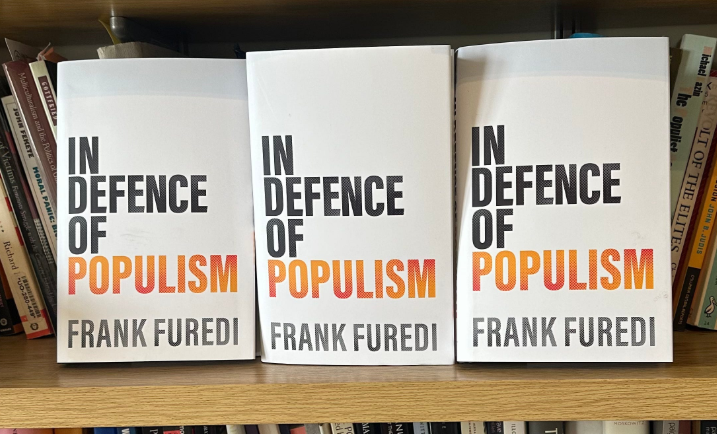
Frank Furedi’s In Defence Of Populism

Filed under: Books, Europe — Tags: , , , — Nicholas @ 04:00

On his Substack, Frank Furedi explains why he wrote his new book In Defence Of Populism with especial reference to the recent Hungarian election results:

Photo from Roots & Wings with Frank Furedi

Have you noticed the flood of commentaries and articles appearing in the mainstream media dwelling on the topic of how to crush populism once and for all? The recent electoral defeat of Viktór Orbán’s Fidesz Party in Hungary has emboldened the European centrist technocratic elite to hope that this result spells the end of populist surge on both sides of the Atlantic.

The “is this the end of populism?” literature has been around for some time. To this day, mainstream commentators frequently express the hope that populism is a passing phenomenon. “Has Europe reached peak populism?”, asked a commentator in Politico in 2019, before expressing the hope that “the tide could be turning against the anti-establishment nationalist movements that have upended politics across the Continent, leaving the barbarians howling in frustration at the gates”.1 “We seem to have passed peak populism”, predicted Andrew Adonis, a leading British anti-Brexit voice.2

The outcome the Hungarian elections has led to an explosion of commentaries that are driven by the anti-populist dream of a world where populism is forced back into the margins of society. Polly Toynbee of The Guardian noted that “Viktor Orbán inspired rightwingers across the EU and in Britain. His defeat could represent a turning of the tide”.3

[…]

The main reason why I wrote In Defence of Populism is because it is necessary to counter the anti-populist hysteria about populism. Populism is surrounded by ceaseless hostility and mystification. Just about everything you are likely to read about populism in the specialist academic literature is motivated by their authors’ animosity and contempt towards their subject matter. Their sentiments are reproduced in an intensely polemical form by the mainstream media which habitually dismisses populists as far right and even fascists. According to the dominant media narrative, populists are racist xenophobes, homophobes and a variety of other phobes. At times the media hysteria regarding the so-called populist threat echoes the Red Scare of the 1920s and 1950s in the United States.

The populist voice has been systematically distorted by its opponents. I argue that this movement has been subjected to ideological warfare and recast through a teleology of evil. It is important to grasp the systematic attempt to demonise populism because, in the media and public life, a distorted and fundamentally flawed characterisation of populism prevails. What’s remarkable about this subject is that virtually everything that is communicated in the media and in the literature about populism is framed by individuals who are external to it. The definitions authored by these individuals communicate their bias and suspicion towards populism. Consequently, the way that populism is represented in public life is an invention of its opponents. Those who are ascribed the label populist do not get to decide who they are nor what populism means.

So although the populist movement is in the ascendancy, its actual definition is still unresolved and remains interpreted though the medium of a modern mythology. Almost everything you are likely to read about contemporary populism bears little relationship to the real impulses that drive this movement forward. In Defence of Populism offers an antidote to the confusions and distortions peddled by the anti-populist idealogues. I look forward to getting your feedback regarding what you think about the case for populism advanced in my book.


  1. Paul Taylor, “Has Europe reached peak populism?”, Politico, 5 September 2019 https://www.politico.eu/article/europe-reached-peak-populism-far-right-anti-european-government-election/
  2. Andrew Adonis, “We seem to have passed peak populism”, Prospect, 11 January 2023 https://www.prospectmagazine.co.uk/politics/peak-populism-donald-trump-boris-johnson-jair-bolsonaro
  3. https://www.theguardian.com/commentisfree/2026/apr/14/viktor-orban-europe-britain-hard-right-populism

“… as the review of USMCA approaches. Dairy is once again at the center of the storm”

Filed under: Business, Cancon, Food, Government, Politics, USA — Tags: , , — Nicholas @ 03:00

Dr. Sylvain Charlebois on the strong hints the US government has been dropping that Canada’s stance on our restrictive dairy cartel — euphemistically referred to as “supply management” — is going to be a key negotiating point in the upcoming USMCA trade negotiations:

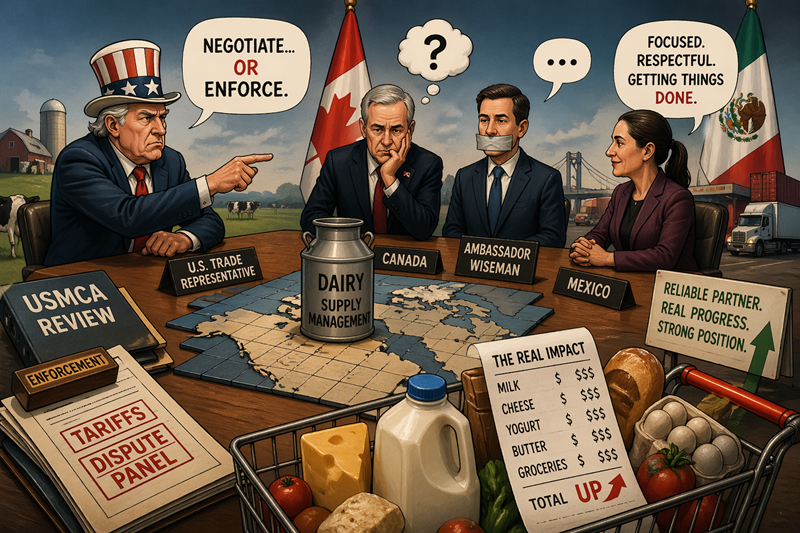
The warning came quietly, but it was unmistakable. According to a Reuters report carried by The Western Producer, U.S. Trade Representative Jamieson Greer made it clear: Canada’s dairy dispute will be resolved one of two ways, through negotiation or through enforcement.

That is not diplomatic nuance. That is a choice.

And it comes at a delicate moment, as the review of USMCA approaches. Dairy is once again at the center of the storm. It always is. Canada’s supply management system, long defended domestically, continues to frustrate U.S. officials over limited market access. As reported by Reuters, tensions remain high around how Canada administers its tariff-rate quotas.

None of this is new. What is new is the tone.

Recent commentary out of the United States, including sharp criticisms aimed at Mark Carney, reflects a growing impatience. Some of it is political theatre. But some of it signals something more consequential, a willingness to move from negotiation to enforcement if progress stalls.

In food trade, that shift matters.

Canada’s agri-food economy is deeply integrated with the United States. This is not a casual trading relationship. It is structural. Supply chains cross the border multiple times before products reach consumers. Roughly three-quarters of Canadian agri-food exports still head south. You do not casually antagonize the market that anchors your value chain.

The critique coming from voices like Brian Switzer, however undiplomatic, boils down to a familiar expectation. Canada should act like a predictable partner. Not subordinate, but steady. When that perception erodes, the consequences are rarely immediate. They emerge later, in tighter border controls, procurement shifts, or dispute panels.

And eventually, in prices.

Steyr M1912/16 Automatic “Repetierpistole

Filed under: Europe, History, Military, Weapons, WW1 — Tags: , , , , — Nicholas @ 02:00

Forgotten Weapons
Published 8 Dec 2025

In the latter half of World War One the Austro-Hungarian military experimented with a number of select-fire pistol type weapons. One of these was the Steyr Repetierpistole M1912/16, an automatic adaptation of the regular M1912 pistol. It was given a 16-round fixed magazine (loaded via two 8-round stripper clips) and a selector switch. A total of 200 were produced, each supplied with a shoulder stock to help make the blistering 1200 rpm rate of fire somewhat usable. The design was not made from scratch, but rather adapted form the existing 1912 fire control system, which makes for a rather unorthodox system.

In addition to 200 of these pistols, the Austro-Hungarian military also acquired 50 twin-gun systems, which two of these pistols were attached to a frame with a single shoulder stock between them (no surviving examples of those are known today).

Frommer Pistolen-MG Model 1917 video:
Frommer Pistolen-MG Model 1917: A Crazy Vi…

Many thanks to the VHU — the Czech Military History Institute — for giving me access to these two fantastic prototypes to film for you. The Army Museum Žižkov is a part of the Institute, and they have a 3-story museum full of cool exhibits open to the public in Prague. If you have a chance to visit, it’s definitely worth the time! You can find all of their details (including their aviation and armor museums) here:

https://www.vhu.cz/en/english-summary/
(more…)

QotD: Goethe, the lost German master

Filed under: Britain, Germany, History, Media, Quotations — Tags: , , , — Nicholas @ 01:00

This was the atmosphere in which I discovered Germany. It was a minor act of defiance to choose German instead of Latin for O-level, but with hindsight I was extremely fortunate to have the choice. There were two German teachers in my grammar school of just 600 pupils. Today, even the best state schools seldom offer the subject; not one of our four children has had the opportunity that I had to study German language and, especially, literature up to the high standard that was then expected at A-level.

Today, the texts are almost all recent and appear to be chosen partly with the film of the book in mind. In particular, Goethe has disappeared from the syllabus, presumably because the language is considered too archaic. Yet I recall the immense pleasure and satisfaction of mastering a Goethe play — Egmont. The story of the dashing Dutchman and his martial defiance of the sinister Duke of Alba, the courage of his beloved, Klärchen, who fantasises in song about how wonderful it would be to be a man and fight the Spaniards — “ein Glück sondergleichen ein Mannsbild zu sein“. Somehow I even obtained an LP of Beethoven’s incidental music for Egmont: seldom heard apart from the overture, but brilliantly evoking the grandeur of the drama.

Like Homer, Dante and Shakespeare, Goethe belongs not just to German literature, but to world literature, Weltliteratur — a term he coined. I am told that even in German Gymnasien, Goethe is little studied now. He is certainly a rare bird in English schools — or even universities. It is tragic that educated people, including students of literature, so seldom encounter the greatest of Germans even in translation. We might get on better with Germany if we did.

Daniel Johnson, “How I discovered Germany”, The Critic, 2020-08-02.

April 24, 2026

Britain’s Green Party … not your weird cousin’s old Green Party

The Green Party have been more of a punchline than a party for decades in British politics, but the Green Party of today shares only a name with its earlier incarnations (the old UK party is now split into three separate Green Parties for England and Wales, Scotland, and Northern Ireland). Now, it’s become a significant threat to the Labour Party thanks to its unlikely fusion of socialist and green policies with strong support from Britain’s growing Muslim community:

The Green Party is a growing force in British politics. In February, they gained the Parliamentary constituency of Gorton and Denton in a by-election — a supposedly “safe” seat for the Labour Party. Local elections in May see them set to make big gains — perhaps sweeping to power in several town halls in London, perhaps including Camden, where Sir Keir Starmer is one of the local MPs. Opinion polls often show them roughly level with Labour and the Conservatives.

This is quite a change from previous decades when they were indulged as eccentrics on the political fringe. The Green Party (or the Ecology Party, as it was earlier named) were the sandal-wearing, muesli-munching environmentalists who wanted to go back to nature. They opposed economic growth — but their supporters tended to be affluent enough that they could afford to do so. Its leader was the aristocrat Sir Jonathon Porritt.

They were the breed George Orwell was thinking of when he wrote: “One sometimes gets the impression that the mere words ‘Socialism’ and ‘Communism’ draw towards them with magnetic force every fruit-juice drinker, nudist, sandal-wearer, sex-maniac, Quaker, ‘Nature Cure’ quack, pacifist, and feminist in England”.

Great fun. But there was a darker side to the quackery then and now. A totalitarian mentality which, as Orwell also vividly described, proves horrific when it prevails.

Increasingly, the Green Party has shifted its focus away from the environment. In the few towns and cities where it has gained power locally, such as in Bristol and Brighton, it has proved ineffective at practical work in this respect. Typical behaviour would be to pass a motion declaring a “climate emergency” but then perform lamentably when it comes to recycling or tree planting or any of the relevant matters they have the power to deal with.

There was always a distortion in its supposed concern for sustainability in that it was really an excuse to denounce capitalism. The Property and Environment Research Center, a US think tank which champions free-market environmentalism, has shown a more enlightened approach. Their work has included a comparison of privately-owned and state-owned forests. Another applies property rights to marine assets. But the role of property rights as a means of good stewardship of our planet is dismissed by the Green Party out of hand.

In any case, much of the campaigning by the Green Party now is on non-green issues. Its leadership talks a lot about foreign policy and a broader economic pitch focusing on class war rhetoric and an extreme programme of state control. Taxing the rich is always seen as the panacea, despite the reality that many entrepreneurs are already fleeing the United Kingdom due to its hostile fiscal environment.

Its Manifesto for the last election two years ago proposed a Wealth Tax, a pensions tax, and a big increase in Capital Gains Tax. A £90 billion carbon tax would have closed down much of British industry, which was probably the idea.

The Mailbox Test

Filed under: Law, Liberty, Politics, USA — Tags: , , — Nicholas @ 03:00

On the social media site formerly known as Twitter, Devon Eriksen responds to a thread about the ethics of setting up a trap that will only be effective if someone attempts to destroy it:

The Mailbox Test, like the breakfast test, is an excellent way to tell who you can allow to wield power in your society.

Goes like this:

    If someone is hurt trying to destroy someone else’s stuff in order to take pleasure from their pain, do you sympathize with …

    The aggressor because he got hurt?

    Or with the guy who owns the stuff, because he wasn’t the aggressor?

You can have people in your society who fail the Mailbox Test. That’s okay … they can work at hospices, or shelters for orphaned kittens, or something.

But you cannot allow them to vote, or otherwise wield political power. Because if you do, they will open the gates of the city to the enemy.

I am personally tired of everyone pretending that people who enjoy ruining things for random strangers are just kewt smol beans who are only aggressive because of all the complex socioeconomic factors and lack of resources.

They knew someone would be hurt by what they did. They knew that someone had done literally nothing harmful to them. And those two ideas, in combination made them feel pleasure. And they went and did it.

That is the sign of a rotten soul.

Defending ourselves and our property is not just a right, it’s a moral obligation. Otherwise, we just kick the can down the road for someone else to deal with, someone who may not be able to defend herself.

I don’t care if a vandal breaks his arms trying to destroy my stuff. Because I value my stuff more than a vandal’s arms. And the fact that he tried to destroy somebody else’s stuff shows that he, too, values his arms less than the opportunity to hurt somebody.

We cannot allow such people inside the city, and we cannot give the keys to those who would open the gates for them.

Another response to the original post from Kit Sun Cheah:

Sure, this adheres to a strict interpretation of Just War Theory.

However … we’re talking about a mailbox.

A mailbox is not a weapon. It does not serve any military purpose. Its existence is entirely inoffensive.

That is why it is an easy target.

A reinforced mailbox is purely defensive. Do not meddle with it and it will leave you alone. Strike it, and Newton’s Third Law kicks in.

Poke it and nothing will happen to you. Try to smash it and you risk smashing your own arm. It does not amplify an incoming force, it merely resists and returns it. Thus it is inherently proportionate.

No law or theory of war requires that you advertise your capabilities. Concealment may feel wrong to a certain type of personality, but openness is not always a social good.

Yes, you can fortify the mailbox in a blatantly obvious fashion. Some ne’er do well will notice it, then decide to pick another easier mark.

You have deterred an attack on your own property by redirecting attention to someone else’s.

Now suppose the mailbox were covertly fortified. A vandal strikes it and is injured. He passes along word to his friends, and their friends. Then they will start to wonder: are all the mailboxes reinforced?

They can’t tell, so they must assume every mailbox is fortified.

Thus, covert reinforcement does more to deter aggression than overt reinforcement. And ultimately, we want to see an end to mailbox destruction.

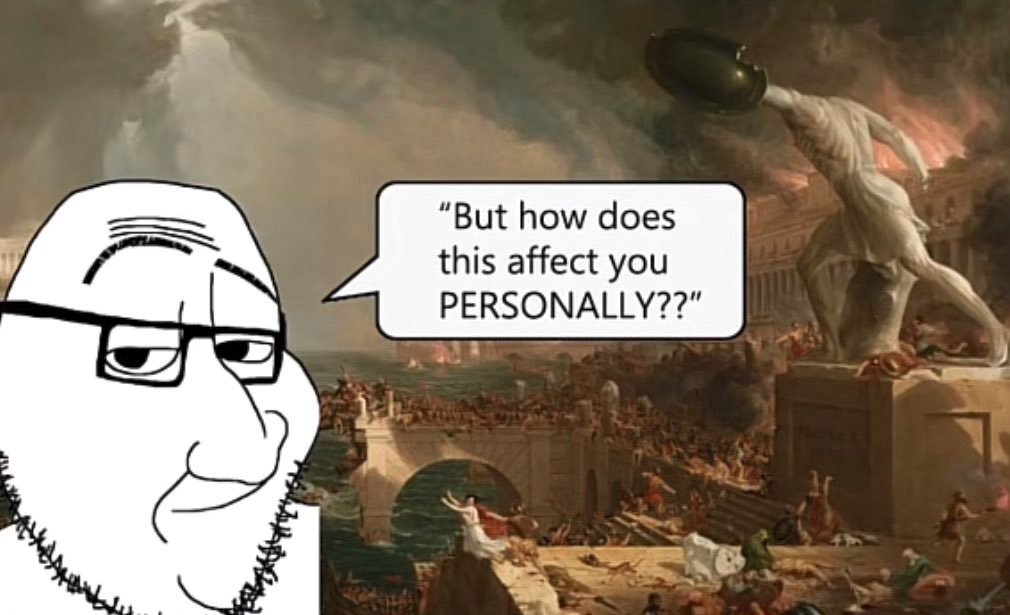
This post is not about just war theory or mailboxes.

Update, 25 April: Welcome, Instapundit readers! Have a look around at some of my other posts you may find of interest. I send out a daily summary of posts here through my Substackhttps://substack.com/@nicholasrusson that you can subscribe to if you’d like to be informed of new posts in the future.

« Newer PostsOlder Posts »

Powered by WordPress