
Overly Sarcastic Productions
Published 30 Oct 2026Look! Up in the sky! It’s a bird! A scavenger bird feasting on the corpses of the enemies we once believed invincible! And all I did was sneeze into its open mouth a couple times!
October 31, 2026
Halloween Special: War of the Worlds
October 21, 2026
Pachelbel Rant
RobPRocks
Published 5 Nov 2019The original Pachelbel Rant in full resolution! I found the transcode file from the original mini DV tape!
Thank you to everyone who liked, shared, translated, and commented on the Rant over the years. It’s been so exciting to hear about how people have found the video — some through music class in school, some found it through friends, some found it by googling Pachelbel to find Canon in D (Ha! Take that, Johann!)
If you’re curious I’m still performing comedy music, I put out a live concert album in early 2019, I regularly perform in New York, the occasional cruise ship, and I write and produce music for myself and other artists.
Turn on closed captioning for the official transcript, here are the songs referenced:
2:21 Graduation (Friends Forever), Vitamin C
2:32 Cryin’, Aerosmith
2:43 One Tin Soldier, Coven
3:35 Hook, Blues Traveler
3:45 Basket Case, Green Day
4:11 Push, Matchbox 20
4:15 Good, Better Than Ezra
4:17 Machine Head, Bush
4:21 With or Without You, U2
4:25 Torn, Natalie Imbruglia
4:28 Sk8r Boi, Avril Livigne
4:32 We’re Not Gonna Take It, Twisted Sister
4:36 Laverne & Shirley Theme Song
4:40 No Woman No Cry, Bob Marley
4:43 Let It Be, The Beatles
October 20, 2026
Your Safety First (1956) – Automotive safety cartoon that inspired The Jetsons
PeriscopeFilm
Published 23 Jun 2026This animated film by John Sutherland Productions was commissioned by the National Association of Auto Manufacturers. Your Safety First is a promotional piece for 21st Century Cars, told from the perspective of a person in the year 2000 looking back on the history of automobile safety. The cartoon humorously compares the dangerous, early days of cars with the safety-focused, modern vehicles of its time. The cartoon was directed by George Gordon, and animated by Ken O’Brien, George Cannata, Fred Madison and Cal Dalton. The story was written by Norman Wright. Note: this cartoon has been noted as a precursor to the animated TV series The Jetsons, which borrowed heavily on the ideas presented in the cartoon including a three-hour work day, automated flying cars, and robotic arms performing most tasks.
0:00 Main titles. The film’s host, a man from the year 2000, introduces a segment on the history of the automobile, beginning with an early 20th-century car.
4:47 The film highlights the dangers of early cars, including a lack of doors, frequent flat tires due to poor tire retention rings, and a complete absence of shock absorbers, which made for a very bumpy and unsafe ride.
5:32 Early cars had poor acceleration and weak, unreliable gas or oil headlamps, making night driving hazardous.
5:47 The vehicles offered little protection from the elements, as they lacked tops and windshield wipers.
6:03 The film shows the danger of the hand crank starter, which often failed, and the unpredictable nature of the car’s individual parts, which could fail without warning, causing accidents.
6:35 The film transitions to the rapid improvements made to cars over the years.
6:42 It lists early safety innovations, such as stronger wheels, demountable rims, doors, tops, windshields, and wipers. The driver’s seat was moved to the left for safer passing, and the electric starter replaced the hand crank.
7:33 The film continues to show the development of safety features over the decades, including pressed steel wheels, stop lights, rearview mirrors, four-wheel hydraulic brakes, and rubber-covered pedals.
7:51 Safety glass and all-steel bodies and tops are presented as major improvements in passenger protection. Shock absorbers are highlighted for smoothing out bumpy roads.
8:30 The film states that, in addition to physical improvements, manufacturers developed research and testing techniques to build safer cars. It shows various “torture tests” designed to find weaknesses in parts.
9:31 Manufacturing processes also improved, with each car undergoing over 2,000 inspections before leaving the factory.
9:48 The film returns to “Grandpa” in the year 2000, showcasing his reliable, safe, and comfortable car. It lists a final set of advanced safety and convenience features, including safety door locks, automatic transmission, a low center of gravity for stability, and tubeless tires.
10:46 Modern features like wraparound windshields and larger rear windows increased visibility. Sealed-beam headlamps improved night driving, while power brakes and power steering made driving easier and safer.
11:27 The film concludes by asserting that the safety of the driver was and will continue to be the primary goal of automobile manufacturers. The host, Grandpa himself, states he is “going on 117” thanks to the easy, modern living made possible by safe cars.
(more…)
Comments Off on Your Safety First (1956) – Automotive safety cartoon that inspired The Jetsons
October 9, 2026
British humour – “there is something unique about ‘taking the mickey'”
This post is from a few months ago, but still seems quite relevant to British society (admittedly, I’m not there and perhaps things are actually better than they appear from across the pond):
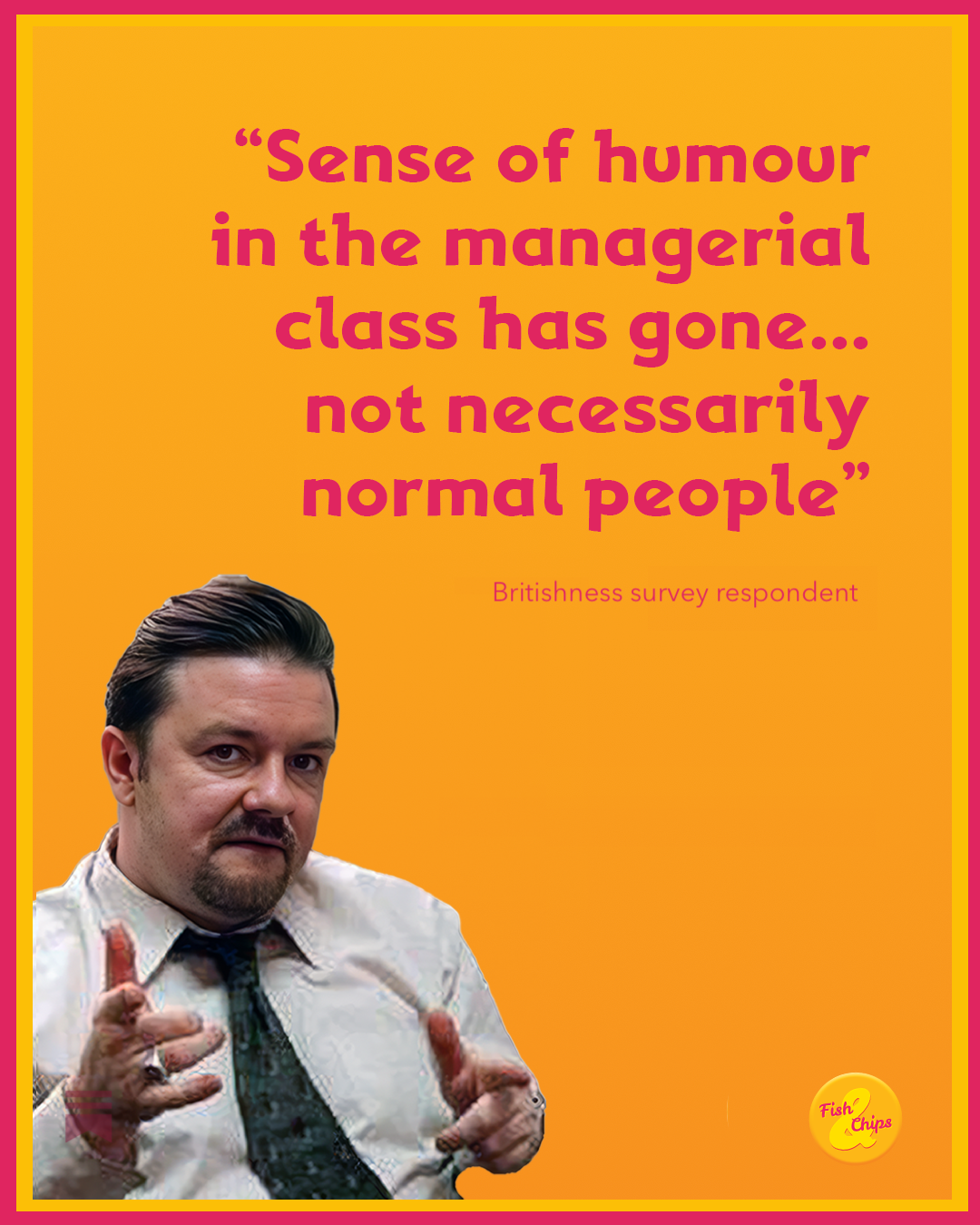
Image from Fish & Chips
Last week, the BBC announced it would be axing Live At the Apollo. Its viewing figures have halved since 2018. I turned on the TV to see what we’d be missing. It was compered by a guy whose idea of being droll was to shout. The comedians he introduced were “safe” — in the way that sticking a cork up your bottom is safe.
In order to get BBC Purity Vetting clearance, Apollo ceased to be Comedy.
Wooden jollity, enforced on us by puritans, is not the real Britain. Being sharply satirical, frivolously inane, or anywhere in between — that is who we are and what we want to watch. Rather like Baldrick, it’s all part of a cunning plan. Our humour is conduit for the House Rules of Britishness.
The self-deprecation. The puncturing of pomposity. The airing of societal concerns through a keenly observed joke. The tension-releasing giggle of the naughty-but-nice. The feel-good factor of unadulterated silliness — from Bob Mortimer right back to Saint Eric of Morecambe.
Yes, in its many forms, British humour is the window to our soul. And yet the Pigeons of Political Correctness have come and dropped their payload all over it.
What a mess they’ve made. On our screens and off, the fear of causing offence suppresses our greatest and most cohering natural instinct. In the mini survey I mentioned in Fish & Chips Portion One, we found that humour was by some distance thought to be the most quintessential British trait. Among things like chatting in the pub, walking the dog, respectfully disagreeing and helping a neighbour, “seeing the funny side” came top. It is our coping mechanism; our way of keeping calm and carrying on. It is what we are admired for. In the once noble pursuit of social justice; of balancing things up a bit – our humour police are creating a whole new imbalance. It is topsy turvy social engineering in which only the “weak” are “strong”. There must be a zany new Monty Python sketch in there somewhere.
A respondent in our survey was spot on when he said: “Sense of humour in the managerial/professional class has gone … not necessarily normal people“.
So it’s time that we “normal people” clean all that crap off the window. The pigeons won’t do it, will they? They”re too busy cooing about Diversity, Equity & Inclusion. It is up to us to make the penny drop for them. To see that what they are trying to do is unnatural. Because in Middle England, there will always be the surreal, the satirical, and the smutty innuendo.
Comments Off on British humour – “there is something unique about ‘taking the mickey'”
October 8, 2026
QotD: Headlines for modern audiences
I considered some eye-catching modern headlines for this one.
Popcorn: you’re making it wrong. This is a classic formulation that produces both anger and curiosity. It’s confrontational and contemptuous, but you think hey, once I learn the secret, I can smirk at other people who don’t know the true way.
We talked to popcorn experts. Here’s why they say you should smear butter on your chest. This style has become the norm, and appeals to people who regard themselves as the sort of people who respect the experts. They trust the popcorn science.
The FDA has banned this poison from popcorn: here’s what we know. Then you discover there’s some 1964 rule that forbids using DDT on corn.
Gut doctor begs: stop doing this with popcorn (Picture of a doctor pointing at a cadaver with its chest blown out from the inside)
Sorry. The closest I can come is this:
If you stop eating popcorn on a regular basis, an unexpected thing happens: it becomes unappetizing. It ceases to be something you consider as “food”. It’s stuff you’d put in a box of plates to keep them from chipping.
But, you say, I make absolutely delightful popcorn with butter and salt! I don’t doubt it. Everything is better with butter and salt. You could say that popcorn is just a delivery mechanism for butter and salt. Golden, rich butter, seeping into the tiny caverns of the detonated kernel, salt falling like snow on Christmas Eve –
Hold on, be right back; I really want some popcorn now.
James Lileks, “Experts say these are the most overrated headlines; number 4 is scary”, LILEKS (James), 2026-07-06.
Comments Off on QotD: Headlines for modern audiences
October 6, 2026
Humour and the British Green Party
In the Daily Sceptic, Steven Tucker discusses the state of comedy in Britain today, in the light of the recent Green Party internal report on what members are supposed to deem funny or not funny. Not joking:
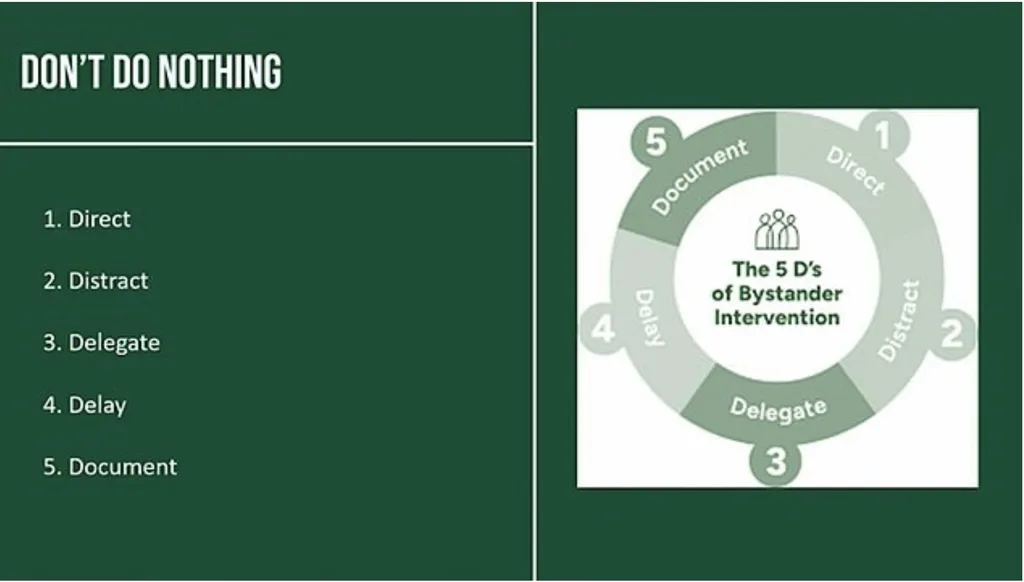
In the very same week these letters were publicised, the UK Green Party did actually launch its own internal in-depth report on what was and was not funny, with party activists receiving training informing them they should maintain detailed records of any jokes fellow members had told to them, “including dates, times [and] locations”, in case anyone later found them to be offensive – particularly if they touched upon sensitive issues like race, religion, sexuality or class. Even if the particular big fat black lesbian affected made a joke about themselves, this was still to be noted down and eliminated, as it nonetheless created “an environment in this space where derogatory jokes are allowed to happen”.
To prevent such jocular genocide occurring again in future, Greens were advised to perform an “audit” of their friendship groups to ensure they were diverse enough so that this simply would not happen: an Englishman, an Irishman and a Scotsman all walk into a pub, and nobody says anything even remotely untoward whatsoever, as diversity is clearly our strength.
Official Green Party advice on what to do if you happen to hear a joke one day. Nowhere does the option “laugh” appear
For a preview of what a future Green-led Ministry of Laughter might one day look like, we should look towards a current controversy involving the quasi-state-run BBC (Bowdlerising British Comedy), which in September decided to mark 20 years since the first broadcast of award-winning sketch-show That Mitchell and Webb Look – by cutting out several sketches, and deeming the show to be “racist”. The now samizdat sketches involved scenarios like English Civil War re-enactors getting bored and deciding to black up and recreate modern-day conflicts in the Democratic Republic of Congo, a brownface Amazonian tribe found secretly living behind flower-pots in a garden centre and a woman wearing a burka being an unsuccessful participant in a TV makeover programme.
Even more primly, the BBC also wiped or butchered entire episodes of popular children’s comedy history series Horrible Histories, as they featured jokes about sensitive topics like slavery – despite the fact they pretty obviously were not of a “Let’s bring it back!”-type perspective, but attempting to satirise the practice’s brutality.
One horrified reaction came from Graham Linehan, the cancelled Anglo-Irish comedy writer who today lives in exile in America, as nobody in the UK industry will now touch his work with a bargepole. Not only does it commit the cardinal post-2010s sin of actually being funny, Linehan’s writing is also deemed to be “transphobic”; Channel 4 refuses to re-show an old episode of his sitcom the IT Crowd, as it features a joke about a cross-dresser (see my review of his 2023 autobiography).
Writing in the Telegraph, Linehan observes that most British comedians who get their back-catalogues politically ruined these days, like Mitchell and Webb, either keep silent and go along with it for an easy life, or else actively denounce themselves in classic Soviet show-trial fashion, so as to keep raking in the cash on the panel-show circuit. Because of this cowardice, he says, “somewhere out there, the next generation of comedy writers and performers, the ones who might have pushed the form further, taken bigger risks, made the joke nobody else would touch, will quietly decide it isn’t worth it, and nobody will have to ban anything ever again”. Sounds a bit like how Islam operates in such matters, too …
September 28, 2026
QotD: “This is revealed preferences with an erection”
As far back as we have records, and into the present day, anywhere that women are sold as pleasure slaves blonde blue-eyed girls with big racks have been the most in demand.
Our most extensive documentation on this is from the Ottoman Empire. Their slave-takers raided as far north as the west coast of Ireland and even Iceland because a handful of Sidneys could fund years-long expeditions — ships, weapons, provisions, hundreds of men — from the price they fetched on the auction block. And net a healthy profit, too.
But the pattern is everywhere — cross cultural, cross-racial. Evolutionary biologists think they know why: chicks who look like le Sweeney are radiating signals of youth and immune-system effectiveness and general reproductive fitness. Blonde hair fades with age, clear skin doesn’t hide blemishes that reveal vulnerability to infection, and I hope nobody reading this needs any education about breast-to-waist-to-hip ratios. If you do, ask an AI for an explainer.
I don’t know that anybody’s explained the allure of blue eyes satisfactorily yet. We know they’re a huge win in the sexual selection game, because of the rapidity with which they propagated. A single point mutation, probably less than 10,000 years ago in Europe, spread like wildfire despite the fact that lack of melanin granules in the iris is recessive.
There’s not much that can reveal the instinctive desires of men more clearly than what they’re willing to pay to own women who light up their limbic systems. This is revealed preferences with an erection.
It’s not just yesterday, either. Every few years somebody busts a semi-covert slave market in some shithole like Mauritania or Afghanistan and it’s the same old story. The highest value merchandise is always blonde white girls, usually trafficked from Eastern Europe.
So, yes, when old-school racists ranted about darkies lusting for the flower of white womanhood, they were not wrong. Because, well, basically everybody lusts for the flower of white womanhood. It seems to be wired in.
ESR, Twitter, 2025-07-30.
Comments Off on QotD: “This is revealed preferences with an erection”
September 16, 2026
QotD: Squeaky bum time
I blinked at them. “We’ve entered … what?”
“Squeaky bum time”, they repeated, as if this was a perfectly normal phrase that everyone uses. “You know, when it’s so tense you’re clenching.”
The first time I heard this phrase, I nearly fell off the couch laughing.
But now?
Now I find myself using it during American sports, muttering it to myself during tense moments, while my American family would have no idea what I’m on about.
This is what happens when you live in a British-American household. Your vocabulary becomes a delightful jumble that sounds slightly off to everyone.
Marianne Jennings, “Squeaky Bum Time and Other British Phrases I Never Knew I Needed”, An American’s Guide to British Life, 2025-10-05.
Comments Off on QotD: Squeaky bum time
September 14, 2026
QotD: “We have Homo Sovieticus in America”
The last numbers from Los Angeles County as a whole were for 2024, when 2,208 homeless people died on the streets. County officials celebrated, because that number was a sharp reduction, and a reflection of the success of programs like overdose intervention teams stationed around public parks.
Remember those numbers, and let’s talk about something else for a moment before we come back to them.
The Soviet writer Aleksandr Zinoviev told a joke that speaks fluent Californian: “In some institution a routine meeting was in progress. There were two points on the agenda: 1) the construction of a barn; 2) the creation of an abundance of consumer goods under communism. As they didn’t have enough planks to build the barn, they moved on at once to the second question.”
Maybe that joke doesn’t land if you don’t live in Los Angeles or Seattle, but from here it’s flawless. Take a quick look at the campaign page for María Elena Durazo, a state senator who just won a seat on the Los Angeles County Board of Supervisors. Infrastructure and fire departments are in bad shape in the place where elected officials think that government exists to provide “economic justice” that restructures communities. When government exists to pay your rent, 911 response times soar.
They can’t fix a street, so they move on at once to managing all of society.
Here’s what Senator Durazo boasts about on her “Meet Maria” page: “Arrested over 13 times for leading non-violent Civil Rights and Worker Rights protests”. It’s the line that appears below “State Senator” on her list of accomplishments. Gentry socialists have high-status-marker arrest credentials, without the burden of low-status prosecution and jail terms.
Zinoviev gave us the term “Homo Sovieticus”, describing the human creature that shaped itself around the postures and predilections of Soviet culture. Humorless, a sanctimonious scold, a deeply selfish schemer while professing adoration for collectivism, comfortable reciting official slogans without feeling the need to believe them or examine them, reflexively conformist, not worried about truth. (X) has been advanced as party doctrine, so (X) is correct, and anyone suggesting (Not-X) is highly suspect. The official account is always correct.
We live among these people. We have Homo Sovieticus in America.
Chris Bray, “Homo Cosmopolitus Won’t Count the Costs”, Tell Me How This Ends, 2026-06-10.
Comments Off on QotD: “We have Homo Sovieticus in America”
September 7, 2026
QotD: “Knackered”, “shattered”, and other useful Britishisms
The surprised expressions caught me off guard at first. “Blimey!” and “Crikey!” initially felt theatrical coming out of my mouth, as if I were performing in a period drama. But they’ve grown on me. There’s something deeply satisfying about a good “blimey” when you’ve just discovered the cost of your heating bill (although, if I’m honest, my partner would be far more expletive about it).
Then there are the words that capture concepts and objects I didn’t even know I needed:
Faff — The act of fussing around with something, whether it’s organizing (like a “bag faff” when you’re rearranging everything in your bag) or just messing about when you should be just getting on with it. [NR: “Faffing about” is a regular bit of my vocabulary — I picked it up from my wife’s uncle on our first trip back after we got married.]
Cheeky — That delightful word for something (or someone) playfully impudent. A cheeky pint. A cheeky biscuit. A cheeky comment from a cheeky child. Americans don’t have an equivalent that carries the same affectionate mischief. [NR: I use the word occasionally, but only in the “cheeky comment” sense. I suspect the other usages developed after we came to Canada.]
Chinwag — A chat or conversation, usually informal and friendly. “Having a chinwag over tea.”
Wheelie bin — A bin with wheels, which is exactly how I explained it to my sister-in-law when she asked what one was. Somehow it sounds less depressing than “trash can” when you’re dragging it to the kerb in the rain, though I can’t explain why. [NR: My cousin in Edinburgh used this term and we laughed ourselves silly … but it’s a useful phrase as wheelie bins are much more common here now.]
Bits and bobs — Covers all those miscellaneous things better than any American phrase. “I need to pick up some bits and bobs” is so much more charming than “I need to run errands”. [NR: I use this phrase all the time, also referring to accessories, jigs or associated “bits”.]
Picky bits — Those yummy nibbles you put out before a meal or during drinks. Americans would say “appetizers” or “snacks”, but “picky bits” is somehow more fun and less formal.
Lashings — A generous amount of something, usually used with food. “Lashings of butter” sounds so much more indulgent than just “a lot of butter”.
A lie in — Sleeping in, staying in bed late. “I had a lovely lie in this morning” sounds so much more luxurious than “I slept in”.
When I’m pleased about something, I’m chuffed to bits. It’s the British equivalent of my American “tickled pink”, though somehow “chuffed” sounds a bit less old-fashioned. When something’s gone wrong, I’m gutted — which is just more emotionally accurate than “disappointed” when your team loses or your train’s been cancelled. When someone’s being ridiculous, they’re a pillock (an insult that somehow sounds almost friendly).
Daft has replaced “stupid” in most contexts because it’s softer, more affectionate, somehow. Posh carries weight that “fancy” just doesn’t. And I’ve learned that “taking the mick” means teasing someone, though I’m still not entirely confident I’m using it right.
Pants can mean trousers, underwear, or that something’s rubbish (as in “that film was pants”) — that was a confusing first month trying to figure out which meaning applied when.
Speaking of films — it’s always a film, never a movie, and you see them at the cinema, not a movie theater. I still slip up on this one regularly. Pro tip: when browsing Netflix or BBC iPlayer in the UK, search for “films”, not “movies”, or you’ll come up empty-handed.
Dodgy covers everything from suspicious strangers to questionable leftovers. When something’s sorted, it’s all taken care of. My spouse uses “lovely” for everything from a cup of tea to a sunset to the bins being collected on time.
When it’s cold outside, it’s not just chilly — it’s parky. When I mentioned it was “a bit parky” on a call with my family, they immediately asked, “So that means you wear a parka when it’s parky?” Fair question, honestly.
When it’s very windy, it’s blowing a hoolie — which sounds far more dramatic than “blustery”, and right now with Storm Amy hitting the UK, it’s particularly relevant (I hope my readers in Scotland are all ok).
When a place is packed, it’s chocker. The pub’s chocker. The motorway’s chocker. It works for everything, where Americans would say “packed” for a pub or “bumper to bumper” for traffic. These words just have more personality than their American equivalents.
The car vocabulary is starting to creep in, and I have to think about it more now. The boot sometimes wants to replace “trunk”. The bonnet makes sense when I hear it instead of “hood”.
And then there’s reckon, which occasionally slips out instead of “think”. I’m trying to hang onto my Americanisms for as long as I can, but it’s getting harder to resist.
Marianne Jennings, “Squeaky Bum Time and Other British Phrases I Never Knew I Needed”, An American’s Guide to British Life, 2025-10-05.
Comments Off on QotD: “Knackered”, “shattered”, and other useful Britishisms
September 6, 2026
QotD: 90s music
[Not to be confused with Disintegration, which as we all know is the greatest album ever].
Nirvana’s genre-defining hit “Smells Like Teen Spirit” was a deconstruction of Boston’s “More Than a Feeling”. Pearl Jam were the deconstructed Doors (though this is more because of Eddie Vedder’s “kinder, more sensitive Jim Morrison” act than for the music). The Counting Crows were deconstructed Sixties folk, the Smashing Pumpkins were deconstructed Pink Floyd (I like Smashing Pumpkins), the Gin Blossoms were the deconstructed Eagles, and so on, finally reaching its nadir with Oasis, the “deconstructed” Beatles who were so deconstructed, McCartney et al could’ve sued them for plagiarism and probably won.
Severian, “Alt Music Thread”, Founding Questions, 2022-07-06.
Comments Off on QotD: 90s music
August 12, 2026
QotD: The art of admitting our mistakes
The painting below by Paul Cézanne demands our consideration. It cannot be passively observed. The glassy patch of water in the lower right-hand corner is where the painting – “Reflections in the Water” – gets its name. Our eyes are naturally drawn to the thick tree on the bank whose ghost is captured on the surface of the pond where the foliage gives way, but really it is the slim sapling, unreflected, unbroken, rising boldly along the canvas’s left edge, that is the true subject of this piece. It is a triumph of subtlety and nerve.
Except that I’m wrong. I’ve been looking at the painting on its side and forming a completely inaccurate impression. Oh well. I’m probably not the first. There is an unconfirmed story that this painting by Cézanne was hung sideways for thirty-one years in London’s National Gallery. The origin of this gossip is from the economist Oswald Toynbee Falk (1879–1972), who lays the blame at the feet of one of its trustees, John Hugh Smith, exactly the kind of person who would in those days have had a hand in such decisions. I can find no corroboration of the story, but I do hope it’s true.
Of course, an establishment as prestigious as the National Gallery would be unlikely to admit to such a galloping blunder. And anyway, as I’ve said, the sideways version has much to recommend it. If there’s a moral to this story, it’s surely that once we commit to an error of thinking for too long it can be mortifying to correct ourselves, particularly if public humiliation is to be the outcome.
It strikes me that the culture war is largely characterised by groups of intelligent people investing in delusional ideas with such gusto that to backtrack would be a kind of social death. One might sooner teach a mule to moonwalk than persuade a celebrity who has championed gender identity ideology to admit that human beings cannot change sex. After demonising women for insisting on single-sex spaces, making excuses for the medicalisation of healthy children, and encouraging the dismantling of gay rights – all in the name of progress – it must be tremendously difficult to admit that it was all for nothing.
For many, the response to being corrected is simply to deny there was any mistake at all and to double down. This is certainly the position of the Green Party, whose representatives are now wholeheartedly wedded to the absurd proposition that human beings have an innate gendered soul that can be misaligned from their body. Their supporters are even congratulating them for their doggedness in the face of reason and evidence, so there is no incentive to course-correct.
Andrew Doyle, “The art of admitting our mistakes” ($), Andrew Doyle, 2026-05-08.

Comments Off on QotD: The art of admitting our mistakes
August 10, 2026
Clarkson’s Farm (and seven subsidiary businesses)
While I don’t watch much TV outside the NFL season, I was certainly aware of Jeremy Clarkson’s post-Top Gear/post-The Grand Tour TV show, I only started actually watching it earlier this week. And that was only because of a glowing review from The Critical Drinker. I’ve been missing a really good show, but I’ve got four-and-a-half seasons to catch up on — I’m not a binge watcher, so that’s not going to happen immediately. On the social media site formerly known as Twitter, Sama Hoole points out just how tenuous a farming business can be in England nowadays and how many other businesses Clarkson has started on his farm to try to make it profitable:

Jeremy Clarkson of Clarkson’s Farm.
Jeremy Clarkson runs at least eight businesses off a thousand acres in Oxfordshire. Seven of them make money.
Count them. A farm shop. A pub. A lager brand. A bestselling book every autumn. A streaming series. A merchandise range. And now an app, built by Lisa Hogan, connecting the public to farms.
Then the eighth. Growing food.
Year one, working the ground flat out: £144. By year six, a £5,000 loss where £37,000 had been projected. This summer, two hundred of those acres grew nothing at all, because putting wheat in them was a guaranteed loss before the drill left the shed.
Every enterprise on that farm turns a profit except the farming.
The lager tells you why, and the chain of cause is on the record. Government subsidies were falling, so in 2021 he decided to brew beer from his own barley. That is the entire origin of Hawkstone. A decision taken in Whitehall turned an arable farmer into a brewer, and the beer worked.
Nothing about the grain changed. Barley sold as barley goes at whatever the buyer offers that morning. Barley in a bottle goes at the price the man who grew it decides.
That one difference is the whole business.
The pub is the same move in bricks. A derelict barn nobody had wanted since 2013, bought for reportedly under a million, now with a queue. On the menu a sausage from his own pigs costs 74p against 18p for the imported version, and he absorbs that gap on every plate. The farm shop, meanwhile, is legally barred from selling food produced more than sixteen miles away, and still cannot keep up with demand.
Now look at what the farming has behind it that yours does not. One of the best land agents in England. A farm manager who has worked that ground since he was a teenager. An agronomist. A production company covering the costs. A queue down the lane. A name that sells anything it is printed on.
It loses money anyway.
And this is the ordinary arrangement, not an eccentric one. Defra’s own figures say 72 percent of farms in England now take income from something that is not farming, and diversification accounts for 31 percent of total farm income. The government’s own Batters Review found nearly a third of British farms were loss-making outright in 2024.
Diddly Squat is simply the loudest version. The shop subsidises the field. The pub subsidises the field. The television subsidises the field.
A thousand acres of English farmland, and the one thing it cannot do is pay for itself by producing food.
Comments Off on Clarkson’s Farm (and seven subsidiary businesses)
August 8, 2026
Pointing the finger of blame accurately
The Librarian of Celaeno wants you to know that former professor Jason Arday did nothing wrong:
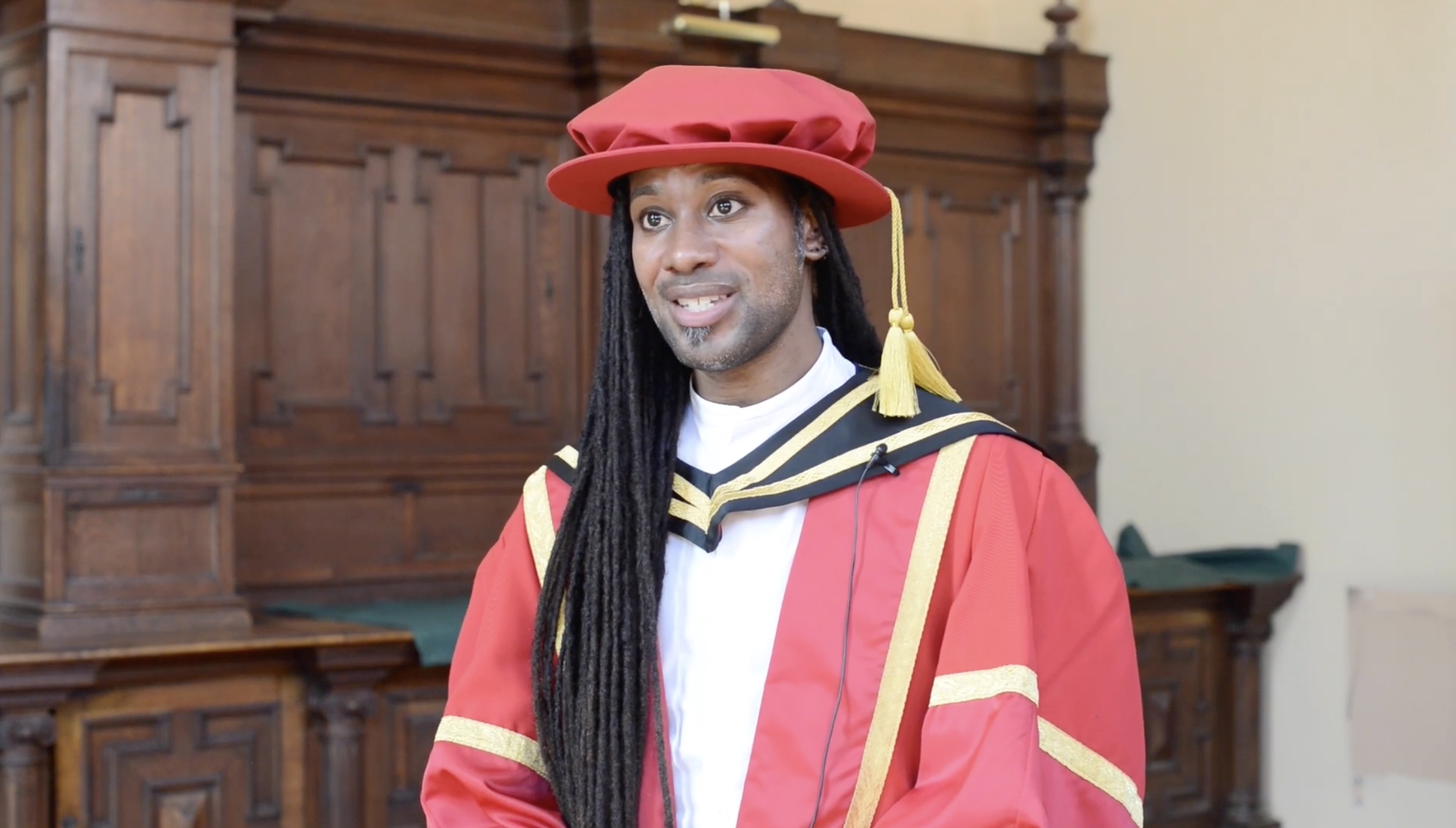
Former Cambridge professor Jason Arday
Image from Andrew Doyle
Once upon a time, an autistic black child was born. Usually, it takes several years to figure that out (the autism, not the blackness), but so autistically autistic was the infant Jason Arday that it was immediately apparent to everyone without there even needing to be any public record of it. Perhaps there is some lost evidence of him having a Reddit account as a toddler; one can speculate. Arday was unable to talk until age 11 and has been unable to stop talking ever since, which is fortunate since otherwise many of his unbelievable life accomplishments would now be unknown.
The range of setbacks he has overcome boggles the mind. Despite being illiterate until age 18, Arday not only graduated high school, but got into college, where he finally learned how to read good. This is even more incredible when you consider that the same year he discovered what the alphabet did he was beaten into epilepsy by random teens — he forgave them so thoroughly that any documentation of the incident is now gone from police records — and that some unspecified time before that he was in a car accident that left him in a waking coma for months. He studied so hard in college that he gave himself a brain tumor, which he evidently removed by himself in the mirror, since there is no evidence of a surgeon having done so. It may be that Arday has in fact learned to read several times in his life, but keeps getting that knowledge erased by semiannual episodes of CTE.
Even though he’d accumulated a substantial amount of what for a normal person would be crippling physical trauma over the course of his short time in the world, of the sort that would require medical interventions that would otherwise severely limit active life, Arday rapidly became one of the world’s most elite athletes. He participated in a ‘30 Marathons in 35 Days’ challenge, which was actually somewhat documented by an independent contemporary account, in the midst of which he suffered a hairline fracture in his fibula, which he seemingly just shrugged off to complete the remaining nine marathons. This was apparently the last time he ran slowly enough for anyone to witness, however, because his career as an ultramarathon runner who hyperGogginsed his way through 600 miles in six days passed entirely without notice by the few other people on Earth who could conceivably do that. He played semi-professional soccer, but was so good that he got bored with it and moved on before anyone could write his name down on a roster. Along the way, Arday became one of the best snooker players in Britain, with a skill level far beyond the need to participate in any public tournaments, other than the single amateur contest he entered but was too gracious to the other players to win.
He surmounted the intellectual challenges involved in becoming a PE teacher, and from there went on to earn a Ph.D as a black man, with his thesis largely consisting of arguing that it’s easier to do well in academia if you’re not closely supervised. It was so convincing a premise that his doctoral committee at Liverpool University evidently forewent actually reading the dissertation, perhaps also having concluded that his proximity to their whiteness had burdened him enough already. It was thus that Dr. Arday came into being, following a path blazed by Ibram X. Kendi as a bedredlocked black man writing about being black while being black blackly in a world basically controlled by the bad guys in Caddyshack.
On Substack Notes, Michael Southon also points the finger at the people who enabled Arday’s rise and attributed racist beliefs to anyone who asked questions:
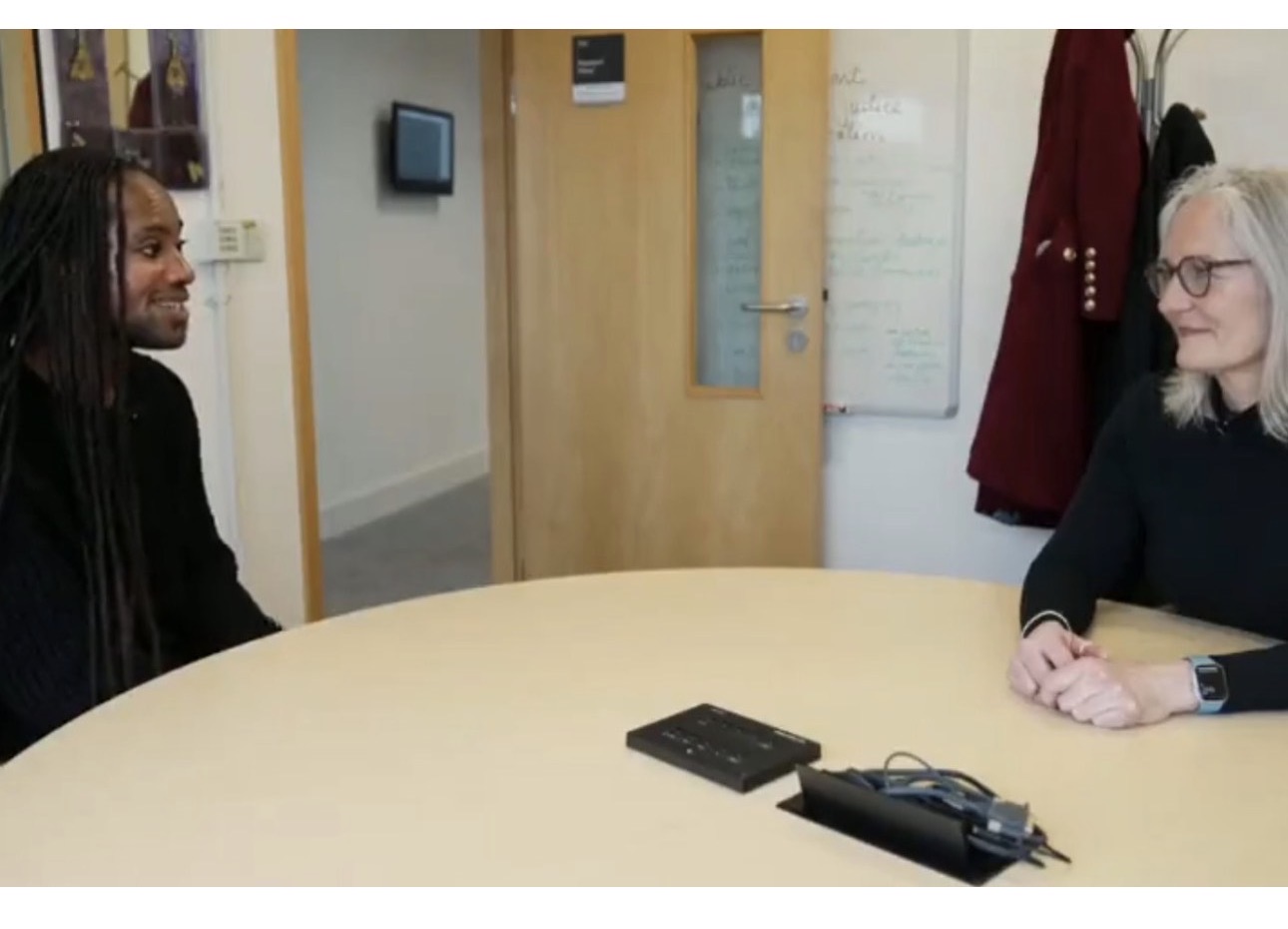
Arday’s arrival to take up his professorship at Cambridge was recorded by at least two BBC cameras. Here he is talking to Hilary Cremin, head of the Faculty of Education at Cambridge.
Cambridge University was so proud of its choice of Jason Arday that they invited the BBC to film Hilary Cremin, the head of Cambridge University’s Faculty of Education, welcoming Arday to his new post. In the clip you can hear Cremin gushingly tell Arday:
We are so lucky to have you. You are the best in the world in terms of the research that you do.
Arday himself is incredulous and suggests that some people will see his appointment as “tokenistic”. In response, Cremin assures him he is “world class”.
The Telegraph reports that when Arday’s students complained that they weren’t being properly supervised, they were told they were being “racist”.
The truth is that Cambridge was desperate to appoint more people of colour. His alleged autism ticked another box on the identity politics agenda. The dreadlocks were icing on the cake.
Will this episode, which has been reported around the world, finally convince the establishment that DEI is a disastrous social policy that lowers standards and turns august institutions whose reputations are based on centuries of meritocracy into the laughing stock of the world?
I doubt it.
Also on Substack Notes, GenX Anecdotes finds the behaviour of Hilary Cremin to be emblematic of a kind of condescending attitude found most frequently among liberal white women:
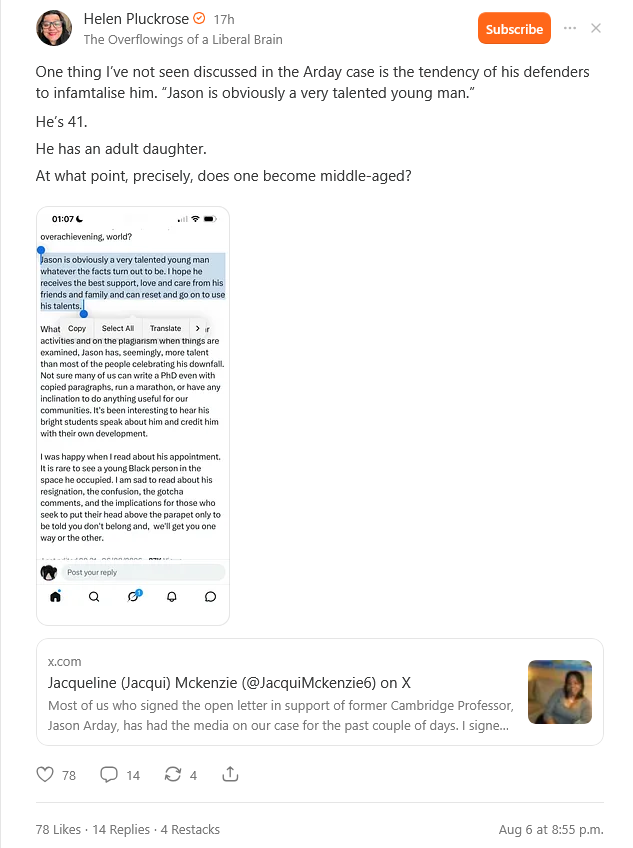
We know the type.
And it does tend to be a woman.
They love nothing more than to put on that awful softy, patronising voice, as if talking to a small child.
I am reminded of that excrutiating clip of Hilary Cremin (Head of Cambridge University’s Faculty of Education) “You are the best in the world in terms of the research that you do“.
Really? “The best in the world”?
Like the bestest in the whole big wide world ever! 😂
I’m surprised she didn’t lean in and give him a pat on the head.
Wtf?
And that tone. 😭
It’s bad enough when they do it to kids.
I have posted about this “tone” before.
Near where I live there’s a Waitrose. The spiritual home of such a woman.
There used to be a Muslim woman wearing a hijab who would beg for money outside. I never gave her money because she seemed fake to me.
Always clean and well presented with the latest new iPhone (!), she would look up from her phone when she saw someone approaching, visibly completely change her facial expression, tilt her head to one side in a kind of puppy dog, “poor me” way, and put on a kind of fake whimpering “please help me!” and hold her hand out.
It was so obviously fake af!
One day I was waiting outside the shop for my daughter who had run in to get something.
As I waited, these two middle class, middle aged women stopped to talk to her.
They were both fawning over her, using that same softy patronising tone, falling over themselves to praise her. One of them said “you’re so beautiful and brave” and the other put her arm around her.
It was such a sychophantic display of patronising bullshit, I think I might have thrown up a little bit in my mouth.
This pathological sickly, performative fawning over their little pet minority groups, is something to behold!
And they were both being played.
This beggar wasn’t homeless. So obviously! You’d have to be a special kind of stupid to think so.
But they really are a special kind of stupid.
They just wanted to feel good about themselves. It’s all about their need to feel like they’re “good kind people”.
Then, no doubt make a FB post about it so all their other annoying cloying phoney friends can “coo” over how much they adore their little darling minority pets.
🤮
July 31, 2026
Drinker’s Extra Shots – Clarkson’s Farm
Critical Drinker After Hours
Published 30 Jul 2026In the mood for an Amazon show that’s actually good, unlike Rings of Power? Then Clarkson’s Farm, arguably the best reality show on TV right now, has got you covered. Join me for a quick review of this absolute gem.
Comments Off on Drinker’s Extra Shots – Clarkson’s Farm


