Quotulatiousness

May 18, 2026

Isoroku Yamamoto – the admiral and the postwar legend

Filed under: History, Japan, Military, Pacific, USA — Tags: , , , — Nicholas @ 05:00

Big Serge examines the popular memory of Japanese admiral Isoroku Yamamoto, the architect of Japan’s early naval war successes against the United States from 1941 onwards, contrasting the postwar image with the man himself:
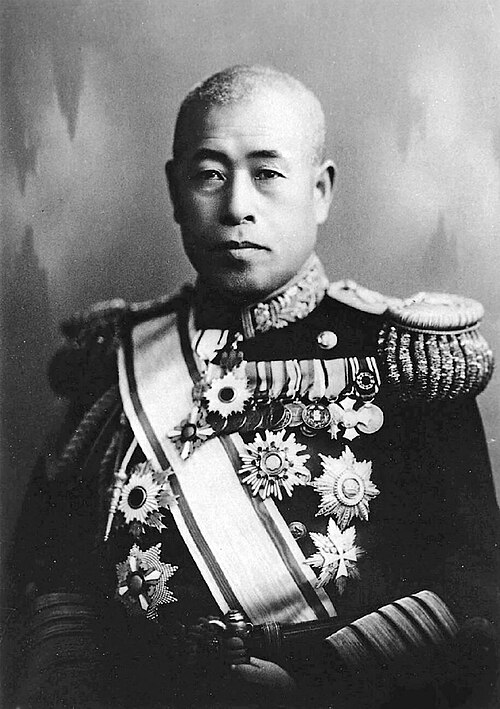
Admiral Isoroku Yamamoto, Commander-in-Chief of the Imperial Japanese Navy’s Combined Fleet.
Photo from the National Diet Library via Wikimedia Commons.

Japanese leadership in the Second World War enjoys noticeably lower name recognition than their German counterparts. Most people with a cursory knowledge of the war know the core German leadership group around Hitler — Himmler, Goering, Goebbels, Speer, and perhaps Heydrich and Bormann — and the all-star lineup of German generals like Rommel, Manstein, and Guderian. In contrast, the only particularly notorious member of Japan’s nebulous leadership group is General Hideki Tojo, who served as Prime Minister for most of the war and became the centerpiece defendant in the postwar trial. As far as Japanese commanders go, the list of name-brand personnel has but a single entry: Isoroku Yamamoto.

Yamamoto’s life and career present a fascinating trajectory that shapes a particular, sympathetic view of the man. A veteran of the Russo-Japanese War, he spent much of his 30’s in the United States, studying at Harvard and serving as naval attache in Japan’s Washington embassy. He therefore had a first hand understanding of America’s industrial depth, and was famously pessimistic about Japan’s prospects in a a war against the United States. “Anyone who has seen the auto factories in Detroit and the oil fields in Texas”, he argued, “knows that Japan lacks the power for a naval race with America”. In one of his more famous and widely recited (though often badly translated) remarks about a war with the United States, he told Prime Minister Fumimaro Konoe in September 1940:

    If I was told that I had to do it, then you will certainly observe the Navy going all out for half a year to a year. However, I do not hold conviction about the outcome after 2-3 years.

This quote certainly seems remarkably prescient, in light of Japan’s initial wave of operational successes, which slowly faded away as American combat power ramped up. Far more famous still is his remark, after the attack on Pearl Harbor, that Japan had “awakened a sleeping giant, and filled him with terrible resolve”.

All of this shapes the perception of Yamamoto as a quasi-tragic figure who understood that Japan was unlikely to defeat the United States in the Pacific War, counseled against the conflict, and then dutifully tried to play a losing hand as well as he could once war had been thrust upon him against his own advice. Yamamoto was furthermore a critic of the Japanese Army’s war in China and a particularly vocal opponent of the Tripartite Pact with Germany and Japan, lending credence to the idea that he was war-averse.

This is the Yamamoto of American popular memory, and indeed of a great deal of Japanese postwar writing: a sort of samurai Cassandra, too perceptive and cosmopolitan for the militarist regime he served, a man who fired the opening shot of the Pacific War with a heavy heart and no illusions.

It is certainly true that Yamamoto had an appropriately pessimistic assessment of Japan’s prospects in an extended conflict with the United States. What is less often appreciated is that Yamamoto did not, on the basis of this assessment, conclude that Japan ought not to fight. He concluded instead that, if Japan was going to fight, it had to fight differently — with greater boldness, more risk, and an aggressive search for a decisive stroke. He did not spend the eighteen months before Pearl Harbor advocating for peace. He spent them designing what was, on balance, the single most aggressive operational scheme that was possible — and then only barely — within Japan’s kinetic parameters.

This is the critical distinction between Yamamoto-the-man and the Yamamoto of postwar hagiography. He was not a pacifist, reluctant or otherwise. He was a Japanese naval officer of strong patriotic conviction, deeply committed to his service and his nation, who happened to understand the arithmetic of industrial war better than most of his colleagues. Notwithstanding his appreciation for America’s vast industrial base, he shared a broader Japanese disdain for American martial proclivities, dismissing American naval officers as a club of “golfers and bridge players”. His understanding of the United States did not produce pacifism. It produced, rather, a particular kind of operational philosophy — one which held that Japan’s best hope in a war with the United States was to front-load its risk-taking, to achieve a string of dramatic early victories that would either compel American negotiation or, failing that, push the eventual American counter-offensive as far into the future as possible. In either case, the operational prescription was the same: bold, high-risk operations aimed at decisive results.
The American Civil War was “two armed mobs chasing each other around the country, from which nothing could be learned”

Filed under: France, Germany, History, Military, USA — Tags: , , , , , — Nicholas @ 04:00

Ben Duval looks at the implications of the quote above (attributed to Moltke the Elder) and shows that there were indeed lessons to be learned from that conflict:

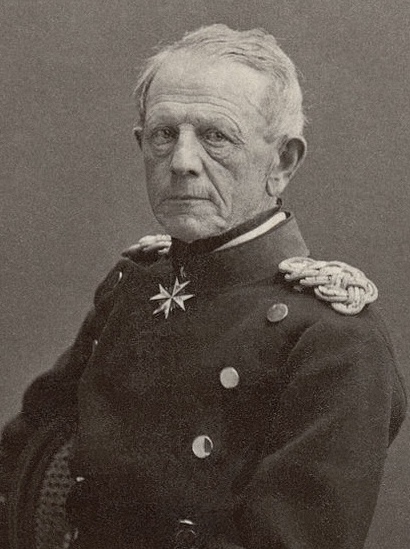
Chief of the Prussian General Staff Helmuth von Moltke the Elder (1800-1891).
Photo by Carl Günther via Wikimedia Commons.

A famous, if apocryphal, quote attributed to Moltke dismissed the American Civil War as “two armed mobs chasing each other around the country, from which nothing could be learned”. There were certainly lessons to be learned — it could hardly be otherwise in so long and intense a conflict. The war showcased many new technologies on a large scale, including rail and telegraph, while the growing accuracy of firearms showed the growing importance of field fortifications in pitched battle. It also gave witness to many expedients and innovations, including the first known employment of indirect fire (although that would take much longer to be appreciated).

Nevertheless, the readiness with which Moltke’s spurious quote was accepted is suggestive of fundamental differences between Europe’s large professional armies and the hastily-raised volunteers that fought for both North and South. The Civil War saw a mobilization of unprecedented scale, expanding from a pre-war regular army of 15,000 to a total of nearly 2 million at its peak.

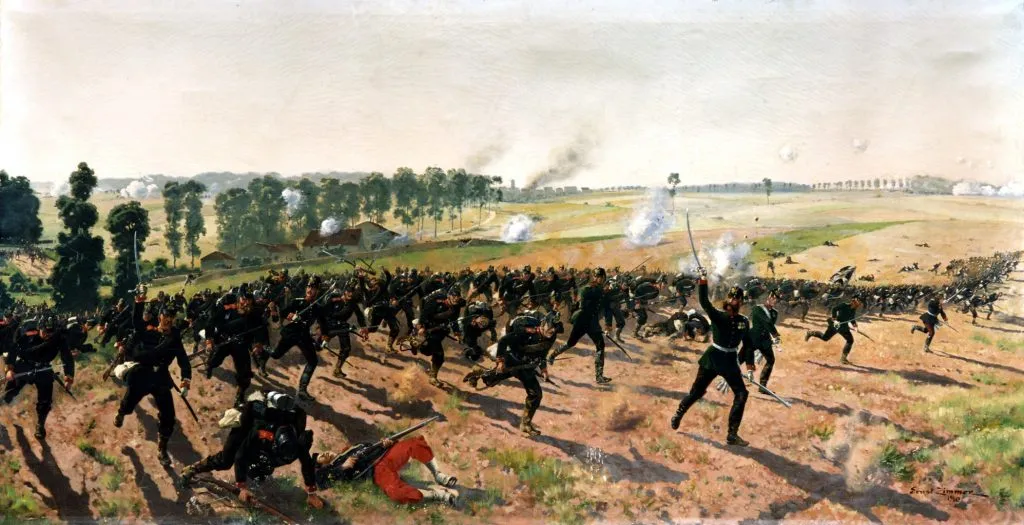
At some critical battles, like Antietam, many regiments had mustered bare weeks before. At best, these soldiers could handle their weapons reasonably well; large-scale maneuvers in the heat of combat were out of the question. Even long-serving formations did not have much of a chance to redress these deficiencies, as demonstrated by the disjointed conduct of Pickett’s Charge. What immediate lessons could the Prussian and French, efficiently maneuvering under fire at Gravelotte or Mars-la-Tour, have learned from Civil War armies?

Prussian attack at Gravelotte on 18 August 1870.

Lessons at the Right Level

Perhaps not much at the tactical level, but there was plenty to be learned at the operational. Never before had railroads been employed at such scale to shift troops within and between theaters; nor the telegraph, which was used to coordinate such movements. Efficient logistical services allowed both sides to undertake bold maneuvers involving massive numbers of troops (it is noteworthy how many generals had previous experience working for railroad companies, and how many more went on to high management or board positions after the war).

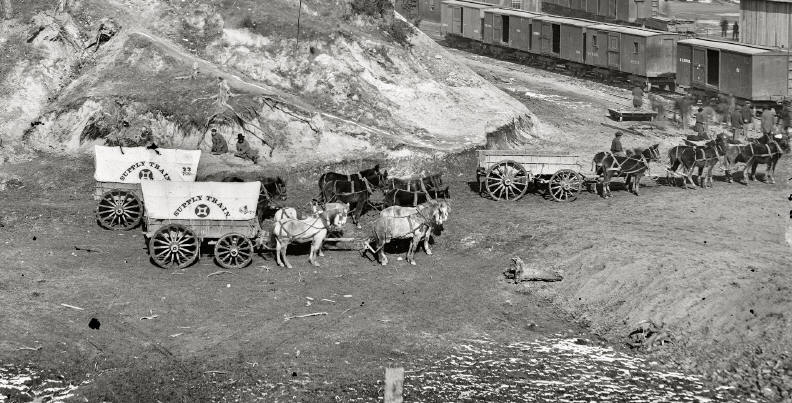
Union supply wagons loading up at a railhead.

But the point also holds more broadly, beyond the particular technical specialties of 1860s America. Whenever tactics alone cannot suffice—either because both sides are extremely skilled, as in the First World War, or because organizational breakdowns rule out more complex maneuvers — decisive action can by default only occur at the operational level. This was an essential point in Saladin the Strategist. Muslim and Crusader armies, through long experience fighting each other, had developed unique fighting styles tailored to blunt each other’s edges: barring a fluke, decision could only be won through some higher-level maneuver.

In such cases, the fighting capabilities of an army matter less in any absolute sense than in their ability to effect a particular operational scheme. Tactical proficiency is but one variable among many, and not necessarily the most important. Whether a general is dealing with poorly-trained militia or long-serving professionals, it is above all their relative odds that factor into his calculations.

Withdrawing the Black Jack Brigade from Europe

Filed under: Europe, Military, USA — Tags: , , — Nicholas @ 03:00

Depending on your point of view, President Trump’s sudden decision to withdraw a US Army brigade from Europe is either Trump having a temper tantrum yet again or part of an overall plan to reduce US deployment to allied nations who should be able to pay for their own defence. On the social media site formerly known as Twitter, InfantryDort discusses the formation being relocated back to the continental United States:

1st Cavalry Division, 2nd Brigade – “The Black Jack Brigade”

There’s a lot of drama around Black Jack brigade being ordered back to the U.S. from Europe.

I was in that unit on that same mission from 2019-2020.

We deployed, did training there, went to a CTC. I’ll be honest, it was the most fun I’ve probably had in the Army.

But after the initial training and the CTC rotation, we didn’t do much.

Played a lot of softball. BBQs. PT. Some drinking. Mostly just working on keeping people out of trouble.

It was kind of like being back at Fort Hood, but in Germany.

I suppose one could argue that the simple act of us being there made all the difference. I don’t know. That was above my level.

But I couldn’t help but think then, as I do now, that there are better ways to keep one’s adversaries at bay.

To say nothing of the fact that I do believe we have been a crutch to Europe for too long. Everyone seems to forget that Europe as a whole, dwarfs the GDP of Russia. A country who is barely richer than Italy.

You accomplish nothing providing security for people who refuse to do it themselves.

What are we supposed to do? Defend them forever? Permanently?

What has it gotten us? Europe, by all accounts, has taken advantage of our security blanket and prioritized making a socialist hellscape.

A socialist hellscape that has become their chief export. So the very act of remaining there in force is enabling the destruction of the western world.

Our relationship with those people DEMANDS revisiting in my view. Because whatever good will we generated after the end of the Second World War has dried up.

The free flow of money from us to them has also dried up.

It’s very telling how others treat you when you stop doing things for them. This isn’t mutual respect. It’s been little more than bribery.

And I’m all for keeping our Armored brigades right here, building readiness.

And not running them into the ground for little gain.

There is an age old adage that says you must help yourself before you can help others. Prudence demands that for our country right now.

America first. America always.

“Three Days in Toronto” (1959, 1960 & 1962)

Filed under: Cancon, History, Railways — Tags: , , , , , , — Nicholas @ 02:00

Transit Toronto Main Channel
Published 6 Oct 2025

Among the huge collection within Richard Glaze’s archive of 16mm film from the 60s and the 70s were a number of 400 foot reels from the 1950s. These were taken during trips Richard made to Toronto before he immigrated, and they show scenes that have not been witnessed in over sixty years. Now that we’ve moved to the new channel, we’ve taken the opportunity to spruce up this film and make some corrections and minor improvements. Enjoy!

Thanks to the dozens of individuals who raised the funds to digitize the first two-thirds of Richard Glaze’s collection.

Corrections:
12:17 – Caption refers to “Hillcrest Wye” when it should be “Hillside”
(more…)

QotD: Medical ads

Filed under: Health, Media, Quotations — Tags: , , — Nicholas @ 01:00

I don’t understand commercials for medicine anymore. I mean, I understand what they’re trying to say when they advertise a medication and list its possible side effects. I just don’t understand why they bother anymore. Nobody takes these advertisements seriously. The other day, I saw a spot for something called Restless Legs Syndrome. I was stunned when it ended without turning into a “Good news; I just saved 15 percent on my car insurance by switching to Geico” commercial. That’s how bad it’s gotten. It doesn’t even matter how legitimate the affliction is. It could be cancer at this point. It could be a pill to stop spontaneous human combustion. Wouldn’t matter. I see these commercials and instinctively shrug them off. I suffer from Grain of Salt Disorder.

Jonathan David Morris, “Thoughts On Health”, Libertarian Enterprise, 2005-09-18.

Powered by WordPress