Quotulatiousness

April 20, 2026

“Hail, Caesar!” oops we meant “Hail, Carney!”

Filed under: Cancon, Media, Politics — Tags: , , , , , , — Nicholas @ 04:00

At The Rewrite, Peter Menzies discusses the unseemly media adulation1 for Caesar Prime Minister Mark Carney after more than a year in power:

Grok illustration of PM Carney as Caesar
Image from The Rewrite.

Thirteen months into his reign as prime minister, we still don’t know who Mark Carney is or how he engineered the removal of Justin Trudeau from office.

Nor do we know what really happened behind the scenes to convince five Members of Parliament to betray their constituents’ democratic decisions and, for the first time in the nation’s history, give Canadians a majority government they didn’t elect.

What we do know is that none of that seems of great interest to most of our media or, as they like to describe themselves when seeking federal subsidies, “defenders of democracy”.

As The Rewrite noted a year ago, the moves behind the scenes to effect the abrupt ouster of Trudeau remain a mystery. And, unlike with other PMs, there have been no Carney family magazine profiles. (Who can forget Justin and Sophie Trudeau‘s sexy Vogue cover?) Yes, there are the books, Values and The Hinge. We have learned he likes hockey, runs, won’t criticize China and is ruthless. But there is a tangible paucity of efforts within MSM to get beyond what is permitted to be known. We don’t even know if he watches Heated Rivalry or why the Brits called him “the unreliable boyfriend”. And yet, as Stephen Maher wrote for Time magazine last week, Canadians adore him.

As for how he has seized power in excess of that granted by the electorate 11 months ago, there wasn’t a hint of concern on the part of CTV News anchor Omar Sachedina when Carney’s majority was confirmed in a couple of “gimme” by-election victories.

The leading voice on Canada’s most-watched newscast, Sachedina appeared awestruck by the “historic” moment and “what the Liberals have been able to achieve in the past year”. When his sidekick, Vassy Kapelos, noted Carney was now out of excuses for not fulfilling the promises that won him a minority government in 2025, Sachedina suggested soothingly that Canadians remember “sometimes ambition does take time, sometimes several election cycles”.

Screencap of CTV News from The Rewrite

The message to Canadians? The Liberals have accomplished great things in the past year, the greatest of which was to do what no one in the nation’s history had ever done before — manufacture a majority without the public’s consent. Oh, and be patient. PMMC’s agenda could take a few more elections. Sit tight and trust.

The next morning, questions were not, as one might expect from defenders of democracy, about whether the PM felt a tad greasy for the way in which he had won unfettered power. Like, in some countries — many actually — that might be considered kind of scary. Here? If you watch the news, it’s dreamy.

The preferred line of inquiry was to ask Carney whether, if he was the Opposition Leader, Pierre Poilievre, he would quit. And so it went for the rest of the week. PMMC wasn’t asked if he worried that his majority would undermine the public’s faith in its institutions. Nor did the press corps pursue their sources to discover what inducements may have been offered to create his Judas Gang of Five.


  1. Yes, I know … the presstitutes will “love him long time” as long as the government subsidies keep rolling in.

April 19, 2026

How to Tank the Economy for War – Death of Democracy 12 – Q4 1935

Filed under: Economics, Food, Germany, History — Tags: , , , , — Nicholas @ 04:00

World War Two and Spartacus Olsson
Published 18 Apr 2026

Nazi Germany in late 1935 was becoming more ruthless, more militarized, and more dangerous. In this episode, Spartacus Olsson reports from Berlin on the final months of 1935, when Hitler’s regime tightened its grip through food shortages, propaganda, rearmament, and the continued implementation of the Nuremberg Laws. As ordinary Germans faced rising prices, scarce meat and butter, and mounting pressure to sacrifice for the Reich, the Nazi state pushed its “guns before butter” economy even further. We examine the “fat gap”, Winter Relief, Eintopfsonntag, and the growing burden placed on German families while resources were diverted to war preparation.

At the same time, the First Supplementary Decree to the Reich Citizenship Law gave the regime a bureaucratic definition of who counted as a Jew, accelerating exclusion, dismissal, and persecution. Courts, police, and the Gestapo increasingly enforced the racist order, while Goebbels’ propaganda machine worked to normalize hardship, suppress criticism, and intensify antisemitism.

Against the backdrop of Mussolini’s invasion of Abyssinia and the paralysis of the League of Nations, Hitler found new room to maneuver internationally while consolidating dictatorship at home. This episode explores how the Third Reich turned scarcity into discipline, prejudice into law, and national pride into obedience — bringing Germany one step closer to catastrophe.

Never Forget.

April 12, 2026

How to Legalize Scapegoating – Death of Democracy 11 – Q3 1935

Filed under: Germany, History, Law — Tags: , , , , — Nicholas @ 04:00

World War Two and Spartacus Olsson

Published 11 Apr 2026

Nuremberg Laws explained: how Nazi Germany turned antisemitic street violence into state policy in 1935. In this episode, Spartacus Olsson reports from Berlin on the third quarter of 1935, when the Kurfürstendamm riots, Goebbels’ propaganda campaigns, and Hitler’s regime culminated in the passage of the Nuremberg Laws.

This historical analysis breaks down how the Reich Citizenship Law and the Law for the Protection of German Blood and German Honor stripped German Jews of civil rights, redefined citizenship around “German blood”, and replaced chaotic mob violence with systematic bureaucratic persecution. The video also explores the role of Joseph Goebbels, the SA, the coming 1936 Berlin Olympics, Leni Riefenstahl’s Triumph of the Will, worsening shortages in the Nazi economy, and the collapse of democracy, human rights, and freedom of expression in the Third Reich.

This episode is essential viewing for anyone interested in Nazi Germany, Holocaust history, antisemitism, Nazi propaganda, the rise of fascism, and the origins of World War II. It shows how legal language, public conformity, and state power combined to normalize persecution long before the worst crimes were fully visible.

April 7, 2026

“The Eight Hundred Years of Oppression”

Filed under: Britain, History, Politics, Religion — Tags: , , , , — Nicholas @ 04:00

On Substack, Upper Canadian Cavalier examines “The Irish Question”:

Every confidence scheme requires three things. A mark who is sympathetic. A grievance real enough to be credible. And an operator whose entire livelihood depends on ensuring the grievance is never actually resolved. Resolution ends the game. The operator does not want justice. He wants the next fundraising dinner.

Irish nationalism, in its mature institutional form, is one of the longest-running confidence schemes in the history of democratic politics. This is not to say the underlying grievances were invented. English rule in Ireland produced genuine catastrophes, and anyone who tells you otherwise has not read much history. The point is not that the wounds were fake. The point is that a very specific class of people discovered, sometime in the nineteenth century, that a bleeding wound is worth considerably more than a healed one, and they have been salting it professionally ever since.

The operators of this scheme are not a conspiracy in any tidy sense. They do not meet in a room. They are, rather, an ecosystem: the Sinn Féin political class, the Irish-American fundraising establishment, the Gaelic cultural bureaucracy with its language boards and arts councils and grant committees, and undergirding all of it for most of its history, the Catholic Church, which managed the remarkable trick of positioning itself as the spiritual soul of Irish resistance while simultaneously running the country’s schools, hospitals, orphanages, and laundries with the administrative efficiency of a medium-sized colonial power. They share no common mailing list. They share something considerably more durable: a common interest in a people who define themselves entirely by what was done to them, because such a people will always need someone to explain what it means.

That someone, naturally, has a salary. Sometimes several.

Part One: The Invoice That Never Clears

The foundational text of Irish identity is not a poem or a legal document or a philosophical treatise. It is an invoice. The Eight Hundred Years of Oppression, presented at every available occasion, never stamped paid, accruing interest at a rate that defies actuarial calculation. It is invoked at pub tables and university seminars and Boston fundraisers and Sinn Féin press conferences with the solemn regularity of a liturgical response, which is appropriate, since it has become one.

Eight hundred years. Let us sit with that number for a moment, because it deserves scrutiny rather than reverence.

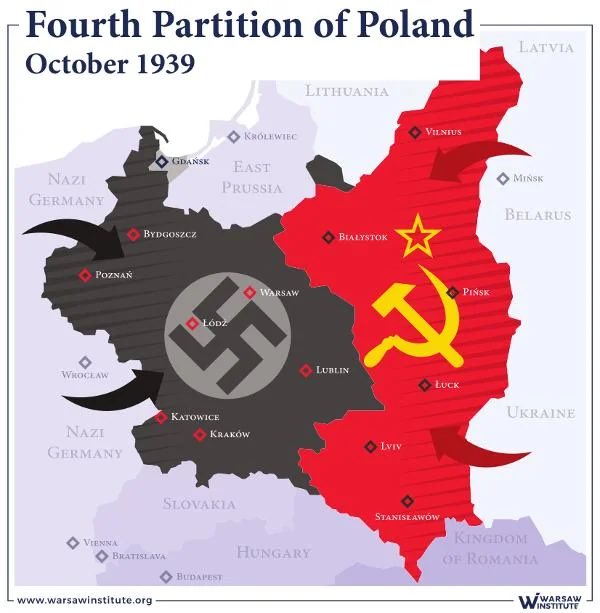
The Poles were partitioned entirely out of existence for a hundred and twenty-three years, absorbed simultaneously by three empires, had their language banned, their nobility liquidated, their clergy persecuted, and their country removed from the map of Europe with a finality that the Irish situation never approached. They rebuilt it. They were then invaded again from both sides at once within living memory, occupied by The Nazis and Soviets losing somewhere between five and six million citizens in six years. They do not, as a general rule, organize their entire national identity around the experience. They built things instead.

The Armenians experienced something so total it required the coinage of an entirely new word to describe it. The Acadians were physically deported. The Welsh had their language suppressed for centuries by a state apparatus that regarded Welsh-speaking children as candidates for corrective intervention, which is considerably more systematic than anything the Penal Laws produced. The Greeks spent nearly four centuries under actual Ottoman administration, not the notional suzerainty that characterized much of the Anglo-Irish relationship, and emerged and got on with being Greeks.

None of them made Eight Hundred Years into a brand.

What distinguishes the Irish accounting of oppression is not the severity of the oppression, which was real but not historically singular, but the extraordinary care with which it has been packaged, maintained, and exported. The Famine, which ended in the 1850s, is still discussed in certain Irish-American circles as a recent bereavement requiring ongoing condolences and, more usefully, ongoing donations. The emotional statute of limitations has never been permitted to run. Each generation receives the invoice freshly printed, as though the debt were personally owed to them and personally owed by someone who can still be made to feel bad about it.

April 5, 2026

How To Let the People Pay For War – Death of Democracy 10 – Q2 1935

Filed under: Germany, History — Tags: , , , , , , , — Nicholas @ 04:00

World War Two and Spartacus Olsson
Published 4 Apr 2026

June 1935: Adolf Hitler reassures the world with promises of peace — while secretly accelerating Germany’s path to war. In this episode of Death of Democracy, we examine how Hitler manipulated international diplomacy and domestic opinion in the second quarter of 1935. From the collapse of the Stresa Front to the signing of the Anglo-German Naval Agreement, foreign leaders were drawn into a dangerous illusion. Meanwhile, inside Germany, antisemitic violence escalated, press censorship intensified under Joseph Goebbels, and economic realities worsened under Hjalmar Schacht’s policies.

Drawing on firsthand accounts from William L. Shirer and Victor Klemperer, this episode reveals a society caught between fear, propaganda, and growing dictatorship.

How did Hitler convince both his people and world leaders that he wanted peace – while preparing for war?
Watch to understand how democracies can be misled – and what happens when we fail to act.
(more…)

March 29, 2026

How Radio Killed Democracy – Death of Democracy 09 – Q1 1935

Filed under: Germany, Government, History — Tags: , , , , , , — Nicholas @ 04:00

World War Two and Spartacus Olsson
Published 28 Mar 2026

Radio did not just spread Nazi propaganda — it helped make dictatorship feel normal.

In How Radio Killed Democracy, we examine how Adolf Hitler and Joseph Goebbels used mass broadcasting to manipulate public opinion in Germany in early 1935. As the Saar plebiscite returned the Saarland to the Reich, the regime turned radio into a political weapon: shaping emotion, manufacturing consent, and helping millions of Germans embrace rearmament, conscription, and the destruction of democracy.

This episode of Death of Democracy follows the decisive first quarter of 1935: the Saar vote, Göring’s admission of [the existence of] the Luftwaffe, Hitler’s open defiance of Versailles, and the growing power of the Gestapo. While Nazi propaganda promised pride, unity, and national revival, civil liberties were collapsing, Jews were being isolated, and Germany was being prepared for war.

How did propaganda become so effective? How did radio help turn fear, resentment, and nationalism into obedience? And how did so many people support a regime that was already dismantling the rule of law?
This is the story of how radio helped kill democracy in Nazi Germany.

Never Forget
(more…)

March 26, 2026

An alternative reading of the American Revolution

Filed under: Britain, Government, History, Politics, USA — Tags: , , , , , , , , — Nicholas @ 04:00

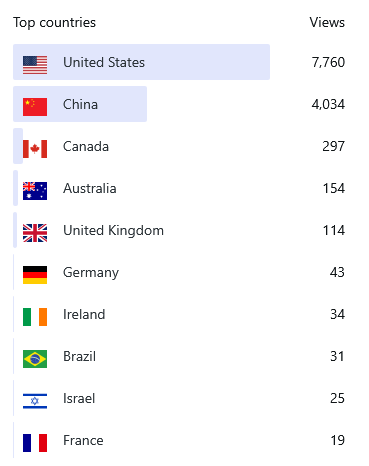
As the majority of my current readers are Americans (or Chinese folks using VPNs to pretend to be Americans), the following could be interpreted as clickbait. Just sayin’.

Upper Canadian Cavalier suggests that the events leading up to the Anglo-Colonial unpleasantness of 1776 onwards have been subject to a preferred reading that tidies up all the inconvenient details and sweeps them under the rug of a revolution against “royal tyranny” (even though HRM King George III was much more liberal than he’s ever given credit for, and a revolution against “an elected Parliament” doesn’t have the right ring to it):

Declaration of Independence by John Turnbull (1756-1843), showing the Committee of Five (Adams, Livingston, Sherman, Jefferson, and Franklin) presenting their draft of the Declaration of Independence to the Second Continental Congress in Philadelphia on 28 June, 1776.
Public domain image via Wikimedia Commons.

The American founding narrative is a document produced by a litigation class to justify actions already taken. Its authors were not philosophers who became rebels. They were rebels who hired philosophers.

This is not a fringe position. It is not the invention of bitter foreigners or tenured radicals looking to dismantle something they never understood. It is the conclusion you reach when you put down the mythology and pick up the actual historical record, the ledgers, the court documents, the correspondence that was never meant to be read by posterity, the testimony of people who were there and whose version of events was systematically buried because they were on the losing side. The American Revolution is the most comprehensively mythologized event in the history of the English-speaking world, and the mythologizing began before the gunpowder had cleared.

Start with the money, because it almost always starts with the money. The Navigation Acts, which colonial propagandists framed as instruments of imperial oppression, were a trade regulatory system that had been in place for over a century and under which the colonies had grown from scattered coastal settlements into some of the most prosperous communities in the Atlantic world. The specific enforcement measures that triggered the revolutionary crisis came after the Seven Years War, a conflict in which Britain spent the modern equivalent of billions of pounds defending the American colonies against French and indigenous pressure across an entire continent. When the war ended in 1763, the British national debt had nearly doubled. Parliament looked at the colonies, looked at the bill, and suggested with what strikes any disinterested observer as elementary reasonableness that the people who had benefited most from the war might contribute something toward its cost.

The Stamp Act of 1765 taxed legal documents, newspapers, and pamphlets at rates that were substantially lower than what ordinary subjects in Britain were already paying. The Townshend Acts taxed glass, paint, paper, and tea, luxury goods, not necessities. At their peak, the total tax burden on the American colonies amounted to roughly one shilling per person per year. The average British subject at home was paying twenty-six shillings. The colonial merchant class, which had grown fat on a century of salutary neglect and profitable smuggling, responded to this modest request for contribution with riots, the formation of extralegal enforcement committees, the physical destruction of property, and the systematic intimidation of anyone who disagreed. They called this liberty.

John Hancock, whose signature on the Declaration of Independence is so oversized that his name became a synonym for a signature, was the wealthiest smuggler in colonial America. His fortune was built on molasses, wine, and dry goods moved outside the official imperial trade system at substantial profit. In 1768, British customs officials seized his sloop Liberty on evidence of wine smuggling. The seizure triggered a riot. The customs commissioners were driven from Boston under threat of violence and had to take refuge on a Royal Navy vessel in the harbor. Hancock was prosecuted and represented by John Adams, who got the charges dropped on procedural grounds. The same John Adams who would later write the Massachusetts Constitution. The same John Adams who, when asked to describe his greatest service to his country, cited his defense of the British soldiers at the Boston Massacre trial. These relationships are not incidental. They are the operating structure of the revolutionary movement.

The Boston Massacre has been taught to American schoolchildren for two hundred and fifty years as evidence of British brutality. Here is what actually happened. On the evening of March 5, 1770, a small detachment of British soldiers posted outside the Custom House was surrounded by a crowd estimated at several hundred people, who pelted them with ice, rocks, oyster shells, and pieces of coal, struck them with clubs and sticks, and screamed at them to fire, daring them repeatedly to shoot. Private Hugh Montgomery was knocked to the ground by a club blow. When he recovered he fired. The other soldiers, believing an order had been given, fired as well. Five people died. It was a tragedy. What happened next is the part that gets edited out of the curriculum. John Adams, cousin of the great agitator Samuel Adams, agreed to defend the soldiers and did so brilliantly. Six of the eight soldiers were acquitted outright. The remaining two were convicted of manslaughter rather than murder and were released after being branded on the thumb, the standard punishment. The jury found that the crowd had been the aggressor. Adams later wrote that the case was one of the best pieces of service he ever rendered his country, by which he meant he had established a legal record that contradicted the propaganda his cousin was already distributing. The propaganda survived. The verdict did not make it into the textbooks.

Samuel Adams, the moral conscience of the Revolution, the man who could manufacture outrage from raw air, had a financial history that his hagiographers handle with extraordinary delicacy. He had inherited his father’s malting business and run it into insolvency. He had then served as a tax collector for the town of Boston and accumulated a personal shortfall of several thousand pounds, money he had collected and failed to remit, that the town had been attempting to recover from him through legal action for years. He was an active defendant in debt proceedings during the very period when he was organizing the Sons of Liberty and writing pamphlets about the tyranny of arbitrary taxation. The Revolution did not merely advance Samuel Adams’s political philosophy. It made his financial problems disappear. When you understand this, his extraordinary energy in the cause of independence begins to look less like principle and more like survival.

Canada’s “national broadcaster” has become an expensive irrelevance

Filed under: Business, Cancon, Government, Media — Tags: , , , , , , — Nicholas @ 03:00

The Canadian Broadcasting Corporation was set up to provide Canadians across the vast heartland of the country with quality news and entertainment options. Some would say it was able to achieve those goals well enough for decades, but with the rise of the internet, fewer and fewer people are watching, listening to, or reading CBC content. In some major cities, the CBC’s share of attention is a rounding error, despite the federal government subsidizing their effort on top of the annual budget they already receive from the taxpayers.

On the social media site formerly known as Twitter, L. Wayne Mathison makes the case for letting the CBC shut down:

CBC Isn’t Being Attacked. It’s Being Ignored. And That’s Worse.

There’s an old business rule most people learn the hard way: if your customers quietly leave, you’re already finished. No protest. No boycott. Just silence.

That’s where the CBC is right now.

You can spin it. You can defend it. You can fund it.
But you can’t fake attention.

We’re looking at a public broadcaster that calls itself the “voice of Canada” while pulling audiences so small they’d embarrass a local radio host. In some cases, tens of thousands of viewers in major cities. That’s not a dip. That’s a collapse.

And here’s the uncomfortable part:

Canadians didn’t lose interest in news. They lost interest in that version of news.

Because when reporting turns into messaging, people notice. When coverage feels selective, people adjust. When tone replaces trust, people leave.

Quietly.

Now layer in Mark Carney.

Carney’s entire pitch rests on a simple belief: that complex societies should be guided by centralized expertise. Managed from the top. Coordinated. Directed. Calibrated.

Sounds efficient. Sounds smart. Sounds like it belongs in a white paper.

But we already have a working example of that model in action.
It’s called CBC.

Centralized control

Institutional messaging

Weak accountability to audience demand

Heavy public funding

And the result?

A broadcaster Canadians are walking away from in real time.

That’s not a coincidence. That’s a signal.

Here’s the reframe nobody wants to touch:

CBC isn’t failing because it lacks resources.
It’s failing because it lost the discipline of needing to be chosen.

When your funding doesn’t depend on your audience, your audience eventually stops depending on you.

That’s not ideological. That’s behavioural economics.

Carney’s model doubles down on that exact structure. More planning. More coordination. More reliance on expert systems that assume compliance instead of earning trust.

But trust doesn’t scale through authority.
It scales through responsiveness.

And that’s the part that’s missing.

This is where the conversation usually derails into tribal nonsense. “Defund”. “Protect”. “Save public media”.

Misses the point.

The real question is simpler and harsher:

What happens when institutions stop adapting because they don’t have to?

You don’t get stability.
You get drift.

You don’t get unity.
You get quiet disengagement.

And you don’t get better outcomes by expanding that model across the country.

You get more of the same, just bigger.

I’ve run businesses. You learn this fast or you go broke:

If people stop showing up, it’s not because they suddenly became irrational. It’s because you stopped giving them a reason.

CBC stopped giving people a reason.
Carney’s approach assumes the reason doesn’t matter.

That’s the disconnect.

Hard line:
If an institution can’t earn attention, it shouldn’t demand trust.

March 22, 2026

How To Indoctrinate the Children – Death of Democracy 08 – Q4 1934

Filed under: Germany, History — Tags: , , , , , , — Nicholas @ 04:00

World War Two and Spartacus Olsson
Published 21 Mar 2026

In this episode of Death of Democracy, we examine Germany in the final quarter of 1934, as Adolf Hitler tightens his grip on power after Hindenburg’s death and prepares the Reich for the next stage of Nazi rule. Behind a façade of order, the regime accelerates secret rearmament, deepens propaganda and youth indoctrination, pushes Jews further out of public life, and turns universities, schools, and culture into instruments of ideological control.

This documentary explores Nazi Germany in late 1934 through the looming Saar plebiscite, the growth of the Hitler myth, rising public frustration with local Nazi officials, and the regime’s deeper preparation for dictatorship, expansion, and war. If you are interested in Hitler, Nazi propaganda, rearmament, antisemitism, the Saar vote, and the collapse of democracy in Germany, this episode provides the critical context.
(more…)

March 20, 2026

The BBC is cheerleading Britain’s “baby bust”

Filed under: Britain, Media — Tags: , , , , — Nicholas @ 03:00

In The Conservative Woman, Dr. Tony Rucinski reports on a recent BBC programme that clearly takes a dim view of parenting:

ON March 13 – the Friday before Mother’s Day – the Centre for Social Justice published Baby Bust, a report projecting that 600,000 British women alive today may miss out on motherhood they actually wanted. Nine in ten young women still hope to become mothers. The ONS confirms the total fertility rate fell to a record low of 1.41 in 2024. The CSJ calculates a “birth gap” of 30 per cent, with 831,000 people turning 50 in 2024 but only 595,000 babies born.

You probably did not hear about it. No identifiable standalone BBC News website article or feature covering the report has appeared. Our national broadcaster had other priorities. Namely a 1,500-word feature headlined “Like a trap you can’t escape: The women who regret being mothers“. It promoted the piece on social media, where it drew hundreds of critical replies. Instead of covering a demographic crisis, the BBC gave prominent space to a piece whose own evidence undermines its thesis – and thus revealed something important about the role it plays in the very crisis it should be reporting.

Its maternal regret article relies on a 2023 study conducted in Poland which estimates some 5 to 14 per cent of parents regret their decision to have children, a review article which synthesises several methodologically incomparable surveys – different countries, different age groups, different question wordings.

The more important point is its arithmetic. If 5 to 14 per cent of parents experience some regret, then 86 to 95 per cent do not. But the BBC devoted a feature-length article to the minority experience and ignored the majority one entirely. The lead case study featured is of a pseudonymous woman, Carmen, who came from a background of violence and dysfunction. But further data unsurprisingly finds the regret rates to be higher among single parents than married ones: 27.3 per cent versus 9.8 per cent. And that adverse childhood experiences, depression, and anxiety were also strongly associated with parental regret.

The BBC’s article however did not mention marriage once. Even the therapists quoted made the case against the BBC’s framing without apparently realising it. They repeatedly stated that regret often reflects “isolation, exhaustion, or lost identity” – failures of support, not failures of motherhood as a vocation.

The far larger and more painful form of regret that the BBC also ignored is the regret of women who wanted children and never had them, the highest figures among those who experienced fertility treatment failure. Or the similar regret found among couples whose fertility treatment did not result in a child. Or that involuntarily childless women’s regret intensifies with age.

The CSJ’s huge figure of 600,000 “missing mothers” just did not fit the narrative the BBC wants to tell.

Nor is this an isolated editorial misjudgment. Between 2023 and 2026, the BBC published a series of prominent features sympathetic to negative experiences of motherhood or to child-free lifestyles, among them: “I felt like a freak because I didn’t want children” (April 2024). “The adults celebrating child-free lives” (February 2023). “True cost of becoming a mum highlighted in new data on pay” (October 2025).

In the same period, not a single piece of the BBC’s coverage of Miriam Cates – the most prominent parliamentary advocate for pro-natalist policy – featured conversion therapy, smartphones and the trans debate, or substantially addressed her work on demographics or declining birth rates.

March 17, 2026

How Germans were propagandized into supporting the National Socialists

Filed under: Germany, Government, History, Media — Tags: , , , , , , , — Nicholas @ 05:00

I’ve read a fair bit about the rise of Hitler after the First World War, beginning when I was in middle school and did a history project on the topic. Yet one aspect of the political success of Hitler’s fascist movement always puzzled me: how such blatant crude propaganda persuaded so many Germans to see things the Nazi way. Over the last five years in Canada, as our legacy media have fallen directly into the clutches of a single political party, I now understand all too well how millions of people getting their world view informed by a single point of view can create and maintain a movement. When all the mainstream media tell effectively the same story in 2026 and go out of their way to praise the government — especially the leader — and belittle and denigrate the opposition parties, it’s easy just to believe what you’re being told and not make waves.

Anyway, back to interwar Germany and their more absolute control of the newspapers and radio stations was used to mould and shape popular opinion:

In the run-up to the German invasion of Poland in September 1939, most people in Germany believed what was being put about both on radio and in the state-controlled press, namely that the Poles were committing all kinds of atrocities to former Prussians living in Poland, that they were war-mongering and using threatening language, and that not only was the Danzig corridor rightfully part of Germany, it was the duty of the Reich to defend those subjects living there.

Eighteen year-old Heinz Knocke was from Hameln in central Germany and typical of many of his age. He had absolute faith in the Führer and the rightness of the German cause. Planning to join the Luftwaffe as a pilot, he had had his preliminary examinations and was hoping that with war imminent, his call-up would be accelerated. “The Polish atrocities against the German minority make horrible reading today”, he scribbled in his diary on 31st August. “Thousands are being massacred daily in territory which had once been part of Germany.”

Oberleutnant Hajo Herrmann, a twenty-four year-old pilot with the bomber group III/KG4, also thought the Poles had brought war upon themselves. As far as he was concerned, the Danzig issue was one of principle. It had been German before 1919, was still inhabited mostly by Germans, and since the Poles had rejected any peaceful solution, what did they expect? “The anger that I felt inside at their unreasonableness”, he noted, “matched my sacred conviction: that of German rightness”. For Oberleutnant Hans von Luck, on the other hand, an officer in the 7th Armoured Reconnaissance Regiment, the escalating situation had brought a sudden recall from leave just a few days’ earlier. He had found everyone at the garrison in Bad Kissingen near Schweinfurt in high spirits. Neither he nor his friends believed a word of Goebbels’ propaganda about the Poles, but they did believe Danzig and the corridor should be part of Germany once more. “We were not hungry for war”, von Luck noted, “but we did not believe the British and French would come to Poland’s defence”. How wrong he was; for while von Luck may have understood that going to war was not a matter to be taken lightly, even he had blindly accepted Hitler’s assurances that Britain and France were bluffing. It was a feature of Hitler’s rule that he frequently said one thing with immense conviction and authority but quite another once events had been proved him wrong. Such was his grip on the German people, however, almost no-one ever questioned this, and certainly not his inner circle or anyone in the German media. At any rate, all three of these young men had believed parts of the nonsense that had been spouted by Nazi propaganda, whether it be false claims about the Poles, the justness of the Nazi cause for invasion, or Hitler’s assurances the British and French were bluffing. Such was he power of Nazi disinformation.

[…]

Both the Imperial Japanese and the Nazis dominated the new forms of media communication emerging in the 1930s. Propaganda had been a key component of Nazi politics from the outset, and while there were some who had not been persuaded, it had been unquestionably hugely effective, not just within the Reich but around the world too. To a large degree, this was due to Dr Josef Goebbels, the Reich Minister for Popular Enlightenment and Propaganda, and Gauleiter — administrative leader — of Berlin, an old Frankish term that had been resurrected by the Nazis. A former failed journalist and one of the first Nazis, he was utterly devoted to Hitler, so much so he had even given up an affair with a Czech film star with whom he was deeply in love because the Führer asked him to. Although the son of a shop assistant, Goebbels was highly intelligent and despite those humble beginnings had attended several universities and gained a doctorate. Marriage to Magda Quant, a society divorcee, gave him the kind of money and status he needed to help him climb up the Nazi ladder. He had become Propaganda Minister in 1933, the year Hitler became Chancellor, and had immediately announced his prime goal was to achieve the “mobilisation of mind and spirit” of the German people. “We did not lose the war because our artillery gave out”, he said of defeat in 1918, “but because the weapons of our minds did not fire”.

In many ways, Goebbels was as responsible for Hitler’s position as Hitler was himself and he was the man who had largely shaped the Nazi’s public image. It was he [who] had insisted on draping swastikas – the bigger the better – from as many places as possible; it was he who taught Hitler how to whip a crowd into a frenzy; it was also Goebbels who had elevated Hitler into a demigod in the eyes of many. He knew all about manipulation theories, orchestrated heavy-handed mob violence, and in the 1933 election created the “Hitler over Germany” campaign; it was the first time, for example, that aircraft had been used to take a candidate around a country in an effort to reach more people. It worked spectacularly well.

With the Nazis in power, Goebbels had also done much to stoke up the virulent anti-Semitism that lay at the heart of Nazi ideology and had done much to turn Nazism into a form of surrogate religion, in which, again, drawing on nostalgia, they had harked back to a “purer” Aryan past to help bind the people both together and behind the Party and, more importantly, the Leader. Goebbels’ influence – his genius – should never be underestimated.

Update, 18 March: Welcome, Instapundit readers! Have a look around at some of my other posts you may find of interest. I send out a daily summary of posts here through my Substackhttps://substack.com/@nicholasrusson that you can subscribe to if you’d like to be informed of new posts in the future.

March 15, 2026

How to Go From President to King – Death of Democracy 07 – Q3 1934

Filed under: Germany, History — Tags: , , , , , , — Nicholas @ 04:00

World War Two and Spartacus Olsson
Published 14 Mar 2026

In Q3 1934, Adolf Hitler completed the transformation of Nazi Germany from a dictatorship into an absolute Führer state. In this episode of Death of Democracy, we examine the aftermath of the Night of the Long Knives, the destruction of the SA leadership, and the consolidation of Hitler’s personal rule after the death of President Paul von Hindenburg.

From the creation of the People’s Court (Volksgerichtshof) to the rise of the SS under Heinrich Himmler, the Nazi regime tightened its grip on the state, the press, and everyday life. Meanwhile, propaganda, economic control under Hjalmar Schacht’s New Plan, and growing antisemitic persecution reshaped German society.

Using contemporary voices from Victor Klemperer, Luise Solmitz, and other witnesses, this episode explores how Hitler’s popularity soared even as terror and repression intensified. Watch the full Death of Democracy series to understand how the Nazi regime consolidated power step by step — and how ordinary societies can slide into dictatorship.
(more…)

March 8, 2026

How to Destroy Your Own Revolution: Night of the Long Knives – Death of Democracy 06 – Q2 1934

Filed under: Germany, History — Tags: , , , , , — Nicholas @ 04:00

World War Two and Spartacus Olsson
Published 7 Mar 2026

In the spring of 1934, Nazi Germany stands on the edge of internal collapse. In this episode of Death of Democracy, we follow the escalating conflict between Adolf Hitler, the SA stormtroopers, and the German Army that culminates in the Night of the Long Knives. As economic cracks appear behind the Nazi “recovery”, Joseph Goebbels launches propaganda campaigns against critics while Heinrich Himmler expands SS power over the Gestapo.

When Vice-Chancellor Franz von Papen publicly challenges the regime, Hitler moves decisively. On June 30, 1934, the Nazi leader unleashes a purge that eliminates Ernst Röhm, the SA leadership, and political rivals — consolidating absolute power.

Using contemporary voices from Martha Dodd, Victor Klemperer, and underground SPD reports, this episode explores how terror, propaganda, and political maneuvering reshaped Germany in just a few months — and paved the way for dictatorship.

Watch the full Death of Democracy series to understand how democracies collapse from within.
(more…)

March 1, 2026

How to Serve the Oligarchs for Power – Death of Democracy 05 – Q1 1934

Filed under: Germany, History — Tags: , , , , , , — Nicholas @ 04:00

World War Two and Spartacus Olsson
Published 28 Feb 2026

In Q1 1934, Nazi Germany reaches a breaking point. In this episode of Death of Democracy, Hitler codifies central control with the Law for the Reconstruction of the Reich, crushing what remains of federalism. Abroad, the German–Polish Non‑Aggression Pact (January 26, 1934) shocks Europe while rearmament continues behind a diplomatic mask.

Inside the Reich, the real story is the power struggle: SA chief Ernst Röhm demands a “people’s militia”, forcing Hitler to choose the Reichswehr over the stormtroopers — setting the stage for the Night of the Long Knives. As Himmler expands SS power and Goebbels tightens the propaganda screws, even historic liberal papers like the Vossische Zeitung disappear. Meanwhile, unemployment falls toward three million amid manipulated statistics, wage freezes, shortages, and a looming foreign‑currency crisis.

Watch, then comment: what warning signs do you see when “order” is used to justify permanent power?
(more…)

February 24, 2026

The political spectrum in Canadian media runs from the far left all the way to the left-of-centre

Filed under: Cancon, Government, Media, Politics — Tags: , , , , , , — Nicholas @ 05:00

The federal government isn’t noted for being good with money. Yes, I know, understatement of the century … But they did make one investment that has been fantastically beneficial. For the Liberal Party, if not for Canadians in general. That investment was buying the support of almost all of the surviving mainstream media outlets by directly subsidizing their payrolls. Most media folks lean left anyway, but once their paycheque literally depended on keeping the Liberals happy, they joyfully co-operated in ways that 1930s German newspapers would blush at. On her Substack, Melanie In Saskatchewan explains just how far away from representative the media political spectrum has drifted (leftwards, of course, always leftwards):

If you were to draw a Venn diagram of the real Canadian political landscape and the pundit ecosystem on legacy networks, you’d find they barely overlap.

Rosemary Barton is the undisputed matriarch of the CBC’s political brand. As host of At Issue and Rosemary Barton Live, she shapes the entire panel tone for CBC political discourse and anchors the network’s election coverage. She has been at the helm of federal election panels since 2016, interviewing party leaders and moderating debates from coast to coast.

Canada’s mainstream media as Liberal Party propagandists.
Image from Melanie In Saskatchewan

Now ask yourself this: if half the population consistently feels unheard by these panels, is that a coincidence, or the predictable result of decades of the same ideological herd wandering through the same studios?

Here is the rub. The At Issue panel rarely rotates through voices that actually represent today’s conservative electorate. Instead, it routinely features professional journalists and political insiders who debate among themselves, talking about conservatives far more often than they engage with conservatives whose voters make up a massive share of the country. That is not centrism. It is an echo chamber assembled by committee.

Then there is Andrew Coyne. He is often presented as the token ideological counterweight on At Issue, the panel’s supposed nod to conservatism. After all, he has spent decades as a columnist and editorial thinker, comfortably critiquing governments from a well upholstered perch.

But let us be clear. Coyne is not remotely representative of today’s conservative electorate. He is not a reflection of the current Conservative Party base. He is not channeling the instincts of voters outside the Ottawa and Toronto corridor.

Positioning him as the conservative voice on a national panel is not balance. It is branding. It allows producers to claim ideological diversity without ever inviting someone who actually carries the convictions, tone, or priorities of the modern conservative movement. Coyne is not a grassroots conservative. He is a professional pundit whose worldview fits tidily within the Ottawa insider class. That is not ideological contrast. It is controlled opposition dressed up as pluralism.

Meanwhile, audiences have been increasingly vocal online about the sense that these panels sound like academic seminars, not reflections of the lived experience of Canadians who didn’t spend their twenties in Ottawa press galleries.

Older Posts »

Powered by WordPress