Quotulatiousness

April 21, 2026

Hungary in the news

Filed under: Europe, Media, Politics — Tags: , , , , — Nicholas @ 03:00

Theodore Dalrymple considers the recent change in government as Victor Orbán was replaced by Péter Magyar, who had been an Orbán supporter until the last few years:

Hungarian Prime Minister-elect Péter Magyar, on 15 March 2026 during a national day demonstration at Heroes’ Square in Budapest. Magyar is wearing a traditional bocskai jacket and a national cockade.
Photo by Norbert Banhalmi and released under CC BY-SA 4.0 via Wikimedia Commons.

It is perfectly normal and healthy that in an electoral democracy a government should be voted out of office after 16 years in power. One of the complaints often heard in such democracies is that “they are all the same”, they being members of the political class of whatever political party.

But there is benefit in a change of government personnel irrespective of all else, for those who remain too long in power come to think of that power as their right, and the citizenry as their servants rather than of themselves as servants of the citizenry.

The recent removal from power by election of Viktor Orbán in Hungary after so long as prime minister (and his full acceptance of the defeat, despite accusations that he was like an authoritarian dictator) was perfectly normal. He had been replaced by a man who is no fire-eating radical, Péter Magyar, a young man who was, until comparatively recently, a supporter of the leader he has replaced.

The electorate, according to polls, was concerned about the state of the economy and the level of corruption in the country. Governments that come into power promising to eradicate corruption often reveal themselves to be no different in this respect from the last: the fruits of corruption are distributed to different people, that is all.

The new prime minister differs greatly from the old in two attitudes: firstly, to the war in Ukraine and secondly to the European Union. Unlike Mr. Orbán, he is no friend of Vladimir Putin’s; and unlike Mr. Orbán, he is more likely to do the Union’s bidding in order to gain access to the latter’s funds. One important question is whether he will be forced to change Hungary’s attitude to mass immigration, opposition to which was a source not only of Mr. Orbán’s conflict with the Union, but of his long domestic popularity.

His policy was regarded as xenophobic, but this was an unjustified slur. Xenophobia is a hatred or fear of foreigners as such, ex officio, and on my visits to Hungary I found none of this. I met, for example, a Kurdish physiotherapist well integrated into Hungary, and a Moroccan academic likewise, who did not complain of personal antagonism to them. Other foreign residents whom I met did not complain of it either. A desire to protect a small country from the effects of mass immigration that have been seen in Sweden (a country of similar size of population), for example, is not xenophobia: it might on the contrary be regarded as both prudent and as a manifestation of love of one’s country. It is part of the malign legacy of Hitler and the Nazis that love of one’s country is now felt by many European intellectuals to be inherently vicious and aggressive. But love of one’s country is not the same as hatred of everyone else’s, though it is true that patriotism can sometimes degenerate into such hatred.

The European Union’s attitude to mass immigration is contradictory. It regards ethnic and cultural diversity as good in themselves, as if what existed before was lacking some important ingredient that such diversity will automatically bring.

April 17, 2026

Hungary in the news

Filed under: Europe, Media, Politics — Tags: , , , , — Nicholas @ 05:00

The way the mainstream media reacted to the recent Hungarian election results, you’d think it was the 2020s equivalent to the fall of the Iron Curtain. Outgoing leader Viktor Orbán has been portrayed as Hungary’s Trump when he hasn’t been discussed as Hungary’s Mussolini. His successor, Péter Magyar is largely unknown outside Hungary where he had been a member of Orbán’s Fidesz party before leaving to join his current party, Tisza. In The Critic, Ben Sixsmith provides some useful background on the state of politics in Hungary today:
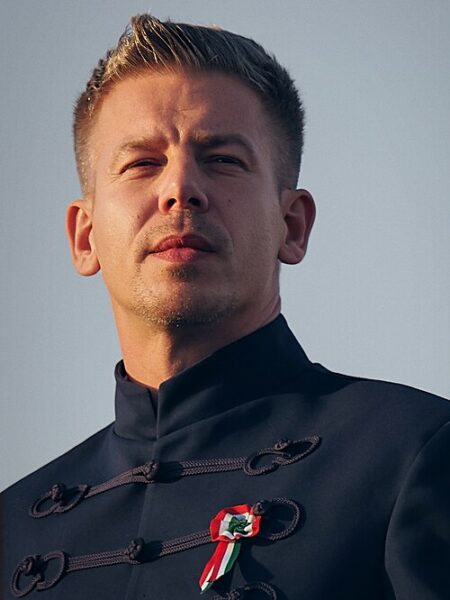
Hungarian Prime Minister-elect Péter Magyar, on 15 March 2026 during a national day demonstration at Heroes’ Square in Budapest. Magyar is wearing a traditional bocskai jacket and a national cockade.
Photo by Norbert Banhalmi and released under CC BY-SA 4.0 via Wikimedia Commons.

Tisza — the name being a portmanteau of the Hungarian words tisztelet (respect) and szabadság (freedom), and a reference to the nation’s second largest river — was founded in 2020 and registered in 2022. It was a very marginal conservative party with policies like “raise the minimum pension” and “stop migration”.

In the 2022 parliamentary elections, the party fielded no candidates at all.

Tisza became a major force in Hungarian elections when Péter Magyar joined the party. Magyar, who has a legal background, had been a member of Viktor Orbán’s party Fidesz. More significantly, he had been married to the Hungarian Minister of Justice, Judit Varga, from 2006 to 2023.

In 2024, Varga resigned, along with Hungarian president Katalin Novák, after both were exposed as having signed a pardon for a convicted paedophile who had been a director of a state-run children’s home. Magyar resigned from Fidesz, accusing Orbán of “hiding behind women’s skirts”.

“For a long time I believed in an idea, a national, sovereign, civic Hungary,” wrote Magyar in a much-quoted statement, “But in recent years, I have slowly and finally realized that all of this is really just a political product.”

Magyar became a ferocious critic of alleged government corruption. His ex-wife responded to his anti-Orbán activities by accusing him of domestic abuse. Magyar denied this. Undaunted, he led various anti-government demonstrations, which attracted tens of thousands of Hungarians. He was also chosen to lead Tisza.

Magyar has profited from good timing. He is also a photogenic man who has performed well on social media. His politics are more mysterious. He has called himself a “critical pro-European and a conservative liberal”.

He is not the sort of liberal that anti-Orbán Westerners might want him to be. While he has said that he will “move away from the current, uncritically friendly approach towards Russia”, he has also said that it will take time to stop buying Russian fuel, and he has criticised the Ukrainian approach to Hungarian minorities. He has sometimes tried to outflank Orbán on sovereignty, saying that Fidesz have brought in too many guest workers, and even questionably saying that migrants have been stealing ducks from Hungarian ponds. Still, it remains to be seen if the pro-EU Magyar will maintain his more right-wing opinions or be swept along by European orthodoxy — not least when he has emphasised the importance of unlocking EU funds.

At The Sceptic, James Alexander says that the situation is more complicated than a split between Orbán and what he terms “the Roral Response”:
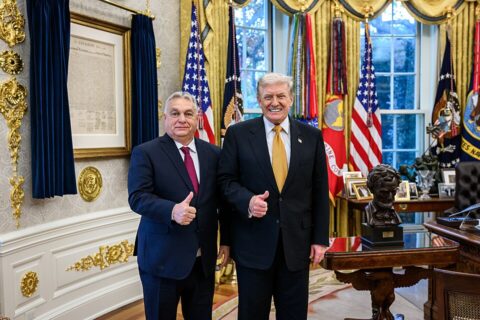
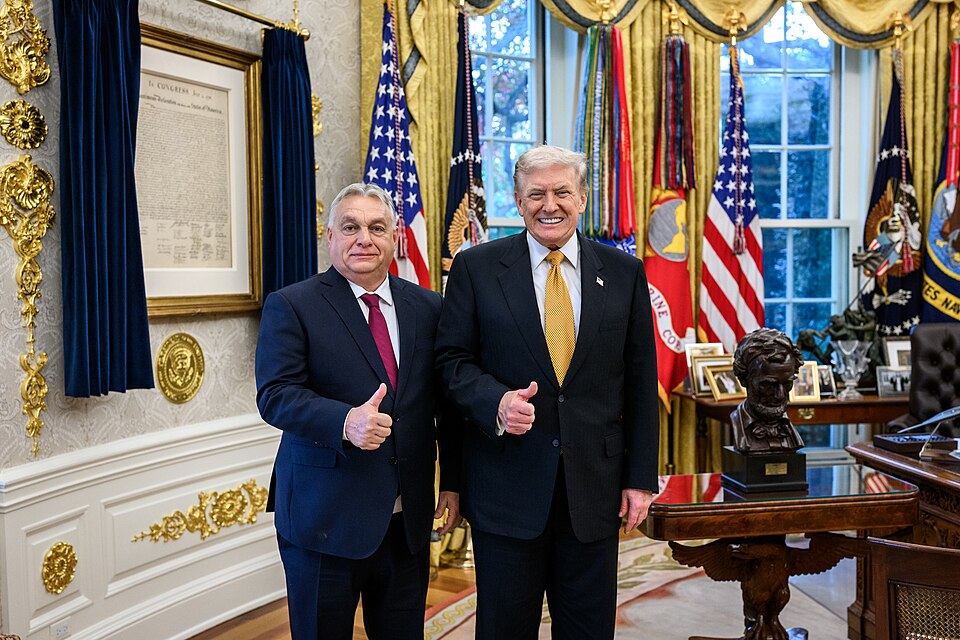
President Donald Trump and Hungarian Prime Minister Viktor Orban pose for a photo in the Oval Office, Friday, November 7, 2025.
Official White House photo by Daniel Torok via Wikimedia Commons.

What is the Orbán-Roral Divide? It is the Manichaean yin-yang binary of the simplistic political imagination, which supposes that, on one side, we have Orbán, Putin, Trump etc., and that, on the other side, we have von der Leyen, Merz, Starmer, Carney, Zelensky and of course the man after whom I name the category: Rory Stewart.

It has some truth in it, but it is bewildering when we see the binary exalted as if it is the only truth of politics. The downfall of Orbán illustrates this almost perfectly.

The subject today is Orbán Developments. And the Roral Response.

News.

As you all know, Orbán, after 16 years of power, fell in the recent election.

  • Viktor Orbán = Fidezs = 37.8% = 55 seats
  • Peter Magyar = Tisza = 53.6% = 138 seats

“Who loses and who wins, who’s in, who’s out,” quoth King Lear.

Orbán lost.

Now, I like Orbán, symbolically. I don’t know about actually: never studied him. I read one of his speeches once, and it read as more intelligent than any equivalent political speech. I have one thing in common with him, which is that he was present at the funeral of Norman Stone. Anyhow, like him or loathe him, we have to be philosophical. And we have to respect him, even if he is an Oxford man.

  • Oxford: Obsessed with power. Corrupt. Cecil Rhodes, Lord Milner, Tony Blair, David Cameron, Boris Johnson, Dominic Cummings, Viktor Orbán etc.
  • Cambridge: Lord Acton: “Power corrupts and absolute power corrupts absolutely.”

So let us look at what people say. The amusing thing is that people immediately editorialise. Twitter, X, Whatyouwill.com, turns everyone into William Rees-Mogg. Look at all these Editors.

Here is Ferenc Horcher, a very important Hungarian scholar:

    Time to face reality: the Hungarian electorate ousted the ruling power. The electoral system Fidesz introduced gave its opponent a two-thirds majority. Orbán established a one-man rule, tailored the campaign to himself, he is responsible for the defeat, he has to resign.

That’s grim talk from a conservative. So here on the jolly side is Sam Moyn, a very important Yale Law School professor:

    Yay for Hungary. What if the answer to illiberalism is democracy?

Ho hum. I sigh a bit over the innocence of making a contrast between illiberalism and democracy, as if liberalism = democracy.

(more…)

February 15, 2026

WW1: The Siege of Przemyśl: Austria-Hungary’s Horror Story | EP 6

Filed under: Europe, Germany, History, Military, Russia, WW1 — Tags: , , , , — Nicholas @ 02:00

The Rest Is History
Published 11 Sept 2025

After endeavouring to wreak their revenge on Serbia, what would be the greatest hammer blow to the Austro-Hungarian Empire during the First World War? With Leviv having fallen apocalyptically to the Russian hordes, what had gone so wrong? How might the war have been brought to an end before Christmas of 1914? And, with the darkness gathering around the Austrian defences, could the great fortress of Przemyśl hold out against the Russian barrage for a second time?

Join Dominic and Tom as they discuss the fall of the Austro-Hungarian Empire and the Russian advance, on the brutal Eastern front, as the first year of the First World War grinds bloodily on…

Alexander Watson’s The Fortress, the book heavily referenced in this episode, is available to purchase here: http://bit.ly/41NKRrq
______

00:00 – Cold open: “intricacies of war” reading
01:13 – Adobe
01:51 – Nick Lloyd & the Tyrolean Kaiserjäger
03:26 – Austria-Hungary’s coming unraveling: setting the stakes
06:50 – Why Przemyśl is a fortress; garrison & geography
08:31 – August 1914: Conrad’s plan and its unraveling
17:48 – Catastrophe for the Habsburg army
18:32 – The siege begins
24:50 – Pendulum swings back; Russians advance again
27:01 – Civilian exodus chaos; encircled again (8 Nov)
28:10 – Uber
28:50 – Folio Society
30:17 – Russian occupation & pogroms in Galicia (1914)
31:39 – War aims: Russification under Count Bobrinsky
33:00 – Russian antisemitism context; pogroms & deportations
37:05 – Second siege strategy: starve them out; General Kusman
38:04 – Early aerial bombing of civilians (Dec 1)
39:10 – Christmas Eve gestures; brief humanity, then darkness
41:04 – Conrad’s Carpathian rescue bid (23 Jan): campaign from hell
42:02 – Carpathian horrors; Tyrolean memoir; morale collapses
47:10 – POW fate: officers vs men; camps & Murmansk railway
49:01 – Austria-Hungary reels from the disaster
50:17 – Germany’s opinion of Austria Hungary
51:13 – Italy cuts a deal, joins war; the Italian Front beckons
53:38 – Tsar’s visit; enforced Russification in Przemyśl
55:14 – Mackensen’s offensive; Germans “liberate” Przemyśl; Austria eclipsed
56:10 – Foreshadowing WW2?
(more…)

December 8, 2025

Hungary 1956: The Day Hope Met Soviet Steel – W2W 056

Filed under: Europe, History, Military, Russia — Tags: , , , , , , , — Nicholas @ 04:00

TimeGhost History
Published 7 Dec 2025

Here we trace how, only eleven years into Soviet rule, Hungary’s brief hope after Stalin’s death ignites into demands for reform, free speech, and withdrawal of Soviet troops. Students mass in Budapest, the secret police fire on demonstrators, and the uprising spreads as workers’ councils seize factories and crowds pull down Stalin’s statue. Imre Nagy promises neutrality and multi-party politics, but Moscow wavers, then sends in overwhelming force. As tanks return to Budapest, street fighting erupts, radios broadcast desperate pleas, and the revolution is crushed, leaving thousands dead and a generation convinced that the thaw was an illusion.
(more…)

October 9, 2025

Russia’s Great Retreat 1915

The Great War
Published 9 May 2025

In May 1915, the Central Powers launched one of the greatest offensive operations of the First World War. The armies of Germany and Austria-Hungary planned to smash their way through Russia lines and tip the strategic balance in their favor. The result was one of the biggest and bloodiest campaigns of the war, known today as the Great Russian Retreat.
(more…)

September 7, 2025

Up on the Mountain: a History of the Ski Cap

Filed under: Europe, Germany, History, Military, WW1, WW2 — Tags: , , , , — Nicholas @ 02:00

HatHistorian
Published 1 May 2025

The ski cap, sometimes also called by its german name of Bergmütze, is a visored cap with ear flaps secured to the front by buttons or a buckle. Allegedly descended from eastern bashlyks worn by Russian soldiers, it was popular in the alpine regions of Germanic countries. First adopted by the AUstro-Hungarian Empire as a field cap, it was infamously worn by the Wehrmacht during WWII. It continues to be used as a field or dress cap by German, Austrian, and Hungarian armed forces, and civilian versions can be found around Central and Eastern Europe.
(more…)

August 29, 2025

The History of Hungarian Goulash

Filed under: Europe, Food, History — Tags: , , , — Nicholas @ 02:00

Tasting History with Max Miller
Published 25 Mar 2025

Hungarian goulash with beef, paprika, potatoes, and tomato

City/Region: Hungary
Time Period: Late 19th Century, written down in 1935

The development and history of goulash mirrors the history of Hungary in a really interesting way, and the story goes something like this:

800s: A group of people from the Ural Mountains called the Magyars settled the area. Being herdsmen, they brought with them a dish of boiled meat or stew.

1400s: The Hungarian king imported Italian ingredients, like onions, and hired Italian chefs to please his new wife, who was from Naples.

1500s: Hungary becomes part of the Ottoman Empire, and thus ingredients like coffee and paprika enter Hungarian cuisine.

1800s: Two brothers invent a machine to remove the seeds and ribs from hot peppers in order to make sweet paprika.

This recipe from the late 19th century reflects all of these developments, with the meat, onions, and sweet paprika. It is so delicious and really easy to make. If you’ve never had real Hungarian goulash (which is a soup, not a thick stew), give this a try!

    Bográcsgulyás
    1 kg (2 1/4 lb) beef
    80 g (5 Tbs) lard
    300 g (1 3/4 cups) onion
    20 g (4 tsp) paprika
    salt, caraway seeds, garlic
    1 kg (2 1/4 lb) potato
    140 g (1 cup) green pepper
    60 g (1 small) fresh tomato
    6 portions of soup paste (csipetke, Recipe 14)
    Use meat rich in gelatine (shin-beef, blade or neck). Cube the meat into 1.5-2 cm (1/2-3/4 in) pieces. Fry the chopped onion in the melted lard (shortening) until it is golden yellow. Lower the heat, then add the paprika, stir it rapidly, add the meat, keep on stirring, add salt. When the meat is browned and all the liquid is evaporated, add the caraway seeds, finely chopped garlic and a small amount of cold water, cover, and braise the meat slowly. Stir it occasionally and add small quantities of cold water, cover, and braise the meat slowly. Stir it occasionally and add small quantities of water if necessary. The meat should be braised, not boiled. While the meat is cooking, cube the potatoes, green pepper and tomatoes into pieces 1 cm (1/3 in) in size and prepare the dough for the soup pasta (csipetke). Just before the meat is completely tender, reduce the pan juices, add the cubed potatoes, let them brown slightly, add the stock, green pepper and tomato. When the potato is almost cooked and the soup is ready to be served, add the pasta (csipetke), and adjust quantity by the addition of stock or water.
    — Károly Gundel, late 19th century

(more…)

July 6, 2025

Steyr-Solothurn S2-200: the Austrian MG30 and Hungarian 31M

Forgotten Weapons
Published 23 Sept 2024

The S2-200 was developed by Louis Stange at the Rheinmetall company in Germany in the late 1920s. Because Germany was not allowed to be doing this sort of arms development at the time, Rheinmetall bought a controlling stake in the Swiss firm Solothurn AG, to make the product deniably Swiss. The gun itself is recoil operated, with a rotating locking collar connecting the bolt and barrel, rather like the Hotchkiss Portative. It was a design that had some early influence on the German MG34, although the German military declined to adopt it. Instead, it was taken into service in 8x56mm by both Austria (as the MG30) and Hungary (as the 31M). A third purchaser was El Salvador, which purchased 47 examples in 7x57mm caliber.

After the anschluss in 1938, the Austrian guns were integrated into the Wehrmacht, where they were primarily used by mountain troops. Hungary did later make a version in 7.92x57mm, designated the 43M.
(more…)

March 23, 2025

Rigged Votes and Terror: Stalin’s Takeover Tactics! – W2W 014 – 1947 Q2

TimeGhost History
Published 21 Mar 2025

By 1947, Stalin’s Soviet Union has begun to firmly grip Eastern Europe, reshaping nations through rigged elections, terror tactics, and propaganda. From Poland to Bulgaria, countries are forced into Moscow’s orbit, crushing opposition and extinguishing democratic freedoms. As Truman declares a doctrine to contain communism, the stage is set for decades of Cold War confrontation.
(more…)

February 8, 2025

Hungarian WWII Rifles (35M, 43M, G98/40)

Filed under: Germany, History, Military, Weapons, WW2 — Tags: , , — Nicholas @ 02:00

Forgotten Weapons
Published 11 Jun 2015

After the breakup of the Austro-Hungarian Empire, the Hungarian army was armed primarily with Steyr M95 straight-pull rifles and carbines, chambered for the 8x56mm rimmed cartridge. In 1935 they adopted a new Mannlicher turnbolt rifle, the 35M, which used the same 8x56R ammunition and en bloc clips. The rifle was modified in 1940 for production to German specifications as the Gewehr 98/40 (including conversion to 8×57 rimless ammunition and a stripper-clip-fed box magazine). The resulting rifle was good enough that it was adopted by Hungary as well in 1943 as the 43M.

March 24, 2024

Chiang versus Mountbatten – WW2 – Week 291 – March 23, 1945

World War Two
Published 23 Mar 2024

Chiang Kai-Shek is demanding his Chinese troops back from Burma, but this doesn’t fit well with Mountbatten’s plans for the region. In Burma, Bill Slim’s forces liberate Mandalay this week and make plans to head south for Rangoon. There’s also friction elsewhere in Allied command — between the Soviets and the Western Allies — over Italy. In the field in Europe, the Soviets advance all along the eastern front, and in the west, the Allies secure another Rhine crossing, and they also launch a double operation to send even more men across the river in force.

0:00 Intro
0:53 Recap
1:20 Iwo Jima
2:15 Plans for Okinawa
3:53 Mandalay liberated and plans for Burma
08:19 Allied Machinations about Italy
10:25 Soviet advances all along the Eastern Front
16:55 Plans for Operation Grapeshot
17:45 Four Allied Operations in the west
23:25 Summary + Conclusion
(more…)

March 17, 2024

Smiling Albert Takes Command – WW2 – Week 290 – March 16, 1945

Filed under: Germany, History, Italy, Japan, Military, Pacific, Russia, USA, WW2 — Tags: , , , , , , — Nicholas @ 04:00

World War Two
Published 16 Mar 2024

After the Allies took a Rhine Bridge last week, Adolf Hitler has again shuffled his commanders, moving Kesselring to the west. Meanwhile, the German offensive in Hungary comes to its end — and it does not end well for the Germans. The Japanese are nearly defeated on Iwo Jima, are feeling a bit of desperation in Burma, but are far, far from defeated on Luzon.

01:02 Recap
01:33 Remagen Bridge and the Western Front
06:44 Army Group Courland and 3rd Belorussian Front
10:23 Konev’s new attacks
11:29 Operation Spring Awakening ends
15:00 A German surrender in Italy?
17:01 Japanese being ground down on Iwo Jima
18:12 The war in the Philippines
20:48 The war in Burma
23:07 Summary
23:36 Conclusion
(more…)

March 10, 2024

German Blunder Hands Allies a Rhine Crossing – WW2 – Week 289 – March 9, 1945

Filed under: Britain, Germany, History, Italy, Japan, Military, Pacific, Russia, USA, WW2 — Tags: , , , , , — Nicholas @ 04:00

World War Two
Published 9 Mar 2024

The Allies manage to take an intact bridge over the mighty Rhine at Remagen, a major piece of luck; the Germans launch a new offensive in Hungary, and the Allies end one in Italy. Over in Burma, Meiktila falls, sabotaging the entire Japanese supply system for the country, and on Iwo Jima the fight continues, bloodier than ever for both sides.

00:59 Recap
01:35 The Fall of Meiktila
03:46 The fight on Iwo Jima
05:27 Advances on the Western Front
07:44 The Rhine River
10:05 Remagen Bridge
16:20 Operation Encore
17:10 Rokossovsky and Zhukov attack
18:09 Operation Spring Awakening
21:57 Notes to end the week
23:42 Conclusion
(more…)

March 3, 2024

Allied Deception Surrounds Japanese in Burma – WW2 – Week 288 – March 2, 1945

World War Two
Published 2 Mar 2024

Bill Slim’s master plan is near fruition and the Japanese are surrounded at Meiktila in Burma. The Allies have also nearly cleared Manila on Luzon, but the fighting on Iwo Jima is just growing in intensity. In Europe, the Soviets are still on the move in Poland, though attacking now to the north, but in Hungary it’s the Germans who are making plans for a new offensive. The big news on the Western Front is the Allies reaching the Rhine, though how they’ll cross that mighty river is anyone’s guess.
(more…)

February 18, 2024

German Counterattack in Pomerania – WW2 – Week 286 – February 17, 1945

World War Two
Published 17 Feb 2024

The Germans finally launch a counterattack into the Soviet flanks, but it does not go as well as was as hoped. The Siege of Budapest comes to an end, also not well for the Germans. The Soviets have now also surrounded Breslau. In Burma, the Allies cross the Irrawaddy River, in the Philippines the fight for Manila continues, and in the Pacific preparations are underway for an American invasion of Iwo Jima Island.

01:50 The fight for East Prussia
04:08 German counterattack in Poland
07:00 Breslau Surrounded
07:57 The Siege of Budapest
09:14 Operation 4th Term in Italy
10:07 Operation Veritable Continues
11:36 Allies cross the Irrawaddy
14:43 The Fight in the Philippines
17:52 Preparations for Iwo Jima
(more…)

Older Posts »

Powered by WordPress