Quotulatiousness

April 20, 2026

Civilization-building is gendered, sorry ladies

Filed under: Health — Tags: , , , , , — Nicholas @ 05:00

On Substack, Janice Fiamengo explains why the very different strengths and weaknesses of men and women will always lead to what appear to be unequal results, and fighting against biology is always a bad idea:

Even if the numbers don’t back it up, women feel that this is so true.

Social psychologist Roy Baumeister explored the relevant research in Is There Anything Good About Men (2010), a cautiously non-feminist book in which the author readily asserted that he, like most everyone else, prefers women to men. Women are more lovable, he claimed, and more pleasant to be around.

But he was not quite willing to accept the now-mainstream thesis that women can replace men in all areas of society.

His thesis is summed up in the book’s sub-title: How Cultures Flourish By Exploiting Men. Men are the foot soldiers of civilization as well as its leaders. They are the ones who make things work or make new things.

Men are the ones who must prove their utility to society. Their drive to be useful has powered centuries of back-breaking work, risk-taking, tool-building, self-sacrifice, and outstanding performance of a sort that has never been expected of women (and still isn’t).

Women in the main tend not to work as hard as men to succeed because they don’t have to. Women developed different strengths and tendencies.

Women’s strength, for good and ill, is in the inter-personal arena: not only in caring for those who are weaker but also in being cared for by those who are stronger. Women are good at reading people’s emotions and desires, and at expressing their own.

Men are not rewarded for expressing emotions and desires; men are oriented to acting, often under pressure to perform competently, in large groups and systems.

“The female brain,” according to Baumeister, “tends to be geared toward empathy, which includes emotional sensitivity to other people and deep interest in understanding them and their feelings. In contrast, the male brain is oriented toward understanding systems, which means figuring out general principles of how things operate and function together, and this applies to inanimate objects as much as social systems” (p. 85).

Baumeister supports his argument in a book-length exploration of men’s system-building. He shows how men are driven to work with, and in competition with, other men to make it possible for large numbers of human beings to live together in complex, efficient networks. The large social institutions that have characterized western cultures, from the army to churches, from corporations to unions, and from market places to police forces, give evidence of men’s system-building.

Women can work well within the systems that men devise, but they rarely devise new systems on their own. This is not because women are, on average, less intelligent than men (except at the very highest levels). It is because women’s motivations and sources of satisfaction are generally different from men’s.

Women’s contribution to culture in nurturing children, providing companionship, and looking after the family home has been a crucial one. But it does not drive innovation or invent new technologies.

Even the most intelligent women are rarely compelled, as highly intelligent men often are, to pursue scientific and other breakthroughs with the single-minded focus necessary for greatness. Often, as in the case involving Matt Taylor discussed above, many women do not seem to value or understand the nature and importance of such breakthroughs.

Women’s main contribution in the male civilizational sphere has been to lobby for admission and then to complain about, and work to undermine, the male culture of competitive excellence.

April 19, 2026

AI’s missing economic impact

Filed under: Business, Economics, Technology — Tags: , , — Nicholas @ 03:00

On the social media site formerly known as Twitter, Rational Aussie explains at least part of why the expected economic benefits of widespread adoption of artificial intelligence agents are … missing:

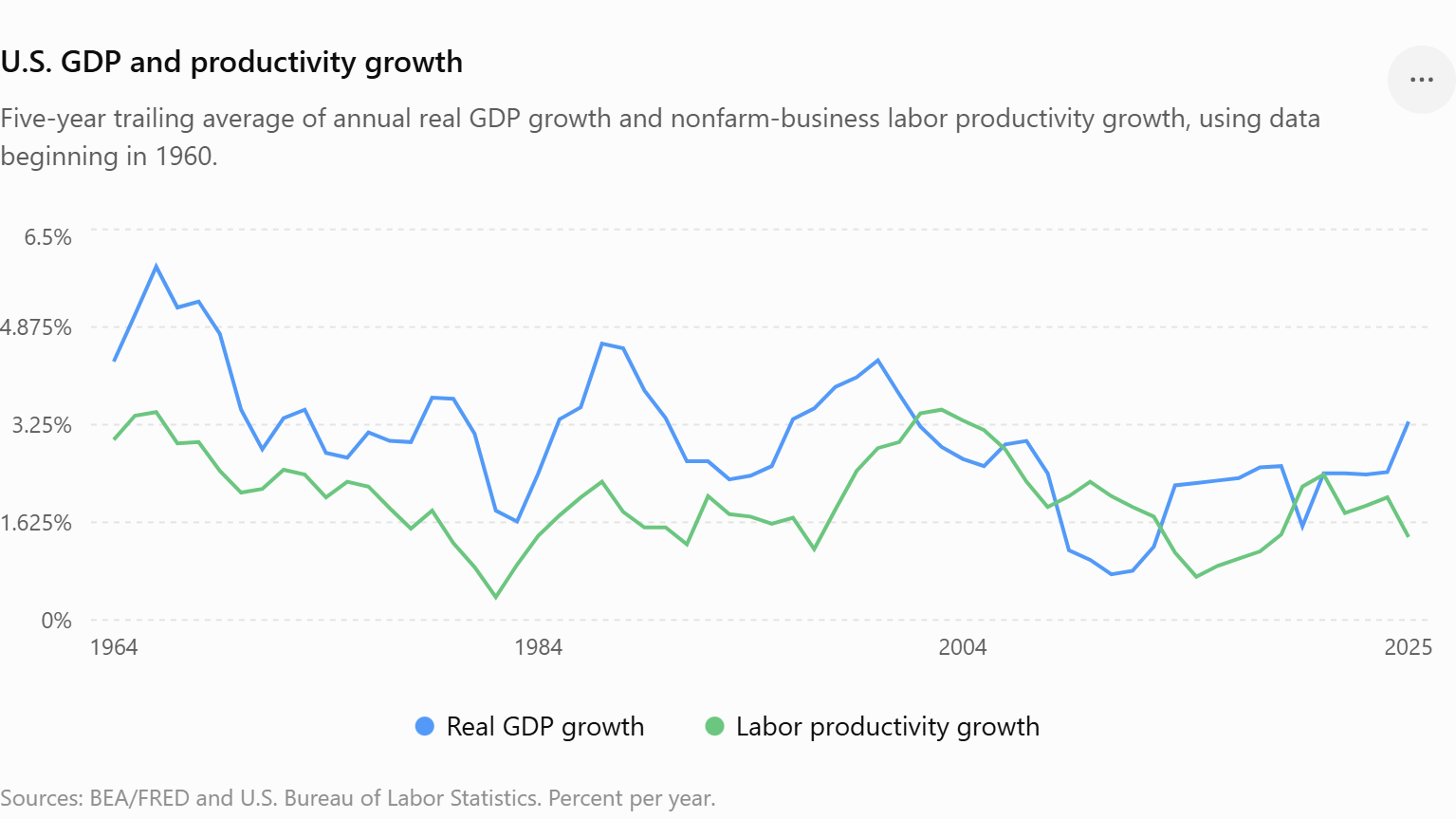
It’s funny how AI has made white collar work 10x faster already but there’s been basically no economic impact from it.

The reason is quite simple:

1. Most white collar work is bullshit, so speeding it up by 10x still equals a pile of bullshit at the end

2. Most white collar employees are using AI to do all their work for the week in 4 hours instead of 40, whilst telling their manager the deadline is still 40 hours away

We have been living in a fake economy for the better part of two decades. It is all a fugazi.

People who do real jobs in the real world get paid comparatively crap, and people who do fake jobs in the fiat Ponzi world get paid just enough fiat currency to pretend they are important. None of it amounts to anything productive nor valuable for the world though.

An entire generation doing fake email jobs, slide decks and excel sheets for corporations who ultimately produce nothing.

April 9, 2026

The NFL’s “Rooney Rule”

Filed under: Business, Football, Government, Law, Politics, USA — Tags: , , , , — Nicholas @ 05:00

As the NFL in its modern incarnation exists as an exception to the normal rules governing corporate structure under US law, you can readily imagine that the NFL’s legal teams are extremely sensitive to the changing winds at the federal level. At a time that the federal government was emphasizing providing employment equity, the NFL scrambled to implement a hiring solution that gave black coaches a better chance of being hired for head coaching opportunities. The winds have shifted recently and the NFL risks being caught on the wrong side of evolving legal decision-making:

In a recent interview with the New York Times, Tampa Bay Buccaneers head coach Todd Bowles said he “absolutely” believed that he was sometimes brought in by NFL teams just to check the “Rooney Rule” box.

The Rooney Rule is an NFL policy instituted more than two decades ago that requires teams to interview — though not to hire — at least one minority candidate when hiring new coaches.

The rule was designed to increase the number of minority head coaches in the NFL, a goal it has failed to achieve. For years, it has been a source of moral controversy, but new developments suggest it may now be a legal issue for the league.

Last week, Florida Attorney General James Uthmeier (R) sent a letter to the NFL calling the Rooney Rule “blatant race discrimination“, adding that hiring decisions should be based solely on merit.

Though the NFL says it believes its policy “is consistent with the law” and promotes fairness, others have indicated the Rooney Rule may be on the chopping block, given recent legal challenges to other forms of racial preferences.

“There’s no question that the environment has changed in recent years“, said Pittsburgh Steelers owner Art Rooney II, the son of Dan Rooney, for whom the rule is named. “We do have an obligation to make sure that our policies comply with the laws, whatever the law is, and whatever the changes in law might be.”

Art Rooney didn’t specify the laws the NFL may not be in compliance with, but he might have been referring to last year’s Supreme Court ruling in Ames v. Ohio Department of Youth Services. In that decision, the court unanimously ruled that separate standards for minority and majority plaintiffs seeking redress for racial discrimination were illegal.

The ruling undercut the ability of organizations to use race or sex in hiring decisions — even for ostensibly benign or diversity-promoting purposes — because majority-group plaintiffs are now allowed to sue under the same legal standard as minority groups.

As I wrote at the time, the Ames decision was likely to be a wrecking ball to diversity, equity, and inclusion initiatives, which employers had used for years to discriminate against majority ethnic groups (and non-focus minorities, such as Asians), in violation of Title VII of the Civil Rights Act.

April 6, 2026

QotD: Taylorism

Filed under: Books, Business, Quotations — Tags: , , , , , — Nicholas @ 01:00

In the world of management, the ideology of generic, domain-agnostic expertise first made its appearance in the late 19th century under the name of “scientific management”, or “Taylorism” after its godfather Frederick Winslow Taylor. Taylor’s insight was that the same engineering principles used to design a more economical or efficient product could just as well be applied to the shop floor itself. In his view, the workers, overseers, and production processes of a factory all combined to form a great living machine, and that machine could be optimized and made more efficient by an application of scientific attitudes.

Taylor was unpopular in his own day and is even less popular today, because his particular brand of optimization of the great living machine was all about stripping autonomy (or as Marx would say, “control and conscious direction“) from workers. But the particular kind of optimization he advocated is less important than the conceptual breakthrough that while a nail factory and a car factory might look very different on the surface, they are both governed by the same set of abstract laws: laws of time and motion, concurrency, bottlenecks, worker motivation and so on. A master of those laws could optimize a nail factory, and then go on to optimize a car factory, and could do both without knowing very much at all about nails or cars.

Who could have a problem with that? Even I don’t think it’s entirely wrong — I may have misgivings about the sheer volume of people going into fields like management consulting, but I’ll admit that there remains alpha in asking a smart and incisive outsider to take a look at your operation and tell you what seems crazy. The trouble comes with confusing that sporadic, occasional sanity-check with the actual business of leading a team of people who are working together to achieve an objective. Because, get this, it’s impossible to lead such a team without a deep understanding of the details of every person’s tasks.

It’s surreal to me that this point has to be made, yet somehow it does. If the team you lead makes nails, you need to know everything there is to know about making nails. If the team you lead operates a restaurant, you need to be an expert, not in “management”, but in restaurants. If the team you lead sells mortgage-backed derivatives, you better know a heck of a lot about finance in general, mortgages in particular, the art of sales, and the specific world of selling financial instruments. There are a thousand reasons why this is true, but consider just one: a subordinate is failing at a task, and tells you that it isn’t because he’s lazy or unqualified but because the task is unexpectedly difficult. How on earth can a manager evaluate this claim without being able to do the job himself?

There’s another, very different reason managers need to be experts in whatever it is their team is doing, and it has to do with morale. A subordinate in any sort of hierarchical organization needs to see that his superior can do his own job as well or better than he can. Almost everybody gets this. In a high-pressure commercial kitchen, if a chef or sous-chef doesn’t like the performance of one of their line cooks, they will often leap in, take over that cook’s station, and begin “expediting.” This has a dual purpose: it both relieves a genuine production bottleneck, and also acts as a showy demonstration of prowess, reminding everybody that they got to be the boss through excellence. At the better tech companies, those managing software engineers are always former engineers themselves, and often the very best of the lot. Just like a chef would do, an engineering manager needs to be able to seize a computer and begin expediting under pressure, both to solve a real problem and as a dominance display. But it’s not just about keeping the troops in line, it’s about inspiring them. Nothing motivates a soldier like seeing his commander leading the charge, weapon in hand.1

John Psmith, “REVIEW: Scaling People by Claire Hughes Johnson”, Mr. and Mrs. Psmith’s Bookshelf, 2023-08-28.


  1. This shows up in places you wouldn’t expect to. I was once cast in a show, and quickly came to understand that our director could (and often did) leap onto the stage, snatch a script out of somebody’s hand, and play their part better than they could. For any part. Before he did this to me, I found him annoying and bossy. Afterwards, I would follow him into the Somme.

Update, 7 April: Welcome, Instapundit readers! Have a look around at some of my other posts you may find of interest. I send out a daily summary of posts here through my Substackhttps://substack.com/@nicholasrusson that you can subscribe to if you’d like to be informed of new posts in the future.

March 19, 2026

Government creates a problem – yet the solution is always “more government!”

Filed under: Bureaucracy, Cancon, Government — Tags: , , , , — Nicholas @ 03:00

On the social media site formerly known as Twitter, L. Wayne Mathison explains the vast drawbacks of asking governments to solve problems:

Government bureaucracy is like a snow machine that keeps blasting, then hires more people to shovel the mess it just made.

We’re told it exists to help. To protect. To serve. Nice story. But in practice, it behaves more like a self-preserving organism. It doesn’t solve problems cleanly. It multiplies them, then offers to manage the mess it helped create.

Here’s the part most people miss. Bureaucracies don’t grow because problems get bigger. They grow because complexity gets rewarded. The more tangled the system, the more valuable the people who run it. That’s not a bug. That’s the incentive structure.

William Niskanen called this decades ago. Bureaucrats maximize budgets, not results. Bigger department, bigger influence. If a problem gets solved too efficiently, the machine loses a reason to exist. So problems don’t disappear. They get “managed”.

Then comes the language game.

Confusion gets dressed up as compassion.
A program no one understands becomes “comprehensive”.
A policy that creates dependency becomes “support”.
Failure becomes “underfunding”.

It’s like hiring a mechanic who loosens parts just to bill you for tightening them later.

Now zoom in on Canada. Then zoom in tighter on Manitoba.

We don’t just have bureaucracy. We have an oversized public sector that’s crowding out the very engine that pays for it. In Manitoba especially, government employment makes up a huge slice of the workforce compared to the private sector that actually generates wealth. More administrators, fewer producers.

And here’s the quiet problem. Public sector growth doesn’t face the same discipline as the private sector. If a business bloats, it dies. If a department bloats, it asks for more funding.

So the balance drifts.

More people administering. Fewer people building, investing, risking.
More rules. Less output.
More spending. Slower growth.

It creates a kind of economic inversion. The part of society that redistributes wealth starts to outweigh the part that creates it. That’s not sustainable. It’s like living off the interest of a bank account you’ve stopped contributing to.

Politicians don’t fix this because growth is easy to sell. Cuts are not. No one gets applause for saying, “We’re going to do less”. So the system expands in one direction only.

Forward. Always forward. Never back.

Meanwhile, taxpayers are handed the bill and told it’s the price of caring.

Here’s the hard reframe. Bureaucracy isn’t malfunctioning. It’s doing exactly what it’s rewarded to do. Expand. Protect itself. Justify its existence.

If you want a different outcome, you need different incentives.

Measure outcomes, not spending.
Reward efficiency, not headcount.
Shrink what doesn’t work, no matter how “important” it sounds.

Because if you don’t trim the machine, it doesn’t stay the same size.

It learns to eat.

March 15, 2026

Jobs and new technology – the example of the ATM

In Saturday’s FEE Weekly, Diego Costa looks at the classic example of how the role of the bank teller changed when automated teller machines (ATM) were introduced:

“Pulling out money from ATM” by ota_photos is licensed under CC BY-SA 2.0 .

[…] Those are important findings, but the study of capitalism in the age of AI is larger than labor-saving technologies inside a fixed institutional world. It’s the study of market processes that change the world in which labor takes place.

David Oks gets at this in a recent essay on bank tellers that has been making the rounds. For years, economists and pundits used the ATM to illustrate why technological progress does not necessarily wipe out jobs. In a conversation with Ross Douthat, Vice President J.D. Vance made exactly that point. The ATM automated a large share of what bank tellers used to do, and yet teller employment did not collapse. Why? Because the ATM lowered the cost of operating a branch. Banks opened more branches. Tellers shifted toward relationship management, customer cultivation, and a more boutique kind of service. The machine changed the worker’s role inside the same institution.

That story was true. Until it wasn’t.

As Oks puts it, the ATM did not kill the bank teller, but the iPhone did. Mobile banking changed the consumer interface of finance. Once that happened, the branch ceased to be the unquestioned center of retail banking. And once the branch lost that status, the teller lost the institutional setting that made him economically legible in the first place. The ATM fit capital into a labor-shaped hole. The smartphone changed the shape of the hole.

Vance looks at the ATM era and says: technology does not destroy jobs. Oks looks at the smartphone era and says: it does, just not the technology you expected. But if you stop there, you are still doing what economist Joseph Schumpeter called appraising the process ex visu of a given point of time. As Schumpeter wrote, capitalism is an organic process, and the “analysis of what happens in any particular part of it, say, in an individual concern or industry, may indeed clarify details of mechanism but is inconclusive beyond that”. You shouldn’t study one occupation within one industry and draw conclusions about how technological change works.

The obvious question you still have to answer is: where did those former bank tellers go? What happened to the capital freed when branches closed? What new institutional forms, fintech, mobile payments, embedded finance, neobanks, emerged from the very same process that destroyed the branch model? How many jobs did those create, and in what configurations?

The lost teller jobs are seen. They show up in BLS data and make for a dramatic graph. The unseen is everything the mobile banking revolution enabled, not only within financial services, but across the entire economy. The person who no longer spends thirty minutes at a branch and instead uses that time to manage cash flow for a small business. The immigrant who sends remittances through an app instead of through Western Union. The fintech startup that employs forty engineers building fraud-detection systems. None of that appears in a chart titled “Bank Teller Employment”. The unseen is the world that emerges.

When economists say the ATM was “complementary” to bank tellers, what they usually mean is something quite narrow: the machine performed one set of tasks, such as dispensing cash, and freed the human to concentrate on others, such as relationship banking, cross-selling, and problem-solving.

But the ATM did more than substitute for one task while leaving others to the teller. It made the teller more productive inside the same institutional setting. This is the comparative advantage layer that Séb Krier touches on when he says that “as long as the combination of Human + AGI yields even a marginal gain over AGI alone, the human retains a comparative advantage”. The branch still organized the relationship between bank and customer and the teller still inhabited a role within that world. The ATM simply changed the economics of that role, making the branch cheaper to operate and, paradoxically, more worth expanding.

But the branch is not just a building with unhappy carpet and suspicious lighting. It is an institution. It is a set of roles, expectations, scripts, constraints, and physical arrangements that organize how a bank and a customer relate to one another. It tells people where banking happens, how banking happens, and who performs which function in the ritual. The teller made sense within that world. So did the ATM. They were both playing the same game.

The iPhone did something different. Instead of automating tasks within the branch, it challenged the premise that banking requires a branch at all. It shifted the game to another board. Call this institutional substitution. When a technology is designed to operate within existing rules, the institution can often absorb it, adapt to it, metabolize it. The real threat comes from technologies that are not even playing the same game. The ATM was a move within the branch-banking game. Mobile banking was a move in the higher-order game, the game about which games get played.

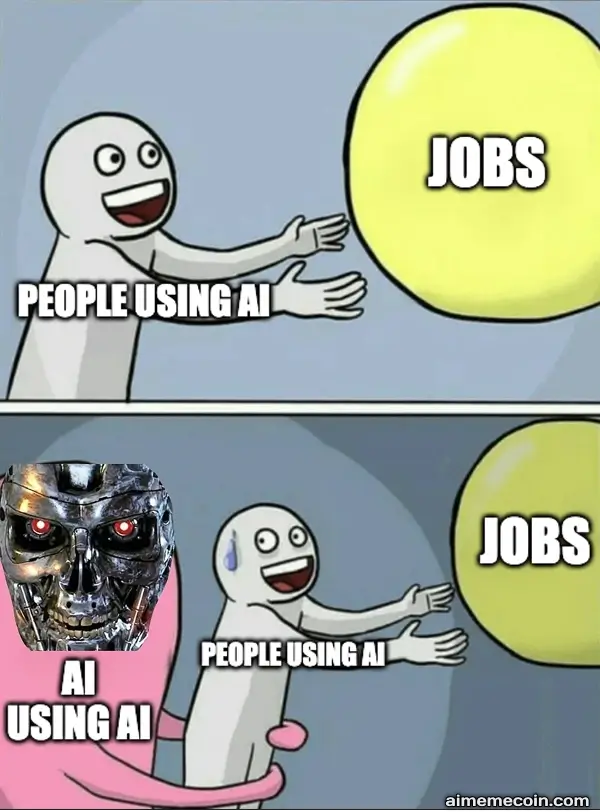
Most discussion of AI stops at the level of task substitution and complementarity. Those are necessary questions, but ATM questions.

Joseph Schumpeter understood that entrepreneurship is not simply about making institutions more efficient. It’s about unsettling the institutional forms through which those efficiencies make sense at all. If you ask whether AI can do some of the work of a lawyer, a teacher, a customer service representative, or a junior analyst, you are asking an interesting question. But you are still mostly asking an ATM question. You are asking how capital fits into an existing human role. The more interesting question is whether AI changes the institutional setting that made that role intelligible in the first place. Now we are talking about institutional substitution. It’s a more dangerous territory and a more interesting territory.

And if the bank teller story is any guide, the technologies that bring about institutional substitution will not necessarily be the ones designed to automate an institution’s existing tasks. They may come from somewhere orthogonal, from applications and configurations that incumbents were not watching because they did not look like competition. The iPhone was not competing with the ATM. It was playing a different game, and it happened to make the old game less central.

So the real question is not whether AI will destroy jobs in the abstract. The real question is how AI will reorganize the architecture of production, consumption, and coordination. Not “AI does what lawyers do, but cheaper”, but rather “AI enables a new way of resolving disputes or structuring agreements that makes the current institutional form of legal services less necessary”.

Update, 16 March: Welcome, Instapundit readers! Have a look around at some of my other posts you may find of interest. I send out a daily summary of posts here through my Substackhttps://substack.com/@nicholasrusson that you can subscribe to if you’d like to be informed of new posts in the future.

March 13, 2026

What did ordinary Tudors do for work? Inside the 16th-century daily grind

Filed under: Economics, Europe, Food, History, Quotations — Tags: , , , , , — Nicholas @ 02:00

HistoryExtra
Published 4 Nov 2025

From sunrise in the fields to the heat of the brew house, Ruth Goodman reveals the untold story of how the Tudors really worked.

Forget silk-clad courtiers – most people in the 16th-century toiled from dawn to dusk just to keep food on the table. Men ploughed, hedged, and hauled in the fields while women brewed ale, milked cows, churned butter, and raised children – often all at once. Every Tudor household was a finely balanced machine of survival.

In this episode of her new series on Tudor Life, historian Ruth Goodman explains how every pair of hands mattered. It wasn’t as simple as “men’s work” and “women’s work”. You’ll hear how the two worlds were completely intertwined. And what about those who were unable to work? This video sheds light on an innovative 16th-century welfare scheme that made all the difference.

Filmed on location at Plas Mawr – an Elizabethan townhouse in Conwy, North Wales, now in the care of Cadw – this series with Ruth looks beyond the royals who often dominate the headlines, and considers the everyday routines of those living in England and Wales in the Tudor era.

00:54 How did Tudors earn money?
03:20 Where did men work?
08:15 What if you were unable to work?

March 7, 2026

QotD: Grind culture and performative working

Filed under: Britain, Business, Quotations — Tags: , — Nicholas @ 01:00

As if compelled by unseen forces — one imagines that scene in The Exorcist — my fellow traveller adjusts his AirPods, straightens his spine, and “locks in”. Before him lies the cluttered still life of Productivity™: a crumpled FT, a bottle of protein-infused kefir, and two boiled eggs sweating inside their polypropylene coffin. For several moments, he sits with priestly solemnity. Then, as the train inches forward, so does he.

And so, begins his morning recital. I would call it theatre, but theatre requires even the slightest concession to its audience. There is no risk of such grace here.

“Jenny? You still there? Jenny? Excellent.”

He repeats her name as though invoking the supernatural. Dale Carnegie once advised this rigmarole; it’s meant to build something called rapport. Unfortunately, Dale Carnegie never sat captive before a disciple who had taken his gospels quite so literally.

“Jenny (build rapport), could you run those numbers by me again? (assert authority). I’m hoping to parallel-path with you moving forward (signal tribal membership). Great! (convey enthusiasm). Jenny, let’s circle back at 1400 GMT; I want to put a pin into an area of emerging awareness.”

By this point in the sermon, I’d developed several areas of emerging resentment and the unignorable desire to drive pins into eardrums — mostly mine. His monologue, which suggested he charged by the word, stretched unabated from Reading to London Paddington, where he skulked off the platform and into the neon vomit of the city like a Roman senator descending into the Suburra.

In the false refuge of a nearby pub, the missionaries gather and gab incessantly. Chirruping clots of earnest twenty-somethings discuss REM-centric sleep regimes, dopamine stacking, and some Santeria called “sunlight dosing”. They sip protein-riddled IPAs. They recite “Huberman says …” as the devout once invoked St Augustine.

These rituals — the 21st-century Lascaux cave paintings — serve one purpose: to peacock one’s devotion to a deity known as The Grind. Like all deities, The Grind demands a daily sacrifice for a distant, mostly hypothetical reward.

We have struggled to name this social pathology. Grind culture. Hustle culture. 996. No days off. Whatever it is, it is not working. In truth, it is the inbred relation of Performative Reading — Performative Working. This theatre drips with all the fripperies of work and none of the results. Much like a Hinge premium account, or indeed the British state.

Christopher Gage, “Mourning Routine: The Cult of Performative Work”, Oxford Sour, 2025-12-03.

March 3, 2026

The Deadly Job of a Victorian Baker

Filed under: Britain, Food, History — Tags: , , , , — Nicholas @ 02:00

Tasting History with Max Miller
Published 2 Sept 2025

Large, gingery loaf of bread

City/Region: England
Time Period: 1857

In order to make expensive wheat flour go further, Victorian bakers added things to it of varying edibility. While potato, corn, and pea flour were used, so was ground up plaster of paris, chalk dust, and a powder called alum. Alum made the flour very white, but is also toxic in large quantities.

This loaf, made only with wholesome, edible ingredients, would have been on the fancier side of a bakery’s offerings with the addition of lots and lots of powdered ginger. This bread really surprised me, as it tastes like a normal loaf of bread at first, but then the heat and the flavor of the ginger comes through afterwards.

    Ginger Loaf, or Rolls.
    Mix intimately two ounces of good powdered ginger, — called in the shops prepared ginger, — and a little salt, with two pounds of flour, and make it into a firm but perfectly light dough with German or brewer’s yeast, [and 1 pint milk] in the usual manner; [to rise one hour or until quite light: to be kneaded down and left again to rise until light]. Bake it either in one loaf, or divide it into six or eight small ones.
    The proportion of ginger can be much increased if desired; but the bread should not then be habitually eaten for a long continuance, as the excess of any stimulating condiment is often in many ways injurious.
    The English Bread-Book by Eliza Acton, 1857

(more…)

February 27, 2026

New (or revived) career paths in the age of the clanker

Filed under: Business, Economics, Media, Technology, USA — Tags: , , , , — Nicholas @ 05:00

If you work in tech, the future is looking blacker by the day as artificial intelligence threatens to eat more and more tech jobs. Even for a lot of non-tech jobs, the clankers are coming for them too. So what jobs can we expect to thrive in an age of AI agents taking on more and more work? Ted Gioia suggests they’re already a growing sector, we just haven’t noticed it yet and that instead of telling people to learn how to code, we should be telling them to be more human:

This is the new secret strategy in the arts, and it’s built on the simplest thing you can imagine — namely, existing as a human being.

We crave the human touch

You see the same thing in media right now, where livestreaming is taking off. “For viewers”, according to Advertising Age (citing media strategist Rachel Karten), “live-streaming offers a refuge from the growing glut of AI-generated content on their feeds. In a social media landscape where the difference between real and artificial has grown nearly imperceptible, the unmistakable humanity of real-time video is a refreshing draw.”

This return to human contact is happening everywhere, not just media and the arts. Amazon recently shut down all of its Fresh and Go stores — which allowed consumers to buy groceries without dealing with any checkout clerk. It turned out that people didn’t want this.

I could have told Amazon from the outset that customers want human service. I see it myself in store after store. People will wait in line for flesh-and-blood clerks, instead of checking out faster at the do-it-yourself counter.

Unless I have no choice at all — in that I need to buy something and there are zero human cashiers available — I never use self-checkout. I’ll put my intended purchases back on the shelf rather than use a self-checkout kiosk. And I don’t think of myself as a Luddite … I spent my career in the software business … but self-checkout just bothers me. I’ll take the grumpiest human over the cheeriest pre-recorded voices.

But this isn’t happenstance — it’s a sign of the times. You can’t hide the failure of self-service technology. It’s evident to anybody who goes shopping.

As AI customer service becomes more pervasive, the luxury brands will survive by offering this human touch. I’m now encountering this term “concierge service” as a marketing angle in the digital age. The concierge is the superior alternative to an AI agent — more trustworthy, more reliable, and (yes) more human.

Even tech companies are figuring this out. Spotify now boasts that it has human curators, not just cold algorithms. It needs to match up with Apple Music, which claims that “human curation is more important than ever”. Meanwhile Bandcamp has launched a “club” where members get special music selections, listening parties, and other perks from human curators.

So, step aside “software-as-a-service” and step forward “humans-as-a-service”, I guess.

February 8, 2026

“Girlboss Gatekeeping” as an evolutionary strategy

Filed under: Economics, Education, USA — Tags: , , , , , , — Nicholas @ 05:00

John Carter linked to this essay on Substack, calling it “A young mother’s reflections on fertility collapse”:

It’s easy to get caught up in the achievement trap, isn’t it? There are times I catch myself catastrophizing and thinking things like if my son doesn’t get into the right elementary school, then he won’t get into the right high school, and then he won’t get into the right college, and then he won’t be able to get a good job and will end up giving hand jobs for crack behind a Walmart.

Even if time, effort, and expense don’t keep people from having children, narcissism certainly can. There was an article in Vogue a while back entitled “Is Having a Boyfriend Embarrassing Now?“. The article was pretty silly, although it dominated internet chatter for a hot minute. Hiding your man is framed as solidarity with single women, but I think that it highlights just how commodified we all are now. When your brand is all about travel, Pilates, fancy cocktails, and mani-pedis, it’s hard to find space for motherhood in all of that. Yes, I know that there are “parenting influencers” as well, but they are not that common if we’re being honest.

Rob Henderson, another writer and podcaster whose content I thoroughly enjoy, posted an essay on this topic that had a novel take. Dr. Henderson writes about “Girlboss Gatekeeping“, where encouraging other women to forgo having children and focus on their careers may be an evolutionary strategy to keep the number of children low so that there are more resources available for one’s own. I can relate to this since when I was in college, everyone talked about what they wanted their careers to be, but it seemed almost verboten to mention starting a family.

Similarly, when I was in college, there was all this talk about how traditional family structure was inherently patriarchal and stifling towards women, and that we needed to move past or do away with marriage as an institution. The people who talked like this were college kids from upper-middle families who were raised by a married mother and father. This plays into another concept from Dr. Henderson called “luxury beliefs“. Basically, these are beliefs that confer status on the people that express them but actually would make things worse for the underprivileged if they were implemented.

I’ve come to realize that so many of the things that we were told or that I used to believe ended up being untrue. That people are born as a “blank slate”. That men and women are the same. That human beings, and by extension, societies are perfectible. That variation in outcomes must be the result of oppression.

If you had talked to me in college, I would have said that I had no interest in marriage or a family. I was all about my career. Things change, though. I met a guy, fell in love, got married, and soon enough, had a baby. I thought that dropping out of my PhD program would have felt more traumatic, but I actually didn’t stress about it all that much. I guess technically I’m on sabbatical, and I could go back eventually, but I probably won’t. I’ve come to realize that lack of ambition doesn’t make me a bad person. I simply have different priorities now. The fact that I’ll never have the word “doctor” in front of my name doesn’t sting that much.

I’m still a little sore from having that kid pulled out of me. The labor wasn’t that bad since I had an epidural, but after the anesthesia wore off, the pain is no joke. I can sit down normally now, but it took a while. Not that I’m whining. It’s just that pregnancy and childbirth can be difficult, and I think that, in all fairness, we need to acknowledge that.

I’m lucky in that my husband and I both have good jobs. Mine is quite flexible, and my boss has been very accommodating about me working from home and working part-time. Not that many people can say that. A brief return to the “girlboss gatekeeping” — I’m really glad my boss is a man. Indeed, I work in STEM, and the majority of people that I work with and in my field in general are men. Of course, things tend to get much shittier when women take them over.

A final thought on fertility has to do with the fact that for a significant portion of young women, it would be embarrassing to be a stay-at-home mom. Choosing motherhood many times means not choosing status. At least not in the way that current society defines it. If you’re wealthy and don’t have to work, then having lots of kids can be a flex, but most people aren’t in that situation. I don’t think that having working parents is bad for kids. In addition to my father working full time, my mother worked a full-time job throughout most of my childhood. It’s probably more important that kids grow up in an intact family with both a mother and a father in the household.

I don’t have any great ideas about how to reorient society and culture to raise fertility, and everyone has to choose their own path. I just figured I would share my own experiences.

January 30, 2026

Corruption – there … and also here

Filed under: Bureaucracy, Business, Education, Government — Tags: , , , , — Nicholas @ 04:00

Copernican draws some examples of life in a corrupt authoritarian society (the old Soviet Union) and compares them with similar situations in the western world today. Depressingly, we have been converging on how Soviets used to have to work the system just to get access to the people they had to get permission slips and permits from:

Corruption is one of the largest issues of our time. Particularly in places like Minnesota, but also nationally. For that reason, it’s necessary to understand corruption, what it is, and how to utilize its benefits. The United States exists in a political hybridization of Soviet Managerialism and Libertarian Corporatism. In both cases, corruption is a common feature of our society, but we don’t see it on the ground the same way that Mexican business owners do or Russian gangs.

Thus, I pose the following question: Are our societies so different that we cannot also benefit from corruption while our culture is ground to dust beneath it?

I recently saw a video from this YouTube channel that discusses Russia and the psychology of living in an oppressive state. A nation not of law, but of management, public policies, and mercurial Karens at every level. I’m not sure how it feels to be Western European (I get the impression the progenitor of the videos is now living in Western Europe), but I can say that, being an American, life seems similar to what’s described therein: Hope seems dangerous. Liberty seems like a time bomb until you step on the wrong bureaucrat’s toes, and your entire future and that of your family is held hostage by the proclivities of unaccountable bureaucrats that you’ve never spoken to1.

Meanwhile, at the top of government, billions of dollars are being laundered by corrupt politicians like Tim Walz, who will lie to your face. Import demographics that hate you. And if you dare defend yourselves, a lynch mob may well try to kill you. How do I get my hands on that money spigot that seems to be free-access for people who want to kill me?

Corruption, or lack thereof, is another one of those American Myths that needs to be deconstructed in the psyche of the population. To do that, we need to understand what corruption really is. Not at the national level of billions of laundered dollars for foreign pirates, but at the personal level. What is corruption for us stuck in the limbo of a faltering civilization?


    When I was young, I witnessed corruption for the first time. I was a child, and I was just entering the primary school system in my home country of Russia. Like all things, there was government paperwork to fill out and submit. When we arrived at the office, an old woman sat behind a glass barrier to help people with their paperwork. My mother knocked on the glass to get her attention. The clerk ignored my mother. My mother knocked again and then took a chocolate bar out of her bag. She passed it through a window into the barrier to the clerk. The clerk looked up and took the chocolate bar, hiding it in a stack of forms. Then she asked, “How can I help?” and filed the papers so that I could attend school.


Corruption doesn’t have to solely give an advantage to those politicians and billionaires sitting atop the society. Corruption can act at every level, from top to bottom. The West exists in a system that is corrupt from the top down, while the Russians exist in a system that is corrupt from the bottom up. Corruption doesn’t need to take the form of extortion payments or threats of ending careers. Corruption can be small, personal, and in many ways more honest than managerial formalization.

Maybe a manager will find some problem with your paperwork, any paperwork you hand in. So to smooth over the process, you bring her a coffee or a chocolate bar. Maybe your academic advisor will help you make the right connections if you gift him a bottle of whiskey or schnapps for Christmas. Maybe you want a teacher to treat your child better at school, so you give her a cupcake or school supplies as a gift.

You don’t need police officers on the take to be advantaged by corruption.

Most people here on substack are underemployed. I am one of them for the time being. I can state with certainty that I have never gotten a job by applying for a job. Never once have I sent out a resume and heard back anything besides an automated “dear applicant, kindly go fuck yourself” from the HR manager. Maybe it’s a byproduct of being a White guy. Lord knows I have enough degrees to find work.

Rather, the only way I’ve ever found employment is through direct connection: I have a friend who has a friend who knows someone who needs an employee. I’m close to fitting the bill, so they’ll hire me. Sometimes they have to dip and duck around hiring-managers and HR to do it:

    Here’s where we’re going to post the job. We’re legally required to leave the posting up for two weeks, but apply with these five keywords in your Resume. When I review the resumes submitted, I’ll be able to pick out yours.

It seems quite conspiratorial when you say it out loud, though that’s the way it has to be in more than a few companies. If they want to hire a White guy, there are hoops to jump through. The addition of “hiring policies” and “diversity” quotas has just added a few hoops, but did not limited one’s acrobatic ability.

Corruption is an individual or a small group of individuals acting in their own interests by ignoring or subverting legal or social rules of conduct.

If you have a friend you’d rather hire than some Indian with a slightly nicer resume? That’s corruption. When the boss hires his nephew, that’s corruption. When you give the DMV associate a chocolate bar, and she helps you with your paperwork instead of telling you to go fuck yourself, that’s corruption. When you hand the inspector of your 40-year-old truck a fifty so that he marks “passed” on your emissions inspection, that’s corruption.


  1. “I am Russian. Here’s how corruption really works.” I highly recommend a look. – https://youtu.be/v21toLzcCgg

January 17, 2026

Scott Adams, RIP

Filed under: Books, Bureaucracy, Business, Humour, Media, Politics, USA — Tags: , , , , , — Nicholas @ 03:00

Another Scott, Scott Alexander, has a long essay about the career and life of the late comic strip artist, author, and internet personality. When I first encountered his Dilbert comic strip, I was living the cubicle life and far too many of the jokes and situations felt like Adams must be in the same company — possibly even the same department. I read a couple of his non-Dilbert books, but I didn’t follow his work very much after I escaped the cube farm, so reading this essay told me a number of things about Adams that I didn’t already know:

Thanks to everyone who sent in condolences on my recent death from prostate cancer at age 68, but that was Scott Adams. I (Scott Alexander) am still alive.1

Still, the condolences are appreciated. Scott Adams was a surprisingly big part of my life. I may be the only person to have read every Dilbert book before graduating elementary school. For some reason, 10-year-old-Scott found Adams’ stories of time-wasting meetings and pointy-haired bosses hilarious. No doubt some of the attraction came from a more-than-passing resemblance between Dilbert’s nameless corporation and the California public school system. We’re all inmates in prisons with different names.

But it would be insufficiently ambitious to stop there. Adams’ comics were about the nerd experience. About being cleverer than everyone else, not just in the sense of being high IQ, but in the sense of being the only sane man in a crazy world where everyone else spends their days listening to overpaid consultants drone on about mission statements instead of doing anything useful. There’s an arc in Dilbert where the boss disappears for a few weeks and the engineers get to manage their own time. Productivity shoots up. Morale soars. They invent warp drives and time machines. Then the boss returns, and they’re back to being chronically behind schedule and over budget. This is the nerd outlook in a nutshell: if I ran the circus, there’d be some changes around here.

Yet the other half of the nerd experience is: for some reason this never works. Dilbert and his brilliant co-workers are stuck watching from their cubicles while their idiot boss racks in bonuses and accolades. If humor, like religion, is an opiate of the masses, then Adams is masterfully unsubtle about what type of wound his art is trying to numb.

This is the basic engine of Dilbert: everyone is rewarded in exact inverse proportion to their virtue. Dilbert and Alice are brilliant and hard-working, so they get crumbs. Wally is brilliant but lazy, so he at least enjoys a fool’s paradise of endless coffee and donuts while his co-workers clean up his messes. The P.H.B. is neither smart nor industrious, so he is forever on top, reaping the rewards of everyone else’s toil. Dogbert, an inveterate scammer with a passing resemblance to various trickster deities, makes out best of all.

The repressed object at the bottom of the nerd subconscious, the thing too scary to view except through humor, is that you’re smarter than everyone else, but for some reason it isn’t working. Somehow all that stuff about small talk and sportsball and drinking makes them stronger than you. No equation can tell you why. Your best-laid plans turn to dust at a single glint of Chad’s perfectly-white teeth.

Lesser lights may distance themselves from their art, but Adams radiated contempt for such surrender. He lived his whole life as a series of Dilbert strips. Gather them into one of his signature compendia, and the title would be Dilbert Achieves Self Awareness And Realizes That If He’s So Smart Then He Ought To Be Able To Become The Pointy-Haired Boss, Devotes His Whole Life To This Effort, Achieves About 50% Success, Ends Up In An Uncanny Valley Where He Has Neither The Virtues Of The Honest Engineer Nor Truly Those Of The Slick Consultant, Then Dies Of Cancer Right When His Character Arc Starts To Get Interesting.

If your reaction is “I would absolutely buy that book”, then keep reading, but expect some detours.


  1. As is quantum complexity blogger Scott Aaronson.

At Ace of Spades H.Q., Buck Throckmorton remembers Scott Adams:

Scott Adams’ death is being eloquently covered by others, so there is not much I can add. But I do want to offer up a few quick thoughts. Aside from Dilbert being my favorite cartoon for decades, I was a loyal reader of Mr. Adams’ blog for many years before his greater celebrity during the Trump era. Mr. Adams often expanded my views, and occasionally frustrated me, but he helped me understand how rational people can understand things differently.

Back in 2016, when I doubted that Donald Trump was in any way conservative, and when I thought Trump had no chance to beat Hillary in the presidential election, Scott Adams was one of two writers who made an impact on my attitude toward that election. Mr. Adams famously wrote about the reasons why Trump was likely to win. He was right. (The other writer was John Hinderaker of Powerline, who was the first legacy conservative I read who stated that of course we traditional Republicans needed to vote for Trump.)

I was flattered once when Scott put out a call for Dilbert topics and he ended up using one of my submissions. As I recall, his invitation to the public was something to the effect of “You provide the workplace situation and I’ll provide the humor“. I wrote him and offered up what a special hell it was to be working for a company campaigning for recognition in a local “Best Places to Work” contest. Shortly thereafter he used that in a cartoon.

Finally, my favorite Dilbert character was one who got very little screen time. Scott Adams may be gone, but Mordac, The Preventer of Information Services lives on.

I think of Mordac every time I have a spontaneously obsolete password, or I’m blocked from being able to access a system necessary for my job, or I can’t access an SaaS app because there are too few licenses, or I’m logged out of a system because I got called away for a short meeting, etc. In all these circumstances, I give a tip of the hat to Mordac, and I applaud his success in protecting my employer by preventing me from doing my job.

January 6, 2026

Woodworking was WORK. What happened?

Filed under: History, Tools, USA, Woodworking, WW1, WW2 — Tags: , , , , , — Nicholas @ 04:00

Rex Krueger
Published 5 Jan 2026

Patrons saw this video early: / rexkrueger
Join the Mailing List: http://eepurl.com/g3rkmv
Take a course: https://www.rexkrueger.com/courses
Compass Rose Toolworks: https://www.compassrosetools.com/
Get my woodturning book: http://www.rexkrueger.com/book
Get My Book, Everyday Woodworking: https://amzn.to/3oyjC0E
Follow me on Instagram: @rexkrueger

December 29, 2025

The war against white men didn’t start in 2015

Filed under: Business, Economics, Education, Government, Media, Politics — Tags: , , , , , — Nicholas @ 05:00

Janice Fiamengo responds to Jacob Savage’s essay on the “lost generation” of young white men who have been subject to open and explicit discrimination in education, employment, and loudly denounced for noticing this:

Most people who have discussed Savage’s essay accept his time frame: that the exclusion of white men took place mainly over the past ten to fifteen years. But this is not true. It has been going on for much longer than that, as Nathan Glazer made clear in his comprehensive Affirmative Discrimination: Ethnic Inequality and Public Policy, first published in 1975 and updated in 1987. Government initiatives to provide jobs for women and racial minorities, particularly blacks, were rooted in the equal rights legislation of the 1960s, implemented later that decade and aggressively expanded in the 1970s and 1980s. The National Organization for Women under the leadership of Betty Friedan, for example, brought a lawsuit against the U.S. Equal Employment Opportunity Commission to force it to comply with federal legislation, and sued the country’s 1300 largest corporations for alleged sex discrimination.

Anyone wishing to read a detailed prehistory of what Savage has chronicled can also consult Martin Loney’s extensively documented The Pursuit of Division: Race, Gender, and Preferential Hiring in Canada (1998), which shows how what was called equity hiring in Canada spread across areas such as the police force, firefighting, the civil service, crown corporations, law, teaching, academia, and elsewhere, beginning in the 1980s. What Glazer’s and Loney’s research shows is that discrimination against white men in employment is far more deeply embedded than most people realize and has affected many more men than is currently recognized.

It is ridiculous to castigate Boomer white men, as it seems popular now to do, for allegedly implementing and benefiting from diversity policies. The last thing that should be encouraged is for younger white men to turn their anger on older white men. Many of these older men themselves faced active discrimination, psychological warfare, divorce-rape, and immiseration. Every organ of the culture told them it was time to change, get with it, stop being Archie Bunker, recognize the superior merits of the women and racial minorities their people had allegedly oppressed for so long. White women were by far the majority and most enthusiastic architects and proponents of equity hiring, bullied in turn by the black and brown women with whom they originally formed their alliance against white men (and all men, with a few exceptions).

Older white men may have secured (tenuous) positions of power, but they had no power in themselves as white men. Most of them knew they could find themselves disgraced, friendless, and jobless as the result of an unpopular decision or an unguarded statement. Accusations of sexual misconduct to take such men out of their positions were not confined to millennial males.

I was in the academic job market in 1997, and diversity hiring was already commonplace then. Everyone knew it was going on, and it was signaled both explicitly and implicitly in the advertisements that encouraged applications from women and visible minorities. My friend Steve Brule remembers when affirmative action was brought in at the large chemical company where he worked in 1984. At the beginning, it was said that these programs would be time-limited, lasting only for a short season. Instead, they lasted for well over 40 years and are still going strong.

It is foolish to imagine that such discrimination is now going to lie down and die. There have been a number of occasions over the last few years in which that was confidently predicted (remember Claudine Gay?) and did not occur. Already the diversity advocates, who are legion, are marshalling their counter-arguments and nit-picking the evidence, finding (or lying about) the ways in which what Savage described hasn’t really happened, recalibrating numbers, rationalizing and justifying them. Thousands of academics will spend years joining forces to discredit claims about discrimination, recasting them as a MAGA or Groyper lament and a dangerous attack on the legitimate (but still inadequate!) gains made by valiant women and long-oppressed racial minorities. Recently for The Washington Post, Megan McArdle, in an ostensibly critical article, is still playing with false justifications and outlandish untruths, saying the following about the rationale for equity hiring:

    … One could say of course it’s unfair, but repairing the legacy of slavery and sexism is a hard problem, and sometimes hard problems have unfair solutions. It wasn’t fair to round up huge numbers of men born between 1914 and 1927 and send them off to fight the Nazis, but that was the only way to win.

    One might argue that, but I haven’t seen anyone do so. No one seems brave enough to state baldly that we should penalize White men born in 1988 for hiring decisions that were made in 1985 by another White guy who was born in 1930. Instead what I’ve seen is a lot of deflection.

What bizarre nonsense, what spurious claims even if her point is that such logic is ugly. Discrimination in favor of white men has been illegal since 1964, and affirmative action/equity hiring was already fully in place by the mid-1980s when the “white guy who was born in 1930” was allegedly discriminating in his hiring practices. As McArdle inadvertently shows, we’ve been operating on the basis of deliberately-perpetrated false beliefs for years, beliefs that the intelligentsia adhered to and promulgated.

On the City Journal Substack, Renu Mukherjee argues that Supreme Court Chief Justice John Roberts is correct that “The best way to stop discrimination on the basis of race is stop discriminating on the basis of race”:

First, public opinion is clear: Americans of all racial and ethnic backgrounds have long opposed the use of racial and identity-based preferences. While this trend extends to employment, I’ve studied it extensively in the context of college admissions. The data underscore Americans’ strong support for colorblind meritocracy.

One year before the Supreme Court struck down the use of racial preferences in college admissions in Students for Fair Admissions v. Harvard, the Pew Research Center asked Americans whether an applicant’s race or ethnicity should be a factor in the college admissions process. 74 percent of respondents said that it should not, including 79 percent of whites, 59 percent of blacks, 68 percent of Hispanics, and 63 percent of Asian Americans. By way of comparison, 93 percent of Americans said that high-school grades should be a factor in college admissions, and 85 percent said the same about standardized test scores. Several surveys since then have produced similar results.

A May 2023 study that I co-authored with my Manhattan Institute colleague Michael Hartney reinforces this point. Through an original survey experiment on the 2022 Cooperative Election Study (CES), we asked Americans to play the role of an admissions officer and decide between two competing medical-school applicants. While the applicants’ accomplishments were randomly varied, the specific pair of applicants that respondents saw always consisted of an Asian American male and a black male.

Our objective was to determine whether, and when, Americans believe diversity should take precedence over merit in medical-school admissions. We found that even when respondents were informed that the medical school lacked diversity, the vast majority made their admissions decisions based on merit — in this case, college grades and MCAT scores — not race.

A few months prior to the publication of that paper, for a separate report, I reviewed hundreds of survey questions on affirmative action stored on the Roper Center for Public Opinion Research’s online database. I found that Americans are most likely to say that they oppose “affirmative action” when survey language explicitly describes the policy as providing “preferential treatment” or “preferences” for a given group. This suggests a deep American aversion to racial and gender-based favoritism — which is why Democrats, when pushing policies rooted in such ideology, tend to rely on euphemisms. Republicans should not do what even Democrats know doesn’t work.

Unfortunately, over the last few weeks, they have sounded like they might. Several prominent Republicans have taken to the social media platform X to argue that “Heritage Americans” — those who can trace their lineage to the Founding era — are inherently superior to more recent arrivals. In doing so, they suggest that the former are entitled to preferential treatment on the basis of ancestry. Here, the logic is that “all animals are equal, but some animals are more equal than others”.

Republican leaders, such as Vice President JD Vance, should reject such grievance-based politics. These ideas were unpopular when Democrats pushed them, and they will be unpopular when Republicans try them, too.

Older Posts »

Powered by WordPress