HistoryExtra
Published 4 Nov 2025From sunrise in the fields to the heat of the brew house, Ruth Goodman reveals the untold story of how the Tudors really worked.
Forget silk-clad courtiers – most people in the 16th-century toiled from dawn to dusk just to keep food on the table. Men ploughed, hedged, and hauled in the fields while women brewed ale, milked cows, churned butter, and raised children – often all at once. Every Tudor household was a finely balanced machine of survival.
In this episode of her new series on Tudor Life, historian Ruth Goodman explains how every pair of hands mattered. It wasn’t as simple as “men’s work” and “women’s work”. You’ll hear how the two worlds were completely intertwined. And what about those who were unable to work? This video sheds light on an innovative 16th-century welfare scheme that made all the difference.
Filmed on location at Plas Mawr – an Elizabethan townhouse in Conwy, North Wales, now in the care of Cadw – this series with Ruth looks beyond the royals who often dominate the headlines, and considers the everyday routines of those living in England and Wales in the Tudor era.
00:54 How did Tudors earn money?
03:20 Where did men work?
08:15 What if you were unable to work?
March 13, 2026
What did ordinary Tudors do for work? Inside the 16th-century daily grind
January 23, 2026
The Rise and Fall of Watneys – human-created video versus AI slop
YouTuber Tweedy Misc released what he believed was the first attempt to discuss Watneys Red Barrel, the infamous British beer that triggered the founding of the Campaign for Real Ale (CAMRA). His video didn’t show up in my YouTube recommendations, but a later AI slop video that clearly used Tweedy’s video as fodder did get recommended and I even scheduled it for a later 2am post because it seemed to be the only one on the topic. I’m not a fan of clanker-generated content, but I was interested enough to set my prejudices aside for a treatment of something I found interesting. Tweedy’s reaction video, on the other hand, did appear in my recommendations a few weeks later, and I felt it deserved to take precedence over the slop:
And here’s the AI slop video if you’re interested:
Dear Old Blighty
Published Dec 20, 2025Discover how Watneys Red Barrel went from Britain’s biggest-selling beer to its most hated pint in just a few short years. This video explores how corporate brewing, keg beer, and ruthless pub control nearly destroyed traditional British ale, sparked a nationwide consumer revolt, and gave birth to CAMRA. From Monty Python mockery to boycotts in local pubs, Watneys became a national punchline and a cautionary tale in business failure. Learn how one terrible beer accidentally saved British brewing culture, revived real ale, and reshaped how Britain drinks forever.
#Watneys #BritishBeer #UKNostalgia #RealAle #CAMRA #BritishPubs #RetroBritain #LostBrands #BeerHistory #DearOldBlighty
August 7, 2025
“The Beer Store seems to be going down faster than, well, a nice, cold beer”
In The Line Scott Stinson discusses the precipitous fall in the fortunes of Ontario’s former beer retail behemoth now that beer is available in — shock! horror! — grocery stores and even (gasp!) convenience stores:

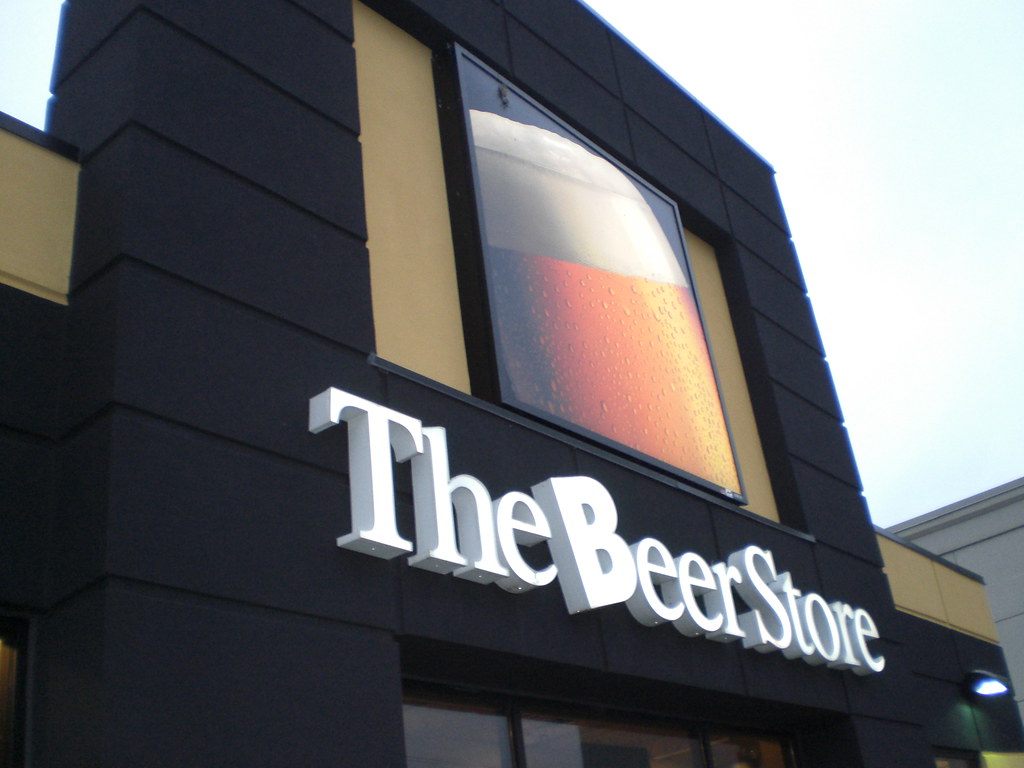
“The Beer Store” by Like_the_Grand_Canyon is licensed under CC BY-NC 2.0
A major Ontario retailer announced last month that it would permanently close 20 locations in August. This follows the closure of 10 of its stores just over a week before that, and precedes the planned shuttering of 10 more locations in September.
What business could possibly be swooning this much? A general retailer pummelled by Amazon? An exporter battered by Trump’s tariffs?
Nope: Beer. Seriously. The Beer Store seems to be going down faster than, well, a nice, cold beer.
Welcome to the uniquely weird world of alcohol sales in the province of Ontario, where somehow selling beer has become a struggling business.
Some background is probably required, for those who, understandably, must think by this point that I am full of shit.
For ages the vast majority of Ontario’s beer sales ran through The Beer Store, a chain of 450-ish outlets that was co-owned by Canada’s largest brewers. You could also get beer at the provincially owned LCBO, but the largest size available there was a six-pack. That was it. This system was exceedingly unfriendly to consumers, but owing to our puritan roots and the fact that the brewers had excellent lobbyists at Queen’s Park, it remained that way through decades — and governments of all three major parties.
About a decade ago, the Toronto Star got its hands on one of the agreements between The Beer Store and the province, which revealed what a sweetheart deal it was getting. Among other things, the deal greatly restricted the degree to which the LCBO could compete in beer retail, which caused much frothing over the fact that The Beer Store, long since owned by multinational conglomerates, was getting preferential treatment over the province’s own booze outlet.
The Liberal government of the day responded by loosening The Beer Store’s stranglehold on beer retail, but just a little: allowing it to be sold at a limited number of grocery stores, a hilariously small step but one that in Ontario was nevertheless a great leap forward.
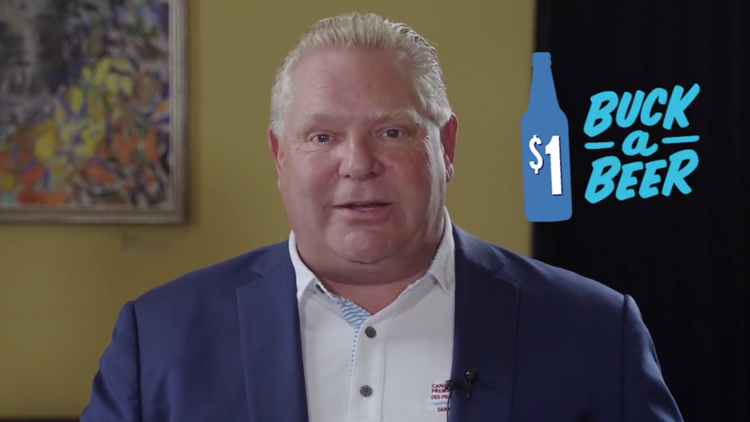
Doug Ford’s Conservative government had long wanted to expand alcohol sales much further, but always stumbled over the fact that The Beer Store had a deal that prohibited such expansion until 2026. But then Ford wanted to hold an election last spring and he convinced The Beer Store to let him break that deal a year early for $225 million, which always seemed like an awfully steep price to move up that expansion by what amounted to a number of months.
It’s only in recently, though, that it has become clear how spectacularly dumb that giant payment was in the first place.
September 16, 2024
QotD: The origins of Marmite
The story of Marmite begins in the late 19th century when a German scientist, Justus Freiherr von Liebig, discovered that the waste product from yeast used in brewing beer could be made into a meaty-flavoured paste which was completely vegetarian. He also produced bouillon, a meat extract which kept well in jars without needing refrigeration. This eventually became the product known as Oxo.
In 1902 the Marmite Food Extract Company was formed in Burton upon Trent, two miles from the Bass brewery which had been there since 1777. Yeast is a single-cell fungus originally isolated from the skin of grapes, used in brewing, winemaking and baking since ancient times. I have read somewhere that the yeast Bass used was descended from the original batch employed since its inception, endlessly reproducing itself right up to the present time.
The waste product from brewing was transported to the Marmite factory, where salt, enzymes and water were added to the slurry before it was simmered for several hours then poured into vats ready for bottling.
The product was an instant hit and within five years a second factory had to be built in Camberwell Green, south London. Marmite was given a huge boost with the discovery of vitamins. It was found to be a rich source of vitamin B, deficiency of which was responsible for the condition beriberi which afflicted British troops during the Great War. They were subsequently issued with Marmite as part of their rations. In the 1930s the folic-acid-rich product was used to treat anaemia in Bombay mill workers, and malnutrition during a malaria epidemic in Ceylon, now Sri Lanka.
Alan Ashworth, “That Reminds Me: My mate Marmite”, The Conservative Woman, 2024-06-05.
September 8, 2024
The last dispatch from Toronto before the catastrophe began
Toronto, in fact all of Ontario, may no longer be there when you get up tomorrow morning. As Chris Selley explained in his brave, final communiqué from the doomed province:
Dear non-Toronto friends,
This city is in crisis. This may be my last communiqué before the telex goes down for good, and I feel honour-bound to tell the world of my city’s plight. If the worst should occur, which it almost certainly will, please tell our story.
The unthinkable has occurred: Doug Ford’s madmen and women at Queen’s Park have licensed hundreds upon hundreds of new locations — called “convenience stores”, in local parlance — to sell beer, wine, cider and pre-mixed cocktails.
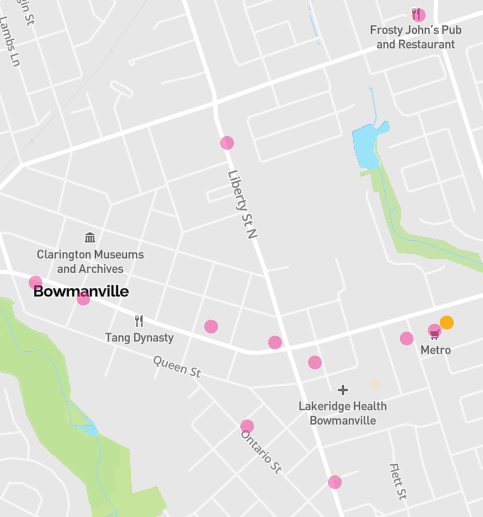
They did this instead of fixing health care, if you can believe that. And, outrage upon outrage, the government even made a map of such locations — as if delivering fallen Ontarians one by one to Mr. Booze himself.
Why, within just a few hundred metres of where I write, through my tears, I can discern on the map more than five such new locations. There’s Mei Convenience, Mimi Variety, Lucy Grocery and Meat, Queen & Jarvis Convenience … the list goes on, and on, my God. Church attendance is reportedly soaring as Torontonians steel themselves for the forthcoming.
Ford’s government did this entirely to solicit corporate donations to his party (some say that’s actually illegal, but whatever) from his buddies at convenience-store empires 7-Eleven and Couche-Tard … and presumably from Mimi and Lucy, whoever they are. Very rich women, clearly.
Instead of fixing health care!
Until recently, some semblance of sanity prevailed: The nearest government-run liquor store to where I sit now is a 15-minute walk away; the nearest Beer Store, the privately owned former quasi-monopoly where you’re still supposed to return your bottles and cans, is nearer to 20 minutes.
And now, suddenly, a bottle or can is shockingly near to hand. And this will lead to more alcohol-related harms. Of this there is no doubt, as one expert recently told the Toronto Methodist Star: “Harm will increase in Ontario. That is straightforward.”
It is true that many jurisdictions around the world report similar or lower levels of alcohol consumption and related harms than Ontario despite having much greater access to retail alcohol — Italy, Greece, the United States — but that is not germane to this discussion. Ontarians are not like other people. Ontario is not like other places. We are worse. Or maybe better. Or some combination of the two.
It’s true! Even saintly Bowmanville has been sullied with the demon liquor thanks to Premier Ford’s diabolical plan:
August 12, 2024
“Premier Doug Ford’s plans for the demon liquor will lead us all to untold poverty and perdition”
In the National Post, Chris Selley points and laughs at the classist viewing-with-alarm and frenzied pearl-clutching over the impending rule change that will allow wine and beer to be sold (and even served) in convenience stores like the 7-Eleven chain:

The plight of poverty-stricken Ontarians, forced to get drunk at their local 7-Eleven dive bar.
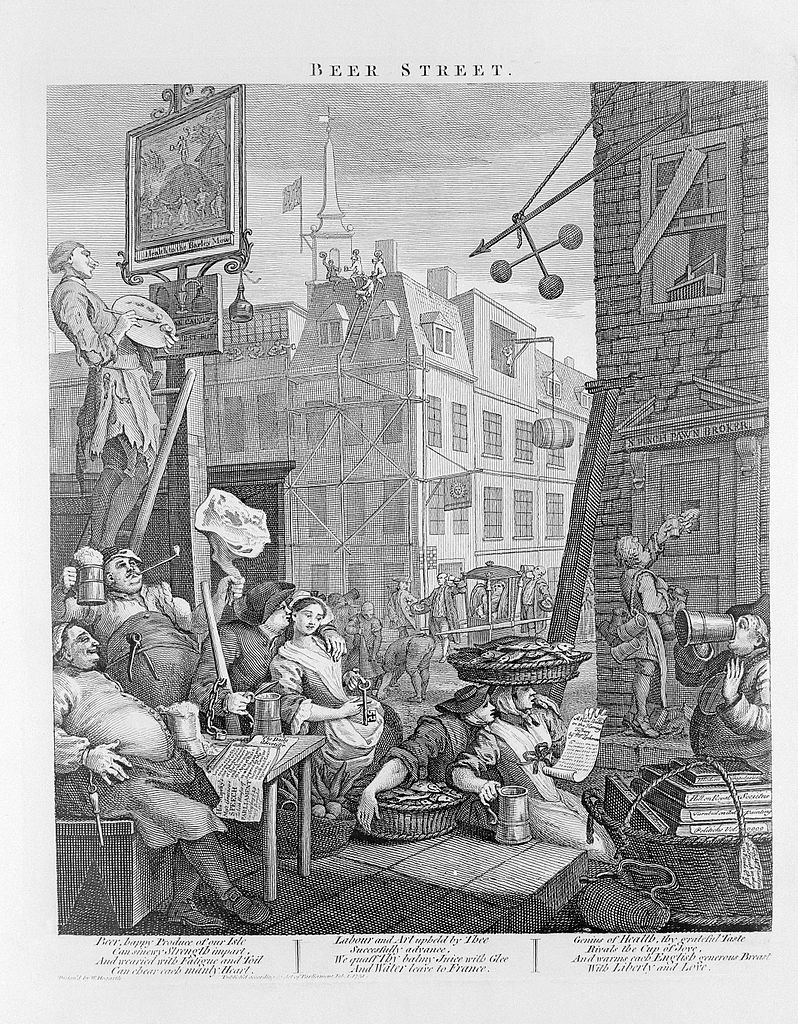
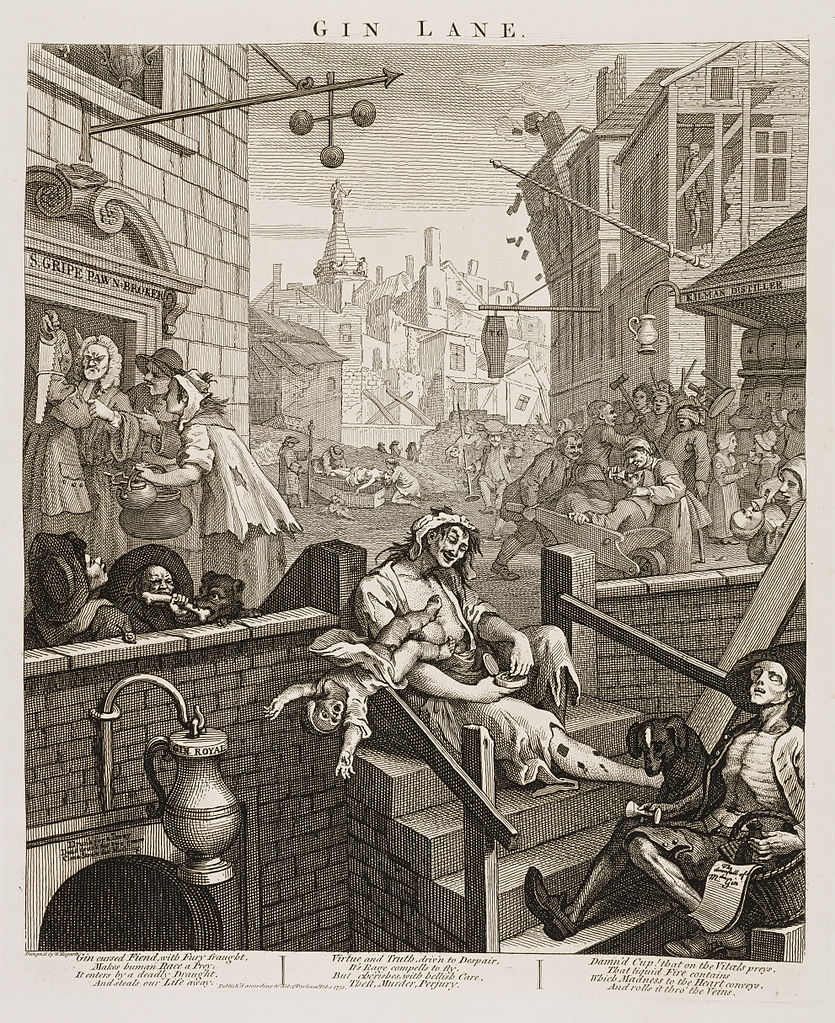
Gin Lane, from Beer Street and Gin Lane via Wikimedia Commons.
Ontario politics in recent weeks has played out as something like a real-time satire of itself, with the Latent Methodist Brigade still insisting Premier Doug Ford’s plans for the demon liquor will lead us all to untold poverty and perdition. The news this week has only made them more upset: Japanese convenience store empire 7-Eleven will open licensed areas in 58 of its 59 stores in Ontario, in which you can enjoy an alcoholic drink with your hot dog, nachos or chicken nuggets. The company says it’ll add 60 jobs.
Fifty-eight is not a large number, you will agree, in a province with many thousands of licensed premises, any of which might get you drunk and send you back out to your car or boat (though of course they shouldn’t). Some of those thousands of licensed premises are even attached to gas stations, I can report. And many gas-station convenience stores in Ontario sell beer, wine and liquor as independently run “LCBO agency stores”.
For the record, 7-Eleven announced they were doing this way back in December 2022. Pro-forma neo-puritan controversy ensued, and quickly died down. Two 7-Elevens already operate as licensed restaurants in Ontario, apparently without incident, along with 19 in Alberta. (Unfortunately, bien-pensant Ontarians are trained from birth to believe Alberta’s liquor-retail reforms in the 1990s were a grotesque misadventure that everyone there regrets.)
Nevertheless, the same pro-forma neo-puritan freakout is playing out again.
“Let me get this straight. 7-Eleven locations where people fuel up their cars will now allow folks to drink on the premises? What could possibly go wrong?” sneered JP Hornick, president of the Ontario Public Service Employees’ Union (OPSEU), who was last seen dragging LCBO employees into a disastrous tantrum-cum-strike over expanding retail access.
“We need a government that will focus on real things including bringing down hospital wait times, fixing schools and tackling the housing crisis as their signature achievements, amongst many more,” Toronto Coun. Josh Matlow correctly averred on Twitter … and then, as is the fashion here, went full non-sequitur: “Doug Ford made sure we could drink coolers inside a 7-Eleven.” As if the government decided it could only pick one.
(And can I just say here, any Toronto city councillor complaining about another politician’s lack of “signature achievements” is on bloody thin ice.)
Every fully paid-up member of the Laurentian Elite [Spit!] believes with all their flinty hearts that Alberta is a barren wasteland of ruined lives thanks to the demon liquor being sold in corner stores. Initial issues from a generation ago are firmly ensconced as “the way it is” with liberalized booze access out there in the wild west.
July 14, 2024
When the Ontario Progressive Conservatives backed away from LCBO privatization
In the National Post, Terence Corcoran posts an excerpt from last year’s The Harris Legacy: Reflections on a Transformational Premier edited by Alister Campbell:

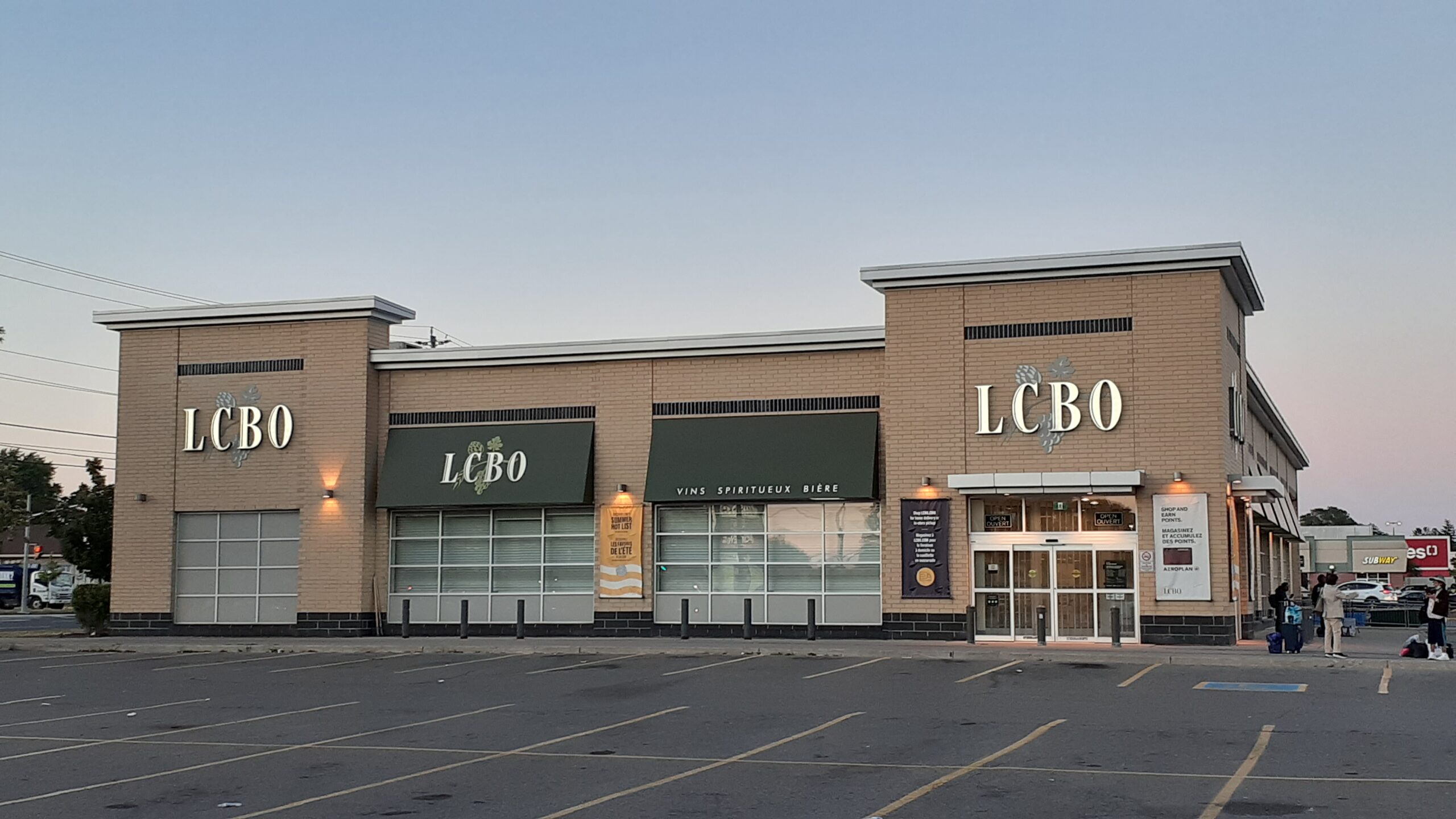
“LCBO at Parkway Mall” by Xander Wu is licensed under CC BY-SA 4.0 .
Almost 30 years ago, in 1995, the Ontario Progressive Conservative government led by Mike Harris promised to privatize the Liquor Control Board of Ontario (LCBO). “We will sell off some assets, such as the LCBO,” said the party’s famed election document, the Common Sense Revolution (CSR). The LCBO could have been a true privatization — a full-fledged divestiture of a government monopoly into a new open and competitive market, but it never happened.
The failure to privatize the LCBO, lamentable from a consumer and economic perspective, remains a significant lost opportunity to demonstrate the benefits of privatization. If Harris had successfully de-monopolized the alcohol market, the whole concept of privatization would have been given a major boost. Instead, the government backed away from privatization of the alcohol market, preferring instead to allow the corporation to substitute modern marketing and retail razzle-dazzle to give the false impression it was offering the public the best of all worlds.
The LCBO failure is also a demonstration of the degree to which the Common Sense Revolution’s starting principles fell short in grasping the essential benefits of private versus public ownership and control. Neo-liberalism isn’t exactly a fine science. The Wikipedia entry on “Neo-liberalism” is a 30-page effort (including 400 footnote links to hundreds of warring academic papers), reflecting an economic and ideological scramble that dates back more than a century. But when the Harris government came to power, major elements of the free-market model were often overshadowed by fiscal policy objectives. With the LCBO, the Harris government veered off the neo-liberal course in pursuit of standard political objectives.
In 1995, the LCBO was a government owned and operated province-wide corporation that controlled liquor and wine wholesale and retail markets. Another private monopoly player, the Beer Store chain, while owned and operated by the brewing industry, was also essentially a government-sanctioned beer monopoly. The CSR neo-liberal objective should have been to privatize the alcohol market by selling the LCBO, deregulating the Beer Store monopoly and allowing beer sales through supermarkets and even corner stores. More importantly, dismantling the LCBO would allow other corporations to enter the alcohol retail business and provide consumers much more choice, which has been the Alberta experience. Notably, Alberta achieved a successful and deregulated approach without sacrificing provincial revenues.
The neo-liberal objective of privatization is to benefit consumers and enhance economic productivity through competition. Instead, the Harris government fell into the fiscal policy trap that routinely captures politicians, bureaucrats and corporate insiders. Instead of aiming to benefit consumers, the objective soon became how to maximize the fiscal return to government. Never mind the consumer and the market. The objective became preserving — and enhancing — government revenues.
At the time, anti-privatization advocates frantically pointed at the Alberta experience of privatization of their provincial liquor monopoly, which (briefly) generated a lot of retail horror stories that Ontario newspapers gleefully republished (and, likely, emphasized out of proportion to the actual Alberta market). You can still hear Ontarians casting aspersions on the Alberta market as if nothing at all had changed after the initial rough patch. From what I’ve heard from Albertans, they have far wider choices of alcoholic beverages in stores much more conveniently sited with better open hours than anyone in Ontario enjoys. The Alberta government still gets at least as much in tax revenues from alcohol sales without needing to be in the distribution or retail business. It doesn’t seem to be the utter disaster that Ontario media portrays it to be … rather the contrary.
July 9, 2024
What it was like to visit a Medieval Tavern
Tasting History with Max Miller
Published 27 Mar 2024Medieval stew with meat, spices, and verjuice, and thickened with egg yolks
City/Region: England
Time Period: 15th CenturySome medieval taverns may have had what is called a perpetual stew bubbling away. The idea is basically what it sounds like: as stew was taken out, more ingredients would be added in so that the stew kept on stewing. In southern France, there was a perpetual stew that was served from the 15th century (around when this recipe was written) all the way up until WWII, when they couldn’t get the right ingredients.
I have opted to not make this stew perpetual, but it is delicious. The medieval flavor of super tender meat with spices and saffron is so interesting, especially with the added acidity and sweetness from the verjuice.
A note on thickening with egg yolks: if you need to reheat your stew after adding the egg yolks, like I did, they may scramble a bit. The stew is still delicious, it’s just the texture that changes a little and it won’t be quite as thick.
Vele, Kede, or Henne in bokenade
Take Vele, Kyde, or Henne, an boyle hem in fayre Water, or ellys in freysshe brothe, and smyte hem in pecys, and pyke hem clene; an than draw the same brothe thorwe a straynoure, an caste there-to Percely, Swag, Ysope, Maces, Clowys, an let boyle tyl the flesshe be y-now; than sette it from the fyre, and alye it up with raw yolkys of eyroun, and caste ther-to pouder Gyngere, Veriows, Safroun, and Salt, and thanne serve it forth for a gode mete.
— Harleian Manuscript 279, 15th Century
July 7, 2024
Ontario’s LCBO strike may be both justified and counterproductive
Ontario’s main importer and distributor of wine, beer, and spirits is now facing its very first actual strike, as the negotiators couldn’t come to an agreement by the strike deadline on Friday morning. On the face of the dispute, the union certainly has some solid grounds for the strike, as pay hasn’t been keeping pace with (official) inflation and far too many of the LCBO’s workforce are on work schedules that keep them from earning full-time wages. On the other hand, over the last decade or so, both Liberal and Progressive Conservative provincial governments have been making piecemeal changes to the market so that the LCBO is far from the only place Ontario drinkers can purchase their preferred booze. Just off the top of my head, here are some of the alternative options now available to Ontario consumers:

“LCBO at Parkway Mall” by Xander Wu is licensed under CC BY-SA 4.0 .
- The Beer Store, Ontario’s other (foreign-owned) booze oligopoly for beer and cider is still operating normally at all their retail locations and agency stores. They also have online ordering for delivery available to ordinary consumers.
- The LCBO is still offering online sales — not same-day, but free delivery.
- Ontario’s vast array of craft brewers are still able to sell individual cans or bottles of beer from their bottle shops or storefront locations (pre-packaged 6-, 12-, 24-container or other types are still limited to the Beer Store oligopoly, of course).
- Ontario’s wineries are similarly still operating normally for retail sales at the winery or (for a few older wineries who still have grandfathered privileges from earlier licensing regimes) stand-alone retail stores.
- Ontario’s much smaller — but growing — number of distilleries are also operating normally and are able to sell their locally produced whiskey, gin, vodka, etc. from their tasting rooms/bottle shops.
- Many, many grocery stores in the province now sell wine, beer, or both, and are all operating normally. They may be slower to replenish the shelves as the LCBO’s limited number of non-union staff will be handling re-supply.
In addition, if the strike continues for more than two weeks, the LCBO will open a select number of their stores for limited hours across the province (again, limited by the number of non-unionized staff available to operate the stores). With all of this (and I’m sure I’m missing some options in my list), consumers may begin to draw the conclusion that the LCBO isn’t as essential as it once was:
On Thursday evening, Colleen MacLeod, chair of the team bargaining on behalf of government liquor-store employees, declared the summer of 2024 utterly ruined.
“Tonight, (Premier Doug) Ford’s dry summer begins,” said MacLeod, of the Ontario Public Service Employees Union (OPSEU), hours before the first ever strike in the Liquor Control Board of Ontario’s (LCBO) history became official.
Desperate? Delusional? That’s up for debate. OPSEU’s press release announcing the strike suggests “delusional.” At one point it claims the LCBO is “Ontario’s best-kept secret.”
What could that possibly mean?
The release then quotes OPSEU president J.P. Hornick as follows: “We told Ford not to ruin everybody’s summer, but now he’s closed the Science Centre and forced a dry summer for Ontarians by refusing to offer a deal that would be good for LCBO workers and Ontario.”
The Ontario Science Centre is a tired old children’s destination in North Toronto that has been neglected in every way by consecutive provincial governments. I’m quite sure few people in Ottawa, Windsor or Thunder Bay have ever even heard of it. Mashing it together with the LCBO, just because OPSEU represents employees at both, suggests the union really doesn’t understand the fight it’s getting into.
If the Ford government is willing to dig in its heels and fight — which isn’t something it’s particularly known for — this could be a great win for the Ontario consumer.
It’s not 1990. The LCBO shutting the doors to its retail stores is really only a minor pain in the rear end, thanks to years of piecemeal, needlessly complex and and too-slow but nevertheless significant liberalization that really kicked into gear under former Liberal premier Kathleen Wynne. (Ford is often mocked for being obsessed with alcohol, but Wynne was nearly beyond parody. If her government woke up in a crisis Monday morning, it was safe to say she’d find herself announcing more beer and wine in supermarkets by Thursday afternoon.)
Anecdotally, as I was in on Thursday picking up a small selection of wine and beer, I overheard a conversation with one of the staffers and another customer where the staffer didn’t believe there’d actually be a strike and that the only result of the brinksmanship at the bargaining table would be that they would have to do more re-stocking next week after the (understandably) higher sales during the past week.
June 24, 2024
Raise a glass of your favourite microbrew to … Jimmy Carter?
Glenn “The Instapundit” Reynolds visits a local brewing festival in Knoxville and remembers what it was like before — of all people — Jimmy Carter began the process of deregulating the beer industry by legalizing homebrewed beer in 1978:
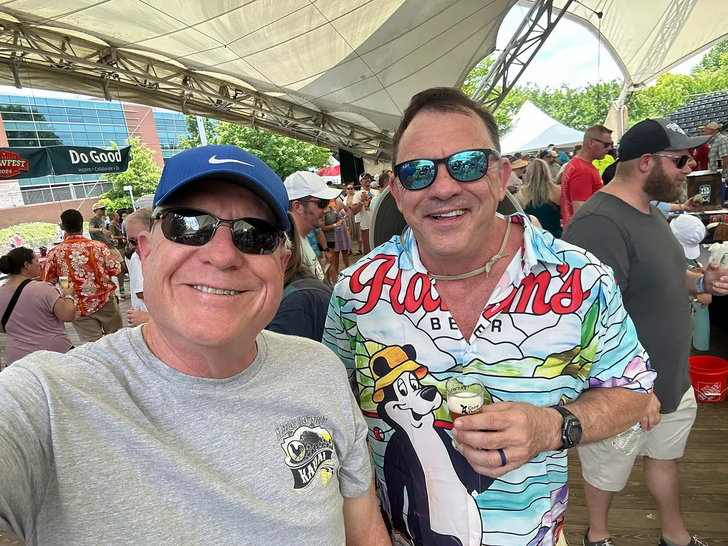
This weekend I want to the Knox Brewfest at the Knoxville World’s Fair Grounds. As the name suggests, it was a collection of most of the local micro-breweries, each with a booth offering samples. (There were also a few bigger operations, like Sierra Nevada, Abita, and Paulaner). I wore my Hamm’s Beer Hawaiian shirt, which was a surprisingly big hit.
And there were some lessons, about which more later.
Hamm’s doesn’t really exist anymore except as a sometimes-produced minor product of Coors, which bought the trademark after it passed through the hands of numerous other companies. But it’s not forgotten!
The beer was good and the crowd was cheerful.
Mostly me, and my friend Jim (who I’ve known since junior high) were reflecting on the vast improvement in the world of beer in America, and particularly in Knoxville. As late as, oh, 1990 or so, you could go into almost any bar in Knoxville and if you asked what kind of beer they had you’d get an answer like this: “We’ve got everything! Bud, Bud Light, Miller, Miller Light, Coors, Coors Light – anything you want!”
It’s easy to take the craft-brewing revolution for granted, but it brought about huge changes and for the better. Nowadays, the beer scene in America tends to be better than that in Europe. No, really. In fact, one of my former research assistants, who practices law in Belgium now, brought over a couple of Belgian friends who wanted to see Tennessee. I met them for lunch at Barley’s in the Old City, to hear a bluegrass show and eat pizza and drink beer. They were very impressed with the fifty or so taps that Barley’s offers.
Back home they said, the bars are usually owned by the breweries and only sell their own brews, so you might have only three or four varieties, all from the same label. Nothing like this.
[…]
This deregulatory story started (like airlines and trucking deregulation) with Jimmy Carter of all people. Despite his (often true) reputation as a bossy micro-manager, he was an engineer and a rationalist. That worked out poorly in foreign policy, but led him to undo a number of irrational regulatory structures, one of which was the limit on home beer production. Carter signed a bill legalizing homebrewing in 1978, and those homebrewers were the nucleus of the craft beer movement a decade or so later.
May 29, 2024
Ontario’s long and winding (and subsidy-strewn) road to beer in convenience stores
Apparently I’ll have a little bit more to celebrate on my birthday this year as the Ontario government’s glacially slow-to-change alcohol sales rules are being liberalized as of September 5th to allow all the province’s convenience stores to begin selling beer and wine:

“The Beer Store” by Like_the_Grand_Canyon is licensed under CC BY-NC 2.0
Premier Doug Ford promised Ontarians beer in corner stores, supermarkets and big-box stores, and by God he has delivered. As of Sept. 5, all Ontario convenience stores meeting eligibility criteria will be allowed to sell beer, wine, cider and pre-mixed drinks. As of Oct. 31, the privilege will be extended to all grocery and big-box stores. The province says it expects as many as 8,500 new booze-procurement sites to come online under the new regime. By Ontario standards, it’s absolutely revolutionary.
The new regime is also, of course, hilariously complicated. And absurdly, offensively expensive.
It is fair to describe the new regime as somewhat more competitive, and certainly more convenient. In addition to offering potentially thousands of new locations, supermarkets (including the roughly 450 already licensed) will be able to offer volume discounts on beer — i.e., a 24-pack will cost less per bottle than a six-pack. This was a privilege hitherto reserved for The Beer Store, the American-, Belgian- and Japanese-owned conglomerate that dominated beer sales in Ontario from the end of Prohibition until fairly recently.
Private retailers will even be able to set their own prices, which until now has been considered blasphemy.
It is not fair to describe the new regime, as the government does, as an “open” market.
Near as I can tell, Ontario will by 2026 have the following retail environments in place:
- The Beer Store. Smelly, surly, and the best-available value. Only beer — no cider or mixed drinks. It’s in the name.
- LCBO locations. Government-run liquor stores retain their near-absolute monopoly on hard liquor sales, in addition to selling beer (especially craft beer, in which The Beer Store’s owners aren’t so interested), wine and everything else.
- LCBO- and/or The Beer Store-branded “agency stores” in rural areas, which sell everything the LCBO does, but operate inside of convenience stores, small supermarkets and other local businesses, and are staffed by non-government employees.
- The existing supermarkets licensed to sell beer, cider and wine (and in rare cases all three!), plus scores of new outlets — the new 8,500 new locations.
The Beer Store maintains a monopoly (in urban areas) on wholesale for bars and restaurants and on refunding cans and bottles, although its new “master framework agreement” (MFA) doesn’t even oblige it to maintain its current number of locations — which in urban areas have been dwindling rapidly. I’m a 17-minute walk from my nearest Beer Store. The house I grew up in, in the heart of midtown Toronto, is a 45-minute walk. I’m not schlepping a leaky garbage bag full of empty cans either distance.
November 26, 2023
Ontario’s beer market may see radical changes soon
For beer drinkers outside Ontario, the province’s weird beer retailing rules may seem to be from a different time, but that’s only because they are. Until fairly recently, the only place to buy beer was from one of two quasi-monopoly entities: the provincially owned and operated LCBO or the foreign brewery owned Beer Store. LCBO outlets were limited to single containers and six-packs, while Beer Stores sold larger multipacks and also handled bottle deposits and returns. In the last few weeks, the Ontario government has indicated that long overdue changes are coming:

“The Beer Store” by Like_the_Grand_Canyon is licensed under CC BY-NC 2.0
The only thing we really know at this point (and it’s been reported by the Toronto Star and now CBC, and earlier by this website, all from sources) is the horribly unfair deal The Beer Store has had since 1927 in Ontario is about to come to an end. It’s expected that The Beer Store will be given notice by the end of December under the Master Framework Agreement (MFA) that the deal will be all but dead. They will have two years to wrap things up while a more modern system of booze retailing is fine-tuned and prepared for implementation. There’s a new era dawning in Ontario, one that would seemingly benefit grocery and convenience stores, local brewers, Ontario wineries, and obviously consumers who will get wider selection, more convenience and competitive pricing.
“The MFA has never been about choice, convenience or prices for customers, it has always been about serving the interests of the big brewing conglomerates, and that’s what needs to be addressed,” Michelle Wasylyshen, spokesperson for the Retail Council of Canada, whose board of directors includes members from Loblaw, Sobeys, Metro, Walmart, and Costco, told Mike Crawley of the CBC.
The end of The Beer Store MFA in whatever iteration it will look like will have a cascading impact on local VQA wine. Ontario wineries hope that it’s a positive impact and are cautiously optimistic that wide open beer and wine sales at grocery and convenience stores means more sales and less levies for their products.
As the CBC pointed out in its story, the looming reforms “pit a range of interests against each other, as big supermarket companies, convenience store chains, the giant beer and wine producers, craft brewers and small wineries all vie for the best deal possible when Ontario’s almost $10-billion-a-year retail landscape shifts. And — this is a biggie — the LCBO lobbying efforts to keep its antiquated system of monopoly retailing intact, which seems to be a big ask with what we now know from sources. Something must give.
Some key bullet points from the CBC report:
- Will the government shrink the LCBO’s profit margins, including its take from products that other retailers sell?
- Will retailers such as grocery and convenience stores be required to devote a certain amount of shelf space to Ontario-made beer and wine, or will they have total control over the inventory they stock?
- Will small Ontario wineries get any help in competing against big Ontario wineries whose products can contain as much as 75% imported wine?
The government has been listening to all stakeholders in the booze industry in Ontario for over a year now. Three key associations — Ontario Craft Wineries, Tourism Partnership Niagara, and Wine Growers Ontario — joined together to commission a report titled Uncork Ontario. That report, which concludes that the Ontario wine sector is well positioned to drive sustainable economic growth for the region, the province, and the country and has the potential to drive at least $8 billion in additional real GDP over the next 25 years, launched a campaign to lobby the government for radical changes to reach those lofty goals, or at least put the wheels in motion.
One of the big issues for Ontario wineries is a punishing 6.1% “sin” tax charged on every wine made in Ontario but not foreign wines. It’s a tax that’s been hurting Ontario wineries for years even though a grant was issued to wineries to help pay that tax back. To this date, the tax has not been cancelled and wineries keep remitting the tax owed monthly and can only hope the grant keeps getting extended. Ontario wines are among the highest taxed in the world with up to 73% of every bottle sold going to taxes and severe levies at the LCBO.
July 26, 2023
QotD: Things were better in “the old days”
… everyone of a certain age, but especially those who love history, tend to assume everything was better in the past, because the present sucks so much.
For example, beer. As ganderson points out in the comments below, beer these days is better than it has ever been. I quote:
the “old” microbrew brands, like Sam Adams, Summit, Sierra Nevada, Brooklyn, etc, are shunned by many millennials as not hip enough.
The very fact that excellent suds like Sam Adams can be found in gas stations across the land — making it tragically un-hip — is all the proof you need of ganderson‘s thesis. I didn’t mean to leave the impression, below, that I consider Lone Star, Natty Lite, etc. to be good beer. They are, in fact, very bad beers. But since I went to college back in the days, and was on scholarship to boot, my choices were almost always between “bad beer” and “no beer”. And since beer, any beer, made me much more interesting and attractive to the opposite sex, and they to me, it was never really a choice at all. I have great sentimental attachment to Lone Star beer, but the very thought of drinking it gives me a hangover. […]
The modern world sucks, but lots of things are far better now. Cars, too. I know, I know, they’re mostly Karen-mobiles, but the muscle cars have a hell of a lot more muscle, and they’re orders of magnitude more reliable. I grew up in a world where you could reliably expect cars to start falling apart at 30,000 miles on the odometer – you expected to lose an alternator at 30, a starter at 50, and by 100K miles you’d have a beater, no matter how scrupulously maintained. These days, with just routine idiot maintenance 100K passes without a hitch. That’s a win, and if “shade-tree mechanic” no longer exists (since you need three computers and a special wrench just to get to the spark plugs), well … still a win.
Materially, these days, most things are better, and the things that aren’t better are cheaper, way cheaper. It’s an open question as to whether the latter fact is good or bad, but the fact is, materially life really is, in some ways, what the Leftards say it is. We pay the spiritual price for most of it, but when it comes to alcohol, at least, give me the Current Year.
Severian, “A Historian’s Fallacy”, Rotten Chestnuts, 2020-12-07.
June 4, 2023
The peasant consumers are threatening to storm the ESG castle
Jon Militmore on the threat to the corporate world of ESG-guided action posed by mere “consumers” with their “choices”:
The Wall Street Journal ran a deep dive article last month exploring “how Bud Light blew it”, but it somehow missed the most important part of the story.
As most people already know, the world’s most popular light lager has seen a collapse in sales following a boycott prompted by a March Madness ad campaign featuring transgender influencer Dylan Mulvaney. The Journal‘s chart depicting the fall in Bud Light sales speaks for itself, and the company’s delayed and tepid response to the uproar only seemed to make matters worse.
This isn’t Anheuser-Busch’s first foray into controversial social issues.
The Journal‘s Jennifer Maloney points out that the company has been engaging in social equity-themed advertising for years, including a 2021 Michelob Ultra ad featuring transgender track star Cecé Telfer and a 2022 Bud Light Canada campaign for Pride Month displaying various pronouns.
What Maloney fails to mention in her article is why beer companies — not just Bud Light — are suddenly courting controversial social issues such as nonbinary gender, transgenderism, and third-wave feminism.
The answer is simple: The rise of environmental, social, and corporate governance as the dominant strain of “stakeholder capitalism” has incentivized corporations to curry favor with ESG rating firms, even if it means alienating their consumers.
Unlike traditional capitalism, which seeks to maximize profits by serving consumers, the ESG model seeks to “improve” capitalism by considering other stakeholders besides investors and consumers. Publicly traded corporations are graded on how well they achieve socially desirable metrics, such as combating climate change, advancing diversity and inclusion, and creating a more “equitable” society.
What was intended to be a kinder, gentler form of capitalism has morphed into a kind of economic fascism that places the arbitrary interests of a small cabal of people — asset managers, bureaucrats, global financiers — ahead of consumers.
As the Austrian economist Ludwig von Mises pointed out, consumers are the true bosses in a capitalist system. They ultimately decide what products are created and purchased, who becomes wealthy, and who becomes poor.
As the Bud Light fiasco shows, ESG places consumers in the back seat. The social equity campaigns are not designed to appeal to Bud Light consumers, but to the ESG rating agencies, which have the power to downgrade companies that fail to dance to their tune.
April 16, 2023
Coopering a 36 gallon beer barrel with hand tools
Jamestown Cooperage
Published 28 Jun 2021I am a practicing traditional cooper who makes barrels, buckets, washtubs, and butter churns by hand. I use mostly traditional skills and handtools to build round, conical wooden vessels for history museums, national parks, and collectors.