The Korean War by Indy Neidell
Published 7 Jul 2026The US Steelworkers Union strike enters its second month this week with no end in sight and the lack of steel production is affecting the war, worsening what is already an artillery shell crisis. President Harry Truman even considers taking over the steel industry to salvage the war effort. In South Korea, the constitution is amended to allow direct popular Presidential elections rather than the President being chosen by the National Assembly and in Chicago, at the end of the week the US Republican Party Convention begins, with Douglas MacArthur giving the keynote address.
00:00 Intro
00:39 Recap
01:09 Local SK News
03:22 Bombing the Power Plants
05:24 Artillery Crisis and Steelworkers Strike
09:53 Republican Convention Begins
13:46 Summary
13:59 Conclusion
July 8, 2026
The Korean War Week 107 – America on Strike! – July 7, 1952
February 14, 2026
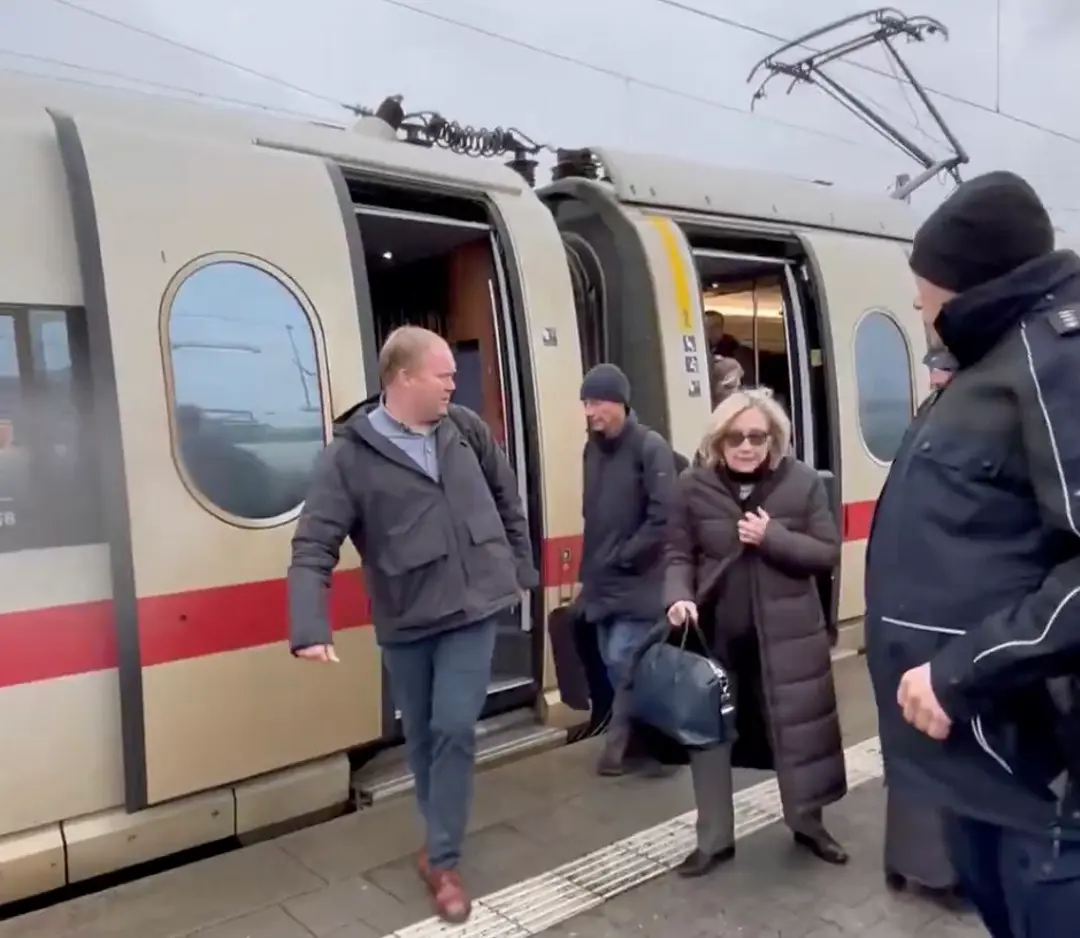
Former First Lady suffers unplanned mingling with the plebs in Germany
eugyppius offers some news from Germany, one of the many western nations eagerly plunging toward cultural suicide in a race with Canada, Australia, the UK and other formerly “first world” nations:
Yesterday Lufthansa pilots and cabin crews went on strike, forcing Hillary Clinton to slum her way on the train to the Munich Security Conference.
[…] you can see the former First Lady and U.S. Secretary of State disembarking from her filthy Deutsche Bahn Intercity Express from Berlin, which had naturally suffered an electrical fault that disabled the restaurant car and with that, all possibility of coffee. Munich Central Station is one of the worst train stations in all of Germany; the place is awash in trash and smells always of urine and french fries. It is a very minor pleasure, watching political elites being forced to navigate the very same dysfunctional landscape all of us have to deal with every day.
“eugyppius,” said absolutely nobody ever, “why has it been so long since you last updated us on Germany? Is nothing going on? Tell us something please.”
The problem is that German politics have degenerated so much in the past year that it is becoming very hard to write abut them.
In the post-Merkel era under Olaf Scholz, insane new crazy bad inadvisable unbelievable stuff would happen almost every day; in the post-post-Merkel years under Friedrich Merz, absolutely nothing can happen no matter how bad things get. After an unstable period comprising the second half of Covid and the pious afterglow of St. Greta (before the latter took up her charitable sailing initiatives), we have settled into a new order. Imagine an airplane piloted by heedless methed-out lunatics. For a brief time they enjoyed aerobatics well exceeding the engineering specifications of their craft, until they snapped a few flight control cables, and now they have become the prisoners of their own recreations as the altimeter ticks down and the ground rushes up at them.
Metaphors are fun but specifics are healthier. As everybody knows, the centre-right Christian Democrats are in a coalition with the newly hard-left Social Democrats, and the latter are determined to block every last initiative, reform and legislative proposal, however mundane or plainly necessary or routine. A little over a year ago, I wrote that German politics had become stuck, and that was true enough back then. What is true right now, is that they have achieved a stage well beyond stuck. The federal government is in a coma, an indefinite vegetative state, on life support – totally paralysed and neither dead nor alive.
We’ve gone over the reasons so much, I hesitate to recite them again, but I will. At the root of our present crisis is a shift within the German left that has had cascading consequences for the party system as a whole. Basically, the left has become both more scattered and more extreme in the last five years. They have become more scattered, because climatism is decaying and this process of ideological unravelling means that leftists have lost a crucial focal point used to rally activists and moderates alike. They have become more extreme, because the general rightward shift in politics is depriving the Social Democrats of their traditional moderating, working-class constituents. These are migrating steadily to the Christian Democrats and ultimately to Alternative für Deutschland.
As the left slowly boils down to their activist base, they become more radicalised. The Social Democrats are no longer the family-friendly centre-left party of Gerhard Schröder. They want to fight, they want to burn things down, they want hell. The very same rightward shift, meanwhile, has had a nearly opposite effect on the CDU. They have lost many of their most engaged constituents and no few members to the AfD. What remains is a husk of dull, uninspired careerists, eager to maintain their good regard with polite society and their regular schedule of polite evening talk show appearances. To break the present impasse, Merz or those around him must act decisively and make facts. He needs to fire all his SPD ministers, form a minority government and achieve some kind of rapprochement with the AfD. Alas, neither Merz nor anybody else in CDU leadership has the mettle for that kind of fight, which would also set off a series of catastrophic revolts within the CDU itself. Thus everything must remain frozen and broken indefinitely, while things get worse and worse and our ability ever to fix them decays.
February 8, 2026
How Legal Immunity Becomes Absolute Power – Death of Democracy Q2 1933
World War Two
Published 7 Feb 2026In spring 1933, Nazi Germany shows how dictatorship becomes normal. This episode of Death of Democracy follows the regime’s second quarter in power, from the first state-organized antisemitic boycott to the destruction of free trade unions and the takeover of the courts. Step by step, democratic institutions are hollowed out through fear, legality, and propaganda. Death of Democracy reveals how tyranny doesn’t arrive overnight — it is made to feel ordinary.
(more…)
August 31, 2025
QotD: The “working” world
In the dark days of the early 1970s, Britain was obliged by a coal-miners’ strike to go on to a three-day working week (our power stations were then mostly coal-fired, and hence there was a shortage of power). Strictly speaking, production should have declined by 40 per cent, but instead declined only by 20 per cent. This surely meant that, on average, people spent one day at work completely unproductively, which will come as a surprise only to those who have never worked in an enterprise or organisation of any kind.
In other words, at least a fifth of our working time is spent doing nothing, or rather nothing productive. Most people are incapable of doing nothing, in the strict sense that a meditator does nothing. Moreover, much of their activity may not merely be unproductive but positively counterproductive, in so far as most people at work feel obliged to do something, and by far the easiest thing for them to do with their superfluous time is to obstruct others, to have unnecessary meetings and so forth.
If taken seriously, not only offices, but millions of journeys to offices, would become unnecessary, pollution would decline and leisure time would increase. This latter would be a disaster, since most people do not know what to do with themselves as it is. It is for this reason that work is not arranged as efficiently as possible, but its productive aspect is diluted by myriad unnecessary tasks — unnecessary, that is, from the narrow point of view of production. Except in the factories of the East, where production is all, a great deal of work is designed to keep us occupied while we produce nothing. It ameliorates boredom and prevents the bad behaviour in which boredom results.
Anthony Daniels, “The Pleasant Embrace of Fear”, Quadrant, 2020-05-06.
July 21, 2025
Was Juan Perón a Fascist? The Cold War Origins of Peronism – W2W 037
TimeGhost History
Published 20 Jul 2025Was Juan Perón really a fascist, a socialist, or something entirely different? In this episode of War 2 War, we explore the rise of Peronism in post–World War II Argentina and how Perón tried to position his country between the superpowers of the Cold War.
Through labour reforms, nationalist rhetoric, media control, and brutal repression of dissent, Juan and Eva Perón created a powerful populist regime that borrowed ideas from both fascism and socialism, while claiming to reject both. From Argentina’s “Third Way” to its complicated ties with the US, USSR, and even Nazi fugitives, we examine the ideology, contradictions, and legacy of Peronist rule.
Was Peronism a unique form of authoritarian populism, or just another face of fascism?
Join us as we uncover the foundations of Argentina’s Cold War identity and the true political nature of Juan Perón.
(more…)
March 28, 2025
The Man Hitler Needs for Civil War, Ernst Röhm, Returns!
World War Two
Published 27 Mar 2025January 1931 starts with violence, economic collapse, and Nazi upheaval in Germany. Hitler secretly meets with army chief Kurt von Hammerstein-Equord, while Ernst Röhm returns to take command of the Nazi paramilitary SA. As hundreds of thousands of miners face mass layoffs and brutal crackdowns, the republic’s future hangs in the balance — how long can democracy hold on?
(more…)
March 17, 2025
QotD: Myths from Norman Rockwell’s America
I’ve seen complaints on X that a factory worker’s single income used to be enough to raise a family on but isn’t anymore. It’s true; I grew up in those days.
The complaint generally continues that we were robbed of this by bad policy choices. But that is at best only half true.
World War II smashed almost the entire industrial capacity of the world outside the U.S., which exited with its manufacturing plant not only intact, but greatly improved by wartime capitalization. The result was that for about 30 years, the US was a price-taker in international markets. Nobody could effectively compete with us at heavy or even light manufacturing.
The profits from that advantage built Norman Rockwell’s America — lots of prosperous small towns built around factories and mills. Labor unions could bid up salaries for semi-skilled workers to historically ridiculous levels on that tide.
But it couldn’t last. Germany and Japan and England recapitalized and rebuilt themselves. The Asian tigers began to be a thing. U.S. producers facing increasing competitive pressure discovered that they had become bloated and inefficient in the years when the penalty for that mistake was minimal.
Were there bad policy choices? Absolutely. Taxes and entitlement spending exploded because all that surplus was sloshing around ready to be captured; the latter has proven politically almost impossible to undo.
When our windfall finally ended in the early 1970s, Americans were left with habits and expectations formed by the long boom. We’ve since spent 50 years trying, with occasional but only transient successes, to recreate those conditions. The technology boom of 1980 to 2001 came closest.
But the harsh reality is that we are never likely to have that kind of advantage again. Technology and capital are now too mobile for that.
Political choices have to be made within this reality. It’s one that neither popular nor elite perception has really caught up with.
Eric S. Raymond, X (the social media platform formerly known as Twitter, 2024-07-08.
December 12, 2024
The Canada Post strike is achieving one thing … strangling the use of cheques
In The Line, Phil A. McBride outlines the one palpable achievement of the postal workers’ strike in the likely fatal blow to the use of paper cheques in Canada:
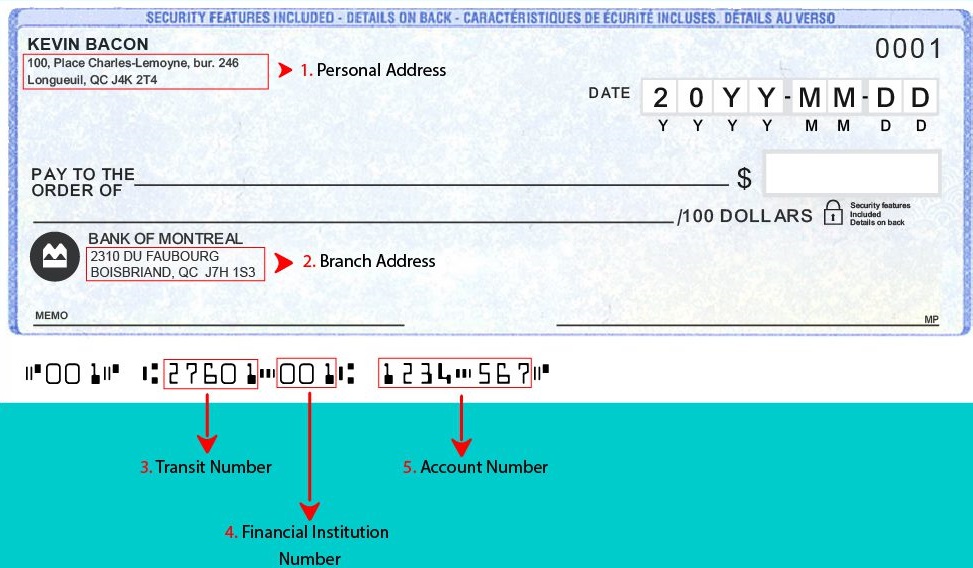
For more than a century, Canadian businesses have been using cheques and the post office to send and receive money across the country and the world. It’s easy: you write a cheque, you put it in the mail, the recipient deposits the cheque at their bank, you wait five business days for it to clear and voila — you’ve got the money.
Except, right now, of course, that’s not happening, due to the ongoing postal strike. In fact, a great number of cheques that are in the mail are stuck there, leaving businesses and Canadians with money stranded in transit. I am increasingly convinced that this strike will be remembered in the future as the death of cheques in Canada, at least as a major medium of business exchange.
The banks won’t miss cheques, if so. Cheques are expensive. In 2015, Scotiabank estimated that the writing and processing of a cheque cost anywhere between $9 and $25. In 2023, approximately 379 million cheques were issued for a combined value of $2.9 trillion dollars. That’s an average value of $7,650.00 per cheque, at an averaged cost of $6.44 billion dollars to the banks and their customers. Very little of that cost is incurred if a payment is made electronically.
But it’s not just the money. Cheques are prone to fraud. Cheques can be counterfeited, signatures can be forged and cheques can be written against accounts that can’t cover the amount they’re issued for. The customer is responsible for sending and receiving them, which means they are prone to loss or interception, which adds further time and cost to an already expensive process.
As a business owner, I happen to agree with the banks: I don’t like cheques. I’m made to wait five business days to access my money, and that’s after I’ve waited for the client to issue the cheque and for the postal service to (once upon a time) deliver it to my office.
Today, all of Canada’s charter banks, as well as most Credit Unions, offer many options for electronic payment. Electronic Funds Transfer (EFT), Interac Electronic Money Transfer (EMT), debit cards, credit cards, even SWIFT wire transfers for international payment. All of these institutions have the ability allow for multiple layers of approval that satisfy corporate accounting, security and reporting requirements. All of these forms of payment are faster, cheaper and more secure than cheques — in most cases, I get access to my money inside 24 hours, rather than waiting for a full week for a cheque to clear.
So why has the cheque endured as long as it has?
Some combination of “If it ain’t broke, don’t fix it” and “It’s always been done this way”.
August 27, 2024
Was 1974 the worst year in British politics or just the worst year so far?
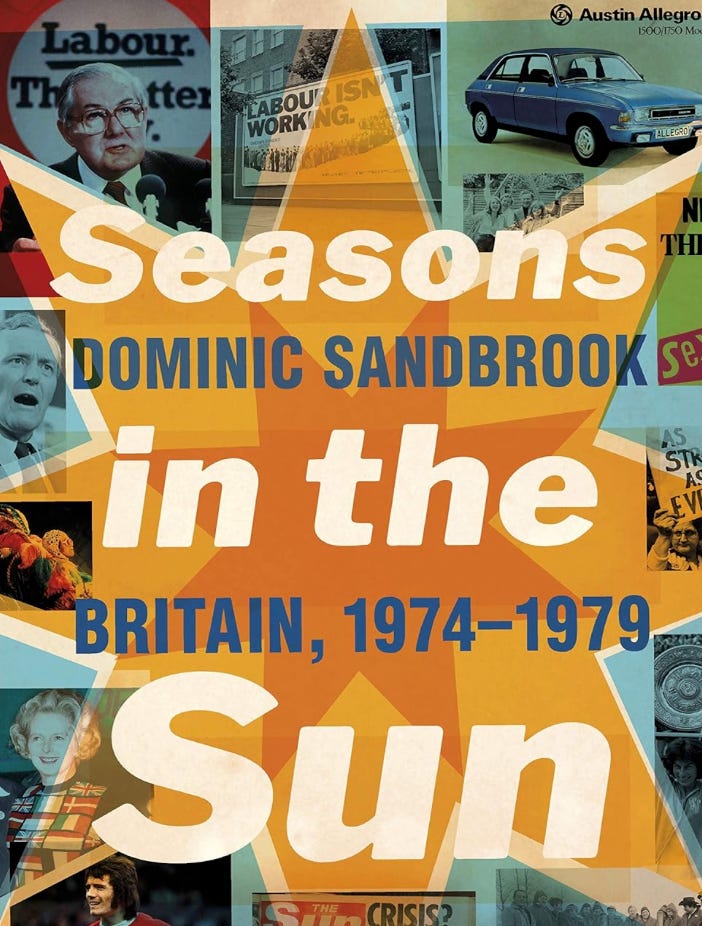
I wasn’t in the UK in 1974 (although I did spend a couple of dystopian weeks there in January 1979), so I don’t know from personal experience just how bad things were, but as Ed West considers Dominic Sandbrook’s very informative social history Seasons in the Sun, he certainly helps make a strong case for it:
One of my favourite moments from reading Fever Pitch as a teenager was the passage where Nick Hornby and a friend bunk off school to watch Arsenal play West Ham, a game which was being held on a weekday afternoon because there wasn’t enough electricity for the floodlights. Britain was enduring a three-day week due to the energy crisis, and assuming the ground would be empty, Hornby is stunned to find it packed with 60,000 people, all skiving off work, and he recalls his hypocritical juvenile disgust at the idleness of the British public.
The scene encapsulates the comic crapness of that period, one that many of us have enjoyed laughing at with the recent Rest is History series on 1974. I began reading Sandbrook’s book Seasons in the Sun afterwards, from where the material for the series was drawn; the early chapters comprise a highly entertaining account of what he described on the podcast as “the worst year in British politics”. Reassuring, perhaps, for those of us inclined towards pessimism, although to paraphrase Homer Simpson, perhaps it was only the worst year so far.
Nineteen-seventy-four saw two elections, the first of which ended in a hung parliament, with Labour as the largest party, and the second with Harold Wilson winning with a majority of 3. These were fought between parties led by exhausted leaders who had run out of ideas, with a third, the Liberals headed by Jeremy Thorpe, soon to be notorious as a dog killer. Britain had declined from the richest country on the continent to one of the poorest in western Europe, and its economy seemed to be falling apart.
During his troubled four years in office Edward Heath had called a state of emergency several times, culminating in ration cards for petrol and power restrictions. In 1973 Heath had “told his Chancellor, Anthony Barber, to go for broke”, Sandbrook writes: “It was one of the greatest economic gambles in modern history: while credit soared and the money supply boomed, Heath hoped to keep inflation down through an elaborate system of wage and price controls”. By October that year, “his hopes were unravelling at terrifying speed”.
The “Barber boom” led to “house prices surging by 25 per cent in just six months, the cost of imports rocketing and Britain’s trade balance plunging deep into the red”. Yet just a week after Heath had published details of his “Stage Three” incomes policy, “the Arab oil exporters in the OPEC cartel announced a stunning 70 per cent increase in the posted price of oil, punishing the West for its support for Israel. It was a devastating blow to the world economy, but nowhere was its impact greater than in Britain.”
The stock market lost a quarter of its value in just a month, while by January 1974 share prices had fallen by almost half in under two years. Just before Christmas, the government cut spending by 4 per cent, and Labour’s Shadow Chancellor, Denis Healey, “warned his colleagues that Britain stood on the brink of an ‘economic holocaust'”. Nine out of ten people told a Harris poll that “things are going very badly for Britain” and nearly as many foresaw no improvement in the coming year. They turned out to be correct.
Amid trouble with the National Union of Mineworkers, in November 1973 “Heath announced his fifth state of emergency in barely four years. Floodlighting and electric advertising were banned; behind the scenes, the government began printing petrol ration cards. As the railwaymen voted to join the miners in pursuit of higher pay, it seemed that Britain was sliding into darkness. Offices were ordered to turn down their thermostats, while the BBC and ITV were banned from broadcasting after 10.30 at night. On New Year’s Day, with fuel supplies running dangerously low, the entire nation went on a three-day working week.” Happy days.
August 16, 2024
After the Trump livestream, Elon Musk’s been “charged with coercive chuckling, a legal first”
Chris Bray has been following the legal sideshow of the United Auto Workers union filing charges with the US National Labour Relations Board (NLRB), alleging that Trump and Musk made threats against organized labour during the recent livestreamed event:
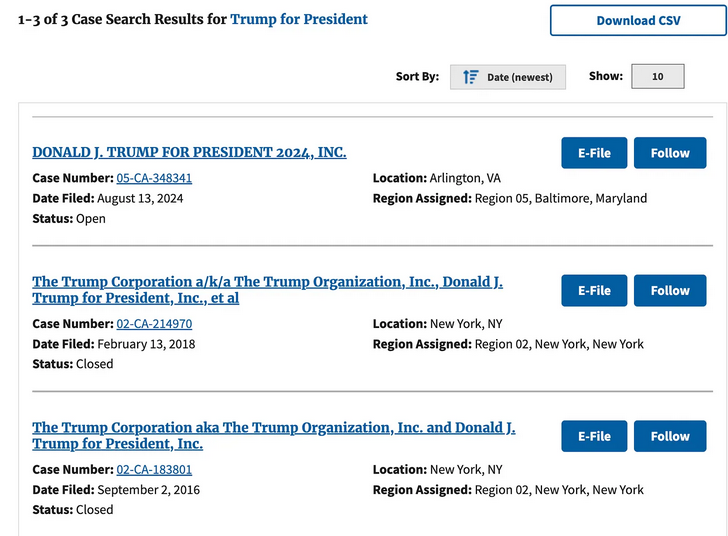
The UAW complaints against Tesla and Trump for President 2024 have been listed on the NLRB website. They really did it, and I got it wrong. The delay in listing the complaints, and the lunacy of the charges, led me to the wrong conclusion. The complaints are real: there are forms with vague and obviously ridiculous complaints on them, and they filed the things.
But they’re still functionally fake, and they’ll die quickly. Anti-Trump organizations have been doing this for years, without success; this is the third complaint filed with the NLRB against Trump campaign organizations.
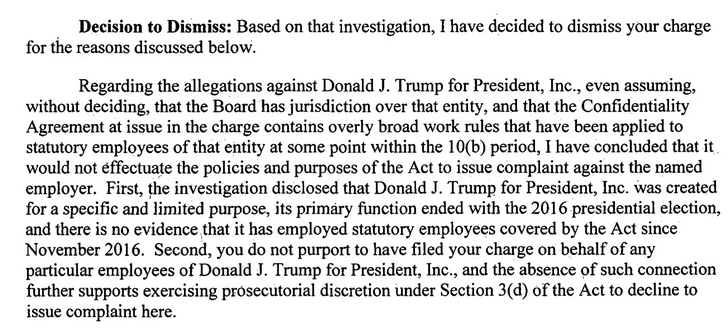
In the first of those previous cases, the NLRB raised the obvious question about jurisdiction, expressing doubt (“without deciding”) that they can police presidential campaigns using labor law:
The NLRB has previously declined to pursue labor complaints against Trump for President, and the UAW has filed a labor complaint against Trump for President. We can make educated guesses about what happens next. I’ve emailed professors who teach labor law to ask them if the National Labor Relations Act governs the political speech of presidential candidates, but they haven’t responded.
As for the complaint against Tesla, Elon Musk had a livestreamed discussion with Donald Trump in which Trump said that striking workers should be fired; Musk laughed, but didn’t say anything in response. This news report includes audio of that exchange. The complaint alleges that Musk therefore made coercive statements
July 21, 2024
LCBO strike reportedly settled
A tentative deal was announced on Friday afternoon, then un-announced after the LCBO claimed the union had added financial demands to the return-to-work conditions after the contract itself had been agreed, and then on Saturday, re-announced. If the deal is ratified by the union, LCBO stores across Ontario should re-open on Tuesday.
It was the first LCBO strike in Ontario history, and it’s open to debate whether the union members will get all that much for their two-week unpaid break. The National Post‘s Chris Selley thinks not, calling it the “Stupidest. Strike. Ever.”

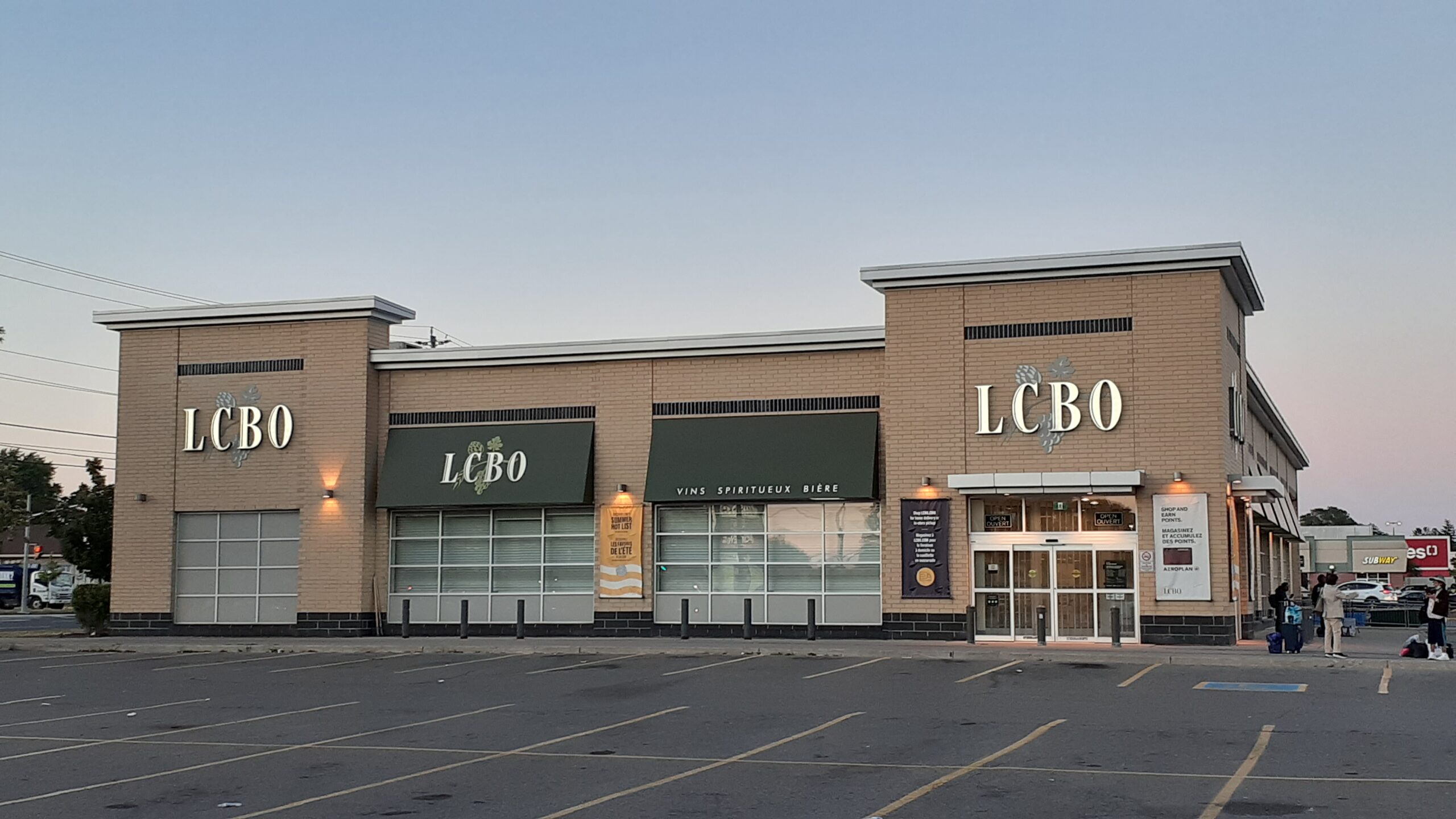
“LCBO at Parkway Mall” by Xander Wu is licensed under CC BY-SA 4.0 .
A week into the strike, a scant 15 per cent of Ontarians told Leger marketing that shuttered LCBO outlets had “affected (them) personally”. Only 29 per cent said they felt the government should legislate or arbitrate LCBO workers back into stores as soon as possible. Eleven per cent said they didn’t even know the strike was happening. And 32 per cent said they had explored “alternative locations” to buy booze, of which there are nowadays myriad.
Many more explored those opportunities in week two of the strike, I suspect, as fridges and wine racks were depleted. That’s potentially bad news for the LCBO’s future retail market share. But you didn’t even need an alternative to the LCBO: With a few days’ planning you could get all your regular brands delivered for free. Delivery and wholesale options were running as normal. Restaurants and supermarkets supplied by the LCBO were still supplied, and though there were reports of empty shelves at some supermarkets, that wasn’t truer than normal at the one I visit.
[…]
So this all looks like a terrible miscalculation by union leadership on behalf of its members — both a fundamental misreading of who had leverage, and a bizarre tactical choice to make the strike first and foremost about expanding the sale of ready-to-drink cocktails and seltzers (RTDs) to supermarkets and convenience stores.
Not wages; not benefits; not the number of full-time positions — things people can at least relate to — but where you can and cannot buy a White Claw or a Caesar in a can. Did they really think people would care?
Near as I can tell, it was an attempt to make this about the LCBO’s retail future: RTDs are a big and growing slice of the alcohol market in Ontario, only accessible (before the strike) at the LCBO. OPSEU wanted us to believe that by allowing supermarkets to sell them, Ontario would make no profit on them. And that’s their baked-in advantage: An incredible number of Ontarians, including far too many journalists, cannot wrap their minds around the notion of the government taking its cut at wholesale rather than retail.
Still, this gambit clearly fell flat.
Update: Fixed broken link to NP.
July 7, 2024
Ontario’s LCBO strike may be both justified and counterproductive
Ontario’s main importer and distributor of wine, beer, and spirits is now facing its very first actual strike, as the negotiators couldn’t come to an agreement by the strike deadline on Friday morning. On the face of the dispute, the union certainly has some solid grounds for the strike, as pay hasn’t been keeping pace with (official) inflation and far too many of the LCBO’s workforce are on work schedules that keep them from earning full-time wages. On the other hand, over the last decade or so, both Liberal and Progressive Conservative provincial governments have been making piecemeal changes to the market so that the LCBO is far from the only place Ontario drinkers can purchase their preferred booze. Just off the top of my head, here are some of the alternative options now available to Ontario consumers:

“LCBO at Parkway Mall” by Xander Wu is licensed under CC BY-SA 4.0 .
- The Beer Store, Ontario’s other (foreign-owned) booze oligopoly for beer and cider is still operating normally at all their retail locations and agency stores. They also have online ordering for delivery available to ordinary consumers.
- The LCBO is still offering online sales — not same-day, but free delivery.
- Ontario’s vast array of craft brewers are still able to sell individual cans or bottles of beer from their bottle shops or storefront locations (pre-packaged 6-, 12-, 24-container or other types are still limited to the Beer Store oligopoly, of course).
- Ontario’s wineries are similarly still operating normally for retail sales at the winery or (for a few older wineries who still have grandfathered privileges from earlier licensing regimes) stand-alone retail stores.
- Ontario’s much smaller — but growing — number of distilleries are also operating normally and are able to sell their locally produced whiskey, gin, vodka, etc. from their tasting rooms/bottle shops.
- Many, many grocery stores in the province now sell wine, beer, or both, and are all operating normally. They may be slower to replenish the shelves as the LCBO’s limited number of non-union staff will be handling re-supply.
In addition, if the strike continues for more than two weeks, the LCBO will open a select number of their stores for limited hours across the province (again, limited by the number of non-unionized staff available to operate the stores). With all of this (and I’m sure I’m missing some options in my list), consumers may begin to draw the conclusion that the LCBO isn’t as essential as it once was:
On Thursday evening, Colleen MacLeod, chair of the team bargaining on behalf of government liquor-store employees, declared the summer of 2024 utterly ruined.
“Tonight, (Premier Doug) Ford’s dry summer begins,” said MacLeod, of the Ontario Public Service Employees Union (OPSEU), hours before the first ever strike in the Liquor Control Board of Ontario’s (LCBO) history became official.
Desperate? Delusional? That’s up for debate. OPSEU’s press release announcing the strike suggests “delusional.” At one point it claims the LCBO is “Ontario’s best-kept secret.”
What could that possibly mean?
The release then quotes OPSEU president J.P. Hornick as follows: “We told Ford not to ruin everybody’s summer, but now he’s closed the Science Centre and forced a dry summer for Ontarians by refusing to offer a deal that would be good for LCBO workers and Ontario.”
The Ontario Science Centre is a tired old children’s destination in North Toronto that has been neglected in every way by consecutive provincial governments. I’m quite sure few people in Ottawa, Windsor or Thunder Bay have ever even heard of it. Mashing it together with the LCBO, just because OPSEU represents employees at both, suggests the union really doesn’t understand the fight it’s getting into.
If the Ford government is willing to dig in its heels and fight — which isn’t something it’s particularly known for — this could be a great win for the Ontario consumer.
It’s not 1990. The LCBO shutting the doors to its retail stores is really only a minor pain in the rear end, thanks to years of piecemeal, needlessly complex and and too-slow but nevertheless significant liberalization that really kicked into gear under former Liberal premier Kathleen Wynne. (Ford is often mocked for being obsessed with alcohol, but Wynne was nearly beyond parody. If her government woke up in a crisis Monday morning, it was safe to say she’d find herself announcing more beer and wine in supermarkets by Thursday afternoon.)
Anecdotally, as I was in on Thursday picking up a small selection of wine and beer, I overheard a conversation with one of the staffers and another customer where the staffer didn’t believe there’d actually be a strike and that the only result of the brinksmanship at the bargaining table would be that they would have to do more re-stocking next week after the (understandably) higher sales during the past week.
February 4, 2024
January 30, 2024
York University’s CUPE local apparently cribs their homework from the Völkischer Beobachter
York University’s contract and part-time instructors are represented by CUPE local 3903, who’ve distributed an eye-openingly anti-semitic document with the (implied) order to interrupt normal tutorials and replace the content with Palestinian propaganda:

Detail from an official “toolkit” distributed to York University contract and part-time faculty which claims that their employer is complicit in “genocide” by the mere tolerance of Jewish groups on campus.
Photo by A Toolkit on Teaching Palestine
A new toolkit circulated to York University teaching assistants instructs them to denounce Israel at every available opportunity, even when it has no apparent relevance to the subject being studied.
“Let us collectively divert this week’s tutorials to teaching on Palestinian liberation,” reads the 15-page document circulated by CUPE 3903, the union representing York’s contract and part-time faculty.
The document adds that tutorials should be diverted to condemnations of the “Zionist Israeli state” regardless of the course that the TA is supposed to be discussing.
“It is a medical issue. An arts issue. A feminist issue. A society issue. A political issue. A cultural issue. A geography issue. An engineering issue. An architecture issue,” it reads.
The document is filled with claims denouncing Israel as a genocidal “colonial project”. Canada is treated much the same, and is referred to alternately as the “Canadian settler state” or “Turtle Island”.
The mere presence of Jewish groups on campus is also referred to as evidence of York University’s “complicity” in genocide.
The document denounces the existence of sanctioned “Zionist cultural institutions”, making explicit reference to Hillel, the world’s go-to Jewish campus organization. York is also called an accessory to genocide because of its research links with the Hebrew University of Jerusalem.
The pamphlet even provides a script for TAs to read as they inform students that the tutorial will be cancelled in favour of becoming a “teach-in … for liberation.”
“Today, I open up our classroom to bring our attention on Gaza, to speak up and stand in solidarity with the Palestinian liberation movement, and contribute in ending Canada’s and York’s complicity with genocide and the settler-colonial occupation of Palestinian land and life,” reads one introductory line.