
Eugenus Rex
Published 6 Jun 2021In an insightful and sobering documentary, journalist Michael Cockerell chronicles the life and career of the politician, classical scholar, linguist, soldier, poet and altogether self-identifying outcast; the Right Honourable Brigadier John Enoch Powell. Featuring interviews with Mr. Powell, his family, friends and the former Prime Minister, the Baroness Thatcher.
Originally broadcast: 11th November, 1995.
(more…)
October 27, 2026
Odd Man Out | A Film Portrait of Enoch Powell (1995)
October 26, 2026
“Christofascism” seen as harmful
I must not hang out in the progressive cool kids’ areas of the internet, as I’d only occasionally heard the term “Christofascism” and I’d never encountered even a vague definition of what the pejorative might mean. Copernican to the rescue with an extended discussion on that very thing (it’s a long piece, these excerpts just skim the surface):
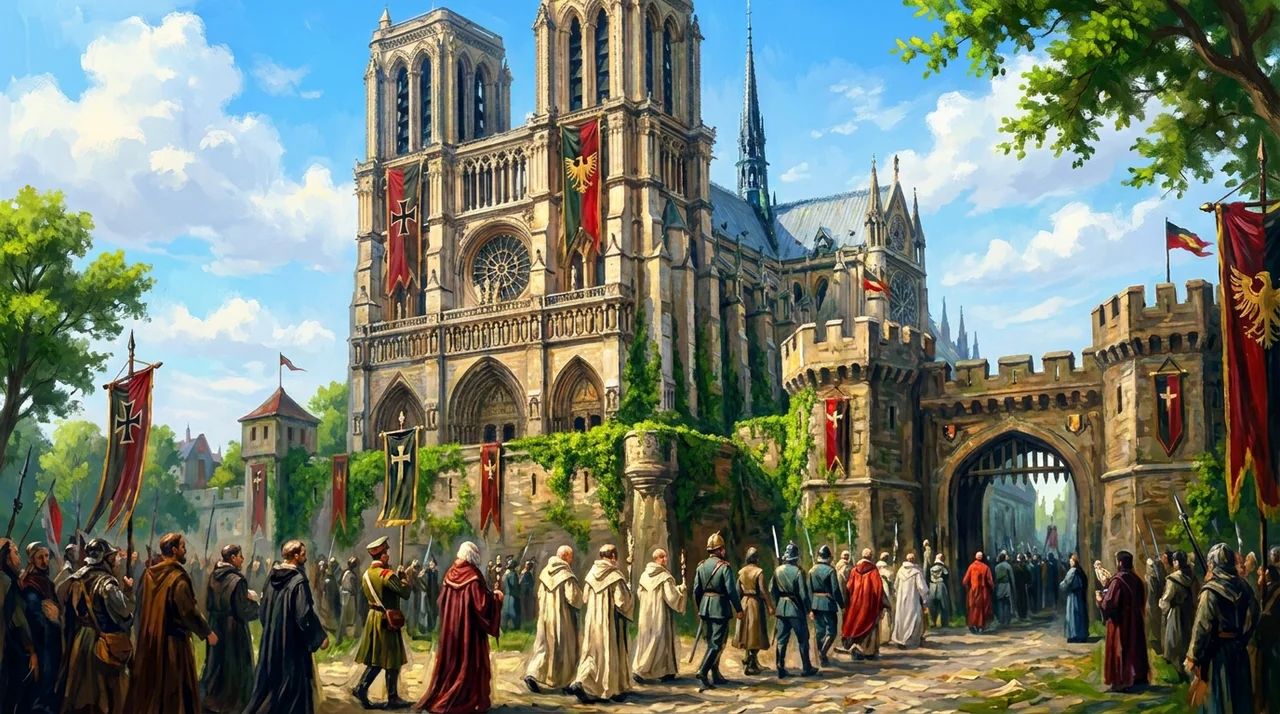
Image from Seeking Always the Horizon
Long has the progressive movement decried “ChristoFascism”, representing it as the greatest threat to Western civilization. The alphabet-soup squad has mostly moved on. Like most words uttered by the progressive mind, the term is used entirely for the reaction it elicits, and has nothing to do with describing the real world. Christofascism was just another word in their toolbox, like “nazism” or “racist” or (now) the ever-popular “if you date a girl two years younger than you, you’re a pedophile”.
All these are words uttered merely to enforce the progressive’s bizarre form of destructive totalitarian thought-control.1
While the [CURRENT THING] horde has moved on from accusations of Christofascism, I have not. There’s something archaically elegant in that formulation of words and the compound thought-form they represent. Hiding in the spiteful accusation is a memetic complex that deserves further investigation. Christofascism was a mere combination of “bad things” that the Left hates … but that doesn’t mean it should be taken as mere braindead progressive gurgling.
It may well be far more than that. There’s a new cultural theology hidden in there.
[…]
ChristoFascism
Individuals like Kulak identify modern (what I’d call “liberal”) Christianity as a fundamental inhibitor to the people of the West.2 That analysis is not entirely wrong. Christianity in its modern incarnation developed alongside the fall of Rome, the High Medieval Period, and then through the Enlightenment and the Industrial Revolution. Christianity was a governance apparatus for regional tribal conflicts and the occasional crusade. It was the centerpiece of the Holy Roman Empire, but the theological framework has a great deal of trouble squaring with modernity.
Simultaneously, all of the alternatives, the materialist religions of the 20th century, have been absolute disasters ending in nihilism, hedonism, or cruelty. The human collective unconscious is not a static thing.3 It’s frothing with new ideas, particularly during times of great change and turmoil. The Hegelian dialectic.
Notably, the Hegelian dialectic ends in the creation of a new thesis. The original Thesis is the Universalist heritage of the West. That would be Christianity from 300 AD up until the 19th century. Then there is the antithesis, the materialist religions that seized the zeitgeist in the 20th.
[…]
A Christofascist cultural foundation must express:
- The moral recognition of a higher power and that it is the duty of the state to nurture a heroic righteousness in its own people, granting Duties, and Guidance in addition to liberty.4
- A masculine Will to Power in the development of its own practices, heritage, and promotion of its own cultural ideals to the exclusion of hostile, foreign, or corrosive ones.
- That the State, and the individuals who make up the State, are responsible for adhering to higher moral standards. One cannot simply blame “the voters” for the evil actions of the state. The leadership of the state holds personal responsibility for imposed policies.
- An intense sense of national exceptionalism, particularly in the eyes of God. As a spiritually exceptional state, the people of the nation uphold a higher scientific and spiritual ideal as individuals, families, and citizens.
- A recognition of other similar nations as being siblings seeking the same ultimate goals through alternative means, rather than pawns in a game of Great Powers.
- Paternalism with God as father to the nation’s people, and the nation’s people not beholden to the operational state but being the actuators of it. A father that expresses temperance in governance.
- I think that John Carter wrote the best analysis of this phenomenon in his work on “Homo Umbrans“. The product of man willingly handing over sapience in exchange for the reprieve from intellectual rigor. To very roughly summarize one of the best articles on Substack: if you feel like you’re under psychic attack when trying to communicate with a progressive, it’s because you are. The Leftist attempts to annul the meaning of words required for thought to render sapient cognition and abstract reasoning impossible.
- Here’s a direct link to some of the work that Kulak has done. This one is of particular interest to those in the proverbial Pagan camp. Here’s an article that was written by Millennial Woes on the same topic. A great article that I would recommend regarding this perpetual confrontation within the Spiritual Right.
- Here’s my own article on how best to conceptualize the collective unconscious.
- We will assume a Christian higher power, it’s in the name after all.
Reality refuting the beliefs of the gun-grabbers
The shooting in Bend, Oregon is turning out to not follow the gun-grabbers’ narrative even a little bit. It’s getting noticed:

I was told by anti-gun extremists that any “Good Guy with a Gun,” would be mistaken for the bad guy and immediately shot by the police, after he was easily shot by the bad guy because the Good Guy with a Gun wouldn’t know how to use his own gun …
What happened in Bend, Oregon? None of that happened …
ESR responds:
Yes, I’ve been thinking that the Bend shooting turned into the graboids’ worst nightmare, and it keeps getting more so as people process it.
Oregon has an A- rating from Giffords. That means its laws were already doing almost everything that the graboids claim should prevent mass shootings. But obviously didn’t.
Giamfranco is soft spoken, articulate, and photogenic. There’s no dismissing him as a scary redneck. And he’s not a veteran or a hunter or anything, just an ordinary family guy who stepped up.
He popped the bad guy with surgical precision. He didn’t hit a bystander, and he didn’t get shot himself either by the bad guy or the cops. Of course this is usually the way it goes, but most people who aren’t gun-culture themselves don’t know that.
The obvious questions is raises are: if gun control didn’t work in Bend, why would it work anywhere? And if an ordinary chill dude can step up to save lives when the laws failed, what kind of idiot do you have to be to want to stop that from happening?
What is it the kids say nowadays? Ah, yes. Cope, seethe, and mald, graboids. This intervention was everything you hate, and that’s good news for the rest of us.
October 25, 2026
“This alliance between Islamist and left-wing forces is known in France as islamo-gauchisme“
After an earlier post of his went viral, Maarten Boudry revisits the same topic but this time with references and footnotes that he regretted not including in the original:
This was not a carefully argued analysis, but an impassioned cry from the heart, dashed off in the heat of the moment after watching the horrific scenes of wanton destruction in France. To my surprise, the post blew up: it received thousands of likes and reposts, was translated into multiple languages and was cited in several newspapers. I was flooded with interview requests, which I declined because I’m still working on my book.
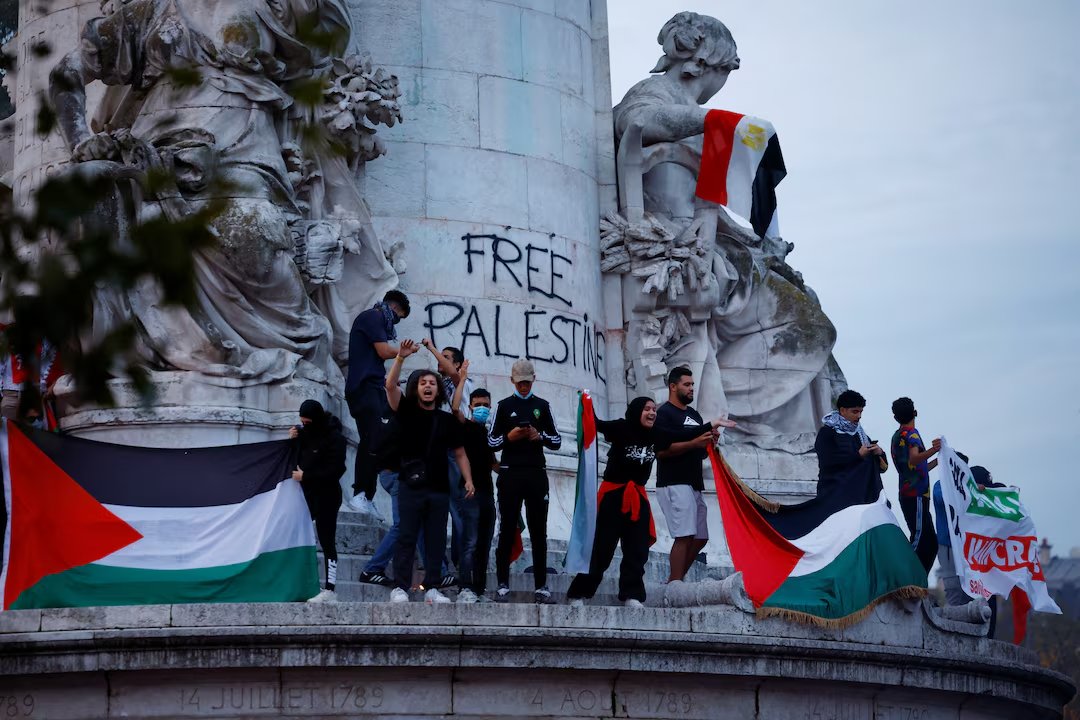
As a sometime academic, however, I felt a bit embarrassed that my little rant contained no sources and little in the way of actual argumentation. A dereliction of duty! So, to make it up to you, I want to elaborate on one of its underlying ideas: that “useful idiots” on the left have been marching alongside Islamists, and that the Palestinian flag has become the joint symbol of hatred for Western civilization. This alliance between Islamist and left-wing forces is known in France as islamo-gauchisme (Islamo-leftism), and elsewhere as the Red-Green alliance. Does it really exist, and in what sense? Is it an orchestrated plot, or more of a rapprochement of convenience?1 And are the warm feelings mutual?
Come to think of it, I happen to have some academic expertise on the topic.
Photo from Maarten Boudry’s Substack
A conspiracy theory?
If we are to believe the vast majority of academics and journalists, Islamo-leftism is nothing but a “conspiracy theory” — a far-right fever dream in the same category as the Great Replacement or Judeo-Bolshevism. In 2021, more than 600 academics said as much in an open letter in Le Monde. As someone who has written several academic papers on conspiracy theories, I’m here to tell you: not only are these people clueless, they are part of the problem. They are abusing the valuable concept of “conspiracy theory” to shut down debate, much like the premature dismissal of the lab-leak hypothesis during the pandemic.
A conspiracy theory, in the pejorative sense, is an unproven and speculative hypothesis about a secret and sinister plot hatched by a relatively small group of people. Typically, the very lack of hard evidence for the conspiracy is taken as proof that the conspirators are fiendishly clever and have covered their tracks. In my academic work, I have dubbed such self-sealing theories the intellectual equivalent of a black hole: once you’ve dived in, it’s hard to claw your way back out.
The rapprochement between parts of the left and Islam is none of these things. It is hiding in plain sight and has been extensively documented. Granted, some of the leftist romance with Islam may stem from secret funding by Qatar and Iran — which would qualify as a genuine “conspiracy”2 — but by and large these factors are incidental. The Red-Green alliance does not rest on covert coordination behind the scenes, but on ideological kinship, a shared enemy (Western civilization, modernity and capitalism) and a hefty dose of naivety on one side.
- See Rob Henderson’s interview with Franziska Sittig, co-author of the 2025 book Intellectual Self-Destruction: How the West Gambles Away Its Future (the book is on my to-read pile)
- See this shocking piece by Ella Kenan about the secret plans of the Muslim Brotherhood and Qatar, which amount to an actual conspiracy.
The generational difference in how young right wingers see the left
On the social media site formerly known as Twitter, Christian Heiens says that there’s a signficant difference in how older and younger conservatives view their opponents on the left:
You need to understand how Right-wing people under 40 view the Left.
When we think of Leftists, we do not think of Barack Obama or Ezra Klein. Yes, these guys are on the Left, but younger Millennials and Zoomers on the Right do not think of Leftists in their own age bracket as polished technocrats.
These are not the sort of people that make up our Left-wing counterparts that we grew up with, went to school with, or work with.
When we think of Leftists, the first thing that pops into our head are a bunch of disgusting, depraved, spiteful mutants who want to destroy everything around them as payback for the crime of being born.
We think of Discord troons that invaded our hobbies, Reddit mods who are drunk on the most insignificant power imaginable, that one girl from high school or college who became a literal Communist, and that friend or family member who cut off all contact because we refused to treat their mental illness like a status symbol.
We think of people who, if they ever became a majority of the country and actually managed to possess political power, would inevitably kill tens of millions of people out of blind envy and petty cruelty.
Younger people on the Right come across as impatient and anxious in their mindset and mannerisms because they understand what will eventually happen when these people succeed their Gen X and Boomer predecessors in the Democratic Party.
They know what is to come if their own generational cohorts on the Left actually take power, and they feel incredibly exasperated that it seems like none of their parents or grandparents understand just how late the hour truly is.
A few days later, he also commented:
This blew up because people realize the age of discourse is coming to a close.
Discourse itself is meaningless at this point because discourse requires moral alignment, which is precisely the thing we are now fighting over.
Every other question has already been answered and there is nothing more to debate. The only thing left to do is to act, or be destroyed.
QotD: Feminism as a luxury belief
One ideology where it’s as true as it is for libertarianism is feminism. Feminism was led by (and greatly improved the life chances of) women like me. It was great for smart, disagreeable, career-focussed women who don’t like or want kids. And yes, just like getting banged up for a bit of weed while harming precisely no-one seriously annoys the kind of smart, self-controlled person who can formulate a (libertarian) policy response to the War on Drugs, so too with women who were uninterested in home and family (or who were same-sex attracted) and found that being circumscribed professionally and romantically really, really rankled.
However, just as most people aren’t members of Heath’s self-control aristocracy, most women do not combine high intellect with disagreeableness and conscientiousness. Some feminists have realised this — albeit in an ad hoc way — and because feminism as a wider movement was/is wedded to blank-slatism, they believed they could shift the dial on what was then called “female socialisation”. That is, they thought it would be possible to make women as a group more closely resemble the able, disagreeable women who were by the 70s and 80s entering the professions, politics, academia, lobbying outfits, and think-tanks.
Or, of course, men. Men more often combine high trait disagreeableness with high trait conscientiousness (although even among males, the combination is rare). This is despite the fact that there are more agreeable women than agreeable men, and more conscientious women than conscientious men.
No woman should be authorized to stay at home to raise her children. Society should be totally different. Women should not have that choice, precisely because if there is such a choice, too many women will make that one. It is a way of forcing women in a certain direction.
“A Dialogue with Simone de Beauvoir”, in Betty Friedan, It Changed My Life: Writings on the Women’s Movement, Random House, 1976, p. 397.
de Beauvoir’s suggestion is both authoritarian and hilarious, and represents a panicked response — not unlike the howls from Marxists when it became clear the proletariat was uninterested in revolution — to women unlike her. While it’s true (at least historically) that there were a number of strands to feminism — including a pro-motherhood one — careerist feminism finished up dominating all the others. I’m old enough to remember campaigns for wages for housework. If some old school wonks got hold of this idea, it could form part of a suite of policies directed to increasing the fertility rate.
You don’t see those feminist campaigns any more, though. They’ve been submarined. As I say, I’m old.
Women throughout the developed world — notoriously — tell pollsters they want more children than they have. Usually three is the preferred number, as opposed to two or one. The so-called “gender wage gap” exists because women have children.
Economists often decry this finding as a case of stated versus revealed preferences: what people do is more salient than what they say, something known since Roman times. Hence the Stoic quip acta non verba (“deeds not words”). However, even if fully half the “I want more kids than I have” response served up to pollsters is nothing more than windy stated preferences, that still leaves a lot of unborn but wanted children. Feminism, as Louise Perry is fond of pointing out, has simply dropped the ball on this one.
This insight is, I recognise, a genuine example of ad hominem. It suggests that people plump for ideologies that will give them a leg-up, and do so deliberately. That said, political ideology is, like conscientiousness, heritable. Henderson’s and Heath’s insight reminds us that everything social is emergent from the biological (the basis of Lorenzo Warby’s essays on this Substack). That’s why libertarianism is the way it is, and feminism is, and probably other ideologies too.
Helen Dale, “People Unlike Me”, Not On Your Team, But Always Fair, 2024-05-29.
October 23, 2026
Quebec is to Canada as Scotland is to the United Kingdom
On the social media site formerly known as Twitter, Fortissax explores the idea that Quebec’s relationship to the rest of the Demented Dominion closely resembles the sometimes awkward relationship between Scotland and the rest of the UK (but primarily England):

People have often compared the relationship between Anglo Canada and Quebec to that of England and Ireland, and while there are some similarities there particularly in the visceral emotions during the Cold War, I’d actually argue that Quebec is closer to Canada’s Scotland.
Scotland entered the British union in 1707 as an established kingdom with its own institutions and national consciousness. Québec entered Confederation in 1867 as the homeland of French Canadians, whose institutions and identity predated the Dominion.
Scotland and Quebec became elements of a larger political order while retaining separate identities. Both the English and Scottish can be British, both Anglo and French Canadians can be “Canadian”.
Scotland preserved its legal system and established church under the Union of 1707. Québec retained its civil law tradition, while the Quebec Act of 1774 protected Catholic religious practice and established important foundations for institutional continuity
Scottish identity has historically coexisted with British identity, just as French Canadian identity has coexisted with Canadian identity. In both cases, nationalists have disagreed over whether their distinctive peoplehood is best expressed through political independence or continued participation in a multinational union.
Scots were disproportionately involved in, and benefited enormously from, the British Empire, particularly through commerce, banking, industry, trade, colonial administration, and the military.
French Canadians likewise disproportionately participated in and benefited from the expansion of British North America and the Canadian economy, establishing banks, credit unions, grocery enterprises, factories, and steamship companies. They helped establish the Hudson’s Bay Company, the North West Company, explored vast swathes of the continent, contributed four Fathers of Confederation, and produced six prime ministers
Fast forward to 2026, certain Scottish and Québécois nationalists are suddenly smol wittle itty bitty decolonial Third World beans who dindu nuffin, possessed absolutely no historical agency, and were apparently dragged kicking and screaming into the imperial projects their ancestors helped build.
October 22, 2026
Street theatre with a niqab and a prayer mat
On Substack Notes, Dan Burmawi discusses the recent phenomenon of Muslims choosing to performatively pray on the public streets:

Photo from Dan Burmawi’s note on Substack.
Tonight, as I was leaving a restaurant on 14th Street in New York around 10 p.m., this Muslim woman took a prayer rug and a niqab out of the trunk of her car, put the niqab on, laid the prayer rug down, and started praying on the street.
I grew up as a Muslim in the Islamic world, and let me tell you: this is absolutely part of an organized effort to flood the public square in the West with Islamic symbolism.
First of all, there is no Islamic prayer at 10 p.m. Even if she missed the Isha prayer, which takes place earlier in the evening, she has until dawn to make it up. So why choose to pray on the street at 10 p.m.?
Second, a Muslim woman who does not wear a niqab or hijab in her daily life would never normally have a niqab sitting in the trunk of her car.
She is clearly not strict enough to wear it every day, so why would she suddenly be so strict about missing a prayer that she carries a niqab in her trunk specifically for this purpose?
Third, in almost any Islamic country, you would never see a woman praying on the street at 10 p.m. This would be completely unacceptable.
If she were genuinely worried about praying, she could simply wait until she got home, especially since a missed Isha prayer can be made up before dawn.
I can tell you with full confidence that these scenes we keep seeing of Muslims praying in the streets of the West are intentional.
They serve to assert dominance, normalize Islam in the public square, seize ground, and demand exceptional treatment that immediately turns into claimed rights.
Bad-faith acts like this are signals of the same project that turned many cities in Europe into shitholes.
Exceptional threats demand exceptional measures.
Islam must be banned in the West because it is not a religion; it is a hostile political ideology.
Until that happens, the West will continue losing ground to this ideology every single day.
October 21, 2026
Capital gains tax is legalized theft
On the social media site formerly known as Twitter, Handre explains the iniquity of most “capital gains” tax schemes in the west:
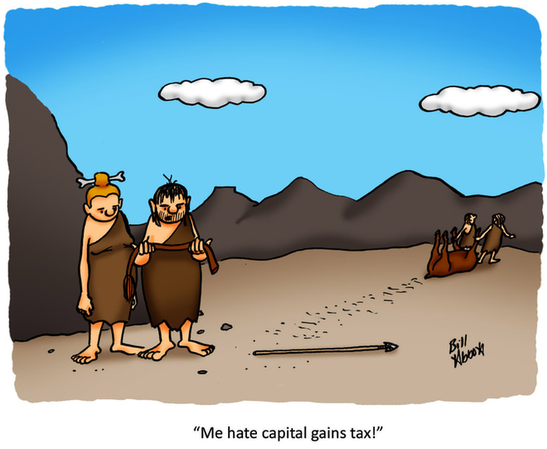
Capital gains tax is theft, committed twice against the same dollar.
You earn income. The government takes its cut immediately, in the US it’s between 22% and 37% depending on your bracket. What remains is yours, after-tax money, already processed through Washington’s collection machine. You choose not to spend it. You save it, invest it, buy assets with it. The discipline required to delay consumption is precisely the behavior that funds capital formation across the economy.
Then the asset grows. You sell it. The government appears again, demanding 20% (plus the 3.8% Net Investment Income Tax for higher earners) on the nominal gain, which often includes pure inflation adjustments that represent no real increase in purchasing power whatsoever.
The IRS treats your patience as a second taxable event. The original dollar was already taxed. The “gain” frequently reflects nothing more than the dollar losing value while you held the asset. Murray Rothbard identified this pattern: the state punishes capital accumulation.
Consider a simple case. You invest $50,000 of after-tax earnings in 2016 into an S&P 500 index fund. By 2026, it’s worth $115,000. Inflation consumed a meaningful slice of that $65,000 gain. You pay capital gains tax on the full nominal figure regardless.
Capital gains taxation suppresses investment, shrinks the capital pool available for productive enterprise, and forces entrepreneurs to seek financing from a shallower pond. Fewer productive investments get made. Workers carry that cost through lower wages and fewer opportunities. The state expands, while you suffer.
Comments Off on Capital gains tax is legalized theft
October 20, 2026
Cognitive dissonance made flesh – Homosexual Intifada: A Queer Palestinian Anthology
They say that politics makes unlikely bedfellows, but the alliance-of-convenience between Palestinian extremists and LGBT activists is surely one of the least likely to have a long, happy life. A guest post by Fred Litwin at The Real Story reviews a book that I wouldn’t have believed to be real but apparently is:
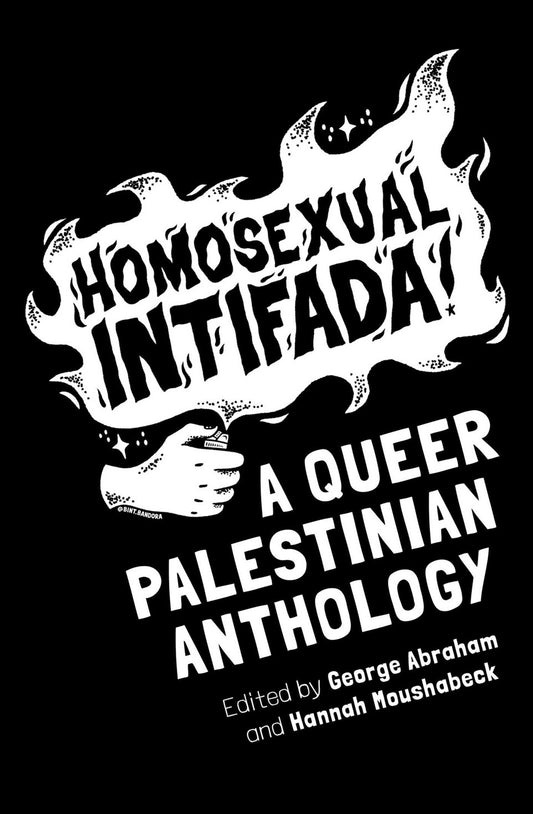
As soon as I saw this book cover, I knew I had to write a review. And the dedication alone had me hooked: “For our Ghazzawi kin, surviving siege after impossible siege, teaching life under the most abject genocidal conditions …
For the martyrs, from every river to every sea,
especially those who died illegible deaths
For those whose queerness was erased from the pages of
history & the ancestors queered on their own terms
For the queer living, despite the systems that
attempt to annihilate Palestinians everywhere
George Abraham (he/they), one of the editors of the anthology, writes in his introduction about “writing from within the dying days of western empire and racial capital”. And so this is a hopeful book:
Contextualized within this interconnected settler genocidal regime, it is unsurprising to witness a rise of queer and trans insurgence, both globally and domestically in the US, standing in solidarity with Palestinians against the very regimes that dispose of all of our bodies without hesitation or consequence.
This rising up is leading to something extremely worthwhile – the “genocidal moment is changing our community’s understanding of queerness”. A friend of Abraham’s says that her [their?] homophobic, transphobic parents are “starting to unlearn these harmful views because of this notable queer solidarity”.
It’s too bad it took a genocide to get people to change their minds but “pessoptimistically, it is a testament to the living power of organized people”. I don’t know about you, but I’m starting to think pessoptimistically: Are minds really being changed in Gaza? Is Hamas starting to “unlearn these harmful views” because of the queers marching in western streets?
Unfortunately, the “transphobic attacks” right here in the west are “the ruling class’s efforts to reconstitute the gender binary, which has always been at the heart of its colonial hegemony”. And so the community’s rage and despair leads to what Abraham calls the “Homosexual Intifada”.
We come to think about the ways queer and Palestinian identities might co-resist, pushing each other to horizons of resistance, knowing that our entangled fight is one against an entire world order, and one that carries many universes of grief.
Thankfully, editing this anthology has connected Abraham “with queer Palestinians all over the world, across generations and transnational contexts”. The contributions of the various authors and poets “treat queer Palestinian life on our own terms, give you clarity and precision of language that feels dangerous to the imperial English of our daily lives”.
Clarity? There’s one word that appears only once in the entire anthology: Hamas.
Precision of language? Let’s have a look at the “precision of language” in Homosexual Intifada.
From the poem “Further Thoughts on Living” by Noor Hindi (she/they):
I loved pinning her against the wall and fucking until her screams silenced her shame.
Noor Aldayeh (they/them), a self-described non-binary Syrian-Palestinian lesbian contributed “Arab Lesbianism is Not an Oxymoron”.
Similarly, gender diversity (and what we might define as gender-queerness or transness, acknowledging such labeling as inherently colonial in nature) has an even wider and deeper standing within our history. From intersex ancient deities (see: Astarte) to gender-nonconforming djinn, to medieval androgyny to “cross-dressing” AFABs [assigned female at birth] in early 1900s Egypt, Palestine and Lebanon – beyond binary ideas and manifestations of identities – not only exist but are deeply integral to SWANA history as a whole.
Update: Of course, I didn’t spot the typo in the headline until after the post had gone live …
Singapore’s unique approach to multiculturalism
In the third and final (?) part of Ed West‘s review of Lee Kuan Yew’s memoirs, he describes the multicultural issue in Singapore and how it was addressed to reduce racial tensions in the city state:
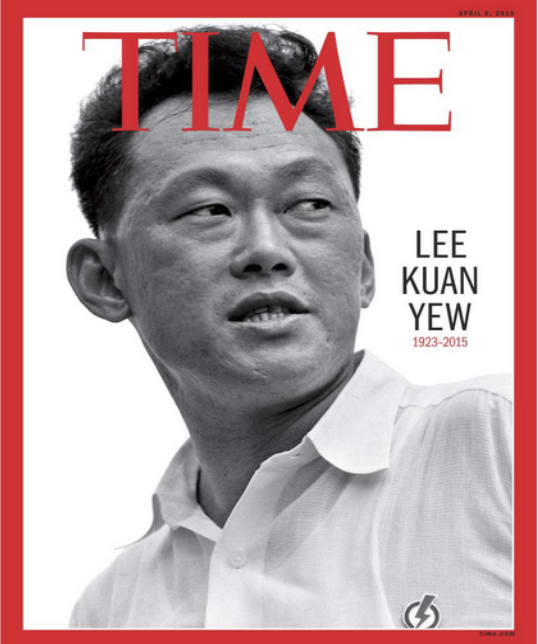
Singapore led the way in becoming the first truly multicultural democracy, but this entailed sacrifices. Because segregation was a major driver of inter-communal tension, so the new Housing and Development Board, as well as providing much needed homes, brought with it the revolutionary idea of neighbourhood quotas. This meant the vast majority of Singaporeans being allocated a flat, on which they had a 99-year lease, in purposefully desegregated housing blocks. The city would never again suffer from race riots.
Parliamentary seats were also reorganised to ensure that every constituency had a representative from each group. “Without this arrangement, the Chinese majority in all constituencies would most likely return Chinese candidates”, he wrote. Voters “preferred one who empathised with them, spoke the same dialect or language and was of the same race. All candidates who have campaigned know this only too well. It was going to be difficult if not impossible for a Malay or Indian candidate to win against a Chinese candidate.”
Lee had a hard-headed approach to multiculturalism, as only someone who was truly multicultural could. As one of the Straits Chinese elite, English was his “master language”, but he spoke Malay well, more like a peranakan — a local-born Chinese — rather than a totok, a recent Chinese immigrant. For his annual speech, which could take up to two hours, Lee would address the audience first in Malay, then Hokkien, and finally in English. Hokkien would later be replaced by Mandarin, even though “for many Chinese Singaporeans, dialect is the real mother tongue and Mandarin a stepmother tongue”.
Lee’s view of multiculturalism also directed his approach to the law. An early experience of defending rioters in 1951 during the “Jungle Girl” disturbances had left him sceptical of the jury system, and he had it abolished in 1969, except for murder trials. Lee saw juries as incompatible with a multi-racial society, but he also believed that many people were too irrational to make such a decision.
He wrote how “a Straits Times court reporter who had watched many jury trials gave evidence … that superstitious beliefs and a general reluctance to take responsibility for severe punishment, especially the death sentence, made Asian jurors most reluctant to convict. They preferred acquittal or conviction on a lesser charge. The reporter said he could predict that whenever a pregnant woman was a member of the jury there would be no conviction on a murder charge, for otherwise her child would be born cursed. After the bill was passed and jury trials were abolished, there were fewer miscarriages of justice arising from the vagaries of jury sentiments.”
Singapore’s tough approach to crime became world famous, and curiously this was partly inspired by his experiences of the Japanese occupation, after which “I did not accept the theory that a criminal is a victim of society”.
He wrote how “punishment then was so severe that even in 1944-1945, when many did not have enough to eat, there were no burglaries and people could leave their front doors unlocked, day or night. The deterrent was effective. The British used to have whipping with a cat-o’-nine-tails or rattan in Singapore. After the war, they abolished whipping but retained caning (with rattan). We found caning more effective than long prison terms and imposed it for crimes related to drugs, arms trafficking, rape, illegal entry into Singapore, and vandalising of public property.”
Comments Off on Singapore’s unique approach to multiculturalism
QotD: What is “hate speech”?
The answer is yes. There is nothing else for them to suppress. Repressive positions are difficult to defend for those who wish to keep their liberal credentials intact. They usually do so by quoting bits of pernicious nonsense from the kind of speech they would ban to illustrate how worthless and abhorrent it is. But pointing to the abhorrent nature of despised speech is insufficient because no speech is legislated against unless it’s abhorrent to some. Nobody outlaws Mary Poppins, not even the Human Rights Commissions (though this could be famous last words).
If suppressing opinion breaches axioms of liberalism, can it be justified by utility? Canadian defenders of hate-speech laws rarely offer any examples, other than the dubious benefit of distinguishing ourselves from Americans (one Human Rights-type called free speech an American concept in a recent court case) but one suggestion is that such laws would have stopped a Hitler. The problem is, the Weimar Republic had such laws. It used them freely against the Nazis. Far from stopping Hitler, they only made his day when he became Chancellor. They enabled Hitler to confront Social Democratic Party chairman Otto Wels, who stood up in the Reichstag to protest Nazi suspension of civil liberties, with a quotation from the poet Friedrich Schiller: “‘Late you come, but still you come'”, Hitler pointed at the hapless deputy. “You should have recognized the value of criticism during the years we were in opposition [when] our press was forbidden, our meetings were forbidden, and we were forbidden to speak for years on end.”
The Nazis would have been just as repressive without this excuse, but being able to offer it made Hitler’s task easier. Like Canadian supporters of hate-speech legislation, supporters of the Weimar Republic thought that their groups and causes would occupy all seats of authority and set all social and legal agendas forever. Shades of the Canadian Civil Liberties Association or the Canadian Jewish Congress! They couldn’t envisage the guns of their own laws being turned around to point at them one day. Eradicating hateful ideas through free discourse is liberal; trying to eradicate them through legislation is illiberal. “There is always a chance that he who sets himself up as his brother’s keeper”, wrote Eric Hoffer, “will end up by being his jail keeper”.
Another thing: “Banned in Boston” sells tickets. As Victor Hugo put it: “The writer doubles and trebles the power of his writing when a ruler imposes silence on the people”. I’d think twice before banning neo-Nazis for this reason alone.
George Jonas, “Regulating speech that is not against any law”, CanWest Publications, 2008-04-02.
October 19, 2026
“If alternative energy is a ‘lower-cost’ solution they shouldn’t need prodding from a wise and benevolent state”
John Robson points out that words do have meanings and calling expensive things “cheap” and cheap things “expensive” doesn’t actually change their economic or environmental value in the real world:
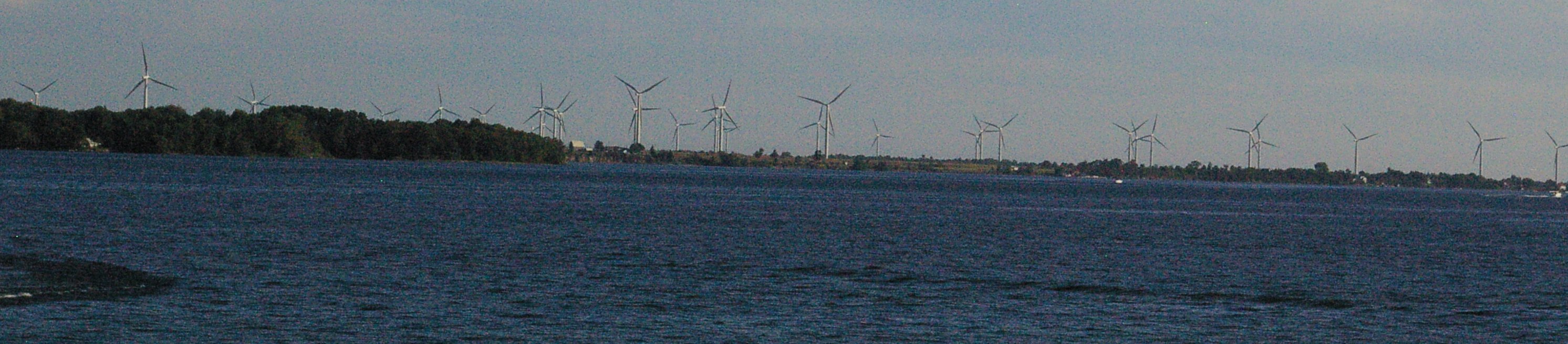
Martian fighting machines striding over Horsell Common … no, wait, these are actually wind turbines on Wolfe Island, near Kingston, Ontario.
When it comes to the alleged green energy transition and its flood of cheap power and paradisaically green, lucrative and fulfilling jobs, those with even fairly short historical memories will recall that the “Green New Deal” legislative package was meant to do for the US economy what Franklin Roosevelt’s “New Deal” had supposedly done in the 1930s. Those of us who think the main achievement of the “New Deal” was to extend a sharp recession into a decade-long depression through a massive set of taxes and regulations driven by inane economic theory, for instance plowing crops under to fight hunger under the AAA, didn’t even find that claim appealing. But others sure did, and with about as much to show for it.
As Wikipedia put it, after tracing uses of the term back to 2007:
The 2019 United States congressional resolution Recognizing the duty of the Federal Government to create a Green New Deal introduced by Alexandria Ocasio-Cortez and Ed Markey advocated a ‘just transition’, counteracting previous systemic injustices that had disproportionally hurt vulnerable communities. A ‘just transition’ relies on increasing social and economic equity and access to opportunity which are crucial components of the Green New Deal and principles of environmental and social justice.
For these hyper adherents to Thomas Sowell’s “unconstrained vision”, just saving the planet isn’t enough. You also have to save the economy, eliminate injustice and after lunch world peace.
In Canada, where we pride ourselves so fiercely on our “elbows up” independence from the United States that we call our system of socialized medicine brought in back in 1966 “Medicare” after um uh the American program from 1964, there are calls for “A Green New Deal for Canadian Sovereignty” which appears to be the US version with maple syrup:
This will allow us to quickly transition from an economy excessively reliant on serving the United States and based on exploitation and the burning of fossil fuels, to one that is more self-reliant, driven by dignified work, clean renewable energy, more equitable and with efficient public services for all.
Oh. Just that? Who knew giving up oil and gas in a cold northern country could fix government health care? Well, Greenpeace Canada, for one, with their 2019 infographic that includes “Create a plan for 1 million good green jobs” (shades of Mole from Pogo exclaiming “A plan! You’re right! I’ll need a plan!”). And with this one, wait, you also get “Indigenous rights” and “proportional representation” and “BETTER LIFE FOR ALL” and “Build clean industries”. Oh and “Grant personhood protections to forests and bodies of water”. And interfaith harmony and a guy in a wheelchair and all that there.
Mind you, the bit where you “Build clean industries” still appears to face a few minor hurdles, like building clean industries. And why just 1 million good green jobs? Why not 5 million, or 53 million, or 628 billion? Since climate transition enthusiasts don’t do practical well.
For instance Canary Media just launched a publication “California Wire” dedicated to telling you the transition that failed in California worked in California:
I’m launching this newsletter at an intriguing moment in California politics. Democratic Gov. Gavin Newsom – who everyone knows is eyeing a run for the White House – has one last chance to show his true colors on energy and climate change. Rising electricity costs are a major issue in California, and Newsom must decide by the end of this month whether to sign a host of bills that could help cut utility rates while also advancing the state’s clean energy transition. What message does he want to send to Californians and the rest of the country?
Dude, he already “sent a message” that this GND is pie in the sky and energy gets more expensive not less. And not because he hid his “true colors on energy and climate change” but because he waved them in everyone’s face while shouting about the subject. So now all he needs to do is wave his pen? Yup:
a few bills on his desk now could at least start the long slog of reforms that experts say will help make power more affordable.
Oh wait. Experts say. But long slog? Help make it more affordable? Why the Dickens isn’t it already more affordable since these kinds of people keep telling us wind and solar are now cheaper than oil and gas, and let’s not even mention coal, and Newsom’s true colours are wind and solar?
Indeed, he calls for:
a precursor to setting up regulations that could steer them [utilities] toward prioritizing lower-cost solutions over expensive grid upgrades.
Talk about leaping into verbiage. And also error, since if alternative energy is a “lower-cost” solution they shouldn’t need prodding from a wise and benevolent state, and if they’re not, you’re just making things worse by persisting in your delusion.
Comments Off on “If alternative energy is a ‘lower-cost’ solution they shouldn’t need prodding from a wise and benevolent state”
British Columbia’s David Eby
I barely pay attention to politics in my own province, so my knowledge of British Columbia politics is far less detailed. I do rather think of BC’s political class as maple-flavoured understudies to California politicians, which may not be fair … I’m not sure if it’s not fair to BC politicians or to the folks running California into the ground. At Without Diminishment, Geoff Russ looks at whether David Eby actually seems to love his adopted province or if he just values it for what it allows him to do:
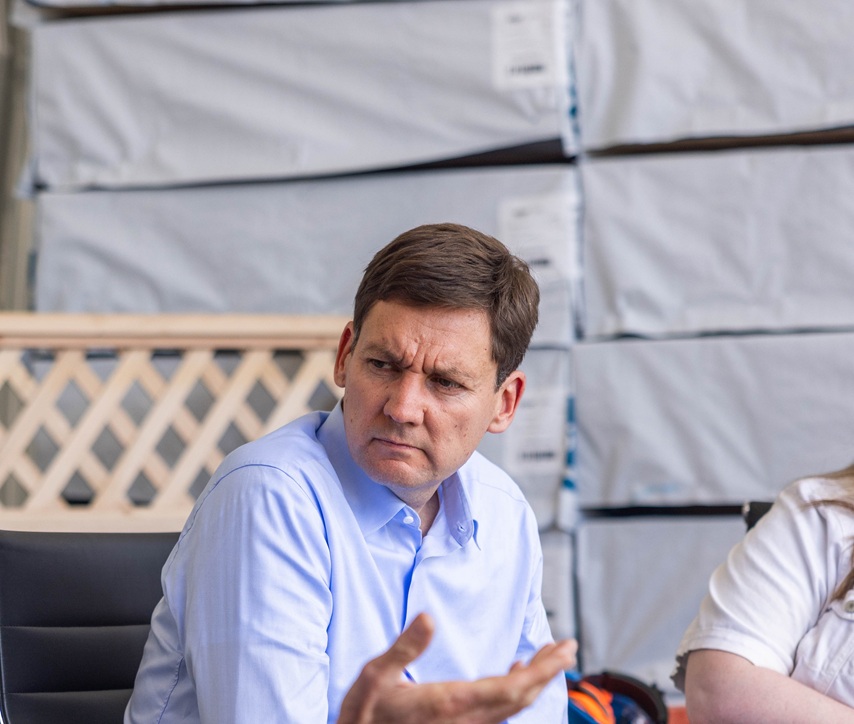
David Eby, Premier of British Columbia
Photo from the Government of British Columbia via Without Diminishment
In the only televised debate of British Columbia’s provincial election, Premier David Eby tried to make it clear that he loves our province.
Are we sure about that?
We know there are people who come from afar to make a home here and go on to do incredible things for B.C. Names like Alberta-born Trevor Linden, W.A.C. Bennett from New Brunswick, and others are all enshrined in the pantheon of West Coast heroes.
If Eby’s record is any indication, he loves what B.C. can do for him. He uses provincial taxes to fund his political experiments and the premier’s office as a pulpit, while milking the treasury to save a buck in his personal life.
The best example of this was the way in which he took advantage of the $10-a-day subsidised daycare program, using it to save money despite the fact that he and his wife earn well over half a million dollars per year.
There was nothing illegal about Eby, a resident of B.C., putting his child in the daycare program. However, that scheme is clearly intended for struggling families and single parents, not a highly paid premier and his well-paid spouse. It was a gross, indecent decision, and there is no way around that.
All of Eby’s alleged affection runs in one direction.
Under his watch, the term “British Columbian” has been replaced in official guides with “people living in B.C.” because the former is allegedly harmful to Indigenous peoples, refugees and other newcomers, like the premier himself. As for British Columbians, the premier seems determined to give away every kilometre of public land in the name of “reconciliation”.
Who British Columbians are has been rendered a source of embarrassment that can only be handled with safety gloves, for they are “uninvited guests” in the government’s cosmology. More broadly, his party’s politics have converted that suspect sentiment into a permanent division between Indigenous peoples and, in the government’s view, apologetic interlopers. This is what constitutes “reconciliation”, according to the one indispensable figure.
That indispensable man arrived from Kitchener, Ontario, with a nose for creating trouble. At both the Pivot Legal Society and the B.C. Civil Liberties Association, Eby introduced himself to his new neighbours by disrupting the Olympics and trying to undermine the local police.
Like so many other Ontario-born transplants in the B.C. NDP, Eby decided that he, and he alone, knew what was best for British Columbians. Never mind that the Ontario NDP have only headed one disastrous government.
October 16, 2026
Worried you might commit an accidental Islamophobia? Britain’s Greens can help!
The British Green Party has been getting a lot of media attention lately, but not for their former environmental concerns: now they’ve effectively converted themselves into the primary political vehicle for British Muslims, as Heydon Prowse explains:
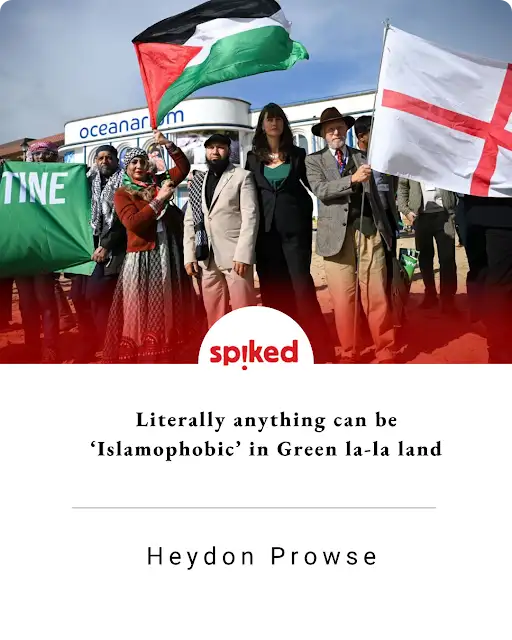
You know you’re in People’s Front of Judea territory when the GEWs (Greens of England and Wales) decree that the majority of JEWs (Jews Everywhere in the World) are “racist“. Meanwhile, the party’s Muslim Greens grouping recently published a handy guide to what is and isn’t “Islamophobic”.
It turns out, pretty much everything is! Including, but not limited to, the following:
1) Criticising the Koran
The guidance warns against saying that the teachings of the Koran are backwards, because nothing says forward-thinking like a pre-Enlightenment ban on questioning religion.
2) Speaking up against Islam’s treatment of women
Koran 2:223 says wives are like farmland that husbands can cultivate as they please. Which, to be fair, is closer than the Green Party has come to discussing agriculture all year.
3) Saying that Islam isn’t a massive fan of the gays
Not a single Muslim country in the world permits or recognises same-sex marriage or lets gay couples adopt. But according to the Muslim Greens, this is all the fault of the Brits.
The guidance says: “Queerphobic legislation in many Muslim-majority countries is deeply tied to colonialism”. Apparently, the British Empire made them do it and has forced them to continue doing it enthusiastically ever since.
4) Going to the pub
Yes, apparently having too many Green Party meetings and social events in venues with alcohol present is racist. Given that Wetherspoons is the closest thing Britain has to a place of worship, I find this one deeply offensive.
Confused? You’re not alone. The Greens seem to have abandoned saving the planet in favour of a much more achievable pastime: making everything racist. It’s a bit like that game show, Is It Cake?, except instead of cutting open a handbag to reveal layers of sponge and jam, you dissect every political opinion to unveil a hidden hate crime.
Almost anything could be racist and you wouldn’t even know it. The guidance encourages Muslims to join the Greens because they “speak out on oppression everywhere”. But careful! It also says that if you assume a Muslim is oppressed, you might be being Islamophobic. Is it solidarity? Is it prejudice? Gotcha! It was cake all along! And now you’ve been referred to a disciplinary committee.
Comments Off on Worried you might commit an accidental Islamophobia? Britain’s Greens can help!


