
Feral Historian
Published 22 May 2026No direct sci-fi angle here, just a clarification of a widely-held misconception about what Fascists believed, exemplified by an oft-repeated fake quote with some tangents on Eco, Gramsci, and others. Since the subject of Fascism and mythologizing of WWII comes up a lot here, it seems appropriate to address this one.
And here’s a link to Umberto Eco’s essay for those who are interested. https://ia802906.us.archive.org/31/it…
Back to the usual science fiction as cultural artifact essays next week.
(more…)
September 23, 2026
Corporatism and Fake Mussolini
Comments Off on Corporatism and Fake Mussolini
September 19, 2026
QotD: Islam and the rise of Western hegemony
Governments across the Islamic world began to adopt constitutions that directly contradicted what Muslims had always believed was the perfect and eternal law given to them by God. Simultaneously, they began to sign up to international bodies that, despite their claims to neutrality, were shot through with the ideological assumptions of the West. The most significant of these was the United Nations, which in December 1948 issued a definitive statement of its guiding principles: the Universal Declaration of Human Rights.
This, which claimed in its preamble that acknowledgement of “the equal and inalienable rights of all members of the human family is the foundation of freedom, justice and peace in the world”, was in reality not at all as “universal” as it affected to be. Standing recognisably in a line of descent from the proclamations of the French Revolution, it served as well as a repudiation of some of the more foundational assumptions of Islamic theodicy.
The concept of human rights was an alien one to Islam. Muslims, traditionally, had not believed in natural law. There were only laws authored by God. The insistence of United Nations agencies on “the antiquity and broad acceptance of the rights of man” derived, not from the great inheritance of the Sunnah, but from the philosophes of the 18th century. Tellingly, the Universal Declaration of Human Rights had been signed — where else? — in Paris.
Western hegemony over the Islamic world, then, did not end with the collapse of direct rule over it by the European powers. Western values, Western assumptions, Western concepts of law, all of them packaged and marketed as “universal”, continued to exercise an overweening dominance in global affairs. If this was true for Muslims in lands that had sought to reconstitute themselves as nation states, then how much more so was it for Muslims who, in the decades that followed the Second World War, travelled to Europe, and settled there in growing numbers.
Tom Holland, “The age-old tension between Islam and France”, UnHerd, 2020-11-02.
Comments Off on QotD: Islam and the rise of Western hegemony
August 24, 2026
“Communism is an ideology designed to liquidate nations”
I nearly skipped this post by Celina, as it started off appearing to be pretty much of interest only to Australians, but that was just the opening sections:
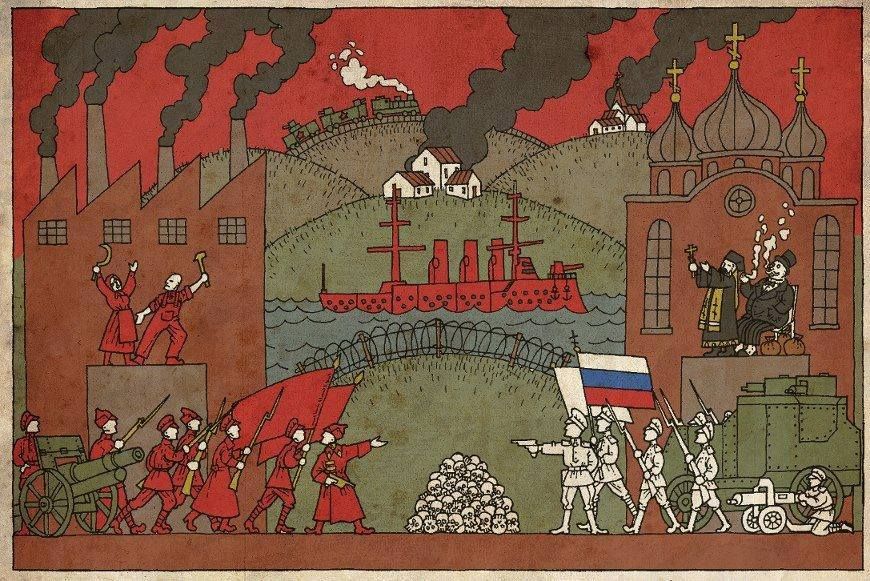
The Bolsheviks were the first governing power of the modern era to write the suppression of “national enmity” into a systematic criminal code. The RSFSR Criminal Code of 1922 penalised agitation and propaganda arousing national enmity or dissension, its successor, the 1926 Code, carried the provision forward as Article 59-7, under the chapter dealing with especially dangerous crimes against the order of administration, punishing “propaganda or agitation directed towards arousing national or religious enmity or discord”, with sharply escalated penalties, up to and including death, where the offence occurred in wartime or amid mass disturbances. From the earliest years of the Soviet state, in other words, speech about nationality was not a civil-society problem to be argued out, but a category of state crime sometimes punishable by death.
To understand why, it is necessary to understand something about communism that conservatives and libertarians have largely obscured. If you ask the average conservative what communism is, he will most likely start discussing government ownership, five-year plans, bread queues etc.
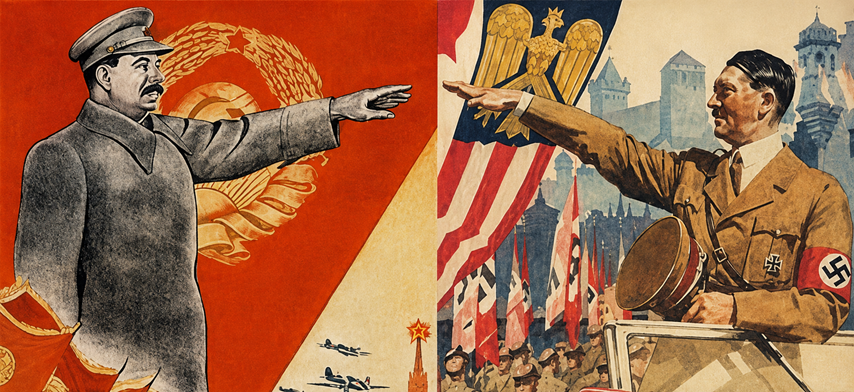
Communism, from this point of view, is essentially capitalism with the economic settings reversed. The government “does and owns everything“. This is why so much conservative analysis eventually degenerates into horseshoe theory: fascists liked government intervention and communists liked government intervention, therefore fascism and communism were basically versions of the same thing.
But that completely misses the ideological conflict which defined twentieth-century Europe. Communism was not just some economic theory about who should own what. It was an internationalist theory about who you are.
Communism is an ideology designed to liquidate nations. Literally.
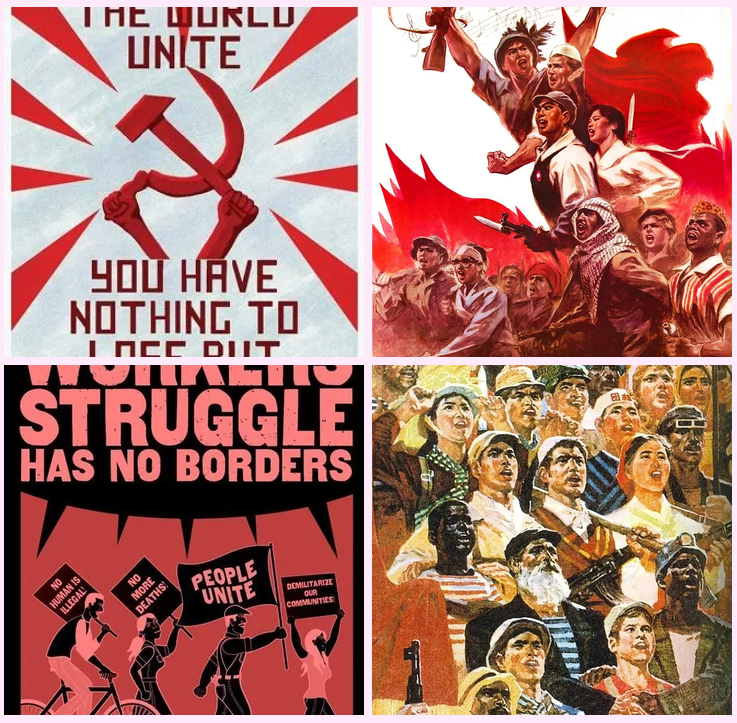
Marxism insisted that the fundamental political division of mankind was class. The worker was not ultimately supposed to understand himself principally as English, German, Italian, French or Russian. He belonged to the proletariat. His historical interests were shared with workers beyond the borders of his own country, while his supposed national solidarity with his own bourgeoisie concealed the class relationship upon which capitalism depended. Hence the language that runs through the entire communist tradition: Workers of the world, unite; The proletariat has no fatherland; No war but class war. You’re not Italian, you’re not German, you’re the proletariat, and all you have to lose is your chains.
The political logic here is blatantly obvious. Nationality competes with class consciousness, patriotism competes with proletarian internationalism. The nation tells a German worker that he shares something profound with another German who happens to own a factory. Marxism tells him that this solidarity is false and his real political brother is the French, Russian or Italian worker standing on the other side of the border.
That is why the nation became one of the great obstacles confronting revolutionary socialism. The theory said workers possessed common international class interests. Yet, history repeatedly demonstrated that workers continued to behave like members of nations.
In 1914, the workers of Europe did not unite against their governments and refuse the coming war. They rallied overwhelmingly to their respective countries. Socialist parties fractured along national lines. Men who Marxists expected to understand themselves as an international proletariat marched into battle as Germans, Frenchmen, Russians, Austrians and Britons. And the same problem returned after the Bolshevik Revolution.
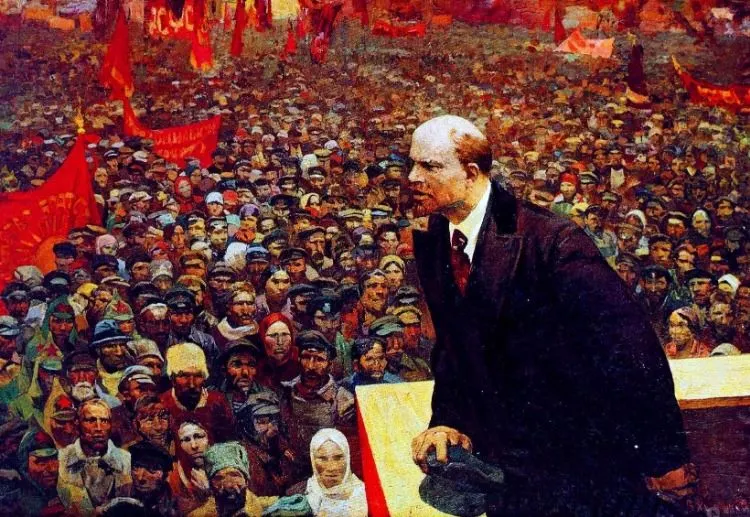
That is why the great twentieth-century conflict between communism and nationalism was not accidental. It was ideological. Communism was internationalist not in the banal sense that communists in different countries cooperated with one another, but in its conception of history itself. The nation was something history would ultimately transcend. Lenin said this openly: socialism aimed not simply to bring nations closer together, but eventually to “merge them“. Elsewhere he described the centralised state as a historical step towards the future “socialist unity of the whole world“.
Stalin, grasping this principle, forged civic nationalism as the indispensable stepping-stone toward that communist universalism. Inside the borders of the revolutionary state the old nationalities were to be liquidated into a single Soviet identity: you are not Ukrainian, you are not Russian, you are not Jewish, you are not Georgian, you are a Soviet patriot, loyal only to the revolution. That state, once purged of national loyalties, would then project its universalist ideology outward, seeking global hegemony by liquidating, in turn, every nation that still dared to resist it.
Update, 25 August: Welcome, Instapundit readers! Have a look around at some of my other posts you may find of interest. I send out a daily summary of posts here through my Substack – https://substack.com/@nicholasrusson that you can subscribe to if you’d like to be informed of new posts in the future.
August 20, 2026
The Frankfurt School – The most destructive intellectual project of the 20th Century
People tend to underestimate how influential intellectual movements can be, as they rarely get outside attention until they’re deeply entrenched in the university system. The Frankfurt School‘s damage record is unmatched by any other intellectual movement of the era:
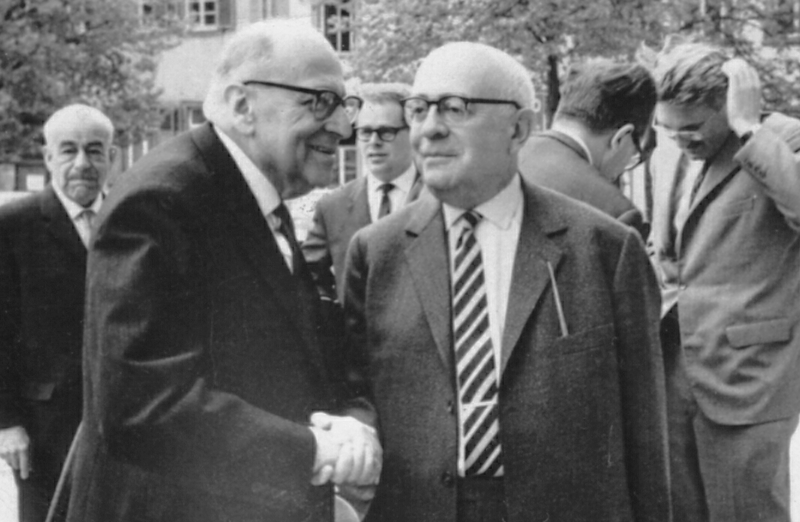
Notable members of the Frankfurt School in Heidelberg, April 1964 at the Max Weber-Soziologentag. Max Horkheimer is front left, Theodor W. Adorno front right, and Jürgen Habermas is in the background, right, running his hand through his hair. Siegfried Landshut is in the background left.
Photograph by Jeremy J. Shapiro via Wikimedia Commons.
The Most Destructive Intellectual Project of the Twentieth Century.
The Frankfurt School. You should know what it was, what it built, and why you are still living inside it.
1. The Institute for Social Research was founded in Frankfurt in 1923 and relocated to Columbia University in 1934 when Hitler came to power. The civilization they had decided to dismantle gave them refuge when another tried to kill them. They spent the next five decades producing the theoretical infrastructure for that dismantling. Western civilization itself was the problem: reason, the Enlightenment, the family, tradition, authority. Not reformed. Dismantled.
2. They called it Critical Theory – and the name is the program. Everything is to be criticized; nothing is to be built. In The Dialectic of Enlightenment (1944), Adorno and Horkheimer argued that Western reason — the reason that produced Newton and the rule of law — contained the seeds of Auschwitz. Not that reason had been misused, but that reason itself, taken to its conclusion, produces the death camp. This was not a critique of institutions. It was an indictment of the civilization itself.
3. Adorno gave them the psychological weapon. The Authoritarian Personality (1950) classified conservatism, religious faith, patriotism, and the traditional family not as political positions but as symptoms of a proto-fascist personality. If you believe in the nation or the father’s authority, you are pre-fascist. The opponent was no longer wrong – he was sick. You don’t argue with a pathology. You treat it. This made dialogue impossible. You don’t persuade someone who is wrong; you diagnose someone who is sick. Politics becomes therapy, and disagreement becomes pathology.
4. Marcuse gave them the political weapon. Repressive Tolerance (1965) argued that tolerating wrong ideas is itself oppression. True tolerance therefore requires suppressing intolerant ideas. The left decides which ideas are intolerant. Everyone else is silenced – not despite tolerance, but “in its name”. Censorship dressed in the vocabulary of liberation.
5. The generation that read Marcuse at Columbia, Berkeley, and Yale went on to run universities, media, foundations, NGOs, content moderation departments, and the EU regulatory apparatus. They implemented the argument sincerely because they had been taught it as philosophy. This was the Frankfurt School’s greatest achievement: it produced true believers.
6. French Theory picked up the tools and made them aesthetic. Foucault made the critique of power literary. Derrida made the critique of meaning philosophical. Deleuze made the critique of identity elegant. A political program became a cultural sensibility. You can argue with a program. A sensibility is in the air you breathe. By the time these ideas reached the American campus through the French conduit, they were no longer ideology. They were the water. The fish did not know they were wet.
7. A civilization stands on three pillars: truth exists and is accessible to reason; good is distinguishable from evil; and there is an inheritance worth transmitting. The Frankfurt School attacked all three – systematically and with considerable intellectual sophistication. It produced a generation that knows how to deconstruct and has forgotten how to build. That sees power everywhere and beauty nowhere. The ultimate achievement was to make destruction feel like progress. Every inherited institution became suspect; every constraint became oppression; every act of preservation became reactionary. Deconstruction became the default, while construction became something that needed to justify itself.
The answer is not another theory. It is the thing the Frankfurt School most feared: the builder who simply builds, the scientist who follows the evidence, the father who transmits what was transmitted to him.
The deconstruction machine runs on the assumption that nothing is worth building.
Prove it wrong.
Tell the truth, have courage, and build.
Comments Off on The Frankfurt School – The most destructive intellectual project of the 20th Century
August 6, 2026
Extreme political polarization
On the social media site formerly known as Twitter, Krzysztof Szczawinski sees the current extreme polarization of political views as being no longer merely ideological:
The Left and the Right are not two different ideologies. They have grown apart to become two different civilizations.
What characterizes a civilization is its relation to morality, to truth, to beauty, to wealth – and the relation of people to power and to reality itself. By this measure, the division is not political. It is civilizational. And Feliks Koneczny — the Polish scholar who mapped civilizational systems with greater precision than anyone before or since — described exactly this architecture a century ago.
The Right represents what remains of Western Latin civilization – the tradition that inherits Roman law, Greek philosophy, and Christian morality, and from that inheritance builds: individual liberty, equality before the law, orderly competition between individuals, free speech, private property, subsidiarity, classical beauty, monogamous marriage, the dual system of private and public law, and — most fundamentally — the primacy of morality over law. Not that law is the codification of morality, but that law must be consistent with morality. Power is not above ethics. What is wrong for the individual is wrong for the state.
The Left represents an amalgamation of what Koneczny called Byzantine, Turanian, and other eastern civilizational systems – characterized by centralism, the omnipotent state, the fusion of law and morality into a single power, and the subordination of the individual to the collective. In these systems, whatever power decrees becomes moral by definition. There is no external moral standard against which power can be judged. Hence the centralism, the bureaucracy, the etatism, the social justice that replaces individual justice, the family defined by the state rather than preceding it. And hence the violence, the lies, the censorship – because in a system where power is morality, opposition is not merely wrong. It is evil.
The most fundamental difference: in the Latin civilization, morality stands above law. In the Byzantine-Turanian systems of the left, there is only one law — which is simultaneously the moral code — and it is whatever the ruler decides. This is not a difference of policy. It is a difference of civilizational architecture. It runs all the way down.
Some will say a balance is needed – a yin-yang between order and creative destruction, between conservatism and progress. This was once true. It is no longer. The Left has ceased to be a force of renewal within Western civilization and has become a force for its demolition – operating not within our civilizational framework but against it, with incompatible rules and incompatible values. Different civilizations do not compete like tennis players who accept the same rules. They fight for power with no rules and all available means – violence, lies, and morally incompatible systems. Bringing a gun to a tennis match is not competition. It is conquest.
The good news: most people are not ideologically committed to either side. They are attached to prosperity, to safety, to beauty, to the life that Western civilization actually produces – and they can be brought back to it, once they understand what they are being asked to abandon. The civilizational argument, clearly made, is the most powerful argument available. Not left versus right. Not conservative versus progressive. Latin civilization versus its opponents. Freedom, morality above power, and the individual who cannot be reduced to a subject – versus the state that decides everything, including what is moral.
The good life versus the state oppression.
Once you see the civilizational map, the political map becomes legible. And once the political map is legible, the choice is not difficult.
Comments Off on Extreme political polarization
July 15, 2026
“Communism no longer comes for your property”
On the social media site formerly known as Twitter, Krzysztof Szczawinski explains why western countries are perhaps more in danger of communist subversion, because we have an out-of-date mental model of what communism looks like:
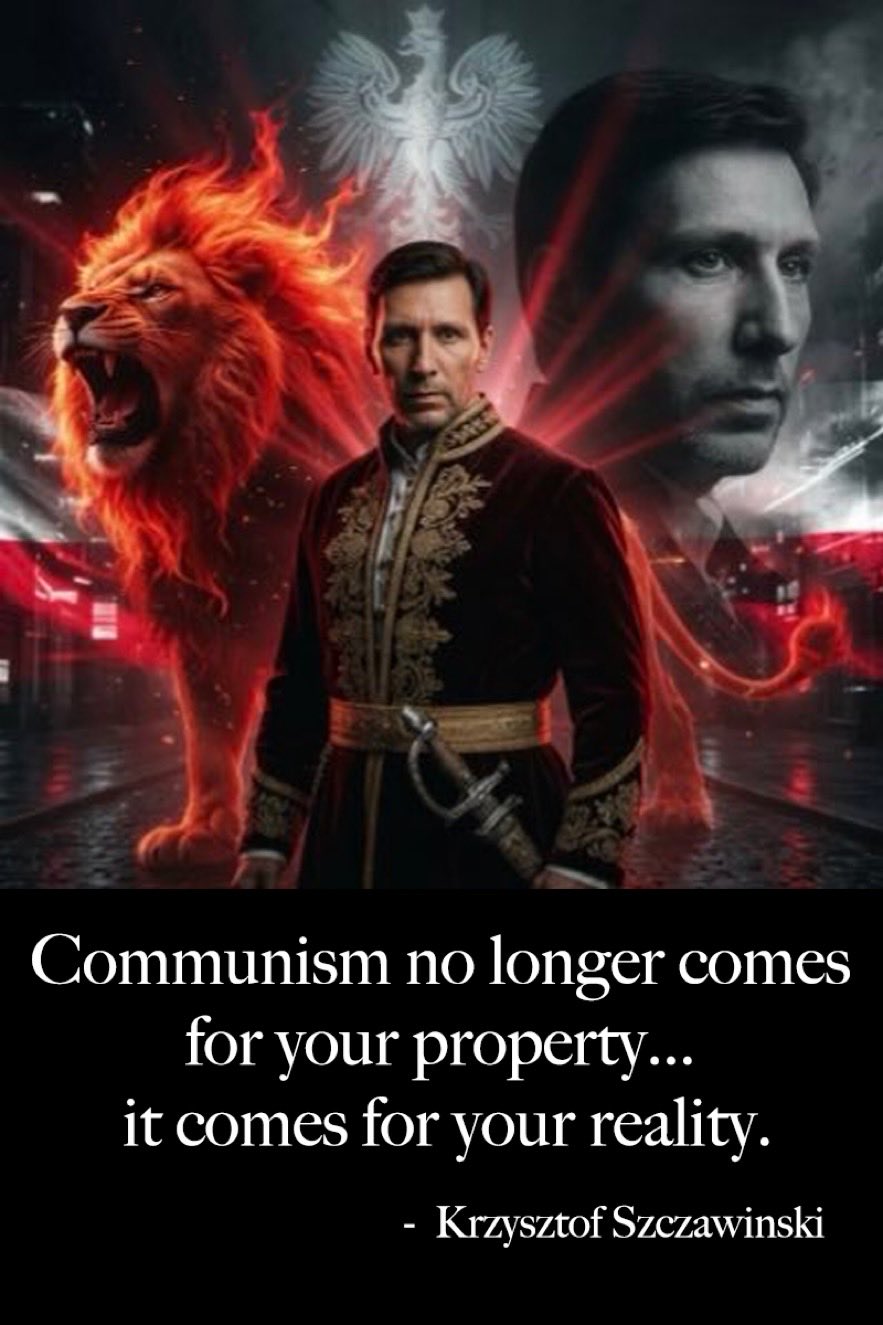
On communism – in summary:
1. Communism no longer comes for your property. It comes for your reality. The West still pictures bread lines and gulags, a failed economic theory safely buried in 1989 – that was only ever the surface symptom. Leftism-communism is the most insidious destructive force in our world today, and it survives every empirical refutation for one reason: it was never really an economic theory. It doesn’t care about the truth. It only seeks power.
2. At its core it is a civilizational cancer – a machine for distorting reality through constant lies, rewritten history, and the systematic corruption of truth. It practices negative selection: it promotes the ambitious sociopaths, the ideologues, and the conformists, while the honest and the competent are sidelined or destroyed. Talent, integrity, and productivity become liabilities. The body count runs to roughly a hundred million. But the deeper kill is spiritual – trust eroded, excellence punished, reality itself subordinated to raw power.
3. What has changed is the method, not the logic. Tanks and gulags were crude, visible, self-defeating. Today it does not confiscate – it destabilizes. Chaos is the new collectivization. Every manufactured crisis follows the same structural logic: disorder is produced, fear is maximized, and in the panic that follows, transfers of power occur that would have been politically impossible in calm times. You do not notice the expropriation, because you are too busy surviving the emergency they built for you.
4. The fuel running this engine is the Systemic Lie – not ordinary propaganda, but a managed reality in which the categories of thought themselves are corrupted. Productivity is renamed exploitation. Order is renamed fascism. Resistance is renamed hate. A population that cannot name extraction cannot resist it – that is the design, not a side effect. Polish has a word for what results: zakłamanie, a society so saturated with lies that truth becomes almost inaccessible. Obłuda is the mask of falsehood worn so long it begins to feel like a face.
5. This is why the ideology did not die in 1989. It mutated, migrated, and entrenched itself inside the institutions of the civilization it had set out to destroy. Under a system of institutionalized lying, the loyal are promoted and the honest are pushed out, until the institution fills, top to bottom, with people selected specifically for their unreliability. That is not inefficiency. That is institutional rot at the genetic level. People learn to say the words, attend the meetings, sign the statements – and inwardly check out entirely.
6. The damage was never only in the ideology. It was in the people – the habits of mind that decades inside a system of lies produce, habits that do not evaporate with a change of government. The decisive terrain now is institutional: the schools, the media, the corporations, and above all the artificial intelligence systems being trained at civilizational scale on values that half the civilization never chose and was never consulted on. Whoever writes the values into the machines will have more influence over the next century than any election result.
7. This is where civilizations are actually won and lost – not in grand gestures, but in millions of daily, invisible decisions about whether to say what you actually see. Every person who refuses to perform the lie one more time is doing something larger than they know. Name the chaos. Name the lie. The naming is the resistance.
Tell the truth, have courage, and build.
June 1, 2026
Social media echo chambers
One of the phenomena noted about most social media platforms was the ease of creating political echo chambers that allowed (mostly) progressive views to be aired but not challenged, which convinced a lot of people that these views were far more widely held than they were. When Elon Musk bought Twitter and reduced the automatic echo chamber mechanism, many formerly happy Twitter users discovered the unpleasantness of dissenting voices (triggering a rush to Bluesky, which allowed the re-creation of those comfortable bubbles for those most distressed). Twitter, now X, has been a much better site since then:
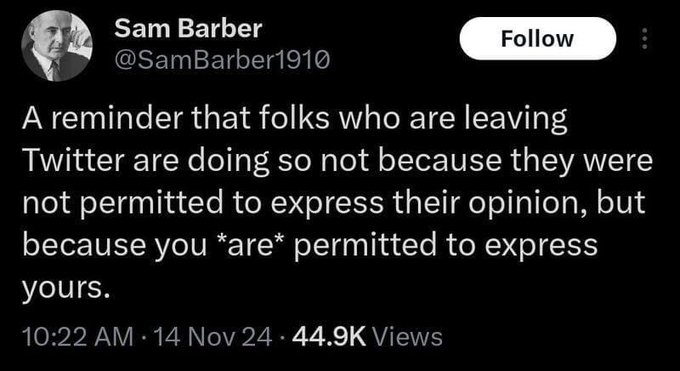
One of the reasons X terrifies soft ideologues is that it has become one of the last places where ideas are forced to compete in the open.
I don’t block people and certainly don’t deliberately curate an echo chamber. My replies are full of people who disagree with me.
And yet every day I watch the same thing happen.
The people who spent years convinced they represented the silent majority get ratioed into the earth by ordinary Americans.
Not because of brigading, coordination, or because some shadowy force is helping.
Because their ideas suck.
That realization should horrify them. But it doesn’t, because they’re dented.
For years they mistook institutional power for public support. They confused HR departments, media outlets, universities, and bureaucracies with actual consensus.
Now the walls are gone and the ideas have to stand on their own. And many of them just can’t.
What’s happening on this platform is not the triumph of a movement. It’s the collapse of an illusion.
The worst part isn’t that they’re losing. It’s that they’re finding out how few people ever agreed with them in the first place.
May 8, 2026
The Strugatskys’ The Doomed City and the Soviet Experiment
Feral Historian
Published 12 Dec 2025While The Doomed City isn’t the last book Boris and Arkady Strugatsky wrote, it is arguably the end of their journey from idealism to cynicism with regards to the whole Soviet project and serves as an almost spiritual history of the period. Let’s meander through it to look at some things not covered in a literary review.
00:00 Intro
03:12 New Jobs
04:45 Aside – Facts and Theory
05:42 Laws and Mentors
09:36 The Experiment
10:50 Regime Change
13:25 Aside – Maps
15:45 Status and Power
18:22 The Ground Beneath Our Feet
(more…)
Comments Off on The Strugatskys’ The Doomed City and the Soviet Experiment
March 20, 2026
QotD: The lameness and sameness of modern science fiction novels
Jane Psmith, “REVIEW: The Powers of the Earth, by Travis J.I. Corcoran”, Mr. and Mrs. Psmith’s Bookshelf, 2024-04-29.
- There’s nothing worse than poor execution of an incredible idea, because it means no one else will come along and do the incredible idea right. Austin Grossman’s Crooked, for instance, is Richard Nixon vs. Cosmic Horrors, which is a brilliant premise (yes, the Interstate Highway System is definitely an eldritch sigil designed to protect America, I will not accept any argument) but falls apart on the totally ahistorical version of our 37th President designed to justify making him the “good guy”. The real Nixon is such a fascinating and compelling figure — why not keep him as weird and twitchy and striving as he actually was and have him be the good guy anyway?
Or, say, the Napoleon movie.
January 15, 2026
“The Left is a death-cult that seeks the destruction of its own people, chasing delusional exaltation”
At Always the Horizon, Copernican discusses the progressive mindset and its complete inability to cope with barbarians (literal and figurative):
In light of recent events, it is important to recognize that a rules-based system can exist only as long as there exists someone to enforce the rules. For a long time, White Westerners have been brow-beaten with an imagined consensus morality where those who are historically hierarchically powerful are also inherently evil. “Those misogynist White rednecks”, etc. That was, according to the rules, the acceptable position to hold.
The rules are enforced by consuming den-mothers who have built around themselves fortresses of bureaucracy and perceived cultural alignment. You have to follow the rules, or you’re a bad person.
Historically, Christianity managed these ideals through Europe and the Holy Roman Empire, where they were considered a moral standard. Enforced through the social order of the time. Having previously attacked Christianity in the late 20th century, the modern Left has proceeded to annihilate that moral grounding. Replacing it with a vague sense of moral relativism and platitudes:
“We think these behaviors and rules are good because everyone agrees, and everyone agrees because we’ve made them as these behaviors and rules are good.”
The tautology of liberal thought. Moral relativism with appeal-to-majority and appeal-to-consensus stacked atop one another. Recent events have demonstrated that even classically liberal political positions cannot be maintained without a strong underlying social and moral framework. Lacking that, liberalism (again, as recently demonstrated) defaults to meaningless tautologies and a feminine urge to “not harm” people who in many circumstances damn well need to be harmed.
The result of this social decay is, of course, a default to basics.
The Barbarians Veto
Your village or apartment block has been put to flame. Your son is dead, your wife and daughter are being hauled off to god knows where, and a giant of a man with a bloody axe stands before you. Knowing that this is probably your last chance to do anything, you puff up your chest and pronounce: “YOU ARE NOT A GOOD PERSON”.
The man looks at you like you’re retarded, and then messily separates your prefrontal cortex and cerebellum. The Barbarian doesn’t give a shit what you consider a “good person” to be. He couldn’t care less. What he knows is that the only thing separating the two of you is that he is strong and you are weak. The reason why it is he standing with a bloodied axe and not you, is simply a matter of prowess and luck. If you were strong, you would be doing the same thing to him.
Do unto others before they do unto you. Do it fast. Do it first. And do it effectively.
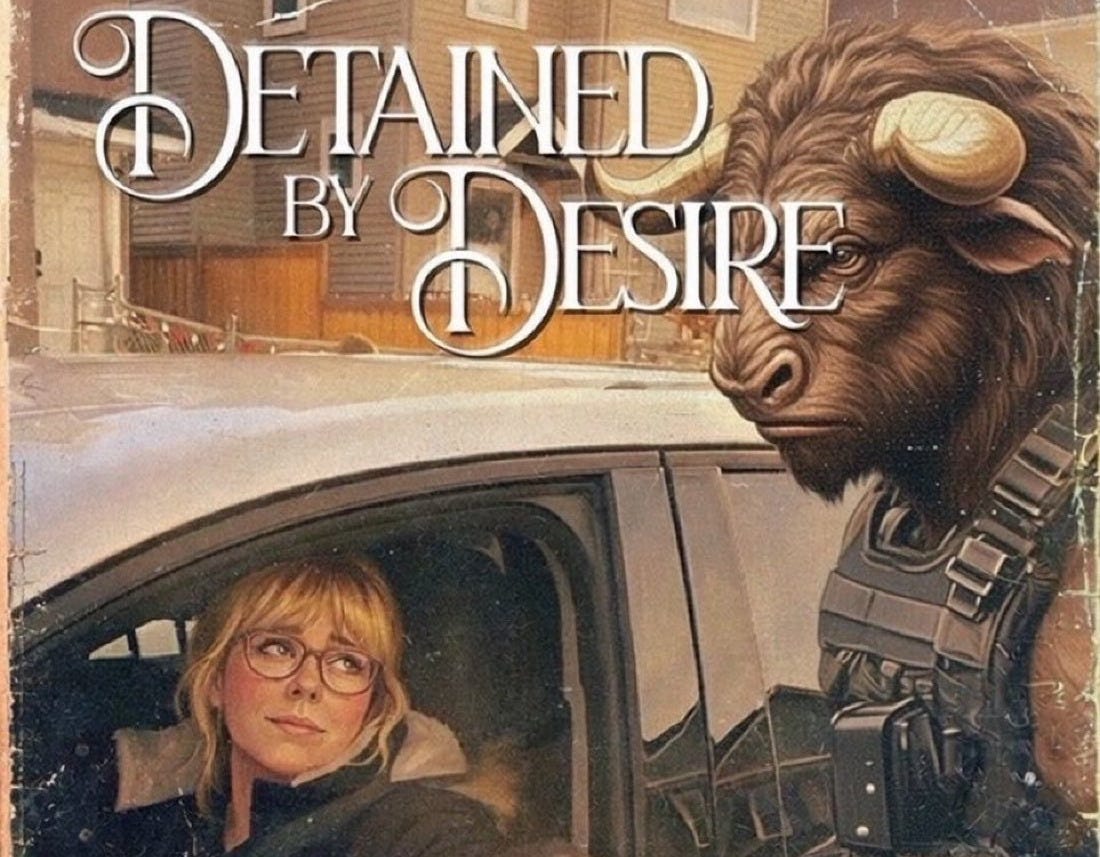
The political Left has built its entire philosophical core on minimizing harm and playing the role of victim. The Left is thus completely blind to the barbarians veto. The Left believes there’s some inherent nobility in having your home burnt to the ground and your family murdered. That’s why they pursue with suicidal ideation the opportunity to die for their psychotic religion. Better yet, they zealously pursue the opportunity to get other people to die for their psychotic religion. Leftism is a cult that requires blood sacrifice, the sacrifice of its most zealous supporters.
They fear the strength of the Barbarian, uncompromising, not willing to sacrifice himself, but entirely willing to sacrifice hordes of his unthinking enemies. He does not see himself as a “good person”, but the barbarian sees himself as a “surviving person”. He survives by killing his enemies. His bloodline survives by impregnating his women, whether they want it or not. The Left has no answer to the barbarian, but to submit to his will, and then demand you do so as well.
That’s why they love murderers, cartels, and foreigners, but demand that their own men and sons die bloodily in self-sacrifice to their own cultural enemies. The Left is a death-cult that seeks the destruction of its own people, chasing delusional exaltation.
Update, 16 January: Welcome, Instapundit readers! Have a look around at some of my other posts you may find of interest. I send out a daily summary of posts here through my Substack – https://substack.com/@nicholasrusson that you can subscribe to if you’d like to be informed of new posts in the future.
January 7, 2026
Red Star: The Dawn of Soviet Sci-Fi
Feral Historian
Published 15 Aug 2025Soviet science fiction is a long winding road and it starts with Alexander Bogdanov’s Red Star. Let’s start down that road.
00:00 Intro
03:15 Introducing Martian Socialism
06:35 Tektology
10:03 Crafting Communism
15:08 Mars Has Problems
19:06 Old Man of the Mountain
20:32 The Engineer Menni
(more…)
Comments Off on Red Star: The Dawn of Soviet Sci-Fi
December 28, 2025
QotD: The Middle Ages saw rebellions but no revolutions
Therefore there were no revolutions in the Middle Ages or the Ancient World, only rebellions — even a nasty series of civil wars like The Wars of the Roses were merely bloody attempts to replace one set of rulers with another, without comment on the underlying structure. A medieval usurpation couldn’t help but raise questions about “political theory” in the broadest sense — how can God’s anointed monarch be overthrown? — but medieval usurpers understood this: They always presented the new boss as the true, legitimate king by blood. I forget how e.g. Henry IV did it — Wiki’s not clear — but he did, shoehorning himself into the royal succession somehow.
Combine that with Henry’s obvious competence, Richard II’s manifest in-competence, and Henry’s brilliant manipulation of the rituals of kingship, and that was good enough; his strong pimp hand took care of the rest. Henry IV was a legitimate king because he acted like a legitimate king.
A revolution, by contrast, aims to change fundamental social relations. That’s why medieval peasant rebellions always failed. Wat Tyler had as many, and as legitimate, gripes against Richard II as Henry Bolingbroke did, but unlike Henry’s, Tyler’s gripes couldn’t really be addressed by a change of leadership — they were structural. 200 years later, and the rebels were now revolutionaries, willing to give structural change a go.
Severian, “¡Viva la Revolución!”, Founding Questions, 2025-02-27.
Comments Off on QotD: The Middle Ages saw rebellions but no revolutions
December 5, 2025
Censorship and “cancel culture” are symptoms of a cultural sickness
A guest post at Woke Watch Canada by C.C. Harvey lays out the evidence that our culture — and most of the western world — is struggling with a spiritual sickness and that arbitrary cancellations and formal censorship of dissenting views are symptoms of that ailment:
When a society begins to suppress intellectual and spiritual searching and dreaming — by punishing speech, regulating thought, discouraging questions, denying the existence of spiritual reality — it is not only a political decline, but a sign of deep unwellness.
Where populations lose respect for liberty of conscience, inquiry, and discourse, society becomes nasty and brutish. Truth-seeking, spiritual health, and peace are inexorably linked. Across formerly open, stable, safe western societies, censorship and repression have been rising as safety, cohesion, and quality of civic life decline.
We must resist cancel culture and speech codes for the following reasons:
- Suppressing Truth-Seeking Violates a Fundamental Human Impulse
Across religious and knowledge traditions, truth-seeking is expressed as a moral duty. When authorities obstruct honest questioning, they interfere with something built into the human spirit.
- Fear Becomes the Organizing Principle
Where dissent is forbidden, fear takes the place of reason. Fear diminishes moral clarity, discourages integrity, and pushes people toward silence rather than responsibility. A fearful society cannot become a virtuous society.
- Conscience Is Treated as a Threat Instead of a Gift
In every major tradition — religious or philosophical — conscience is seen as a source of moral insight. When institutions punish people for following their conscience, they reveal a belief that the individual soul has no intrinsic worth, only value as a compliant unit.
- Dialogue Is Replaced With Dogma
Healthy societies debate, persuade, and refine ideas through open conversation. Unhealthy ones replace discussion with mandatory narratives and speech codes. Leaders who fear questions fear the truth those questions might uncover. Dogma can be secular or religious. It is ideologically rigid, generally not truth-seeking.
- Collective Identity Replaces Individual Worth
Authoritarian systems elevate the group above the person: the party, the ideology, the movement, the “community”. When people are valued only as members of a group rather than as individuals, conscience becomes irrelevant and conformity becomes the main civic expectation. This is materialism, and denial of spiritual reality.
- Repentance and Correction Become Impossible
A culture that silences criticism cannot correct its own errors. Without the freedom to point out problems, there can be no course correction, no growth, and no accountability. Mistakes multiply because they are protected by enforced silence.
- The Vulnerable Are Punished First
Censorship and ideological enforcement nearly always fall hardest on those with the least power — dissidents, researchers, students, teachers, and ordinary citizens. When moral pressure is used to intimidate rather than uplift, society reveals a deeply inverted understanding of justice.
- Curiosity and Creativity Decline
When questions become dangerous, people stop asking. When our human body, spirit, and intellect work in tandem without fear, we are capable of incredible scientific, artistic, and intellectual discovery and achievement. A society that punishes inquiry slowly starves itself of spirit in the form of innovation and insight.
- Tribal Narratives Replace Shared Reality
When open debate disappears, competing ideological factions manufacture their own “truths”. Without a shared standard for evidence or meaning, society fragments into groups that can no longer communicate across boundaries. This is a recipe for distrust, polarization, and alienation … in dogmatically religious societies: a recipe for holy war and violent oppression.
- A Culture That Punishes Dissent Is Living by Avoidance, Not Truth
Suppressing dissent is always a sign that an ideology cannot withstand scrutiny. Societies that silence critics pretend confidence but are insecure. The greater the fear of open conversation, diverse thought, and public debate, the greater the underlying instability and spiritual decay.
- Each Soul’s Journey Is Sacred — And Faith Must Be Chosen, Not Forced
Across traditions, genuine belief is understood as something voluntary:
- Love and faith cannot be coerced.
- Insight cannot be mandated.
- Moral understanding cannot be imposed through fear.
A society that tries to control belief tries to destroy the inner space where thought, reflection, and integrity develop. Coerced belief is not belief; it is compliance. An individual’s free relationship with God is sacred. No human rightfully owns another’s body, mind, or soul.
Update, 7 December: Welcome, Instapundit readers! Please do have a look around at some of my other posts you may find of interest. I send out a daily summary of posts here through my Substack – https://substack.com/@nicholasrusson that you can subscribe to if you’d like to be informed of new posts in the future.
October 17, 2025
QotD: Wickermanism
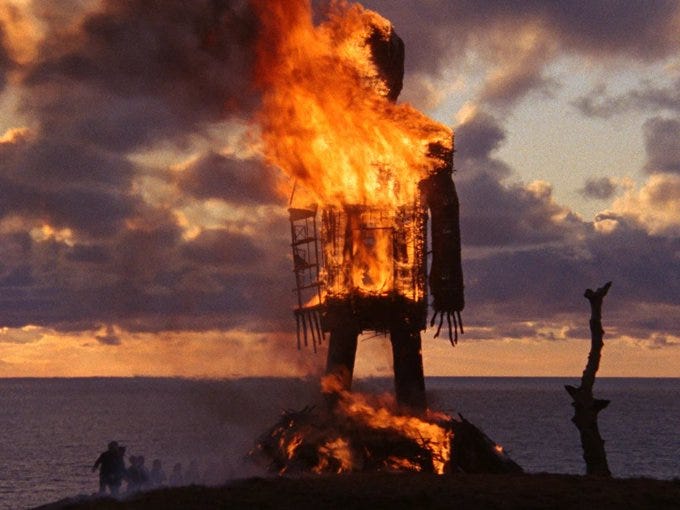
I’m a Wickermanist.
Conservative? Classical Liberal? Libertarian? Anarcho-Capitalist?
All of these got immediately diluted by moderates and blackmail curious boomer compromisers.
Conservative … “but leave the blackmailed pedos alone.”
Classical Liberal … “but let us just have totalitarian surveillance.”
Libertarian … “but what do you mean ‘taxation is theft’ and IRS agents should die in work camps … We’re Socially liberal and fiscally conservative.”
Anarcho-Capitalists … “But like private violence to enforce natural law doesn’t mean YOU should shoot criminals and state enforcers.”
I’m a Wickermanist.
I’m naming my ideology after the execution method I want to see practiced annually either by governing entities, private paramilitaries, or radicalized individuals.
Pedos. Corrupt politicians. Traitors to foreign governments. Would-be tyrants. I want them burnt alive in giant Wickermen every year.
Not one time during the revolution, not once everyone agrees, but irrespective of any institutional authority save the match lighter. That ongoingly every year to appease the sun or whatever.
If it’s formalized and good governance is actually achieved and they didn’t find suitably corrupt politicians one year, they can draw lots or an extra old one can volunteer and be remembered as a hero. but I want wickermen burning.
I’m tired of having to constantly rebrand as somehow every ideology becomes “Pay your taxes, don’t ask about Epstein, don’t enact private vengeance no matter how precedented or implied by the ideology or demanded by the founders and the entire western cannon.”
Even “Nazi” has become something Elon, Trump and Grok are …
“MechaHitler” is a popular product by a Fortune 500 and somehow IT got lame within 24 hours.
I’m naming my ideology after an execution method so you moderate losers can’t poison it.
“But muh mass appeal!?”
Democracy is old women and the hormonal equivalent, who can’t commit violence, betraying their kinsmen who can so that the enemies of their nation will tell them their opinions matter.
No change that has ever mattered has been spearheaded by the Median voter, and no great person in history has ever paid them any note.
The only tragedy is that there is neither the time nor the lumber to burn the average voter.
Kulak, Substack Notes, 2025-07-12.
Comments Off on QotD: Wickermanism
September 14, 2025
QotD: Intersectionality theory
More importantly, however, I do agree with Christina Hoff Sommers that Intersectionality Theory is dangerous for humanity, dissolving the complexity of human nature and culture down to an overly simple Manichean model of Oppressor and Oppressed, Them and Us, Good and Evil, and Black and White (literally and figuratively). It’s is another instantiation of Identity Politics and it is dangerous because it threatens to reverse everything that the Civil Rights movement fought to obtain, and it is the very opposite of what Dr Martin Luther King Jr. dreamed about in his most famous speech:
I have a dream that my four little children will one day live in a nation where they will not be judged by the color of their skin but by the content of their character.
Michael Shermer, interviewed by Claire Lehmann, “The Skeptical Optimist: Interview with Michael Shermer”, Quillette, 2018-02-24.
Comments Off on QotD: Intersectionality theory


