Quotulatiousness

April 22, 2026

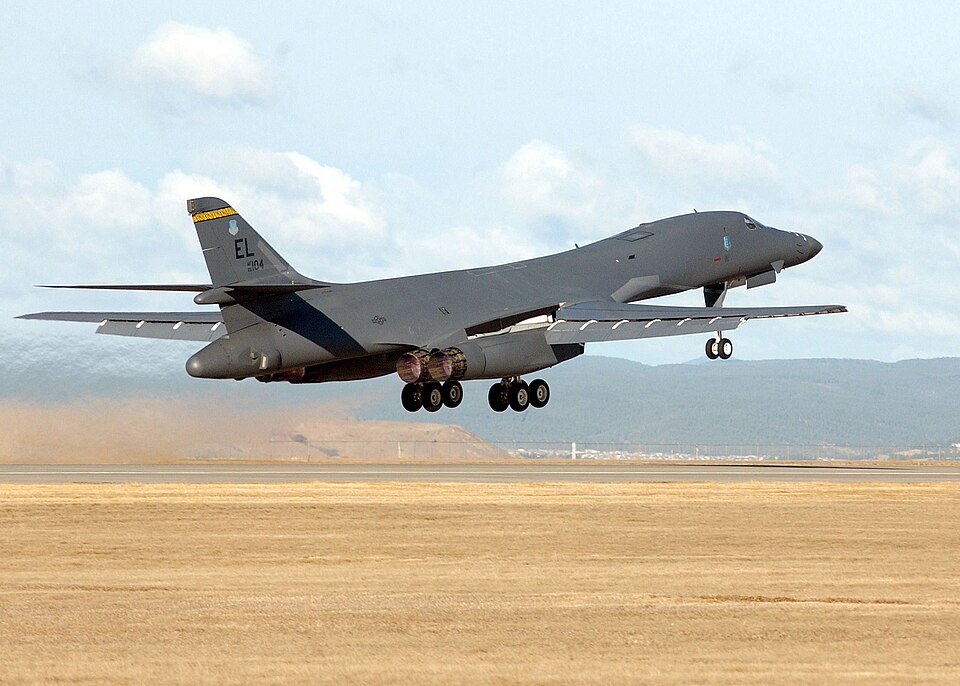
Reflections on the life extension of the A-10 – “we ought to be seriously looking at building an A11”

Filed under: Middle East, Military, USA, Weapons — Tags: , , , — Nicholas @ 03:00

On the social media site formerly known as Twitter, ESR admits that there clearly still is a role for the “Warthog” in modern combat … under the right conditions:

Gotta admit I’ve changed my mind about this. I was in the camp that loved the Hog but was grudgingly prepared to concede that its time had passed — not survivable in a modern threat environment stiff with drones and MANPADs.

But damned if the A-10 didn’t turn out to be an effective tool against small-boat swarms in the Straits of Hormuz. And not so expensive to fly or ammo up that you end up with a nasty shot-exchange problem either — not something you can say for putting the F-35 on that job.

The Hog has demonstrated that there is still a tier of missions in between the envelope of an attack helicopter and a fast fighter for which the Hog is excellently fitted. Still. In 2026.

Of course you need to have done SEAD to lower the odds that it will be popped by competent air defense, but the US Air Force is very good at that mission. As it keeps demonstrating.

I was wrong. The Hog deserves its extension. And we ought to be seriously looking at building an A11. Maybe not a manned A11, but a functionally similar instrument with a big fucking gun and the ability to fly low and slow and loiter on a patrol area.

In conclusion: “Let me sing you the song of my people: BRRRRRRRRRT.”

March 14, 2026

Belgian Aces in Exile – Belgian Fighter Aces – WW2 Gallery 10

Filed under: Britain, Europe, Germany, History, Military, WW2 — Tags: , , , — Nicholas @ 04:00

World War Two
Published 12 Mar 2026

Belgium might have been quickly overrun by the Germans in 1940, but many Belgian airmen continued the fight by flying with Britain’s RAF, and quite a few of them were good enough to score five or more aerial victories and become Flying Aces. Here are a few of their stories.
(more…)

March 4, 2026

The Korean War Week 89: Is There Such Thing As Soviet Neutrality? – March 3, 1952

Filed under: China, History, Military, USA — Tags: , , , , , , — Nicholas @ 04:00

The Korean War by Indy Neidell
Published 3 Mar 2026

The UN is not just worried that the Communists have strong air power, they’re worried that because they can’t produce more jets quickly enough, the Communist advantage in the skies will soon become insurmountable, but they at least have plans to try and stave that off. They also have plans for rotating in fresh troops, but those plans have stumbling blocks of their own, as do the negotiations about who might be part of a post-armistice supervisory team, specifically the USSR, whom the US does not see as “neutral” with regard to this war.

00:00 Intro
00:54 Recap
02:05 Supervisory Team
03:29 45th and 40th Divisions
07:14 POW Repatriation
10:29 Communist Air Power
15:52 Notes
16:36 Summary
16:55 Conclusion
(more…)

February 27, 2026

The British Are Coming! – British Fighter Aces – WW2 Gallery 09

Filed under: Britain, History, Military, WW2 — Tags: , , — Nicholas @ 04:00

World War Two
Published 26 Feb 2026

In this gallery special, we examine five of Britain’s leading fighter aces: Archie McKellar, James MacLachlan, Robert Stanford Tuck, John Braham, and James Edgar Johnson. From the Battle of Britain to night fighting, Intruder missions, and offensive sweeps over occupied Europe, their careers reflect the RAF’s transformation from desperate air defense to sustained air superiority.

These pilots did more than accumulate victory claims. Their experiences illuminate the evolution of air combat, showing how individual skill, technology, and strategy intersected in the broader history of the Second World War.

Which of these careers best captures the changing nature of air power in World War Two?
(more…)

February 23, 2026

QotD: Faith, Hope, and Charity defended Malta

Filed under: Britain, History, Italy, Military, Quotations, Weapons, WW2 — Tags: , , , — Nicholas @ 01:00

June 1940.

France has collapsed, Hitler is eating Europe alive, and Mussolini doesn’t want to miss out. He wants birthday cake without bringing a present.

Poor show

So he looks at a map and asks the Italian Air Force:

“Who can we bomb that’s really close?”

Answer: Malta, 49 miles away.

The Italians begin their great wartime contribution by flying at 14,000 feet and dropping bombs with the accuracy of a man throwing darts after fourteen pints. Half land in the sea, a few hit fields.

But accuracy wasn’t the point. They just wanted to show Berlin they were “in the war”.

For the Maltese, who had never seen modern bombing, even bad Italian bombing was terrifying.

And unfortunately for them, this was only the warm-up act.

Maynard’s Defence: Faith, Hope and Charity

Air Commodore Foster Maynard is given the job of defending Malta with basically nothing.

He had been promised four fighter squadrons.

Zero have arrived. Typical early war British brilliance.

His only aircraft were some slow, ancient Fairey Swordfish.

Great for torpedoing ships, hopeless for intercepting bombers.

These were the famous “Stringbags”. We will hear from them later on.

Then like an archaeologist opening a cursed tomb the British discover 18 Gloster Gladiators in crates on the island. They were meant for HMS Glorious and HMS Eagle.

What followed was peak British wartime admin:

  • Maynard asks the Navy to release some Gladiators.
  • He gets permission.
  • The ground crew assemble several.
  • THEN the Navy says “No actually, stop, pack them back up.”
  • THEN the decision gets reversed again.
  • So they unpack them, reassemble them … again.

After all this faffing, three Gladiators emerge ready to fight.

Next problem: no fighter pilots.

Big problem I feel, anyway …

Maynard asks for volunteers. Eight bomber men step forward, either heroic or mildly insane.

Problem solved.

A journalist on the island, Harry Kirk, watching these three lonely biplanes scramble day after day, nicknames them Faith, Hope and Charity after his mother’s brooch.

The names stick. The legend begins.

On 21 June 1940 Pilot Officer George Burges shoots down a Savoia-Marchetti bomber over Valletta, the island’s first air victory.

The Maltese take it as a sign from God.

(It wasn’t, but let them have the moment.)

“MALTA: PART 1, Foreboding”, WWII Matters, 2025-11-17.

February 21, 2026

The Bomber Mafia by Malcolm Gladwell

Filed under: Books, Germany, History, Japan, Military, USA, WW2 — Tags: , , , — Nicholas @ 03:00

Based on the few books of his I’d heard of, I wouldn’t have expected Malcolm Gladwell to dip into military history … and from what Secretary of Defense Rock says, it might have been better if Gladwell had steered clear of this particular topic anyway:

I recently received The Bomber Mafia as a gift for my birthday, and it was bad, so bad that I felt compelled to write this review. In so many ways, the book is everything that is wrong with the “pop history” genre: a bestselling author with a massive built-in audience, with a hit podcast to cross-promote the material, and a framing promise to reveal a supposedly “great untold story” about the strategic and moral struggles of American airmen in World War II. The problem in this case is that Gladwell’s narrative about Curtis LeMay, Haywood Hansell, and the evolution of strategic bombing repeatedly collides with the existing scholarship and often ignores it altogether. From his treatment of the raids of Münster and Schweinfurt–Regensburg to his use of the United States Strategic Bombing Survey and his confident claims about what compelled Japan to surrender, The Bomber Mafia exemplifies the worst tendencies of popular history: sweeping pronouncements built on selective reading, caricatured context, and a startling indifference to both primary sources and a vast secondary literature.1

I was only vaguely familiar with Malcolm Gladwell and his work, but for those who don’t know (like me until recently), he has been a staff writer for The New Yorker since 1996, has written a bunch of New York Times bestselling books on sociology, psychology, and economics, and also hosts a very popular podcast called Revisionist History.2 This is all to say he is widely known and already has a big audience that is generally receptive to his projects. The book was originally based on four episodes he did on this topic in July 2020, and then turned into print, so it isn’t so much an actual book as it is a printed podcast.3

Unsurprisingly, both the audiobook and print editions were widely acclaimed upon release. Writing in the Wall Street Journal, Yale professor Paul Kennedy praised the book as “a wonderful book”.4 The journalist Michael Lewis described it as “a riveting tale”, while the bestselling biographer Walter Isaacson called it “a wonderful narrative”.5 The book was named a Kirkus Reviews Best Book of the Year and selected as an Editors’ Choice by The New York Times Book Review. It also enjoyed significant commercial success, reaching number two on The New York Times Best Sellers list.6 To promote the book, Gladwell made appearances on Jimmy Kimmel, MSNBC, and CBS’s Sunday Morning show. MSNBC even stated in the segment title that this is “A great untold story”, which is hilarious, given that I don’t know how much ink has been spilled on the strategic bombing campaigns.7

But it should be noted that the book has been criticized by virtually anyone who has seriously studied this topic. Much of the criticism of the book has come from the fact that it hardly focuses on the Japanese and German perspectives, misinterprets why members of the air tactical school focused on precision bombing, and the actual role strategic bombing played in the surrender of Japan.8 All of that is valid, but what was initially more startling to me was how little use was made of primary or secondary sources. So many important works are left out makes me wonder how much research Gladwell even put in.9 To write about strategic bombing in World War II and not include Michael Sherry’s The Rise of American Air Power, Richard Overy’s The Bombing War, Donald Miller’s Masters of the Air, Ken Werrell’s Blankets of Fire or Death From the Heavens, Geoffrey Perrett’s Winged Victory, and barely using any of the official histories is borderline negligence.10 Anyone doing research on strategic bombing and Air Power in World War II almost certainly would have come across these.


  1. Popular history is a form of historical writing aimed at broad audiences that usually prioritizes storytelling over real scholarship. See Gerald Strauss, “The Dilemma of Popular History,” Past & Present, no. 132 (1991): 130–49, and more recently, Ben Alpers, “The Promise and Perils of Popular History,” Society for U.S. Intellectual History, August 17, 2021.
  2. The show itself isn’t really a conversation with experts and historians (though they do appear) so much as storytelling.
  3. I would also preface that I generally don’t have a problem with this premise. There is definitely a segment of the historical profession that dislikes pop history for reasons tied as much to credentials as to content. Much “popular history” is produced by journalists, independent writers, or commentators rather than credentialed academic historians, and that fact alone generates suspicion. In some cases, this skepticism is warranted: weak sourcing, thin engagement with the scholarship, and overconfident claims do real damage. But the problem is not who writes history so much as how it is written. Plenty of non-historians have produced outstanding historical works by taking the craft seriously — immersing themselves in primary sources, engaging honestly with existing scholarship, and resisting the temptation to oversimplify for the sake of narrative punch. Conversely, academic credentials have never been a guarantee for insight or even accuracy. If a writer does the work, respects the evidence, and treats complexity as something to be explained rather than avoided, there is no real reason to dismiss the result simply because of the writer’s background.
  4. Paul Kennedy, “The Bomber Mafia’ Review: Architects of a Firestorm”, The Wall Street Journal, April 30, 2021.
  5. Summary of reviews in paperback.
  6. “Hardcover Nonfiction – May 16, 2021”. The New York Times.
  7. Malcolm Gladwell: ‘Bomber Mafia’ Looks At A Great Untold Story From WWII.
  8. Some critical reviews include David Fedman and Cary Karacas, “When Pop History Bombs: A Response to Malcolm Gladwell’s Love Letter to American Air Power”, Los Angeles Review of Books, June 12, 2021; Saul David, “Malcolm Gladwell’s The Bomber Mafia is misleading history-lite”, The Daily Telegraph, April 25, 2021, and Steve Agoratus, Air & Space Power History 68, no. 4 (2021): 52–53.
  9. This is also coming from a guy who famously wrote that achieving world-class expertise in any field is, to a large extent, a function of accumulating roughly 10,000 hours of deliberate practice, as described in his book Outliers: The Story of Success.
  10. Gladwell doesn’t really deal with British strategic bombing; there’s just a brief chapter on Arthur Harris. If interested, see Noble Frankland, Bomber Offensive, the Devastation of Europe (New York: Ballantine Books, 1971) Max Hastings, Bomber Command: The Myths and Reality of the Strategic Bombing Offensive, 1939-45 (New York: Dial Press/James Wade, 1979), and Norman Longmate, The Bombers: The RAF Air Offensive against Germany, 1939-1945 (London: Hutchinson, 1983).

February 16, 2026

Unsung Heroes of the Eastern Front – Soviet Fighter Aces – WW2 Gallery 08

Filed under: Germany, History, Military, Russia, WW2 — Tags: , , , — Nicholas @ 04:00

World War Two
Published 15 Feb 2026

We’re back with another helping of fighter ace tales, this time taking us to the USSR. From the personal brilliance of Ivan Kozhedub, to the cerebral genius of Alexander Pokryshkin, come with us as we explore five more individual stories of skill, determination, self-sacrifice, and tragedy, who defined a generation of Soviet aviation in a theatre of WW2 where the aerial campaign is so often overlooked in favor of the ground war.

Check out Sabaton History‘s episode about the Night Witches: • Night Witches – Female Soviet Pilots – Sab…
(more…)

The destruction of Dresden, February 1945

Filed under: Britain, Germany, History, Military, USA, WW2 — Tags: , , , , — Nicholas @ 03:00

If you’ve watched the two-part video on the bombing of Dresden by LordHardThrasher (Part 1, Part 2), much of this will already be familiar to you, as Ed West discusses the history of the city up to the point the RAF bombs began to fall on Shrove Tuesday in 1945:

… Just over six years later the city of Dresden would be reduced to ashes by hundreds of bombers from the RAF and US Air Force, a horror that began on the evening of Shrove Tuesday, February 13, 1945, lasting until Thursday morning. Griebel would survive, but all his art went up in the blaze.

Dresden is perhaps, after Hiroshima, the name most synonymous with slaughter from the air, and in Britain at least the most controversial. Last year, while visiting this incredibly beautiful city — much of it now rebuilt — I reread Frederick Taylor’s account of the bombing, published back in 2005 on the 60th anniversary of the event.

Dresden’s destruction was extensive. Almost no buildings in the centre or its inner suburbs survived the bombs, and the death toll was immense, although difficult to assess in a city packed with refugees from the east. Anything between 20,000 and 80,000 fatalities is possible, although the consensus seems to be around 25,000.

That night was to be the worst of many wartime firestorms, a meteorological event in which the heat of the blaze becomes so intense, up to a thousand degrees centigrade, that the oxygen is sucked out of the surrounding air. More died in Dresden from asphyxiation than fire, and even those who thought they had found shelter in fountains were boiled alive. Many more drowned in the city’s reservoir, where they had gone to seek protection, their energy sapped by the soaring temperatures, unable to climb out. The bombers, thousands of feet above, could feel the warmth of the thousand fires below.

[…]

As everyone in the 1930s was well aware, the new war would bring aerial destruction on a hideously greater scale, and when it came again, it was the Luftwaffe who first put these ideas into practise, first in Poland and then Rotterdam.

After failing to destroy the Royal Air Force over the summer of 1940, the Nazis switched to aerial bombing of British cities. Between September 7, 1940 and New Year’s Day 1941, London was attacked on 57 consecutive nights, killing 14,000 inhabitants, a rate of 250 fatalities for each day of bombing. The German air force went on to kill an estimated 43,000 British civilians over the course of the war, with V-1 attacks continuing until the last weeks of the war.

On November 14, 1940, over 500 German bombers took off for a mission that would gift their language a new verb: Coventrated. Five hundred tons of high explosives, 30,000 incendiary bombs, fifty landmines and twenty petroleum mines were dropped on the target, and the medieval city went up in flames.

Like the blitz on other British cities, morale was not crushed in Coventry, but something dawned on the British high command. The destruction of Coventry’s infrastructure, utilities and transport had proved far more damaging than the destruction of any purely “military” target. Furthermore, bombers were notoriously inaccurate, and one survey showed that only 2 per cent of bombs fell within even one thousand feet of their intended point. Aerial bombardment of cities would prove far more effective than any hopeless targeting of particular coordinates.

They also learned that a large enough bombing raid would result in a firestorm, in which air currents are drawn in from the surrounding area, causing the fire to burn far more intensely. Indeed, a major attack on the City of London on December 29, 1940 might have become another firestorm but for the bad weather.

The British had been initially reluctant to take the war to Germany. While Poland was left to endure hell, leaflets were dropped over Berlin in October 1939 claiming that Nazi leaders were secretly profiting from the war, leading Noel Coward to suggest that it looked like we were trying to bore the Germans to death. There is even the apocryphal story about British official Sir Kingsley Wood refusing to bomb industrial targets in the Black Forest because it was private property. Indeed, our attempts to bomb Germany in 1940 were so feeble that Goebbels had to fake British “atrocities” to rouse the German public

With the entry of the United States and Soviet Union into the war in 1941, and with the German defeat at Stalingrad, the shoe was now on the other foot. The British invested more resources in Bomber Command and its head, Air Marshall Arthur Harris. “Bomber” Harris would become representative of the entire policy of destroying Germany’s cities, and a figure of controversy; the unveiling of his statue in 1992 attracted protests and has been repeatedly vandalised, but like many architects of wartime destruction, he was motivated by a desire to prevent a repeat of what he saw in 1914-18. The son of a colonial official who might have spent the rest of his life as a farm manager in Rhodesia were it not for war, he had joined the Royal Flying Corp in the first conflict and from his plane saw the horror of trench warfare and became determined that this sort of stalemate should never be repeated.

Having stuck to targeted industrial centres, in February, 1942 Allied command issued the Area Bombing Directive authorising the wide scale destruction of enemy cities. On 28 March the Hanseatic town of Lübeck was destroyed in a firestorm, and its most famous son, the anti-Nazi novelist Thomas Mann, appeared on BBC radio saying that while he regretted the destruction of his native city, “I think of Coventry, and have no objection to the lesson that everything must be paid for. Did Germany believe that she would never have to pay for the atrocities that her leap into barbarism seemed to allow?”

After the Lübeck bombing, Goebbels approached a state of panic for the first time, describing the damage as “really enormous”. He responded, in April 1942, by saying that he would “bomb every building in England marked with three stars in the Baedeker Guide” – Exeter was now hit in retaliation.

On May 30 the Allies launched what Harris called “the Thousand Plan”, the first thousand-bomber raid. Cologne and Hamburg were singled out for destruction, but on last-minute meteorological advice only the Rhineland city was chosen. Hamburg’s citizens would never know how fate had saved them – if only for another year.

So shocked were the Germans by the attack that the authorities forced the city’s fleeing citizens to sign a pledge of secrecy about what they saw, which ended with the sinister line “I know what the consequences of breaking this undertaking will be”.

Things would only get worse, and the Allies were getting both more destructive and more skilled. In faraway Utah, the Americans were now busy testing the destruction of German-style buildings, even hiring German refugee architect Erich Mendelssohn to recreate a German apartment block.

February 6, 2026

Dresden Part 2 – Firestorm Dresden: Three Days In Hell!

Filed under: Britain, Germany, History, Military, USA, Weapons, WW2 — Tags: , , , , — Nicholas @ 04:00

HardThrasher
Published 5 Feb 2026

In “Firestorm Dresden: 3 Days in Hell”*, we’ll unpack the bombing and subsequent firestorm in February 1945. We’ll look at how first the RAF night raids and then the US 8th Air Force daylight attacks unfolded, the damage they did and the horrific impact on the ground. We’ll look at how the aftermath shaped the myths and understanding surrounding the raid, and the fate of Arthur Harris and those who’d planned the raid.

    * Proof once more, as if it were needed, how shit AI is — I have, apparently, to put the title of the video into the first words in the description to attract Google’s attention … I am so sorry to brutalise the English language like this.

[NR: Part one was posted here on January 22nd, should you want to watch it first.]

00:00 – 02:22 – Opening
02:26 – 06:20 – The weather
06:20 – 16:12 – The attack
16:18 – 25:17 – Horror on the ground
25:22 – 29:26 – USAAF Attacks
29:30 – 34:30 – Dealing with the bodies
34:34 – 44:59 – Reaction in the west
45:03 – 48:06 – The Soviet view
48:10 – 54:27 – Summing up and close
(more…)

January 25, 2026

Germany’s Conquerors of the Skies – Luftwaffe Aces – WW2 Gallery 07

Filed under: Germany, History, Military, WW2 — Tags: , , , , — Nicholas @ 04:00

World War Two
Published 24 Jan 2026

From the legendary Erich Hartmann to the intense but brief career of Hans-Joachim Marseille, today we dive into the lives of five of Germany’s most elite pilots from World War 2. This is the first gallery episode we’ve done in some time, but there could be more in the pipeline: that all depends on you. If you like this format, let us know in the comments. We’d love to hear what you’ve got to say, and whether you want us to cover Allied and other Axis aces too.
(more…)

January 22, 2026

Dresden Part 1 – Targets, Tangents & Genocide

HardThrasher
Published 20 Jan 2026

Was Dresden a war crime or a late-war military decision made in cold blood? The firebombing of Dresden (13–14 Feb 1945) remains one of the most infamous episodes of the WW2 history: a firestorm, a shattered city, and a death toll that still sparks argument today.

But most of what “everyone knows” about Dresden is wrong. In Part 1 of this two-part series, you and I will dig into the real reasons Dresden became a target. We also ask the uncomfortable questions: Was Dresden an “innocent” city? How Nazi was it? And what does Dresden reveal about the logic — and limits — of strategic bombing? And because this is my video and I’ll do as I damn well please, we’ll also do a quick overview of nearly 1,000 years of history, because why not. Thus in this you will also get the Northern Crusades, a discussion of pottery, a smattering of Central European history and long discussion of how the Nazis subverted power and used it to abuse people whilst being wildly incompetent at the basics

00:00 – Start
04:39 – Part 1 – A Brief History of Everything in Central Europe
17:36 – Rise of the Nazis and the Nuremberg Laws
30:25 – Military and Industrial Dresden
34:03 – Failure to Prepare for War
40:37 – How did it become a target?
52:37 – Survivor’s Club
(more…)

January 14, 2026

The Korean War Week 82: Ridgway’s Nuclear Warning! – January 13, 1952

Filed under: China, History, Military, USA — Tags: , , , , , , , — Nicholas @ 04:00

The Korean War by Indy Neidell
Published Jan 13, 2026

Operation Strangle, to destroy enemy logistical capability with air power, has been in progress for months now, and yet the enemy is still able to bring up men and supplies, and even slowly stockpile them for possible future offensives. The UN position now is that should there be an armistice, and should the other side break its terms, retaliation would be broader and would include actions against Communist China, but will the UN have the force to do such retaliation? That is the question.

00:00 Intro
00:44 Recap
01:09 POW Issues
03:30 The Airfields
08:29 UN Declaration
10:15 Operation Strangle
14:13 Summary
14:35 Conclusion
15:25 Call To Action
(more…)

January 6, 2026

Woodworking was WORK. What happened?

Filed under: History, Tools, USA, Woodworking, WW1, WW2 — Tags: , , , , , — Nicholas @ 04:00

Rex Krueger
Published 5 Jan 2026

Patrons saw this video early: / rexkrueger
Join the Mailing List: http://eepurl.com/g3rkmv
Take a course: https://www.rexkrueger.com/courses
Compass Rose Toolworks: https://www.compassrosetools.com/
Get my woodturning book: http://www.rexkrueger.com/book
Get My Book, Everyday Woodworking: https://amzn.to/3oyjC0E
Follow me on Instagram: @rexkrueger

December 27, 2025

QotD: The US Department of War does “The Twelve Days of Christmas”

Filed under: Humour, Military, Quotations, USA — Tags: , , , , , , — Nicholas @ 01:00

The President signed an EO directing the Department of War to assist Santa with the Twelve Days of Xmas.

Status of acquisitions follows:

Day 1 – Partridge in a Pear Tree:
The Army and Air Force are in the process of deciding whose area of responsibility Day 1 falls under.
Since the partridge is a bird, Air Force believes it should have the lead. Army, however, feels trees are part of the land component command’s area of responsibility.

After three months of discussion and repeated OpsDeps tank sessions, a $1M study has been commissioned to decide who should lead this joint program.

Day 2 – Two Turtle Doves:
Since doves are birds, the Air Force claims responsibility. However, turtles are amphibious, so the Navy-Marine Corps team feel they should take the lead. Initial studies show that turtles and doves may have interoperability problems.

Terms of reference are being coordinated for a four-year, $10M DARPA study.

Day 3 – Three French Hens:
At State Department instigation, the Senate Committee on Foreign Affairs has blocked off-shore purchase of hens, from the French or anyone else.

A $6M program is being developed to find an acceptable domestic alternative.

Day 4 – Four Calling Birds:
Source selection has been completed, with the contract awarded to AT&T.

However, the award is being challenged by a small disadvantaged business.

Day 5 – Five Golden Rings:
No available rings meet MILSPEC for gold plating.

A three-year, $5M accelerated development program has been initiated.

Day 6 – Six Geese a-Laying:
Six geese have been acquired.

However, the shells of their eggs seem to be very fragile. It might have been a mistake to build the production facility on a nuclear waste dump at former Air Force base closed under BRAC.

Day 7 – Seven Swans a-Swimming:
Fourteen swans have been killed trying to get through the Navy SEAL training program.

The program has been put on hold while the training procedures are reviewed to determine why the washout rate is so high.

Day 8 – Eight Maids a-Milking:
The entire class of maids a-milking training program at Aberdeen is involved in a sexual harassment suit against the Army.

The program has been put on hold pending resolution of the lawsuit.

Day 9 – Nine Ladies Dancing:
Recruitment of Ladies has been halted by a lawsuit from the “Don’t Ask Don’t Tell Association”.

Members claim they have a right to dance and wear women’s clothing as long as they’re off duty.

Day 10 – Ten Lords a-Leaping:
The ten lords have been abducted by terrorists. Congress has approved $2M in funding to conduct a rescue operation.

Army Special Forces and a USMC MEU(SOC) are conducting a “NEO-off” competition for the right to rescue.

Day 11 – Eleven Pipers Piping:
The pipe contractor delivered the pipes on time. However, he thought DoD wanted smoking pipes. DoD lost the claim due to defective specifications.

A $22M dollar retrofit program is in process to bring the pipes into spec.

Day 12 – Twelve Drummers Drumming:
Due to cutbacks, only six billets are available for drumming drummers. DoD is in the process of coordinating an RFP to obtain the six additional drummers by outsourcing. However, funds will not be available until FY 26.

As a result of the above-mentioned programmatic delays, due to a high OPTEMPO that requires diversion of modernization funds to support current readiness, Christmas is hereby postponed until further notice.

“Old NFO Retired”, from social media courtesy of Moses Lambert.

Update, 29 December: Welcome, Instapundit readers! Have a look around at some of my other posts you may find of interest. I send out a daily summary of posts here through my Substackhttps://substack.com/@nicholasrusson that you can subscribe to if you’d like to be informed of new posts in the future.

December 26, 2025

Allied Bombing 1944 – Distraction and Destruction before Dresden

HardThrasher
Published 25 Dec 2025

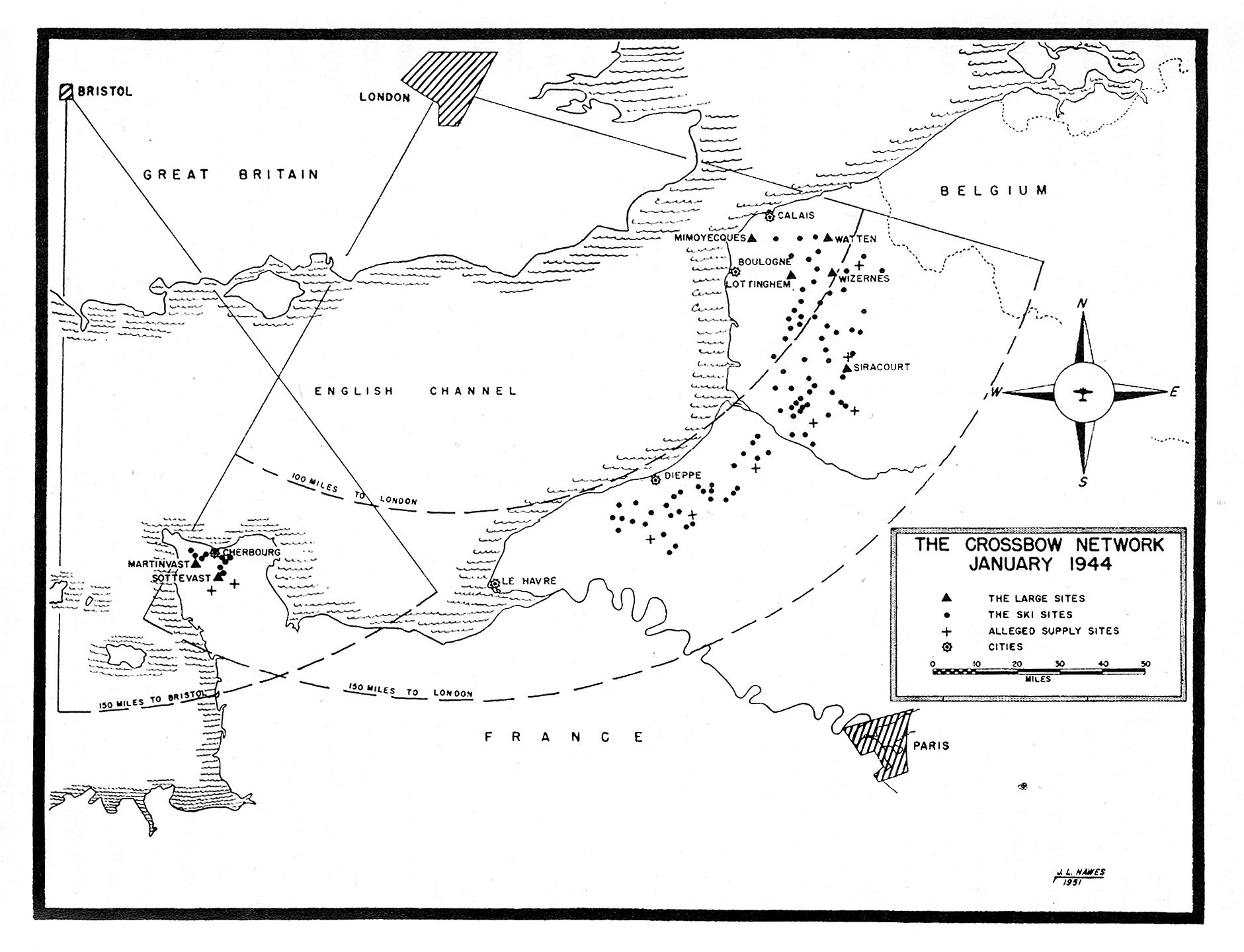
Hello my little Christmas puddings; today’s film covers the strategic bombing forces in WW2, what they did to support Operation Overlord, the aerial war across France and into Germany during 1944, taking out enemy formations, V1 and V2 sites, and breaking up the Nazi oil fields in the process. But all did not go according to plan … this is the inbetweeny bit from June – December 1944 and the part everyone forgets before the Bulge, Dresden and all that …

00:00:00 – Introduction
00:01:12 – A Word From Our Sponsor
00:03:25 – A Few Notes For New Viewers
00:04:02 – How End A War
00:06:25 – A 90 second (well 6 minutes) Recap of the story so far
00:12:15 – On With The Show
00:18:40 – The Key Players
00:20:10 – Enter Trafford Leigh-Mallory
00:24:05 – Trafford in Charge At the AEAF
00:26:15 – The Strategic Bombers Role In D-Day
00:27:29 – The Bombers As Part Of The Deception Plans
00:28:18 – Cutting Off Normandy
00:29:41 – The V1s, Poison Gas and Biological Warfare
00:37:31 – The One True Raid To End The War
00:41:50 – Self Harm in Normandy (It’s Trafford Time Again)
00:52:04 – Focus On Oil – Why, How and What Happened in 1944
01:05:00 – And on to Dresden
01:05:25 – Survivor’s Club
(more…)

Older Posts »

Powered by WordPress