
Real Time History
Published 15 May 2026The 19th century is a time of violent global imperial competition. The Scramble for Africa and the Great Game between the Russian and British Empires over influence in Central Asia are among the best-known examples. But the 2nd half of the century also involved another Great Game – the Great Game for Asia.
00:00 Intro
05:35 1st Sino-Japanese War 1894-95
30:02 Boxer War 1900-01
55:40 Russo-Japanese War 1904-05
01:22:14 Conclusion
(more…)
October 12, 2026
The Great Game for Asia 1894-1905
October 5, 2026
QotD: Socialism and the world wars
What gave socialism a shot was that the hypertrophic nationalism of the first half of the twentieth century plunged the world into not just one but two world wars. Without these catastrophes, it is inconceivable that so many devotees of Marx would have come to power in the seventy years after 1917. The world wars made the case for socialism in multiple ways. First, they seemed to confirm the destructive tendencies of “imperialism, the highest form of capitalism”, in Vladimir Lenin’s words. Second, they greatly expanded the role of the state, which became the principal purchaser of goods and services in most combatant countries, creating precisely the kind of state-controlled economy that socialist theory claimed would perform better than free markets. Third, the wars acted as a great leveler, imposing very high marginal rates of taxation, wage controls, and price controls in ways that tended to reduce wealth and income disparities. Fourth, in 1917 the German government financed the Bolshevik coup in Russia that brought Lenin to power.
The tragedy was that those who promised utopia generally delivered hell on earth. According to the estimates in the Black Book of Communism, the “grand total of victims of Communism was between 85 and 100 million” for the twentieth century as a whole. The lowest estimate for the total number of Soviet citizens who lost their lives as a direct result of Stalin’s policies was more than 20 million, a quarter of them in the years after World War II. Mao alone, as Frank Dikötter has shown, accounted for tens of millions: two million between 1949 and 1951, another three million by the end of the 1950s, a staggering 45 million in the man-made famine known as the Great Leap Forward, yet more in the mayhem of the Cultural Revolution. Even the less bloodthirsty regimes of Eastern Europe killed and imprisoned their citizens on a shocking scale. In the Soviet Union, 2.75 million people were in the Gulag at Stalin’s death. The numbers were greatly reduced thereafter, but until the very end of the Soviet system its inhabitants lived in the knowledge that there was nothing but their own guile to protect them from an arbitrary and corrupt state. Other communist regimes around the world, including the very durable dictatorships in North Korea and Cuba, were strikingly similar in the miseries they inflicted on their own citizens.
The various socialist regimes could not even justify their murderous behavior by providing those they spared with higher living standards than their counterparts living under capitalism. On the contrary, they were economically disastrous. The collectivization of agriculture invariably reduced farming productivity. A substantial proportion of the victims of communism lost their lives because of the famines that resulted from collectivization in the Soviet Union and China. North Korea had a similarly disastrous experience. Central planning was a miserable failure for reasons long ago identified by Ludwig von Mises, Friedrich Hayek, and Janos Kornai, amongst others. Indeed, the economic performance of strictly socialist countries got worse over time because of rigidities and perverse incentives institutionalized by planning.
Moreover, the evidence is clear that, as countries moved away from socialist policies of state ownership and toward a greater reliance on market forces, they did better economically. The most striking example — but one of many — is that of China, which achieved a true great leap forward in economic output after beginning to dismantle restrictions on private initiative in 1978. After the collapse of “real existing socialism” in Central and Eastern Europe in 1989 and the dissolution of the Soviet Union in 1991, there was widespread recognition (the “Washington consensus”) that all countries would benefit from reducing state ownership of the economy through privatization and from lowering marginal tax rates. […] the highest marginal personal income tax rate was reduced in nearly all Organisation for Economic Co-operation and Development (OECD) countries between the mid-1970s and mid-2000s.
Niall Ferguson, “Capitalism, Socialism and Nationalism: Lessons from History”, 2020-02.
Comments Off on QotD: Socialism and the world wars
September 29, 2026
War drums echo again in Britain
Mark Steyn on the renewed interest in going to war against Russia by the British establishment (let’s not point out just how Britain’s existing armed forces are being required to skip “non-essential” training to save money):
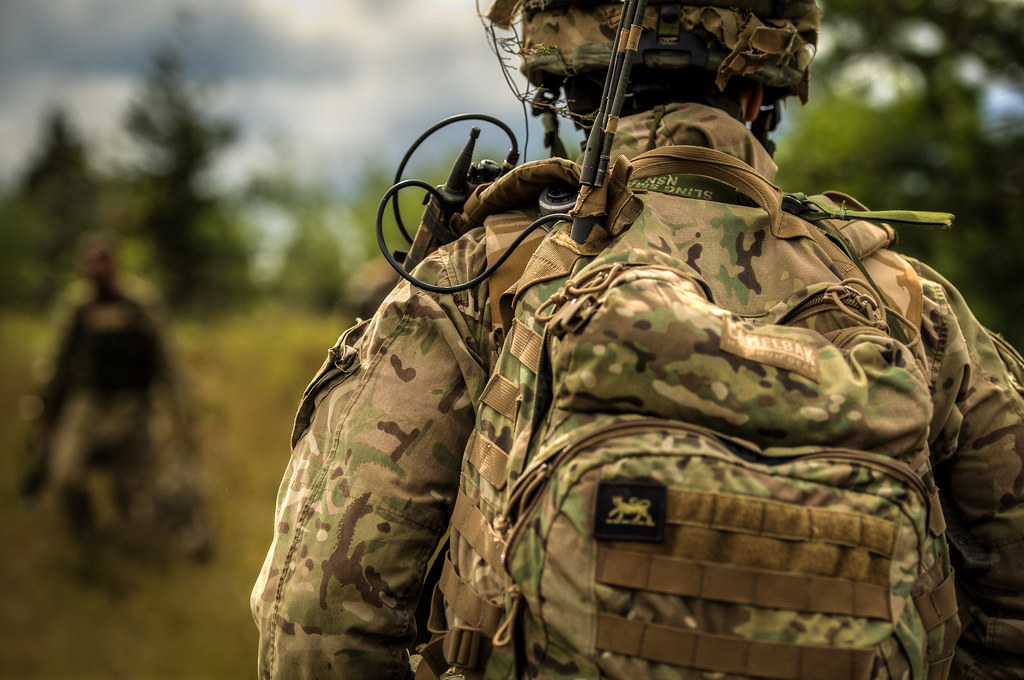
“British Army working during the Field Training Exercise” by U.S. Army Europe is marked with Public Domain Mark 1.0  .
.
On the other hand, the Iran war has, apparently effortlessly, brought Britain to economic ruin, which may be why the UK’s hitherto all-powerful iron-fisted caudillo has not been seen since late July, even by his favourite Ukrainian rent boys.
Still, the good news is that every day Russia inches closer to that 2022 collapse:
The Novoshakhtinsk refinery in the southern Russian region of Rostov was hit by drones and had to be taken offline, regional governor Yury Slyusar said in a post on Telegram early on Friday.
As a result of the drone attacks, the Novoshakhtinsk refinery, which has the capacity to process 110,000 barrels of crude oil per day, was damaged and halted operations, the official said …
Ukraine continues its campaign to cripple Russian refining capacity, fuel supply, and export revenues. Due to the low refinery production, Russia has been forced to ban diesel exports for months and is likely to extend the ban beyond September 30. The ban was initially introduced in July as Ukraine has continuously taken Russian refineries offline.
That’s great news, isn’t it?
Whoops, my mistake: in another exciting plot twist, bringing the Russian economy to its knees is now a bad thing. Because the, er, Houthis have done a Lindsey Graham and put their flip-flops on the ground:
The Houthis’ capture of Mocha has transformed the war in Yemen – and the geopolitics of the Red Sea
Are you a renowned geopolitical expert? Are you free for a quick Zoom hit on what happens if the Iran-backed Iraqi militias bomb the strategically vital Saudi port of Macchiato? Ha! Gotcha!
Notwithstanding these distractions, what rank-and-file voters want to know is who’s two points up in Iowa. After all, we live in a golden age of popular self-government where Abdul el-Sayed is “America’s next Obama” and Elif Eralp is “Germany’s Zohran Mamdani” and Sadiq Khan is the next Sadiq Khan. Iowa-wise, Republican control of the Senate is all down to Nicki Minaj.
As you’ll have gathered from all the foregoing, news is bollocks. And yet, to return to where we came in, the strange persistence of certain recurring themes is itself newsworthy. It is curious, for example, that every western European leader insists on alerting his citizenry that “war with Russia could begin at any moment“.
Why? It’s fairly obvious that Moscow has determined to conclude the Ukraine war on the battlefield and to hold what it has taken: to the victor the spoils, as President Trump remarked at the UN General Assembly. In the course of an agreeable week or so in Odessa, it took me a day or two to notice that seventy per cent of the locals speak Russian and that the preferred items I painstakingly learned from the breakfast menu were not in fact in Ukrainian. So I can see why the Kremlin might jib at letting Nato turn it into the Lindsey Graham Memorial Headquarters for the new forward operating bases that used to be in the Gulf. In the weeks since my pre-coma vacation, Putin has destroyed the town’s port and reduced Ukraine to a de facto landlocked country.
Tough for the Ukrainians. So the European political class has volunteered you — yes, you, Clive Higginbotham of Rotherham, and you, Jean-Marie Durand of Clichy-sous Bois, and you, Stig Karlsson of Malmö — to go and fight the Russian bear. The Pakistani minicab-driver will take care of your wife and daughters while you’re away. When the Donbass is in peril, what fainthearted ninny worries about his own territorial integrity? In London the government’s busy giving away Northern Ireland, Gibraltar, the British Indian Ocean Territory and the English South Coast to, respectively, Brussels, Madrid, Port Louis and every sex-fiend in Somalia, so your sovereign territory is hardly at issue, is it, you whiny loser?
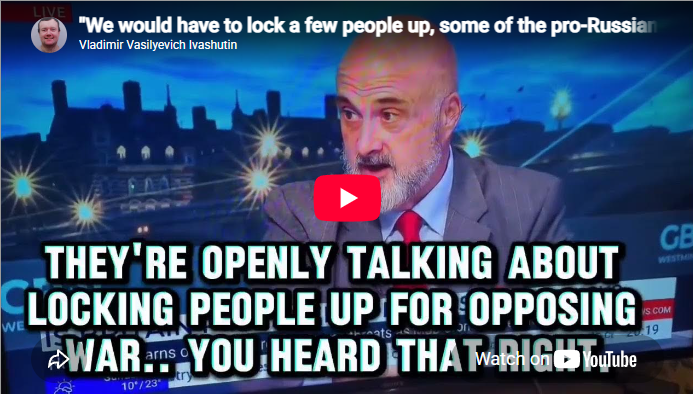
Even so, you’d think impending nuclear armageddon would be a wee bit politically controversial. Au contraire, it’s impeccably non-partisan. Here, for example, is a discussion about next month’s blitzkrieg against Russia between the Rt Hon Sir Jacob Rees-Mogg, former Lord President of Her late Majesty’s Privy Council and a “conservative”, and Mr Paul Richards, former chair of the Fabian Society and a “socialist”:
Got that? If you oppose war with Russia, the “conservative” wants to throw you in gaol because Britain suspended habeas corpus during the Napoleonic Wars and the “socialist” wants to throw you in gaol under the 1914 Defence of the Realm Act.
Because that’s all the choice anyone needs in a functioning democracy. So good luck findng a Neither Of The Above candidate who’ll be permitted to take power. After all, the winning party in this month’s German elections is, per the intelligence agencies, a “Russian sleeper cell”.
But but but, splutter my correspondents, aren’t you worried that Iran is two weeks away from a nuclear weapon? Actually, I assume the deceased ayatollahs have used the seven months since February 28th to acquire nukes. Wouldn’t you?
Comments Off on War drums echo again in Britain
AK-12: The Improved 2019 Model
Forgotten Weapons
Published 25 May 2026NOTE: I goofed the selector positions, and mistakenly described them backwards: from the top, it is safe, full, 2-round-burst, and then semi at the bottom. In addition, there is supposed to be a segmented cleaning rod stored inside the handguard, which is missing on this example. Sorry!
The AK-12 went through an extensive development program that attempted to substantially change the AK design, but failed. In 2015 the early design plans were scrapped, and the project reverted to simply making some changes to the AK-100 series. This resulted in the AK-12 being adopted as the new Russian standard infantry rifle in December 2017. Within a short time a number of shortcomings were found in the rifles, and an improved model was accepted in 2019, with deliveries beginning in 2020.
The rifle in today’s video is that improved 2019 pattern. It has a redesigned stock, a new style of rear sight, and new pistol grip. Many thanks to the IRCGN (Institut de Recherche Criminelle de la Gendarmerie Nationale) for allowing me access to film this very rare rifle for you!
Balanced-recoil AK-107:
• Balanced Recoil AK-107 / Kalashnikov SR-1:…
(more…)
Comments Off on AK-12: The Improved 2019 Model
September 27, 2026
Harsher than Versailles: The Treaty of Brest-Litovsk 1918
The Great War
Published 24 Apr 2026On March 3, 1918 the Central Powers (Germany, Austria-Hungary, Bulgaria, and the Ottoman Empire) and Bolshevik Russia signed the Treaty of Brest-Litovsk, ending the First World War on the Eastern Front. The terms were harsher than those the Germans offered in December, and much harsher than the later Treaty of Versailles. The Treaty of Brest-Litovsk was only in force until November 1918, when the Central Powers’ defeat nullified it. But it had a major impact inside and outside Russia.
(more…)
Comments Off on Harsher than Versailles: The Treaty of Brest-Litovsk 1918
September 25, 2026
How True was Lord of War? Surplus from the Warsaw Pact (w/ Val Forgett)
Forgotten Weapons
Published 20 May 2026When the Soviet Union collapsed, there was a gold rush for the surplus guns held by all the various newly independent republics, as well as the Warsaw Pact nations. Lord of War is not far off … and Val Forgett was there, bringing guns into the US for Navy Arms.
Comments Off on How True was Lord of War? Surplus from the Warsaw Pact (w/ Val Forgett)
September 20, 2026
There are wedding gifts and there are wedding gifts
Gift-giving has been a thing since caveman days, they say, but sometimes gifts carry strings along with them that are impossible to ignore, or as The Grim Historian puts it, “never let a mobster pay for your wedding”:

Nothing says “just a wedding gift” like the benefactor whose role stayed secret until ProPublica had to put an arrow over his head.
Photo: Laura Gordon Photography via Instagram; annotation/source: ProPublica.
My Grandma Ella had a rule about gifts, usually delivered while waving a wooden spoon over a white apron so stippled with tomato sauce it could have been entered into evidence.
She would say, “Never accept gifts. That’s how a rich man turns you into a beggar.”
That may sound cynical, but no Italian survives a lifetime of weddings, funerals, Sunday dinners, and relatives saying “forget about it” without learning that generosity has a very long memory.
A gift creates an imbalance. You give me something. Now I am indebted to you. Sure, you may insist it is “just a gift.” But I have seen enough crisp white envelopes exchange hands to know there are gifts, and then there are … gifts.
Say I give you a hundred dollars and tomorrow you hand me a hundred dollars back, congratulations…we have invented banking. Or say you sign up for my breathtakingly grim history newsletter. I have provided you a service in exchange for your 5 ducats, but we are all clear on the bargain.
But suppose I give you something you can’t return. Not tomorrow. Not next year. Now the books stay open. And a man who keeps your books open is not your friend. He owns a piece of you.
Which brings us to Donald Trump Jr.’s wedding and who owns him.
ProPublica reporters Justin Elliott, Brett Murphy, Joshua Kaplan and Alex Mierjeski reported this week that Umar Kremlev — a Russian businessman closely associated with Vladimir Putin — gifted Trump Jr. and Bettina Trump quite the wedding shindig in the Bahamas.
According to records and interviews ProPublica reviewed, Kremlev paid to rent a private island, covered an elaborate fireworks show, and had his team help organize the festivities. There were helicopters, seaplanes, oceanfront villas, and a five-tier funfetti cake flown in from Florida. So not exactly the crystal punch bowl from Aunt Linda.
Fortunately, after ProPublica published its story, the newlyweds fessed up. Yes, Don Jr. and Bettina Trump have a wealthy Russian benefactor (sorry, “friend”) granting party favors. Then they made a statement that would have my Italian grandmother shaking her mano fica.
“Friendship doesn’t require a political motive. Generosity doesn’t automatically come with an agenda. And sometimes a wedding gift is simply a wedding gift.”
Just a gift.
Comments Off on There are wedding gifts and there are wedding gifts
September 17, 2026
You don’t hate the relic media nearly as much as they deserve
The relic media in Canada has — thanks to generous government subsidies — become a maple-flavoured version of the North Korean news media, but even in the United States where there’s still a somewhat competitive market, most media outlets are delighted to act as unpaid propagandists … and have been that way for generations:
Walter Duranty won a Pulitzer Prize for lying about Stalin’s Ukraine famine while millions starved. His employer, the New York Times, never returned that prize. The institutional rot ran deeper than one reporter.
In 1936, Times Moscow correspondent Harold Denny watched the first of Stalin’s Great Purge trials and reported the proceedings as credible. The defendants, Grigory Zinoviev and Lev Kamenev among them, confessed to plotting murder and sabotage. Denny saw no obvious coercion and wrote accordingly. The NKVD had spent weeks breaking these men through sleep deprivation, threats against their families, and relentless psychological torture until they would say anything in open court.
Every confession was fabricated. Every defendant was executed anyway. Stalin murdered roughly 750,000 people during the Great Purge between 1936 and 1938, and the Times gave the operation a veneer of legitimacy at its most critical moment.
Central planners require a monopoly on information to survive. When the newspaper of record in the most powerful capitalist country on earth launders your show trials as fair proceedings, you buy yourself years of Western political goodwill. Stalin purchased that goodwill with useful idiots who confused proximity to power with insight.
You pay for this dynamic today every time an institution that failed catastrophically keeps its credentials, its prizes, and its authority to declare what counts as credible journalism.
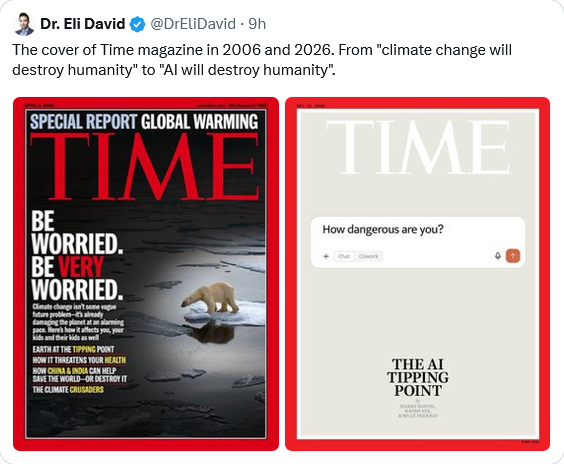
Duranty would have been proud of Time magazine had he been alive today.
Comments Off on You don’t hate the relic media nearly as much as they deserve
September 13, 2026
Velvet Glove and Sparrow II missiles: A Guide To Early Cold War Bomber Interception Tactics
Polyus
Published 6 Apr 2026The Velvet Glove was a semi-active guided missile system developed by the Canadian Armament Research and Development Establishment. Its successor, the Sparrow II was developed by Canadair in association with the US Air Force. This is the story of the development of the missiles in the context of their contemporary weapons systems.
0:00 Introduction
1:00 NORAD and continental defense
3:21 Gun approach
5:32 Rocket pod approach
7:54 Nuclear option
8:35 Interception Tactics
11:56 Guided missile approach
14:38 Velvet Glove missile development
19:30 Sparrow missile development
22:03 Arming Canada’s future fighters
25:08 Conclusion
Comments Off on Velvet Glove and Sparrow II missiles: A Guide To Early Cold War Bomber Interception Tactics
September 8, 2026
Why The Soviet Union Lost In Afghanistan
Real Time History
Published 3 Apr 2026In February 1989, the last Soviet combat troops leave Afghanistan after almost a decade of war. Despite military superiority, the superpower was not able to establish a stable Moscow-friendly regime in the country. Yet, the mujahedeen are also deeply divided and influenced by outside forces such as Pakistan, Saudi Arabia, and Osama Bin Laden.
(more…)
Comments Off on Why The Soviet Union Lost In Afghanistan
September 1, 2026
“Under Communism, everyone has a job”
Sandy Petersen responds to the “Under Communism, everyone has a job” claim that has been circulating recently thanks to the rising popularity of useful idiots:
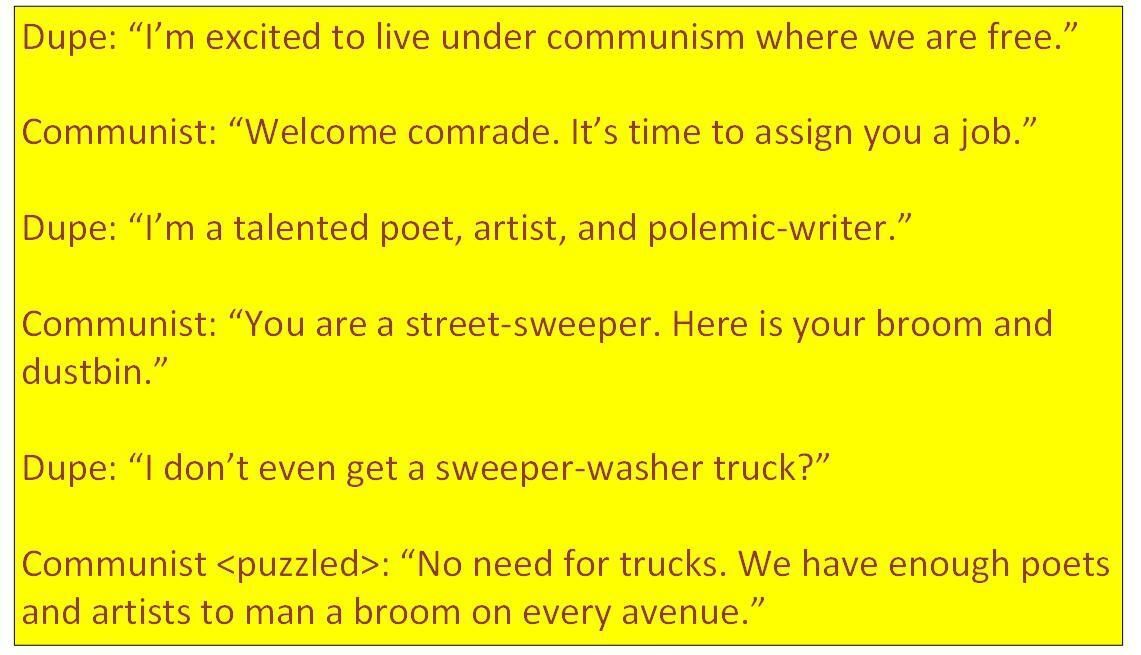
“Under Communism, everyone has a job”. This is absolutely true.
Here’s what else was true.
1) You were ASSIGNED your job AND the region for that job by the state (i.e., a bureaucrat). You were required to stay in your job at least 3 years.
2) After 3 years, if you wanted to switch jobs, you needed the approval of both your labor board AND your employer. If you switched too often (for example: every 3 years), there were legal penalties, up to imprisonment.
3) Promotions were based on party membership, loyalty, and sucking up. I’ve talked to a lot of former Soviet citizens, and zero of them thought merit was of use. Also many nice jobs were only for party members.
4) Wages were pretty even across the board. A factory worker, engineer, and factory manager had similar salaries, so it was indeed egalitarian, but didn’t have a lot of incentive. The higher-rank workers did get perks to make up for it. They might get a vacation dacha on the Black Sea. Or a “company” car with a chauffeur. That sort of thing. The higher-ups had better stuff.
5) You needed a passport to travel inside your own country. You couldn’t just move to Leningrad and look for work. Or even go on vacation without permission.
6) You had a union. It was state-controlled. You could not go on strike. If you criticized your factory manager, you would be arrested. Yay unions.
If you look at the above, they are an evil capitalist’s wet dream. Think of a movie with a foul imaginary super-corporation so beloved of science fiction movies — they would support every one of those initiatives.
Because that’s what the Soviet Union was — the biggest, most evil corporation that ever existed.
Comments Off on “Under Communism, everyone has a job”
August 24, 2026
“Communism is an ideology designed to liquidate nations”
I nearly skipped this post by Celina, as it started off appearing to be pretty much of interest only to Australians, but that was just the opening sections:
The Bolsheviks were the first governing power of the modern era to write the suppression of “national enmity” into a systematic criminal code. The RSFSR Criminal Code of 1922 penalised agitation and propaganda arousing national enmity or dissension, its successor, the 1926 Code, carried the provision forward as Article 59-7, under the chapter dealing with especially dangerous crimes against the order of administration, punishing “propaganda or agitation directed towards arousing national or religious enmity or discord”, with sharply escalated penalties, up to and including death, where the offence occurred in wartime or amid mass disturbances. From the earliest years of the Soviet state, in other words, speech about nationality was not a civil-society problem to be argued out, but a category of state crime sometimes punishable by death.
To understand why, it is necessary to understand something about communism that conservatives and libertarians have largely obscured. If you ask the average conservative what communism is, he will most likely start discussing government ownership, five-year plans, bread queues etc.
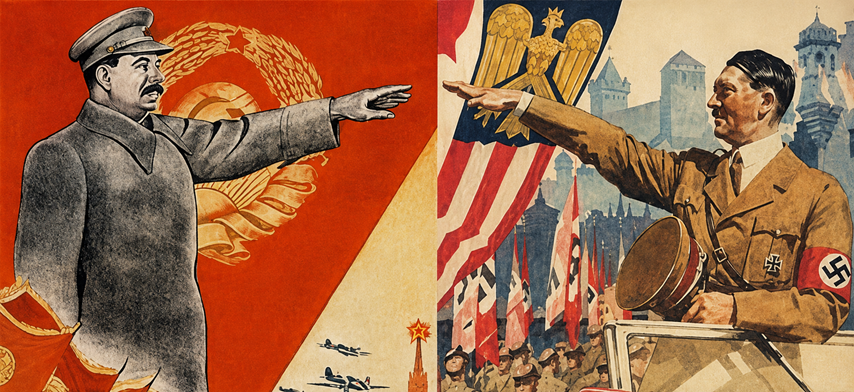
Communism, from this point of view, is essentially capitalism with the economic settings reversed. The government “does and owns everything“. This is why so much conservative analysis eventually degenerates into horseshoe theory: fascists liked government intervention and communists liked government intervention, therefore fascism and communism were basically versions of the same thing.
But that completely misses the ideological conflict which defined twentieth-century Europe. Communism was not just some economic theory about who should own what. It was an internationalist theory about who you are.
Communism is an ideology designed to liquidate nations. Literally.
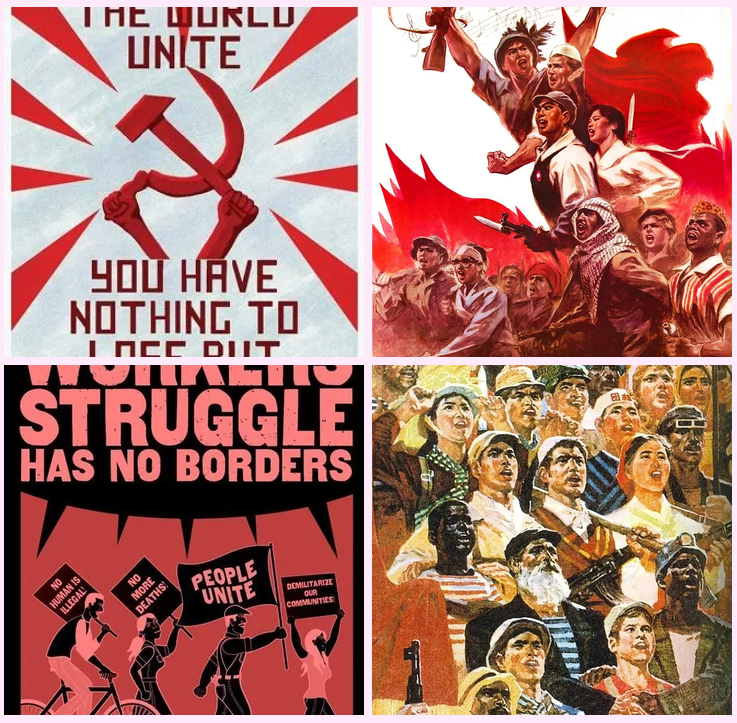
Marxism insisted that the fundamental political division of mankind was class. The worker was not ultimately supposed to understand himself principally as English, German, Italian, French or Russian. He belonged to the proletariat. His historical interests were shared with workers beyond the borders of his own country, while his supposed national solidarity with his own bourgeoisie concealed the class relationship upon which capitalism depended. Hence the language that runs through the entire communist tradition: Workers of the world, unite; The proletariat has no fatherland; No war but class war. You’re not Italian, you’re not German, you’re the proletariat, and all you have to lose is your chains.
The political logic here is blatantly obvious. Nationality competes with class consciousness, patriotism competes with proletarian internationalism. The nation tells a German worker that he shares something profound with another German who happens to own a factory. Marxism tells him that this solidarity is false and his real political brother is the French, Russian or Italian worker standing on the other side of the border.
That is why the nation became one of the great obstacles confronting revolutionary socialism. The theory said workers possessed common international class interests. Yet, history repeatedly demonstrated that workers continued to behave like members of nations.
In 1914, the workers of Europe did not unite against their governments and refuse the coming war. They rallied overwhelmingly to their respective countries. Socialist parties fractured along national lines. Men who Marxists expected to understand themselves as an international proletariat marched into battle as Germans, Frenchmen, Russians, Austrians and Britons. And the same problem returned after the Bolshevik Revolution.
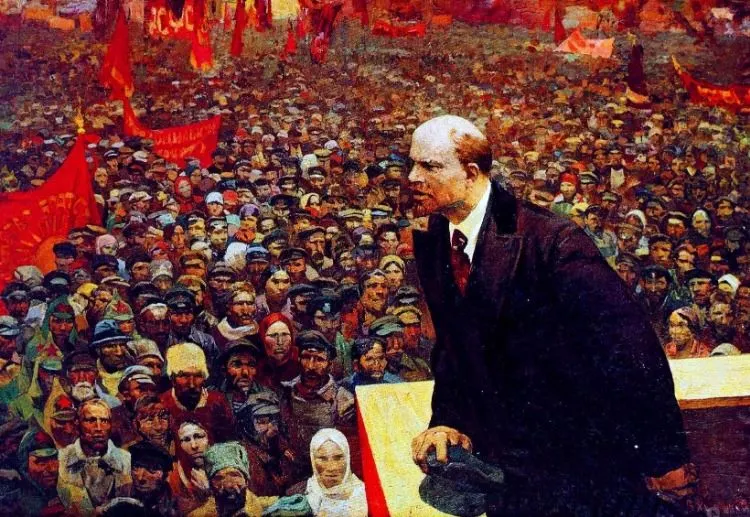
That is why the great twentieth-century conflict between communism and nationalism was not accidental. It was ideological. Communism was internationalist not in the banal sense that communists in different countries cooperated with one another, but in its conception of history itself. The nation was something history would ultimately transcend. Lenin said this openly: socialism aimed not simply to bring nations closer together, but eventually to “merge them“. Elsewhere he described the centralised state as a historical step towards the future “socialist unity of the whole world“.
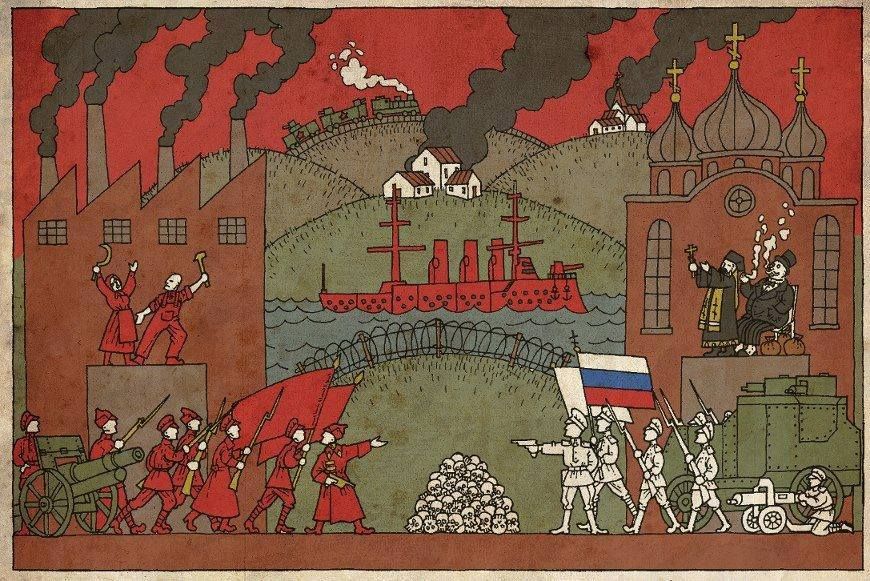
Stalin, grasping this principle, forged civic nationalism as the indispensable stepping-stone toward that communist universalism. Inside the borders of the revolutionary state the old nationalities were to be liquidated into a single Soviet identity: you are not Ukrainian, you are not Russian, you are not Jewish, you are not Georgian, you are a Soviet patriot, loyal only to the revolution. That state, once purged of national loyalties, would then project its universalist ideology outward, seeking global hegemony by liquidating, in turn, every nation that still dared to resist it.
Update, 25 August: Welcome, Instapundit readers! Have a look around at some of my other posts you may find of interest. I send out a daily summary of posts here through my Substack – https://substack.com/@nicholasrusson that you can subscribe to if you’d like to be informed of new posts in the future.
August 22, 2026
August 20, 2026
QotD: George Bernard Shaw’s role as Stalin’s useful idiot
Shaw toured Ukraine during the height of the Holodomor, when Soviet grain requisitions had stripped peasants of every scrap of food. Conservative estimates put the death toll at 3.5 million Ukrainians. Shaw saw the empty villages, the skeletal survivors, the mass graves. Then he signed a public letter praising Stalin’s “remarkable progress” and told Western journalists that reports of famine were capitalist propaganda.
Why would an intelligent man become Stalin’s useful idiot? Shaw believed in central planning with religious fervor. He thought brilliant intellectuals like himself could design society better than millions of individuals making their own choices. When confronted with central planning’s inevitable result (mass death), he chose to lie rather than admit his ideology killed people. Shaw preferred beautiful theory to ugly facts.
Shaw deliberately used his celebrity status to give Stalin cover while Ukrainian children died of starvation. He returned to Britain and spent years defending Soviet policies, even as refugee testimonies and photographic evidence exposed the genocide. The man who wrote about moral awakening in Pygmalion had abandoned his own moral compass entirely.
Free market economists warned that socialist calculation was impossible, that without prices and property rights, economies would collapse into chaos and death. Shaw dismissed these warnings as bourgeois nonsense while standing ankle-deep in their vindication.
Handre, The social media site formerly known as Twitter, 2026-05-13.
Update, 21 August: Welcome, Instapundit readers! Have a look around at some of my other posts you may find of interest. I send out a daily summary of posts here through my Substack – https://substack.com/@nicholasrusson that you can subscribe to if you’d like to be informed of new posts in the future.
August 12, 2026
“Hitler’s socialism wasn’t just an internal economic policy – it was the cause of the war”
On the social media site formerly known as Twitter, Krzysztof Szczawinski explains why socialism — of the left (the Soviet Union) and the right (Nazi Germany) — was the economic driver that pushed Europe into war in 1939. German socialism (in one state) could only continue to grow by annexing resources and manufacturing capabilities from neighbouring states, and by August 1939 it was Poland’s turn:
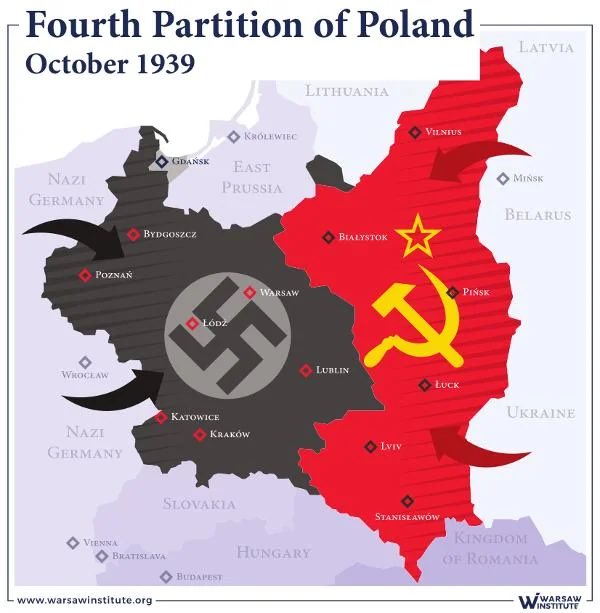
Socialism was at the origin of the war. Not as a coincidence. As a necessity. The socialist economic model generates contradictions it cannot resolve internally – the calculation problem, the misallocation, the stagnation, the mounting failure. War is the exit. It provides the external enemy that explains the internal failure. It justifies the total mobilization the system always wanted. It consumes the surplus population the economy cannot employ. It redirects the resentment outward.
Does this remind you of anything?
The evidence is not subtle. The NSDAP program of 1920 reads like a standard socialist manifesto. The economic reality confirmed it – price controls, industrial planning, state allocation of raw materials, entrepreneurs reduced to government functionaries. Private property in name only. Mises called it Zwangswirtschaft – coercive economy. Hayek dedicated a chapter of The Road to Serfdom to the socialist roots of Nazism. Both writing from observation, not retrospect.
After 1945 the Soviet victors imposed their version and attached the capitalist label to every rival. Western textbooks followed. The lie became the curriculum.
The real divide has never been left versus right. It is collective control versus individual freedom. Once you place National Socialism correctly within the family of collectivisms, the political spectrum becomes legible – and the war becomes explicable.
When the system fails — and it always fails — it needs an enemy. The bigger the failure, the bigger the enemy required.
Imagine being Poland. Squeezed between two socialist systems, both searching for their enemy.
We were it.
Comments Off on “Hitler’s socialism wasn’t just an internal economic policy – it was the cause of the war”


