
PeriscopeFilm
Published 23 Jun 2026This animated film by John Sutherland Productions was commissioned by the National Association of Auto Manufacturers. Your Safety First is a promotional piece for 21st Century Cars, told from the perspective of a person in the year 2000 looking back on the history of automobile safety. The cartoon humorously compares the dangerous, early days of cars with the safety-focused, modern vehicles of its time. The cartoon was directed by George Gordon, and animated by Ken O’Brien, George Cannata, Fred Madison and Cal Dalton. The story was written by Norman Wright. Note: this cartoon has been noted as a precursor to the animated TV series The Jetsons, which borrowed heavily on the ideas presented in the cartoon including a three-hour work day, automated flying cars, and robotic arms performing most tasks.
0:00 Main titles. The film’s host, a man from the year 2000, introduces a segment on the history of the automobile, beginning with an early 20th-century car.
4:47 The film highlights the dangers of early cars, including a lack of doors, frequent flat tires due to poor tire retention rings, and a complete absence of shock absorbers, which made for a very bumpy and unsafe ride.
5:32 Early cars had poor acceleration and weak, unreliable gas or oil headlamps, making night driving hazardous.
5:47 The vehicles offered little protection from the elements, as they lacked tops and windshield wipers.
6:03 The film shows the danger of the hand crank starter, which often failed, and the unpredictable nature of the car’s individual parts, which could fail without warning, causing accidents.
6:35 The film transitions to the rapid improvements made to cars over the years.
6:42 It lists early safety innovations, such as stronger wheels, demountable rims, doors, tops, windshields, and wipers. The driver’s seat was moved to the left for safer passing, and the electric starter replaced the hand crank.
7:33 The film continues to show the development of safety features over the decades, including pressed steel wheels, stop lights, rearview mirrors, four-wheel hydraulic brakes, and rubber-covered pedals.
7:51 Safety glass and all-steel bodies and tops are presented as major improvements in passenger protection. Shock absorbers are highlighted for smoothing out bumpy roads.
8:30 The film states that, in addition to physical improvements, manufacturers developed research and testing techniques to build safer cars. It shows various “torture tests” designed to find weaknesses in parts.
9:31 Manufacturing processes also improved, with each car undergoing over 2,000 inspections before leaving the factory.
9:48 The film returns to “Grandpa” in the year 2000, showcasing his reliable, safe, and comfortable car. It lists a final set of advanced safety and convenience features, including safety door locks, automatic transmission, a low center of gravity for stability, and tubeless tires.
10:46 Modern features like wraparound windshields and larger rear windows increased visibility. Sealed-beam headlamps improved night driving, while power brakes and power steering made driving easier and safer.
11:27 The film concludes by asserting that the safety of the driver was and will continue to be the primary goal of automobile manufacturers. The host, Grandpa himself, states he is “going on 117” thanks to the easy, modern living made possible by safe cars.
(more…)
October 20, 2026
Your Safety First (1956) – Automotive safety cartoon that inspired The Jetsons
October 15, 2026
1980s gun myths from TV shows
On Substack, John Van Stry discusses one of the myths about guns that were commonplace in 1980s cop shows on TV:

Okay, so he’s talking handguns, but this is still kinda on-topic.
Decades ago, and I do mean decades, on one of the many police drama TV shows that existed in the 70’s, there was one about cops (of course there was!) where they followed a different set of officers (not detectives, street cops — kinda1) each week.
So in that particular episode we had these guys (I think it was two? It was more than one) going around and robbing banks and they were shooting (and of course killing) people at the banks. They were using “HIGH POWERED WEAPONS” (emphasis theirs) of some sort. I don’t remember if it was rifles (AR-15’s weren’t the boogie man back then) or pistols. I think it was pistols though, Magnums perhaps?
Anyway, cutting to the chase, we’ve got two officers “staking out” the bank that they believe is going to be next and all they’ve got are their wimpy-wimpy-wimpy (emphasis theirs) .38 revolvers. Because everyone knows being shot by a .38 is no more dangerous than being shot by a B-B gun!2
So, before the “big shootout” one officer comes up to the other and offers him a Special Bullet.3 He tells the other “I thought maybe we should have a little something to even the odds”.4
The other officer is of course duly horrified because this is NOT “regulation ammo”!
So what was this “special ammo”? Were they .357 magnum rounds? (which you might be able to shoot from some .38’s back then, if you could get them to fit, just once). Were they +P’s?5 Oh no no no no no! They were (Dun dun DAAAA!)
HOLLOW POINTS!!!!
Yup, their first bullet in their revolver was a .38 hollow point.
When the robbers attack, oh the things that happen! One officer blows one of the robber’s heads Clean OFF!! Yes, that’s right! The dreaded hollow point is so powerful it took off the guy’s head! Completely!!! I don’t recall exactly what the other robber had happen, but I think it was a hole blown throw him you could see through.6
But wait! There’s More!7
- I forget the details exactly, it was a long long time ago.
- In this episode at least — consistency from the anti-gun lefties who wrote this dreck in the 70’s was not to be expected.
- I ain’t making this part up.
- Or words that effect. Again, 50 years ago, I don’t remember the exact line.
- A lot of .38 ammo was ‘+P’ back then, because they hadn’t created the designation yet, look up the specs in the old reloading manuals if you don’t believe me.
- Props to these officers however for their first shots in each case being killing ones!
- Of course there is!
When your political establishment is controlled by globalists
On Substack Notes, Spiff responds to someone decrying the British media’s concerted efforts to ignore the political protests across the channel:
Britain’s traditional media have long since chosen their side on the culture wars. They have embraced the establishment and their disgust at patriotism and national loyalty. They are globalists.
That is why they are becoming more extreme over time. They have to. They are a crucial part of the establishment narrative machine along with nudge units, elaborately funded NGOs and charities, and the civil service.
A Nuremberg-style trial would likely convict them of treason given how anti-immigration the British public is. We may not know the details but all these institutions point in only one direction; more immigrants, more diversity, the managed decline of the country, the condemnation of its people.
We often have to step back and look at screenshots like the one below to remind ourselves the media class are making a series of conscious decisions to damage and diminish Britain and the British people. It is not an accident. They know what is happening in France and their choice has been to downplay the enormous social changes that were avoidable and are not working in favour of the French people. Mass immigration of North Africans is destroying France. These riots reflect the alliance between immigrant groups and the hard-left who hate the West.
A similar process is now destroying the UK. They have to keep that observation away from the public for as long as they can. But time is now running out.

Prime Minister Burnham will probably follow Mark Carney’s example and start subsidizing the non-state media to ensure that the propaganda is more closely co-ordinated to the establishment’s preferred narrative. After all, it’s working quite well to keep malinformed Canadian elbows up.
October 14, 2026
There’s nothing preventing the Canadian government from using propaganda
And now that the majority of the relic media are addicted to government subsidies, the propaganda efforts are that much more effective:
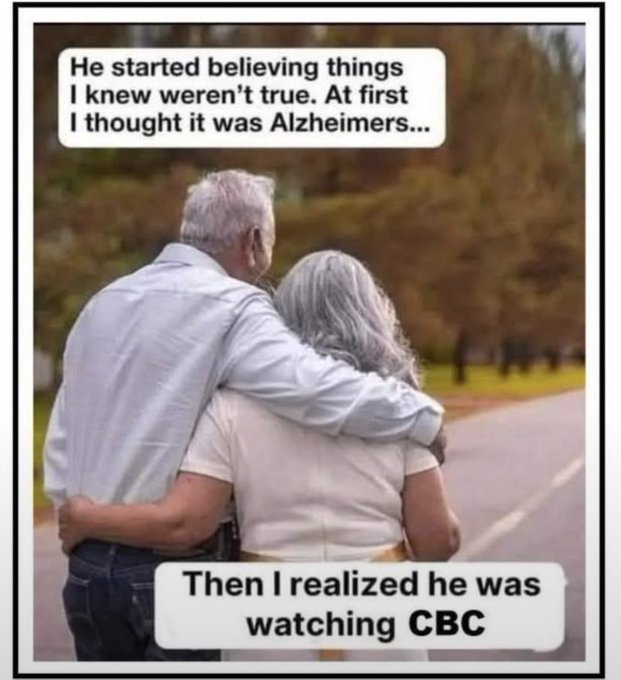
Here’s something that not many Canadians both know and understand in Canada. There are currently zero laws in place regarding our Government’s ability to use propaganda against it’s citizens.
Not only can they do it, but they have teams of behavioral scientists & psychologists figuring out how to do it effectively.In 2016 there were only 6 federal employees in the role. Since 2021 there are now over 70
In the Public Health Agency of Canada (PHAC) there are over 16
Immigration, Refugees and Citizenship Canada there are over 5
Treasury Board Secretariat over 3
Environment and Climate Change Canada over 2
And there are more working in the Privy Council Office
During Covid they admitted to using these individuals to push COVID-19 compliance up amongst the population, They ran research surveys & experiments to test messaging and interventions, and designed choice architecture or communications to drive desired behaviours.
These ghouls manufactured consent amongst the population & nudged people to make decisions they didn’t want to.
Fast forward to today and what we are witnessing in regard to the U.S. and Europe. They are using the same tactics to convince people that the U.S. is our enemy & the EU is our savior. Stop falling for their propaganda, step back and think for a moment, why are they bombarding you daily with anti-U.S. rhetoric, climate fear, pro EU messaging. Are you being manipulated to accept their plan’s & decisions.
Star Trek: Yesterday’s Progressivism
Feral Historian
Published 12 Jun 2026Star Trek has always been a progressive cultural phenomenon, but that was in the last century. Now, Star Trek is older than most of its fan base and in some ways has started to look fairly conservative. This not only reminds us how relative those terms are, but also makes us ask, is Star Trek still relevant? Or perhaps more relevant than it ever was?
00:00 Intro
01:42 TNG, Discovery, and the Orville
04:16 Auroville
06:52 History Didn’t End
08:59 Social Cohesion as Technology
13:40 Step Back to Go Forward🔹 Patreon | patreon.com/FeralHistorian
🔹 Ko-Fi | ko-fi.com/feralhistorian
🔹 and Merch! | feral-shop.fourthwall.com
October 9, 2026
Conrad Black on Tucker Carlson
On his (new-ish) Substack, Conrad Black discusses Tucker Carlson’s media career before he unceremoniously left Fox News and what he has been doing since then:
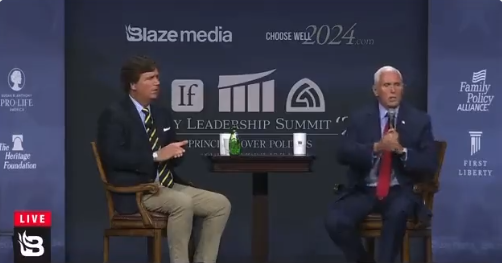
Tucker Carlson talking to Mike Pence, July 2023.
This became a dangerous cycle because the more Tucker forayed into the fringe, the harder he struck a vein of malformed but popular sentiment. Meanwhile, censorship of his relatively tame views only handed him a bigger megaphone and more incentive to go further. His sensible opposition to the Iraq and Afghanistan disasters, and his wariness of another quagmire emerging in Ukraine, curdled into progressively more unhinged forms of isolationism. His legitimate concerns about demographic trends and failed immigration policy curdled into belief in a coordinated conspiracy to erase white people from Europe and North America. Reasonable criticism of Israel and the American role in the Middle East curdled into the quasi-antisemitic trope of AIPAC as the hidden hand controlling U.S. foreign policy. His well-earned distrust of government curdled into various conspiracies involving some mix of extra-terrestrials, the CIA, and the Jews.
The pattern has become so predictable that if there was an effort to block him from praising Brussels sprouts as his favourite vegetable, at least three of his next five interview guests would spend two hours apiece insisting the maligned little cabbage is the victim of a coordinated smear campaign bankrolled by Big Salad. The attempted prohibition becomes the proof.
As a free-speech and free-market advocate, I think Tucker is entitled to say what he wants, and I congratulate him on his commercial success, even while finding many of his views idiotic. What troubles me is not so much the outlandish claims, but the skill atrophy — the phenomenon whereby any skill sharpened by adversarial pressure dulls without resistance. In boxing, the term “ring rust” is sometimes used to describe the way a boxer who stops facing strong opponents loses their timing, power, and urgency, until nothing’s left but a shell of their former selves. Looking back over his podcast guest list, with the exception of this Rees-Mogg segment, Ted Cruz last year, and perhaps a handful of others, it has been a long procession of hundreds of people brought on to confirm his own worldview back to him, in their own words. And the ring rust has set in.
I first noticed it at an event in Edmonton in January 2024, where I sat on a panel with Tucker and Jordan Peterson. I found myself in the awkward position of feeling the need to defend then-Finance Minister Chrystia Freeland in front of a packed arena of anti-Liberal partisans (with whom I would have considered myself somewhat of a kindred spirit). I was booed by parts of the audience for pointing out the fact that while Freeland, whom I know slightly and like personally, was politically hopeless, she was not, as Tucker had claimed, a fascist. The typically leftist habit of reducing every political opponent to a Hitler or Mussolini analog is lazy and obnoxious — not adjectives I would have used to describe the old Tucker. His justification was that he had recently seen a video of reporter David Menzies being detained by the RCMP after a collision with an officer while trying to get his microphone close enough to pick up Freeland’s response (or lack thereof). It was an outrageous overreaction by the officer, but there was no suggestion that Freeland had ordered the arrest. Ironically, Menzies’ question that Freeland was trying to dodge had been about why the Liberal government had gone soft on Iran’s terrorist regime — a question one might well put to Tucker.
The signs of atrophy continued to show up and in ways that, as a former admirer of Tucker’s, became progressively more alarming. At the memorial following the tragic murder of Charlie Kirk, Tucker gave an odd speech in which he claimed that the assassination was reminiscent of his “favourite story”, in which Jesus Christ was killed for telling the truth by a group of shadowy figures “in a lamp-lit room” in Jerusalem, “sitting around eating hummus”. When asked about it a few days later, Tucker employed a variation of the Jon Stewart technique of backing away from his own words to avoid serious scrutiny. With his characteristic forced laugh, he denied any implication that he had echoed the nascent conspiracy theory that Israel had murdered Charlie Kirk. His defense: hummus is a traditional Arab (rather than Jewish) food.
The evident decline grew even more pronounced in his May 2026 New York Times sit-down, when Lulu Garcia-Navarro asked why he had suggested that Donald Trump might be the Antichrist. Tucker insisted he had never said that, wasn’t even sure what the Antichrist was and insisted “those words never left my lips” — then, after he was shown a clip from his own show of the words leaving his lips, he apologized that his remarks from the clip implied “a precision I haven’t arrived at”. In other words, the jury is still out about whether Trump is the Antichrist, and he regretted jumping the gun on the verdict.
Which brings us to the latest instalment. After roughly 200 interviews, each amounting to hours-long sessions of Tucker and his guests regurgitating the same pablum into each other’s mouths, the transformation into a shell of his former self appears to be complete. In this conversation, moments after declaring that killing the innocent is “never justified under any circumstances”, he pivoted almost in the same breath into a full-throated defence of Hitler — history’s single greatest killer of innocents. He argued the invasion of Poland was understandable given that 15% of the country had been German before the Treaty of Versailles. While absurd, at least it is consistent with his position on Russia’s invasion of Ukraine. But even if, for argument’s sake, that justified Poland, Hitler didn’t stop there. What justified the invasions of Belgium and France? After all, France was faithfully adhering to the Tuckerite foreign policy of reluctant rearmament, appeasement, and assuming an entirely defensive posture (behind the Maginot Line). Stretching the flimsy logic further one could argue (feebly) that France had it coming too, since 6% of France (Alsace-Lorraine) was also German before Versailles. But there’s still no justification for the invasions of Denmark, Norway, the Netherlands, Yugoslavia, Greece, or the Soviet Union — with whom Hitler had a signed non-aggression pact. None of those countries were ever German, let alone Libya, Tunisia, and Egypt.
What’s clear is that Hitler used his early invasions to test whether anyone would stop him — and the feedback he got was a green light for more. History keeps teaching the same lesson: appeasement is just expansionism outsourced to your enemies.
Small wonder Tucker hasn’t learned this lesson from history, given that he called Darryl Cooper — a man with zero historical credentials — “the best and most honest popular historian in the United States.” Cooper spent two hours on Tucker’s show in September 2024, arguing Churchill, not Hitler, was the “chief villain” of the war, and that the deaths of millions in Nazi camps owed more to German logistical incompetence than deliberate extermination.
British humour – “there is something unique about ‘taking the mickey'”
This post is from a few months ago, but still seems quite relevant to British society (admittedly, I’m not there and perhaps things are actually better than they appear from across the pond):
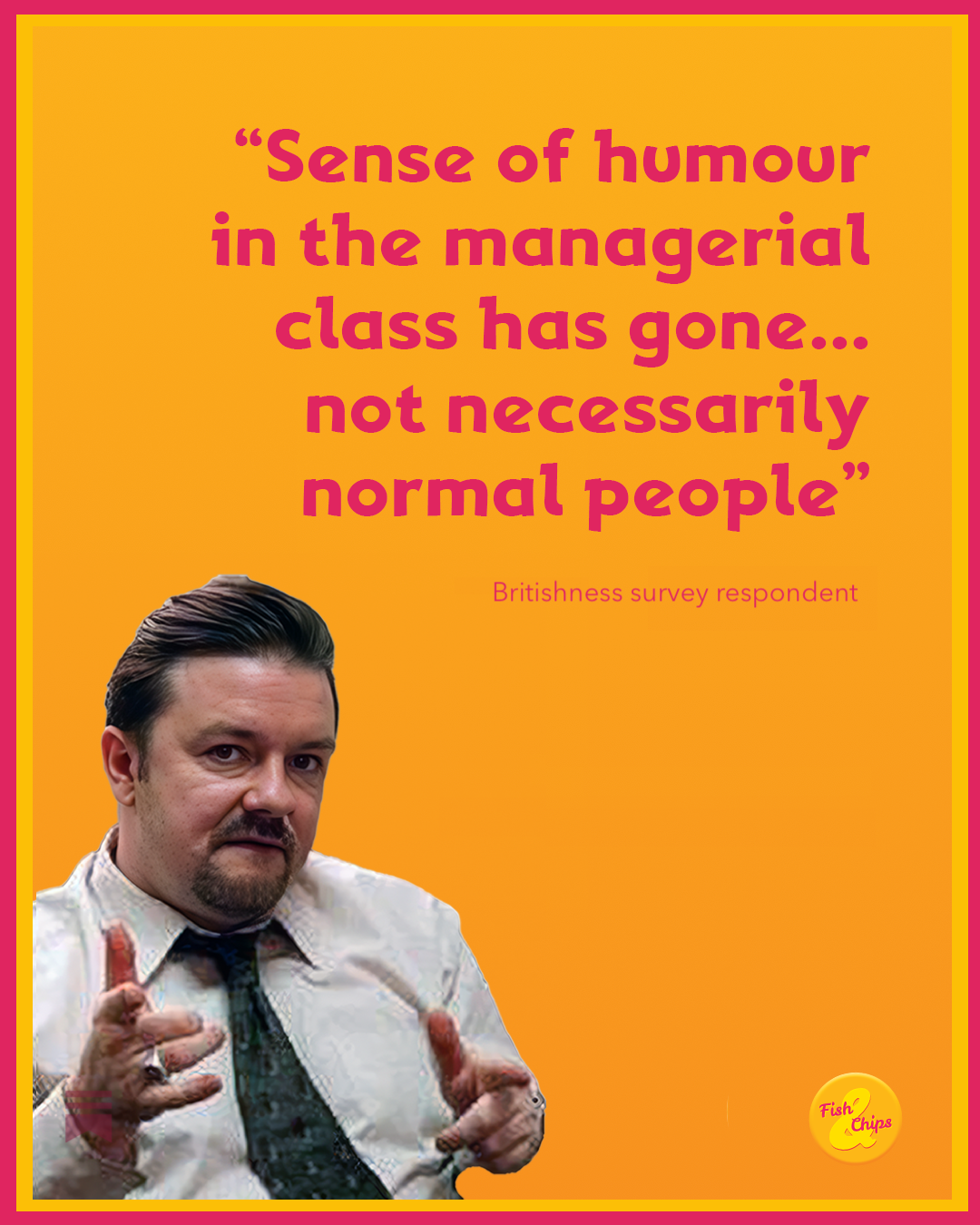
Image from Fish & Chips
Last week, the BBC announced it would be axing Live At the Apollo. Its viewing figures have halved since 2018. I turned on the TV to see what we’d be missing. It was compered by a guy whose idea of being droll was to shout. The comedians he introduced were “safe” — in the way that sticking a cork up your bottom is safe.
In order to get BBC Purity Vetting clearance, Apollo ceased to be Comedy.
Wooden jollity, enforced on us by puritans, is not the real Britain. Being sharply satirical, frivolously inane, or anywhere in between — that is who we are and what we want to watch. Rather like Baldrick, it’s all part of a cunning plan. Our humour is conduit for the House Rules of Britishness.
The self-deprecation. The puncturing of pomposity. The airing of societal concerns through a keenly observed joke. The tension-releasing giggle of the naughty-but-nice. The feel-good factor of unadulterated silliness — from Bob Mortimer right back to Saint Eric of Morecambe.
Yes, in its many forms, British humour is the window to our soul. And yet the Pigeons of Political Correctness have come and dropped their payload all over it.
What a mess they’ve made. On our screens and off, the fear of causing offence suppresses our greatest and most cohering natural instinct. In the mini survey I mentioned in Fish & Chips Portion One, we found that humour was by some distance thought to be the most quintessential British trait. Among things like chatting in the pub, walking the dog, respectfully disagreeing and helping a neighbour, “seeing the funny side” came top. It is our coping mechanism; our way of keeping calm and carrying on. It is what we are admired for. In the once noble pursuit of social justice; of balancing things up a bit – our humour police are creating a whole new imbalance. It is topsy turvy social engineering in which only the “weak” are “strong”. There must be a zany new Monty Python sketch in there somewhere.
A respondent in our survey was spot on when he said: “Sense of humour in the managerial/professional class has gone … not necessarily normal people“.
So it’s time that we “normal people” clean all that crap off the window. The pigeons won’t do it, will they? They”re too busy cooing about Diversity, Equity & Inclusion. It is up to us to make the penny drop for them. To see that what they are trying to do is unnatural. Because in Middle England, there will always be the surreal, the satirical, and the smutty innuendo.
October 6, 2026
Humour and the British Green Party
In the Daily Sceptic, Steven Tucker discusses the state of comedy in Britain today, in the light of the recent Green Party internal report on what members are supposed to deem funny or not funny. Not joking:
In the very same week these letters were publicised, the UK Green Party did actually launch its own internal in-depth report on what was and was not funny, with party activists receiving training informing them they should maintain detailed records of any jokes fellow members had told to them, “including dates, times [and] locations”, in case anyone later found them to be offensive – particularly if they touched upon sensitive issues like race, religion, sexuality or class. Even if the particular big fat black lesbian affected made a joke about themselves, this was still to be noted down and eliminated, as it nonetheless created “an environment in this space where derogatory jokes are allowed to happen”.
To prevent such jocular genocide occurring again in future, Greens were advised to perform an “audit” of their friendship groups to ensure they were diverse enough so that this simply would not happen: an Englishman, an Irishman and a Scotsman all walk into a pub, and nobody says anything even remotely untoward whatsoever, as diversity is clearly our strength.
Official Green Party advice on what to do if you happen to hear a joke one day. Nowhere does the option “laugh” appear
For a preview of what a future Green-led Ministry of Laughter might one day look like, we should look towards a current controversy involving the quasi-state-run BBC (Bowdlerising British Comedy), which in September decided to mark 20 years since the first broadcast of award-winning sketch-show That Mitchell and Webb Look – by cutting out several sketches, and deeming the show to be “racist”. The now samizdat sketches involved scenarios like English Civil War re-enactors getting bored and deciding to black up and recreate modern-day conflicts in the Democratic Republic of Congo, a brownface Amazonian tribe found secretly living behind flower-pots in a garden centre and a woman wearing a burka being an unsuccessful participant in a TV makeover programme.
Even more primly, the BBC also wiped or butchered entire episodes of popular children’s comedy history series Horrible Histories, as they featured jokes about sensitive topics like slavery – despite the fact they pretty obviously were not of a “Let’s bring it back!”-type perspective, but attempting to satirise the practice’s brutality.
One horrified reaction came from Graham Linehan, the cancelled Anglo-Irish comedy writer who today lives in exile in America, as nobody in the UK industry will now touch his work with a bargepole. Not only does it commit the cardinal post-2010s sin of actually being funny, Linehan’s writing is also deemed to be “transphobic”; Channel 4 refuses to re-show an old episode of his sitcom the IT Crowd, as it features a joke about a cross-dresser (see my review of his 2023 autobiography).
Writing in the Telegraph, Linehan observes that most British comedians who get their back-catalogues politically ruined these days, like Mitchell and Webb, either keep silent and go along with it for an easy life, or else actively denounce themselves in classic Soviet show-trial fashion, so as to keep raking in the cash on the panel-show circuit. Because of this cowardice, he says, “somewhere out there, the next generation of comedy writers and performers, the ones who might have pushed the form further, taken bigger risks, made the joke nobody else would touch, will quietly decide it isn’t worth it, and nobody will have to ban anything ever again”. Sounds a bit like how Islam operates in such matters, too …
October 3, 2026
Altered Carbon: Immortality Breaks Humans
Feral Historian
Published 29 May 2026Richard K. Morgan’s Altered Carbon builds on a simple premise, what if everyone’s consciousness was digitally transferable, regardless of class or wealth. The world he depicts has an undercurrent of dread permeating everything and hints at some even more terrifying possibilities.
00:00 Intro
03:10 Not Human Anymore
06:25 Social Disconnect
11:07 Make it Personal
15:15 The Netflix Adaptation
(more…)
September 23, 2026
Doctor Who – the early Doctors
One of my earliest memories of television involve a BBC children’s TV show that began in 1963: Doctor Who. My mother claims I watched every episode from behind the settee, but I wouldn’t let her turn it off even though I was clearly terrified. I was young enough that I don’t remember particular stories — I don’t even remember being surprised when the actor portraying the lead character suddenly changed from William Hartnell to Patrick Troughton. After my family came to Canada, I only occasionally caught an episode on TV, and I don’t think I saw anything produced after the late 1980s, so all the modern casting choices (and the controversy) passed me by.
Millennial Woes provides a helpful guide to the show from the first episode through to the late 1980s, which may be of interest to some of you:
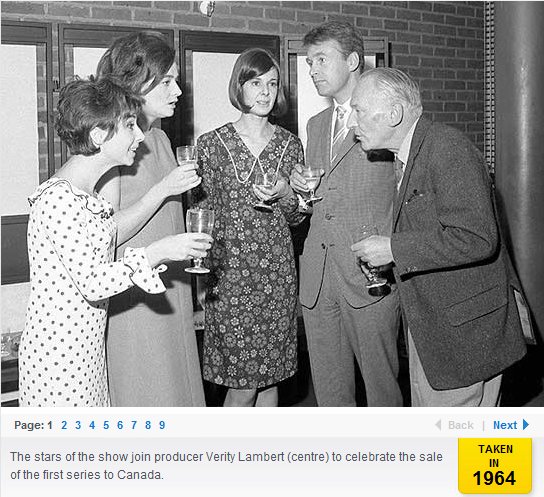
Several people have asked me to write a guide to Doctor Who, so here it is. I think most readers will be familiar with the show so I won’t waste time introducing it. Suffice it to say, we’re talking about a somewhat silly family sci-fi show, but one that frequently had soul, style, humour, and a lot of warmth. As with so much contemporaneous TV drama, Doctor Who had charm that seems to be simply impossible to achieve nowadays.
This guide is a difficult one to write because there are simply so many stories to survey, and because the show has multiple eras which are very distinct — almost different TV shows altogether. (Broadly, I would say the eras are 1963-69, 1970-81, 1982-87, and 1988-89.)
[…]
Something you will notice is that I talk about the incidental music almost as much as the stories themselves. I find Doctor Who‘s music, across the various eras, very stimulating and enjoyable in its own right. (This indicates how big a part it must play in the show itself.)
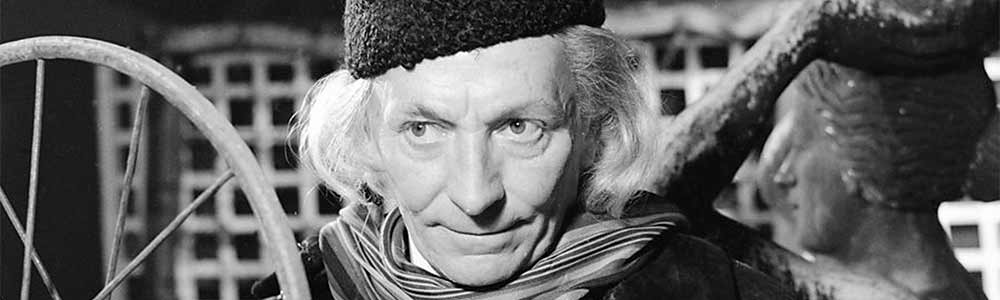
The First Doctor was played by William Hartnell. This was Doctor Who at its very beginnings, in 1963, so it is radically different not only from the modern 2005 show but even from the Pertwee era seven years later, by which time TV production had advanced in leaps and bounds.
I must confess to being barely acquainted with Hartnell’s era, having watched only four or five stories in total. It is too slow-moving for my tastes. However, I can certainly recommend one episode …
“An Unearthly Child”
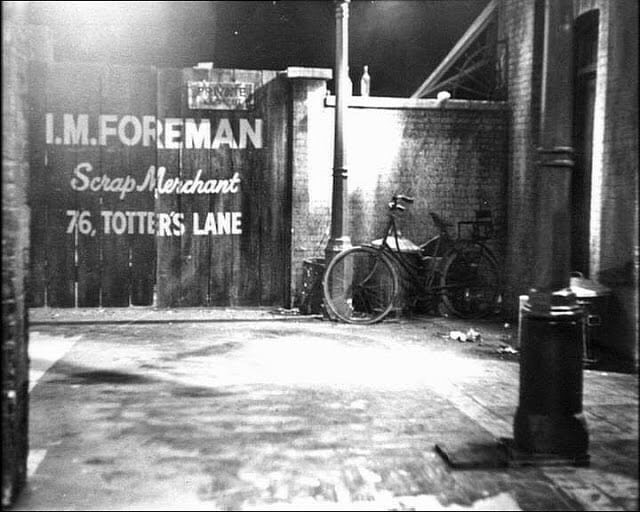
This is the very first episode. Though it is technically the first of a four-part story, it is really a “standalone” episode to set up the programme. The introduction of now-iconic elements is beautifully done. Everything at this stage seems darker and more mysterious than it will later be. The Doctor is secretive, unfriendly and sinister. The TARDIS is scary and doesn’t seem reliable, its first “flight” being a genuinely unnerving experience.
The atmosphere is terrific throughout. The whole thing is in grainy black & white reminiscent of a 1930s horror film. It is excellent, in my opinion. Had the show continued in this vein it would probably have been much shorter-lived but less lightweight. I guess things are always better while they still have their mystery.
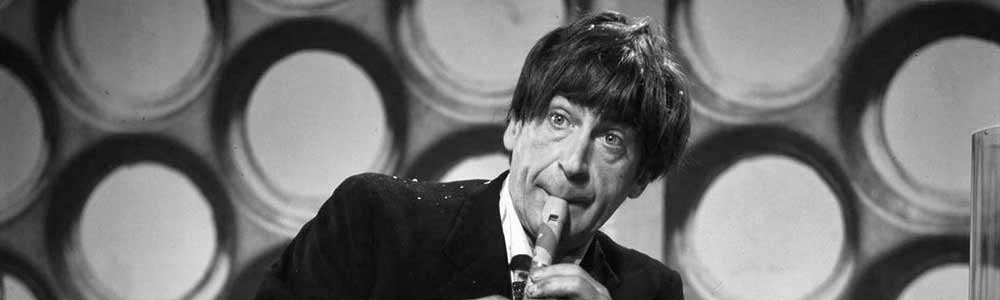
The Second Doctor was played by Patrick Troughton. He was perhaps the most talented — as an actor — of the men who played the role in the classic era. His turn on the character is much more playful and irreverent than Hartnell’s. I am again very unfamiliar with the era, so am somewhat at a loss for recommendations.
“The Three Doctors”
This is a cheat since this story is actually in the Third Doctor’s era, but I think the Second really dominates proceedings so it feels appropriate to cite this story as one of his. You get a strong sense of how different he is from the Third, whom Troughton effortlessly upstages. And it’s a good story.
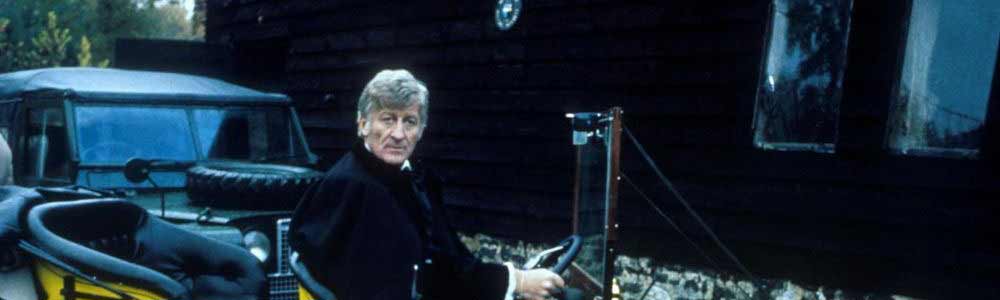
The Third Doctor was played by Jon Pertwee, then known mostly for comedy work. During most of this era the Doctor is confined to Earth, working as “scientific advisor” to UNIT led by the Brigadier, and battling his Timelord nemesis the Master. A lot of the stories are 6 or 7-parters, formats that work very well; there is more world-building than in the 4-parters, which start to seem slightly lacking by comparison.
The third was perhaps the least “alien” incarnation of the Doctor. You can easily imagine him being a heroic leader in the Empire or a maverick figure in British government or business, up to about 1970 (after which such mavericks were tamed or filtered out by bureaucracy). Aristocratic but still practical and “a man of action”, he is constantly innovating and questioning, and being frustrated by the lack of imagination in the lesser men around him. But he is very much a man, not an alien. That choice was probably dictated by Pertwee’s own personality, and it would be reversed when his successor arrived.
Nevertheless, this era was a peak for Doctor Who. The storytelling is very competent, the production style has real charm and the acting (RP galore!) is consistent and endearing. All of this means the stories bear rewatching, remaining enjoyable time after time.
In terms of choice, you can hardly go wrong with this era. The only bad stories are “Carnival of Monsters” and “The Mutants“, with the rest being uniformly great fun.
September 8, 2026
The legacy of Top Gear
I’m not really a “car guy” … I’ve generally driven pretty unexciting vehicles and don’t have a burning desire to own a “supercar” or even a “sports car”. Yet I always enjoyed being able to catch an episode of BBC’s Top Gear, which was usually years and years after that particular episode had been originally aired. There’s lots of YouTube channels that serve up Top Gear clips and even some multi-episode supercuts. It may well have been the only “car show” whose primary audience were not “car guys”:

The original Top Gear that launched in 1977 was a useful programme. The 2002 reboot, cooked up by Clarkson and producer Andy Wilman, was something else: a studio with a live crowd, a mute racing driver in a white suit called The Stig, celebrities sent around a track in a “reasonably priced car”, and three presenters who treated cars as punchlines, characters and passports.
When James May replaced Jason Dawe in series two, the chemistry locked. Clarkson was the loud, power-obsessed ringmaster. Hammond was the sharp witted, enthusiastic hamster who would try anything. May was Captain Slow, the pedant with the soul of an engineer. Their arguments weren’t bits. They felt like three mates who actually liked each other and enjoyed winding each other up. The show became a sitcom that happened to have supercars in it.
Cars stopped being appliances. They became the excuse for “how hard can it be?” challenges, £1,500 sports cars that immediately exploded, races against trains and boats and planes, and specials that sent three middle-aged men across Botswana, Vietnam, Bolivia, Patagonia and the Arctic. The cinematography — helicopter shots, dusk light, engines echoing off mountains — made a car show look like cinema. People who had never cared about torque curves suddenly cared about whether Hammond would survive the next cheap-car challenge.
The numbers were absurd — In the UK it regularly pulled six million-plus viewers and peaked near seven or eight million. At its height it was the BBC’s most valuable commercial property, worth tens of millions a year in overseas sales, DVDs, tours and merch. The UK version was sold into 170-plus countries. BBC figures put the cumulative worldwide audience around 350 million people — not every week, but over the life of the show, an astonishing reach for a programme that started as a poky little motoring magazine.
Sunday night became a ritual. Families who couldn’t name a camshaft still sat down together. Kids who would never own a Veyron learned what one sounded like. People in countries with no British TV tradition quoted “POWERRRR,” “Oh, cock,” and “Some say …” as if they were local slang.
They invented the template everyone still copies — Look at YouTube car culture. Cinematic reviews. Personality-first presenting. Budget road trips with mates. “We bought three terrible cars and drove them across a continent.” That whole language exists because Clarkson, Hammond and May made it look like the most fun job on earth, years before every 22-year-old had a gimbal and a channel. Writers have argued, not unreasonably, that for a generation they mattered more to car enthusiasm than many of the great manufacturers. Ask a random person to name someone famous associated with cars. They will not say Enzo Ferrari. They will say Jeremy Clarkson.
They also made loving cars socially normal. You didn’t have to be a garage hermit. You could be a bloke who liked engines and jokes and scenery. The specials doubled as travel films. A lot of people booked flights to Vietnam or Botswana because three idiots on BBC Two made the world look reachable.
The impact wasn’t just ratings. It was companionship. For more than a decade, millions of people had three familiar voices in the living room every week. Bad day? Cheap-car challenge. Need wonder? Polar special. Need to laugh at human incompetence? Almost any episode. The friendship on screen — real enough that it survived crashes, controversies, a BBC firing and a move to Amazon — made the show feel like hanging out with people you knew.
They were messy. They caused diplomatic incidents. They said things that would not survive a modern compliance meeting. That is part of why they felt like television from a different era: three men who were allowed to be large, rude, authentic, sentimental and ridiculous in the same hour. When they finally signed off from The Grand Tour, it really did feel like the end of something that television no longer quite knows how to make.
And on that bombshell …
September 7, 2026
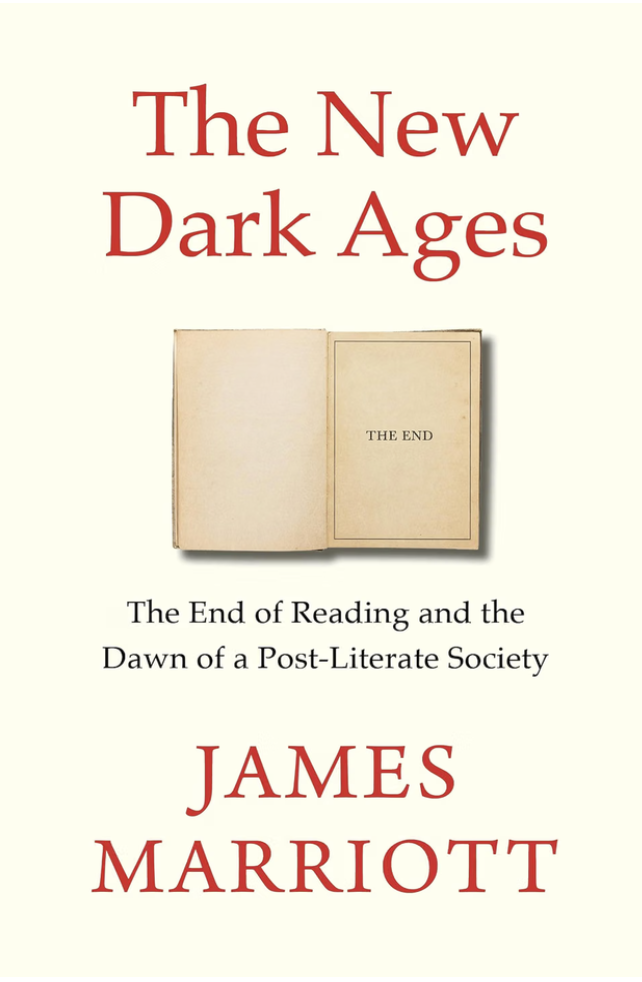
The New Dark Ages by James Marriot
Ed West reviews James Marriot’s The New Dark Ages, which covers issues that are certainly of deep concern to parents as GenZ and Gen Alpha appear to have almost completely abandoned literacy in any written form:
I’m not the only parent who feels increasingly anxious about their children’s media diet. For teenage boys in particular, entertainment often comes in the form of YouTube, which for any adult briefly glancing at the screen seems to feature an array of thumbnailed gawping imbeciles, besides an invitation to watch the latest work of creativity: “I took a bath full of Diet Coke and Mentos” or “I cemented a microwave to my head”. In comparison to this, the mindless television I watched in the 1990s seems as narratively complex as Dostoevsky.
Most of all, it’s notable that many children aren’t reading anymore, and it’s steadily become a topic of interest among fellow parents, then worry, and now panic. It’s impossible to ignore the fact that something quite bad is happening.
Every catastrophe needs its Jeremiah, and for this we have Times columnist James Marriott, whose increasing anxiety about the decline of literacy was articulated in a hugely popular substack post last year. Having written extensively about how no one reads books anymore, he decided to turn the subject into a book, The New Dark Ages, published this week.
I wouldn’t call the book “urgent” because I usually take that to mean “worthy scolding by an ideological ally”; it’s entertaining, informative, often amusing and makes a coherent case in 50,000 or so words, which many of us can still manage. But the implications he lays out are disturbing, and influence everything around us.
James and I have become friends over the past couple of years, drawn together by a mutual sense of despair, and he’s probably the only person in journalism even more pessimistic than I am. If you believe the media to be a circle-jerk of people helping their mates (which it is, obviously), bear that in mind, but reading his prose one gets a sense of how likeable as well as articulate he is, even if born in the wrong decade. His upbringing will seem as alien to those raised in the coming years as the world of Boethius would have been to Alfred the Great.
Literature was our religion: the way we explained and interpreted our lives. As a child I quickly learned that every possible event — from a major bereavement to a minor playground contretemps — could be cross-referenced against a novel by Thomas Hardy or a poem by Philip Larkin. There was a quote for everything. I was dragged off to Shakespeare plays at what now strikes me as a rather cruelly young age (“if you’re not enjoying it”, I remember my dad telling me, “you can just read your book instead”). We worshipped pretty much all the canonical English poets but in our pantheon of literary saints, Shakespeare was Jesus or, more probably, God.
We celebrated his birthday every year with a homemade cake and in the holidays we were taken on solemn pilgrimages to Stratford-upon-Avon. I recall that I was once presented with a Shakespeare-themed stuffed bear (it was wearing a t-shirt with a quotation from Hamlet).
Such a veneration for the written word naturally made him sensitive to disturbing stories about declining literacy that began circulating around the turn of the decade. “The first rumours that something important was happening reached me via friends working in universities”, he writes: “I came close to going into academia myself (though I don’t think the world is a poorer place for the loss of my proposed PhD on landscape imagery in post-war British poetry)”.
Anecdotes were soon backed up by data, showing significant declines in reading comprehension among students, as well as an even sharper drop in the number of adults and children reading for pleasure. The chief suspect seemed obvious: it’s the phones. (Everything’s “the phones”). Yet the more Marriott looked into it, the more he came to believe that the real transformation came with television, as Neil Postman had warned in his 1985 polemic Amusing Ourselves to Death.
“Postman believed that the rise of TV — with its bias towards triviality and charismatic personalities — was beginning to undermine the kinds of reasoned and productive public discourse on which a civilised democracy depends. He was dismissed by some of his critics as a crank and a Luddite. The passing of time has revealed that he was a prophet.”
September 5, 2026
60th Anniversary of Star Trek: A Very Brief Look Back
Feral Historian
Published 4 Sep 2026On September 8th 1966, Star Trek premiered and has since reflected shifts in American popular culture from the Vietnam era to today. It hasn’t always been good, but it has been a ride. Perhaps one that has come to an end.
00:00 Intro
04:32 A New Trek
06:15 Overlap
09:04 Stuck In Itself
10:00 Enterprise
12:37 JJ
13:28 Trek TodayThe link for Sean Munger’s video: • Star Trek and the Vietnam War (Part I)
Obviously this is not a statement of agreement with every point in that video.🔹 Patreon | patreon.com/FeralHistorian
🔹 Ko-Fi | ko-fi.com/feralhistorian
🔹 and Merch! | feral-shop.fourthwall.com
🔹 Oh, and book 2 of Stellar Drift is out. https://www.amazon.com/dp/B0GTVXK4CN
August 18, 2026
QotD: A quick heuristic for evaluating public figures
InfantryDort @infantrydort
The amount of trust I have in a person is directly proportional to how many legacy media hit pieces they attract.
My first thought was: good heuristic for evaluating public figures!
My second thought was: No, wait. Sometimes the legacy media attacks genuinely bad people.
My third thought was: … but this happens surprisingly seldom. Why is that? A few seconds of thought reveal the answer.
When you’re policing an orthodoxy (and the legacy media definitely sees its job as policing an orthodoxy) the most dangerous person isn’t the one whose beliefs are radically different from the orthodoxy, but the deviant whose position is just close enough to attract converts from within the orthodox mass.
Heretics get burned more often than do unbelievers.
So yes, InfantryDort is right. Probabilistically, trusting public figures that the media constantly does hit pieces on is unlikely to tangle you up with the genuinely evil and crazy, and much more likely to point you at truth-seekers.
ESR, The social media site formerly known as Twitter, 2026-05-15.

August 5, 2026
I, Claudius (MCMLXXVI). Show Me The Way To Go Rome
Stam Fine
Published 3 Apr 2026Stam Fine Reviews looks at the landmark 1976 classic BBC series I, Claudius based on the books by Robert Graves. I, Claudius is a sprawling epic looking at four emperors, Augustus, Tiberius, Caligula, and Claudius. Claudius had a limp, stammered and facial tics but was a survivor when everyone else around him was murdered.
I, Claudius is an influential series, even in places you don’t expect it (The Sopranos, Dynasty, Succession).
Note: The Romans didn’t use the letter ‘U’ at the time unless you upgraded your subscription to Roman+. I do not presently subscribe to Roman+.
Stars Derek Jacobi, Sian Phillips, Brian Blessed, George Baker, Patrick Stewart, Ian Ogilvy, Simon MacCorkindale, Margaret Tyzack, Patrica Quinn, John Hurt, and many more.
0:00 Introduction
0:33 Veni, vidi, Google Translate usus sum.
1:15 Technical Difficulties.
1:34 I, Claudius Take Two.
4:09 Augustus and Livia
5:50 Claudius
8:05 Tiberius
10:55 Caligula
13:14 Emperor Claudius
16:00 From Book to BBC2
19:11 Cast
21:24 LegacyI, Claudius
I, Clavdivs
I Claudius


