It’s a conspiracy. Every piece of worthless advice I ever hear tells me I must, “Read, read, read”. I can’t even try to listen to music on YouTube without entrepreneurs, life coaches and other snake oil salesmen popping up on shouty adverts, posing alongside other people’s Lamborghinis and Learjets, asking me to guess how many books the world’s top fifty “Super Achievers” read each year. (It’s fifty-two, conveniently.) “The more you learn, the more you earn!” these morons confidently claim. As if reading books makes you a billionaire.
I don’t buy it. I bet billionaires don’t read at all. Not only because they don’t have the time, but because every big reader I know is broke. Without exception, books have overloaded their minds, and their lives are in total disarray. When they’re not consumed by tortuous examinations of Socialist Realism in the shallower subsections of the Baltic Canal between late October 1933 and early March 1934, they’re deconstructing turgid translations of 9th Century Glagolitic poetry from the White Carpathian territories of Great Moravia. On weekends, for light relief, they dip into obscure anthologies of critically-acclaimed feminist speculative fiction championing unsung writers born in the shadow of the Chappal Waddi in the Mambilla Plateau. What should have been their office hours are spent haggling with elderly volunteers in Oxfam bookshops over worthless, dogeared volumes of Dietrich Bonhoeffer’s early letters or needlessly exhaustive histories of the Sepoy Mutiny of 1857 in the Ganges-Brahmaputra basin. They own vast stacks of surplus, dust-magnet books, but they never own art, or cars, or houses. Bibliophiles are massive losers — why can’t we just admit that? There’s a clear correlation between reading and underachievement. There’s a reason homeless vagabonds line their coat pockets with paperbacks and newspapers. Our children must be warned, before it happens to them.
Reading is even less helpful to writers. If you write, you are incurably influenced by whatever garbage you happen to be reading at the time. For example, if I’m reading Hemingway, I finish this sentence here. Whereas, in the rare, transcending moments that I am reading, say, Henry James, I find, to my eternal chagrin, that I write — if, indeed, “write” is the morpheme, or mot juste, for which I rightly delve — in my lasting endeavours — my contention, if you will, against the ordained — in a spirit of refined demonstration, or braggadocio, as the case may be, that … Where was I?
Then, of course, there’s the snobbery associated with reading. “Read a book!” command the enlightened few, should you dare disagree with them on any trendy subject. It’s ridiculous, but if you read — or, better still, opine pretentiously about what you read — the chattering classes will clamber to pressgang you into their fanatical ranks. Nobody cares if you write anything, so long as you describe the latest high-status books as “vital”, “necessary”, “required”, or “essential”. Trust me, you can get away for years with pretending that you are “working on something big that I’d rather not talk about for fear of jinxing it” while freely enjoying all the wine and canapes you can stomach. But suggest you don’t read, and people quickly get suspicious.
Dominic Hilton, “All Booked Up”, The Critic, 2020-08-17.
April 21, 2026
QotD: “Bibliophiles are massive losers, why can’t we just admit that?”
March 25, 2026
Montaigne, a Substacker avant la lettre
On Substack (of course), Ted Gioia makes the case that Michel Eyquem, Seigneur de Montaigne (or “Montaigne” to unwashed moderns) was the historical progenitor of all essayists to follow:
Michel de Montaigne may be the most influential essayist in history — even Shakespeare borrowed from his work (taking some passages almost verbatim). But if Montaigne were alive today, this famous essayist might be mistaken for just another slacker living in his parents’ basement.
Okay, let’s be fair. He actually lived in the family castle. But it still was slacking. At age 38, he didn’t have a job — and preferred reading books. Leave me alone, was his message to the world.
The Montaigne family castle (Photo by Henry Salomé)
But even a castle was too noisy for him — or maybe it was just his wife from an arranged marriage that made him feel that way. In any event, Montaigne eventually decided that he needed total isolation, almost like a monk in a hermitage. So he moved into the tower on the family estate. He called it his citadel.
Here he surrounded himself with books, and announced his intention to devote the rest of his life to reading and philosophizing “in calm and freedom from all cares”.
Montaigne’s tower (Photo by Henry Salomé)
But at age 47, Montaigne had a change of heart. He returned to the world, ready to embark on travels and public service. But before leaving for Italy, he had one last goal he needed to fulfill closer to home — and it would have a decisive impact on Western culture.
During his years in the tower, Montaigne wrote 94 essays, and compiled them in two book-length manuscripts. These he now delivered to a printer in Bordeaux, and paid to have them published. A short while later, he traveled to Paris and proudly gave a copy to King Henry III
In his mind, he was serving as his own patron, drawing on the family wealth to cover the expenses of his debut as an author. But today, of course, we would call this self-publishing — a term that is often (unfairly) used to demean the value and legitimacy of these rule-breaking efforts by do-it-yourself writers.
Call it what you will, Montaigne’s achievement cannot be denied. He not only invented the modern essay — setting the stage for Bacon, Emerson, and so many others. But he also helped shape the human sciences and legitimize the personal memoir. That’s because his essays covered many topics but really had only one subject—namely Montaigne himself, with all his quirks and opinions and hot takes.
His essays marked a milestone in the history of individualism. So, of course it makes sense that they were self-published. That’s what individualists do. They are happy to work outside the system.
I could even imagine our slacker Montaigne publishing these essays on Substack today. You might say that he anticipated the Substack style of writing. His balancing of memoir and analysis, subjective and objective, observation and generalization is very much aligned with what I see on this platform every day.
March 24, 2026
“Matt Goodwin’s Suicide of a Nation is a very bad book”
In The Critic, Ben Sexsmith reviews a new book by Matt Goodwin, Suicide of a Nation: Immigration, Islam, Identity:
Here is an exceptionally easy argument to make:
- Mass migration is ensuring that the historical majority in Britain is becoming a minority.
- This is the result of policies that have been pursued regardless of popular opinion.
- This has had many kinds of destructive consequences.
The first claim is so obviously true that one might as well deny the greenness of the grass. The second is proven by decades of broken promises (see Anthony Bowles’s article “Immigration and Consent” for more). The third requires argumentation, but I think that it is clear if one considers hideous incidences of terrorism, grooming gangs and violent censoriousness, as well as broader trends of economic dependency and electoral sectarianism.
Again, this is not a difficult argument to make. So why is it made so badly?
Matt Goodwin’s Suicide of a Nation is a very bad book. It reads like the book of a political operator extending his CV. The left-wing commentator Andy Twelves caused a stir on social media by pointing out various factual mistakes and what appear to be non-existent quotes. Twelves speculates that these “quotes” are the result of AI hallucinations, which is plausible, if not proven, in the light of the fact that two of Mr Goodwin’s sparse footnotes contain source information from ChatGPT.
Inasmuch as Suicide of a Nation makes a form of the argument sketched out the beginning of this article, there is truth to it. But it contains a fundamental problem — it assumes that this argument is so true that there is no requirement to make it well.
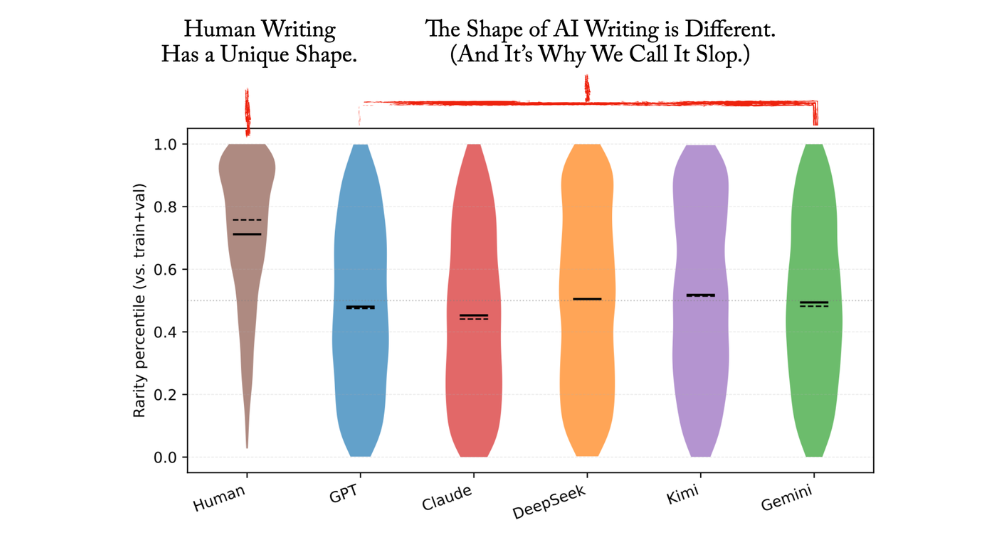
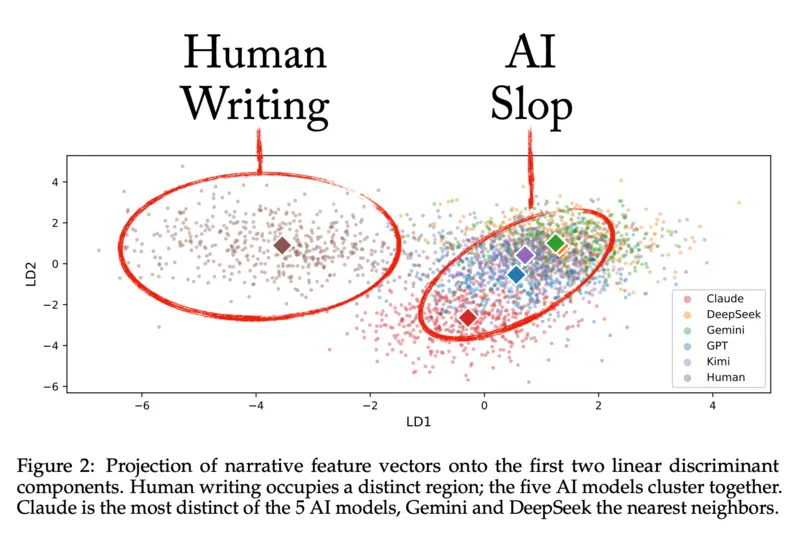
“Slop” is an overused term but it feels painfully appropriate for a book that is spoon fed to its audience. Goodwin, who had a long academic career before becoming a successful commentator, is not a man who lacks intelligence. But he writes as if he thinks his audience lacks it. “I did not write this book for the ruling class”, writes Goodwin, “I wrote it for the forgotten majority”. Alas, he seems to think that the average member of the “forgotten majority” has the reading level of a dimwitted 12-year-old. As well as being stylistically simple, the book is full of annoying paternal asides. “In the pages ahead I shall walk you through what is happening to the country …” “In the next chapter we will begin our journey …” Thank you, Mr Goodwin. Can we stop for ice cream?
The book is terribly derivative, with a title that reflects Pat Buchanan’s Suicide of a Superpower and a subtitle — “Immigration, Islam, Identity” — that all but repeats that of Douglas Murray’s The Strange Death of Europe — “Immigration, Identity, Islam”. It is written in the humourless and colourless rhetorical style of AI. I’m not saying it was AI-generated. (Indeed, a brief assessment using AI checkers suggests that it was not.) I’m just saying that it might as well have been.
March 22, 2026
Four million books published in North America during 2024
In the latest SHuSH newsletter, Ken Whyte considers the size of the North American book market at most recent count:
I’m often asked by writers about the prospects of a particular book. I try to be encouraging. If it’s a good book, there’s undoubtedly an audience for it. At the same time, I try to be realistic. It’s a crowded market and it’s often difficult even for a good book to find its audience.
If asked to explain just how crowded the market for books is today, I usually say something like, there are about two million books published in North America every year. I’m not sure where I got that figure from. Probably from some research I read five years ago.
Turns out it’s wrong. “The total number of books published in the US in 2025 with ISBN numbers jumped 32.5% over 2024 to more than four million books,” announced Publishers Weekly on March 17.
I can’t get over that number. Four million books.
An average reader might get through about 2,000 books in a lifetime. A long-lived super-reader churning through 70 or 80 a year may exceed 5,000. Gladstone’s reading logs suggest that he engaged with more than 20,000 books, but it’s not clear he read them all.
A large independent bookstore might carry between 10,000 and 30,000 books. A suburban chain store, 60,000 to 120,000. The Barnes & flagship at Union Square in Manhattan has hundreds of thousands of books on four massive floors. Powell’s City of Books in Portland, occupying an entire city block—you need a map to get from room to room—has at least a half million books, and by some counts a million. New York’s The Strand, which boasts 18 miles of books, new and used, is probably the world’s biggest bricks-and-mortar retailer: it has 2.5 million books on incredibly dense shelving. You’d need a Powell’s, a Strand, and a couple of B&N Union Squares to hold four million titles.
Four million books is equivalent in volume to the holdings of a good-sized university library system, or a large public library system—collections built over a century. And these are published in a single year.
In 1939, the year Margaret Atwood was born, The Library of Congress, widely recognized as the largest library in the world, home to a civilization’s worth of books, boasted about six million titles, including pamphlets. It’s now holding about 25 million, and the US alone is on pace to produce that many titles between now and the end of the decade.
Four million books. That’s 11,000 books a day. Four hundred and fifty books an hour.
A year ago, there were “only” 3.15 million books, traditional and self-published, released. So 2025 represents an increase of 32.5 percent. Self-publishing was up just under 39 percent. Traditional publishing about 6.6 percent. Publishers Weekly doesn’t offer much of an explanation for the explosion of new titles. AI has to be a major factor (see this week’s publishing sensation in The New York Times.)
Of course, most of the four million books are not worth your time. Only 642,242 of the titles were released by traditional publishers. A traditional publisher doesn’t guarantee quality, but it suggests a minimum of vetting. The search for merit among self-published books is easily frustrated.
Bowker, the service that counts the ISBNs (the unique thirteen-digit identifiers attached to each book), does not distinguish among formats. Many of the four million were published only as ebooks. And some books published as print, ebook, and audiobook are triple-counted. There may only be about 2.5 million distinct works in that total.
If one were to take the colouring books, planners, puzzle books, and AI-generated garbage out of the equation, we might be down to 1.5 million meaningfully distinct books. And of all those, maybe 1 to 3 percent, or 20,000 to 50,000, will sell over 1,000 copies. That puts some perspective on the four million.
March 4, 2026
Jean Raspail’s The Camp of the Saints
Like many, I’ve heard of Jean Raspail’s novel The Camp of the Saints but I’ve never seen a copy of it for sale and I certainly haven’t actually read it myself. At Postcards From Barsoom, John Carter discusses a rare thing: a newly translated printing of the book that iscurrently available for sale:
To call The Camp of the Saints prescient undersells it. At times, Raspail seems to be downright prophetic. Pope Benedict XVI plays a prominent role (albeit this is a character who could not be more different from Cardinal Ratzinger). Raspail also correctly predicted that Rhodesia would become Zimbabwe, which may have been easily foreseeable when Raspail was composing the work but still did not formally happen until 1980, seven years after the novel’s publication; while Raspail was writing, the Rhodesian Bush War was still in full swing. The Rhodies fought until the bitter end to prevent the breadbasket of Africa from being turned into Africa’s basketcase.
The Camp of the Saints is sometimes described as a dystopian novel, which should be read alongside 1984, Brave New World, Fahrenheit 451, Slaughterhouse 5, and C. S. Lewis’ That Hideous Strength. There’s something to be said for this interpretation. You get a pretty good description of the modern world with the Venn diagram overlap of the total state’s panoptic tyranny, the flattening of the human spirit into a mass-produced Last Man via the endless consumption of mass-produced trivial amusements, the death of literary curiosity, the imposition of forced egalitarianism, demon-worshipping transhumanist technocracy, and Raspail’s civilizational collapse via obsequious moral inversion.
Like every good dystopia, however, The Camp of the Saints is first and foremost a satire of the modern world, a warning about where things will head if certain sociopolitical trends are taken to their natural conclusion. Raspail’s work does not take place in some science-fictional near future, as the majority of other dystopias do: its world is technologically and politically indistinguishable from the world Raspail lived in, and still all too recognizable to us. It has been derided as a far-right racist tract, and Raspail’s depiction of the third world horde that subsumes the West is far from flattering, but his venom is directed primarily at the West’s own spineless cultural thought-leaders and political elites, who he identifies as the true and only possible architects of the world-historic catastrophe that he predicts.
The Camp of the Saints also has all the key tropes of a zombie apocalypse story.
The third world horde is depicted as a vast, ravenous, mindless beast comprised of individual members who are not at all fearsome or intimidating, but which triumphs through sheer numbers and slow but relentless advance, and which is defended by its revolting appearance and overpowering, nauseating stench. The migrants are the most wretched products of the slums of Calcutta, malnourished and sickly, afflicted by every kind of congenital defect, infectious disease, infirmity, and skin infection. Their leader is a monstrous, drooling idiot dwarf with lidless eyes, a toothless sphincter for a mouth, and stumps for limbs, who rides about on the shoulders of a giant coprophage. They make their way from India packed like human sardines in a fleet of rusting, dilapidated plague ships, wallowing their way towards Europe through the nauseating miasma that arises from the swamp of corpse-littered shit that they leave in their wake, spending their days listlessly staring out to sea and mindlessly copulating amidst their own putrifying filth. Merely to look upon the migrant horde is to be transfixed with a kind of a religious terror, overcome by its ugliness, paralyzed by pity. Soldiers forced to take even the smallest of aggressive actions against the horde, with only a few exceptions, throw down their weapons and run, not because they are terrified of the horde itself, but because they are terrified of their own conscience should they strike down a defenseless, pitiable wretch. In a few cases, soldiers take their own lives after being made to shoot. The horde’s primary weapon is the crushing psychological pressure that slams down on the souls all who behold it; better to give up and accept the inevitable than suffer the torment of fighting against it.
When the horde encounters a westerner, one of two things happens. Either the westerner is immediately killed by being trampled underfoot or torn limb from limb, or he is smoothly assimilated into the horde, becoming by and by indistinguishable from the innumerable wretches that comprise it. The zombies either eat you, or turn you into a zombie. Women of course are assimilated by rape.
Not everyone succumbs right away, of course. At the end of the novel a small group of psychologically resilient Frenchmen led by an army colonel and a right-wing government minister fall back to an abandoned mountain village. Inside the village’s borders they establish a micocosm of the old, pre-invasion French civilization. They defend their redoubt simply by shooting any migrants or white “assimilates” (as they immediately take to calling them) who get too close. The migrants and assimilates are easily seen, a constant presence shambling in the distance; they are just as easily picked off, being slow and unarmed, and the village’s inhabitants soon take to treating the hunt as a sport. Of course this refuge does not last long: the French air force, in what is implied to be its last act (for the new world will not be able to maintain airplanes) wipes the last surviving Frenchmen out in an airstrike. Racism can’t be tolerated, you see.
Finally, there are the delusional lunatics who imagine that they can befriend or master the horde, turning it to their own purposes or making common cause with it, and who are therefore instrumental in opening the gates to their and everyone else’s doom. Upon actually encountering the horde the madmen find only death or assimilation; the horde is utterly indifferent to any expression of friendship.
January 16, 2026
“During the 1990s, the midlist disappeared at major publishing houses”
It’s no secret that the publishing industry has changed substantially — and from most readers’ point of view, for the worse — but when did it happen, and why? Ted Gioia points to the mid-1990s in New York City:
Everybody can see there’s a crisis in New York publishing. Even the hot new books feel lukewarm. Writers win the Pulitzer Prize and sell just few hundred copies. The big publishers rely on 50 or 100 proven authors — everything else is just window dressing or the back catalog.
You can tell how stagnant things have become from the lookalike covers. I walk into a bookstore and every title I see is like this.
They must have fired the design team and replaced it with a lazy bot. You get big fonts, random shapes, and garish colors — again and again and again. Every cover looks like it was made with a circus clown’s makeup kit.
My wife is in a book club. If I didn’t know better, I’d think they read the same book every month. It’s those same goofy colors and shapes on every one.
Of course, you can’t judge a book by its cover. But if you read enough new releases, you get the same sense of familiarity from the stories. The publishers keep returning to proven formulas — which they keep flogging long after they’ve stopped working.
And that was a long time ago.
It’s not just publishing. A similar stagnancy has settled in at the big movie studios and record labels. Nobody wants to take a risk — but (as I’ve learned through painful personal experience) that’s often the riskiest move of them all. Live by the formula, and you die by the formula.
How did we end up here?
It’s hard to pick a day when the publishing industry made its deal with the devil. But an anecdote recently shared by Steve Wasserman is as good a place to begin as any.
He’s describing a lunch with his boss at Random House in the fall of 1995. Wasserman is one of the smartest editors I’ve ever met, and possesses both shrewd judgment and impeccable tastes. So he showed up at that lunch with a solid track record.
But it wasn’t good enough. The publishing industry was now learning a new kind of math. Steve’s boss explained the numbers:
Osnos waited until dessert to deliver the bad news … First printings of ten thousand copies were killing us. It was our obligation to find books that could command first printings of forty, fifty, even sixty thousand copies. Only then could profits be had that were large enough to feed the behemoth — or more precisely, the more refined and compelling tastes — that modern mainstream publishing demanded.
Wasserman countered with infallible logic:
I pointed out, if such a principle were raised to the level of dogma, none of the several books that were then keeping Random House fiscally afloat — Paul Kennedy’s The Rise and Fall of the Great Powers, John Berendt’s Midnight in the Garden of Good and Evil (eventually spending a record two hundred and sixteen weeks on the bestseller list, and adapted into a film by Clint Eastwood), and Joe Klein’s Primary Colors (published anonymously and made into a movie by Mike Nichols in 1998) — would ever have been acquired. None had been expected to be a bestseller, and each had started out with a ten-thousand copy first printing.
But it was a hopeless cause. And I know because I’ve had similar conversations with editors. And my experience matches Wasserman’s — something changed in the late 1990s.
The old system offered more variety. It took greater risks. It didn’t rely so much on formulas. So it could surprise you.
In a post about the jinned-up anger about CEO pay versus average worker pay, Tim Worstall briefly touches on the plight of writers:
Or even more fun perhaps.
In 2006, median author earnings were £12,330. In 2022, the median has fallen to £7,000, a drop of 33.2% based on reported figures, or 60.2% when adjusted for inflation.
That’s median earnings so 50% of all authors earn less than £7,000. And note this is only among those taking it seriously enough to join the Society of Authors (a number which does not include me). Even at my level of scribbling 5x to 10x, depends upon the year, of those median earnings can be gained.
But top level authors, well, they do earn rather more. No, not thinking of the JK Rowling level of global superstardom. But it would astonish me if Owen Jones is earning less than 50x those median earnings (yes, Guardian column, books, Patreon, YouTube and whatever, £350k would be my lower guess).
Writers display that similar sort of income disparity and range, no? Because we’re not about to suggest that Owen is top rank earning now, are we, even if it is a damn good income there.
Which shows us what is wrong with the Cardiganista’s1 initial calculation. They’re pointing only to the incomes of the very tippy toppy of the income distribution for that job. If we apply the same sort of reasoning to writers or footie players (and it’ll be the same for actors and all sorts of other peeps) we find very similar distributions.
- They all seem to be Guardian retirees and their byline pictures have them wearing cardigans — or did — therefore …
January 11, 2026
January 9, 2026
QotD: “My goal is to get paid for having fun”
My critics consider me a pulp hack, but I’ve proven I can do the deep, dark, and serious better than they can. I’ve demonstrated that I can hop into whatever genre I feel like and do well there. But mostly I just like to have fun and entertain my fans.
True multi genre authors are rare. I’ve done really well in a bunch of different genres because I’m good at recognizing what people enjoy about those, and then giving them what they want, with my own spin on it. I can tweak it, but I shouldn’t break it.
“What if your childhood heroes are really losers and here’s a new girl boss? OOOOH SO EDGY.” That kind of shit bores me.
Far too many authors are pretentious shit heads who climb up their own ass thinking they need to “subvert” expectations, but they’re really not brilliant enough to pull that off. They’re just crapping on the stuff that made people like those genres to begin with. They’re not nearly as clever as they think they are.
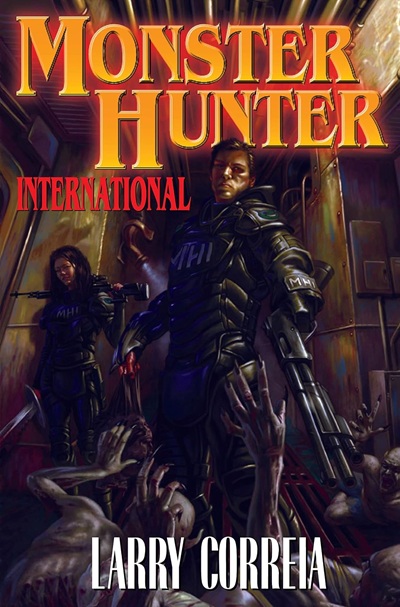
Me? I’m happy to be a pulp hack. If I’m writing epic fantasy, I’m going to do the big, deep, thematic, emotional, stuff (and Saga of the Forgotten Warrior rocks) and if I’m doing progression fantasy then it’s going to be fun and adventure and scrappy nobodies trying to make it in the world and becoming heroes along the way. American Paladin is a dark and gritty vigilante story (with monsters in it). And Monster Hunter is urban fantasy soaked in testosterone and gun oil (that’s next for 2026). I’ve done sci-fi. I’ve done horror. I’ve done comedy. I’ve done thrillers. Hell, I’ve done stuff like Hard Magic where good luck pinning down what the hell genre that is … alternate history, hard boiled, pulp noir, super heroes? Hell if I know.
My goal is to get paid for having fun. 😀
Larry Correia, The social media site formerly known as Twitter, 2025-10-08.
December 10, 2025
QotD: The “rules” of Gonzo journalism
Thompson now had the recipe for his journalism career, and it involved three conceptual breakthroughs.
- The story behind the story is the real story.
- The writer is now the hero of each episode.
- All this gets written in the style of a personal communication to the reader of the real, dirty inside stuff — straight, with no holds barred.
Why couldn’t you write journalism like this? In fact, a whole generation learned to do just that, mostly by imitating Hunter S. Thompson.
But it grows tired and predictable in the hands of today’s imitators — and the Gonzo King never invited either of those modifiers. Yes, blogs and Substacks are part of his legacy, formats that blur the line between diary, confession, and journalism. But he did it before all the rest, not as a desktop publisher — instead putting his life at risk on the road with total fear and loathing.
So if Substack is the grandchild of Hunter Thompson and New Journalism, it is a tame, well-behaved descendant — and nothing like its brave forebear, who kept going full speed without a helmet until the end.
Even the reader has to run to keep up.
Ted Gioia, “The Rise and Fall of Hunter Thompson (Part 2 of 3)”, The Honest Broker, 2025-09-08.
November 27, 2025
We’re not quite at the point that we get trigger warnings for trigger warnings, but …
On her blog, Sarah Hoyt discusses the continued expansion of trigger warnings in fan fiction, but not because the readers demand it:
… I’ve noticed a creep up of trigger warnings in fanfic. Some of these would be incomprehensible to non-Jane-Austen fans and are actually not so much trigger warnings as sub-genre warnings. There are subgenres some fans (sometimes I’m some fans) hate, like “Lizzy is not a Bennet” or “Bingley is evil” or … whatever. That’s fine. It saves me the trouble of reading a fanfic that’s going to annoy me. Unless I’m in the mood to be annoyed, in which case I will read it so I can grit my teeth and mentally yell at the writer. (Bingley is evil is a problem because it usually turns into a revenge-fest on EVERYONE. Everyone is evil. Etc. I don’t think there’s ever a time I want to read that. You find yourself wanting to take a shower for the soul. With a wire scrub brush.)
We make fun of trigger warnings, often, but it’s a real measure of how stupid things have gotten. When I’m having to read a trigger warning for say “kissing without consent.” or “violence against children” (Okay, you’ll think that last makes perfect sense, until you find out it’s because a kid gets slapped once in the novel) or “verbal violence” or –
And you start wondering, on the serious, if the ideal novel for these people has no plot at all, just people sitting around having a nice meal and talking.
This is disturbing, because the whole point of a novel is to make you feel emotions and experience things you either can’t in your real life, or which wouldn’t be safe to experience in your real life, followed by resolution and catharsis. That’s what a novel offers you. The opportunity to be the someone else far away experiencing “Adventure” (which as we all know is really a series of unpleasant events.)
Anyway, I’ve slowly come to the conclusion all this demand for warnings and screeching about offense isn’t by real readers.
No, seriously. Real readers know that no one can insulate them against all surprises in a book (or blog) and that in fact the point of reading is to get out of your head and experience different things, different events, different emotions and different points of view. You might disagree vehemently with them (I actually do with most of the really old science fiction. Really, scientists in charge? Who thinks that’s even safe? Oh, yeah, the Soviet Union. But even they didn’t DO IT. They just paid lip service. They might have killed a lot more people if they’d done it, at that.) but that forces you to think about why you disagree and how you’d do it differently. If you’re of a certain frame of mind, you [might] end up becoming a novelist and writing your response to what you disagree with. Though if you are worth spit, even then, your “response” will be less of a response and more of this whole new thing it became, with the response buried somewhere inside it. And if you’re not of that frame of mind, you’ll still end up a more considered and self-reflective thinker than you were before. For one, while you might think that the other POV is stupid, if you read a whole novel with it, you’ll be aware that thought went into it, and might even have to confront that the worst stupid takes a lot of thought and self deception.
Anyway, the point is, I don’t think the offense-monsters read. Because the whole point of their screeching is to shut down the thinking and prevent ANYONE ELSE from being exposed to the material, and maybe thinking.
That’s not what they say, of course. They say “I’m offended”. And “I’m hurt”. And “You’re mean because you offended me”.
But what they really mean is “this you cannot think” “This you cannot see” and “this you cannot read” and “this you cannot write”. And “this you cannot say”.
They have, you see, completely surrendered their very core to the herd. They have given up their right to think and feel and be, in favor of belonging completely to the herd. (They used to have a term for this and said it as though it were praiseworthy: “mind-kill”.) So being exposed to contrary things hurts, and they have no defense, because they have taught themselves not to think and/or reason through things.
The pain they feel at the slightest hint of disagreement is true. It is also a symptom of what they have done to themselves, and has nothing to do with being mentally or emotionally healthy.
Just like the pain of withdrawal of a chronic alcoholic denied alcohol is real, and continued and too fast withdrawal might kill him, however continuing to feed his drinking habit will also kill him, faster.
To give them trigger warnings, apologize for any offense and handle them with kid gloves is not only bad for them but bad for society in general.
October 19, 2025
Printed Maplewash from Random Penguin “Canada”
In the latest SHuSH newsletter, Ken Whyte discusses one of the most cynical and blatant attempts to “Maplewash” US product as 100% home-grown Canadian: a book of essays by living and dead Canadian authors, titled with the Liberals’ moronic “Elbows Up” slogan … with all the profits going to Random Penguin’s US corporate headquarters:
Ever since the Trump tariffs against Canada were launched last spring, US firms operating in Canada have been engaged in a variety of maple-washing tactics to shield themselves from consumer backlash. Some are as simple as new labelling — “prepared in Canada!” More audacious was McDonald’s effort to make everyone forget it’s the White House’s caterer of choice: a partnership with Canada’s sweetheart, Shania Twain.
You might think the McDonald’s gambit would be hard to top, but Penguin Random House has done it.
Penguin Random House Canada is a division of Penguin Random House LLC, corporate headquarters at 1745 Broadway, 3rd Floor, New York, New York, 10019. Penguin Random House LLC is in turn controlled by Bertelsmann, a media conglomerate in Gütersloh, Germany, but legally and operationally, it is a US company. Its executive leadership, including CEO Nihar Malaviya, works out of the above address. Strategy and publishing priorities are set in New York, and profits in PRH’s many far-flung international divisions flow to New York. You can see why this firm, with its dominant position in the Canadian market, might feel vulnerable and want to camouflage its Americanness when everyone starts shouting “buy Canadian!”
[…]
There are at least four levels of cynicism to Elbows Up!
The first — let’s call it eye-popping — is that Penguin Random House Canada would use so many of its own authors as human shields in a trade war. I mean, that’s cold. You not only have to conceive it, you have to be confident the authors are so oblivious that they won’t notice — or so obliged that they won’t care — that they’re laundering the reputation and protecting the economic interests of a US multinational and that the net proceeds from their rousing defence of Canadian sovereignty are going straight to 1745 Broadway, 3rd Floor, New York, New York, 10019, along with the licensing rights to their contributions.
[…]
The third level of cynicism — gobsmacking — is that Penguin Random House Canada used its McClelland & Stewart imprint for this atrocity.
I’m not sure there’s ever been a more important Canadian cultural institution than M&S. In the second half of the twentieth century, it was synonymous with Canadian literature. It published the core of the modern Canadian canon — Margaret Atwood, Leonard Cohen, Alice Munro, Mordecai Richler, Mavis Gallant, Robertson Davies, Rohinton Mistry, and many others. More than that, M&S was a symbol of our cultural sovereignty. Its catalog is the closest thing we’ll ever have to the Elgin Marbles.
Jack McClelland, who built the company, ran into financial trouble and sold M&S to strip-mall baron Avie Bennett in 1986. In 2000, Bennett cashed out, selling 25 percent of M&S to Penguin Random House and granting 75 percent to the University of Toronto because federal rules required majority Canadian ownership of cultural enterprises. It was an ingenious deal: UofT played the stooge of Canadian control; PRH had its way with the jewel of Canadian publishing; M&S remained eligible for federal grants because of its “Canadian ownership”. Then, in 2011, the U of T quietly transferred its shares to PRH, giving the multinational full ownership, never mind the foreign-ownership rules. UofT explained that playing the stooge of Canadian control was no longer “a core business” of the university. The house that built Canadian literature, along with its full catalogue of Canadian classics was now fully domiciled at 745 Broadway, 3rd Floor, New York, New York, 10019. The feds didn’t lift a finger.
I don’t know what you’d call that but a cultural crime.
And I don’t know what you can say about PRH using M&S for its maple-washing exercise beyond that it’s gloating.
The final level of cynicism — this one’s just sad — is that Elbows Up! is a forgettable book. It has none of the freshness, quirkiness, and genuine intellectual engagement of The New Romans. It takes as its title a partisan Liberal slogan from the last election (an act of toadying that probably qualifies as its own level of cynicism). A few of the essays, particularly those by the younger writers, are interesting, but none of them has much to say about Canada’s current predicament or the nature of the Canada-US relationship. I was struck by how many of the contributors can’t see beyond their narrow professional or personal identities. It’s as though they’ve never before been called upon to consider Canada as a whole. They lack the vocabulary to contribute anything meaningful. Also, the emotional tone is oddly flat from start to finish.
October 16, 2025
“The ‘big secret’ of the Soviet archives was that the communists really were communist”
Big Serge talks to historian Sean McMeekin, the author of Stalin’s War and other works that some call “revisionist” for their different views of “settled” historical events:
Big Serge: “One of the first things that stands out about your work is that you have found success writing about topics which are very familiar to people and have a large extant corpus of writing. World War One, the Russian Revolution, World War Two, and now a broad survey of Communism – these are all subjects with no shortage of literature, and yet you have consistently managed to write books that feel refreshing and new. In a sense, your books help “reset” how people understand these events, so for example Stalin’s War was very popular and was not perceived as just another World War Two book. Would you say that this is your explicit objective when you write, and more generally, how do you approach the challenge of writing about familiar subjects?”
Dr. McMeekin: “Yes, I think that is an important goal when I write. I have often been called a revisionist, and it is not usually meant as a compliment, but I don’t particularly mind the label. I have never understood the idea that a historian’s job is simply to reinforce or regurgitate, in slightly different form, our existing knowledge of major events. If there is nothing new to say, why write a book?
Of course, it is not easy to say something genuinely new about events such as the First World War, the Russian Revolution, or World War Two. The scholar in me would like to think that I have been able to do so owing to my discovery of new materials, especially in Russian and other archives less well-trodden by western historians until recently, and that is certainly part of it. But I think it is more important that I come to this material – and older material, too – with new questions, and often surprisingly obvious ones.
For example, in The Russian Origins of the First World War, I simply took up Fritz Fischer’s challenge, which for some reason had been forgotten after “Fischerites” (most of them less than careful readers of Fischer, apparently) took over the field. In the original 1961 edition of Griff nach der Weltmacht (Germany’s “Bid” or “Grab” for World Power, a title translated more blandly but descriptively into English as Germany’s Aims in the First World War), Fischer pointed out that he was able to subject German war aims to withering scrutiny because basically every German file (not destroyed in the wars) had been declassified and opened to historians owing to Germany’s abject defeat in 1945 – while pointing out that, if the secret French, British, and Russian files on 1914 were ever opened, a historian could do the same thing for one of the Entente Powers. I had already done a Fischer-esque history on German WWI strategy, especially Germany’s use of pan-Islam (The Berlin-Baghdad Express), inspired by a similar epigraph in an old edition of John Buchan’s wartime thriller Greenmantle – Buchan predicted that a historian would come along one day to tell the story “with ample documents”, joking that when this happened he would retire and “fall to reading Miss Austen in a hermitage”. So it was a logical progression to ask, if Fischer can do this for Germany’s war aims, why not Russia?
Readers may have missed the obvious Fischer inspiration for Russian Origins owing to the editors at Harvard/Belknap, who thought my original title – the obviously Fischer-inspired Russia’s Aims in the First World War – was boring and unsexy. Probably this helped sell books, but it did lend my critics an easy line that I was “blaming Russia for the First World War” rather than simply applying a Fischer-esque lens to Russia’s war aims. Some also called me Russophobic, which is understandable, though I think it misses the point. To my mind, subjecting Russian strategic thinking, wartime diplomacy and maneuvering to the same scrutiny as those routinely applied to Germany and the other Powers is taking the country seriously on its own terms, rather than ignoring Russia, as nearly every historian of, say, Gallipoli has done.
A book on Russian war aims was also long overdue. Other than an underwhelming Chai Lieven study from 1983 and a few articles, no one had really done this for Russia since Soviet scholars and archivists had (with very different motivations) published annotated volumes of secret Russian diplomatic correspondence back in the 1920s. For me, this was a door wide open, and I walked right in. Stalin’s War is in many ways a sequel to Russia’s Aims in the First World War (my own title!), written in a similar spirit, albeit much longer and in some ways more ambitious.
With the Russian Revolution, it was probably still harder to say anything really new, particularly after the popular histories of Richard Pipes and Orlando Figes (and a huge new literature written partly in response to them) came out in the 1990s. And I do not think my “take” was quite as revisionist or controversial as those on WWI or WW2. What I did try to do, in order to add something new to the story, was to combine my own research in a number of areas (Russian army morale reports before and after Order No. 1, depositions taken after the July Days, police reports from 1917, Bolshevik finances and expropriation policies, etc.) with new work done by others since 1991 on, especially, Russia’s military performance in WWI (a topic almost completely ignored in Cold War era literature on the Revolution, both Soviet and western), to reinterpret both the February and October Revolutions. In full disclosure, I would have preferred to write an ambitious history on just 1917, where I had the most original material and new points to make, but my publisher wanted a one-volume “comprehensive” history of the Revolution, so that is what I wrote. Like most historians and writers, I like to think that I write entirely from inspiration with a free hand, but of course there are all kinds of factors that play into our work.
Getting back to your question – while I have certainly done original research for all of these books, I am hardly the only historian to take advantage of Russian archives opened after the collapse of the USSR in 1991 – including, I should add, all the incredible archival material compiled by Russian researchers in the 1990s and 2000s into huge published volumes of Soviet-era documents. I think it is my mindset that differentiates me from other scholars who have taken similar advantage of this opportunity. Simon Sebag Montefiore, for example, uncovered incredibly rich veins of new material for Stalin. Court of the Red Tsar, as Antony Beevor did for Stalingrad, both of which books made an enormous splash. They’re not exactly “revisionists”, though. Rather, these historians retell stories already partly familiar, but with reams of fascinating new details that greatly enrich the story. I think this is a wonderful way to write history, and thousands of readers evidently agree. It is just not what I do.”
Big Serge: “I’m glad you brought up The Russian Origins of the First World War. This was the first of your books that I read, and I found it interesting for a counterintuitive reason, in that its arguments seem like they should be obvious and not particularly controversial. The essence of the book is that the Tsarist state had agency and tried to use the First World War to achieve important strategic objectives. That should be obvious, after all this was an immensely powerful state with a long pedigree of muscular foreign policy, but people are very accustomed to the Guns of August sort of narrative where all the agency and initiative is with Germany, and everyone else is reduced to the role of objects in a story where Germany is the sole subject.
It makes me think somewhat of a quip that Dr. Stephen Kotkin has used in interviews about his Stalin biographies, when he says that the “big secret” of the Soviet archives was that the communists really were communist. His point is that, even in a very convoluted and secretive regime, sometimes what you see really is what you get. I think you made a similar sort of point with Russian Origins. If I could paraphrase you, the big reveal is that the big, powerful Tsarist Empire was behaving like a big powerful empire, in that it had cogent war aims and it consistently sought to work towards those – so consistently in fact that the war aims were initially largely unchanged after the fall of the monarchy in 1917. You’re saying something very similar with Stalin’s War: the shocking secret here is that a powerful, expansionist, heavily militarized Soviet regime acted like it and worked aggressively to pursue its own peculiar interests.
How do you conceptualize this? It strikes me as a little bit odd, because, as you say, there is sometimes a bit of a stigma round the label “revisionist”, but your books generally present schemas that are fairly intuitive: Tsarist Russia was a big, powerful empire that pursued big imperial aims; Stalin was the protagonist of his own story and exercised a muscular, self-interested foreign policy; the Bolsheviks used extraordinary violence to conquer an anarchic environment. Are you surprised that people are surprised at these things?”
Dr. McMeekin: “I wish I was surprised, and perhaps at first I was, but I suppose that, over the years, I have become inured to the shocked! Shocked! reactions I receive when I point out fairly obvious things. Historians, like most groups, tend to be pack animals, who like to run in safe herds. When it comes to a familiar subject such as the outbreak of World War I, the literature tends to groove around well-trodden themes and questions. Certainly it has done since Fischerites took over the field: it’s Germany all the time, with perhaps a nod to Austria-Hungary in the Serbian backstory, or Britain with the naval race. France and Russia had almost disappeared from the story, as if one of the two major continental alliance blocs was irrelevant. I was heartened that my own treatment of Russia’s role in the outbreak of the war and Russia’s war aims garnered attention and shaped the conversation, both in itself and through Christopher Clark’s bestseller Sleepwalkers (which draws on Russian Origins). By contrast, Stefan Schmidt’s pathbreaking 2009 study of the French role in the outbreak of the war (Frankreichs Aussenpolitik in der Julikrise 1914), which Clark and I draw on heavily, has still not been translated into English, making barely a ripple in the profession. Clark and I have poked around with English-language publishers, trying to gin up interest in a translation, but so far without luck.
With the Second World War, I suppose the “shock” value is still greater, and perhaps therefore even less surprising. In Germany, after all, there are laws on the books making it illegal to “trivialize” the Holocaust, for example by foregrounding Soviet war crimes on the eastern front, and of course whole areas of the war such as the Molotov-Ribbentrop Pact, Soviet war plans in 1941, and even Lend-Lease are highly sensitive in Russia, though I’ll note that there has been a curious exception for the “full-on” revisionism of Rezun-Suvorov (Icebreaker, etc.) – perhaps because his thesis is so extreme as to be easily caricatured, or maybe just because his books sell so well, it has never been difficult to find them in Russian bookstores. In a way, I also think the popularity of Suvorov’s books in Russia relates to the way they do take the Soviet Union seriously as a great power, as I do, of course – whether or not one agrees with his thesis, and I’m sure many of his Russian readers do not, it is less condescending than western histories that treat the Soviets as passive victims of fate in the Barbarossa story before Stalin woke them up.
I was perhaps more surprised at the visceral reaction to Stalin’s War in Britain, particularly my discussion of Operation Pike (eg British plans to bomb Soviet oil installations in Baku in 1940), which sent certain reviewers into paroxysms of rage I found absolutely bewildering. If anything, I should have thought my sharply critical treatment of Hopkins and Roosevelt would have offended Americans far more gravely than my slightly more sympathetic portrayal of Britain’s wartime statesmen, but it was quite the opposite. Certainly some American Roosevelt admirers were annoyed, but this was nothing like British reviewers’ hysteria over Operation Pike. Curiously enough I had dinner not long ago with one of these reviewers, and he brought up Stalin’s War. He was very civil, full of British charm, but he still wanted desperately to know why I had argued that Britain “should have gone to war against the Soviet Union instead of Nazi Germany”. As always when I am accused of this – another reviewer stated this point blank in the TLS – I simply asked him if he could locate a passage in the book where I had stated any such thing? The entire subject of World War II has become so encrusted with emotion and taboos that I think it clouds people’s vision. They see ghosts.”
October 2, 2025
How “Roman” is Times New Roman?
toldinstone
Published 24 May 2025Today’s video explores the long history of “Roman” fonts.
Chapters
0:00 Introduction
0:42 The Latin Alphabet
1:53 Rustic capitals
2:21 Uncial
2:50 Carolingian miniscule
3:32 Gothic
4:24 The Book
5:26 The first fonts
6:05 Littera Antiqua
6:46 Aldus Manutius and his successors
7:40 Times New Roman
8:07 How Roman?
QotD: The gap between the author and the reader
I’ve thought about this uncrossable gap from the reader’s side as well. A few years back, I read a book written by an eleventh-century Byzantine bureaucrat and historian, Michael Psellus, chronicling his turbulent times. (That the title was Fourteen Byzantine Rulers but only covered a century is a clue to just how turbulent.) It was, of course, originally handwritten, “publication” consisting of the manuscript being hand-copied by scribes, and distributed to a tiny audience of like-minded men. I read it in English translation, in an e-edition instantly available worldwide in unlimited quantities, on my tablet computer. Psellus could not possibly have pictured me as his reader, living a thousand years later on a continent he didn’t know was even there, speaking a language that hadn’t come into existence yet, in a technological future he could not have imagined. (That I’m female, to boot, might be less of an issue — there were plenty of literate Byzantine women, at least in the upper classes of his assumed readership.) And yet his words and thoughts were handed to me as freshly as if they’d been penned (though not typed) yesterday. I could see him; he couldn’t see me.
The Psellus book was a memoir, and so its author was presenting himself fairly directly to his audience, if in a self-edited fashion. Fiction adds a layer of veiling between creator and reader, ranging from a thin gauze to a thick stage curtain. People are naturally curious about anything hidden by a curtain, and always want to peek. (When thinking about this as a shy writer, I always channel that famous line from the Wizard at the climax of the movie The Wizard of Oz — “Pay no attention to that man behind the curtain!”) But if readers can’t get an actual look, they will make up the writer in their heads, constructed from their own knowledge and expectations much as they mentally construct the fictional characters they’re reading about.
I got an accidental peek at this process many years ago at a science fiction convention, where I fell into a conversation in the booksellers’ room with a (male) reader who was very surprised to discover I was a woman — by whatever assumptions, he had not processed my name on the cover as female. (This, I later discovered, is not uncommon in my foreign-language translations, where the genders of English names are less recognizable.) Quickly, before his mental image was overwritten by our encounter, I got him to describe the author whom he had imagined had written the books he’d enjoyed (Vorkosigan Saga science fiction stories, at the time.) It included some odd details — male, mid-thirties, dark-haired, East Coast upper class — rather like my fictional character Ivan Vorpatril, really. Nothing at all like the beleaguered (if also mid-thirties) Midwestern housewife and mother I actually was. Yay curtain.
Lois McMaster Bujold, introduction to the Taiwanese edition of The Curse of Chalion by Fantasy Foundation/Cite Publishing, 2020-03-25.
September 1, 2025
How did the Egyptians forget Hieroglyphs?
toldinstone
Published 25 Apr 2025Chapters:
0:00 Introduction
0:53 Introducing hieroglyphs
2:15 Hieroglyphs in Roman Egypt
3:10 The great temples
3:53 Decline of the temples
5:04 FlexiSpot
6:28 Vanishing hieroglyphs
7:40 Roman ignorance of hieroglyphs
8:44 Hieroglyphica
9:28 Mysterious or powerless