Quotulatiousness

May 25, 2026

Enoch Powell, in person

Filed under: Britain, History, Politics — Tags: , , , , , — Nicholas @ 06:00

I posted an excerpt from Niccolo Soldo’s post on Enoch Powell last week, which might be why Substack called my attention to this post from Francis Turner, which includes some memories of personal interaction with Powell during a visit Powell paid to Turner’s father in the early 1980s:

No wonder he was vilified for telling the truth … he was completely correct.

As I commented on Niccolo’s post I had the fortune to meet Enoch Powell in the early 1980s. I think it would have been about April 1983 but I could be wrong. I don’t recall the reason Powell came, it could have been something to do with the Bible or Greek Patristics, it could have been theology, it could have been Gladstone or it could have been something totally different that I can’t guess. Anyway he spent a few days with my father for some reason and the two of them got on like a house on fire.

Both were Cambridge educated classicists, though my father was there a decade after Powell, and they had a number of other things in common. They were of essentially the same social class and similar background. Both had been in intelligence in WW2 and concentrated on the Japanese front. Both had been to India — my father as missionary, Powell as soldier in WW2. Both had learned Indian languages — Powell learned Urdu, my father Tamil. Both had worked with “working class” people — my father as a vicar in Rochdale, Powell as MP in Wolverhampton. They also shared a similar political outlook, though I don’t think they discussed politics much beyond sharing their distaste for Europe.

What I recall of those few days was what a nice man Enoch Powell was. As I mentioned in the comment, he helped me with my homework, which was Herodotus. I recall him, in addition to giving me specific advice, discussing with me and my father the various dialects of ancient Greek and how remarkable it was that an educated Greek in Constantinople could have read Herodotus written a thousand years or more earlier without much difficulty. I also recall him encouraging my father to learn German and even Russian because “you’ve learned two non Indo-European languages already, so both will be easy for you as a classicist”.1 Since Powell spoke (or at least read and wrote) multiple Indo-European languages, including both of those, he may have been optimistic but his encouragement undoubtedly helped.

He entirely failed to mention to me that he’d spent years as an academic studying Herodotus and had actually published a well known book about his work. But that did explain how he could know precisely what passage I was having trouble with from just the first few words.

One thing that stood out was his intellect. He wasn’t in any way patronizing but he made little attempt to disguise his brains. He started off assuming you could more or less keep up and would adjust down until you did. He was also curious about new things. I don’t think he was faking it when he asked me about home computers and what good they were for. I’m not entirely sure I gave him a good answers but the questions he asked helped me realize that I really enjoyed programming them and that therefore a computer programmer might be a good career.

The other main thing that he taught me was to distrust the media. He gave some specific examples regarding the IRA and Northern Ireland and how the BBC and the newspapers had exaggerated certain events. He also pointed out that the media had to pick and choose what to report on and that they could prioritize some events over others.

One other thing. Part of his background was (Anglican) Christianity. He might not have gone to church every day, but he certainly did go on Sundays and if the opportunity presented itself he would attend Matins or Evensong. It was just the sort of thing one did. And one behaved accordingly.


  1. Quote not exact because it was 45 years ago

George Washington “basically started the world’s first global war”

On his Substack, Ed West talks about a book he had intended to write, but “put it on the back burner” for too long and the moment has passed:

George Washington in the uniform of the Virginia Regiment, 1772.
Portrait by Charles Willson Peale (1741-1827) from the Washington and Lee University collection via Wikimedia Commons.

The story would start in the 1750s. The first truly world war is in full flow, as Britain and France battle for supremacy of the continent and the oceans. In North America, British colonial troops fight side by side with soldiers from the old country, who mock the bumpkin locals with their ditty “Yankee Doodle“. But, rivalries aside, they both know what they’re fighting for: if Louis XV’s absolute monarchy wins, all their liberties will be gone.

In a heroic battle the British regular and colonial forces take the French stronghold of Fort Duquesne and rename it Fort Pitt, after cabinet minister William Pitt “the elder” – it later becomes Pittsburgh. By 1763 the French are driven out of North America altogether. The British colonies are safe. One officer particularly shines during this war, and diarist Horace Walpole writes how “The volley fired by a young Virginian in the backwoods of America set the world on fire”.

That Virginian was George Washington. Born in Wakefield in Westmoreland County, this British hero was the great-grandson of an Essex clergyman thrown out of the church for drunkenness, and who had landed in that colony in 1657. Washington was an impressive man in every way – standing at 6’2″, with enormous hands and feet and a massive nose, he was notably strong and able to throw objects immense distances (although many of these accounts improved in the telling).

Despite having almost no teeth, like any good British patriot, Washington was very proper about his appearance, insisting on bringing a selection of fine linen shirts even into the backwoods. A conservative by nature and with ambitions to serve as an officer in His Majesty’s forces, he didn’t like the new fashion for shaking hands, preferring the more formal bow.

A major at 21, Washington’s first job was to lead his men into the Ohio Valley to warn away any Frenchmen they found there. The following year, 1754, and now a lieutenant-colonel, he went back and built Fort Necessity close to Fort Duquesne, where he stumbled upon a contingent of enemy troops. They ran for their muskets and Washington ordered his company to fire. Ten Frenchmen were killed, including their lieutenant, and the incident would spark a war in North America between the two great powers, which in 1756 linked up with a Europe-wide conflict later known as the Seven Years’ War. It’s strange to think that, as well as being the first president of a future global superpower, Washington basically started the world’s first global war.

But what if France had won that struggle? Would French-controlled colonies in North America have formed constitutions centred on the rights to life, liberty and the pursuit of happiness, not to mention the often-overlooked right to property? Would they have enshrined religious tolerance or the right to free speech? Trial by jury? Innocence until proven guilty? Hell, no! And if it wasn’t for us, my thesis went, you’d be speaking French.

Without England’s history of Parliamentary freedom, habeas corpus, Magna Carta and the jury system, the colonies would never have developed as they did. Neither would they have the same commercial spirit, downstream of their Puritan and Quaker inheritance.

I think I came up with the proposal after reading David Hackett Fischer’s Albion’s Seed, one of the most discussed and popular analyses of American culture. This great work of history and anthropology charts the foundation of the country’s cultural folkways through four migrations – East Anglian Puritans to New England, Cavaliers from England’s south and south-west to Virginia, the mostly northern Quakers to the middle colonies, and Borderers from Ulster to the Appalachians.

I was always very interested in founder effects, whereby colonies come to take on aspects of the mother country which subsequently disappear back home. This is reflected in the fact that many “Americanisms” are actually old English words, like fall, trash and garbage, even “gotten”. It’s also true to some extent of the American accent, developing out of various regional dialects which have since been flattened by the dominance of London. This is especially the case with Ocracoke Island in North Carolina, which apparently is the closest thing to Shakespearean English, although I fear that if I went there this would no longer be true, and they’d all say “like” four times in every sentence and tell you they’re “reaching out”.

Did The Taranto Raid Inspire Pearl Harbor?

Filed under: Britain, History, Italy, Japan, Military, USA, Weapons, WW2 — Tags: , , , — Nicholas @ 04:00

TimeGhost Cartographic
Published 24 May 2026

In November 1940, the British Royal Navy launched a daring carrier strike against the Italian fleet at Taranto. The attack shocked the world, crippled Italian naval power in the Mediterranean, and demonstrated just how devastating naval air power could be against battleships at anchor. But the consequences of Taranto didn’t end in Italy.

In this episode, we explore the aftermath of the raid, the race to understand how it had been achieved, and why military observers around the world paid such close attention to what happened there. From British convoy operations in the Mediterranean to Japanese investigations into shallow-water torpedo attacks, this episode examines how one raid would echo far beyond the harbor at Taranto.

How did the British make the attack possible? What lessons did foreign observers take away from it? And why did some nations react to the raid very differently than others?

“When I was in high school, I was taught that every single Canadian adored Pierre Elliott Trudeau”

Filed under: Cancon, Education, Media, Politics — Tags: , , , , , , — Nicholas @ 03:00

My family arrived in Canada in October 1967, just as the last of the Centennial events were shutting down. Pierre Trudeau became Liberal leader and Prime Minister not long afterwards. I think the “Trudeaumania” of 1968 was nearly 100% media generated, but it was new to Canadian voters who liked the idea of Canada being led by a sophisticated international playboy rather than the stolid, rather unfashionable men who preceded Trudeau. The media continued to “love him long time”, which definitely helped keep him in power and then back into power after the brief Joe Clark experiment. Since he left office, his reputation has been cherished and burnished by progressives in the educational system, as Harrison Lowman relates:

A Toronto Sun editorial cartoon by Andy Donato during Pierre Trudeau’s efforts to pass the Canadian Charter of Rights and Freedoms. You can certainly see where Justin Trudeau learned his approach to human rights.

“When I was in high school, I was taught that every single Canadian adored Pierre Elliott Trudeau. I learned that when the rose-pinned prime minister winked and pirouetted, the whole nation swooned.

It wasn’t until first-year university that I was first exposed to the fierce Western backlash to his National Energy Program.

It wasn’t until I graduated that I learned about any opposition to his Charter of Rights and Freedoms, his policy of national bilingualism, and official multiculturalism.

It was my Ontario high school civics teacher’s fault. While she was a great educator in other ways, the politics lessons she taught us were clearly slanted in the Liberal direction; a direction she supported.

My experience as a young person 20 years ago demonstrates the immense power teachers hold in moulding young minds. It’s a power that concerns me when I imagine dropping off my eight-month-old son at school in three years. Today, that teaching slant has become even steeper, with too many educators unwilling or unable to provide political or ideological balance in their classes.

This week, I interviewed Stephen Reich, a PhD student at The Ontario Institute for Studies in Education (OISE) who researches the proliferation of critical theory in kindergarten to Grade 12 policymaking.

Reich told me I should be concerned—that the educational leaders in this country have all but abandoned what should be the true purpose of education: imparting civilizational knowledge to the next generation. Instead, they’ve replaced it with seeking multiple “truths” and a narcissistic obsession with oppression narratives. Never mind that 92 percent of Canadians polled say they don’t want their children separated by race: taught to see themselves as “privileged” vs. “oppressed”. Reich says certain teachers are far less interested in producing independent thinkers and far more interested in producing activists.

“I have a feeling that success [for them] is ideological conformity,” he explained. That they aim to help foment some sort of “liberation.”

CP-121 Tracker; carrier-borne ASW powerhouse turned aerial firefighter

Filed under: Cancon, France, History, Military, Technology, Weapons — Tags: , , , , , , — Nicholas @ 02:00

Polyus
Published 31 Jan 2026

This is an aircraft carrier borne submarine hunter, dressed up like a firefighter. Its story is one of Cold war posturing, coastal policing, and aerial firefighting. Quite the career for such an unassuming looking aircraft. It was the de Havilland Canada CP-121 Tracker, an icon of Canadian aviation for almost 60 Years.

0:00 Introduction
0:30 Historical Context
1:58 Tracker or Gannet?
4:26 Canadian built CS2F-1 Trackers
9:06 CS2F-2
10:23 CS2F-3
13:12 New roles
15:14 Marine Reconnaissance
16:10 Conair Firecat/Turbo Firecat
17:48 Conclusion
(more…)

QotD: Modern movie casting

Filed under: Media, Politics, Quotations, USA — Tags: , , , — Nicholas @ 01:00

In the English speaking world, it has become common to “blackwash” movies and television shows. This is the process of removing white characters and replacing them with non-white characters. The stated claim is that popular entertainment needs to reflect the changing nature of the audience. Of course, the reason the audience is changing is that the same people blackwashing films and television shows are ethnically cleansing white societies with mass immigration.

For a long time now, Hollywood has been taking great care to make the good characters black and the bad ones white. For a short while, the bad guys could be Arab terrorists, but now bad guys are white again. If they need to be foreign baddies, then they are neo-Nazis from eastern Europe or Russian gangsters. Of course, the smartest characters are black or female. If we’re lucky, the brainiac is a black lesbian. Every computer hacker is now non-white or female.

On occasion the blackwashing gets ridiculous. Some figure from white history is played by a black actor. A black guy in a show about medieval Europe could be amusing, but that’s not how it is done. Instead, we get black cowboys saving a white town or a black playing King Lear. It will not be long before we have historical dramas in which well-known figures from white history are played by black actors as black people. Imagine Ben Franklin played by Morgan Freeman.

The Z Man, “Blackwashing”, The Z Blog, 2020-10-02.

May 24, 2026

The PRC would need a literal “short, victorious war” to defeat the US

Filed under: China, Economics, Food, Military, Pacific, USA — Tags: , , , — Nicholas @ 06:00

On Substack, Tom Kratman looks at the economic and strategic weakness of the Peoples Republic of China should it get into a serious shooting war with the United States:

China’s strategic position is appalling, and at least the higher party cadres and senior military leadership have to know that it is. Why? China is utterly dependent on both imports and exports to keep their economy going and to feed themselves. By that latter, I don’t just mean they need to import food, though they do to the tune of one third. That’s bad enough, but they also need to import fertilizer to grow the inadequate amount of food they grow for themselves. No, nitrogen and phosphates aren’t a huge problem; they are net exporters. Potash is a problem. Loss of potash imports probably cut their grain production by about ten percent. This would be painful, but survivable with a touch of rationing and some weight loss.

Except for one thing, oil and natural gas. Cut those off and grain production drops by a third within two years and probably forty percent after that. On top of the loss of the third that they must import, that’s serious hunger.

And another thing, farm machinery and transportation. China only produces about a quarter of its oil needs domestically. Cut those off and mechanization of farming must be reduced.

Add in that this kind of food reduction also means they must stop feeding food animals.

Moreover, while a good deal of their transportation net runs off of electricity, which can be produced by the coal China does have, at what we might call the strategic level, getting the food from the farms to the railheads and from the railheads to markets to kitchens requires liquid fuel. China’s ability to produce liquid fuel from coal exists, but it is tiny.

Add in the increased need for liquid fuel for their military in this case.

A long series of interrogatories to Grok suggests that China’s total food production and importation collapses by seventy percent or more within two or three years if they go to war with us.

It won’t be sudden; they probably have about a year’s worth of food in storage against such a day. But within three years? We’re talking an entire civilization in kwashiorkor1 and marasmus2.

How do they keep that industrial civilization going in the absence of food and energy imports, or the exports that have kept their economy going? They likely don’t.

Although China’s population appears to be in accelerating collapse, they still have a lot more people than we do. Surely that represents … nothing. For a war fought largely at sea it represents nothing. Yes, they can, at least for the moment, build more ships faster than we can. However, we can build things to sink ships faster than they can build ships. Thus, we’ll keep our existing naval supremacy.

There’s a worse factor in there, though; in China sons are just a lot more important than daughters. No, I don’t care if this upsets western feminist sensibilities; we are not talking about the west but about China. Daughters, assuming they marry, go on to take care of their husband’s family. Sons take care of the parents. It is the rare Chinese family with an extra son to spare.

But can’t they build enough ships to overwhelm our blockade in the short term, at least? No, they can’t. China is surrounded by enemies on land, Vietnam, India, and Russia predominant among them, though none of the neighbors – barring, maybe, North Korea – really likes China or doesn’t fear it. No, however much public kissy face they may engage in for foreign consumption, China and Russia have long-standing, intractable issues between them. China is a threat to Russia and vice versa in ways we are not.

So all the manpower and money spent on a navy is largely wasted. They’re not going to get a navy large, powerful, and competent enough to take us on and, if they really try to, we will manufacture a war – the United States is good at this – to trim them down to size before they can. Worse, every increment of money and manpower they spend on the navy is money and manpower not spent on the much more important army and air force.3


  1. Caused by protein deficiency.
  2. Caused by deficiency in all macronutrients.
  3. The Navy is much more important to us because we have no serious land enemies in this hemisphere.

Update, 25 May: Welcome, Instapundit readers! Have a look around at some of my other posts you may find of interest. I send out a daily summary of posts here through my Substackhttps://substack.com/@nicholasrusson that you can subscribe to if you’d like to be informed of new posts in the future.

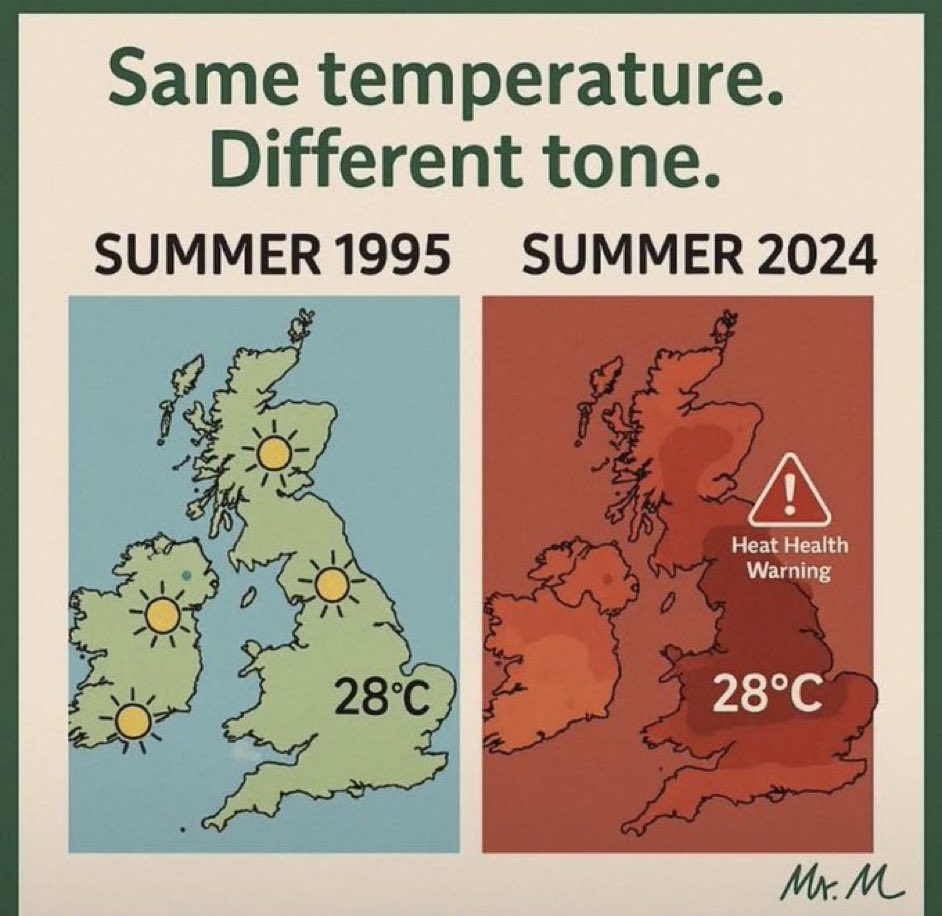
The British Climate Change Committee report is “full of howlers”

Filed under: Britain, Environment, Media, Politics — Tags: , , , — Nicholas @ 05:00

Matt Ridley expands on a recent Daily Mail article on the antics of the Climate Change Committee’s latest “findings”:

The British public has been propagandized to believe the most extreme risks are far more common than they really are … even in the way the weather is reported.

In my Daily Mail essay on the @theCCCuk‘s new report, I point out that they have a vested interest in exaggeration.

“Between the moment when these climatecrats wake in the morning and the moment they lay their overworked brains to rest on feather pillows at night, they have one all-consuming ambition: to maximise their own budget.

They achieve this goal by being as alarmist as possible.

Imagine if they found evidence that climate change was no big deal or even good news: would they want to publish this? Of course not. It would be disastrous for their (taxpayer-funded) income.

The committee has never produced a report on global greening: the remarkable 15-20 per cent increase in green vegetation on the planet over the past four decades, caused mostly by carbon dioxide emissions.

Nor do its members talk about falling deaths from cold weather anywhere near as much as they do about the smaller number of deaths from hot weather.

Good news for us, in short, is no news for them.


The report is full of howlers. It states emphatically that, by 2050, ‘sea levels will be [not “could be” or “may be”] 20–45 cm higher around UK coasts than today.’

That implies sea levels rising over the next 24 years by 8mm to 19mm per year.

But over the 35 years we have had satellites measuring it, sea levels have risen on average by just 3.4mm per year. There was a little acceleration in 2015-2020 and there has in fact been a deceleration since then: 4.5mm increase per year since 2010 and 3.7mm per year since 2015. (In some parts of the country, such as East Anglia, the land is sinking, a different effect.)

So to assume that the rate of sea-level rise could more than quadruple within the next quarter-century is completely unscientific. Neither Greenland nor Antarctica is losing ice at an accelerating rate — and they are the only possible sources for such a huge increase.

How, then, does @theCCCuk justify this hysteria over sea levels?

It bases its sea-level prediction “on a high-emissions scenario (RCP8.5), using the upper-end estimate (95th percentile)”.

RCP8.5 is an economic scenario that was produced in 2011 for the UN’s Intergovernmental Panel on Climate Change (IPCC) by a team of mathematical modellers.

Their instruction was to find out what it would take to increase CO2 emissions at a rapid rate to a very high level by the end of the century.

First, the modellers said, the world would have to massively increase the use of coal at the expense of oil and gas — using coal to make fuel for cars and planes, burning eight times much coal in 2100 as the world did in 2000, and projecting that fully half of all the world’s energy would be supplied by coal by the end of this century.

Yet even this back-to-coal fantasy was not enough to achieve the gargantuan emissions the modellers were tasked with producing. So they assumed both that the world’s population growth would also reverse its current slowdown, surging to 12 billion people by the end of the century, that innovation to make our lives more fuel-efficient would largely end, and also that we wouldn’t even try to cut emissions.

None of these are going to happen.

Scientists have been saying for more than a decade that the apocalyptic RCP8.5 scenario is extremely unrealistic, and even the alarmist BBC said in 2020 that it was “exceedingly unlikely”.

The IPCC has recently announced that it is abolishing RCP8.5 altogether, while one of the Climate Change Committee’s own members, Professor Piers Forster, wrote an article just last week “on the death of RCP8.5”.

Nobody, at all, ever, under any circumstance, should be using RCP8.5 to forecast climate. Yet the CCC is still using it to terrify the government and the British people – and even taking its “upper-end estimate”!

How to Indoctrinate a Generation – Death of Democracy 16 – Q4 1936

Filed under: Germany, History — Tags: , , , , , , , — Nicholas @ 04:00

World War Two and Spartacus Olsson
Published 23 May 2026

How did Nazi Germany seize control of its youth by the end of 1936? In this episode, Spartacus traces the Hitler Youth Law, the Four-Year Plan, Winterhilfswerk, the Anti-Comintern Pact, Goebbels’ attack on criticism, and the tightening exclusion of German Jews.

Berlin, December 31, 1936. The Nazi regime did not need another single dramatic coup. It connected the household, the factory, the school, the street collection, the newspaper, and the foreign threat into one system of mobilization.

This episode covers how the Law on the Hitler Youth declared all German youth organized within the Hitler Youth; how the Four-Year Plan redirected recovery toward rearmament and autarky; how charity became mandated patriotic ritual through Winterhilfswerk; how anti-Bolshevik propaganda linked Spain, Japan, Italy, and Germany; and how Jewish Germans were pushed further into isolation through administrative humiliation and police control.

This is an educational historical documentary condemning Nazism, antisemitism, dictatorship, racial exclusion, and political indoctrination.

Hollywood took the wrong lessons from Joss Whedon’s work

Filed under: Media, Politics, USA — Tags: , , , — Nicholas @ 03:00

I was a huge fan of the TV show Firefly, which I think was Joss Whedon’s best work — perhaps more so because it was cancelled before any of his typical tics and quirks took the show in overtly progressive directions. On the social media site formerly known as Twitter, Devon Eriksen responds to a comment on yesterday’s post about writers needing empathy to fully portray the characters they create:

    Koko (literal gorilla) @Mark68002312

    I think Joss Whedon did great at writing characters in the Joss Whedon universe. At least through Firefly.

    I don’t understand how people — even people who don’t write for a living — think the character and the context/universe they live in are independent

Joss Whedon wrote the characters in Firefly the way he did because they were:

1. Rebels and iconoclasts, thus irreverent.
2. Broken people, thus inclined to hide deep pain behind shallow humor.
3. Familiar with each other already, thus more likely to banter.

The style worked in Firefly because it created a sense of character and setting, which it was appropriate to.

Joss was no master of individualizing character voice, but he at least managed to get the group dynamics right.

However, Hollywood, sack of narcissistic overfunded retards that they are, managed to learn the wrong lesson from the show’s resonance with audiences.

“Oh, the people want light, quippy dialogue with a joke to interrupt every tense moment with a laugh. They are not interested in drama, pathos, gravitas, or emotional weight”, they concluded, and proceeded to pack every damn film with snark for the next twenty years, like Pacific islanders making landing strips and control towers out bamboo, enacting rituals to bring the “cargo” back.

The lesson they should have learned is that audience want, will always want, dialogue that illustrates and enhances character and setting.

Banter is a good tool, sometimes, but it is one good tool in a toolbox of many, and an author must select the right one to do character voice correctly.

    “He will run. A vampire can run throughout the night, untiring. Verdammnis, is there no metal in this room larger than the buckles on braces? Were we women, at least we would have corset stays …”

    “Here.” Asher sat suddenly on the lid of the coffin and pulled off one of his shoes with his good hand. He tossed it to the startled vampire, who plucked it out of the air without seeming to move. “Is your strength of ten men up to ripping apart the sole leather? Because there should be a three-inch shank of tempered steel supporting the instep. It’s how men’s shoes are made.”

    “Thus I am served,” Ysidro muttered through his teeth, as his long white fingers ripped apart the leather with terrifying ease, “for scorning the arts of mechanics.”

Don Simon Ysidro doesn’t say “Well excuuuuuse me for not knowing all about shoes”, because Don Simon Ysidro is a three hundred year old Spanish nobleman turned vampire, not a homosexual Las Vegas nightclub DJ.

And when he remarks upon his own deficiency in knowledge, he says “mechanics”, not “tradesmen”, or “blue-collar workers”, because to a nobleman of the renaissance, a “rude mechanical” is not an impolite robot, he is an uncultured man who works at physical labor or crafts, rather than social or intellectual pursuits.

US Tanks & Armour in the Vietnam War

Filed under: Asia, History, Military, USA, Weapons — Tags: , , , , — Nicholas @ 02:00

The Tank Museum
Published Jan 9, 2026

If you watch films like We Were Soldiers and Platoon, Vietnam was all about Hueys dropping off Air Cav with M60 door gunners giving fire support and M16 toting grunts humping through the jungle. Tanks and AFVs barely get a look-in. In fact, armour was vitally important in Vietnam. The South Vietnamese, the US Marines and Army, all used AFVs in some of the worst tank country in the world in ways that definitely weren’t in the owner’s handbook. This is the story of armour in Vietnam, told through three incredible vehicles

First, the M48 – part of the famous US Patton family. Designed with the battlefields of Europe in mind, it was the US Marine Corps that insisted on bringing them to Vietnam. With 110mm of frontal armour, and a hull designed to deflect mine blasts, the M48s proved their worth time and time again.

Next, the M113 (or “tracks”) – an armoured personnel carrier that was the most numerous and, arguably, the most effective AFV on the battlefield. Designed to be air portable, the M113s had aluminium armour and weighed just 12 tons. As an APC, the M113 was basically a battle taxi intended to drop off its passengers and perhaps provide a bit of fire support with its pintle mounted .50 Cal. However, the soldiers in Vietnam skipped reading the owner’s handbook and set about turning them into ersatz tanks.

And finally, one of the most bizarre vehicles to ever emerge on the battlefield – the M50 Ontos. The Ontos was small – only 12.5 feet long and lightweight at 9.5 tons, making it easy to move by air. Yet despite its diminutive size the Ontos bristled with 6 M40 106mm recoilless rifles. They were small, ferocious and devastatingly effective.

00:00 | Introduction
00:46 | The Beginning
03:02 | The Patton
08:04 | The ACAV
11:39 | “The Thing”
13:33 | The Other Side of the Hill
15:28 | The End is Nigh

This video features archive footage courtesy of British Pathé.

In this film, Chris Copson and Paul Famojuro reveal the untold story of armour in Vietnam. Whilst media portrayals of the Vietnam War tend to focus on other aspects of the armed forces, armoured fighting vehicles played an incredibly important role. The M48, a tank designed for Europe, ended up surviving mine strikes while crashing through the jungle. The M113, a lightly-armoured personnel carrier, was upgunned to serve in armoured assaults. And the M50 Ontos, a thing so ferocious a nearby shot would have the North Vietnamese abandoning their positions. This is the story of Armour in Vietnam.
(more…)

QotD: Historians, past and present

Filed under: Books, Europe, History, Politics, Quotations — Tags: , , , — Nicholas @ 02:00

The average ancient historian led troops, tutored a prince, governed a province, advised a king, made a fortune, fell from favor, was exiled, and buried 7 of their 10 children. The average modern historian passed a few tests then wrote a book on their laptop next to their cat. And worse, they all passed the same tests at the same institutions. And they all wrote the same statements on their applications to get into those institutions. And while attending those institutions, they all adopted the same opinions. Anyone who did otherwise was filtered out before they could become a professor with a publishing deal. Everything is like this now.

Meanwhile Xenophon was an Athenian student of Socrates who joined a Greek mercenary group that marched 1000 miles into Persia to overthrow the King of Kings on behalf of the King’s brother. When the King’s brother died and the group’s commanders were all killed by Persian treachery, he led the troops 1000 miles home himself while being constantly harried by hostile armies. He then tried to establish a colony on the Black Sea, survived a mutiny, raided the Thracians, fought for the Spartans, was exiled by Athens, and settled down to manage an estate and write it all up.

Contrast Xenophon with Mary Beard, who studied at Cambridge and now teaches at Cambridge. She holds the same opinions as everyone else at Cambridge. She’s remarked before that, “I actually can’t understand what it would be to be a woman without being a feminist”. This seems like a peculiar failing for an ancient historian. After 9/11, she wrote an article saying that many people thought “the United States had it coming”, and that “world bullies, even if their heart is in the right place, will in the end pay the price”. That caused some controversy on the world stage, but earned her a promotion at Cambridge. I don’t know if she’s ever talked publicly about religion or democracy or climate change or immigration, but I could tell you exactly what she thinks about these things anyway. So why would you bother reading what she thinks about Rome? The answers are just as predictable.

Roman Helmet Guy, “New Books Aren’t Worth Reading”, Atlas Press, 2026-01-13.

May 23, 2026

A referendum? In our Alberta? There they go!

Filed under: Cancon, Media, Politics — Tags: , , — Nicholas @ 05:00

I hope Jen Gerson will forgive my hubristic use of “our Alberta” in my headline, as there’s at least a possibility that at the end of this process, Alberta won’t be “ours” any more:

So I guess we’re doing this, eh?

I mean, of course Alberta is holding a secession referendum. It’s Alberta; the province that consistently exhibits the inverse of one of Paul Wells’ most-famed Rule of Politics. To wit: “1: For any given situation, Canadian politics will tend toward the least exciting possible outcome”.

Okay, well. Yeehaw, I guess. Alberta hits different.

I suppose I’ll be doomed to die here — everywhere else would be boring by comparison.

For those who have not yet been fully read in: In a speech on Thursday that can only be described as a rhetorical onion of bad faith and gaslighting, Smith called for a secession referendum based on Forever Canadian leader Thomas Lukaszuk’s successful petition, which was intended to rally support of federalists ahead of an expected pro-secession petition. Lukaszuk’s question proceeded to the legislature, while the separatist Stay Free Alberta attempt was subsequently quashed in the courts.

Smith will continue to appeal that ruling and in order to stay ahead of the judicial process will now hold a non-binding secession vote in October based on the successful federalist petition. Except the actual question won’t be based on Lukaszuk’s exact wording, but will rather be something both novel and maybe able to pass judicial review.

The imminent question now to be posed to us reads: “Should Alberta remain a province of Canada or should the Government of Alberta commence the legal process required under the Canadian Constitution to hold a binding provincial referendum on whether or not Alberta should separate from Canada?”

So we’ll have a referendum on having another binding referendum. This, as far as I can tell, will please neither federalists nor separatists. It will increase the odds that an initial vote to leave Canada will pass if voters regard it as a harmless protest exercise; this will thus ensure that secession remains a live feature of Alberta politics for the foreseeable future.

Yes, I know this is confusing.

The trick is just don’t think about it too much. If you haven’t been following since at least March, you’ll never get fully caught up now. Just feel it out. If you get the sense that you are swimming in the surreality of an episode of Veep, you probably have it about right.

I can’t even give you ordinary political analysis, anymore. We just have to imagine that we’re all trapped in an improbable soap opera we can’t shut off, hostage to terrible over-actors whose intentions and actions only make sense to those of us who have been religiously following every B-rate plot twist for years. I’m waiting for a demonic talking puppet named Timmy to roll into town on the back of a Ford F150 driven by a malevolent witch who casts love spells and curses in order to triangulate a never-ending high school drama populated by bored corporate memo takers and Calgary School dorks who decided politics was the highest and best use of their short time on this God-given earth.

They could have started a soup kitchen, or taken up diamond painting from those kits they sell at Michael’s, but nah. It’s this.

So here we are. Staring down the barrel of a referendum that has a higher chance of securing a thin majority than anyone seems to realize, even if it is very unlikely to lead to a legal separation of the province. Either way, simply holding the vote opens the whole country up to an unpredictable cauldron of economic and political consequences, in addition to God-knows what foreign interference. It’s so goddamn crazy, the plot would get rejected for a one-man YouTube shorts series.

And all of this because Danielle Smith is beholden to an emboldened and committed political base of separatists that has threatened to blow up her leadership and her party if she doesn’t hold a secession vote. Meanwhile, the moderates in caucus are proving to be something less than profiles in moral courage. Only two, Matt Jones and Nate Horner, noted opponents of holding a vote, seem willing to speak up, and both of them resigned on Wednesday. Everyone else is either cowed, indifferent, or a separatist too lacking in integrity to say so outright in public.

The UCP has become a party of snivelling, weak little thieves who operate by night.

The inevitable collapse of Rhodesia

Filed under: Africa, History — Tags: , , , , , — Nicholas @ 04:00

Celina outlines the key reasons Rhodesia was never likely to avoid the collapse of its ruling class regardless of outside pressures or embargoes:

Rhodesia as a country vanished in 1980, yet it has returned online in fragments, whether that be restored bush-war footage on YouTube, memorial websites, photographs of men in army short-shorts holding their rifles or a growing online group of conservative influencers speaking about the destruction of Western civilisation.

I believe Rhodesia continues to remain intriguing to people because it condensed several modern traumas into one: decolonisation, the collapse of settler sovereignty, the Cold War, guerrilla war, sanctions, and the spectacle of a militarily capable state losing politically. It survives in the imagination because it appears, to admirers and enemies alike, as an unusually concentrated test of whether a highly organised White minority can hold a country once history, demographics, and international legitimacy have begun to run against it.

The case of Rhodesia is more haunting the closer one looks. Rhodesia was not a failed state in the crude sense, like many African nations. It had an efficient bureaucracy, a productive commercial economy, a coherent White political class, and security forces widely regarded as formidable. Yet its doom lay not principally in incompetence, but in structure.

“Demographics are destiny” is often used as a slogan. In Rhodesia it was a structural fact. At the moment of Rhodesia’s Unilateral Declaration of Independence in 1965, about 230,000 Whites governed a total African population of roughly 4.2 million, meaning the ruling minority amounted to about 5 percent of the whole. The state was trying to preserve European political control without ever having become a European-majority society. That was the original wound.

Rhodesian officials understood the problem clearly. From the early colonial period, administrators and settler pressure groups openly pursued the creation of a “white man’s country”, publicising opportunities in Britain and South Africa, subsidising immigration, distributing land, and hoping to expand the European population fast enough to secure political permanence. Some settlers stated the logic bluntly: the only satisfactory final solution would be for Europeans to outnumber Africans. But even in the high-settlement decades, the project never came close to achieving that outcome.

By the 1960s the imbalance had become impossible to ignore. Josiah Brownell’s book The Collapse of Rhodesia: Population Demographics and the Politics of Race showed how deeply Rhodesian politics became organised around the fear of “racial swamping”. The 1969 census reported 228,040 whites, around 15,000 fewer than previously estimated, and opponents of the government attacked the drift in ratios from 17.5 Africans per European in 1962 to about 22 to 1 in 1969. More devastating still, that same census showed a net increase of only 7,000 whites since 1962, against a net increase of roughly 980,000 Africans.

Nor was immigration the easy answer. Between 1955 and 1979, Rhodesia received 255,692 immigrants but lost 246,047 emigrants. On average, about 4.6 percent of the white population arrived each year and 4.1 percent left. That is a staggering level of population churn for a community already too small to feel secure. It meant that Rhodesia was not only numerically weak; it was socially and psychologically fragile, dependent on a white population that was transient.

“The primary skill of an author is empathy

Filed under: Books — Tags: , , , , , — Nicholas @ 03:00

On the social media site formerly known as Twitter, Devon Eriksen describes the real skill a fiction author needs to have to produce fully satisfying stories:

Woke message fiction may be slowly dying, but stories won’t magically get better when it’s dead.

Because there’s a deeper problem.

I found it in a book I’ll call MillenialQuest. That wasn’t its real name, of course. I’m not trying to dunk on some poor soul just for writing a bad book. If I did that, I’d never be stopping.

It was some medieval fantasy thing with a rather likely premise involving a fallen paladin and an army of steampunk centaurs.

But when I opened it up, I quickly realized that every single character, despite living in a world where “horse” was the peak of transportation technology, was a Joss Whedon character wearing a Tolkien skinsuit.

Complete with sarcasm, cutesy little quips, and no emotional self-control whatsoever. Didn’t matter if the character was a professional assassin or a cloistered scholar, he talked, acted, and thought as if he were auditioning for a episode of Buffy the Vampire Slayer.

My first impulse was to be annoyed with the author for disappointing me. But I quickly realized that the problem ran deeper, and the author, annoying as her habits were, was both symptom and victim of a deeper malaise.

The primary skill of an author is empathy.

Now, I don’t mean the “empathy” that socialist twats are constantly talking up, in lectures about how we must all immediately dismantle Western civilization to create infinity third world biomass.

I mean the actual skill of figuring out what other people are thinking and feeling.

To excel at his craft, an author must empathize in two directions at once. Not alternately, but simultaneously. He must empathize with the audience to understand how they will experience what he writes, and he must empathize with characters, to understand how they see the world, and what they would do and say.

Empathy must be learned. And it can be learned in two ways, either by having lots of conversations with people who are as different from you as possible, or by reading books with characters who are also totally unlike you.

Well, we’ve now raised several entire generations who cannot withstand the stress of a real conversation with someone from their own nation who happened to vote for the other idiot on a two-option menu.

And what have those people been watching, listening to, and reading?

Well, Whedonized stories wherein every character is a reskinned version of a white, middle class, left-leaning liberal arts student in a small East Coast private college.

The author of MillenialQuest didn’t set out to write The Message™. Nobody was a purple-haired mixed-race fat wheelchair lesbian, and there weren’t any thinly veiled rants about capitalism or diversity.

Sure, the word “misogynist” was used a bunch, without any apparent awareness of the confused look of incomprehension that your standard medieval knight would respond with.

But so was the word “allergies”. And “expense account”. And “psychology”. And “self-medication”.

No, the core pathology here wasn’t the irrepressible urge to preach the author’s values at all.

It was a complete lack of ability to put her head into someone else’s world view.

To the new breed of author, the 21st century liberal zeitgeist isn’t just the only moral viewpoint, it’s the only imaginable viewpoint.

This is why they think you are evil and crazy if you voted for the other guy. Because they literally have no idea what might have motivated you to do that.

The author of MillenialQuest couldn’t imagine a world where differing responsibilities for men and women are a necessity for survival, rather than a cause for complaint.

She couldn’t imagine how the concept of an expense account would be expressed in a world where peak financial technology is pounding your shiny metal into discs with faces on them.

Emily Wilson can’t understand a woman who would be ashamed of cheating on her husband, or men who would start a war over an insult.

Yes, often it’s deliberate. Often it’s preaching, or venting their own desire to debate with someone whose response they cannot hear.

But the point is, even if and when they are forced, by threat of major film studio bankruptcy, to stop deliberately trying to preach and propagandize, they won’t magically gain the ability to write characters different from themselves.

Empathy is a skill. It has to be learned and then practiced. And most people in the writing game today simply haven’t had the opportunity.

We may be exiting the age of DEI slop, but we are entering the age of just plain slop.

Older Posts »

Powered by WordPress