Quotulatiousness

October 8, 2026

Central planning also centralizes the importance of “who you know”

Filed under: Business, Economics, Government, Politics — Tags: , , , , — Nicholas @ 03:00

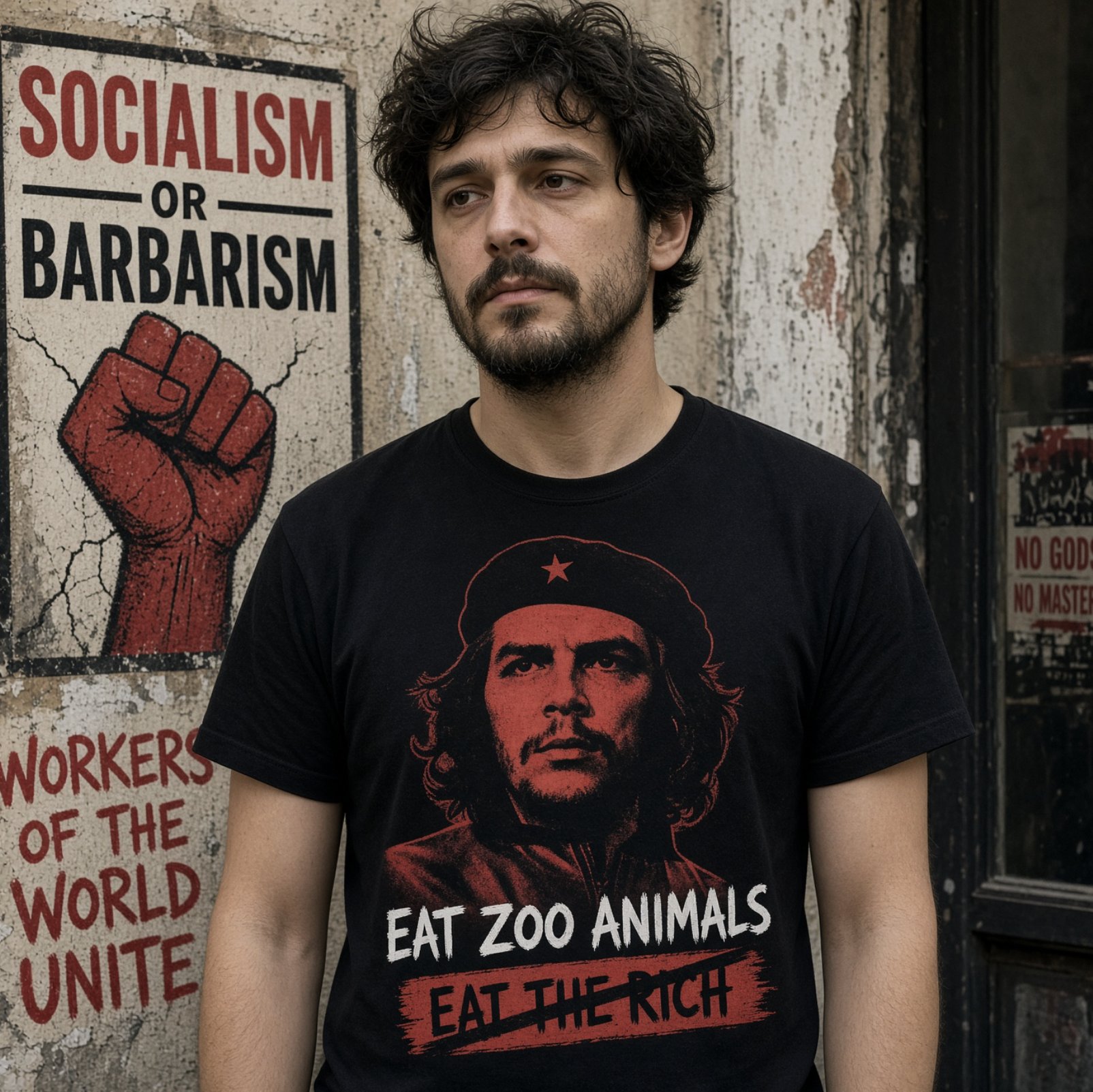
On the social media site formerly known as Twitter, Handre points out the other thing that socialized economies share with one another: the overwhelming importance of “friends”, “connections”, and “family” in generating unearned wealth and power.

AI-generated image from @Handre on X

Socialism concentrates power, and concentrated power concentrates wealth. Hugo Chavez spent two decades screaming about imperialist oligarchs while his own daughters accumulated the kind of fortune that would embarrass a Rockefeller.

Maria Gabriela Chavez holds assets estimated at $4.2 billion, making her Venezuela’s wealthiest individual by a comfortable margin. Her father nationalized over 1,200 private companies between 2002 and 2012.

The mechanism is straightforward: When the state controls production, distribution, currency, and courts, political proximity becomes the only productive investment. You don’t build a business; you cultivate a minister. Chavez’s inner circle stole through socialism, using currency controls, preferential exchange rates, and state contracts as the instruments.

Meanwhile, the Venezuelan poverty rate crossed 80 percent in 2024. Infant mortality climbed. The bolivar collapsed so completely that Venezuelans began pricing transactions in dollars just to preserve basic calculation.

Ludwig von Mises proved mathematically in 1920 that socialist planners cannot rationally allocate resources without prices generated by voluntary exchange. No prices, no signal. No signal, no coordination. Shortages follow as surely as math follows addition.

This while Venezuela sits atop the world’s largest proven oil reserves. Poverty there is entirely manufactured. Chavez’s family lives in Caracas and Miami on wealth extracted from people who cannot buy protein. The ideology that promised to eat the rich ended with the people eating the zoo animals.

October 1, 2026

QotD: The “auction of the empire” – Didius Julianus buys the highest office for himself

Filed under: Europe, Government, History, Military, Quotations — Tags: , , , , — Nicholas @ 01:00

The death of Marcus Aurelius in 180 and the subsequent 12-year rule of his violent and erratic son Commodus ended the era of Pax Romana (the “Peace of Rome”). With the assassination of Commodus on New Year’s Eve 192, many Romans no doubt hoped 193 would bring a restoration of peace and stability. That was not to be so. Indeed, the new year was so tumultuous that it would become known in Roman history as the Year of the Five Emperors.

The elite unit of imperial bodyguards known as the Praetorian Guard arranged for an army officer named Pertinax to succeed Commodus as Emperor. We know that money played a role; Pertinax offered a tidy sum of 12,000 sestertii each to the guardsmen, but it was done in the more typical way (quietly and behind the scenes). After 87 days in which Pertinax attempted to clean house of Praetorian corruption, the dissatisfied Guard stabbed and beheaded the would-be reformer. That set the stage for an act so brazen in its scope that the next emperor would be remembered primarily for that, and for not much more.

Knowing the Praetorian Guard could be bought, two men appeared at its headquarters and presented themselves as rival claimants for the Roman throne. One was Titus Flavius Sulpicianus, who was the father-in-law of the deceased Pertinax. The other was 60-year-old Didius Julianus, who had distinguished himself in both politics and the military. In his Chronicle of the Roman Emperors, historian Chris Scarre notes,

    No attempt was made to hide the nature of the negotiations: the Praetorians stationed heralds on the walls to announce that the position of emperor was up for sale … The bidding went on for some time, but eventually the soldiers’ choice fell on Didius Julianus. He not only bid the higher price, but also warned them that if they elected Sulpicianus they might expect revenge at his hands for the murder of Pertinax.

This notorious “Auction of the Empire”, as Edward Gibbon would call it centuries later, was described by another historian who was alive and writing as it happened, Cassius Dio (155-235 A.D.). In his 80-volume history of Rome, he described the scandalous episode this way:

    So when he [Didius Julianus] heard of the death of Pertinax, he hastily made his way to the imperial throne. Then ensued a most disgraceful business and one unworthy of Rome. For, just as if it had been in some market or auction-room, both the city and its entire empire were auctioned off. The sellers were the ones who had slain their previous emperor, and the would-be buyers were Sulpicianus and Didius Julianus, who vied to outbid each other … They gradually raised their bids up to 20,000 sestertii for each soldier. Some of the soldiers would carry word to Julianus, “Sulpicianus offers so much; how much more do you make it?” And to Sulpicianus in turn, “Julianus promises so much; how much more do you raise him?” Sulpicianus would have won the day, being prefect of the city and also the first to name the figure 20,000, had not Julianus raised his bid by a whole 5,000 at one time, shouting the sum out in a loud voice and indicating the amount with his fingers.

Sold! One gigantic empire and the top position in it — for a mere 25,000 sestertii per guardsman, or approximately the value at the time of ten horses.

Upon assuming the mantle of Emperor, Didius Julianus devalued the currency by reducing the precious metal content of Roman coinage. But not even that measure made the price he offered affordable to him. He never fully coughed up what he promised. After 66 days in power, he met the same fate as his predecessor — assassination at the hands of disgruntled Praetorians.

“But what evil have I done?” he is said to have cried with his last words. “Whom have I killed?”

Before the year was over, three other men would attempt to claim the title of Emperor until one man emerged as the unquestioned ruler — Severus.

The Year of the Five Emperors was drenched in power lust, scandal and blood. For the Empire, it was mostly downhill from there. When it fell to foreign invasion in 476, many Romans welcomed the invaders because they figured they couldn’t be worse than their own rulers.

And, sadly, they were probably right.

Lawrence W. Reed, “Didius Julianus: The Roman Emperor Who Bought the Imperial Throne – and Paid With His Life”, Foundation for Economic Education, 2021-08-11.

September 24, 2026

More than you ever wanted to know about the Teapot Dome scandal

Filed under: Government, History, Politics, USA — Tags: , , , — Nicholas @ 05:00

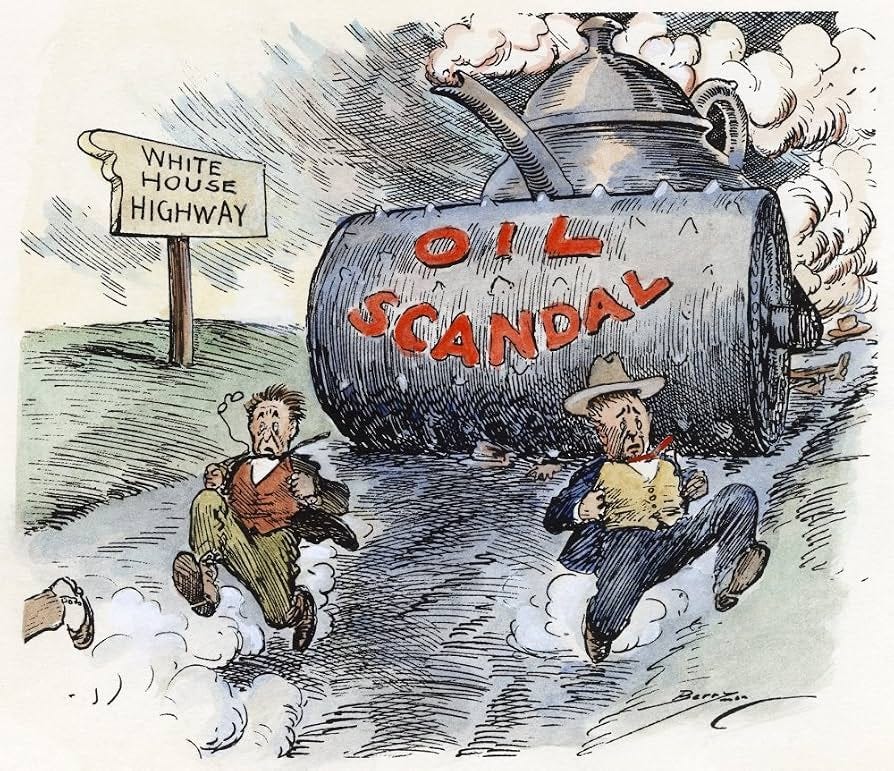
At The Grim Historian, Carlyn Beccia has a long, long post about the scandal that (probably) killed President Harding: the Teapot Dome scandal.

“The Teapot Dome scandal” by Clifford Berryman, 1924
Granger Collection

Washington, 1922. Somewhere around H Street, a piano is still playing after midnight. The car turns off the avenue and slows outside a townhouse with the shades already drawn.

Warren Harding steps onto the sidewalk. Presidential seal on the door he just closed. Another beautiful woman on his arm, history declined to name. He doesn’t look around. He doesn’t have to.

Warren Harding is handsome. Everybody always says so. He was a notorious ladies’ man, carried on a fifteen-year affair with one married woman, fathered a child with another, and left historians enough love letters that we know far too many bawdy details about “Jerry”. (Jerry was the nickname he gave his penis.)

[…]

Either way, Harding’s genial personality probably helped. Harding liked people, people liked Harding. He had what the kids call the rizz. (Or so Jerry claimed.) And he must have had some charisma because 1920 voters handed him one of the biggest landslide victories in American history.

Now, Harding liked bringing his buddies along for the ride. Men seeking government jobs drifted through the rooms alongside men who already had them.

Attorney General Harry Daugherty is here. Daugherty is Harding’s longtime political manager and friend. Daugherty would soon become engulfed in investigations involving influence peddling and government property, and would refuse to surrender records to Senate investigators. Calvin Coolidge eventually forced him out. He later stood trial twice on charges of defrauding the government. Neither trial produced a conviction.

Harding’s unofficial fixer, Jess Smith, was there too. He technically held no federal office but nevertheless had a desk and room inside the Justice Department, used official stationery, dictated to department secretaries, carried government files, and gave orders people obeyed. Jess Smith died by suicide in 1923 while corruption allegations were swirling around the Justice Department.

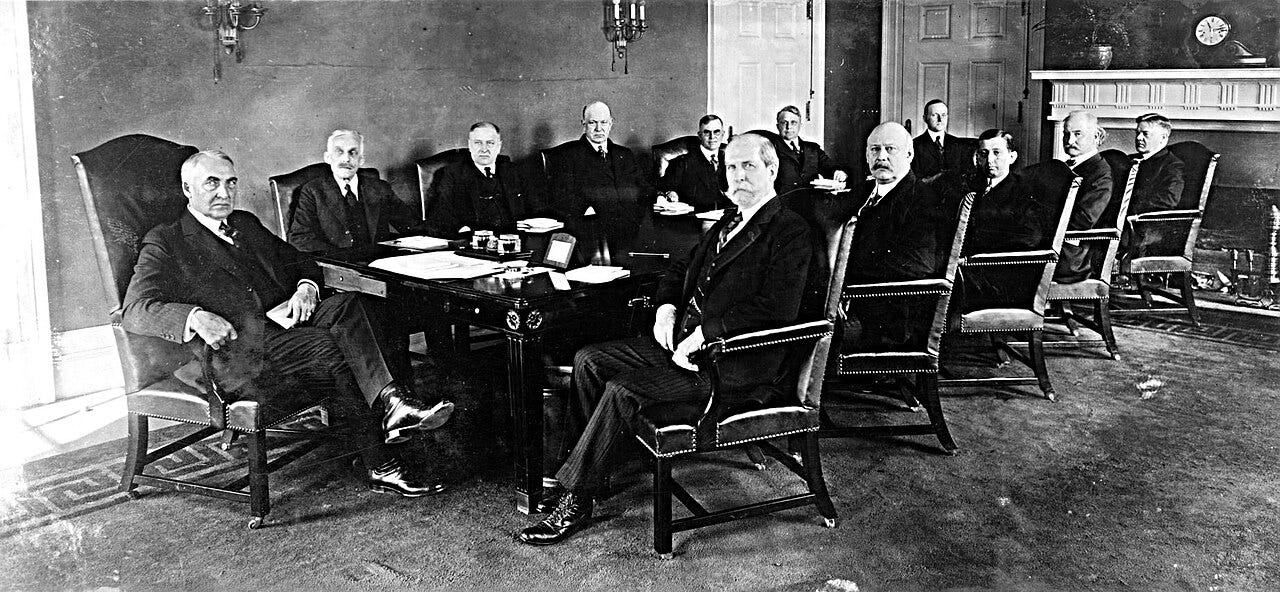
The cluster of men who swarmed around Harding became known as the Ohio Gang?—?old political friends, poker companions, fixers and assorted hangers-on who had followed him to Washington and discovered that federal office came with considerably better party favors.
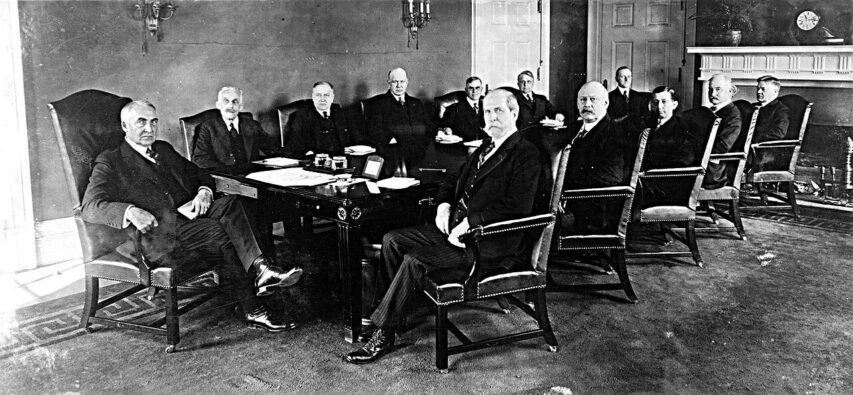
Harding’s cabinet, 1921. A few members of the Ohio Gang are hiding among the respectable people. They look very serious here. After hours was another story.

[…]

For years, Theodore Roosevelt and other conservationists had worried that private companies would simply gobble up America’s petroleum reserves. So Roosevelt ordered federal geologists to identify oil deposits worth protecting. Taft then withdrew millions of acres from private development and established naval petroleum reserves in California. Woodrow Wilson added another in Wyoming. In 1920, Congress gave the Navy power to manage and lease all three.

The reason was not complicated. American battleships were switching from coal to oil. If another war came along, perhaps it would be prudent for the United States Navy to own some oil.

Wild concept.

So the government had locked away huge underground deposits in California and Wyoming as an emergency stockpile. Together, the three reserves were believed to contain roughly 435 million barrels?—?about as much oil as the entire United States produced in a year.

There were two big California fields, Elk Hills and Buena Vista, and one Wyoming reserve called Teapot Dome.

Teapot Dome was not even the great petroleum monster of the group. Elk Hills would eventually become one of the country’s most productive oil fields and produce its billionth barrel in 1992. Teapot Dome, by contrast, occupied just 9,481 acres and produced about 22 million barrels during its later decades of federal operation.

Teapot Dome simply had better branding. It was named for a nearby sandstone formation that allegedly resembled a teapot.
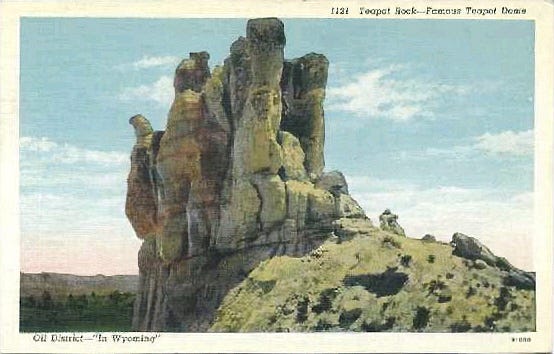
Teapot Rock on an old postcard from around 1922
Public Domain

Yes, that’s a teapot. Apparently, Wyoming whiskey was excellent.

So Fall wanted control of all three reserves, and Harding gave it to him. On May 31, 1921, the president signed an executive order transferring administrative authority from the Navy to Fall’s Interior Department.

Shortly thereafter, Fall undergoes a miraculous financial renaissance. Remember Fall’s ranch with ten years of unpaid taxes and the general Grapes of Wrath ambiance?

Yeah, so by June 2022, Fall pays those taxes. He buys neighboring property. He makes substantial improvements to Three Rivers. The formerly cash-starved rancher suddenly throws money around like he’s discovered oil under the sofa cushions.

He had not. He had discovered oilmen. Two of them, specifically.

[…]

Meanwhile, President Harding was having a truly shitty year. In the spring of 1923, Jess Smith was dead, Charles Forbes had resigned from the Veterans Bureau in disgrace, and Fall had quietly resigned from Interior to work for none other than Harry Sinclair.

For once, it wasn’t Jerry keeping Harding up at night.

So that summer, Harding left on a cross-country speaking tour. During this time, Harding reportedly told a journalist: “I have no trouble with my enemies … But my goddamn friends … they’re the ones who keep me walking the floors nights!”

Those friends would drive him to an early death. On August 2, 1923, Warren Harding died in a San Francisco hotel room, probably of a sudden heart attack. He was only 57 years old.

Then Calvin Coolidge became President, and he wasn’t into playing footsy with poker players.

September 20, 2026

“Honest” graft

Filed under: Business, Government, History, USA — Tags: , , , , — Nicholas @ 05:00

Politicians and corruption go together like wine and cheese but not like crime and punishment for some reason. It’s almost as though the path to wealth and influence goes through political connections rather than economic efficiency and innovation. Chris Bray points out the difference between the “honest” graft of days gone by and the kind of all-consuming corruption we see far too often these days:

Tammany had honest graft: They said they would build a bridge or a park, and then they built it. The cost would be sort of not nakedly obscene, and no money would be missing if there was an audit. But by the most remarkable coincidence, the land where the park or the highway or the approaches to the bridge would go turned out to be owned by very close friends of the Tammany machine, who then got paid a nice little premium for the acquisition of land that was needed for a public purpose, and maybe the people who sold the concrete and the lumber and supplied the labor also turned out to be awfully close friends of the politicians who approved the project, but at the end, there’s the bridge. There’s the new highway, and it cost something within shouting distance of what you would expect the thing to cost. It added up, but they did some fairly polite stealing. There was respect in it. It wasn’t honest, but it wasn’t wide-open looting.

An extremely common form of graft in American politics is the “Three Bs” that Robert Caro famously described in Texas politics: beef, bourbon, and blondes. Cocktails, steak dinners, and maybe if you were a legislator who played ball a nice young lady came and visited your hotel room during the legislative session. But that graft was about topics like who got the state highway contract. Some money traded hands, there was dishonesty in the allocation of public resources, and the highway got re-paved.

The Quality Learing Center model, or the high-speed rail model, or the 800 hospices in Los Angeles with patients that never died, all represent a model of grift that comes from a culture of complete shamelessness. In California, nearly 700 non-profit corporations exist to provide shelter to the homeless, and over 500 non-profit corporations exist to prevent homelessness and provide social services to the homeless or to people who may become homeless. There’s quite a bit of overlap between those categories, so there aren’t 1200+ non-profits, but there are hundreds, and they have billions of dollars in income.

Some are entirely legitimate and do real work. There are people in California who will be fed and sheltered tonight by a non-profit corporation that will keep them from sleeping on the street. It’s not at all my argument that no one in any non-profit anywhere ever does anything real. But the overall picture is theft, and the premise that the flood of money is ending homelessness (or is meant to) is a lie, and a dark one. Gavin Newsom presented his ten-year plan to end chronic homelessness in 2008.

Update, 22 September: Welcome, Instapundit readers! Have a look around at some of my other posts you may find of interest. I send out a daily summary of posts here through my Substack – https://substack.com/@nicholasrusson that you can subscribe to if you’d like to be informed of new posts in the future.

There are wedding gifts and there are wedding gifts

Filed under: Media, Politics, Russia, USA — Tags: , , , , — Nicholas @ 03:00

Gift-giving has been a thing since caveman days, they say, but sometimes gifts carry strings along with them that are impossible to ignore, or as The Grim Historian puts it, “never let a mobster pay for your wedding”:

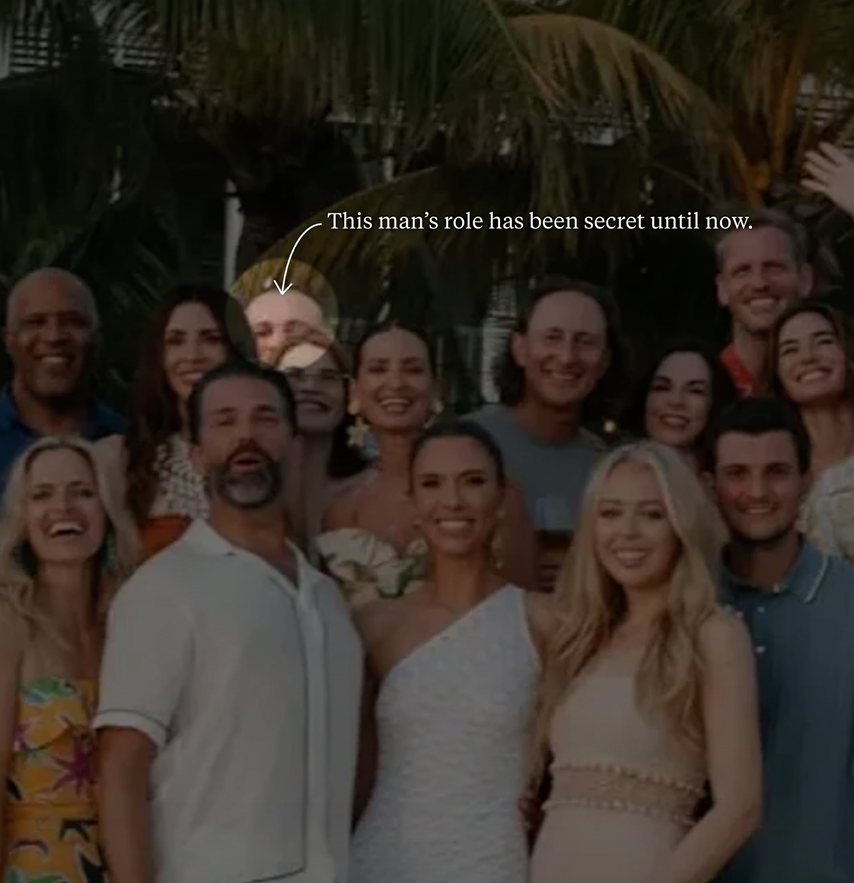
Nothing says “just a wedding gift” like the benefactor whose role stayed secret until ProPublica had to put an arrow over his head.
Photo: Laura Gordon Photography via Instagram; annotation/source: ProPublica.

My Grandma Ella had a rule about gifts, usually delivered while waving a wooden spoon over a white apron so stippled with tomato sauce it could have been entered into evidence.

She would say, “Never accept gifts. That’s how a rich man turns you into a beggar.”

That may sound cynical, but no Italian survives a lifetime of weddings, funerals, Sunday dinners, and relatives saying “forget about it” without learning that generosity has a very long memory.

A gift creates an imbalance. You give me something. Now I am indebted to you. Sure, you may insist it is “just a gift.” But I have seen enough crisp white envelopes exchange hands to know there are gifts, and then there are … gifts.

Say I give you a hundred dollars and tomorrow you hand me a hundred dollars back, congratulations…we have invented banking. Or say you sign up for my breathtakingly grim history newsletter. I have provided you a service in exchange for your 5 ducats, but we are all clear on the bargain.

But suppose I give you something you can’t return. Not tomorrow. Not next year. Now the books stay open. And a man who keeps your books open is not your friend. He owns a piece of you.

Which brings us to Donald Trump Jr.’s wedding and who owns him.

ProPublica reporters Justin Elliott, Brett Murphy, Joshua Kaplan and Alex Mierjeski reported this week that Umar Kremlev — a Russian businessman closely associated with Vladimir Putin — gifted Trump Jr. and Bettina Trump quite the wedding shindig in the Bahamas.

According to records and interviews ProPublica reviewed, Kremlev paid to rent a private island, covered an elaborate fireworks show, and had his team help organize the festivities. There were helicopters, seaplanes, oceanfront villas, and a five-tier funfetti cake flown in from Florida. So not exactly the crystal punch bowl from Aunt Linda.

Fortunately, after ProPublica published its story, the newlyweds fessed up. Yes, Don Jr. and Bettina Trump have a wealthy Russian benefactor (sorry, “friend”) granting party favors. Then they made a statement that would have my Italian grandmother shaking her mano fica.

“Friendship doesn’t require a political motive. Generosity doesn’t automatically come with an agenda. And sometimes a wedding gift is simply a wedding gift.”

Just a gift.

September 18, 2026

QotD: Higher education as a vast money laundering racket

Filed under: Bureaucracy, Education, Quotations, USA — Tags: , , — Nicholas @ 01:00

Have I mentioned my theory (which I regard as a certainty) that Higher Education is best understood as a massive money laundering operation? We all had a good chuckle, I’m sure, at that title [“fellowship at the International Centre for the Study of Radicalisation at King’s College in London”], just as we’ve had good chuckles at the ridiculous titles of all the Angry Studies programs infesting colleges nationwide. We’ve probably concluded — correctly — that these are just make-work for otherwise unemployable PhDs who check a few of the Diversity quota boxes.

But when you consider just how much money is involved, it’s a lot harder to laugh. Your average tenured prof makes north of $100 K, and for every one of them, there are at least two administrators, four outreach coordinators, and uncountable Special Assistants to the Assistant Provost’s Special Assistant for Diversity and Inclusion. Not to mention all the classroom space, office space, etc. that this requires (including paying the very real people who have to coordinate that stuff — no easy task — the custodial staff and so on). I’d bet that just one of these programs, all in, runs at least a million dollars per year when you throw in bennies and whatnot.

That’s a LOT of scratch, for one or two classes a semester that barely even make their enrollment numbers.

I dunno what nefarious purpose the Angry Studies programs serve (aside from the obvious, perpetual one of “burning down ambient civilization, just because”), but the “national security” ones I’m sure are basically just “diplomatic” cover for cloak and dagger shit. They used to use academic conferences like that back during the Cold War — who else but an officially credentialed diplomatic representative gets to travel around his enemies’ territory? In this case, of course, none of these people are actually going anywhere near war zones (with the exception of Mx. Kagan, of course, who decided to take command of American forces in the field). But academic “conferences” are good ways to make contacts and pass suitcases full of cash and other goodies around …

… I suspect.

Severian, “Klown Kollege”, Founding Questions, 2022-08-28.

September 16, 2026

Veterans of the GWOT “saw things with our own eyes that are hard for others to believe”

Filed under: Media, Middle East, Military, Politics, Religion, USA — Tags: , , , , , , — Nicholas @ 03:00

On the social media site formerly known as Twitter, Cynical Publius explains why some of the strongest opposition to Islamification comes from people who’ve seen Islamic culture up close in countries where it’s the majority religion:

Does this photo of Afghan men watching a young boy dance give you the creeps? It should.

Have you noticed that the community that is most vocal in warning about the Islamification of the USA is the GWOT veterans’ community?

That’s because we saw things with our own eyes that are hard for others to believe:

  1. The treatment of women as chattel property. Goats are treated better than daughters — no exaggeration.
  2. Widespread pedophilia and bestiality while at the same time people we call “LGBTQ+” in the West are subject to barbaric methods of execution.
  3. An absolute lack of freedom of religion.
  4. Wanton disregard for human life.
  5. Insanely paranoid antisemitism straight out of The Protocols of the Elders of Zion.
  6. Wholly corrupt governments; bribery as a uniform standard.
  7. Tribalism to an extreme: tribe trumps truth and justice, always.
  8. In the Gulf Arab countries, “Third Country Nationals” from poor Muslim countries engaged in menial labor and literally treated as slaves.
  9. Absolute confidence that Islam will violently conquer the rest of the world, and a belief that this is just and proper.
  10. Acceptance of the idea that lying can be and is necessary and proper.

These are not one-off observations; these are widespread norms that are easily observed and experienced in day-to-day life in any nation that accepts Sharia law. ALL OF THESE THINGS ARE COMMONPLACE. Having seen this stuff up close and personal across the entire Middle East, Central Asia and the Horn of Africa, American veterans have unwittingly become like the prophets of old, warning everyone else of the dangers we have seen that we never wish to see come ashore in America.

Yet somehow our voices are not being heard sufficiently, and we now see literal Communists wishing to import these evil practices to the USA en masse, as a path to their own power.

Guess what Commies? It’s the other way around, you are the ones being used and when the Green forces dispose of you Red forces, it’s not going to be pretty.

Wise up.

Update, 17 September: Welcome, Instapundit readers! Have a look around at some of my other posts you may find of interest. I send out a daily summary of posts here through my Substack – https://substack.com/@nicholasrusson that you can subscribe to if you’d like to be informed of new posts in the future.

August 31, 2026

QotD: India, “coasting on inertia”?

Filed under: Bureaucracy, Government, India, Quotations — Tags: , , , , , — Nicholas @ 01:00

There are lots of examples of “nations” that don’t have any real reason to exist as coherent political entities. All of Africa, for instance, but also India, and they’re a pretty good test case for how far coasting on inertia can take you. I didn’t get into any trouble when I was there – I’m the law-abiding sort, and besides, I was a guest in their country — but I knew that, should trouble find me, the first thing I was going to do was hand Officer Friendly-ji my passport … in which he would find two nice crisp Tubmans. And if that didn’t solve the problem, I’d invite him to come down to the ATM with me and figure it out from there.

Moreover, if I happened to witness a crime … well, that wasn’t going to happen. I’d make sure of it. Pro wrestling referees got nothing on me. But if somehow I did get roped into an investigation, I was going to flee to the nearest Western embassy and hole up like Julian Assange. As with the Tubmans-in-the-passport thing, this is not because I condone or encourage crime. I really hope they find the guy whodunit, and nail his balls to the wall … in the abstract. But in the concrete, my main concern is that Officer Friendly-ji will have much less paperwork, and far more business opportunities, by pinning it on the burra sahib, so sahib — that would be me — is making his pasty pale ass scarce.

This is not a blanket condemnation of the Indian police. Rather, it’s an acknowledgement of reality. India is a huge country of over a billion people, in which there are at least 30 major languages (= “spoken by over a million people”) and a thousand minor ones. There are at least six major religions, the adherents of which are always bickering with each other. Even granting that every single national official in India has the wisdom of Solon, how the hell are they supposed to pass laws that mean anything under those conditions?

The administration of “justice”, then, devolves to the lowest common denominator in the localities. About which I know nothing, which makes me a nice fat target, so … yeah. How many dolla dolla bills to make this go away, Inspector?

Severian, “Friday Mailbag”, Founding Questions, 2022-07-22.

July 19, 2026

QotD: Obfuscated exchange

We have discussed potlatch a lot so far but obfuscated exchange is one of my two major research interests, and it’s what first got me really interested in Ashley’s work.1 At some level the fundamental nature of the interaction is that rich men are paying for models to hang out with them, yet that rarely happens directly. Instead there are multiple ways in which the nature of this transaction is obfuscated. And note, it’s not because anything about bottle service is illegal, because it ain’t. Unlike prostitution, there are no laws against paying for arm candy, it’s just that it’s seen as extremely tacky and kind of a desperate move.

At this point, it’s worth digressing from Ashley’s work and laying out my own theory of obfuscated exchange before showing how Ashley applies the model to her data.2 So the starting point is to recognize that there are certain goods and services that may be more or less OK if you get them for free, but are gross, shameful, and/or illegal if you pay for them. For instance, payment transforms casual sex into prostitution and constituent service into bribery.

Now suppose you’re someone who has money, and who really wants to have no-strings sex with someone who isn’t really attracted to you, or to get a government service that the legislator or bureaucrat thinks you’re not entitled to. One way to handle this is you just do it anyway and break the taboo: you hire the prostitute or bribe the public official. Another way is you don’t do it: you think something like “I would gladly pay $200 for sex or $10,000 to get this zoning exemption, but that would be wrong and so I’m not doing it”. But what I find really interesting is when you find a way to have your cake and eat it too by buying the non-market good while obfuscating that you paid for it, hence obfuscated exchange.

In my 2014 Sociological Theory paper, I outline three forms of obfuscation:

  • Gift exchange — I give you a gift and at some point in the future you give me a gift. There is a continuous tension between whether the gifts are traded for each other or are both expressions of a relationship.3 This ambiguity effectively allows gift exchange to trade goods that it would be immoral to directly exchange for one another. The classic example is that the difference between a sugar baby/sugar daddy relationship and a prostitute/john relationship is gift exchange vs cash on the barrelhead.
  • Bundling — You and I engage in some type of innocuous commercial transaction, but we also have a relationship involving things that ought not to be sold. The classic example is a boss having sex with his worker, or a lawyer with his client.4 Is this just that two people with a business relationship also find one another irresistible, or is it quid pro quo sexual harassment? Interpreted as bundling, it is the latter, and there are some cases where it’s obviously little more than money laundering (as with the Congressman who went to prison for selling his house to a defense contractor, who immediately resold the house at a substantial loss).
  • Brokerage — I hire someone to help me acquire something, and they pay the person I need it from, who then gives it to me. A majority of settlements under the Foreign Corrupt Practices Act look like this: AmericaCo is doing business in Corruptistan and hires LocalFixer who in turn just bribes PublicOfficial.

After that first paper, I introduced a fourth type, “pawning”, which is when an explicit debt is forgiven in exchange for a non-market good. This is how the mob gets gambling addicts to serve as co-conspirators in embezzlement and robbery. However Ashley didn’t find any pawning to speak of in her ethnography.

So back to Ashley, one of the things I love about her ethnography is you see three different obfuscation structures all at once. Again, at a fundamental level, what is happening is rich guys are paying for models to hang out with them, but not explicitly. Let’s start with the rich guys and work towards the models. What it says on the $30,000 credit card receipt is “champagne” or “vodka”. In theory the arm candy is incidental, even though that’s why the guys aren’t spending much less at BevMo and getting drunk in their hotel room. So the arm candy is bundled with the alcohol.

We might then think, OK, so the club provides the models, and in a sense they do, but the club doesn’t do this directly. Instead it pays a commission to night club promoters who arrange that the models be there in exchange for a commission on the table’s check. So the promoters act as brokers between the club and the models.

Now we might be thinking, OK, so the promoter gets a cut of the check and out of that he pays the models. Nope. As a rule promoters don’t pay models, and when they do it is widely seen as a death spiral desperation move. Rather, promoters recruit models through gift exchange. For reasons discussed in Ashley’s first book, models are constantly short on cash, and promoters will hang out in fashion districts looking for models who they can offer favors to and befriend. For instance, she talks about promoters who will drive SUVs around Manhattan offering models rides. A common pattern is to meet a group of models, identify the most popular girl in the clique, seduce her, and then get her to constantly mobilize her girlfriends to help you get paid by staying out until 4am, even though this means that they are so tired and hungover the next day that they miss their own auditions and photoshoots.

There is more than a little resemblance between the promoters and pimps. Aside from the vast moral difference that these guys don’t commit felonies and aren’t hyper-misogynists, they all come across as like Andrew Tate with their peacocking, their hustle mindsets, and the basic fact that their livelihood is based on leveraging their own charm into mobilizing pretty girls into making money for them from other men.

John Psmith and Gabriel Rossman, “GUEST JOINT REVIEW: Very Important People, by Ashley Mears”, Mr. and Mrs. Psmith’s Bookshelf, 2024-03-04.


  1. My other major research interest is diffusion, or how ideas and behaviors spread. This is the subject of my 2012 pop music radio book and my 2021 PNAS. The upshot of my take on diffusion is that you will be badly misled if you only pay attention to social contagion processes like word-of-mouth as it’s critical to consider the constant hazard (eg, advertising, government mandates, or the legitimacy that comes with a mature product category).
  2. Rossman, Gabriel. 2012. Climbing the Charts. Princeton, NJ: Princeton University Press. https://www.google.com/books/edition/Climbing_the_Charts/E_37GZumy50C?hl=en

    Rossman, Gabriel, and Jacob C. Fisher. 2021. “Network Hubs Cease to Be Influential in the Presence of Low Levels of Advertising”. Proceedings of the National Academy of Sciences 118(7). https://www.pnas.org/doi/10.1073/pnas.2013391118

  3. Rossman, Gabriel. 2014. “Obfuscatory Relational Work and Disreputable Exchange”. Sociological Theory 32(1):43–63. https://www.chapman.edu/research/institutes-and-centers/economic-science-institute/_files/ifree-papers-and-photos/obfuscatory-relational-work-and-disreputable-exchange.pdf
  4. Rossman, Gabriel, Michael Munger, Alan Fiske, and Alex Tabarrok. 2016. “The Exchanges We Hide”. Cato Unbound. https://www.cato-unbound.org/issues/june-2016/exchanges-we-hide/

    Schilke, Oliver, and Gabriel Rossman. 2018. “It’s Only Wrong If It’s Transactional: Moral Perceptions of Obfuscated Exchange”. American Sociological Review 83:1079–1107. https://www.oliverschilke.com/fileadmin/pdf/Schilke__Rossman._It_s_Only_Wrong_If_It_s_Transactional_-_Moral_Perceptions_of_Obfuscated_Exchange.pdf

    Schilke, Oliver, and Gabriel Rossman. forthcoming. “Honor among crooks: the role of trust in obfuscated disreputable exchange”. American Sociological Review https://osf.io/6b793/

  5. Bourdieu, Pierre. 2000. Pascalian Meditations. Stanford, CA: Stanford University Press. especially “Twofold Truth of the Gift”
  6. Zelizer, Viviana A. 2005. The Purchase of Intimacy. Princeton, NJ: Princeton University Press.

June 25, 2026

Formerly Peru’s First Lady, Keiko Fujimori is now President in her own right

The new President of Peru, Keiko Fujimori, faces a big economic challenge to her nation:

With just over 99% of ballots counted, Keiko Fujimori holds a lead of roughly 40,000 votes over Roberto Sánchez — less than half a percentage point, and the third consecutive Peruvian presidential contest decided by a margin that narrow. Sánchez led through the early days of counting, carried by rural and highland turnout; but the overseas votes, which broke for Fujimori above 63%, pulled the result the other way as the tally crossed 95%.

The outcome is no longer seriously in doubt. What remains in doubt is whether a victory this narrow constitutes a mandate to govern, or merely a turn to occupy the office in impotence.

Fujimori has never held executive power. What she inherits, however, is a name: her father, Alberto Fujimori, governed Peru from 1990 to 2000, stabilizing a hyperinflationary economy and crushing the Shining Path insurgency, albeit with darkly authoritarian techniques for which he was later convicted. Long known as Peru’s answer to Venezuela’s Hugo Chávez, Fujimori has cast a long shadow over Peruvian politics ever since.

Keiko served as his First Lady through the latter half of the 1990s, then built her own career: a congresswoman from 2006 to 2011, and the leader of Fuerza Popular (“Popular Force”) since. She spent 13 months in pretrial detention on corruption charges tied to Odebrecht financing; a court voided the case in January 2025. She has run for president four times, losing the previous three runoffs by margins under a single percentage point before, now, winning her fourth.

Her governing history is, as a result, tied deeply to her father’s. She has spent two decades defending it rather than living it, which is itself a kind of qualification in a country where economic memory often prevails over institutional memory. The model her father installed — trade liberalization, fiscal orthodoxy, an open door to foreign capital — has outlasted eight changes of president in ten years. The claims of Fujimorismo — the governing-economic doctrine named for Fujimori that has dominated ever since his time — is that it alone can be trusted to keep that model standing.

Keiko Fujimori’s flagship commitments are, consequently, the two pillars of Fujimorismo itself: a hard line on crime, and an unapologetic defense of the market economy.

The security platform proposes deploying the military against organized crime and prison disorder, taking inspiration both from Peru’s own recent past, and Nayib Bukele’s divisive tactics in El Salvador. Alongside this, the platform promises expanding video surveillance, and modernizing this apparatus through the use of artificial intelligence to detect corruption in public contracting. She insists that her father’s system’s abuses will not be repeated.

The economic platform is a much-needed deregulatory shock: cutting investment-approval timelines by 40%, reducing the fiscal deficit from 2.2% to 1% of GDP, and shrinking the state. As for exactly how that shrinking will be achieved besides the aforementioned measures, Keiko is not clear.

Nevertheless, both pillars of the plan were sold on a single word, repeated at her closing rally and in her final debate: order, against the chaos she says the left represents.

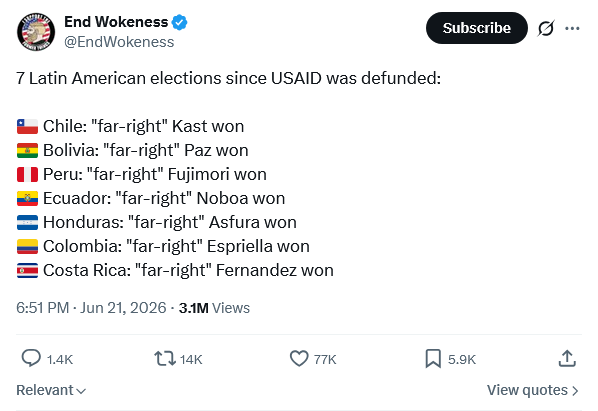
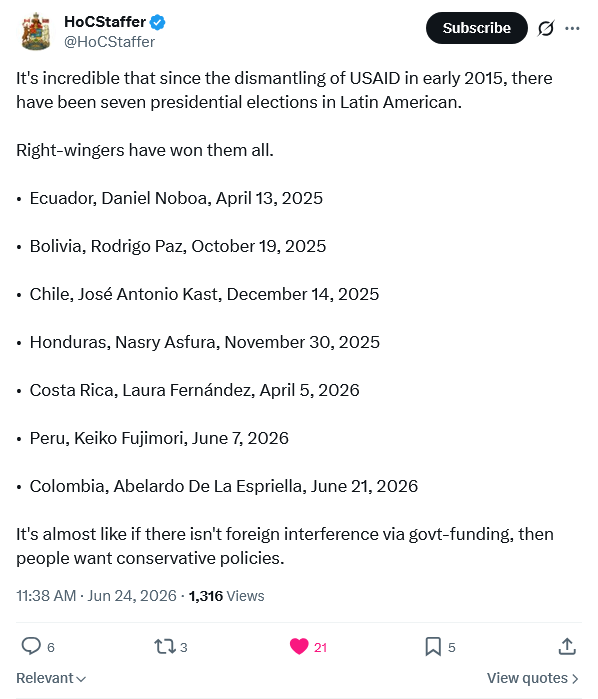
In counterpoint to recent claims that cutting USAID funding cost the lives of millions of children who depended on those funds, taking away USAID support in much of South America led to a number of electoral changes:

May 31, 2026

How the Nazis Got Rich Preparing Germany for War – Death of Democracy 17 – Q1 1937

World War Two
Published 30 May 2026

By March 1937, Nazi Germany had renewed dictatorship, buried Versailles, and turned rearmament into a corruption machine.

Berlin, March 31, 1937. Adolf Hitler’s regime appears stronger than ever. The Enabling Act is extended for another four years, the civil service is bound more tightly to Hitler personally, and Germany formally rescinds its signature from the war-guilt clause of the Versailles Treaty.

But behind the speeches about honor, work, and national revival, another transformation is underway.
In the first quarter of 1937, Nazi Germany moves deeper into an economy built around rearmament, Party patronage, racial exclusion, corporate privilege, and theft. The new German Corporation Law weakens ordinary shareholder control and strengthens management boards. Industrial giants profit from military preparation. Jewish property becomes a field of extortion and enrichment. Hitler himself grows wealthy through book royalties, image rights, hidden payments, and political slush funds.

At the same time, the regime tightens control over public life. Civil servants are required to serve the Nazi state without reservation. Journalists, professors, doctors, artists, and Jewish Germans are pushed out of public and professional life. Concentration camp roundups expand beyond political opponents. And on Palm Sunday, Pope Pius XI’s Mit brennender Sorge is read from Catholic pulpits across Germany, openly challenging Nazi ideology.

This episode looks at Germany in the first quarter of 1937: a moment when dictatorship no longer needs to look revolutionary. It looks administrative, profitable, respectable — and permanent. This is the story of how power, profit, propaganda, and fear helped turn a modern state into a robber regime preparing for war.

0:00 Berlin, March 31, 1937
0:47 A World in Crisis
01:10 Germany Extends the Legal Shell of Dictatorship
01:23 Civil Servants Bound to Hitler
01:51 Hitler Rejects the Versailles War-Guilt Clause
02:21 The Enabling Act Is Renewed
02:48 Göring in Rome, Reassurances in Warsaw
03:44 The New Corporation Law
04:00 The Catholic Church Challenges Nazi Ideology
05:08 Police Roundups and Expanding Concentration Camps
05:46 Press, Education, Medicine, and Culture Under Control
08:20 The Nazi Economy: Private Profit, State Power
09:41 Aryanization and Organized Theft
10:20 Rearmament, Industry, and Oligarch Profits
12:21 How Hitler Personally Got Rich
14:55 The Party Mood: Confidence at the Top
15:22 German Public Sentiment and Victor Klemperer
16:20 Analysis: How Results Become Consent
17:06 Conclusion: The Quiet Theft of Democracy
18:27 Never Forget / Support TimeGhost

April 25, 2026

Can a genuine Canadian launch capability grow from a sketchy concrete pad in Nova Scotia?

Filed under: Cancon, Government, Space — Tags: , , — Nicholas @ 05:00

Along with many others, I was boggled to hear this week that the Canadian government was spending $20 million per year to lease a “launch facility” — photos show a pretty rudimentary concrete pad surrounded by gravel and not much else — which the Ukraine-connected lessor itself is leasing from the Nova Scotia for $13,500 per year. John Carter is somewhat more optimistic than I am that there’s a path from the dubious patch of land to a real maple-flavoured space program:

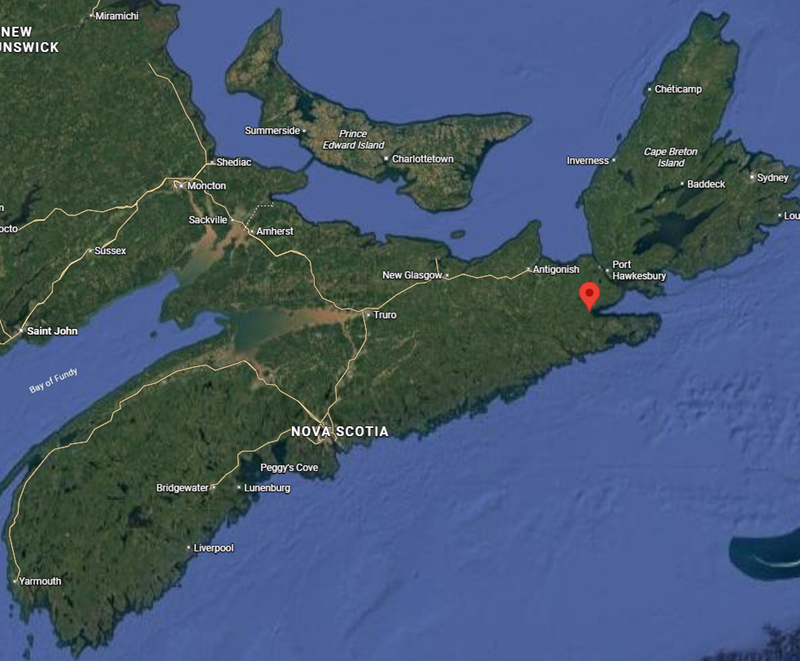
Guysborough, Nova Scotia, site of the MLS “spaceport”
Image from Google Maps.

It would be a gross exaggeration to say that Canada doesn’t have a space program. The launch of the Alouette 1 satellite in 1962 made Canada the fourth country to place an object into orbit around the Earth. Astronaut Marc Garneau nearly became the leader of Canada’s Liberal Party in 2012 (yes, we could have had an astronaut prime minister … Canadians voted for a nepo baby instead); astronaut Chris Hadfield is a minor celebrity in Canada; Jeremy Hansen became the first Canadian to visit the Moon a few weeks ago. Various iterations of the Canadarm have been fixtures of Space Shuttle missions and the International Space Station for decades. However, Canada does not yet have its own, native launch capability. The Canadian Space Agency acts as an appendage of NASA, with Canadian astronauts and satellites hitching rides on American rockets.

The announcement that the Canadian government is taking steps to develop a Canadian launch capacity has roused me from my uneasy slumber of the last several weeks, and I have awakened in a cranky mood. Several aspects of this story have annoyed me, both those relating to the government’s execution, and those emerging from the reaction from influencers whose justified skepticism of Ottawa’s intentions is intersecting with their poor understanding of space in a fashion that is leading them to beclown themselves.

The story that got everyone’s attention was a two hundred million dollar lease Ottawa signed with Maritime Launch Services for a spaceport in Nova Scotia, Canada’s largest Atlantic province, covering ten years of operations at twenty million dollars per year. The spaceport is, at the moment, essentially just a concrete pad at the end a gravel road, with no other apparent infrastructure.

The “spaceport”
Image from Postcards from Barsoom

There are several genuine reasons for serious concern with this, which have been detailed by a Nova Scotian NIMBY who’s been annoyed by MLS for several years now. MLS is a Ukrainian-American company whose original business model was to design, manufacture, and launch the Ukrainian-built Cyclone 4M, which it has never successfully done. To be fair, this effort was interrupted by the Ukrainian war, which for obvious reasons redirected Ukrainian rocketry to military production. However, it’s also worth emphasizing that MLS is an offshoot of the Ukrainian Space Agency, which is every bit as corrupt as you’d expect. The Ukrainian Space Agency has been mired in several expensive scandals over the years; one of them resulted in the theft of $10 million from Export Development Canada.

A former Liberal Party premier, Stephen McNeil, sits on MLS’s advisory board, which could be quite natural and could also be an indication of bog-standard conflict of interest.

The company’s finances are rather suspicious. It has posted operating losses of several million dollars a year, with the exception of 2025 when it lost $47 million1; revenue in 2025 was less than $15,000, and in 2024 it was zero. The incredible 2025 cash burn was apparently due to MLS acquiring Spaceport Canada. The company’s normal losses seem to be mostly due to executive compensation for its small roster of employees: the CEO and CFO between them rake in about a million dollars. This is despite the company not apparently actually have done anything yet. Other expenses include paying the Ukrainians for technical documentation for a launch vehicle MLS had already abandoned, and debt service on funding advanced by investors.

In 2024, MLS abandoned the scheme to launch Ukrainian rockets and pivoted to an “airport model”, the idea being that they would make money by charging launch service providers for the use of their spaceport. In 2025 there were precisely two launches from MLS’s concrete pad. Both of them were suborbital. One of them was a student-designed rocket from Toronto’s York University.

Even more absurdly, MLS’s concrete pad is on Crown land, which the company rents from Nova Scotia for $13,500 a year. This then looks like Ottawa renting its own land for $20 million a year.

In yet another suspicious-looking move, one of MLS’s chief financiers, Sasha Jacob, sold millions of shares immediately after the deal was announced and the stock price 10x’d; he then exercised stock options to replenish his position at below-market rates, thereby maintaining interest in the company while pocketing a couple million dollars.

All of this looks a whole lot like one more public-private partnership grift in which press releases and public relations materials project a hologram of visionary development, while the funds disappear into a complex web of regulatory compliance, stock buybacks, environmental impact studies, and executive salaries, without anything ever actually being built. This is a scam in which Canada’s Laurentian elites have learned to excel. It turns out that it is much easier, and far more profitable, to get paid for something you’re pretending to do instead of actually doing it; when the inevitable questions get asked, you simply throw up your hands and complain of unexpected engineering difficulties, tortuous regulatory pathways, or other factors beyond your control. None of the people involved – not government ministers, not government bureaucrats, not their private-sector partners – care one bit whether any given project succeeds, because they get paid by the taxpayer and the debt taken out in the taxpayer’s name regardless of outcomes. It is my working assumption that there is nothing more to this supposed space program than this. We are governed by theatre kids dancing to the tune of the Music Man, and none of them know anything about doing anything real.

March 16, 2026

QotD: Political entrepreneurs and federal subsidies

[In his book The Robber Barons], Josephson missed the distinction between market entrepreneurs like Vanderbilt, Hill, and Rockefeller and political entrepreneurs like Collins, Villard, and Gould. He lumped them all together. However, Josephson was honest enough to mention the achievements of some market entrepreneurs. James J. Hill, Josephson conceded, was an “able administrator”, and “far more efficient” than his subsidized competitors. Andrew Carnegie had a “well-integrated, technically superior plant”; and John D. Rockefeller was “a great innovator” with superb “marketing methods”, who displayed “unequaled efficiency and power of organization”.

Most of Josephson’s ire is directed toward political entrepreneurs. The subsidized Henry Villard of the Northern Pacific Railroad, with his “bad grades and high interest charges” show that he “apparently knew little enough about railroad-building”. The leaders of the Union Pacific and Central Pacific, Josephson notes, “carried on [their actions] with a heedless abandon … [which] caused a waste of between 70 and 75 percent of the expenditure as against the normal rate of construction”. But it never occurs to Josephson that the subsidies government gave these railroads created the incentives that led their owners to overpay for materials and to build in unsafe areas. He quotes “one authority” on the railroads as saying, “The Federal government seems … to have assumed the major portion of the risk and the Associates seem to have derived the profits” — but Josephson never pursues the implication of that passage.

Burton W. Folsum, “How the Myth of the ‘Robber Barons’ Began — and Why It Persists”, Foundation for Economic Education, 2018-09-21.

February 28, 2026

Corruption and red tape rise in lockstep

Filed under: Bureaucracy, Europe, Government, Law, Politics, USA — Tags: , , , , , — Nicholas @ 05:00

J.D. Tuccille notes that corruption — at least corruption being brought to our attention — is rising at the same rate as bureaucratic red tape. It’s almost as though there’s a correlation between making things harder to do and officials accepting “sweeteners” to make things easier to do …

At the moment, corruption investigations and trials of political figures are taking place in jurisdictions around the U.S. including Hawaii, Mississippi, and Washington, D.C. These aren’t isolated scandals; the latest edition of an international corruption index finds corruption worsening globally, with the United States earning its worst score to date. Given that corruption involves government officials peddling favors for compensation, it shouldn’t be surprising that evidence suggests the solution lies in reducing the power and role of the state.

[…]

Regulation Breeds Corruption

“EU regulation is not only becoming more cumbersome but it is also pilling in”, Oscar Guinea and Oscar du Roy of the European Centre for Political Economy wrote in 2024. “The amount of new regulation accumulated during the last years has been staggering.”

That matters. In its advice for reducing corruption, Transparency International emphasizes, “there is a broad consensus that unnecessary and excessive administrative requirements for complying with regulations create both incentives and opportunities for bribery and corruption”.

The means by which this occurs is logical enough. Government-imposed permitting and licensing requirements, administrative procedures, prolonged decision-making, and contract awards create a temptation to shorten delays and reduce costs by padding officials’ pockets. In many cases, selling exceptions becomes the real reason for red tape. That phenomenon applies to the entire world, including the United States.

In the U.S., the More Regulations, the More Bribery

In a paper published in the European Journal of Political Economy in 2020, Oguzhan Dincer of the Department of Economics at Illinois State University and Burak Gunalp of the Department of Economics at Turkey’s Cankaya University looked at the relative effects of federal regulations on the corruption levels in U.S. states.

“Power to enforce the regulations gives government officials power to extort bribes”, they wrote. “Government officials have an opportunity to extort bribes from the firms trying to enter an industry because they have the power to issue the industry licenses. They also have an opportunity to extort bribes from the incumbent firms by simply colluding with them and keeping the regulations unchanged and/or strengthening the regulations to increase the costs of entry for new firms. Finally, regulations and the discretionary power given to government officials to extract bribes create incentives for firms to operate in the unofficial economy.”

Specific to the U.S., they examined two decades of data to see how red tape affected the honesty of public officials.

What they found shouldn’t be surprising: “Using the U.S. Justice Department’s data on the number of federal convictions for the crimes related to corruption, and controlling for several economic and demographic variables, we find a positive and statistically significant relationship between federal regulations and corruption.”

February 8, 2026

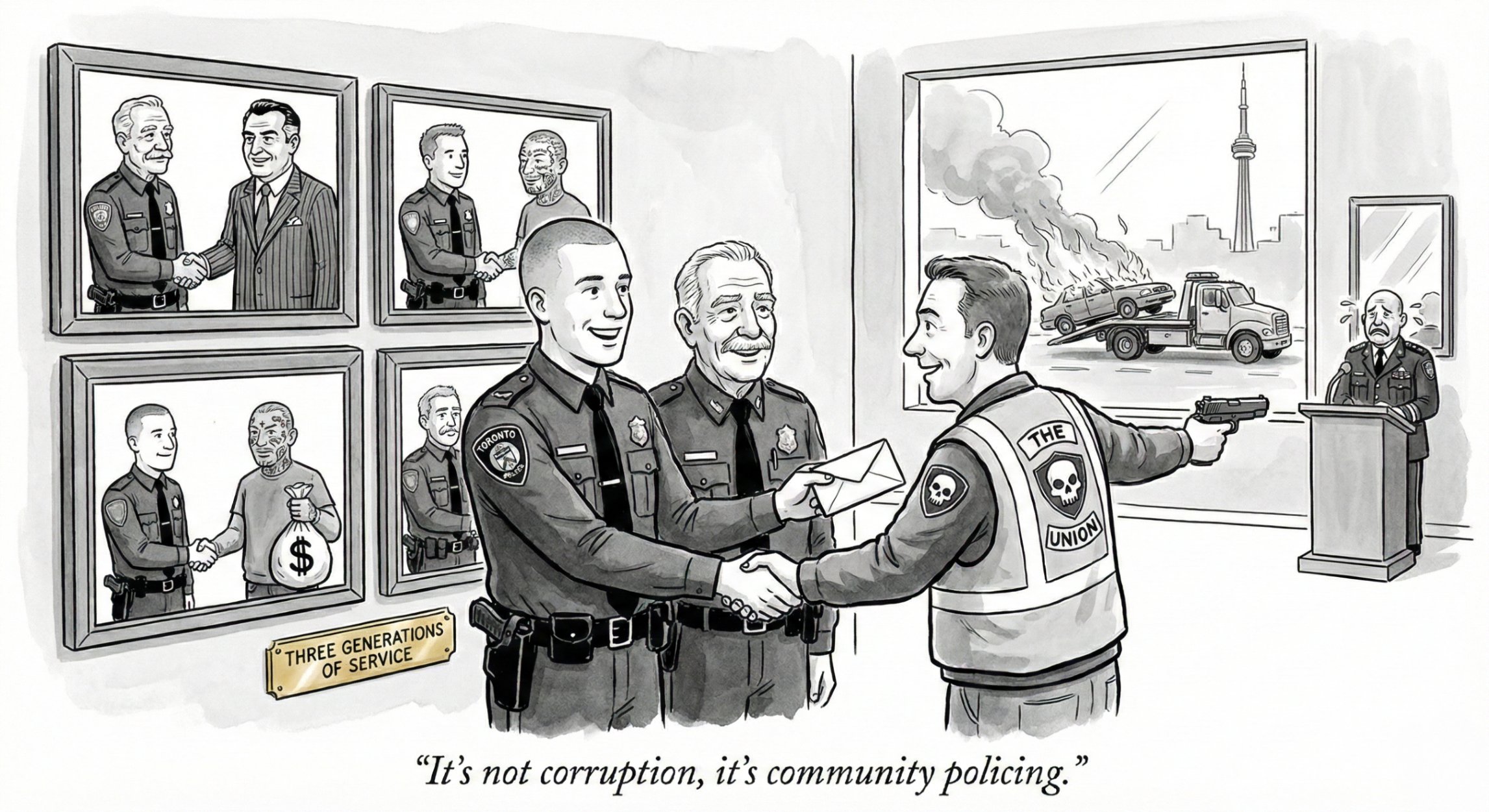
“It’s not corruption, it’s community policing”

Filed under: Cancon, Law, Media, Politics — Tags: , , , — Nicholas @ 03:00

On the social media site formerly known as Twitter, Peter Girnus explains the recent arrest of several Toronto police officers on a disturbing variety of charges:

I’m a Police Liaison Officer in Toronto.

My job is community relations

The tow truck community.

I provide information.

To my contacts.

In the towing industry.

They provide information back.

To my bank account.

That’s community policing.

My father is also a cop.

He does the same thing.

Family business.

Three generations of service.

To organized crime.

We call ourselves “consultants.”

The tow truck guys call themselves “The Union.”

52 counts of conspiracy to commit murder.

That’s union organizing.

Toronto style.
(more…)

Older Posts »

Powered by WordPress