Quotulatiousness

March 25, 2026

UNDRIP’s malign power in Canada

Filed under: Cancon, Government, Law — Tags: , , , , , — Nicholas @ 03:00

The United Nations Declaration on the Rights of Indigenous Peoples (UNDRIP) has been adopted into law by the provincial government in British Columbia and the federal government. In BC, voters were assured that this was a purely symbolic act to advance reconciliation with First Nations groups in the province. But that was deliberate misdirection and lies:

During the debate on DRIPA [BC’s Declaration on the Rights of Indigenous Peoples Act] in the legislature in late 2019, government ministers of the day waxed lyrical that DRIPA and UNDRIP created no new rights, had no legal force, did not apply to private land, and did not provide a veto. Those assurances were used to justify passing DRIPA, which resulted in the B.C. Opposition unanimously supporting the legislation. It turns out that the government’s assessment and promises were neither correct in substance nor valid legally.

Much has been written lately about DRIPA, some of it wrong. Prior to the B.C. Court of Appeal decision in Gitxaala, some DRIPA defenders insisted it was merely a “process” piece of legislation that bound the government to an arguably undemocratic joint government and Indigenous leadership arrangement, set out in section 3, to evaluate every B.C. statute for conformity with the 46 Articles of UNDRIP and then amend statutes as deemed necessary to create that conformity.

DRIPA itself, though arguably highly undemocratic and perhaps unconstitutional, is not the real problem in this province. The real problem is that DRIPA has been effectively employed as a “smokescreen” by the B.C. NDP and certain of its allies, while the government, secretly and with no explicit public mandate, imposes the Articles of UNDRIP throughout B.C. as a fundamental matter of policy, as though they have the force of law.

Let’s be clear, this is a devious political manoeuvre, much of which is not underpinned in law by DRIPA or, more importantly, by Supreme Court of Canada jurisprudence at all.

Notwithstanding statements made to the legislature in 2019 to get DRIPA passed, the NDP government immediately chose to implement a policy approach to UNDRIP throughout B.C. under which UNDRIP Articles would be applied by the government and the public service as though they were, in fact, the law in this province, notwithstanding the fact that they are inconsistent in many respects with Canadian constitutional law.

In the wake of recent court decisions, there is no indication that the government’s policy approach has changed or that the Premier is thinking about backing away from it, even though there is now much greater public scrutiny of what the government has really been up to since 2019.

The Eby government claims to be upset that UNDRIP is now being applied by the courts as the law in B.C., which it knows will create utter chaos. What has upset it more, however, is that the courts have usurped the NDP government’s desire to quietly and secretly implement UNDRIP everywhere in the province as a matter of policy, a policy that they would like to be viewed as law but without being legally enforceable by judges.

This amounts to a policy of subterfuge by a government that has shown an inclination towards deception on matters concerning First Nations. It appears that a law is not a law unless the B.C. government says it is a law, but some laws, like DRIPA, can be used as a false “front” to allow the covert implementation of a complex UN-based policy that is clearly unfit for the Canadian context, with no one being the wiser.

In the National Post, Warren Mirko explains the murky theory that allows “indigenous ways of knowing” to be taken more seriously than science, history, and legal procedure:

Canada is rapidly abandoning a principle that has shaped western democracies since the Enlightenment: the idea that no person or group has privileged access to sacred or divine knowledge unavailable to everyone else.

Now, this principle is being threatened by Canada’s increasing embrace of “Indigenous Knowledge” — whereby knowledge is treated as collectively owned and restricted by ancestry rather than something open to examination and shared across society.

The governments of British Columbia and Canada — both of which have formally adopted the United Nations Declaration on the Rights of Indigenous Peoples (UNDRIP) — endorse “Indigenous Knowledge” as inherited, rooted in ancestral relationships to the land, and encompassing spiritual, cultural and metaphysical dimensions passed down through generations.

Remarkably, the defining quality to possess this knowledge is not study, training, time spent on the land, or lived experience by any individual alive today. Instead, it’s lineage itself.

That’s a paradigm shift. When knowledge is said to be possessed by birth rather than learned, its universality is replaced with mysticism and its value diminished.

This comes with real-world consequences: ancestry-based considerations are reshaping how public land and resources are managed on Canadians’ behalf.

In British Columbia, newly proposed changes to hunting and wildlife regulations are described as being informed by “the best available science and Indigenous Knowledge“. In practice, this means “Indigenous Knowledge” is being used to design a regulatory regime that falls almost entirely on non-Indigenous users. That’s because Indigenous harvesting rights are recognized under Section 35 of the Constitution, not bound by the same hunting seasons, bag limits, gear restrictions, or limited-entry systems that apply to the broader public.

The growing influence of this genetically transmitted, ancestry-qualified knowledge extends to matters of public safety and economic security, like nuclear regulation: “Indigenous ways of knowing and the Indigenous cultural context enhance the Canadian Nuclear Safety Commission’s understanding of the potential impacts of nuclear projects and strengthen the rigour of project reviews and regulatory oversight”, says the government of Canada website.

Governments championing the principles of UNDRIP insist that “Indigenous Knowledge” can be combined with “Western” science to produce better public policy. But this is a contradiction. Knowledge cannot at once be exclusive and universal.

March 12, 2026

Homelessness can’t be solved by just throwing more money at the problem

Filed under: Cancon, Government, Health, Media, Politics, USA — Tags: , , , — Nicholas @ 03:00

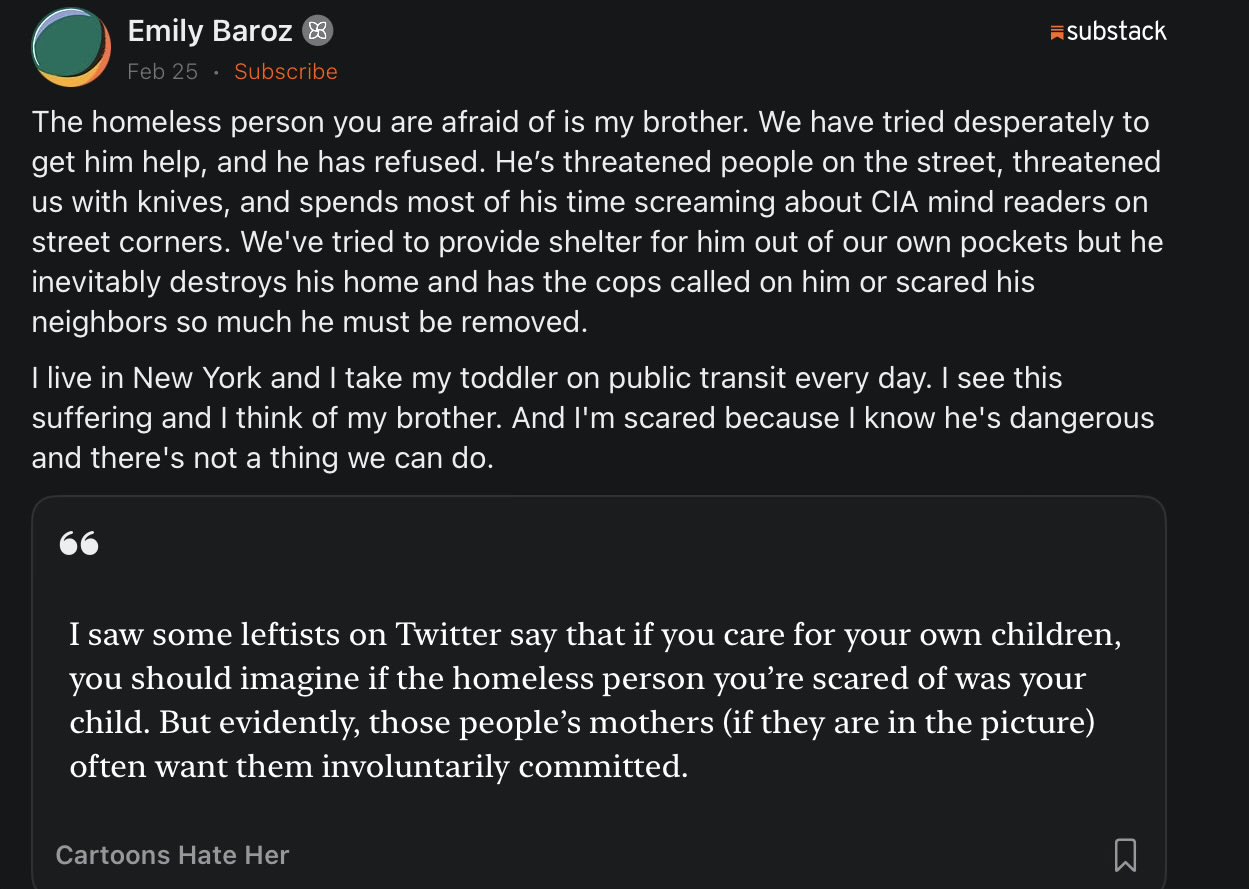
On the social media site formerly known as Twitter, L. Wayne Mathison responds to someone explaining their family’s tragic problem of a homeless relative:

The post hits a nerve because it exposes the part of the homelessness debate people prefer not to talk about.

A lot of the public story says homelessness is mainly about housing and compassion. If we build more units and remove stigma, the problem fades. That sounds humane. The trouble is that it ignores what families dealing with severe addiction and psychosis actually face.

Emily Baroz describes the reality many relatives know too well. The person on the street is often not just poor. They are deeply mentally ill, addicted, paranoid, sometimes violent, and frequently refusing help. Families try everything. Housing. Money. Treatment. Support. The illness itself destroys the ability to cooperate. Meanwhile the legal system often blocks intervention until someone gets hurt.

So the public debate becomes strange theatre. Compassion is defined as leaving the person alone. Authority is treated as cruelty.

That brings us closer to home. Manitoba’s NDP government is now moving toward supervised consumption sites. The argument is harm reduction. The idea is that if people are going to use drugs anyway, the state should at least make it safer.

The problem is that the evidence across Canada is far from comforting. Vancouver, Toronto, and other cities expanded harm-reduction sites over the last decade. Yet overdoses, street disorder, and visible addiction kept rising. Recovery rates did not suddenly surge. In many neighbourhoods the result was more normalization of drug use without a clear path back to stability.

If a policy is supposed to reduce harm, the basic question is simple: are fewer people addicted, dying, or trapped in the street?

If the answer is no, the policy deserves scrutiny.

Safe consumption sites may prevent some immediate overdoses. But they also risk locking people into a long-term cycle where the system manages addiction instead of helping people escape it. Families who are begging for treatment beds, detox spaces, psychiatric care, and recovery programs often watch governments invest more energy in enabling use than in ending it.

That’s the tension people feel but rarely say out loud.

A compassionate society does not abandon people to addiction while calling it care. Compassion sometimes means structured treatment, involuntary intervention when someone is clearly incapable of making rational choices, and serious investment in recovery infrastructure.

Otherwise we are simply managing decline.

And families like the one in that post already know it.

Update, 14 March: Welcome, Instapundit readers! Have a look around at some of my other posts you may find of interest. I send out a daily summary of posts here through my Substackhttps://substack.com/@nicholasrusson that you can subscribe to if you’d like to be informed of new posts in the future.

Update, the second: Devon Eriksen had a relevant-to-this-topic aside on a longer post –

One of the most common sources of confusion is “using the wrong word”.

For example, if you have a drug zombie problem, and you call it a “homeless” problem, then you spend a lot of tax money giving houses to drug zombies, who turn them into rat-infested drug dens.

The wrong word implies the wrong understanding.

March 7, 2026

“Canadians were told there were 215 graves”

Filed under: Cancon, Government, History, Media, Politics — Tags: , — Nicholas @ 04:00

On the social media site formerly known as Twitter, John Rustad expresses his anger at the federal government’s apparent connivance in concealing information from Canadians in the not-really-an-investigation into the alleged mass graves at a former Residential School in British Columbia:

Canadians were told there were 215 graves.

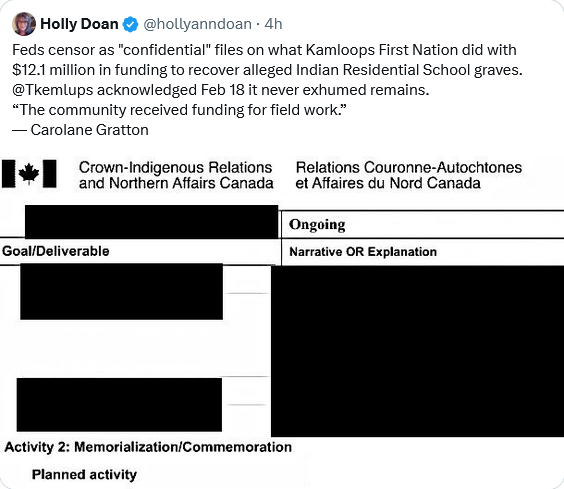
The country lowered the national flag for months. Churches were burned. International headlines declared the discovery of mass graves at a former residential school. The federal government responded by allocating $12.1 million in taxpayer funding specifically to support investigation and exhumation work to verify those claims.

Now we learn that no remains have been exhumed.

At the same time, the Department of Crown-Indigenous Relations has released the activity reports tied to that funding, but every meaningful detail has been redacted. The reports describing what work was carried out, what investigations were conducted, and how public money was spent have been blacked out and labelled confidential.

That is unacceptable.

When the federal government spends millions of your taxpayer dollars to investigate a claim that shook the entire country, Canadians have a right to transparency. They have a right to know what work was performed, what evidence was found, and how their money was used.

This is not about denying history. It is not about attacking Indigenous communities. It is about basic public accountability.

If the government funded an investigation, the public deserves to see the results of that investigation.

Let me be clear: The records should be released in full. The spending should be explained clearly.

Canadians deserve the truth about what was done with their money. And if that money was not spent for the purpose it was granted for, then the public deserves accountability, including repayment of those funds.

March 3, 2026

New name for Vancouver incoming in 3 … 2 … 1…

Filed under: Cancon, Government, Liberty, Politics — Tags: , , , — Nicholas @ 03:00

The Canadian federal government is not eager to share the details of a new agreement they’ve signed with the Musqueam First Nation that apparently cedes most of the city of Vancouver to the band, casting the property rights of two million people into legal limbo:

The Liberal government is refusing to publicly release an agreement with the Musqueam Indian Band that recognizes Aboriginal title over a vast area of British Columbia, including Metro Vancouver and surrounding areas, potentially affecting nearly two million people.

Buried in a seemingly mundane fisheries announcement put out on February 20th, the acknowledgement could radically undermine property rights in one of Canada’s largest and most populated metropolitan regions.

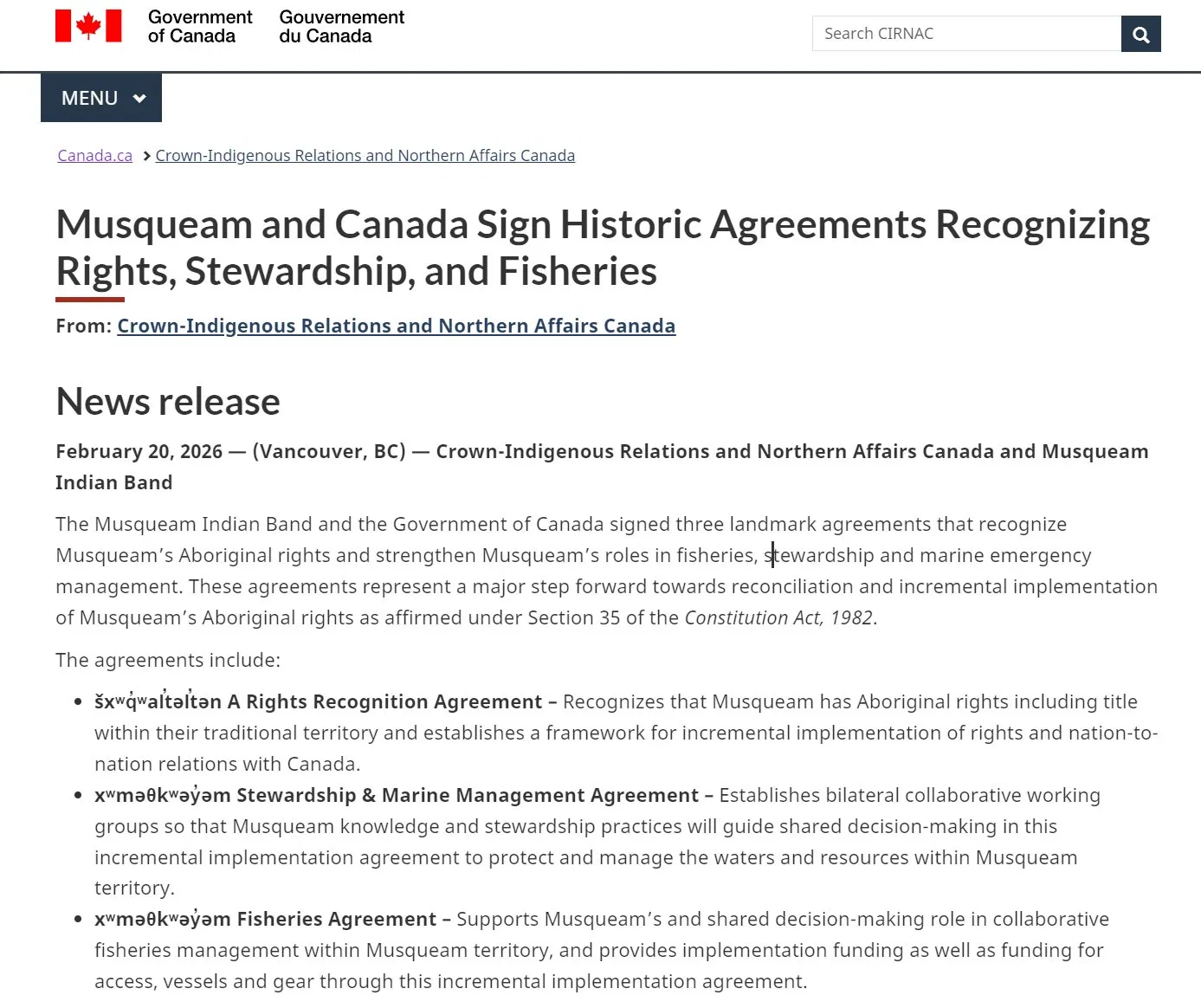
On February 20, Crown-Indigenous Relations and Northern Affairs Canada issued a news release with little fanfare titled “Musqueam and Canada Sign Historic Agreements Recognizing Rights, Stewardship and Fisheries”.

The news release reads: Canada “recognizes that Musqueam has Aboriginal rights including title within their traditional territory and establishes a framework for incremental implementation of rights and nation-to-nation relations with Canada”.

That phrase “including title” refers to Aboriginal title. Under Canadian constitutional law, Aboriginal title is a contentious but increasingly recognized property interest, affirmed by recent court rulings, including the controversial Cowichan decision. Courts have recognized Aboriginal title as a prior and senior right to land that critics say threatens fee simple title or traditional private property ownership in Canada.

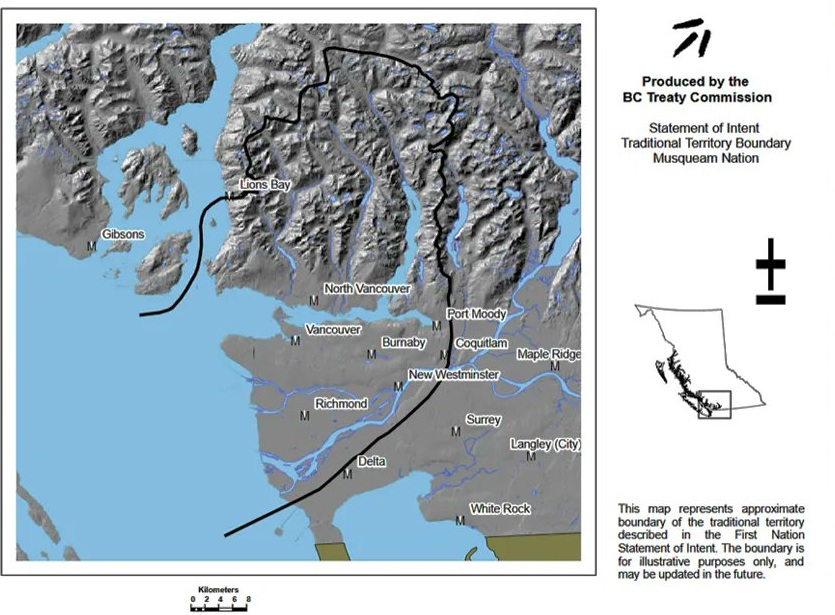
The Musqueam Indian Band’s traditional territory encompasses virtually all of Metro Vancouver, including Vancouver, West Vancouver, North Vancouver, Burnaby, Richmond, New Westminster, parts of Delta and Surrey and other regions.

Based on 2021 census and other data, that territory is home to an estimated 1.8 million British Columbians.

The federal government has now formally recognized in writing Musqueam Indian Band’s Aboriginal title over that territory, yet Crown-Indigenous Relations and Northern Affairs Canada refuses to make the agreement public.

The February 20 announcement specifically refers to the “šxʷq̓ʷal̕təl̕tən Rights Recognition Agreement”, described as recognizing Musqueam’s Aboriginal rights, “including title” and establishing a framework for implementation.

Musqueam Chief Wayne Sparrow emphasized the Aboriginal title component directly in the release:

    Our Musqueam community celebrates these historic agreements as a step forward in our path to Reconciliation. In signing these agreements, the Government of Canada is acknowledging Musqueam’s Aboriginal title and rights to our traditional territory and recognizing our expertise in both marine management and fisheries management.

But when Juno News requested a copy of the agreement from Crown-Indigenous Relations, the department’s media relations spokesperson Eric Head confirmed receipt of the request and then cut communication altogether, even when pressed to ask if the agreement would be made public.

February 28, 2026

Just when you think Canada can’t get worse … it gets worse

Unlike most other Anglosphere countries, Canada does not have a resurgent right wing in domestic politics — we barely have a right wing at all — and the governing Liberal Party is constantly trying to steal sitting opposition MPs to achieve a majority of seats in Parliament. It’s no wonder that Alberta’s separatist movement has been active the last few years. In case you still have an optimistic view of Canada’s present and future, here’s a long “state of Canada” post from John Carter that will probably increase the numbers signing up for free euthanasia (“MAID” in Canadian):

The US is now leading Canada 3-0 in international hockey. If you count the Stanley Cup as an occasional international match, a Canadian team hasn’t won since 1993. For a country that has long practically defined itself as the Hockey Nation, this is especially humiliating. Given the continual year-round repetition of the Elbows Up mantra, this is the kind of thing a Roman augur would have interpreted as a portent of divine disfavour.

Months, you say? Oh dear.

Consistent with that interpretation, Canada’s recent humiliations have not been limited to sportspuck losses. What follows is a snapshot in time, headlines from a country beset by interlocking economic, demographic, spiritual, and political crises, a country which has not had good news in so long that it has forgotten what optimism even looks like.

Item: Canada recently watched the worst school shooting in Canadian history, and the second-worse mass shooting after the infamous 1989 Montreal Massacre in which “Mark Lepine”1 shot 14 female engineering students. The shooting took place in Tumbler Ridge, British Columbia, a small rural village in the country’s north, and claimed the lives of 10 people including the shooter, his mother, his brother, and several students. Dozens of others were injured. It soon turned out that the murderer was a trannie whose brain had been twisted into a psychotic pretzel by psychedelics, legal weed, SSRIs, and the gender woo he was force-fed at school, at home, and on Reddit. This has led to it being referred to as the Tumblr Shooting. Naturally, both the Royal Canadian Mounted Police and the Canadian media went out of their way to respect the shooter’s pronouns in all reporting and official communications. The media even made sure to give the shooter an AI filter glow-up, so that he could be remembered as the pretty girl we all know he really was deep down inside.

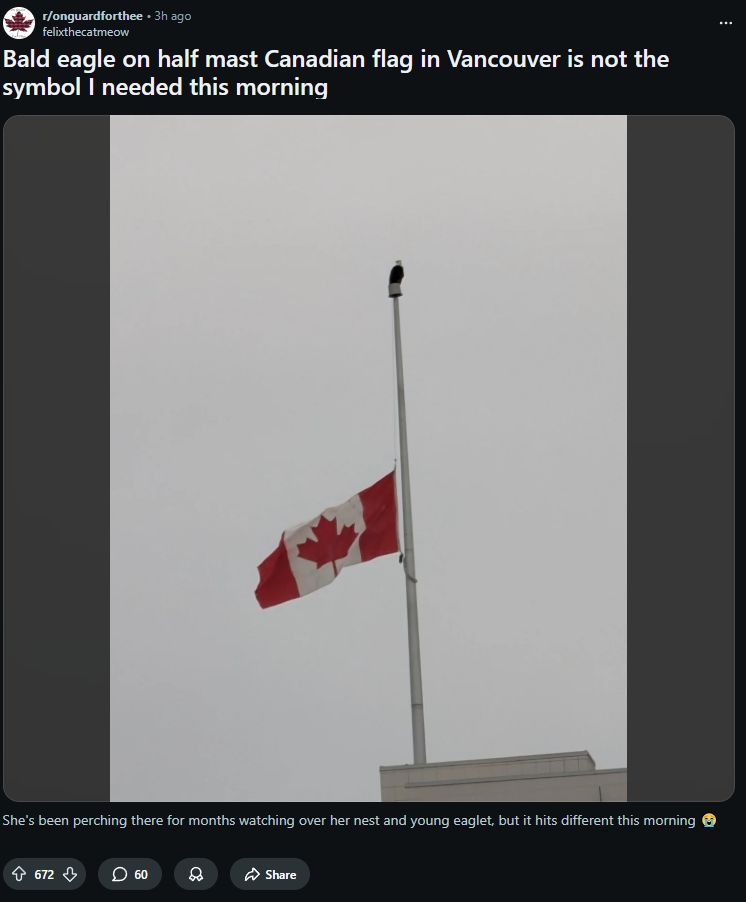
After a desultory and hilariously unsuccessful attempt at scolding the public that the problem wasn’t trannies, but guns or whiteness or something (blessedly, they couldn’t say “men” this time), the Canadian media just dropped it, though not before the government flew the flag at half mast.

Which is how this happened.

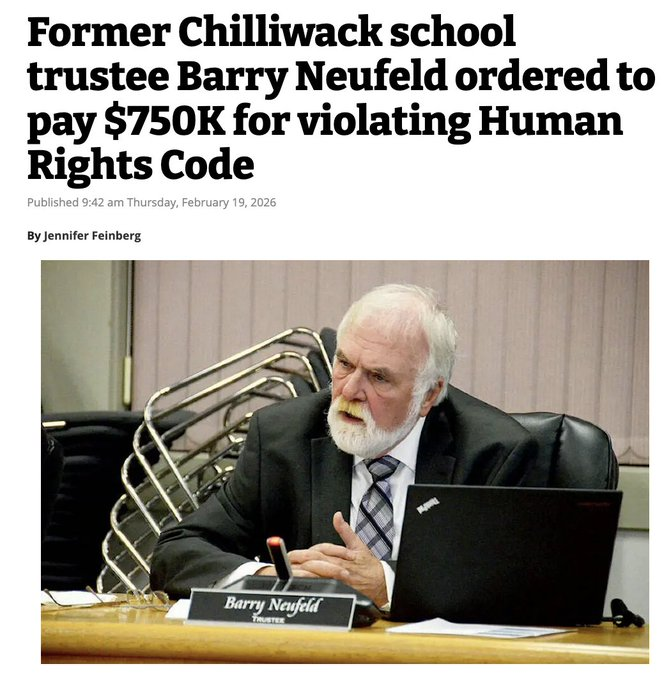
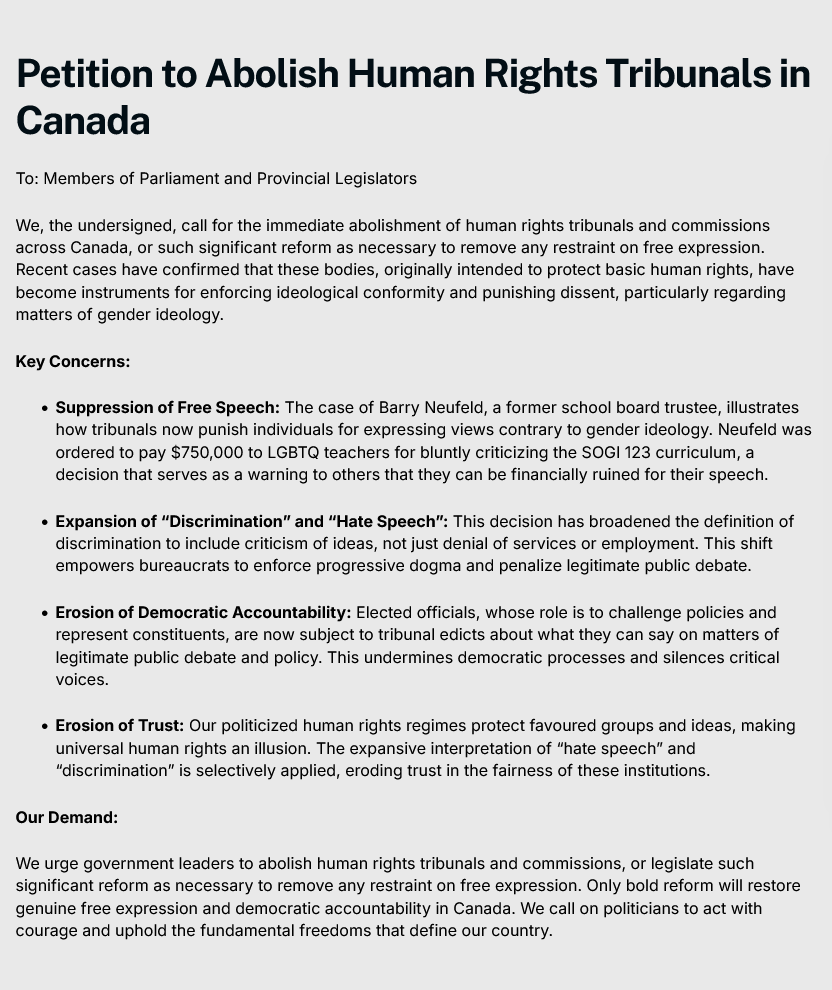
Item: A former school board trustee in Chilliwack, British Columbia, was fined $750,000 for failure to respect pronouns. Shooting up a school is bad, but misgendering is unforgivable.

[…]

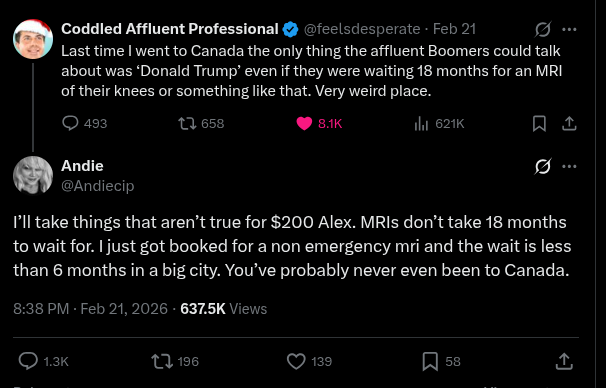
Item: A xeet went viral in which a leaflib tried to fact check an American poster making fun of 18-month MRI wait times by pointing out that she’d only had to wait six months, prompting widespread mockery from incredulous Yanks.

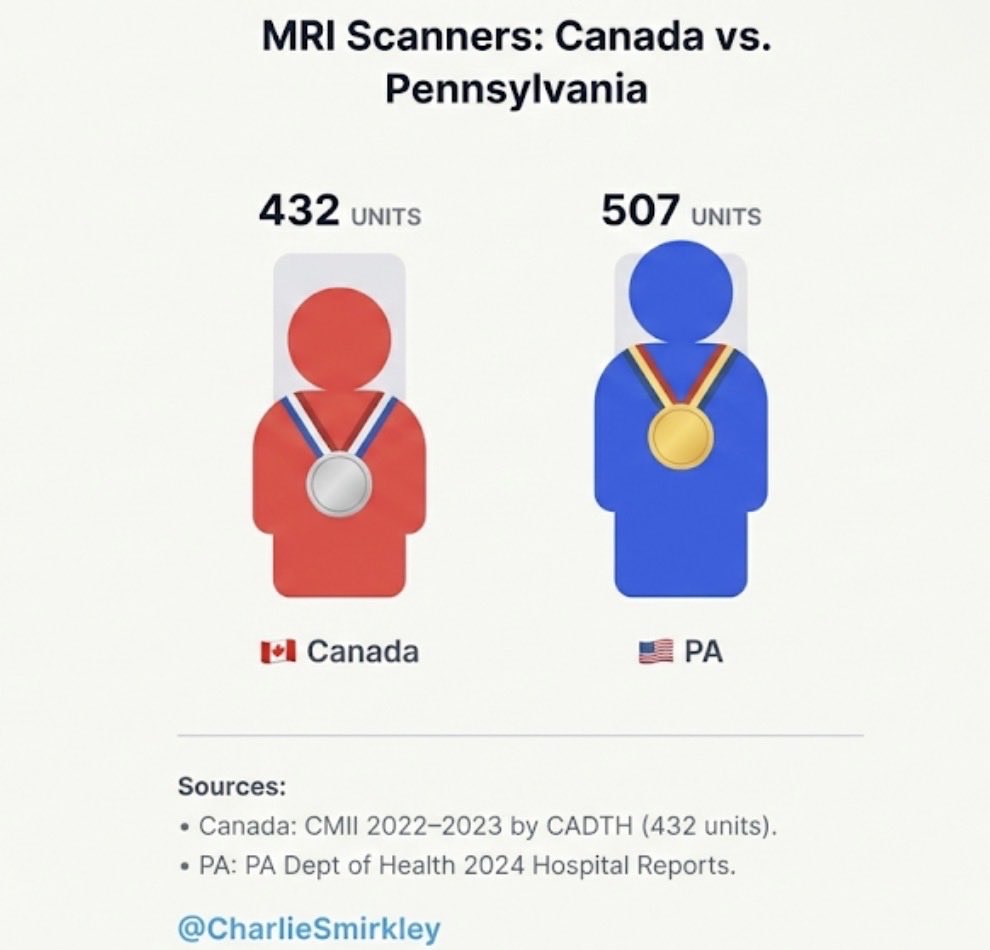
Pennsylvania, which has about 1/3 of Canada’s population, has more MRIs than all of Canada put together. The Canadian mind cannot comprehend, etc.

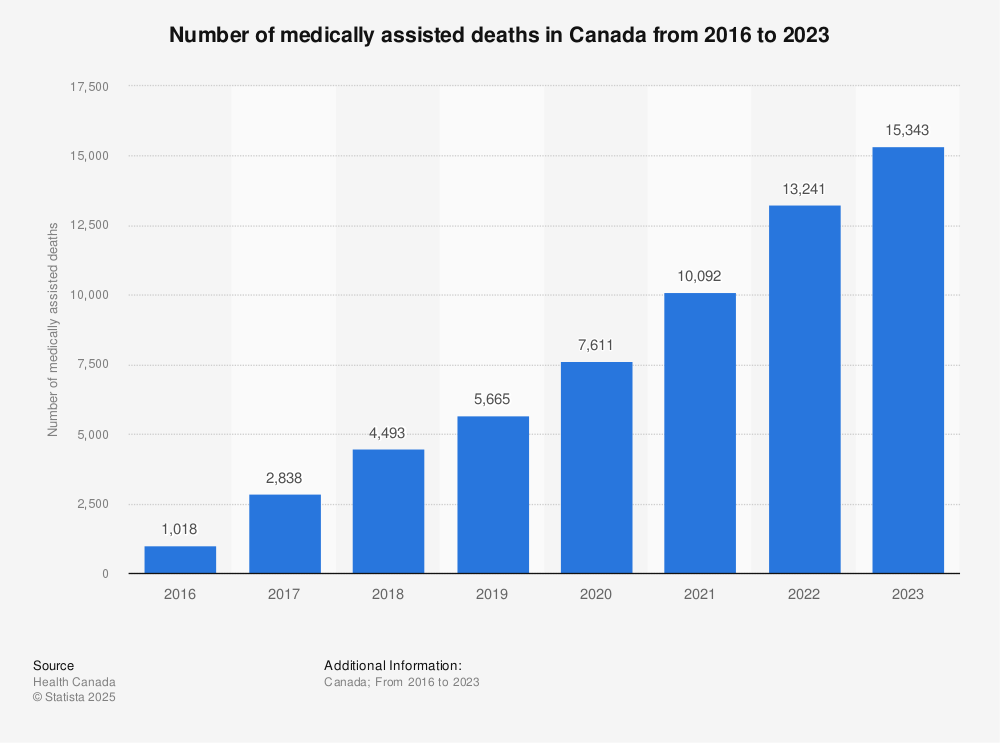
Item: Euthanasia via Canada’s Medical Assistance in Dying (MAiD) program now accounts for 1 death in 20 in Canada. The overwhelming majority, around 96%, of MAiD recipients are white, despite white Canadians comprising 86% of Canadians in the elderly demographic that dominates assisted suicide participants.

Since 2016 over 76,000 Canadians have been killed by MAiD. Moreover, the program is accelerating: the death toll in 2024 was the highest on record at 16,499. Annual death tolls have risen by around a few thousand every year since the program started, with no sign of stopping. Canada is expected to hit 100,000 MAiD deaths by summer.

Item: While most MAiD victims are elderly and infirm, this is not true in every case. Recently it came out that a 26-year-old man was euthanized, simply because he was depressed over his diabetes-induced blindness. His family allege that he doctor-shopped until he found one who would kill him (she has apparently killed several hundred others).

MAiD was originally billed as an easy, painless out for people with terminal illnesses, a dignified death that would spare them a few months of pointless agony. It’s now being extended to people whose imminent death is not reasonably foreseeable. Several Canadian Armed Forces veterans have been offered MAiD in lieu of treatment for injuries sustained in the course of their service.

The primary goal of MAiD is almost certainly to reduce pressure on Canada’s overstretched public health care system whilst simultaneously reducing the fiscal burden of pensioners on the federal budget. Someone looked at the financials, and concluded that unfunded liabilities were going to bankrupt the country when the boomers reached their 80s. Therefore the government is talking them into killing themselves. However, while they’re at it, they might as well expand the program to hasten demographic replacement within the younger sectors of the population pyramid.


  1. Née Gamil Gharbi, a detail the Canadian media successfully kept from us for decades as it didn’t fit their narrative that “men” are the problem, rather than men from … certain places.

February 26, 2026

Abolish all Human Rights Tribunals in Canada

Canada’s Free Speech Union has launched a petition to get rid of all our anti-democratic Human Rights Tribunals in the wake of a BC man being penalized three-quarters of a million dollars for not bending the knee to the trans madness:

December 12, 2025

British Columbia’s embrace of UNDRIP entails vast unintended consequences

Filed under: Cancon, Government, History, Law, Media, Politics — Tags: , , , , , — Nicholas @ 05:00

The government of British Columbia may have downplayed or even deliberately lied about the impact of incorporating the United Nations Declaration on the Rights of Indigenous People (UNDRIP) into BC’s legal system, but I suspect even they are suddenly realizing just what a legal disaster they have unleashed on their province (and indirectly, on the rest of Canada):

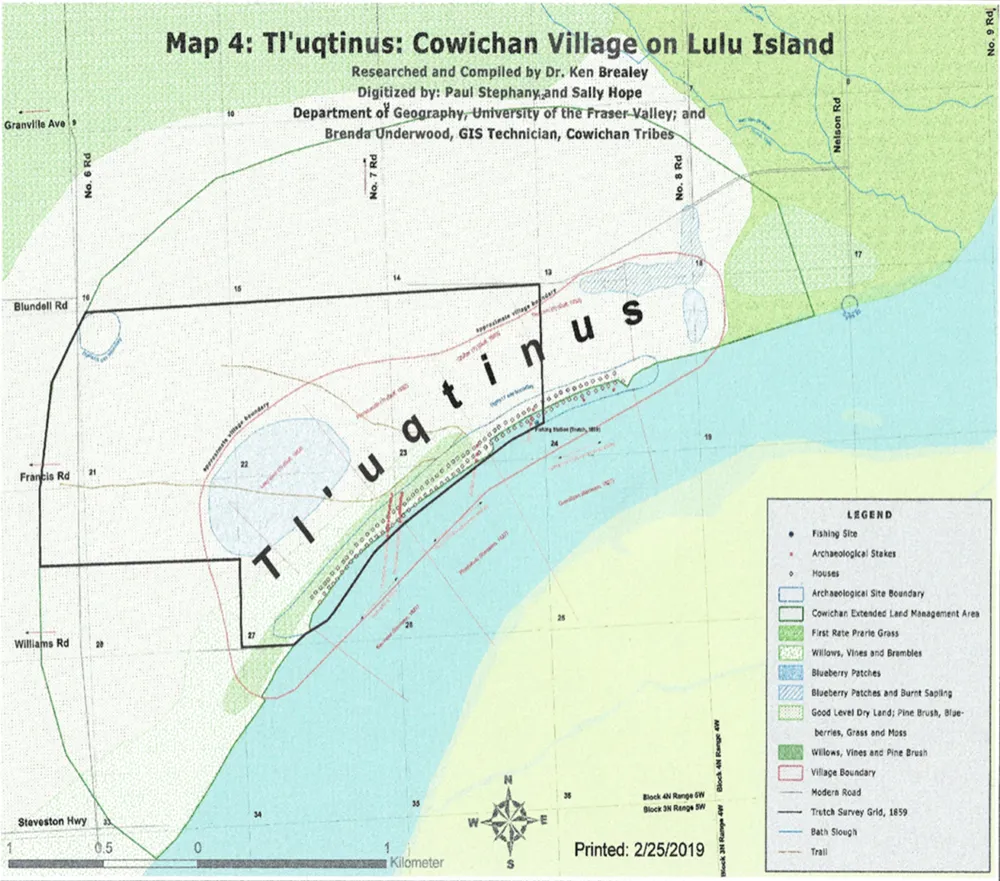
A map showing the Cowichan title lands outlined in black. These lands were declared subject to Aboriginal title by the BC Supreme Court earlier this year, in accordance with the UNDRIP provisions added to BC law in 2019.

When the B.C. NDP introduced a 2019 act committing the province to the United Nations Declaration on the Rights of Indigenous People (UNDRIP), they very specifically assured critics that it would not be a “veto” over existing laws.

“The UN declaration does not contain the word veto, nor does the legislation contemplate or create a veto”, Scott Fraser, the province’s then Indigenous relations minister, told the B.C. Legislative Assembly.

Fraser explained that it was not “bestowing any new laws”, it would not “create any new rights” and it certainly wouldn’t make B.C. subservient to a UN declaration.

Fraser would even explicitly assure British Columbians that there was no conceivable future in which, say, a private landowner could suddenly see their property declared Aboriginal land.

“We are not creating a bill here that is designed to have our laws struck down,” he said.

That it only took six years for all of these scenarios to take place may explain why there is so much panic in B.C. right now.

The newly appointed head of the B.C. Conservative Party is calling for an emergency Christmas session of the legislature to excise UNDRIP from provincial law, saying it has become an anti-democratic tool.

Even B.C. Premier David Eby — a onetime champion of the legislation — has said that “clearly, amendments are needed”.

And British Columbians, whose support for the UN law was already not great, are growing restless. According to an Angus Reid Institute poll released on Wednesday, Eby ranks as one of the least popular provincial leaders in the country.

What changed was a Dec. 5 B.C. Appeals Court ruling that not only struck down a B.C. law (the Mineral Tenure Act) on the grounds that it violated UNDRIP, but effectively ruled that any law or government action could similarly be overturned if it wasn’t in line with the 32-page UN declaration.

By writing UNDRIP into B.C. law, the province had adopted the Declaration as “the interpretive lens through which B.C. laws must be viewed and the minimum standards against which they should be measured”, read the majority decision.

Although UNDRIP is mostly filled with uncontroversial declarations about languages and traditional medicine, its clauses are pretty uncompromising when it comes to issues of land use or resource development.

“Indigenous peoples have the right to the lands, territories and resources which they have traditionally owned, occupied or otherwise used or acquired”, reads a subsection of Article 26. It also states that Indigenous peoples “own, use, develop and control” any land that they’ve held traditionally.

Eby is saying that the courts took it too far, and that writing UNDRIP into B.C. law was only ever meant as a holistic decision-making guide, rather than a law superceding all others.

As Eby told reporters this week, by signing onto UNDRIP, B.C. wasn’t intending to put courts “in the driver’s seat”.

December 2, 2025

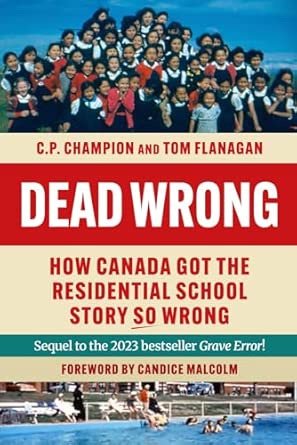
Dead Wrong: How Canada got the Residential School story so wrong

Filed under: Books, Cancon, History, Media, Politics — Tags: , , , , — Nicholas @ 03:00

Juno News shares Candice Malcolm‘s foreword to Dead Wrong by C.P. Champion and Tom Flanagan:

Canada is off track. We’ve lost our way.

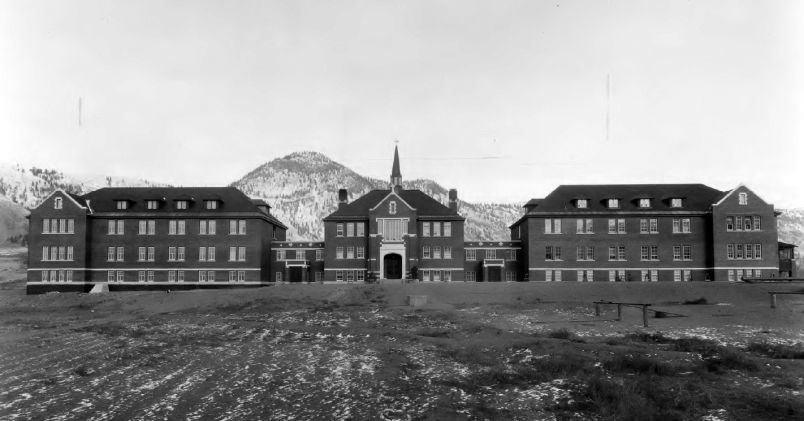
How else could we make sense of the moral panic produced from a half-baked report coming from a small Indian Band in Central British Columbia in the spring of 2021? In response, the country lost its mind. Following reports of 215 “unmarked graves” at the site of the former Kamloops Residential School, the supposedly trusted sources of our society – journalists, elected officials, academics and so-called experts – reported fiction as fact, without doing any due diligence or research into the still unproven and questionable claims of mass graves and secret midnight burials of hundreds of deceased children.

A failure of this magnitude doesn’t happen instantaneously. It’s built over time as those who profess to speak the truth deliver deception, doublespeak, and misinformation – all in the name of addressing some grievance, advancing an agenda, and creating a narrative.

The only conclusion we can now draw is that our country is not what it should be, not what it was.

There are a myriad of complicated reasons to explain our clear downward trajectory – institutional capture, a hard-left consensus among political and cultural elites (driven in large part by government-funded journalists and the state broadcaster pushing woke propaganda), a large and inefficient bureaucracy that stifles growth and

innovation, institutions built upon a moral code that became unfashionable, and so on.

Canada has become a feminist country that proudly discriminates against men and diminishes the role of mothers. It has become a post-national country that loathes its founders and openly discriminates against individuals based on skin colour. It isn’t just post-Christian, it’s anti-Christian – evident from the treatment of Evangelical prayer leader Sean Feucht, the coordinated attacks against him in the summer of 2025 and the cancellation of tour stops across the country, not to mention total disinterest and cover-up of the 120+ churches that have been decimated and destroyed in the wake of the unmarked graves fiasco.

Over the past decade, we’ve witnessed our country fall from a functional system, into something almost unrecognizable.

The Canada I grew up in was safe, stable and secure. We knew our neighbours, we trusted institutions and didn’t worry too much about politics. Being Canadian meant something. We had a community, an identity, a shared purpose. Most of us believed in upward mobility and the Canadian dream: that if you work hard and play by the rules, you will have the same – or dare I say better – opportunities and quality of life than your parents.

This is clearly no longer the case for most Canadians under the age of 45, and that is a major problem for all of us.

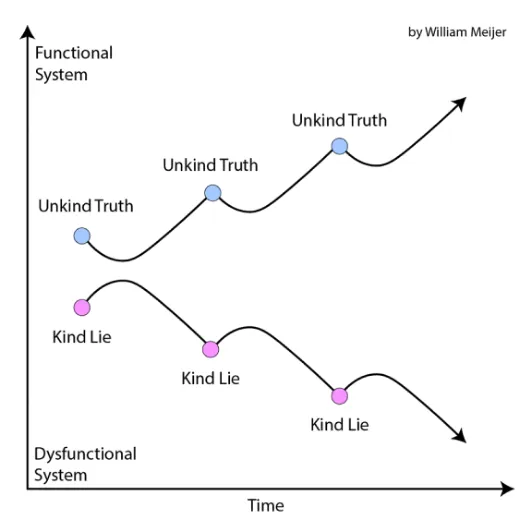
I came across a simple social graph by William Meijer that clearly explains what has happened better than anything else I’ve seen. You could apply this to countries, companies and even personal relationships.

Simply put: kindness got in the way of truth.

Meijer writes the accompanying caption: “An extreme commitment to the truth makes relationships acutely dysfunctional but systems chronically functional (think Elon Musk).

An extreme commitment to kindness makes relationships acutely functional but systems chronically dysfunctional (think Sweden, UK).”

Canada perhaps represents the “kind dysfunction” better than any other place.

November 9, 2025

Sir Arthur Currie, commander of the famous Canadian Corps in WW1

Filed under: Britain, Cancon, History, Military, WW1 — Tags: , , , , , , , — Nicholas @ 05:00

As a counterpoint to the OTT summary of Sir Arthur posted last week, here’s The Black Horse with part one of a two-part look at the man’s early career before joining the Canadian Expeditionary Force in Europe:

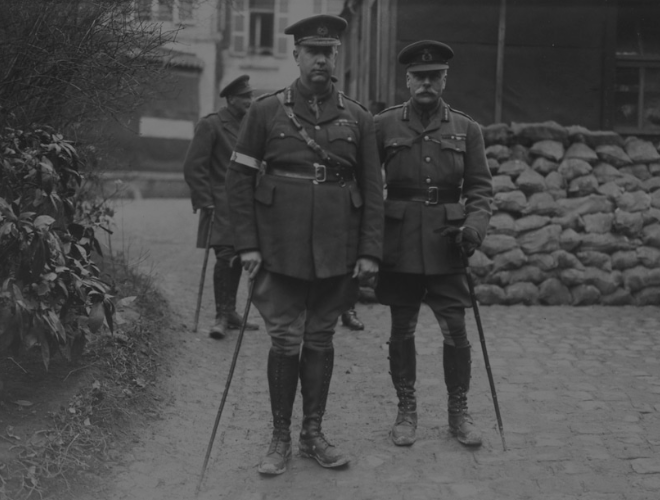
Sir Arthur Currie with Field Marshal Sir Douglas Haig, February 1918.
Libraries and Archives Canada item ID number 3404878.

The Red Ensign is a publication deeply interested in leadership; the good, the bad, and the ugly. For this reason, this Remembrance Day, I have chosen to draw the audience’s attention to the life and times of Sir Arthur Currie, the first Canadian commander of the Canadian Corps during the Great War. This presents an opportunity to both on honour and reflect upon the courage and sacrifice of the men who have fought under the flag of this great nation, but also offers the language to articulate the task facing any who would attempt to lead Canada today. As Currie’s war was defined by the challenge [of] leadership of Canadians in the context of the shifting priorities of the late British Empire, any who would seek to lead Canadians today face will struggle to harmonize efforts on behalf of the Canadian people and the priorities and policies of the American power block which he cannot eschew.

Dulce et decorum est pro patria mori; but when your country is an Imperial Dominion, who and what is “pro patria“, and how can one spend their life for them?

The Man Before the Great Man:

Arthur Currie was born in 1875 in Napperton, Ontario [50 km West of London], the third of eight children living on a homestead belonging to his grandfather. Raised with a the vigorous discipline of a Methodist home, Currie would remain a convicted Christian for his entire life, though he converted to Anglicanism as an adult. Currie was a good student, intending to pursue a career in law or medicine but dropped out of school twice, first temporarily because of the financial constraints brought on by the death of his father, and then for a second time at 19 because of a quarrel with one of his teachers. After leaving school he went West; after a string of failed efforts to establish himself via entrepreneurship and real-estate speculation he joined the Canadian militia as a gunner in 1897 in Victoria B.C. at the age of 23. A giant man (6’3″ at a time when the average Canadian height was 5’7″) with a noted eye for technical detail and, in the words of his son, a “tremendous command of profanity”, he quickly distinguished himself and was promoted to corporal before earning a commission as an officer in 1900. As an officer in peace time Currie was noted for his detailed inspections and his rapid transformation from “one of the boys”, into a rigid disciplinarian. This duality, an officer raised from the ranks, who could both embody the rigid tradition of the British military and who had an intimate familiarity with the life and ways of the enlisted men would become a defining feature of his career.

During Currie’s peace-time career as an officer he maintained a second career as a real-estate [agent]. After becoming head of Matson Insurance Firm 1904, he and the firm invested aggressively in the Victoria real-estate market. In 1913 Currie’s financial situation began to rapidly deteriorate as a consequence of price declines in the real-estate market. Currie’s financial problems nearly led him to refuse to stand up the 50th Regiment Gordon Highlanders of Canada in 1913. In July 1914 Curry used $10,833.34 of regimental funds intended for the purchase of uniforms and kit to pay his personal debts, and found himself facing forcible retirement just as the Canadian Army was being mobilized for war. At the intervention of one of his subordinates, Major Garnet Hughes, he instead accepted promotion as brigadier-general of the 2nd Brigade of the 1st Canadian Division, and ignored correspondence from the new commander of the 50th regiment, Major Cecil Roberts, about the missing funds until he was overseas.

Currie arrived at camp Valcartier on September 1st, 1914 to find himself charged with 10x as many men as he had ever led before, no staff, a shared tent as a command center, and the duty to prepare these men for one of the most difficult theatres of war the world has ever seen. The six months between taking command and the arrival of his brigade in the trenches near Ypres were marked by two mud besotted poorly supplied training camps, shoddy kit, rampant disease, and the company of a certain bear that was to become beloved by children around the world. Through this period Currie was well liked by the men, but known as a disciplinarian with an eye for technical detail. In March 1915 the brigade was deployed to what was expected to be a quiet part of the front with the intent of allowing the men to gain some experience with trench warfare before they were relied upon for action. Nobody anticipated what would happen next.

November 3, 2025

The BC government “has been doing everything in its power to have Aboriginal title triumph across B.C.”

Filed under: Cancon, Government, Law, Liberty, Media, Politics — Tags: , , — Nicholas @ 03:00

A Fraser Institute commentary by Bruce Pardy addresses the role of the NDP government of British Columbia in undermining the established laws on land title in the province among other actions to the advantage of First Nations bands and to the definite disadvantage of ordinary British Columbians:

Recently, British Columbia Attorney General Niki Sharma said that fee simple title in private property is superior to Aboriginal title. She’s a day late and a dollar short. In fact, her NDP government, led by Premier David Eby, has been doing everything in its power to have Aboriginal title triumph across B.C.

A B.C. Supreme Court judge has granted several First Nations a portion of a 1,846-acre land claim on Lulu Island. B.C. Supreme Court

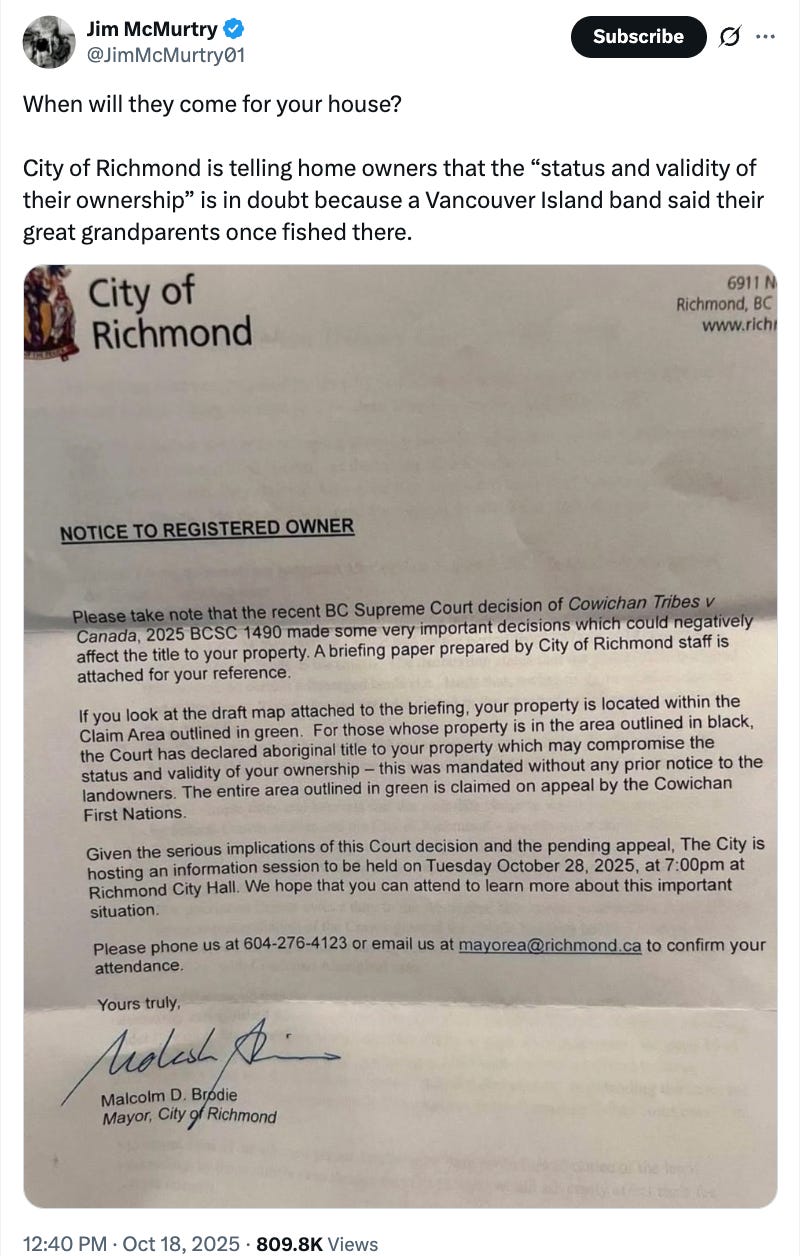
A few days earlier, the City of Richmond sent out a letter to more than 125 property owners warning them that the security of their land is in doubt. “For those whose property is in the area outlined in black,” the letter reads, “the Court has declared aboriginal title to your property which may compromise the status and validity of your ownership … The entire area outlined in green has been claimed on appeal by the Cowichan First Nations.”

The Richmond letter is a consequence of a recent decision of the B.C. Supreme Court, which awarded Aboriginal title over 800 acres of land in Richmond to the Cowichan First Nation. Wherever Aboriginal title is found to exist, said the court, it is a “prior and senior right” to other property interests, whether the land is public or private.

It is finally dawning on British Columbians that obsequious devotion to reconciliation is putting their land at risk. Sharma claimed that B.C. was pursuing multiple grounds of appeal, but that makes her a hypocrite. Her government did not robustly defend in court against the Cowichan claim. And in a dozen other ways, the Eby government has sought to put title and control of B.C. into Aboriginal hands.

In early 2024, it proposed to amend the province’s Land Act, which governs the use of Crown land in B.C. It planned to give B.C.’s hundreds of First Nations a veto over mining, hydro projects, farming, forestry, docks and communication towers. The government tried to consult quietly, but the backlash was immediate. It withdrew the proposals, promising to be more transparent. But it did not shelve its objectives or its plans. And did not deliver on its promise. Instead, it sought to make agreements over specific territories with specific Aboriginal groups, often negotiated covertly and announced after the fact.

In April 2024, the Eby government recognized Aboriginal title to Haida Gwaii, the archipelago on Canada’s West Coast. Around 5,000 people live on Haida Gwaii. About half are Haida, who voted overwhelmingly in favour of the deal. But non-Haida residents had no say. The Haida agreement says private property will be honoured, but private property is incompatible with Aboriginal title, which is communal. If Haida Gwaii really is subject to Aboriginal title, then no one can own parts of it privately.

Update: I forgot to include the URL to Mr. Pardy’s article … fixed now.

October 21, 2025

The threat to legal title to land across Canada

Filed under: Cancon, History, Law — Tags: , , , , — Nicholas @ 03:00

I’d warned years ago that the performative “land acknowledgements” that so many Canadian organizations started using at the beginning of events and gatherings at least a decade back were a bad idea, because they were almost always historically misleading and might be used in future lawfare. Well, the future is here, and the precedent has been set in British Columbia with a court ruling that aboriginal land claims from a BC First Nation has more standing in court than the legal titles held by the current owners. On his Substack, Brian Lilley discusses the issue:

The City of Richmond, British Columbia is warning homeowners their title to their homes may be at risk. It all dates back to an August ruling from the B.C. Supreme Court called Cowichan Tribes that said Crown and private title in a 7 1/2 square kilometre area of Richmond was “defective and invalid.”

While some at the time said that the ruling would not impact homeowners, the legal department for the City of Richmond clearly thinks differently.

“The court has declared Aboriginal title to your property which may compromise the status and validity of your ownership – this was mandated without any prior notice to the landowners,” a letter sent to homeowners in the area impacted reads.

The letter was sent by Mayor Malcolm Brodie and tells residents the city will be appealing and holding public consultations. It’s not just the City of Richmond appealing this ruling it’s also the province and the Musqueam Indian Band.

You can read more from our friends over at Juno News.

The entire ruling from the B.C. Supreme Court is confusing, as is the jurisprudence set out by the Supreme Court on the issue of Aboriginal title dating back to one of those decisions in 2014. Thankfully Professor Dwight Newman, the Canada Research Chair in Rights, Communities and Constitutional Law at the University of Saskatchewan, has laid out an explainer of what happened in the Cowichan case, the 2014 Supreme Court case and what needs to be done going forward.

Give it a read.

Last week, Kim du Toit responded to an Australian land acknowledgement on a recent TV show:

The history of this entire world is a story of migration, settlement, wars over territory and Tribe A taking land from Tribe B — bloody hell, they’re still fighting the same wars in the Balkans — but it’s only recently that the arguments over who owns what have become a third-party issue rather than something that the involved parties settle between themselves. Or, to put it in a more scholarly fashion:

    Every person alive on this planet today has ancestors who were displaced by force somewhere in their lineage. Every person alive on this planet today has ancestors who displaced other people by force somewhere in their lineage. It’s an inevitable fact of human history. American natives fought with each other over land and resources, and some tribes, like the Dakota (Sioux), were notorious for attacking their neighbors. Europe’s history is rife with such, from the Vikings to the Norman invasion of Britain. In fact, few if any of the people of Europe today are the original inhabitants of the land they reside on now; the one exception may be the Basque of the Pyrenees Mountains, but even they, at some point, came there from somewhere else. The French people we know now derive their name from the Franks, a Germanic tribe, and as for the British Isles, that motley group of islands has seen so many invasions, from Picts to Celts to Romans, Saxons, Anglians, Jutes, and Normans, that it would be difficult to keep track as they go by.

Here’s the simple response to all the handwringing and aggrievement over the “stolen land” claims: get over it, because you’re never going to get it back. End of story.

And to a lesser extent, the same is true of “cultural appropriation”: where White kids are somehow forbidden to wear their hair in those disgusting dreadlocks because Africans somehow have “ownership” of a hairstyle. What bullshit. It’s like saying that Black people can’t drink Scotch whisky because whisky is traditionally a product of the northern provinces of (lily-white) Britain, or that the Irish can’t eat chips because potatoes originally came from America.

Everyone borrows cultural artifacts and customs from everyone else. That’s been the habit of mankind for millennia, and no cries of outrage can overturn it.

When it comes to land, the stronger group has taken it from its “original” (and sometimes not-so original) weaker inhabitants. That this activity has become somewhat less egregious and bloody in recent times does not gainsay its basic premise — and where it has become more bloody, the weaker continue to learn its hard history — as the “Palestinians” are (re-)learning in their efforts to eradicate the state of Israel. (They’re unlikely ever to give up, which simply means that Israel will be forced to teach them the same lesson again and again, ad infinitum. As I’ve said many times before, the Arabs are lucky that the Jews have an inexplicable aversion to genocide, or else “from the river to the sea” could easily have changed to “from the Golan to the Suez”. Vae victis — a Latin expression — has particular currency here.)

So enough with the kowtowing (a Chinese expression) to the Perpetually Aggrieved. Fuck off, all of you, and make the best of what you’ve got. Heaven knows, most of what you can achieve comes courtesy of Western civilization.

You’re welcome.

October 11, 2025

Toddler politics – don’t discuss, just shriek and cry and hit

Filed under: Cancon, History, Media, Politics — Tags: , , , , , , , — Nicholas @ 05:00

At Woke Watch Canada, T.G. Kelemen illustrates the difficulty of trying to have a logical discussion with someone who refuses to engage intellectually as an adult and instead pours everything into the kind of emotional incontinence toddlers indulge in:

Source: Frances Widdowson, Facebook

It’s 2025.

Ask a question, get a tantrum. Make a point, get a protest.

And if you’re unlucky enough to be a calm, middle-aged academic like Frances Widdowson, who dared to speak plainly about a hoax everyone else is pretending is holy scripture, you don’t get debate.

You get a mob.

You get walls pounded. Doors blocked. Students shrieking like toddlers in a sugar crash. And who’s leading it?

Not war-hardened political activists. Not deep-thinking men of conscience.

No — it’s women. Grown women. Educated. Empowered. Enraged.

But not enlightened.

Welcome to the “regressive” West, where a large and growing portion of womanhood has been educated not to argue, but to erupt. To scream instead of speak. To censor instead of counter. To “feel”, and then enforce those feelings on everyone else.

What used to be a bad breakup is now a political position.

What used to be a mood swing is now being proposed as legislation.

Kamloops: Hysteria and Mass Psychosis

Let’s rewind. Canada. 2021. The Kamloops Indian Residential School story breaks. “Unmarked mass graves”, they say. “215 children”, they whisper. Every outlet repeats it. Politicians take a knee. Flags at half-mast. Even the Pope apologizes, having already formally done so twice, with countless statements of regret.

No bodies are found. No evidence. No excavation. One inconclusive radar scan and a theory.

And still: nothing.

But the narrative’s already set. When Frances Widdowson says, when she suggests maybe we need evidence before enshrining national guilt into law, she’s hounded. Not with counter-arguments. Not with facts.

With a toddler’s unhinged rage.

The women who confronted Widdowson aren’t showing the understandable, righteous anger mature people show in response to obvious injustice. No. What we have is full-grown girl-children who aren’t getting their way throwing their emotional and psychological scat in her face. Why? Simply for disagreeing with them.

In February 2023, invited to speak at the University of Lethbridge, Widdowson faced similar militant protest. The lecture was shut down. Protesters, mostly female, banged on walls, wailed through the halls, and demanded she be de-platformed. One group called her a “residential school denier”. Another called her “unsafe”. Some students cried in interviews, claiming trauma.

Trauma? From a talk you didn’t even attend?

That’s the playbook now. You don’t have to hear the words. Just say you were harmed. The more you feel, the more you’re right. Welcome to emotional absolutism where logic is violence and hysteria is virtue.

Can modern women handle the responsibility their suffrage and freedom demands? Judging their own behavior, the answer is a resounding no.

September 20, 2025

BC Ferries, federal financing and Chinese shipyards

Filed under: Cancon, China, Government — Tags: , , , , , , — Nicholas @ 03:00

As you may have heard, at the same time that Canadian politicians of all parties were thumping the tub about buying Canadian, British Columbia’s provincially owned ferry corporation decided to buy new ships from China … and the federal government not only gave the deal their blessing, they added in a billion dollar underwriting guarantee to boot:

In Ottawa they call it “arm’s-length”. Out in the real world, people call it duck-and-cover. At Meeting No. 6 of the House of Commons transport committee, MPs confronted a simple, damning timeline: Transport Canada’s top non-partisan official was warned six weeks before the public announcement that BC Ferries would award a four-ship contract to a Chinese state-owned yard. Yet the former transport minister, Chrystia Freeland, told Parliament she was “shocked”. Those two facts do not coexist in nature. One is true, or the other is.

There’s an even bigger betrayal hiding in plain sight. In the last election, this Liberal government campaigned on a Canada-first message — jobs here, supply chains here, steel here. And then, when it actually mattered, they watched a billion-dollar ferry order sail to a PRC state yard with no Canadian-content requirement attached to the federal financing. So much for “Canada first”. Turns out it was “Canada … eventually”, after the press release.

Conservatives put the revelation on the record and asked the only question that matters in a democracy: what did the minister know and when did she know it? The documents they cite don’t suggest confusion; they suggest choreography — ministerial staff emailing the Prime Minister’s Office on how to manage the announcement rather than stop the deal that offshored Canadian work to a Chinese state firm.

Follow the money and it gets worse. A federal Crown lender — the Canada Infrastructure Bank — underwrote $1 billion for BC Ferries and attached no Canadian-content requirement to the financing. In plain English: taxpayers took the risk, Beijing got the jobs. The paper trail presented to MPs is smothered in black ink — hundreds of pages of redactions — with one stray breadcrumb: a partially visible BC Hydro analysis suggesting roughly half a billion dollars in B.C. terminal upgrades to make the “green” ferry plan work. You’re not supposed to see that. You almost didn’t.

How did the government side respond? With a jurisdictional shrug. We’re told, over and over, that BC Ferries is a provincial, arm’s-length corporation; the feds didn’t pick the yard, don’t run the procurement, and therefore shouldn’t be blamed. That line is convenient, and in a technical sense it’s tidy. But it wilts under heat. The federal lender is still federal. The money is still public. If “arm’s-length” means “no accountability”, it’s not a governance model — it’s a get-out-of-jail-free card.

The fallback argument is economic fatalism: no Canadian shipyards bid, we’re told; building here would have taken longer and cost “billions” more. Maybe that’s true, maybe it isn’t — but it’s the sort of claim that demands evidence, not condescension. Because the last time Canadians heard this script, the same political class promised that global supply chains were efficient, cheap and safe. Then reality happened. If domestic capacity is too weak to compete, that’s not an argument for outsourcing permanently; it’s an indictment of the people who let that capacity atrophy. And if you swear “Canada first” on the campaign trail, you don’t bankroll “China first” from the Treasury bench.

Dr. Leslyn Lewis on X:

August 24, 2025

The Supreme Court of British Columbia has detonated a legal mine under all of Canada’s established property titles

Filed under: Cancon, History, Law, Politics — Tags: , , , — Nicholas @ 05:00

Conrad Black discusses just how much the Supreme Court of British Columbia’s decision on First Nations land claims in BC will undermine established property rights across the entire country:

A map shows the Cowichan title lands outlined in black. (B.C. Supreme Court) Photo by B.C. Supreme Court

The decision earlier this month by the Supreme Court of British Columbia that the Cowichan tribes hold title over federal, city, and private land in Richmond B.C. that enjoys a higher legal status than the fee simple ownership of the current proprietors is outrageous but may have some positive consequences. The decades and $7 billion that have been spent or pledged for what is called the “reconciliation” process, has finally hit a stone wall. The almost universal desire to be fair to Indigenous people and where appropriate to compensate them for inequitable treatment, has finally collided with the entrenched economic rights and interests of every owner of real property in Canada, including those of Indigenous ancestry.

Inexplicable latitude has been granted to the thickening population of crusaders for indigenous rights. Even the NDP government of British Columbia, which has been pathologically addicted to prostrating itself at the feet of anyone or anything purporting to champion any definition of the Indigenous interest, was reduced to monosyllabic waffling by the court decision brought down by Justice Barbara Young. Premier David Eby’s office declared an ambition to continue seeking a negotiated resolution of the conflict between Aboriginal rights and common law rights of affected property owners, (including the municipal, provincial, and federal governments-of $100 billion of property in Richmond B.C. that is directly affected by the decision).

This is an understandable ambition, but in the circumstances, his government might have pressed the negotiations over the six years that this case has been litigated. Our judiciary has been addicted to truckling to almost any Indigenous claim, on the restricted occasions when the federal and provincial governments have even had the temerity to conduct a defense against them. Now the taxpayers’ negotiating position has been tanked by this ludicrous decision, which is being appealed.

If courts with authority for the whole country were to come to similar judgments, and we cannot doubt that activists will continue to push on an open door and quite rightly take all they can get, then every property title deed in the country is compromised, including the Houses of Parliament. There were only approximately 200,000 native people in all of what is now Canada when the French and British explorers and settlers came here starting at the end of the 15th century. Yet the implication of this ruling is that they legitimately owned all of Canada and that in the patchwork of numbered treaties and other agreements following absorption of the politically organized parts of Canada into the British Empire at the end of the Seven Years War in 1763, ancient and undocumented Aboriginal rights took precedence over any subsequent real estate law allocations of property rights under the common or civil law systems that gradually spread across Canada.

Given the activist preferences of courts across the country, we can expect to see similar cases pop up everywhere, as First Nations sensibly try to strike while the iron is hot and lay claim to as much of the real estate of Canada as the courts will let them … which might well be the entire land mass plus fishing rights.

August 13, 2025

“[A]ll those land acknowledgments weren’t just symbolic: they [were] advance notice”

Filed under: Cancon, Government, History, Law, Politics — Tags: , , , , , — Nicholas @ 03:00

In The Free Press, Rupa Subramanya discusses the — in my opinion, insane — court ruling in British Columbia that invalidated existing land titles in part of the Vancouver area, handing the titles to the properties over to the Cowichan First Nation:

A B.C. Supreme Court judge has granted several First Nations a portion of a 1,846-acre land claim on Lulu Island. B.C. Supreme Court

It turns out that all those land acknowledgments weren’t just symbolic. They may have been advance notice.

When Canada adopted its constitution in 1982, Prime Minister Pierre Trudeau slipped in a ticking time bomb: an explicit recognition of indigenous land rights without constitutional protection for property rights for other Canadians. That constitutional clause has fueled decades of lawsuits from First Nations — Canada’s indigenous people — asserting claims to huge portions of their ancestral territories.

Last Thursday, the British Columbia Supreme Court ruled that the Cowichan Nation holds “Aboriginal title” to about 1,846 acres of land on the south shore of Lulu Island in Richmond, and constitutionally protected rights to fish in the south arm of the Fraser River.

This 275,000-word judgment doesn’t just affect government-owned lands. It also includes private property now owned by third parties. So if you’re a Canadian who is a property owner in British Columbia and not indigenous, your claim on what you think you own has just been superseded by indigenous claims, called a “senior” claim in legalese. Down the road, your land or house could be expropriated by the federal government and turned over to an indigenous group that claims ownership.

That has already happened in Ontario, where three northern Ontario First Nations claimed in a lawsuit last month that a 14-acre public park in Kenora called Anicinabe Park is actually unceded territory and should be returned.

“In constitutional terms, aboriginal rights trump private property rights,” Bruce Pardy, a professor of constitutional law at Queen’s University in Kingston, Ontario, told me. He pointed to last November’s ruling by a New Brunswick judge that the court might be in position to order the government to seize private property and turn it over to an indigenous group making a claim on it.

As Prime Minister Mark Carney tries to fast-track major infrastructure projects — roads, bridges, pipelines, power plants, and more — all part of his plan to boost Canada’s global competitiveness and reduce reliance on the U.S., some of those ambitions might be snarled by indigenous land claims that take years to resolve. The British Columbia case began in 2019 and is considered to be the longest trial in Canadian history.

The day before the Cowichan Nation ruling in British Columbia, a Yukon First Nation announced that it would oppose all new mining claims on its traditional territory while a regional land-use plan is developed. Yukon First Nations leaders said that new claims are “unwelcome” and “unlawful”, and that they plan to challenge the mining industry to protect the land from further industrial activity.

Stefan Labbé in BIV last week:

A B.C. court has handed the Cowichan Tribes and other First Nations title over a chunk of federal and city land in Richmond that for centuries was used as a winter fishing village, before colonial administrators evicted the people who lived there.

The landmark Aug. 7 ruling was handed down after more than 500 days of litigation before the B.C. Supreme Court.

It gives the Cowichan Tribes, the Stz’uminus First Nation, Penelakut Tribe, Halalt First Nation — as well as the Lyackson First Nation in a supporting role — Aboriginal title over the Tribes’ historic Tl’uqtinus village on the southeast side of Lulu Island.

The ruling also gives the First Nations fishing rights at the mouth of the Fraser River.

In a joint statement, the First Nation plaintiffs said: “We raise our hands to the generations of leaders” who fought for the return of the Tl’uqtinus village lands and their fishing rights in the Fraser River.

B.C. Supreme Court Justice Barbara Young suspended her decision for 18 months “to allow for an orderly transition of the lands” in keeping with the principle of reconciliation.

“Now that this multi-year journey has concluded, it is my sincere hope that the parties have the answers they need to return to negotiations and reconcile the outstanding issues,” she wrote.

Jamie Sarkonak in the National Post wrote on Monday:

This case of “land back” in action (Cowichan Tribes v. Canada) casts a shadow over the country’s property system. It jeopardizes the default means of owning land in Canada — the estate in fee simple, where owners have exclusive rights to sell land — wherever Aboriginal title is found to exist.

Aboriginal title is the right of an Indigenous group to use, control and reap benefits from the land. It’s granted to claimant groups that can prove they are descended from the sole occupants of an area at the time the British asserted sovereignty. Unlike regular fee simple ownership, it’s enshrined in Section 35 of the 1982 Constitution and impossible to sell to anyone but the Crown.

The Cowichan claim covered the site of their summer village near the mouth of the Fraser River, where they had established continuous, exclusive seasonal occupancy dating back to European contact in the 1790s.

In 1846, the British Crown asserted sovereignty over that land and the rest of what would become B.C. The following years would see property being surveyed and auctioned off to public and private buyers — but not the Cowichan summer village. Instead, it was set aside in 1860 and continued to be used as a settlement for the group. Colonial officials considered the possibility of making it into a reserve, and took initial steps to do so. After B.C. joined Canada in 1871, however, the summer village was carved into parcels and sold over the years until 1914. Purchasers included private parties (including “well-placed men” in the colony) and even the municipality itself; some of the land purchased privately would eventually be sold back to the Crown. Today, about half of these lots are held by public bodies, with the other half falling under private ownership.

A map shows the Cowichan title lands outlined in black. (B.C. Supreme Court) Photo by B.C. Supreme Court

The question before the B.C. Supreme Court was whether the taking of those village lands was legal to begin with. Justice Barbara Young (a Harper appointee, by the way) concluded it was not.

Older Posts »

Powered by WordPress