Quotulatiousness

May 31, 2026

How Sports Illustrated devolved into AI slop

Filed under: Business, Media, Sports, Technology, USA — Tags: , , , , — Nicholas @ 05:00

Ted Gioia generously pulls an article out from behind the paywall for the benefit of cheapskates like me. It’s on the deliberate destruction of Sports Illustrated:

Imagine if sports journalism were like an actual sporting competition — and the best team wins.

In that kind of contest, could any periodical in history surpass this lineup:

  • William Faulkner reports on a hockey game.
  • Robert Frost covers baseball.
  • Carl Sandburg offers golfing tips.
  • John Steinbeck contributes a story about fishing.
  • Ernest Hemingway writes on bullfighting.

This sounds like an editor’s fantasy. But these are actual stories and bylines from Sports Illustrated.

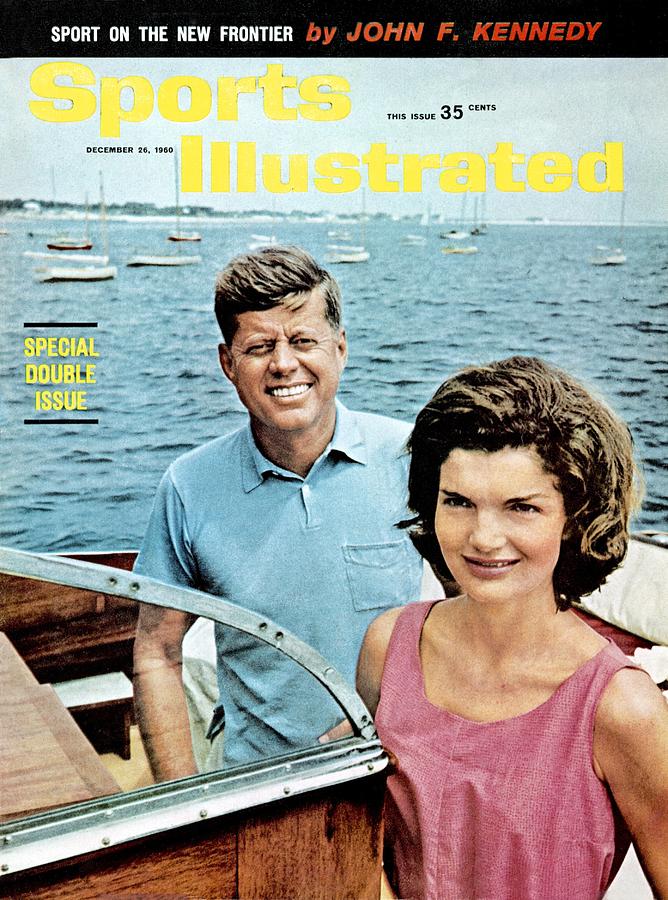
For a period of fifty years, this magazine set the gold standard for sports journalism. Nobel and Pulitzer winners wrote for them. Sports Illustrated even convinced John F. Kennedy to write a freelance article. In fact, that was one of the first things JFK did after getting elected president.

How do you kill a brand as powerful as Sports Illustrated?

It’s easy, you can do it in one just one move. You just need to embrace the most exciting, futuristic technology of the 21st century.

That’s what Sports Illustrated did. The world’s most respected sports magazine gave up on Hemingway and Faulkner, and started publishing AI slop. The editors clearly wanted to hide this — they pretended that the articles were written by actual human beings. They even created fake bios with photos for the non-existent authors.

When a journalist from Futurism asked them about this, they quickly deleted everything.

But the damage was already done. The magazine’s reputation was on the mat, like those bloodied boxers it had covered over the decades.

Just 55 days later, Sports Illustrated announced that it was laying off most of its workforce. The media reported that Sports Illustrated would stop operations completely.

A few months later, a new publisher stepped in as savior. But there wasn’t much to save — at least as a journalism business.

The latest move happened yesterday. The new owner laid off 12% of its workforce, including several of the remaining skilled journalists from the pre-AI era. Some of them are in desperate shape.

Former SI journalist Jeff Pearlman now mocks the magazine as an “empty vessel for selling sh*t to idiots and for getting people to gamble away their money on sports”.

It’s now a brand name, he insists, with nothing behind it.

    That’s all Sports Illustrated is. It’s a name. It’s something to put on cruise ships. It’s something to put on clubs. It’s something to put on popcorn. Literally, there’s a Sports Illustrated popcorn.

How the Nazis Got Rich Preparing Germany for War – Death of Democracy 17 – Q1 1937

World War Two
Published 30 May 2026

By March 1937, Nazi Germany had renewed dictatorship, buried Versailles, and turned rearmament into a corruption machine.

Berlin, March 31, 1937. Adolf Hitler’s regime appears stronger than ever. The Enabling Act is extended for another four years, the civil service is bound more tightly to Hitler personally, and Germany formally rescinds its signature from the war-guilt clause of the Versailles Treaty.

But behind the speeches about honor, work, and national revival, another transformation is underway.
In the first quarter of 1937, Nazi Germany moves deeper into an economy built around rearmament, Party patronage, racial exclusion, corporate privilege, and theft. The new German Corporation Law weakens ordinary shareholder control and strengthens management boards. Industrial giants profit from military preparation. Jewish property becomes a field of extortion and enrichment. Hitler himself grows wealthy through book royalties, image rights, hidden payments, and political slush funds.

At the same time, the regime tightens control over public life. Civil servants are required to serve the Nazi state without reservation. Journalists, professors, doctors, artists, and Jewish Germans are pushed out of public and professional life. Concentration camp roundups expand beyond political opponents. And on Palm Sunday, Pope Pius XI’s Mit brennender Sorge is read from Catholic pulpits across Germany, openly challenging Nazi ideology.

This episode looks at Germany in the first quarter of 1937: a moment when dictatorship no longer needs to look revolutionary. It looks administrative, profitable, respectable — and permanent. This is the story of how power, profit, propaganda, and fear helped turn a modern state into a robber regime preparing for war.

0:00 Berlin, March 31, 1937
0:47 A World in Crisis
01:10 Germany Extends the Legal Shell of Dictatorship
01:23 Civil Servants Bound to Hitler
01:51 Hitler Rejects the Versailles War-Guilt Clause
02:21 The Enabling Act Is Renewed
02:48 Göring in Rome, Reassurances in Warsaw
03:44 The New Corporation Law
04:00 The Catholic Church Challenges Nazi Ideology
05:08 Police Roundups and Expanding Concentration Camps
05:46 Press, Education, Medicine, and Culture Under Control
08:20 The Nazi Economy: Private Profit, State Power
09:41 Aryanization and Organized Theft
10:20 Rearmament, Industry, and Oligarch Profits
12:21 How Hitler Personally Got Rich
14:55 The Party Mood: Confidence at the Top
15:22 German Public Sentiment and Victor Klemperer
16:20 Analysis: How Results Become Consent
17:06 Conclusion: The Quiet Theft of Democracy
18:27 Never Forget / Support TimeGhost

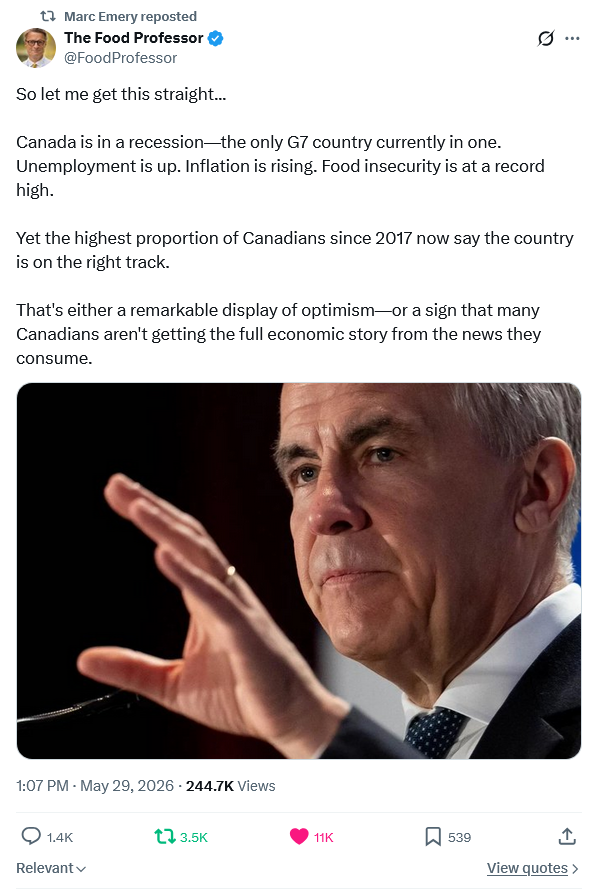
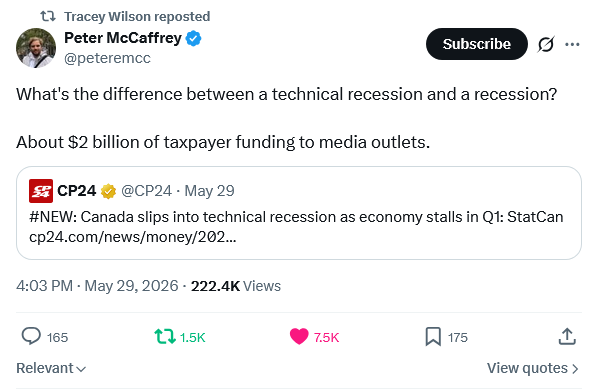
Canada slips into recession: state media rally to attack official opposition

Even before they became explicitly subsidized presstitutes for the Liberal Party, the Canadian mainstream media have always been far more critical of conservatives, so this pivot to defend the government after official statistics show the country is in a technical recession is very much on brand:

Stuart, this is exactly the problem.

You’re acting like annualized quarter-by-quarter numbers are some exotic partisan invention. They aren’t. That is one of the standard ways GDP is reported and understood.

And the “reporter’s narrative” point is weak. The reporter framed the question as if calling it a recession was irresponsible, even though the numbers show real weakness: contraction, stalled growth, falling investment, weak productivity, and Canadians losing ground.

Pierre did what more politicians should do: he challenged the frame.

Because the frame matters.

When Conservatives warn about decline, it’s “doom”.

When Liberals preside over decline, it’s “complex global headwinds”.

When Canadians get poorer, it’s “resilience”.

When GDP shrinks, it’s “not quite the word we’d prefer today”.

Give me a break.

Canadians do not live inside a Statistics Canada footnote. They live inside rent, mortgage renewals, grocery bills, job insecurity, and taxes. Pierre is speaking to that reality.

The press gallery can massage the vocabulary all it wants. The country is weaker, poorer, less productive, and more expensive.

That is not a narrative.

That is the room.

The Liberals are getting great value for their money — well, our money — as even though the economy is tottering, media-massaged messaging is reflected in polls (feel free to doubt the accuracy of polls like this if you like):

The Battle Of Jutland: How Britain Should Have “ANNIHILATED” Germany’s Fleet & Won EASILY

Filed under: Britain, Germany, History, Military, Weapons, WW1 — Tags: , , , , , , — Nicholas @ 02:00

History Undone with James Hanson
Published 13 Dec 2024

James Hanson is joined by Rear Admiral Dr Chris Parry and the YouTuber and naval historian ‪@Drachinifel‬ to discuss the Battle of Jutland. It was the largest naval battle of the First World War and the only time the British and German fleets went head to head.

So just how significant was it and should it have ended differently? This is History Undone.

(more…)

QotD: Pornography, old school

Filed under: History, Media, Quotations — Tags: , , — Nicholas @ 01:00

It’s interesting to contrast today’s mainstream porn actresses, with their breast augmentations and Brazilian waxes, with the variety of natural bodies from earlier years. These women have breasts, bellies and hips. They have body hair. Some are skinny, some are fat, most are somewhere in between.

And they’re beautiful.

They pose nude or in skivvies, alone and in groups, as pinups and in hard-core activities that prove the internet generation didn’t invent kink — our great-grandparents did.

Regina Lynn, “This Old Porn Is New Again”, Wired News, 2005-09-09.

Powered by WordPress