Quotulatiousness

May 29, 2026

“Tornados are like a warning sign God put up saying you’re not tall enough to ride this ride”

Filed under: Britain, Europe, Humour — Tags: , , , — Nicholas @ 05:00

Larry Correia is feeling a bit rant-y about Europeans lecturing Americans about their morally superior continent without air conditioning:

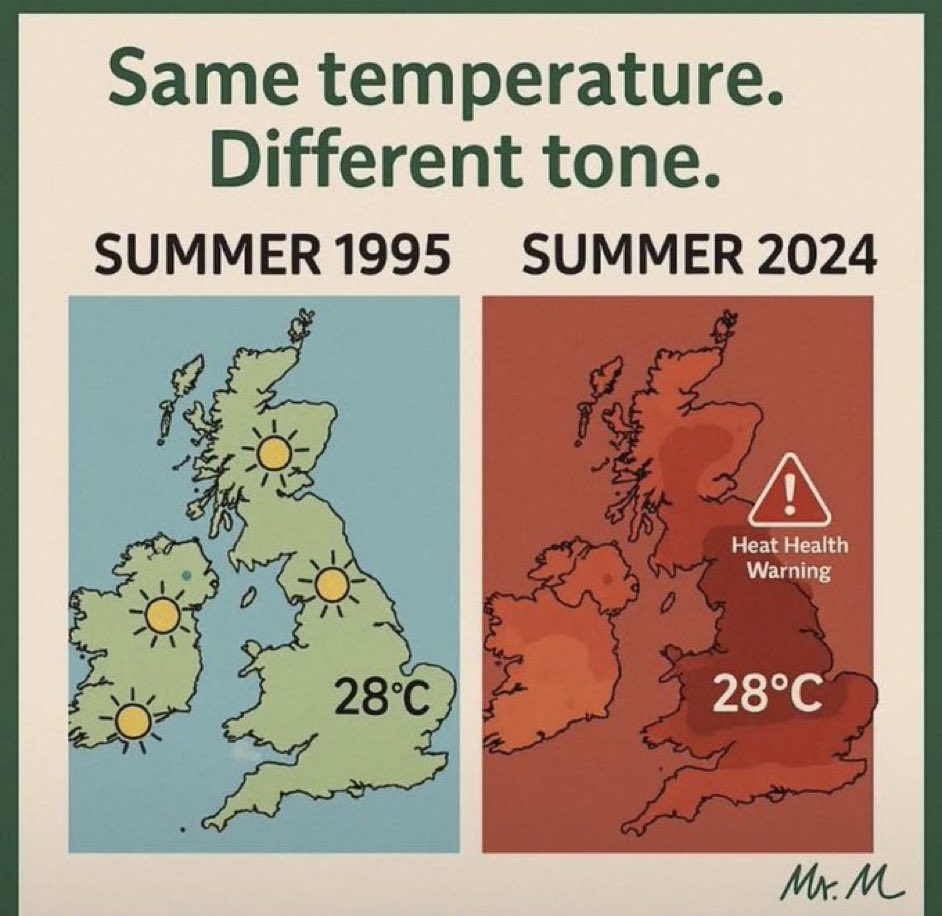
Even the weather reports emphasize that this is the heat death of the continent …

Oh goody. It is Europe whining about America having air conditioning while they drop like flies season again. This is my favorite time of year (the other continents call it “summer”).

This year they seem fixated on American houses being made of wood and how we have tornados?

Because you know, Europeans all live in two thousand year old mud huts and windowless castles that can’t accept a window unit, and that somehow makes them morally superior to us, so they can die miserably by the thousands when it hits 78 degrees, while lecturing us smugly about “climate change” the whole time.

I live in a place that’s Norway in the winter, Algeria in the summer, five thousand feet higher than the average elevation in the UK, in a house that’s so large the average UK home would fit in my office/game room, but please, do go on about how amazing your 800 square foot mud brick shack built after the Blitz is.

Listen, you absolute pussies, if you’re that scared of living where there’s tornados that’s okay. Tornados are like a warning sign God put up saying you’re not tall enough to ride this ride. That’s why our ancestors came here and yours stayed to decay there.

A couple generations ago the UK used to be our peer. Now they’ve got the per capita GDP of Mississippi, there’s only 5 UK companies in the global top 100, it took them a month to get their one functioning destroyer out of dock (and it promptly broke a week later), and they’re menaced by the rape gangs their government imported and protected. You’d think there would be some self-awareness exercised in there somewhere, but nope. It’s all hubris. America sucks because our average house (which is about 3x bigger than the UK’s, only its insulated and has air conditioning) is made of wood. Oooh sick burn. We also put ice in our water. GASP.

I just saw some Brit bragging about how he had a pub in his neighborhood older than America. Cool. The guys who built that pub would be ashamed of what’s become of you, while their descendants who weren’t scared of tornados moved here. Then he bragged his house was two hundred years old and would be standing in two hundred more! Sure, but living in it will be five dudes named Achmed and their twenty wives.

For the record I don’t hate the British. I like most Brits. I just despise your bossy weenie socialists who want you to live like fucking peasants to sacrifice on behalf of global warming, and those are the ones who mouth off on X all day. I’m actually rooting for you normal sane Brits to continue overthrowing your shitty labor government in the hopes you can move into the modern air conditioned world with the rest of us.

So anyways, happy summer. Try not to die.

Debunking the “it’s just phone book information” claim for Bill C-22

Michael Geist explains why the “it’s just phone book information” hand-waving by politicians and government officials is worse than misleading: it’s deliberate mendacity.
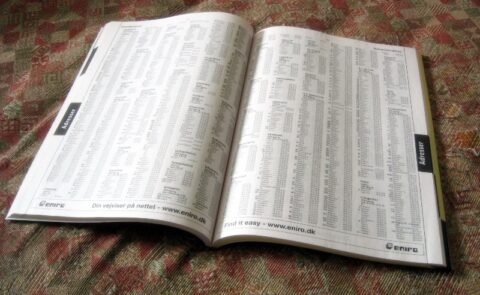
en telefonbog (a Danish telephone directory)
Photo by Tomasz Sienicki via Wikimedia Commons

If this sounds familiar, it is because the same tired claims have been used for years. In September 2011, then-Public Safety Minister Vic Toews defended the Harper government’s lawful access proposals by claiming “linking an internet address to subscriber information is on par with the phone book linking phone numbers to an address”. Christopher Parsons, then a researcher at the Citizen Lab, responded with a detailed anatomy of what a lawful access “phone record” actually contained, showing that the three-field directory entry the government was invoking was being used to describe an eleven-field record including IP addresses, IMEI and IMSI numbers, SIM serials, device identifiers, and account information from multiple providers, any one of which could be cross-referenced to build a comprehensive profile of a person’s online life.

The Supreme Court of Canada put the issue to rest in the Spencer decision, holding unanimously in 2014 that there is a reasonable expectation of privacy in subscriber information precisely because the disclosure of such information “will often amount to the identification of a user with intimate or sensitive activities being carried out online, usually on the understanding that these activities would be anonymous”. It returned to the same terrain in Bykovets in 2024, extending Charter protection to IP addresses on the reasoning that an IP address is the “first digital breadcrumb that can lead the state on the trail of an individual’s Internet activity”.

Bill C-22’s new subscriber information production order applies a low evidentiary standard but covers name, pseudonym, address, telephone number, email address, account identifiers, types of services provided to the subscriber, the period during which they were provided, and information that identifies the devices, equipment, or things used by the subscriber in relation to those services. In short, a modern subscriber record is not a phone book entry but rather an index of a person’s digital life and the government is proposing to reduce the standard needed to gain access to that information.

Moreover, the same phony framing is now being stretched beyond subscriber data to mandatory metadata retention. As Conservative MP Andrew Lawton noted to Fraser at committee, the government and its officials have been telling Canadians that requiring electronic service providers to retain metadata for up to a year is “no different than just having a copy of the phone book that someone could leaf through”. That is a laughable comparison, given that metadata includes the date, time, duration, and type of a communication, the identifiers of the devices involved, and information identifying the location of the device. It is as if the phone book would include the details of every call made including location, call recipient, and device. And given retention for up to a year, the plan poses a disproportionate privacy risk that is likely to be struck down as unconstitutional by the Supreme Court, should it survive in its current form.

And in a follow-up post, he writes:

On encryption, Anandasangaree said the bill “was never meant to breach encryption” and promised to “clarify it in the Bill”. Language clarification is welcome but structural problems remain. The safeguards in Bill C-22 at ss. 5(5) and 7(5), which state that a provider is not required to comply if compliance would create a systemic vulnerability, are incompatible with s. 12, which unconditionally requires compliance with orders, and with s. 13, which specifies that orders prevail over regulations when inconsistencies arise. The term “systemic vulnerability” is not defined in the statute, and the Governor in Council has the power to make regulations “respecting the meaning of any term or expression for the purposes of this Act”. None of this is fixed by promising clearer language. It is fixed by the kind of amendment the Privacy Commissioner proposed this week, namely adopting Australia’s definition, which expressly covers actions that render encryption less effective, together with an explicit prohibition on regulations or orders that require the introduction of, or prevent the rectification of, a systemic vulnerability.

Moreover, Anandasangaree’s defence of the bill’s privacy implications was a deflection rather than an answer, as he tried to turn the attention to the privacy practices in the private sector, stating, “I drive a vehicle where every single point that I drive to is tracked. And that data is not with me.” Commercial data practices are indeed a real concern and Canada needs stronger laws to address them. However, the bill’s surveillance map of every Canadian is not justified by pointing to the absence of meaningful constraints on data collection and to the failure of his own government to address long-overdue private-sector privacy reform.

That brings the press conference back to the Privacy Commissioner. Asked directly whether he would accept Commissioner Philippe Dufresne’s amendments, the Minister said he would “be looking at” them and “looking to see what he has to offer”. Dufresne tabled eight concrete amendments at committee on Tuesday: narrowing subscriber information to a closed list (name, address, telephone number, IP address), restricting who can be compelled to telecommunications service providers, defining “publicly available information” to exclude information in which a person has a reasonable expectation of privacy, an overarching requirement that SAAIA obligations be necessary and proportionate, an Australian-style amendment to “systemic vulnerability”, an explicit prohibition on orders requiring vulnerability introduction or preventing rectification, an exemption to the SAAIA’s confidentiality rules to allow disclosure to regulatory bodies such as the OPC, and allowing his office to investigate if data breaches result from application of the new powers. Anandasangaree’s comments, coming a day after the Dufresne’s committee appearance, noted that “we have until like five o’clock today” for amendments. That window does not leave room to seriously consider the Commissioner’s recommendations. The “I will be looking at” claim, delivered hours before the deadline, amounted to a rejection of the recommendations.

Progressives, suddenly – “We’ve gotta protect our phony baloney jobs!”

Apologies to Mel Brooks for hijacking that line from Blazing Saddles. On the social media site formerly known as Twitter, signs of panic from the media and media-adjacent progressive ranks as they realize Silicon Valley is an existential threat to their media monopoly:

    Tim Shipman @ShippersUnbound

    One aside on the Blair conversation

    I’m absolutely gobsmacked at the level of hostility to “tech bros” and the belief that we can just insulate ourselves from AI and technology

    Like listening to weavers on the spinning Jenny or Hanson cab drivers on the advent of the motor car

Look this isn’t complicated.

The left hates you because they’re (correctly) worried AI is going to replace the “work” they do for their comfortable professional-managerial class sinecures, while at the same time they are (correctly) concerned that AI generated video will completely neutralize the remaining cultural influence they wield via their control of entertainment media.

The right (correctly) views you with suspicion and contempt because you already replaced white men with H1Bindians, which hurt us economically, and also enshittified the Internet, which was further enshittified due to your perfidious collaboration with leftists during the peak of the Great Awokening’s censorship and deplatforming push.

Despite your years of service to them, the left wants to immolate your headless corpses on funeral pyres built from your burning data centres, merely because you MIGHT be a threat to them in the near future.

Despite your record of pusillanimity, the right — some of us — are willing to work with you. That is a godsend for you, because we are literally your only defence right now.

But we have conditions, and those conditions are not negotiable.

Julius Caesar: the final verdict

Filed under: Europe, History, Military — Tags: , , , , — Nicholas @ 02:00

Adrian Goldsworthy. Historian and Novelist
Published 29 Oct 2025

This week the questions are all about Julius Caesar, and in particular:

What were his motives? Did he aim at reform/revolution from the start?

Also, how was he viewed by the wider population after the Ides of March?

QotD: What is volley fire and what is it for?

Filed under: History, Military, Quotations, Weapons — Tags: , , , , — Nicholas @ 01:00

We want to start by understanding what volley fire is and what it is for. Put simply, “volley fire” is the tactic of having a whole bunch of soldiers with ranged weapons (typically guns) fire in coordinated groups: sometimes with the entire unit all firing at once or with specific sub-components of the unit firing in coordinated fashion, as with the “counter-march”. In both cases, the problem that volley fire is trying to overcome is slow weapon reload times: this is a solution for slow-firing but powerful ranged weapons. That has generally meant firearms, historically, but we do actually see volley fire drill with crossbows in China from a very early period as well (but, interestingly, there’s no evidence I am aware of that volley fire was ever done with crossbows in Europe – when Europeans decide to do volley fire with firearms, it seems to have been an entirely new idea).1

Volley fire can cover for the slow reload rate of guns or crossbows in two ways. The first are volley fire drills designed to ensure a continuous curtain of fire; the most famous of these is the “counter-march”, a drill where arquebuses or muskets are deployed several ranks deep (as many as six). The front rank fires a volley (that is, they all fire together) and then rush to the back of their file to begin reloading, allowing the next rank to fire, and so on. By the time the last rank has fired, the whole formation has moved backwards slightly (thus “counter” march) and the first rank has finished reloading and is ready to fire. The problem this is solving is the danger of an enemy, especially cavalry, crossing the entire effective range of the weapon in the long gap between shots. This, by the by, was the volley fire tactic that was being used in China with crossbows before gunpowder; I don’t know that anyone ever did volley-and-charge with crossbows, which lack the lethality of muskets.

The other classic use is volley-and-charge. Because firearms are very lethal but slow to reload, it could be very effective to march in close order right up to an enemy, dump a single volley by the entire unit into them to cause mass casualties and confusion and then immediately charge with pikes or bayonets to try to capitalize on the enemy being demoralized and confused. You can see variations on this tactic in things like the 17th century Highland Charge or the contemporary Swedish Gå–På (“go on”). By charging rather than waiting to reload, the attacker could take advantage of the high lethality of firearms without suffering the drawback of long reload times.

Crucially, note that volley-and-charge works because it compresses a lot of lethality into a very short time, which I suspect is why we don’t see it with bows or crossbows (but do see it with javelins, which may have shorter range and far fewer projectiles, but seem to have had higher lethality per projectile). As we’re going to see in a moment, the lethality of bows or crossbows against armored, shielded infantry – even in close order – was pretty low at any given moment and needed to add up over an extended period of shooting. By contrast, muskets were powerful enough to defeat most armor and thus to disable or kill basically anyone they hit, limited of course by reload time: with a reload time of as much as 30 seconds for earlier matchlocks, a line of musketeers might only be able to fire a few times at an advancing infantry unit (which might take two or three minutes to walk through effective range) and given the limited accuracy of smoothbore muskets, only the last shots would hit at a high level. By contrast, a unit doing volley-and-charge is compressing probably close to 50% of the lethality of sustained shooting, devastating moment and then immediately charging.

Putting that much lethality into a singular instant was valuable from a morale perspective and of course it enabled a unit to quick march through the enemy’s effective range, stopping only briefly to fire and charge, limiting losses from steady enemy fire. But as we’re going to see, the lethality of bows (and, to a significant extent, crossbows) was much lower and so couldn’t be effectively compressed into that single, devastating, confusing moment.2

Bret Devereaux, “Collections: Why Archers Didn’t Volley Fire”, A Collection of Unmitigated Pedantry, 2005-05-02.


  1. On drill and in particular, counter-march volley fire with crossbows, see Andrade, The Gunpowder Age (2016), 149-160.
  2. It also didn’t generate a smokescreen to help with the final rushing charge, whereas a musket-and-bayonet unit might benefit significantly from firing and then charging through and out of its own obscuring smoke into a terrified and confused enemy.

Powered by WordPress