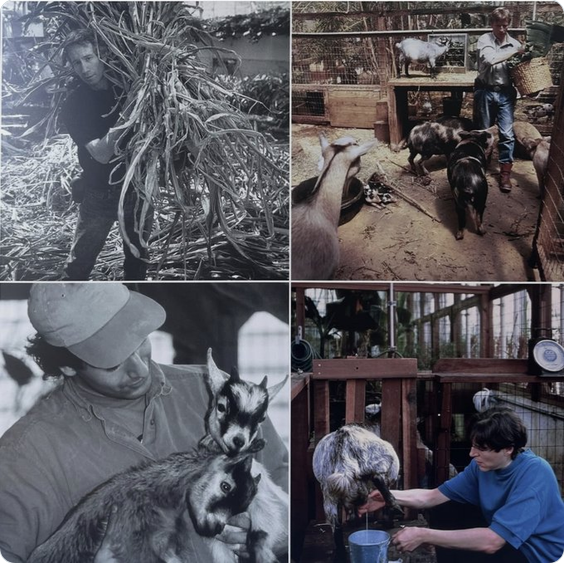
Sama Hoole on a now-obscure experiment in the early 1990s which didn’t produce the expected results at all:
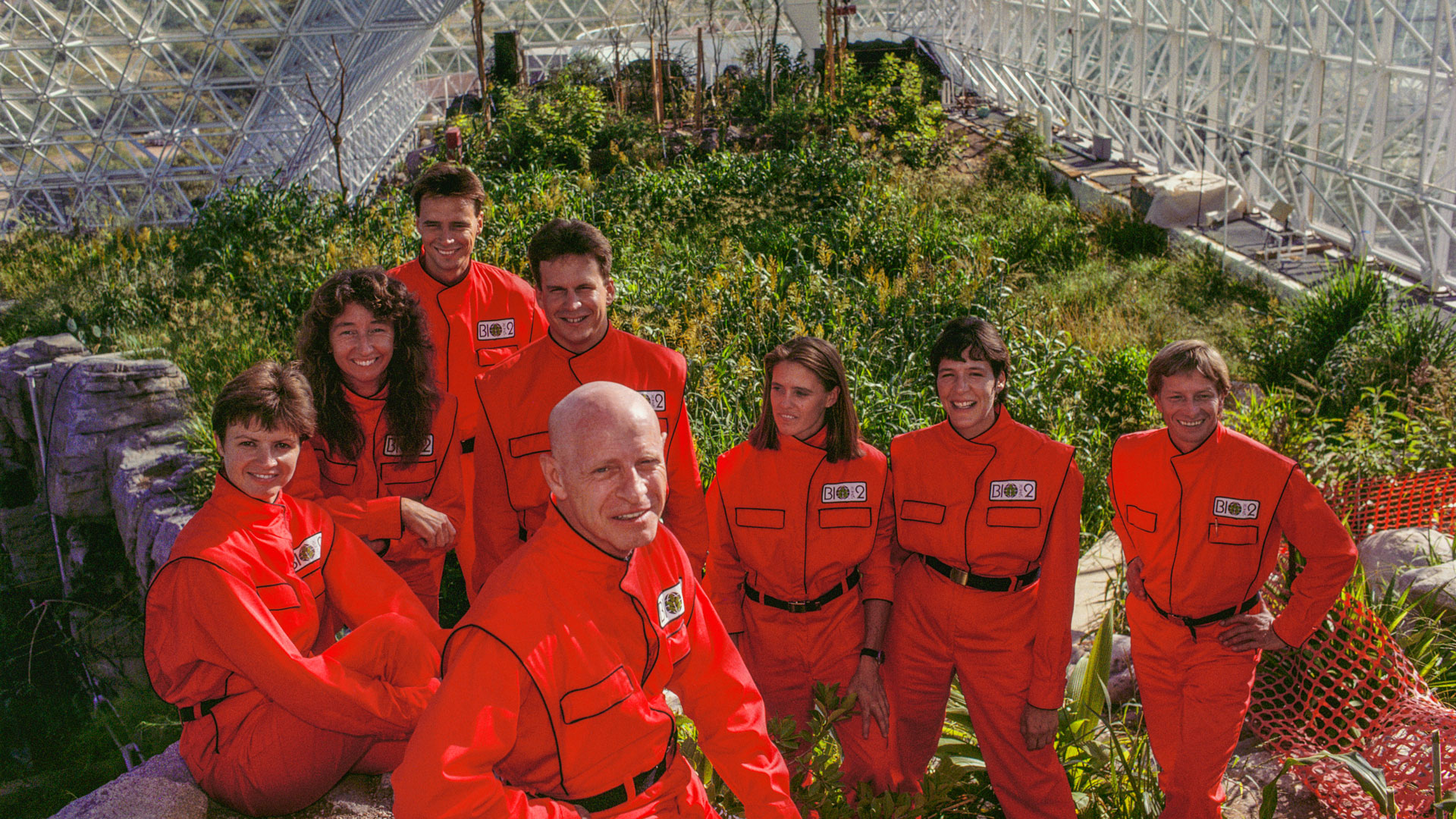
Eight people sealed themselves in a glass dome to prove humanity could feed itself on plants, and spent two years starving in front of the world’s press.
Biosphere 2 cost a hundred and fifty million dollars. Three acres of Arizona desert under sealed glass, eight crew, door shut on 26 September 1991, nothing in or out for two years. The farm inside was worked intensively and by any agronomic measure it was superb, out-producing the most efficient smallholder farming on earth by a wide margin.
It produced 83 per cent of what they needed.
Which left Roy Walford, the crew doctor, in a sealed box with seven hungry colleagues and his own life’s work. Walford was a UCLA pathologist who had spent thirty years arguing that severe calorie restriction extends lifespan. He had doubled it in mice. And here was reality handing him his own hypothesis with the door welded shut.
So he called it a health programme.
The menu became vegetables, half a glass of goat’s milk a day, and meat or fish about once a week. The men lost close to a fifth of their body weight, the women about a tenth. And the markers Walford cared about behaved impeccably: blood pressure, glucose, cholesterol and triglycerides all down at least twenty per cent, into ranges any doctor would frame. He published it in PNAS in 1992.
The bloodwork was magnificent. The people were falling apart.
Jane Poynter wrote the book afterwards. Fatigue, depression, mental fog, and a preoccupation with food that ate the entire interior life of the crew. They stole from each other. They split into two factions that stopped speaking. The ecological research the building had been constructed for was largely abandoned by people who no longer had the headroom for anything past the next meal. The ants and cockroaches, by contrast, were thriving.
The air was leaving too. Oxygen started at 20.9 per cent and kept dropping and nobody knew where it was going. Columbia eventually worked it out: the concrete was quietly eating it. So oxygen had to be pumped in from outside, which is an interesting result for a sealed world.
Walford’s verdict on the mutiny is the whole thing in one sentence. He said afterwards that any other physician aboard would have panicked and declared they were starving, but that he knew they were on a programme of health enhancement.
He knew. Seven other people, visibly wasting, were simply mistaken.
He came out in 1993, developed ALS, blamed the conditions inside, and died in 2004 aged 79 after years on 1,600 calories a day in pursuit of a longer life. The mice got double. He did not make it to average for an American professor.
Every argument you have heard this decade was already in that building. Grow it locally. Take the animals out. Eat less. Watch the numbers improve.
Eight of the most motivated humans alive, handed three acres of the best-managed farmland on the planet and no meat, could not feed themselves.
The press reported the fighting as a personality clash.
And he updated:
I left something out of that one.
Biosphere 2 had a working farm, and the farm had pigs, chickens and goats. Only one of those three was still alive when the door opened, and the reason why is the most useful thing the entire two years produced.
Biosphere 2 had livestock, and the crew ate the pigs first.
Zazu and Quincy were Ossabaw dwarf pigs. In the first year one of them produced a litter of seven, which inside a sealed glass building where every calorie was counted should have been the best news anybody had.
They killed them anyway.
The chickens went too. Mrs Fruitcake and the rest, slaughtered because they were eating more than they were laying.
Neither animal was killed for meat. They were killed for competing.
A pig and a chicken have one stomach, and it wants exactly what a human wants: grain, roots, beans, anything starchy or dense. Inside Biosphere 2 there was no outside, no feed lorry, no surplus. Every mouthful a pig took came off the plate of one of eight visibly starving people. The crew did the arithmetic and reached for the knife.
Now notice which animals survived the cull.
The goats. Milky Way, Stardust and Vision, three African pygmy goats, milked daily for the full two years. And in the crew’s own scientific write-up, published in Advances in Space Research in 1995, they recorded that the goats were the most productive domestic animals in the entire system.
The most productive thing in a building where the humans lost a fifth of their body weight was the ruminant.
It is the four stomachs. A goat is a fermentation vat on legs. She runs on stalks, leaves and crop residue, the fibrous rubbish that comes off any farm and that no human gut can process, and turns it into milk. She was never taking food off the crew. She was manufacturing food out of what the crew threw away.
So that sealed box did test the great modern argument, the one about feeding crops to animals being a waste of land and calories.
It found the argument correct for pigs and chickens.
It found it wrong for the animal that eats grass.
Biosphere 2 gets quoted endlessly as proof we should grow plants and drop the livestock. Eight people with the most productive farmland on earth ran that experiment properly, went hungry for two years, and kept exactly one kind of animal alive throughout, because she was the only one paying rent.
They killed the pigs to feed the people and kept the goat to feed the people.