
July 1, 2026
The Korean War Week 106 – The Battle of Old Baldy – June 30, 1952
The Korean War by Indy Neidell
Published 30 Jun 2026On the ground, the fight for the hilltop they call “Old Baldy” really heats up this week, and it’s a bloody one. In the air, the bombing campaign to destroy the North Korean hydro-electrical complex continues, and the Suiho dam, one of the world’s largest, is put out of action and the power is out across much of the country.
00:00 Intro
00:45 Recap
01:14 Suiho Dam
05:22 Old Baldy
09:04 Army Budgets
14:29 Planning a coup?
16:08 Summary
16:22 Conclusion
17:10 Call to Action
Comments Off on The Korean War Week 106 – The Battle of Old Baldy – June 30, 1952
Scholarship replaced by elitist gatekeeping and bad faith
It is possible — in fact, essential — to discover and disseminate the facts about Indian Residential Schools. Repeating the unproven (and to many, deeply discredited) narrative and denouncing those seeking the facts as “denialists” has nothing to do with scholarship but it’s very much in line with gatekeeping:
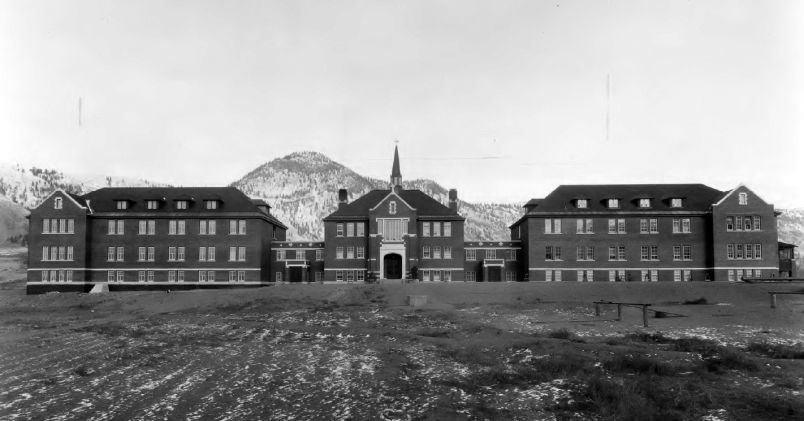
Kamloops Indian Residential School, 1930.
Photo from Archives Deschâtelets-NDC, Richelieu via Wikimedia Commons.
Let’s be honest about what is happening in this video.
This is not academic debate. It is a character attack dressed up as scholarship.
Dr. Travis Hay’s presentation at Mount Royal University, uploaded by Frances Widdowson under the title “Bad Faith: Residential School Denialism and the Academy”, is deeply disappointing. I expected a serious lecture. I expected evidence, argument, and a careful dismantling of claims he believes are wrong.
Instead, what we get is a bad faith lecture.
So yes, Bad Faith is a good title. Just not for the reason Hay thinks.
The real bad faith is pretending to defend scholarship while avoiding the hard work of open debate.
Hay spends much of the lecture drawing a line between “good faith” and “bad faith” criticism. But his standard for good faith appears to be simple: you may disagree only inside the boundaries of the approved framework. You can quibble over details. You can adjust the margins. You can offer polite corrections.
But if you challenge the premise itself, suddenly you are no longer mistaken. You are morally defective. You are a “denialist”, a “grievance merchant”, or some broken person who must be pushed outside respectable academic life.
That is not scholarship. That is gatekeeping.
None of this requires minimizing the real harm done by residential schools. It simply means historical claims should be open to examination. Evidence should be tested. Terms should be defined. Numbers should be scrutinized. Arguments should be answered.
Instead, Hay leans heavily on moral outrage, personal denunciation, and guilt by association. Rather than carefully taking apart Widdowson’s arguments, he drags in old controversies involving other people, uses emotional anecdotes, and builds a mood where the audience is being told what to feel before they are allowed to think.
The most revealing part is the conclusion. Hay says people like Widdowson do not belong in the academy. In other words, the answer to uncomfortable academic work is not better evidence, better reasoning, or open debate. It is expulsion.
That should bother everyone.
A university that cannot tolerate dissent is not protecting knowledge. It is protecting doctrine.
If Widdowson is wrong, prove it. Debate her. Bring the evidence. Take her claims apart in public. That is what serious scholars are supposed to do.
But when the response is censorship, exclusion, and personal insult, it starts to look less like confidence and more like fear.
I came away from viewing this lecture disappointed. Not because Hay disagrees with Widdowson. Disagreement is the whole point of academic life. I was disappointed because the lecture showed so little faith in the public’s ability to hear competing arguments and judge the evidence for themselves.
This lecture does not prove that Widdowson’s arguments are wrong. It proves that parts of the academy no longer know how to handle a serious challenge without reaching for moral panic and professional exile.
Comments Off on Scholarship replaced by elitist gatekeeping and bad faith
Elleander Morning: Causes vs Catalysts
Feral Historian
Published 6 Mar 2026Elleander Morning (Jerry Yulsman) is a peculiar bit of alt-history, brilliant in some ways and immensely clunky in others. It’s a story of a war averted, or perhaps only postponed, and it plays with some fundamental questions of history.
00:00 Intro
02:30 Implications left hanging
03:29 The Books
06:15 The New Catalyst
12:06 Gaming the Past
13:04 Concluding Musings
(more…)
Comments Off on Elleander Morning: Causes vs Catalysts
QotD: An imaginary obituary for a nation
I present the following thought exercise to you: if some overeager, industrious journalist were to write an obituary for Canada, how would it read?
Today, the world marked the passing of Canada, younger than most, older than some. Canada, on her best days was a beacon in the world for freedom, justice, inclusion, poutine and hockey. Canada gave the world the telephone, the lightbulb, the pacemaker, insulin and was the first nation to successfully complete a double lung transplant.
For the better part of her history, Canada was a trusted ally, a safe harbour for those fleeing persecution, a voice for the voiceless and an example for other nations. People from around the world flocked to her shores to bring the best of where they came from together with others contribute to building a nation that was unlike any other in the world.
But the last few years of her life did seem to be defined by a nearly psychopathic desire to get in her own way. Anointed by God with a natural bounty that, if mined and managed responsibly could have made her one the fairest and wealthiest nations in the history of the world. And yet that natural bounty remained largely locked away.
Canadians had built one of the fairest and most equal societies on the planet, and yet they seemed hell-bent on focussing on the minutia and sometimes the mirages that appeared to divide them.
The 21st century was poised to be the Canadian century, but through much fault of their own, Canadians squandered that opportunity, and today we bid farewell to a nation that had greatness within its grasp, but decided instead to become smaller, to become lesser, to marginalize itself and by extension, made the world a less wonderful place.
Canada: for many on the outside looking in, gone far too soon. Ironically, the assessment of the Canadian legacy by so many who, through the happy accident of birthright, or another privileged pathway to citizenship is markedly different: she overstayed her welcome.
Ben Mulroney, “Canada’s chance to find itself again”, National Post, 2025-11-10.
Comments Off on QotD: An imaginary obituary for a nation


