Quotulatiousness

July 31, 2026

The “vibe coding” “revolution”

Filed under: Media, Technology — Tags: , , — Nicholas @ 05:00

I’ve used Grok a couple of times to create custom graphics to go with articles on the blog, but aside from that I’ve barely considered using AI for anything. Sometimes the AI-generated email conversation summaries on Gmail are helpful, but they just happen and don’t require any direct interactions from me. As such, I’m in no position to make sweeping declarations about the current state of the AI revolution … but Freddie deBoer has thoughts he’s shared on his Substack:
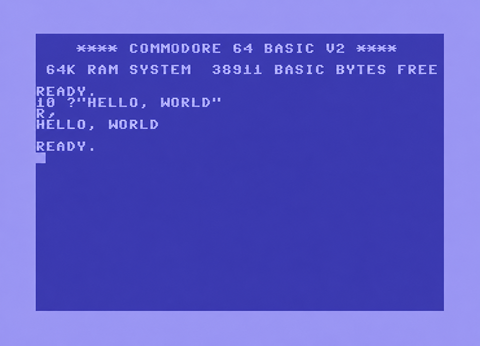
You are aware, I imagine, of “vibe coding”. The large language models that have received so much fanfare in the past four years have thus far not delivered on the outsized promises that have been made on their behalf; limitless free energy, an end to hunger, and immortality have all conspicuously eluded us. One thing that LLMs really appear able to do well, though, is to write code. And this proficiency has gotten sufficiently advanced that many people now write software solely through directing an LLM, without necessarily having any actual programming skills themselves. The overwhelming majority of the output of this effort is useless or redundant or barely functional, true, but the mere fact that people can do it is an interesting statement on what “AI” is actually good at. And for stupid meme reasons we call this practice vibe coding.

So, in the past two-ish years, several hundred million human beings acquired the ability to write software by speaking to a machine in ordinary language. This was heralded (correctly, in a narrow technical sense) as a great democratization: a notoriously Byzantine skillset had been suddenly made available to vastly more people. A capacity once reserved for a priesthood of specialists, a relatively small society of craftsmen, has been distributed suddenly and nearly for free to baristas, accountants, fourteen-year-olds, retirees, you, me … We have been told that the instruments now available to the general public are staggeringly powerful. The era of citizen coding is upon us! A reasonable person, informed of this, would have braced for the consequences. Surely something would have to change, right? A wave of brilliant new apps? A flowering of new affordances granted by software? Any visible change to daily life commensurate with the scale of the gift of vibe coding? All of the above, no doubt. All of the above and more.

Well, take a look around and tell me … where is it? What are the fruits of all of this vibe coding? What difference has it made? What is the great application that has emerged from all this liberated capacity? What new thing does our species now do with its hours that it did not do three years ago? What old thing does our species not have to do that it had to do three years ago? What chores have been eliminated, what friction has been smoothed over, what corner of ordinary existence been reshaped by the sudden arrival of hundreds of millions of amateur programmers? There’s been a great deal of activity, some of it quite frantic. There’s been a steady churn of half-built to-do apps and Wordle clones and boutique email clients that do nothing the old standbys can’t, weekend RPG projects that flare and vanish, and at the end of it, there’s a world essentially unchanged. And to give the teams at Anthropic and OpenAI their flowers, this has not been a failure of their tools. The tools work, more or less. This is all about something stranger and more important than a failure of the LLMs: the necessary work of software has already been done. We haven’t seen a lot of new types of software because we already have what we need. You can’t flood a vessel that’s already full, and the amateurs, God bless them, have been pouring this new power into a jug that we’ve been frantically filling throughout the 21st century.

The project of software is complete. Not decelerating, not maturing, not entering some new and humbler phase, but complete. Complete in the way that the map of the Earth is complete, which is to say complete in the sense that the great blank spaces have been filled and what remains is the labeling of tributaries and the correcting of coastlines, mapping and remapping the parts of the globe that are in a state of permanent flux, responding to changing conditions without altering our conception of the Earth. I’m aware of how this all sounds. In particular, I’m not naive to the fact that for those who write code for a living (whose number is growing, not shrinking, despite doomsaying) it’s going to sound provoking rather than provocative. I’m also aware that some are going to mistake my saying that the project of software is complete for somehow belittling the achievements of software. This is not the case! I assure you that I’m aware that I’m typing my argument into a machine that would have been indistinguishable from sorcery to my grandparents and then transmitting it through a lattice of code so vast and so intricate that no living person could comprehend more than a sliver of it. I am aware that software enables my current economic existence, however ambivalent I have become about that relationship. No, I’m not claiming that the global project of satisfying humanity’s appetite for software is in any sense unimportant. I am however claiming that it’s finished. It has been accomplished.

Update: Corrected a boneheaded typo.
Drinker’s Extra Shots – Clarkson’s Farm

Filed under: Britain, Bureaucracy, Business, Humour, Media — Tags: , , , , — Nicholas @ 04:00

Critical Drinker After Hours
Published 30 Jul 2026

In the mood for an Amazon show that’s actually good, unlike Rings of Power? Then Clarkson’s Farm, arguably the best reality show on TV right now, has got you covered. Join me for a quick review of this absolute gem.

Nobody “designed” capitalism

One of Karl Marx’s cleverer notions was to come up with a label for the economic system that had slowly emerged from the feudal period in Europe. It wasn’t ever the result of some overarching plan or campaign, it was just the easiest way for producers and consumers to connect without coercion or force. It had no real name until its declared enemy named it:

Capitalism did not begin in a boardroom. Voluntary exchange, repeated across generations, built the fairs, the credit networks, the double-entry books that Luca Pacioli codified in 1494. Nobody planned this. That’s the whole point.

The story you learned in school runs backwards. You were taught that greedy factory owners exploited children until noble legislators rescued them in 1833. What actually happened: the Industrial Revolution dragged English living standards up so fast that population doubled between 1750 and 1850 because people stopped dying. Wages rose. Life expectancy rose. The factory that horrifies the modern reader was an upgrade from a life of starving on a tenant farm at the mercy of the harvest. Children worked because their families were poor, and the factory made those families less poor. The reformers arrived after the market had already done the heavy lifting, then took credit for the sunrise.

Real capitalism needs sound money, and here is where the tragedy sharpens. Between 1815 and 1914, under a classical gold standard, prices in Britain fell gently while output exploded. You could save a coin and expect it to buy more later. That world died in stages: 1914, when governments suspended gold to print [money for] war; 1933, when Roosevelt confiscated citizens’ gold at $20.67 an ounce then revalued it to $35; 1971, when Nixon closed the window entirely and handed us the pure fiat regime you live under now.

What followed was corporatism wearing capitalism’s coat. When the Federal Reserve can conjure trillions and hand them to the banks and firms closest to the spigot, you no longer have a market allocating capital. You have a cartel allocating privilege. The 2008 bailouts were a monetary system doing exactly what a monetary system built on the printing press does.

When someone blames “unfettered capitalism” for the mess around you, ask them to point to the fetters.

The answer is to let go. Less regulation, no central bank, less tax, less government. Not more!

A few days ago, Severian point out:

Title page of Das Kapital in the first German edition of Volume 1.
Wikimedia Commons.

At its broadest, “system” means something like “the appearance of rule-governed behavior”, and so yeah, “capitalism” is a “system” in that sense. The “law” of Supply and Demand is a “rule”, if you like, and we can start piling on the ACK-shullies from there. But it’s not particularly useful trying to analyze why and how it happens; the only thing we need to proceed is to acknowledge that it does.

“It” being “reification“, which you’ll recall means “treating an abstraction as if it were a real object”. Synonyms (per Wiki) include “concretism, hypostatization, or the fallacy of misplaced concreteness”, and while I personally dig “hypostatization” — it’s got that groovy Gnostic ring to it — “reification” is easier to type; plus it was very successfully repurposed by Marx and we might need that later, so “reification” it is. Calling “the natural human tendency to exchange stuff for other stuff, each party pursuing what he perceives to be his own advantage” Capitalism is a reification. It’s useful rhetorical shorthand …

… but it carries with it a tendency to mistake the map for the territory, you dig? Instead of confining yourself to “the natural human tendency to exchange stuff for other stuff, each party pursuing what he perceives to be his own advantage”, you inevitably start talking about the “rules” or “laws” of Capitalism. And from there, it’s just a short leap to our course title: the morality of Capitalism.

Because that’s what rules are for, no? To keep things fair — or equal, if you prefer. If we want to find out who’s better at tennis, let’s say, we set up a bunch of rules, to eliminate from the outcome every “inequality” but skill (and dumb luck). Both players have to agree on the scoring. Tennis, therefore, really is a system, strictly speaking. It really is a game, in the mathematical and linguistic senses.

Tennis is not a reification. When we talk about tennis, we are talking about the rules of the game, or the outcome of an individual match. That’s it.

But watch what happens when we start talking about the “rules” of Capitalism. The very word “rule” (or “law”) unavoidably contains the notion of fairness. The rule determining “out of bounds” in tennis is explicitly designed to make the game fair, because that’s what game rules are for — to make the players equal in every respect but skill. You couldn’t know who is the better tennis player if the rules were arbitrary; “out of bounds” has to be clearly defined, and universally applicable.

If you start talking about the “rules” of Capitalism, then, you might not think about “fairness”, but you can’t help but feel it.

Which the contrast with Communism makes worse. Because of course “Capitalism” and “Communism” are “dialectically constructed”. I don’t like throwing Marxist jargon around, but it’s useful in this case. Because Communism is a system, or a game, or whatever word you prefer. Communism does have rules, and they are explicitly designed — like the rules of all games — to ensure equality.

(And they do, comrades, they really do. As P.J. O’Rourke pointed out back when he was funny, Communism is as fair as it gets. We’re all equally broke, starving, and dead, but goddamn it, we’re equal).

I’m sure I don’t have to tell this crowd what a bad idea it is to let your enemies define things for you, but that’s what “Capitalism” does. Karl Marx his own self invented that term. Pick your famous “Capitalist” thinker — Adam Smith, David Ricardo, whoever. They didn’t call themselves “Capitalists”; they called themselves political economists. They weren’t devising rules for a game; they were describing phenomena they observed. It was only after Marx slapped the “Capitalism” tag on the natural human tendency to exchange stuff for other stuff, each party pursuing what he perceives to be his own advantage, that we started seeing “Capitalists”.

Cooking Kangaroo on the World War 2 Australian Home Front

Filed under: Australia, Food, History, WW2 — Tags: , , , — Nicholas @ 02:00

Tasting History with Max Miller
Published 3 Feb 2026

Slices of braised kangaroo with carrots, onions, parsley, and gravy

City/Region: Australia
Time Period: 1943

Rationing began in Australia in 1942, and meat was one of the foods that had the biggest difference in pre-ration and rationed amounts in the Australian diet. Out in the country, you could hunt to supplement your meat ration, which often meant wallaby and kangaroo, which had fallen out of popularity in the early 20th century, and to be honest, I can see why.

This recipe, from an Australian wartime ration cookbook, is actually for spiced beef, and if you don’t have kangaroo in the back of your freezer or are hunting to supplement your wartime ration, I’d use the beef. The texture of the kangaroo wasn’t bad, but the flavor was not my favorite. I usually like gamey meats, but this was too gamey even for me with an earthy taste that I wasn’t a fan of.

    Spiced Beef
    Method: Mix sugar, mustard, vinegar and salt together and rub over meat with the back of a wooden spoon. Place meat in a dish with bay leaves, cloves and peppercorns — leave for 12 hours. Turn occasionally. Place meat with juices, herbs, etc., sliced carrots, onion and parsley in a saucepan. Just cover with water and simmer for 2 — 3 hours. Serve hot with liquid thickened as gravy or cold with liquid thickened and served as cold sauce. If the oven is in use, cook the meat in a casserole — 2 1/2 — 3 hours in a slow oven (325°F).
    Planning Meat Ration Meals by the Commonwealth Rationing Commission and the Commonwealth Department of Health, 1943

(more…)

QotD: Cuisine on campaign

Filed under: Britain, Food, History, Military, Quotations — Tags: , , — Nicholas @ 01:00

War is not a picnic. I [used to] find it difficult to cook in the proximity of squalling children; I suppose the rattle of gunfire, incendiary bombs, and the whistle of mortars might be equally distracting to the higher sort of culinary exercise. But the circumstances of a field kitchen are not wholly grim. Dried herbs and spices are very light to carry, and wherever one happens to be on a campaign, there are the fruits of that countryside. Moreover, as most old soldiers will recall, and the readers of their diaries and memoirs in their absence, most days are not that exciting. There is plenty of time to think about food. There are long periods of boredom and waiting with nothing to look at but the sky; interspersed with short periods of pant-shitting terror.

Supposing, for a moment, a bit of imagination on the part of quartermasters and cooks, and a semi-intelligent rationing authority, a war might be conducted with a bit of style. There could be rivalry between regimental kitchens, or between the galleys in Her Majesty’s fleet. Food could be made a powerful inducement in the recruitment drives.

There are some little sparks like this, in history. In the Crimean War, Florence Nightingale, that extraordinary lantern-bearing angel, procured the voluntary help of Alexis Soyer, the leading London hotel chef of the day, to advise her on the organization of field hospital kitchens. These quickly became the place to eat — almost worth getting wounded. M. Soyer applied his very broad mind to analyzing the limitations of field cookery, then turning each limitation into a strength. (I recommend his Culinary Campaign in the Crimea, 1857.)

Morale is not a small thing in the conduct of war. A hot meal served in defiance of logistics in the cold wet of a hideous trench, comes to remind us of victory, in the very face of the enemy.

David Warren, “Non-idlers”, Essays in Idleness, 2020-11-11.

Powered by WordPress