
Quotulatiousness

July 14, 2026

Orson Welles – the great failures

Filed under: History, Media, USA — Tags: , , , — Nicholas @ 05:00

On his Substack, Ted Gioia looks at the up-and-down-and-up-and-down career of Orson Welles and selects, from a long list, his ten greatest failures:
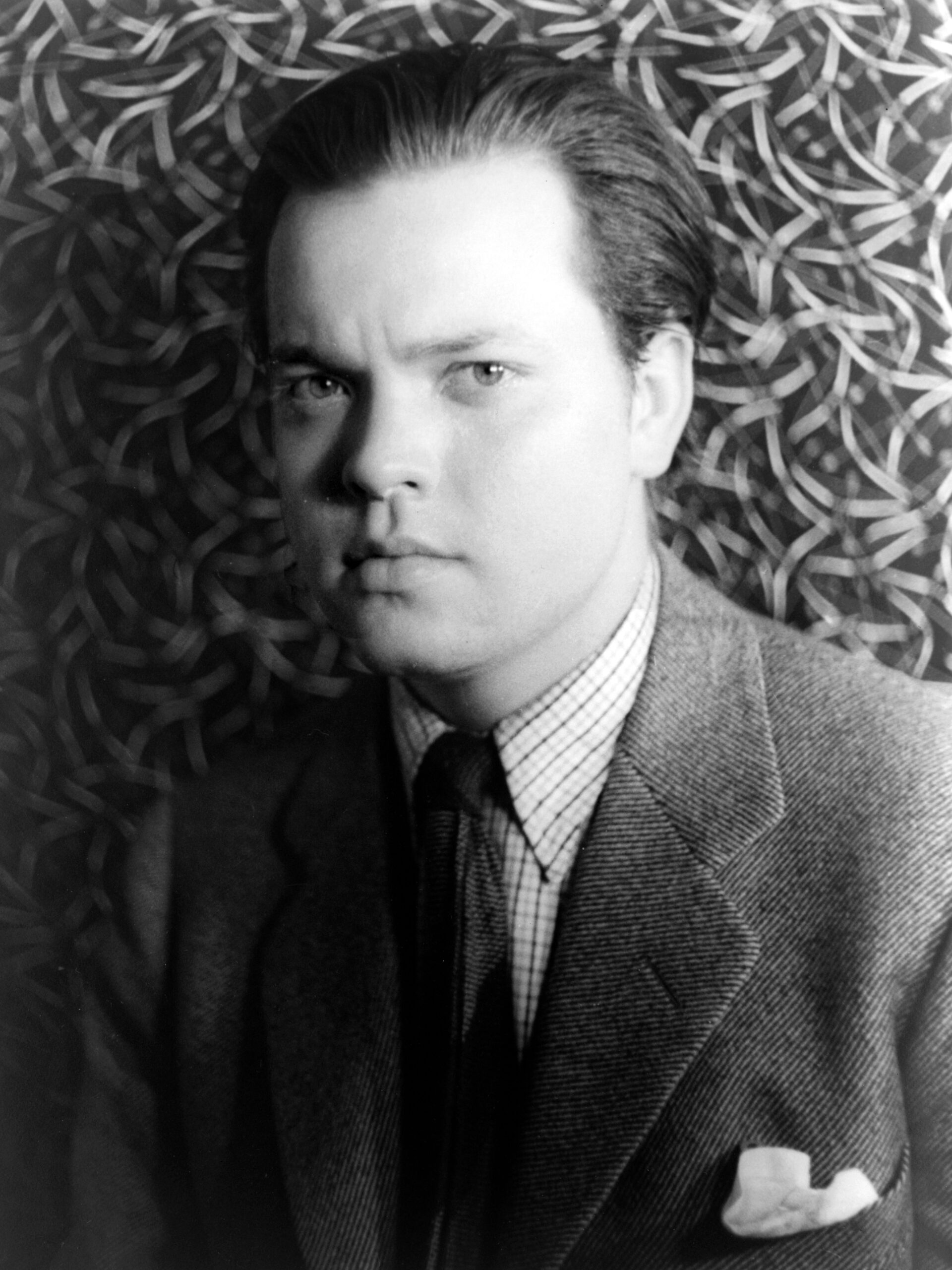
Orson Welles in 1937.
Photograph by Carl Van Vechten via Wikimedia Commons.

It takes a lifetime of misses to create those hits (if they come at all). And those misses tell the real story of our passion, our resilience, our willingness to push our talent to the limit.

These speculations have led me to return to the work of filmmaker Orson Welles (1915-1985) — who I see as an inspiring role model for indie creators of the digital age. Welles is like many of us today. He lost institutional support from Hollywood studios while still in his twenties. And despite his reputation as the most innovative filmmaker of his generation — for many years his debut movie Citizen Kane won polls as the best film of all time — was forced into a precarious life as a perennial freelancer.

He spent most of his career working on projects that failed. And not because they weren’t good (see the list below) — but for other reasons. Some blame Welles’s prickly personality. Others will fault close-minded Hollywood execs. Or maybe Welles was just cursed with bad luck — problems did seem to follow him wherever he went.

You might say that even his hits were misses. His biggest early success came via a 1938 radio rendition of H.G. Wells’s The War of the Worlds, which convinced many listeners that extraterrestrials were actually invading America. Welles got plenty of publicity but was threatened with $12 million in lawsuits in the aftermath. He was lucky to escape without criminal charges.

His greatest triumph, Citizen Kane, was also anything but a conventional hit. The major theater chains refused to book it — fearing punishment from newspaper magnate William Randolph Hearst, the thinly-disguised model for Kane. So even at the peak of his career, Welles had a target on his back.

It got worse from there. He couldn’t finish the editing of his second film The Magnificent Ambersons (1942) — because FDR prodded him into going to Brazil as a cultural ambassador during World War II. So Welles was out-of-touch as the studio butchered his remarkable film, and even added a saccharine new ending. It’s testimony to Welles’s greatness that The Magnificent Ambersons is still ranked among the best movies of the era despite the meddling.

After Brazil, everything fell apart for Welles. Hollywood never forgot him, but also never forgave him. He got occasional gigs (although more often as an actor). But this brilliant filmmaker never enjoyed job security or long-term institutional support. He was the permanent indie gadfly — always pitching projects and sometimes actually starting them. But rarely finishing them.

At his death in 1985, Welles left behind at least 19 unfinished projects. Add to that the many others he abandoned in earlier years. And then there are so many Welles concepts that hardly got started at all — but were promising ideas that deserved better. Finally, Welles suffers the added indignity of achieving some commercial successes (on radio or the stage) that are now lost to us — so even these must be counted among his misses, at least from the perspective of posterity.

Below I’ve listed Welles’s ten greatest failures. But I could have easily expanded it to twenty or thirty.

I do this as testimony to Welles’s greatness. From a mercenary perspective, these might be failures, but from an aesthetic standpoint they testify to a creative force that operated at the highest level of intensity for a full lifetime.

Translating “virtù” in Machiavelli’s The Prince

Filed under: Books, Government, History, Italy, Politics — Tags: , , , , — Nicholas @ 04:00

At SteynOnline, Tal Bachman ponders the use of the Italian word “virtù” and how best to translate it into English without losing the essence of what Machiavelli was trying to communicate:

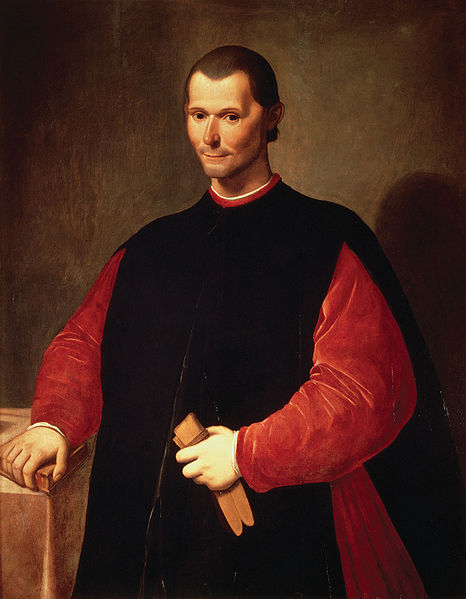
Portrait of Niccolò Machiavelli by Santi di Tito (1536-1603)
Via Wikimedia Commons.

I’d read Machiavelli’s The Prince many times. Pondered its fiendish teachings as I watched political events. Wondered how true, or at least universal, the suggestions really were. I’d even started translating the text myself a few months earlier, just for fun. Machiavelli’s Italian wasn’t all that different from Spanish, so I could get quite a bit of it. With a bit of study, I got the rest. Now, here I was, standing in the very room he’d written the book in, touching the very desk he might have used.

It was in that moment I remembered a letter Machiavelli had written once, to a friend, about writing in that very room:

    When evening has come, I return to my house and go into my study. At the door I take off my clothes of the day, covered with mud and mire, and I put on my regal and courtly garments; and decently reclothed, I enter the ancient courts of ancient men, where, received by them lovingly, I feed on the food that alone is mine, and that I was born for. There, I am not ashamed to speak with them and to ask them the reason for their actions; and they in their humanity reply to me. And for the space of four hours I feel no boredom, I forget every pain, I do not fear poverty, death does not frighten me. I deliver myself entirely to them … I have composed a little work (The Prince), where I delve as deeply as I can into reflections on this subject.

The book itself opens with a quick description of the different types of states, and then concludes the first paragraph with an important sentence. New dominions, says Machiavelli, are acquired o con le armi di altri o con le proprie, o per fortuna o per virtù — that is, they’re acquired “either with the arms of others or with one’s own, either by fortune or by” — drum roll — “virtù“. That’s the word in Italian. The question is how to best translate virtù into English.

You might say, “virtue”. And you wouldn’t entirely be wrong: of course the Italian virtù and the English virtue are cognates. The problem is that in the Tuscan Italian of 1513, virtù carried important connotations which no longer exist in contemporary Italian, and don’t exist in English. “Virtue” these days, in either language, refers to an ethical attribute; it describes something good or moral. But in Renaissance Italian, it still retained an older meaning — one unaligned with anything specifically ethical. That older meaning merely described a certain kind of manly excellence, skill, power, prowess, or virtuosity: the Latin root of virtù is vir, meaning man; virility, like virtuosity, traces back to the same root. (The only remaining echo of this meaning in English or Italian, that I know of, lies in the idiom “by virtue of” — which attributes some authoritative force to something: “The agreement remained binding by virtue of state law”, or “Dan became captain by virtue of his experience”.)

To make matters even more challenging for the conscientious translator, Machiavelli pushes this older meaning to its extreme end throughout The Prince. In fact, his use — or as some might have it, his abuse — of the word virtù drives the main theme of the book.

In brief, what Machiavelli argues is that the political realm has its own rules — its own sort of morality, if it can even be called that. This morality is entirely unlike Christian morality, Aristotelian morality, or commonsense folk morality. Thus, the meaning of “virtue” and “vice” in the political realm differs from the meaning in other contexts. Failure to understand this and act accordingly will bring ruin to any aspiring ruler.

So, according to Machiavelli, a “virtuous” ruler isn’t necessarily a good man. In fact, he can’t be a good man by any normal definition; if he were, he’d inevitably fail as a ruler. After listing off some admirable moral qualities, Machiavelli says this:

    It is not necessary, then, for a prince to have in fact all of the qualities written above, but it is indeed necessary to seem to have them … when these qualities are possessed and always observed, they are harmful; but when they seem to be possessed, they are useful. So it is useful to seem compassionate, faithful, kind, honest, religious … a prince cannot observe all of those things for which men are believed good, since to maintain his state he is often required to act against faith, against charity, against kindness, and against religion.

A virtuous ruler, in other words, is simply a political virtuoso: a ruler who knows what it takes to acquire and use power effectively, and has the guts to do it.

[…]

As you read through The Prince, you can almost hear Machiavelli saying, hey — I didn’t create this world. I’m just explaining how it actually works. If that’s anyone’s fault, it’s God’s — except there’s no reason to believe God even exists. And so, the aspiring ruler can and must do whatever it takes to succeed, without fear of divine disapproval.

This is Machiavelli’s conception of, or redefinition of, virtù. It is the main theme of the book. Yet as Harvey Mansfield notes in his book Machiavelli’s Virtue, often “Machiavelli’s translators have difficulty in rendering virtù“. Indeed they do, and where they don’t get it right, the reader has no chance to grasp just how radical or disturbing Machiavelli’s morality-inverting argument is. Where they do get it right, we get the chance to engage with one of history’s subtlest and most challenging political thinkers. This raises the question of whether there’s some specific set of principles which ought to guide the translation of great books, and if so, what they might be.

The problem is the state

Filed under: Europe, France, Government — Tags: , , , — Nicholas @ 03:00

Brivael Le Pogram explains that acceptance of mediocrity is key to the decline of most western societies … meek acceptance that we are lesser people living in the ruins of a just-passed but rapidly receding Golden Age:

An SNCF Train à Grande Vitesse (TGV) Duplex DASYE (moteur asynchrone, nouvelle generation de duplex) train at Figueres-Vilafant station, May 2011.
Photo by eldelinux via Wikimedia Commons.

I’m on a “air-conditioned” train where it’s 26 degrees. The WiFi doesn’t work. No one says a word.

And that’s what fascinates me the most: not the breakdown, but the collective acceptance.

The socialist state has pulled off a psychological feat. It’s made us internalize that a mediocre service, paid for at exorbitant cost, is normal. That it’s even what “public service” means.

The same service in a free market would cost a fraction of the price. And if the AC broke down, you’d be refunded within the hour, because a competitor is waiting right next door for you to switch shops.

Make a list of everything the state touches:

    Education: plummeting standards, teachers burning out, PISA rankings in freefall.
    Healthcare: months-long waits, hallways full of gurneys, caregivers fleeing.
    Transport: delays, breakdowns, strikes, prices exploding.
    Justice: years for a judgment.
    Police: overwhelmed, demoralized.
    Colossal budgets.
    Record-high tax takes in Europe.
    Result: everything’s rotten.

Why?

Because two things are missing that only the market provides: skin in the game and prices.

Skin in the game first. An entrepreneur who delivers a lousy service goes bankrupt. He loses HIS money, HIS reputation, HIS years of work. A bureaucrat who mismanages a public service loses nothing. He’ll get promoted, transferred, or at worst he’ll coast to retirement. Failure has no personal consequences. So failure repeats, indefinitely.

Prices next. Hayek showed it: market prices are an information system. Every price aggregates millions of individual decisions and signals where to allocate resources. When the state sets prices or subsidizes at a loss, it destroys that signal. No one knows anymore what anything is worth. We sprinkle money at random, we waste, and we call it “public investment”.

That’s why the bureaucrat is the worst possible steward of your taxes: he spends other people’s money, on other people. No incentive to save, no incentive to serve well. Milton Friedman summed it up in one sentence: it’s the worst of the four ways to spend money.

The problem isn’t this minister, that government, this reform. The problem is structural. A monopoly without competition, without prices, without skin in the game, will ALWAYS produce mediocrity. No matter who’s running it. No matter the budget.

If you’ve grasped that, you’ve grasped 90% of political economy.

So do one simple thing: explain it to your loved ones. Next delayed train, next emergency room wait, ask the question: “Who loses money when this service sucks?” Answer: no one. That’s the problem.

The information will eventually spread. And one day, collectively, we’ll stop swallowing it.

The problem is the state. Always.

Auto-translated from the original French by X.

Update, 15 July: Welcome, Instapundit readers! Have a look around at some of my other posts you may find of interest. I send out a daily summary of posts here through my Substackhttps://substack.com/@nicholasrusson that you can subscribe to if you’d like to be informed of new posts in the future.

How Britain Built the Sterling SMG

Filed under: Britain, History, Military, Weapons — Tags: , , , , , , — Nicholas @ 02:00

Royal Armouries
Published 11 Feb 2026

This episode follows our recent look at Winston Churchill’s personal Patchett machine carbine and shows how the Sterling was manufactured at scale for British service.

0:00 Jonathan Intro
1:00 Archive Film Start
15:05 Manufacture of the Breech Block
23:22 Fabrication of the Carbine Casing
31:37 Fabrication of the Carbine Magazine and Components
48:55 Assembly and Range Testing
1:02:09 DUCKS

This video includes historical archive film. The material is subject to Crown Copyright and is presented here by the Royal Armouries, which holds the archive for educational, research and public engagement purposes. All rights remain with the Crown and relevant rights holders.
(more…)

QotD: Subaltern Studies

Thinking more about the Stupid Smart Guy, I took a quick peek at Salon.com, because nobody is dumber than a Salon writer … and no one thinks he’s smarter. Fully acknowledging it’s sufficient to say “Dunning-Krugerrand: The Website” and move on, nonetheless I persisted, and I came up with a theory I want to run by y’all: The Left are externalizers.

You can come at this in a few different ways. In the History biz, a big buzzword used to be “agency”. Not as in “three letter”, but as in “ability to meaningfully affect your environment”. One has “agency” insofar as one is able to get one’s way. It’s a big deal in the ivory tower, because if the grand sweep of History since the Middle Ages tells us anything, it’s that White guys tend to get their way, while brown guys do not. There are entire continents (and Subcontinents) full of millions of people, run by a handful of honkies.

Obviously that’s very very bad for them … but very very good for you if you want tenure, providing you can find some way to prove that the honkies weren’t really in charge. Subaltern Studies, for instance, is a field where, at its worst, literally anything a brown person does, or doesn’t do, is an example of “agency”, because it’s an example of “resistance” — doing exactly what Whitey says is really sticking it to Whitey, because extremely dense polysyllabic theory-laden reasons.

The stated goal of all this being, to give “agency” to the subaltern. But that’s the funny thing: While explaining at enormous length why “doing exactly what Whitey says” is somehow “resistance”, these folks were in fact acknowledging the massive agency — no quotation marks — of the British. They said “Jump, frog!” and seven hundred fifty million people asked “How high?” There’s only so much jargon can do to disguise that basic power dynamic, which is why “Subaltern Studies” isn’t the hot new thing anymore.

Severian, “Externalizing”, Founding Questions, 2022-07-14.

Powered by WordPress



