The Election of 1848 was an attempt to address the lingering issues from the Mexican War. The Treaty of Guadalupe Hidalgo ceded vast territory to the US, again almost all of it (except for northern California) below the Missouri Compromise line (a line of latitude above which slavery was prohibited, theoretically under the terms of the Northwest Ordinance of 1787). There was no question about Texas’s status as a slave state, but what about the rest of it? Specifically, what about California, which thanks to a massive gold rush was soon to pass the threshold for admission?
The Democrats’ candidate, Lewis Cass, pushed the idea of “popular sovereignty” in the territories. It wasn’t a bad move — since California was the only soon-to-be-state up for grabs, and since some parts of California are above the Missouri Compromise line, let them decide the terms on which they want to enter the Union. The problem with that, obviously, is that the Senate could become radically unbalanced very quickly, depending on how fast the rapidly-expanding population of the territories got their act together. Iowa and Wisconsin had just entered the Union (1846 and 1848, respectively), as free states under the Compromise. They were counterbalanced by Florida and Texas (both 1845), but obviously the balance was very delicate.
Cass was of course defeated (by Mexican War hero Zachary Taylor), so wrangling over California continued. Taylor wasn’t the greatest leader anyway, and when he died in office he was replaced by everyone’s favorite placeholder, Millard Fillmore. Fillmore gets an undeserved rep for incompetence; in reality, he was exactly the kind of president the Second Party System was designed to produce, even though he was never elected to the office. Most real political power before the Civil War was at the state level, so the President was supposed to be the steward and figurehead of his Party, not a strong national leader. (You can still see echoes of this as late as the early 20th century — William Howard Taft supposedly said “I forgot I ever was President;” he was much more concerned with his reputation as Chief Justice of the Supreme Court).
But slavery was a federal issue, indeed THE federal issue. In the absence of strong leadership at the top — and again, in all fairness to Fillmore and the rest, the system was designed to prevent strong Presidential leadership — it fell to Congress. Which a) is where it should’ve been, under the federal system the Founders designed; but b) meant that it was guaranteed to be a cock-up, because like all debating societies Congress was dominated by Very Clever Boys.
Worse, the immediate antebellum Congresses were dominated by the Very Cleverest Boy of them all, Stephen Douglas. I don’t think there has ever been a Cleverer Boy in American politics than Stephen Douglas, which is really saying something. (A case could be made for Lyndon Johnson, I suppose, and look how that turned out). Douglas’s signature “legislation” was the Compromise of 1850, which did a lot of things, including bringing California into the Union as a free state. It’s easy to get lost in the historical weeds here, so I’m keeping this deliberately superficial. Here are the highlights:
First, it’s important to note that nobody except Stephen Douglas knew they were voting on “the Compromise of 1850”. You have to hand it to the bastard, it’s a really slick piece of politics. He put together a whole bunch of bills, horse-trading parts of each of them among the competing factions to cobble an overarching program together. Nobody would’ve voted on an omnibus bill called “The Compromise of 1850”, but when the dust settled and all the votes were tallied on a bunch of separate measures, that’s what emerged.
Second: Douglas swiped Lewis Cass’s idea of “popular sovereignty” for the new territories (New Mexico and Utah) carved out of the Mexican Cession. At the time, this looked like a band-aid, a procedural quick-fix — those territories wouldn’t be coming into the Union as states anytime soon, and since cotton doesn’t grow so well in the desert it didn’t matter that much anyway. “Popular sovereignty” was just a way to kick the can down the road. Please note, however, that now the precedent was set: The Missouri Compromise is now officially a dead letter, though nobody will come right out and say it.
Third: The Fugitive Slave Act essentially federalized slave-catching. The details aren’t important; the principle is. The US government is now officially the enforcement arm of what many folks were openly calling “the Slave Power Conspiracy”.
Fourth: What looked like a purely symbolic measure, outlawing the slave trade in Washington DC. Here again, we misunderestimate the power of symbols at our peril. The practical effect of this was nil, since DC is tiny and if you wanted to buy slaves, the big markets literally right across the road in Maryland and Virginia would be happy to sell you some. But look at the glaring contradiction — Federal marshals can (and will, and did) dragoon local law enforcement into catching runaway slaves on the planters’ behalf, but the slave trade itself is outlawed in the Capitol’s sacred precincts, because freedom.
The term “fake and gay” hadn’t been invented yet, but since the Compromise of 1850 was the product of the Very Cleverest Boy of all, it was by definition fake and gay, and you can see it clearly with the DC slave trade ban.
So Very Clever was he, that he torpedoed his own signature achievement just four short years later in order to make a buck. Some Chicago railroad boys had him on the payroll, and while the details of the Kansas-Nebraska Act don’t matter, the principle very much does. Remember “popular sovereignty?” It didn’t matter in Utah or New Mexico; it mattered very much in Kansas, where fanatics from both sides flooded into the territory in order to vote.
Think about what kind of guy would uproot his entire life to move across state lines just to vote on shit, and Bleeding Kansas suddenly makes sense.
Here again, one is tempted to blame the President for not showing leadership, and Franklin Pierce and James Buchanan have well-deserved reps as do-nothings … except again, “doing nothing” was pretty much the President’s job description back then. That’s not to let them entirely off the hook — James Buchanan was very much a Current Year Democrat, in that even though he wouldn’t actually take any action he couldn’t stop shooting his mouth off; you have to get well into the 20th century to find a major political figure who stepped on his own dick as hard and as often as James Buchanan.
Finally, the coup de grace, the Dred Scott decision. I’m going to stop with this one, because even though things like John Brown’s Raid and the Caning of Sumner are important, they follow, as it were, from the logic laid down by Dred Scott. Some kind of Really Bad Shit was inevitable after that ruling; the precise form of the Really Bad Shit was incidental (n.b. the Caning of Sumner preceded Dred Scott (May 1856 vs. March 1857), but they were very much of a piece).
Here again, it’s easy to get lost in the details, so here are the two big takeaways:
First, Dred Scott was decided correctly as a purely legal matter. The issues surrounding the case were as broad as possible, but the narrow issue at law was this: In granting Dred Scott standing to sue in a federal court, the State of Missouri had implicitly granted him United States citizenship, which is the sole prerogative of Congress. It’s in the Constitution and everything, and back then the guys on the Supreme Court actually bothered to read the fucking thing, so they ruled against Scott on those very narrow grounds (from which all else flowed, legally).
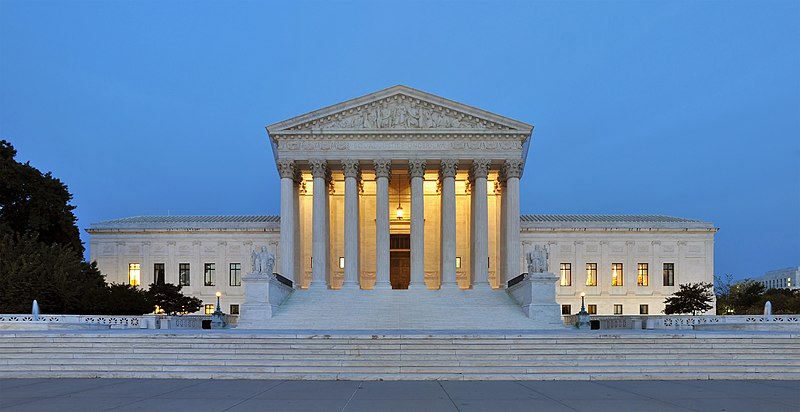
But that’s the second big takeaway: Chief Justice Roger Taney didn’t stop there. If you only got Dred Scott in school, you got the stuff Wiki spends most of its time on — the whole bit about Taney ruling that blacks aren’t, and never can be, citizens of the United States. But the truly important part is this:
Now, … the right of property in a slave is distinctly and expressly affirmed in the Constitution. … Upon these considerations, it is the opinion of the court that the act of Congress which prohibited a citizen from holding and owning property of this kind in the territory of the United States north of the [36°N 36′ latitude] line therein mentioned, is not warranted by the Constitution, and is therefore void.
In other words, not just the Missouri Compromise, but the Compromise of 1850, and indeed the very possibility of compromise over slavery, is now officially unconstitutional. Slavery is now de facto legal everywhere in the United States, because any law prohibiting it runs afoul of the 5th Amendment as interpreted by Dred Scott.
What other outcome could there be at that point? Flip the script in 1860 — let the Democrats have their shit together, and the Republicans split three ways. Stephen Douglas is now President, and while that’s a truly horrifying prospect (never, ever let a Very Clever Boy occupy the big chair), the outcome would’ve been the same, or near enough — it’d be the Yankee fanatics in the North seceding, not the Slave Power Conspiracy in the South, but somebody was calling it quits.
Severian, “1846-1861”, Founding Questions, 2022-06-25.