Quotulatiousness

July 27, 2026

The shambolic Fifth Crusade, or “Waiting for Fredot”

In The Critic, Anatoly Grablevsky reviews a new book on one of the less well-known attempts to wrest control of the Holy Land from the Islamic conquerors:
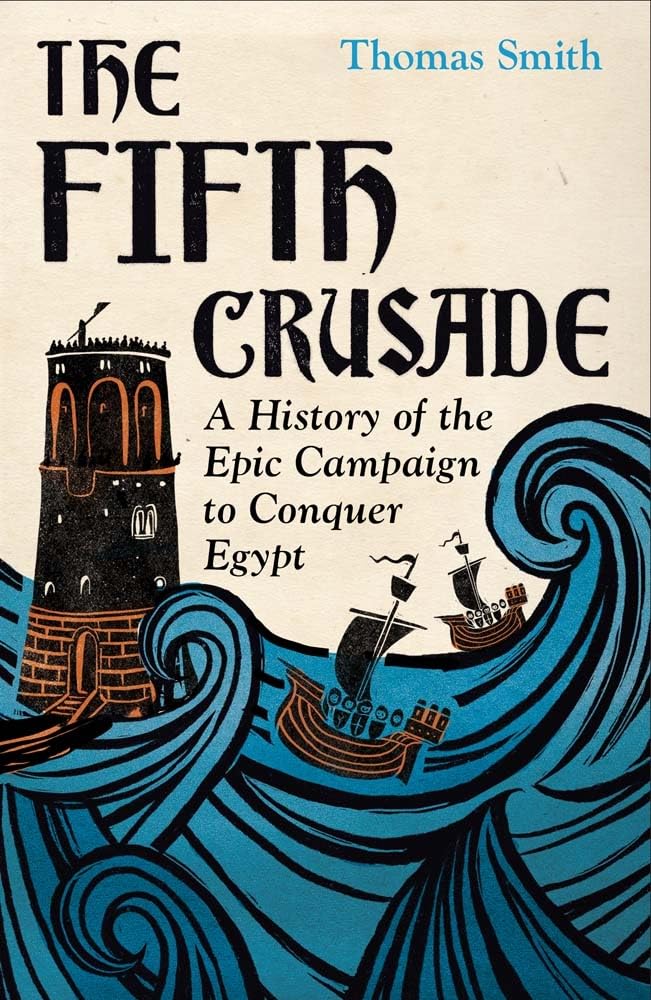
By the early 13th century, the military and geopolitical situation of the Crusader Kingdom of Jerusalem was dire. After the Third Crusade (1189-92) had failed to retake Jerusalem, the Frankish realm in the Holy Land was reduced to a thin coastal strip centred on the heavily fortified city of Acre. The rest of the Near East was in the hands of the Ayyubids, the successors of Saladin.

In response to Ayyubid encroachment, in 1213 Pope Innocent III called for a new holy war to reinforce the Kingdom of Jerusalem and reclaim the Holy City for Christendom. The bulk of the expedition was recruited in the Holy Roman Empire, whose young emperor, Frederick II, the wonder of the world himself, ostentatiously took up the cross. He was, however, in no hurry to join his countrymen in the east.

Learning from their bitter past experiences, this time around the Crusaders adopted a novel strategy. Instead of focusing their efforts on the Holy Land, the Christians targeted Egypt, the political and economic heartland of the Ayyubids.

The Crusader army’s first port of call was the coastal city of Damietta, which, after a lengthy siege, fell in 1219. This was a major victory for Christendom: Crusaders had not captured a city of Damietta’s size, wealth and strategic importance since the fall of Jerusalem in 1099.

The Ayyubid Sultan Al-Kamil, under pressure from Mongol attacks at the rear, now offered attractive peace terms that included the return of Jerusalem to the Christians. The Crusaders, overconfident and under orders from the absentee emperor, rebuffed Al-Kamil and instead decided to march on the Ayyubid capital of Cairo.

Here, the crusade took a shambolic turn. The Christians wasted precious months awaiting the arrival of Frederick II, but the emperor never bothered to show up (Smith might have called his book “Waiting for Fredot”). By the time the Crusaders finally began the march south, Al-Kamil had gathered his strength, and the Franks were quickly outmanoeuvred by the Sultan, who used his superior knowledge of the Nile’s flooding patterns to trap them against the river.

The Crusaders reacted by launching an all-out assault on their substantial wine provisions so that, when the Muslims attacked, the Christian army disintegrated in a drunken rout.

In the ensuing peace deal, Al-Kamil regained Damietta, in return for giving safe passage back to Europe to the Christian survivors.


Timeō Danaōs et dōna ferentēs

Filed under: Greece, History, Media — Tags: , , , , , — Nicholas @ 04:00

The tag in my chosen headline means roughly “beware of Greeks bearing gifts”, which anyone who has read anything about the Trojan War can understand. A huge problem for modern translators of works like The Iliad and The Odyssey is that there’s a double layer of cultural change built in before you start: the Mycenaean Greek culture of the Bronze Age — the setting of the Trojan War — is significantly different from the Greek culture of the classic era — when the oral tales were first written down (and attributed to Homer).

Classic Greek culture is often misunderstood by modern audiences through the most prominent survivals of that time: especially Greek philosophy, as the philosophers we think of as most representative of Athenian and the wider Greek culture were actually a fairly small and relatively powerless subculture at odds with the mainstream of their times.

All that said, going from a translation to an on-screen interpretation requires a lot of picking and choosing of elements to highlight and others to leave unrepresented or actively suppressed. In the most recent film of Odysseus and his extended return journey from Troy to Ithaca, director Christopher Nolan chose to portray Odysseus as a modern man in ways that may suit today’s audiences, but don’t accurately portray the Homeric interpretation or the times in which it is set:

Some viewers have described Nolan’s version of Odysseus as suffering from post-traumatic stress disorder. But moral injury is the more accurate term. It overlaps with PTSD, but it’s not the same thing. Moral injury occurs when a person commits, witnesses, or fails to prevent an act that violates his moral convictions. In war, moral injury can arise when a person does something that violates his own ideals, loyalties, or sense of right and wrong. The result is lasting guilt. A combat veteran comes to see himself as corrupt, unworthy, or beyond forgiveness.

In the film, Odysseus describes his guilt over the violence he witnessed during the sack of Troy. He is conscience-stricken about his Trojan Horse gambit. Odysseus took an object that appeared to be a gift of peace and used it as a weapon of deception. His stratagem allowed the Greeks to enter Troy, destroy the city, and slaughter its people.

But the Trojan Horse is Odysseus’s crowning achievement. Homer’s Odysseus is a wily trickster, and a trickster would not be tormented by the fact that his trick succeeded.

During his journey, he repeatedly deceives his own men for what he believes is the greater good, and these acts clearly trouble him. The war itself is remembered as grim and pointless. Men are drafted rather than rushing eagerly toward glory.

This is not Homer’s moral universe. In the poem, the Greeks rape, rob, enslave, and pillage without displaying anything like modern guilt. We can tolerate this when reading an ancient text. It is harder to tolerate when those acts are placed directly before us on a movie screen.

This may explain Nolan’s decision. Had he shown the violence of the original story without softening it, would the audience still have been able to sympathize with Odysseus?

Consider what happens to the enslaved women accused of consorting with the suitors after Odysseus returns home. Odysseus orders them to be killed, and Telemachus hangs them. Homer does not present the scene as morally complicated. Their punishment is part of restoring order.

Modern films sometimes allow their heroes to inhabit moral worlds very different from our own. Robert Eggers’s 2022 film The Northman asks us to sympathize with Viking characters who obey codes that most moviegoers today would find reprehensible. But The Northman was a mid-budget film. Nolan made a summer blockbuster that cost hundreds of millions of dollars. A blockbuster can’t afford to depict a hero from whom audiences recoil. Eggers could let his Viking be a Viking. Nolan needs his Greek warrior to be one of us.

Yet such individuals lived in societies that existed before Christian morality reshaped the Western understanding of guilt, mercy, and the value of every human life. The moral injury that afflicts Nolan’s Odysseus belongs more naturally to the AD world than the BC one.

In the film, Odysseus grieves for the men he lost and appears to blame himself for their deaths. But Homer presents that suffering as the result of pride, fate, divine anger, and human foolishness. The original story does not depict Odysseus as a man tormented by the fear that he has violated his own moral code.

The difference is clear in the episode of the lotus-eaters. In Nolan’s film, Odysseus eats the lotus because he seeks mental relief, a kind of ancient Greek version of using psychedelics to treat combat trauma. In the poem, Odysseus does the opposite. He refuses to eat the lotus and orders his men away from it.

Biosphere 2

Filed under: Environment, Food, Health, Science, USA — Tags: , , , — Nicholas @ 03:00

Sama Hoole on a now-obscure experiment in the early 1990s which didn’t produce the expected results at all:

Eight people sealed themselves in a glass dome to prove humanity could feed itself on plants, and spent two years starving in front of the world’s press.

Biosphere 2 cost a hundred and fifty million dollars. Three acres of Arizona desert under sealed glass, eight crew, door shut on 26 September 1991, nothing in or out for two years. The farm inside was worked intensively and by any agronomic measure it was superb, out-producing the most efficient smallholder farming on earth by a wide margin.

It produced 83 per cent of what they needed.

Which left Roy Walford, the crew doctor, in a sealed box with seven hungry colleagues and his own life’s work. Walford was a UCLA pathologist who had spent thirty years arguing that severe calorie restriction extends lifespan. He had doubled it in mice. And here was reality handing him his own hypothesis with the door welded shut.

So he called it a health programme.

The menu became vegetables, half a glass of goat’s milk a day, and meat or fish about once a week. The men lost close to a fifth of their body weight, the women about a tenth. And the markers Walford cared about behaved impeccably: blood pressure, glucose, cholesterol and triglycerides all down at least twenty per cent, into ranges any doctor would frame. He published it in PNAS in 1992.

The bloodwork was magnificent. The people were falling apart.

Jane Poynter wrote the book afterwards. Fatigue, depression, mental fog, and a preoccupation with food that ate the entire interior life of the crew. They stole from each other. They split into two factions that stopped speaking. The ecological research the building had been constructed for was largely abandoned by people who no longer had the headroom for anything past the next meal. The ants and cockroaches, by contrast, were thriving.

The air was leaving too. Oxygen started at 20.9 per cent and kept dropping and nobody knew where it was going. Columbia eventually worked it out: the concrete was quietly eating it. So oxygen had to be pumped in from outside, which is an interesting result for a sealed world.

Walford’s verdict on the mutiny is the whole thing in one sentence. He said afterwards that any other physician aboard would have panicked and declared they were starving, but that he knew they were on a programme of health enhancement.

He knew. Seven other people, visibly wasting, were simply mistaken.

He came out in 1993, developed ALS, blamed the conditions inside, and died in 2004 aged 79 after years on 1,600 calories a day in pursuit of a longer life. The mice got double. He did not make it to average for an American professor.

Every argument you have heard this decade was already in that building. Grow it locally. Take the animals out. Eat less. Watch the numbers improve.

Eight of the most motivated humans alive, handed three acres of the best-managed farmland on the planet and no meat, could not feed themselves.

The press reported the fighting as a personality clash.

And he updated:

I left something out of that one.

Biosphere 2 had a working farm, and the farm had pigs, chickens and goats. Only one of those three was still alive when the door opened, and the reason why is the most useful thing the entire two years produced.

    Biosphere 2 had livestock, and the crew ate the pigs first.

    Zazu and Quincy were Ossabaw dwarf pigs. In the first year one of them produced a litter of seven, which inside a sealed glass building where every calorie was counted should have been the best news anybody had.

    They killed them anyway.

    The chickens went too. Mrs Fruitcake and the rest, slaughtered because they were eating more than they were laying.

    Neither animal was killed for meat. They were killed for competing.

    A pig and a chicken have one stomach, and it wants exactly what a human wants: grain, roots, beans, anything starchy or dense. Inside Biosphere 2 there was no outside, no feed lorry, no surplus. Every mouthful a pig took came off the plate of one of eight visibly starving people. The crew did the arithmetic and reached for the knife.

    Now notice which animals survived the cull.

    The goats. Milky Way, Stardust and Vision, three African pygmy goats, milked daily for the full two years. And in the crew’s own scientific write-up, published in Advances in Space Research in 1995, they recorded that the goats were the most productive domestic animals in the entire system.

    The most productive thing in a building where the humans lost a fifth of their body weight was the ruminant.

    It is the four stomachs. A goat is a fermentation vat on legs. She runs on stalks, leaves and crop residue, the fibrous rubbish that comes off any farm and that no human gut can process, and turns it into milk. She was never taking food off the crew. She was manufacturing food out of what the crew threw away.

    So that sealed box did test the great modern argument, the one about feeding crops to animals being a waste of land and calories.

    It found the argument correct for pigs and chickens.

    It found it wrong for the animal that eats grass.

    Biosphere 2 gets quoted endlessly as proof we should grow plants and drop the livestock. Eight people with the most productive farmland on earth ran that experiment properly, went hungry for two years, and kept exactly one kind of animal alive throughout, because she was the only one paying rent.

    They killed the pigs to feed the people and kept the goat to feed the people.

The Total Erasure of Carthage | Part Four

Filed under: Africa, History, Italy — Tags: , , , , , — Nicholas @ 02:00

The Rest Is History
Published 12 Feb 2026

Three decades after the defeat of Hannibal, how had the Roman Empire managed to conquer vast swathes of the known world? Why did the predatory eyes of this terrifying behemoth turn once more to Carthage? And, could this mighty city defy the odds and repel Rome one last time …?

Join Tom and Dominic as they reach the climactic, final phase of the Punic Wars; the greatest military struggle of all ancient history.
(more…)

QotD: The art of management

Filed under: Books, Business, Quotations — Tags: , , — Nicholas @ 01:00

Despite this view being out of fashion today, most organizations retain a residual awareness that leaders should have a superset of the skills of the people they’re leading.1 So the only thing that really could serve as “management turpentine”, a transferable set of management techniques applicable to any domain, is narrowly-tailored advice for how to deal with people, how to motivate, direct, and control them. And so, by and large, that’s what management books like this one offer — techniques for the one part of the job generic enough to benefit from this kind of advice. But is it really so generic?

A nanosecond’s reflection will tell you that the techniques needed to manage computer programmers, movie actors, and the boom-town roughnecks that inspired Conan the Barbarian are going to be very different. What if we restrict our analysis to just one category, say the computer programmers?2 Well, consider another similarly restrictive category: children. The great limitation of parenting books is, as every parent of more than one child knows, that children are extremely different from one another. One child may need strict discipline, while another actually needs to be encouraged to take rules less seriously; one needs to be reassured constantly and showered with love, while another needs to have firm boundaries. The techniques that work brilliantly with one child will not work unmodified with another. If the goal is the Aristotelian mean, then some need to be nudged to one side, and others in the opposite direction.

If that’s the way it is with kids, imagine how much more so this all applies to adults, who in addition to having different innate personalities and temperaments and aptitudes also carry with them extensive life histories, experiences, and scar tissue. Any generic advice, any “management turpentine”, needs to be heavily customized to the personalities and the dynamics of a particular team. But the catch is that mastering the ability to apply this sort of generic management advice in a particular situation is pretty much just the same thing as mastering management itself.

To a very great degree, management just is the art of taking a set of discordant personalities and welding them into a harmonious whole. A great manager sizes up his or her team, sees the ambitious go-getter, the resentful and self-defeating genius, the timid and awkward newbie with leadership potential, the lazy slob who secretly glues them all together — sees not just these categories but sees the individuals and the unique ways they subvert these archetypes, and instantly and intuitively knows how to fuse them into a machine for achieving a common purpose. Or as Hilaire Belloc once put it:

    There is one element in the [management of men] which is all-important, and the possession of which is a gift, like the gift of verse or “eye” in a sport. It is not to be prayed for. It is not to be acquired. It is granted by the unseen powers. This element is that which you have in the good management of a pack of hounds, or in any other kind of good generalship. It consists in a mixture of detailed and general appreciation; for when those two faculties are combined — the faculty of seeing the individual, the faculty of seeing the whole — you have the genius of the human helmsman; as rare a sort of genius as there is among men.

But why does he say that this particular talent is not to be acquired? Go back to Johnson’s line about the management turpentine and read it again, but this time note how deftly the magic trick is performed. Do you see it? Hey presto, there are only two options as to what a book on painting could be about — “Form and Structure and Meaning,” or where to buy turpentine. This is important, because left to your own devices you might prefer a third possibility: namely a book about how to make great art. But as soon as you say it, it becomes clear why that option needs to be hidden from view — no such book has ever existed, no such book can exist, you can’t learn to make great art from a book.

John Psmith, “REVIEW: Scaling People by Claire Hughes Johnson”, Mr. and Mrs. Psmith’s Bookshelf, 2023-08-28.


  1. Fewer and fewer every day though. A United States military friend recently pointed out to me that the high ratio of senior Russian officers killed in Ukraine and Syria speaks well of their military culture, because it means that even their general officers make a custom of occasionally leading from the front (there’s a long history of this in the Russian armed forces). He then reflected bitterly that an American general being killed was simply unthinkable, since to a man they sit in air-conditioned offices and command their troops over satellite link.
  2. Johnson’s book is marketed towards those managing computer programmers, which is interesting since she worked on the operations side of the house and as far was I know has never been in charge of a crew of engineers.

Powered by WordPress