Quotulatiousness

July 8, 2026

Don’t call them “U-boats”!

Filed under: Cancon, Germany, Military, Weapons — Tags: , , , , — Nicholas @ 05:00

In his latest post for The Line, Matt Gurney violates the cardinal rule of discussing German naval equipment … don’t call ’em “U-boats”!
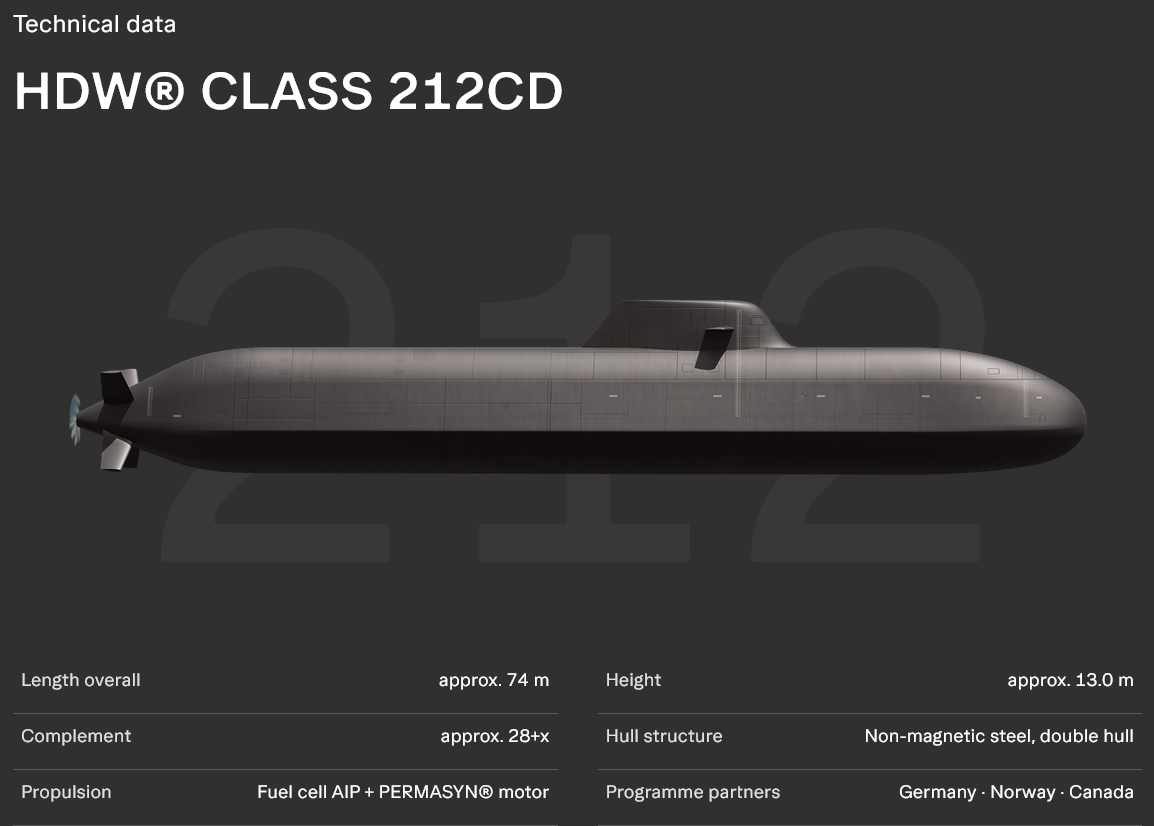
In Halifax on Monday, Prime Minister Mark Carney announced that Canada had chosen a preferred vendor for our new fleet of patrol submarines. Canada will (probably) be going with a German-Norwegian consortium that was offering the Type 212CD submarine, and not the South Korean boats offered by Hanwha. The prime minister said it was a close finish between the two competitors and noted that either design would have met Canada’s needs. The decision announced Monday is not a final purchase order but rather a determination of who our preferred partner would be. The prime minister said that if the negotiations with TKMS, the German company offering the 212CD, did not go well, Hanwha remained an acceptable option.

Personally, I was rooting for the Koreans. I liked their submarine’s ability to launch missiles vertically, which would’ve given the Canadian fleet some powerful strike options. I also tripped a little over the thought of Canadians in U-boats — I suspect many historically minded Canadians will also blink hard at that little twist of fate. But I fundamentally agree with the prime minister — either boat is fine for our purposes. The 212CD will be an excellent asset once it enters Canadian service (presumably with a snappier name).

Sooner would be better. The prime minister noted repeatedly during his remarks on Monday that the government was moving quickly to make this announcement, having settled on a preferred partner five years ahead of the original schedule. This is true, and I give the prime minister full credit for that. I would also note that the schedule was already ridiculously long. We actually should have begun replacing the submarines a decade ago. The PM’s comments reminded me that I had written a column about the urgent need to just get on with replacing the submarines when we had last announced another cycle of refurbishments to keep the current fleet in service because we had yet again delayed a decision on a replacement.

I found my old article. I wrote it seven years ago.

That was bad. Carney accelerating it is good. It’s also good that we are looking at a much larger fleet of submarines, going from four to as many as 12. Submarines are very complicated machines. For every boat you want available for service, you need three or four in your fleet. This gives you a large enough fleet to have an operational submarine available while others undergo maintenance or refits or participate in training exercises with their crews. The four Victoria-class submarines Canada possesses today mean that we typically might have one available for service at any given time, so a fleet of 12 will give us a much more robust presence. Given that we claim three oceans, and that the world is pretty much a dumpster fire these days, having a submarine available on each coast at all times seems like a good idea.

Time is of the essence. Germany and Norway, the prime minister said, have offered to allow Canada to cut ahead of them in line for deliveries of the submarines, which are already under construction but haven’t yet entered service. Given the decrepit state of our elderly existing fleet, that was obviously a meaningful sweetener, and the PM said the first boats could be in Canadian service in seven or eight years, which is pushing the Victorias to their limits, but should work. We hope?
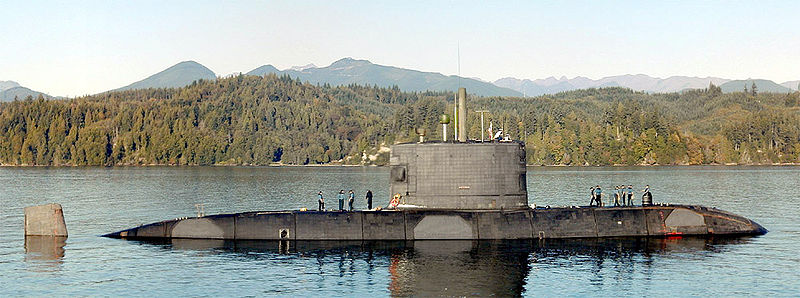
HMCS Victoria, one of four ex-Royal Navy submarines in Canadian service, will have to carry on in service — as much as the class can carry on — until the early 2030s.
Image via Wikimedia Commons.
The Korean War Week 107 – America on Strike! – July 7, 1952

Filed under: China, History, Military, USA — Tags: , , , , , , , — Nicholas @ 04:00

The Korean War by Indy Neidell
Published 7 Jul 2026

The US Steelworkers Union strike enters its second month this week with no end in sight and the lack of steel production is affecting the war, worsening what is already an artillery shell crisis. President Harry Truman even considers taking over the steel industry to salvage the war effort. In South Korea, the constitution is amended to allow direct popular Presidential elections rather than the President being chosen by the National Assembly and in Chicago, at the end of the week the US Republican Party Convention begins, with Douglas MacArthur giving the keynote address.

00:00 Intro
00:39 Recap
01:09 Local SK News
03:22 Bombing the Power Plants
05:24 Artillery Crisis and Steelworkers Strike
09:53 Republican Convention Begins
13:46 Summary
13:59 Conclusion

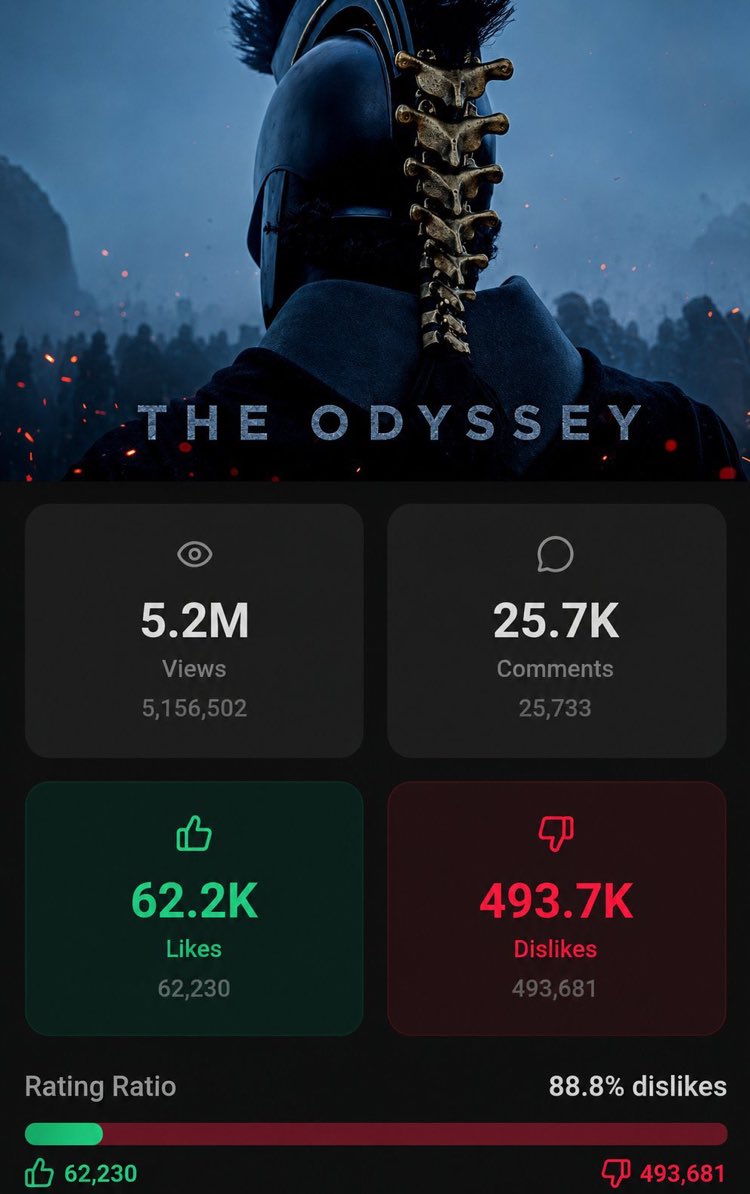
Initial reactions to The Odyssey trailer

Filed under: History, Media, USA — Tags: , , , — Nicholas @ 03:00

As always, I’m not closely following whatever movies Hollywood chooses to extrude, but I do see the occasional high and low lights from the reactions of others. The latest attempt to portray Homer on screen isn’t finding it easy to get potential viewers excited:

The public reaction to the Odyssey trailer is a strong indication that Nolan’s reputation won’t be enough to prevent this turd from leaving a smoking crater in the studio’s budget.

People are sick of blackwashing. They’re sick of girlboss reimagining. They’re sick of every movie turning into a sermon.

Does this mean that a Tipping Point will be reached, that Hollyweird will finally sit up and pay attention to the dashboard full of red warning lights and sirens screaming for its attention?

Lol. Lmao.

The cultural revolution means that everyone in a position to do something has been replaced with religious fanatics who don’t care about nonsense like “money”.

Just like every other institution they suborned.

They are crashing the plane with no survivors, and as it goes down in flames they will take the opportunity for a final smug lecture about how the failure of the audience to appreciate them demonstrates that the audience are nothing but white supremacists.

I’ve seen speculation that the current crop of “big” movies were all in early production just at the peak of a few trends that have since receded in popular culture — girlbosses and general wokeness — and it might just be a matter of timing … or it could be that Hollywood’s movers and shakers are still determined to press on with the undiluted progressive message even if it means losing hundreds of millions of dollars with every new release.

On the topic of The Odyssey, Ted Gioia talks about his own discovery of Homer as a youngster and says “youngsters were Homer’s target audience — you can feel that at every turn in his story”:

The first work of classical literature that thrilled me to the depths of my soul was the Odyssey. It made such a big impact that, decades later, I insisted on reading it aloud to my own children, hoping they would feel that same magic.

I was little more than a child back when I discovered Homer — 12 or 13 years old, I’d guess. Back then I knew more about comic books than serious literature. But I was outgrowing Spiderman and Superman, and decided to take a chance on Odysseus.

I approached this book with fear and trembling — worried it might be too difficult. But I soon discovered that Homer was the Stan Lee of antiquity. He told adventure stories not much different from the ones peddled by Marvel or DC.

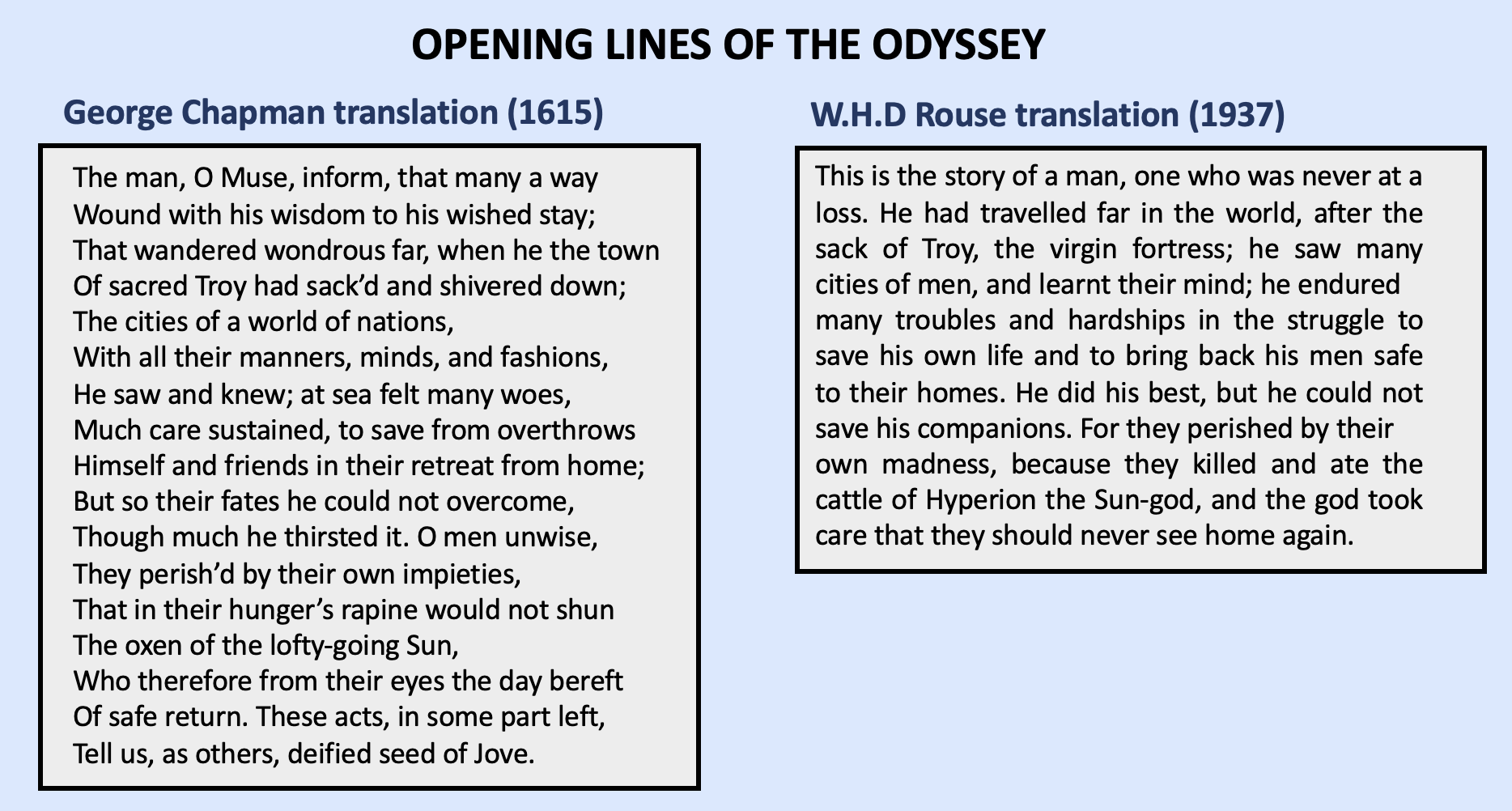
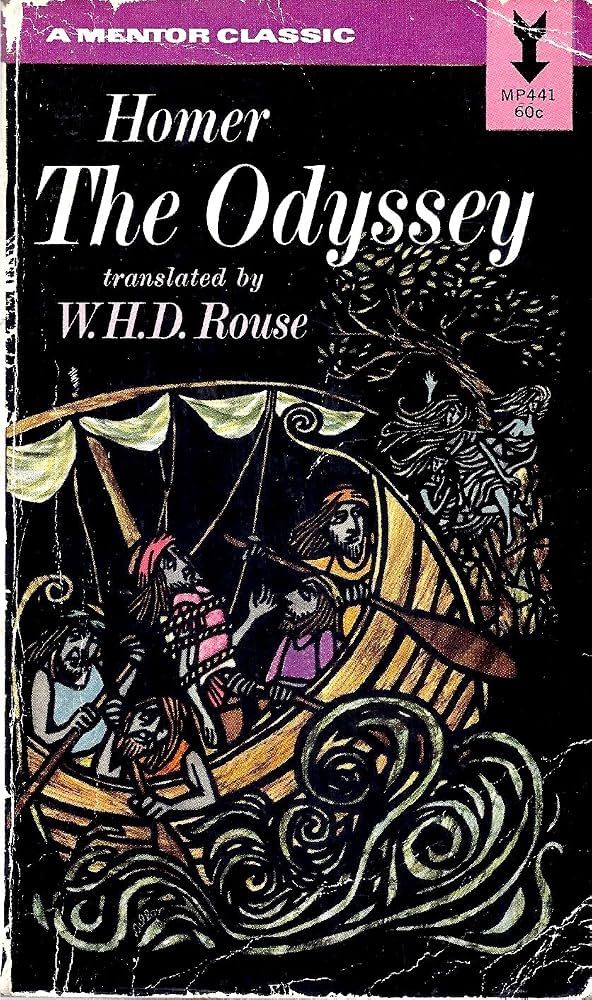
I’d somehow gotten my hands on a tattered used paperback copy of the Odyssey, in a 1937 prose translation by W.H.D. Rouse — published by Mentor Classics (cover price when new = 60 cents). This is not a respected translation — they will never assign Rouse’s version of Homer at any Ivy League college. [NR: I think this is the way I first encountered The Odyssey … possibly this version in Grade 5 as it was a prose translation.]

That’s because the legit translators try to convey this epic as poetry. Rouse made no attempt at that. He just turned Homer into everyday language, just like it was a pulp fiction story for the mass market.

That was the right choice, he believed, because (as he wrote in his introduction): “The Odyssey is the best story ever written … It has been a favorite for three thousand years”. Other translations of this book are, he claimed, “filled with affectations and attempts at a poetic language Homer himself is free from. Homer speaks naturally and we must do the same.”

You can see the difference by comparing Rouse’s rendering of the opening lines with the esteemed Chapman translation from Shakespeare’s era.

Is this the best version of Homer? I won’t go that far — years later I became very fond of Robert Fitzgerald’s translation. But I will insist that Rouse is the superior version for a youngster. And, in many ways, youngsters were Homer’s target audience — you can feel that at every turn in his story.

So this is the first thing about the Odyssey you won’t learn at Harvard — namely that this tale was not intended for Harvard elites. It’s a story for everybody. So it’s an obvious choice for a big-budget Hollywood movie. There was no pretension or elitism in Homer’s approach. In today’s parlance, you would say that he was appealing to a mass audience.

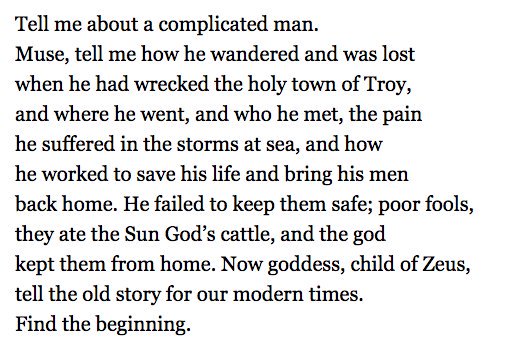
Director Christopher Nolan — whose screen version of the Odyssey makes its debut in London today — relied on the more recent Emily Wilson translation of the Odyssey into iambic pentameter. In her version, our hero is described, like Shaft, as a complicated man who won’t cop out (when there’s danger all about). Okay, she doesn’t use those exact words, but comes close …

Emily Wilson’s translation of the opening lines of the Odyssey

I like this rendering, and can almost hear that Isaac Hayes synth vamp in the background. Wilson is just as straightforward as Rouse — living up to her aspiration to “tell the old story for modern times”.

ZKP-524: A Prototype Czech 7.62x25mm 1911 Copy

Filed under: Europe, History, Military, Weapons — Tags: , , , , — Nicholas @ 02:00

Forgotten Weapons
Published 18 Feb 2026

The Czechoslovak military knew when they adopted it that the vz.52 pistol was not very good, and they initiated a replacement program at the same time as its adoption. Two pistols were developed to be its replacement; the CZ 531 and the ZKP 524. The ZKP was designed by the brothers Josef and František Koucký, based heavily on the Colt 1911 and Tokarev TT33 pistols. It was chambered for the 7.62x25mm cartridge as required by the military, and held 8 rounds in a single-stack magazine. In trials against the CZ-531, it proved to be more accurate, but less reliable and more expensive. It suffered a cracked slide after 4,198 rounds fired, and an improved second example was made. However, the vz.52 proved good enough despite its shortcomings, and the program to replace it fizzled out after this testing.

Thanks to the Czech Military History Institute (VHU) for graciously giving me access to this unique prototype to film for you! If you have the opportunity, don’t miss seeing their museums in Prague:
https://www.vhu.cz/en/english-summary/

CZ 531 video: • CZ-531: A Czech Browning in 7.62mm Tokarev
(more…)

QotD: The Wilmot Proviso

Filed under: Americas, History, Quotations, USA — Tags: , , , , , , — Nicholas @ 01:00

The details of the procedural shenanigans aren’t important. The thing to know is, the Wilmot Proviso made official and on-the-record what everybody knew, but was desperate to keep sub rosa: The Mexican War was a war for slavery. Specifically, it was a war for Texas (and California), which was a massive new slave state. And since pretty much all territory captured from Mexico after the inevitable US victory would be below the old Missouri Compromise line, slavery would be legal in all of it under the Compromise.

The Wilmot Proviso attempted to scotch that, which forced the Senate, at least, to come right out and say it. People always underestimate the power of words and symbols, and professional historians are among the worst offenders. With the newer generations of pros it’s ideological enstupidation that causes it, but the older folks were almost as bad. It’s a structural issue — we rely on documents, so even though “the temper of the times” is real obvious in the aggregate, unless you can pin it down to specific statements in archival sources it’s hard to make your case.

If it helps, think of the couple whose marriage is obviously on the rocks. They fight constantly, they all but live separately, everybody knows their relationship is doomed … but when one of them finally comes out and says “I want a divorce”, things often change radically. Temporarily, most often, but how many people have you seen suddenly make all-out efforts to patch things up only after somebody finally says the D-word?

You can hear the capital letters in their voices. Before, all that stuff — romantic weekend getaways and the like — were attempts to “get back on track” or “spice things back up” or whatever. As soon as someone says Divorce, though, all those things become capitalized — we’re Saving Our Marriage.

The Wilmot Proviso was like that. Somebody finally said the D word.

Severian, “1846-1861”, Founding Questions, 2022-06-25.

Powered by WordPress