
Dominion Defence Review
Published 8 Aug 2026Plagued by chronic low availability while also being expensive to maintain, the purchase of used British submarines seems to be a good reminder that a low sticker price isn’t everything …
August 10, 2026
Was Canada’s Victoria-class submarine deal a massive procurement failure?
Comments Off on Was Canada’s Victoria-class submarine deal a massive procurement failure?
July 8, 2026
Don’t call them “U-boats”!
In his latest post for The Line, Matt Gurney violates the cardinal rule of discussing German naval equipment … don’t call ’em “U-boats”!
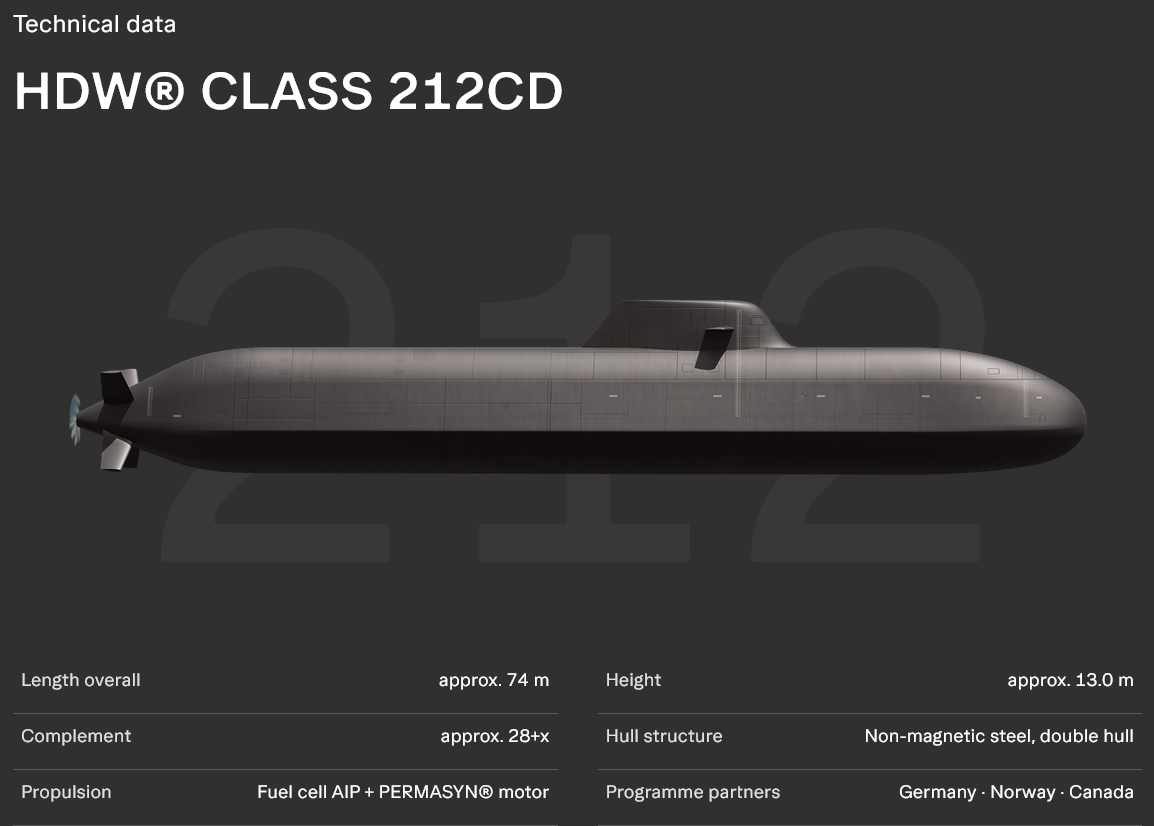
In Halifax on Monday, Prime Minister Mark Carney announced that Canada had chosen a preferred vendor for our new fleet of patrol submarines. Canada will (probably) be going with a German-Norwegian consortium that was offering the Type 212CD submarine, and not the South Korean boats offered by Hanwha. The prime minister said it was a close finish between the two competitors and noted that either design would have met Canada’s needs. The decision announced Monday is not a final purchase order but rather a determination of who our preferred partner would be. The prime minister said that if the negotiations with TKMS, the German company offering the 212CD, did not go well, Hanwha remained an acceptable option.
Personally, I was rooting for the Koreans. I liked their submarine’s ability to launch missiles vertically, which would’ve given the Canadian fleet some powerful strike options. I also tripped a little over the thought of Canadians in U-boats — I suspect many historically minded Canadians will also blink hard at that little twist of fate. But I fundamentally agree with the prime minister — either boat is fine for our purposes. The 212CD will be an excellent asset once it enters Canadian service (presumably with a snappier name).
Sooner would be better. The prime minister noted repeatedly during his remarks on Monday that the government was moving quickly to make this announcement, having settled on a preferred partner five years ahead of the original schedule. This is true, and I give the prime minister full credit for that. I would also note that the schedule was already ridiculously long. We actually should have begun replacing the submarines a decade ago. The PM’s comments reminded me that I had written a column about the urgent need to just get on with replacing the submarines when we had last announced another cycle of refurbishments to keep the current fleet in service because we had yet again delayed a decision on a replacement.
I found my old article. I wrote it seven years ago.
That was bad. Carney accelerating it is good. It’s also good that we are looking at a much larger fleet of submarines, going from four to as many as 12. Submarines are very complicated machines. For every boat you want available for service, you need three or four in your fleet. This gives you a large enough fleet to have an operational submarine available while others undergo maintenance or refits or participate in training exercises with their crews. The four Victoria-class submarines Canada possesses today mean that we typically might have one available for service at any given time, so a fleet of 12 will give us a much more robust presence. Given that we claim three oceans, and that the world is pretty much a dumpster fire these days, having a submarine available on each coast at all times seems like a good idea.
Time is of the essence. Germany and Norway, the prime minister said, have offered to allow Canada to cut ahead of them in line for deliveries of the submarines, which are already under construction but haven’t yet entered service. Given the decrepit state of our elderly existing fleet, that was obviously a meaningful sweetener, and the PM said the first boats could be in Canadian service in seven or eight years, which is pushing the Victorias to their limits, but should work. We hope?
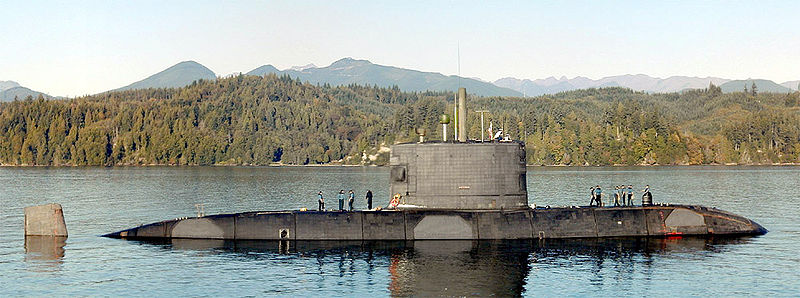
HMCS Victoria, one of four ex-Royal Navy submarines in Canadian service, will have to carry on in service — as much as the class can carry on — until the early 2030s.
Image via Wikimedia Commons.
Comments Off on Don’t call them “U-boats”!
July 7, 2026
Canada decides to buy German submarines
I wouldn’t say I’ve been closely following the Canadian Patrol Submarines Project (CPSP), but I was interested enough to do a bit of reading about both of the contending bidders and their offerings. Based on my understanding of the RCN’s needs, I expected the South Korean KSS-III submarine to be the final winner, but I was wrong: Prime Minister Mark Carney announced that the German/Norwegian TKMS Type 212CD submarine had been selected instead.
Type 212 submarines at the HDW shipyard in Kiel, Germany, 1 May 2013.
Photo by Bjoertvedt via Wikimedia Commons.Submarines enable the Royal Canadian Navy (RCN) to defend threats near and far from Canada’s shores. Yet, our current fleet is aging, with only one of four submarines seaworthy. With the longest coastline in the world, Canada’s ability to deploy underwater surveillance capability is critical. Our security and sovereignty depend on them.
Today, at Canadian Forces Base Halifax, the Prime Minister, Mark Carney, announced that Thyssenkrupp Marine Systems (TKMS) has been selected as the preferred supplier to begin negotiations for delivering Canada’s next fleet of submarines to the RCN. This will be the largest defence procurement in Canadian history, and it will equip the RCN with the capabilities they need to keep Canadians safe.
With ultra-low acoustic and magnetic signatures, TKMS’ 212CD is one of the stealthiest submarines in the world. It is capable of Arctic patrol, undersea surveillance, special forces deployment, and it is fully NATO-interoperable. These submarines provide an unparalleled combination of advanced technology and lethality that will enable the RCN to detect, track, deter and, if necessary, defeat adversaries in all three oceans bordering Canada. This procurement will bolster Canadian security through a platform shared by Germany and Norway, two of Canada’s closest Allies.
The Government of Canada and TKMS will now enter into negotiations to finalise the contracts and all arrangements required to deliver the requirements of the CPSP. Canada will conclude contracting no later than the end of 2027, with the first four submarines to be delivered ahead of schedule, in 2034. In the event that negotiations with the preferred supplier are unsuccessful, Canada may designate Hanwha Ocean as the preferred supplier and enter into negotiations.
The CPSP is being advanced by the Defence Investment Agency and aligns with Canada’s Defence Industrial Strategy. Under the Build-Partner-Buy framework, the project demonstrates the Partner approach, with collaborations with trusted Allies to develop and deliver capabilities while ensuring industrial and economic benefits for Canada. The CPSP will prioritise investments across the Canadian supply chain, to create high-paying jobs, leverage Canadian defence industries, and maximise benefits for Canadian workers and businesses.
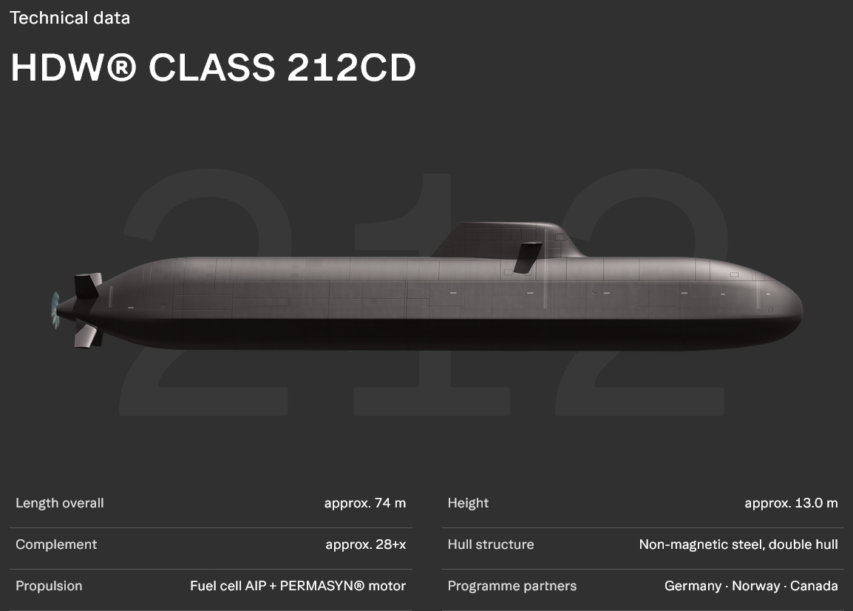
Noah comments on the press release information and some wider issues to do with the CPSP:
And with this, the long-awaited Canadian Patrol Submarine Project finds its home. What started as an ambitious RFI back in 2024 has quickly turned into one of the most consequential, publicized, and dynamic projects, I would say, in Canadian history.
TKMS and Kongsberg, operating as Team GERNOR, have claimed the preferred supplier designation from the federal government. As always, there is no contract today. The selection of a preferred supplier merely sets the table for negotiations to a final contract.
While the federal government will want to move quickly, and I’m sure that the Navy would like to see the contract signed, it is highly likely that comes in 2027. The typical “quick” timeframe is about a year. Keeping in mind, of course, that CPSP will be the largest procurement contract in federal history,1 and in this case also includes additional negotiations on build slots for submarines from both Germany and Norway.
[…]
There was no universal consensus, and I know this choice didn’t come easy for anyone. Both sides put all they could into it. Yet in the end, the GERNOR option pulled ahead. The European focus was championed heavily by those in the PMO as an opportunity to open doors and integrate Canadian industry into the wider European ecosystem, especially as European interest in Canadian expansion grows.
At the end of the day, that ecosystem came out on top. In the final weeks and months of the competition especially, the banner of Europe rallied to the call of unity, to stand with their hands at the back of Team GERNOR. That push, and that united front, is very likely what pushed that sense of alignment forward.
You don’t need to look far for it. Just after CANSEC, Italy’s Fincantieri, a noted ally of TKMS, signed a new MOU with Magellan Aerospace to investigate the potential production of heavyweight torpedoes and undersea countermeasures, building off the proposed investment TKMS plans to make.
While not in the 212CD network, Fincantieri is in the family, and they, among others, are also looking to Canada and our choices. It is the first example of the TKMS family taking notice and making proactive moves to jump in and secure capacity in a future Canadian submarine industry; and, as I understand it, far from the only one being discussed.
Another outside addition: Navantia of Spain and TKMS have also recently signed an MOU to investigate collaboration on naval shipbuilding. While this new agreement is young, I am also led to believe that Navantia is looking to Canada with interest, building off some of their previous engagements with industry.
Increasingly, the European front is united in industry, in the political sphere, and diplomatically to present the 212CD not as a German-Norwegian partnership but as a foundational Canada-Europe partnership that will build off the foundation of agreements like SAFE and the EU-Canada Security and Defence Partnership to create a united Atlantic front that promotes collaboration and joint investment, and opens the European market to Canadian industry.
- NR – “the largest procurement contract in federal history” … Canada’s major military purchases happen so rarely and always taking as long as bureaucratically/politically possible, so every ship, aircraft, helicopter, or tank purchase has a good chance of being the next “largest procurement contract in federal history”.
May 25, 2026
CP-121 Tracker; carrier-borne ASW powerhouse turned aerial firefighter
Polyus
Published 31 Jan 2026This is an aircraft carrier borne submarine hunter, dressed up like a firefighter. Its story is one of Cold war posturing, coastal policing, and aerial firefighting. Quite the career for such an unassuming looking aircraft. It was the de Havilland Canada CP-121 Tracker, an icon of Canadian aviation for almost 60 Years.
0:00 Introduction
0:30 Historical Context
1:58 Tracker or Gannet?
4:26 Canadian built CS2F-1 Trackers
9:06 CS2F-2
10:23 CS2F-3
13:12 New roles
15:14 Marine Reconnaissance
16:10 Conair Firecat/Turbo Firecat
17:48 Conclusion
(more…)
Comments Off on CP-121 Tracker; carrier-borne ASW powerhouse turned aerial firefighter
April 21, 2026
The Royal Canadian Navy’s proposed Arctic Mobile Base
At True North Strategic Review, Noah tries to answer the obvious question “what the hell is an Arctic Mobile Base?”
RCN Arctic Mobile Base concept image
RCN via True North Strategic ReviewFor those that don’t know, the Arctic Mobile Base, as it is currently called, is officially on the books. Despite a few years of conceptualization, the project is still in its early stages.
I always feel the need to reiterate that to folks; it is very much still a concept. It is not funded, not approved, but despite that, we already have a fairly decent vision of what the RCN is sorta looking for as a platform.
[…]
When you hear a name like Arctic Mobile Base, I’m sure a lot of ideas go through your head. Indeed. What exactly is a base in this context? Who or what is it meant to support? What sort of gaps is it designed to fulfill?
To understand the AMB (as I will call it from here on out), you need to understand exactly what the Navy is facing up in the Arctic; more specifically, the difficulty in building and maintaining infrastructure. With the failure of Nanisivik, the RCN is faced with a difficult position.
The first thing you need to know here is fundamental limitations. Canada, unlike our other allies, lacks an available ice-free port to utilize in the Arctic year-round. The closest available major ports that Canada has access to with year-round access are Saint John on the East Coast and Prince Rupert on the West Coast.
Iqaluit, Tuktoyaktuk, and Churchill, the major ports available in the Canadian Arctic, all freeze in the winter. Even Nome in Alaska freezes. The only port facility available year-round would be in Nuuk, where, while work is underway on the Danish side to expand current facilities, it is still not enough to provide ample support for Canadian vessels operating in the Archipelago.
[…]
That brings us to the vessels themselves, or at least the concept as I have been told. I guess one could say they are the true successors to the original Joint Support Ship concept; maybe even ALSC if you want to get deep into the philosophical.
They are an everything vessel. They will be Command and Control centres. They will have large, extensive medical facilities. They will be Replenishment Vessels, able to support the rest of the fleet at sea. They might have some submarine tender capabilities and forward repair capabilities built in. Those two are me speculating, though I’m sure someone is asking those questions.
They will be HADR platforms, able to operate independently of any existing infrastructure like ports. They will have an amphibious capability to support that, and if needed, support the Army in any endeavour they find themselves in. They will be able to reach any other vessel in the fleet, even the Polars if required.
That means that as of now, the Navy is looking at PC 2 for its potential rating, a monumental ask. It is likely to have similar range and endurance requirements to the existing Polar Icebreakers, so perhaps around a 25,000-30,000 Nautical Mile Range (as a general rough figure) and upwards of 270 days endurance.
That will allow for the AMB to maintain a persistent, on-station capability in the Archipelago for an extended period of time, similar to the future Arpatuuq and Imnaryuaq. Again, the AMBs are meant to be a semi-permanent capability in the Arctic, with the desire to have one up there or available to get up there at any given time and stay up there supporting both the fleet and local communities for an extended period of time.
As for what I know? Two are planned. Both will be based on the East Coast, where it is easiest to access the Arctic compared to going from Esquimalt, past the Bering Strait, and over Alaska. It is also the area of most activity for the Navy. So it makes sense, along with the typical desire to consolidate maintenance, crews, training, and additional infrastructure.
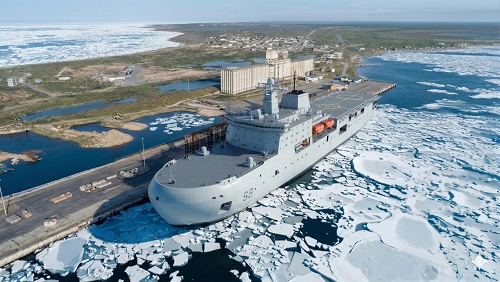
While I’m pleased to discover that the RCN seems to be taking the Arctic seriously and doing planning to that end, we should also keep in mind that the federal government is a big believer in the “ice free Arctic by 2050” predictions, they may not be willing to fund hulls built to PC 2 levels of ice-breaking capability. Which would be fine if the predictions come true, but very limiting to the planned ships if the Arctic fails to warm up as the climate models claim it will.
Comments Off on The Royal Canadian Navy’s proposed Arctic Mobile Base
April 19, 2026
HMCS Magnificent – Canada’s Forgotten Carrier
Skynea History
Published 13 Nov 2025The Royal Canadian Navy is probably not the first one you think about for naval aviation. You’re more likely to think of lighter ships, like Haida.
However, the Canadians would operate three aircraft carriers during the Cold War. The short-lived (well, short-lived in Canadian service) Warrior. The more famous Bonaventure, that I’ve covered before. And, the topic of this video, HMCS Magnificent.
The middle child and probably the least famous of the three. But the one that is, largely, responsible for building Canadian carrier doctrine. It was Magnificent that built up the Canadian naval air arm. Magnificent trained the pilots that would go on to serve with Bonaventure.
And Magnificent is often overlooked for being the middle child. Hence why I chose to cover her today.
Further Reading:
https://forposterityssake.ca/Navy/HMC…
https://naval-museum.mb.ca/rcnships/c…
Comments Off on HMCS Magnificent – Canada’s Forgotten Carrier
March 17, 2026
Will Canada Outpace the UK in Surface Fleet Numbers?
Warships & Warriors
Published 13 Mar 2026The Royal Canadian Navy (RCN) is facing a critical turning point in 2026. Caught between a massive 20% personnel shortfall and the urgent need to project power globally, Canada is being forced to make difficult decisions, including the early retirement of eight Kingston-class warships. However, despite these severe manning challenges and aging hardware, Canada is quietly executing one of the most ambitious naval modernisation programs in the Western world.
In this video, we break down the complete state of the Royal Canadian Navy’s surface and subsurface fleet in 2026. We explore the twilight years of the Victoria-class submarines, the heavy burden placed on the aging Halifax-class frigates, and the massive success of the new Harry DeWolf-class Arctic and Offshore Patrol Vessels.
Looking to the future, we analyse Canada’s generational leap in naval technology. With the highly advanced River-class Destroyers entering production, boasting AEGIS combat systems and Tomahawk missiles, and a new fleet of conventionally powered submarines on the horizon, the RCN is transforming into a Tier 1 maritime force. But with 15 new destroyers and up to 12 new corvettes planned, is Ottawa actually taking its future maritime defence more seriously than London?
(more…)
Comments Off on Will Canada Outpace the UK in Surface Fleet Numbers?
February 20, 2026
The Canadian Patrol Submarine Project
The Royal Canadian Navy is planning to replace its four current conventional submarines, the British-built Victoria class with a dozen new conventional submarines from either South Korea or Germany (a joint German-Norwegian design). Michael J. Lalonde, a former Canadian intelligence officer, goes through the requirements for the new submarines, the two contending designs’ strengths and weaknesses, and makes his own recommendation for the RCN’s next submarine class:
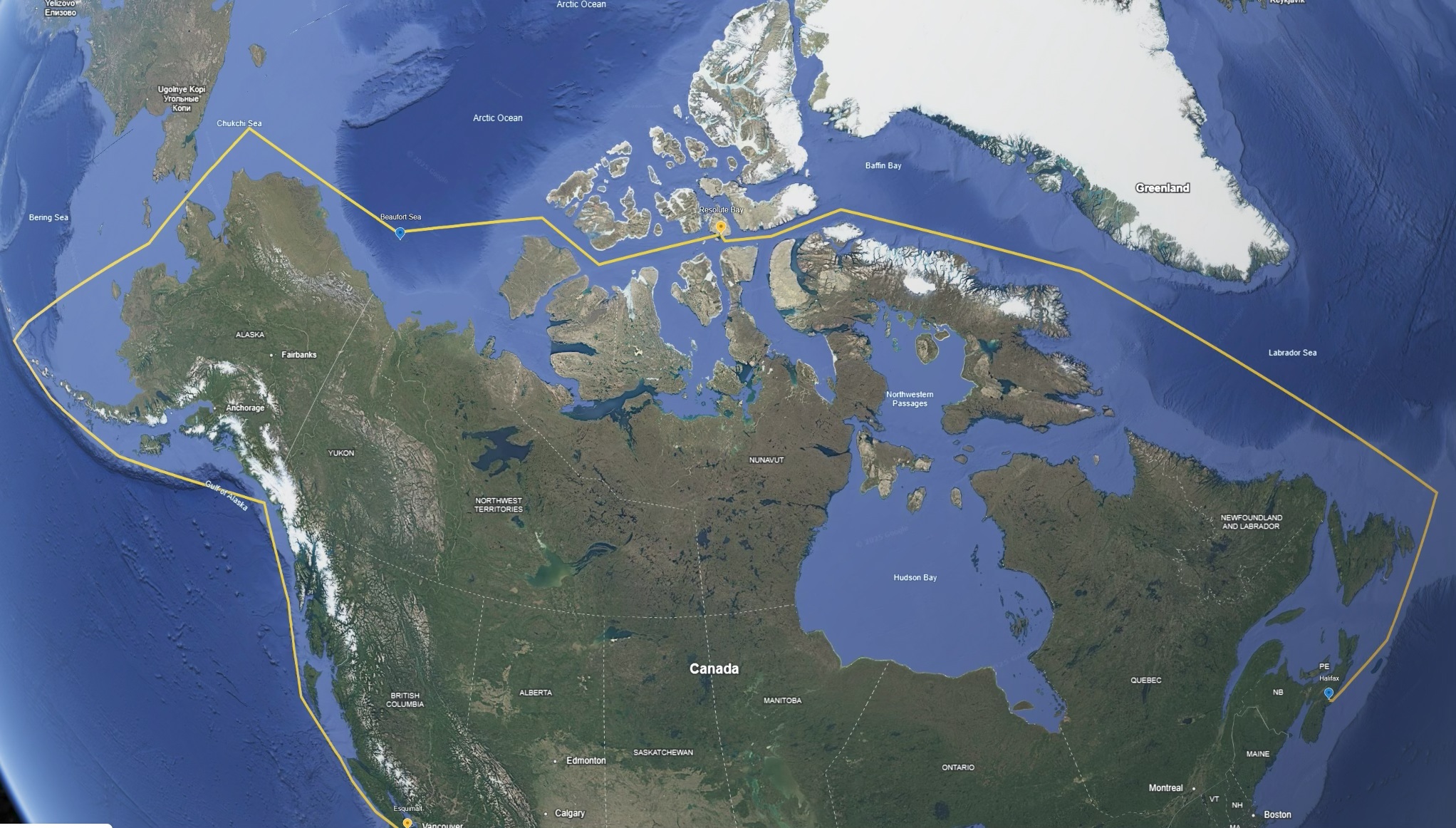
Rough transit routes to Canada’s Arctic from Esquimalt BC and Halifax NS
The first step is to assess what the Government of Canada wants out of its new submarine fleet and what capabilities it will need to achieve its objectives. I’m starting here because there is a common misconception that Canada needs submarines exclusively for Arctic patrol and surveillance, which is false. While it’s true that Arctic sovereignty and security are quite rightfully a preoccupation for the government, patrolling Canada’s Arctic is not the only capability Canada needs out of its new fleet. However, it is the most common argument in favour of a submarine fleet since Arctic sovereignty remains popular within Liberal and Conservative circles alike, along with mainstream media.
Unfortunately, this narrative forces a lopsided conversation about the role these new boats will be expected to play over the coming decades. In addition to Arctic operations, these subs will be expected to deploy far into the North Atlantic with NATO and push across the Pacific to support the Indo-Pacific Strategy. Ottawa’s own defence policy update ties submarine recapitalization to contributions with allies in both theatres.
This implies a blue-water capability, which means these conventionally powered submarines must be able to deploy and fight in the open ocean, far from home ports and daily logistics, for extended periods. This requires long range and endurance for transoceanic transits, sustained submerged persistence through air independent propulsion (AIP) and high-capacity batteries to minimize snorkelling, and habitability and maintenance margins that keep the crew and systems effective past the 30- to 60-day mark. Simply put, the new boats must be able to cross an ocean, remain covert and lethal on station, and deliver effects.
The government further stipulated specific capabilities that the new submarines must have in one of its press releases stating “Through the Canadian Patrol Submarine Project (CPSP), Canada will acquire a larger, modernized submarine fleet to enable the Royal Canadian Navy to covertly detect and deter maritime threats, control our maritime approaches, project power and striking capability further from our shores, and project a persistent deterrent on all three coasts.”
What caught my attention here is the ability to project power and striking capability further from our shores. Power projection is synonymous with a blue-water capability; however, a striking capability, which I take to mean a land strike capability, is not typical for a conventionally powered SSK, which are typically armed only with torpedoes to take out other submarines or surface vessels.
To sum up, Canada’s new subs must be able to:
- Patrol the Arctic with under-ice capability year-round
- Deploy with NATO in the North Atlantic and support Canada’s commitment to the Indo-Pacific Strategy – A blue-water capability
- Remain submerged for three weeks or more at a time
- Covertly detect and deter maritime threats
- Control Canada’s maritime approaches
- A range of 7000 + nautical miles
- Project power far from home ports
- Anti-surface and subsurface warfare
- Land-attack capability via cruise and/or non-nuclear ballistic missiles
- Insert Tier-1 special operators on coastal infiltration missions
- Conduct intelligence, surveillance, and reconnaissance in Canadian maritime approaches and abroad.
With that out of the way, let’s look at what each submarine can do.
He outlines the two competing designs and how they could meet the RCN’s needs and then plumps for the South Korean KSS-III for its stronger case for meeting those needs in the wider ocean environments than the German/Norwegian Type 212CD:
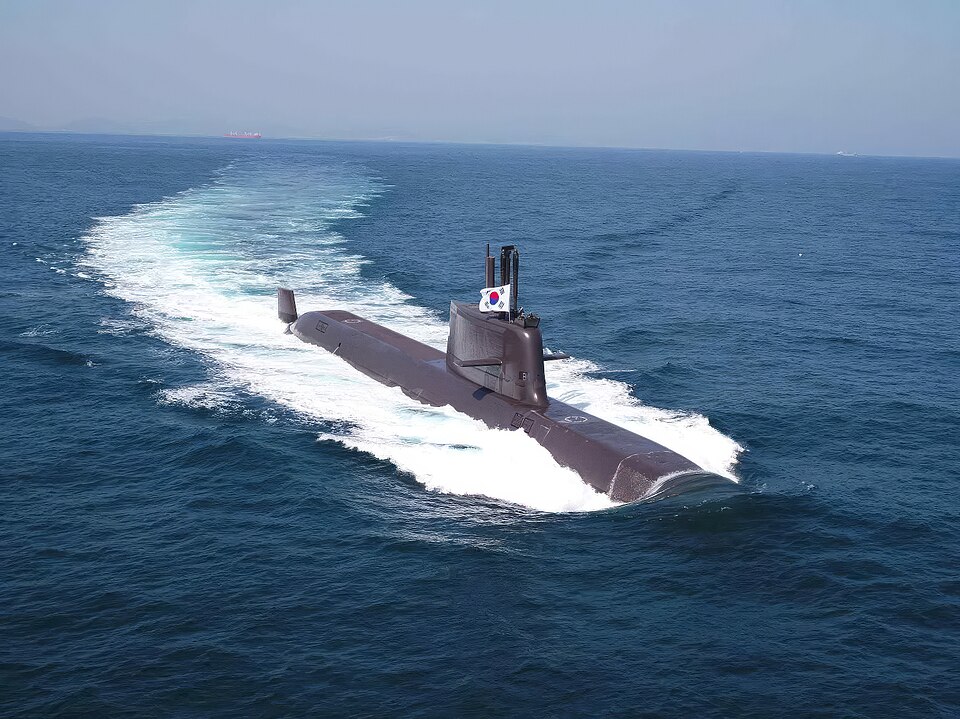
ROKS Shin Chae-ho, a KSS-III submarine at sea on 4 April, 2024.
Photo from the Defense Acquisition Program Administration (DAPA) via Wikimedia Commons.
The KSS-III is the only conventional submarine that can meet all of Canada’s requirements. It combines the blue-water reach and endurance demanded by transoceanic tasking with a vertical launch system that enables credible land-attack and complex anti-surface strike options, supported by lithium-ion batteries that lengthen quiet submerged persistence and improve sortie tempo on distant stations. Its larger hull and higher automation provide the habitability and crew margin needed for 30 to 60 day deployments from Halifax and Esquimalt to the North Atlantic, the Indo-Pacific, and the Arctic ice edge, while remaining within the conventional, non-nuclear profile Canada has set. The design’s modern combat system and sensor suite can be integrated with Canadian and allied command, control, and targeting architectures, and the bilateral sustainment framework required with South Korea can be structured by contract to include full technical data access, in-country training pipelines, and an industrial workshare that anchors through-life support domestically. The delivery cadence proposed for a 2026 award would shorten Canada’s reliance on the Victoria class and reduce associated sustainment exposure during transition, while an initial Canadian order of up to twelve boats would give Ottawa a controlling voice over configuration management, growth paths, and export-variant standards for the life of the class.
Comments Off on The Canadian Patrol Submarine Project
February 5, 2026
On The Line with Vice-Admiral Angus Topshee, commander of the Royal Canadian Navy
The Line
Published 3 February, 2025Today on On The Line, Matt Gurney is joined by Vice-Admiral Angus Topshee, commander of the Royal Canadian Navy, for an extended, wide-ranging conversation recorded in the library of the Royal Canadian Military Institute in downtown Toronto. The discussion ranges across geopolitics, the state of the world, the state of Canada’s navy, what’s going right for the fleet, and what still needs to improve.
First, a correction from your host. During the conversation, Matt incorrectly stated at several points that Canada intends to procure 15 new submarines. Admiral Topshee was too kind to interrupt him during the recording, but the correct number is 12. That mistake was entirely Matt’s, and he regrets the error.
With that out of the way, the conversation spans the globe. Admiral Topshee discusses what’s happening in Europe with Russia and Ukraine, and in the Pacific, where growing Chinese power and influence is challenging long-held assumptions about global security. There’s also extensive discussion of the Arctic, why it matters, and what is changing there. Procurement comes up as well — shipyards, new ships for the fleet, and what it will actually cost to deliver on plans that now enjoy broad political support.
They also spend time on what Canada itself needs to sustain a much larger navy and armed forces. Do we have enough bases? Enough reservists? Are people being enrolled into the navy quickly enough? And how, realistically, could Canada expand its forces rapidly in a time of war?
It’s a long, free-ranging conversation about geopolitics, the evolution of warfare, and the future of the Royal Canadian Navy. Check it out today on On The Line. And special thanks to the Royal Canadian Military Institute for hosting this recording of the podcast. For more like this, visit ReadTheLine.ca, and as always, like and subscribe.
0:00 Intro
0:26 Vice-Admiral Angus Topshee
54:16 Outro#OnTheLine #RoyalCanadianNavy #AngusTopshee #CanadianForces #Geopolitics #ArcticSecurity #NavalPower #CanadaDefence #MattGurney
Comments Off on On The Line with Vice-Admiral Angus Topshee, commander of the Royal Canadian Navy
January 13, 2026
Navies in the news
On the social media site formerly known as Twitter, John Konrad talks about the latest “OMG we’re all going to die!” pants-wetting over scary new hypersonic missiles as a threat to the navies of the west, especially the US Navy’s big carriers:
R.C. Maxwell @RCMaxw3ll
EXCLUSIVE: After Russia used hypersonics in western Ukraine, @RedState talked with senior executives from American startup @CastelionCorp, which is on the brink of finishing a comparable missile system that surpasses the capabilities of Russia & China.
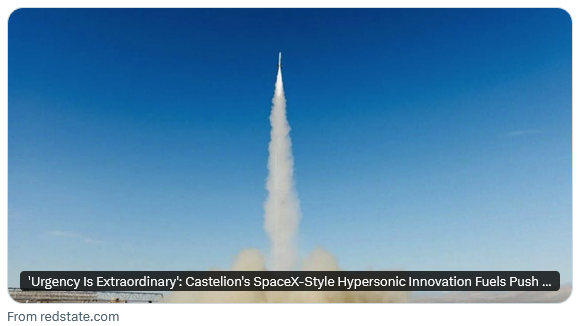
This is insane and it’s great news for the U.S. Navy.
All the worst people keep telling me Trump-class battleships are “obsolete” because of hypersonic missiles.
Then this drops:
“Blackbeard, engineered from a clean-sheet design by former SpaceX alumni, will not only match but decisively outpace foreign systems … rapid iteration and scalable production. We’re not just going to provide a comparable missile. We’re going to provide better missiles.”
A tiny startup just told Russia and China’s entire missile-industrial complex: we can beat you.
That’s the tell.
If hypersonics were the unstoppable carrier-killers people claim, you wouldn’t see startups leapfrogging them in a garage with venture capital. You’d see locked-in monopolies and terrified Western navies.
Here’s what the hype crowd misses:
1) Future battleships won’t be naked.
They will carry layered anti-hypersonic defenses, directed-energy weapons, decoys, and interceptors specifically designed to kill these things.2) Hitting a moving ship at hypersonic speed is brutally hard.
No nation has publicly demonstrated a successful hypersonic strike on a maneuvering warship. China hit a fake carrier sitting still in the desert. That proves almost nothing.
Think about the physics.
Flying a kamikaze plane into a carrier was hard but pilots had eyes, brains, and real-time judgment.
Now imagine doing that blind, with sensors the size of a soda can, while the target is jamming, maneuvering, spoofing, and throwing decoys.
Now imagine the Honey I Shrunk the Kids laser made you the size of an ant and you are told to steer a bullet into a weaving jet ski.
Russia can hit slow oil tankers. If they could reliably hit moving ships bringing supplies into Ukraine, they already would have.
3) Hypersonics are scarce and insanely expensive.
Even if it took 100 missiles to score a hit on a battleship, that’s 100 missiles that aren’t hitting ports, refineries, factories, air bases, and ammo depots.
Most of those targets don’t shoot back. None of them weave like a battleship.
Battleships change the economics of war.
They force the enemy to burn their most precious weapons just to try to hurt one ship.
That’s not vulnerability.
That’s deterrence.Stop black-pilling naval power. The physics, the economics, and now the tech sector are all pointing in the same direction.
Also on naval matters, Matt Gurney at The Line talks about his unfamiliar feelings of hope that the Canadian government’s promised spending boost for the Royal Canadian Navy will not only happen, but that the RCN may generate significantly improved capabilities as a result:
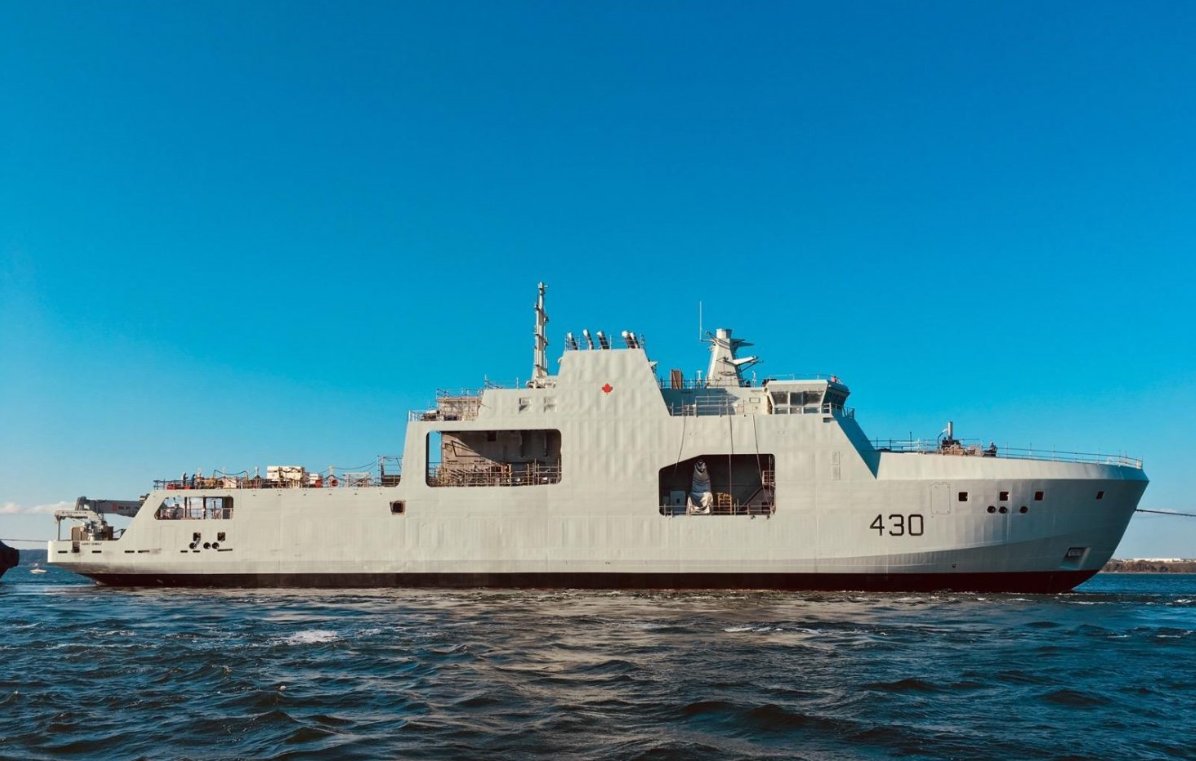
Arctic Offshore Patrol Ship HMCS Harry DeWolf shortly after launch in 2018. The ship was commissioned into the Royal Canadian Navy in June, 2021.
A day or two ago, I found myself thinking about the state of the Royal Canadian Navy. Because, I mean, hey — who doesn’t?
Anyone who has paid much attention to my work will be aware that I’m not exactly bullish on our country’s ability to get much done — especially on the file of military procurement. Yet, a day or two ago, I found myself thinking about the state of the Royal Canadian Navy and feeling something almost like … hope? Is this what hope feels like?
There is a lot going on in Canadian naval news, and that fits a broader pattern. There’s a lot going on on the seas globally, and, somewhat to my surprise, Canada seems to be doing a pretty good job — could be better, but could be worse — adapting to the new reality.
[…]
So let’s talk about seapower. The U.S. has it — not as much as it wants, but it’s got it. It wants more. Even if that ends up taking some pretty weird forms. And others are racing to catch up.
Including, intriguingly, Canada.
Last week, Canadian shipyard Seaspan announced that it had signed agreements with both Finland and American shipyards to licence its design for Multi-Purpose Icebreakers to the U.S. Coast Guard’s Arctic Security Cutter Program. And while the “Elbows Up” crowd may look askance at the prevalence of the word “American” in that sentence, this is damned interesting — not only are we continuing to show interest in the Arctic, but we’re also trying to sustain real shipbuilding in this country. The situation in the White House is so bizarre these days that it’s hard to take any announcement like this to the bank, but it was notable. If nothing else, it would be nice to see more efforts like this — whether the plans work will, alas, largely be out of our hands.
In addition to that, a few more stories came to mind. The first was this announcement from a few months ago: the Irving Shipyards have begun work on the final Arctic Offshore Patrol Ship of the Harry DeWolf class. Irving is also getting started on the next generation of Canada’s main warships, the River-class destroyers. Canada is actively seeking a replacement, in far greater numbers, of its current fleet of problematic submarines. And there’s also growing talk about a new smaller, mid-range class of Canadian warship, dubbed, for now, the Continental Defence Corvette. (Which I guess rolls off the tongue better than the See, Trump, We’re Spending On the Military Now Program.)
It’s easy to be a cynic on Canadian defence procurement — I am cynical about Canadian defence procurement. But then I looked at the ships being seized by U.S. forces. At Russia cutting cables, China ringing Taiwan with missiles and the U.S. throwing fleets around like Theodore Roosevelt has something to prove. And I look at a plan to not only replace Canada’s (too small) fleet of warships, but to considerably grow it … and it’s hard not to see the bigger picture.
Reverting to a pre-1945 geopolitical reality isn’t going to be an exercise in vibes. It’s going to be an exercise in power — or at least attempts to wield power. Air forces matter, cyber matters, drones matter and Lord knows armies matter. But they matter locally. True global power, or at least the ability to give a global power some pause before they decide to whisk your el jefe off to a Manhattan courtroom in a tracksuit, requires the ability to control your coasts and all the ocean approaches to them.
Comments Off on Navies in the news
December 31, 2025
The Royal Canadian Navy … a terrorist organization according to Iran
An unexpected post from True North Strategic Review, as Noah shares the details of a new announcement from the Islamic Republic of Iran about that well-known terrorist group known as His Majesty King Charles’s Royal Canadian Navy (RCN):

Statement from the Iranian Ministry of Foreign Affairs, via True North Strategic Review
Welp. Sometimes you wake up to the most random things imaginable. This is certainly one of them in my books.
The Iranian Ministry of Foreign Affairs has released a statement today officially designating the Royal Canadian Navy as a Terrorist Entity under the “Tit-for-Tat” trigger outlined in Article 7 of the Reciprocal Action Against the Declaration of the Islamic Revolutionary Guard Corps as a Terrorist Organization by the United States Act.
Here is the translated statement for those curious:
Since the Canadian government has declared the Islamic Revolutionary Guard Corps, which is recognized as one of the pillars of the country’s official armed forces, a terrorist organization, contrary to the fundamental principles of international law, the government of the Islamic Republic of Iran, based on the principle of reciprocity and based on Article 7 of the “Reciprocal Action Against the Declaration of the Islamic Revolutionary Guard Corps as a Terrorist Organization by the United States” Act passed in 2019, which stipulates that “all countries that in any way comply with or support the decision of the United States of America to declare the Islamic Revolutionary Guard Corps as a terrorist organization shall be subject to reciprocity,” considers the Royal Canadian Navy to be subject to the aforementioned Act and its provisions, and therefore, within the framework of reciprocity, identifies and declares it as a terrorist organization.
For a bit of context, under the Reciprocal Action Against the Declaration of the Islamic Revolutionary Guard Corps as a Terrorist Organization by the United States Act, the Iranian government includes a clause stating that any country that supports or complies with the U.S. decision to label the IRGC as terrorists is also subject to reciprocity.
This retaliation clause is in direct response to the Canadian government’s decision last June to declare the Islamic Revolutionary Guard Corps as a terrorist entity. Although quite late to respond, the decision to designate the Royal Canadian Navy specifically is a curious one.
The likely scenario is that the choice was made based on operational proximity. The Royal Canadian Navy is the branch of the Canadian military most likely to physically encounter Iranian forces. They’re really the only branch that maintains a tangible, visible presence near Iranian territory. By designating the Navy specifically, Iran is creating a legal pretext to harass or target Canadian vessels in these international waters under the guise of Counter-Terrorism operations.
Comments Off on The Royal Canadian Navy … a terrorist organization according to Iran
November 10, 2025
Canadian military expansion
In the free-to-cheapskates portion of this week’s dispatch post from The Line, the editors discuss some of the implications of the significant expansion plans for the Canadian Armed Forces (with the caveat that little of these plans are funded and would be subject to major changes if the government fails to get its budget through Parliament):
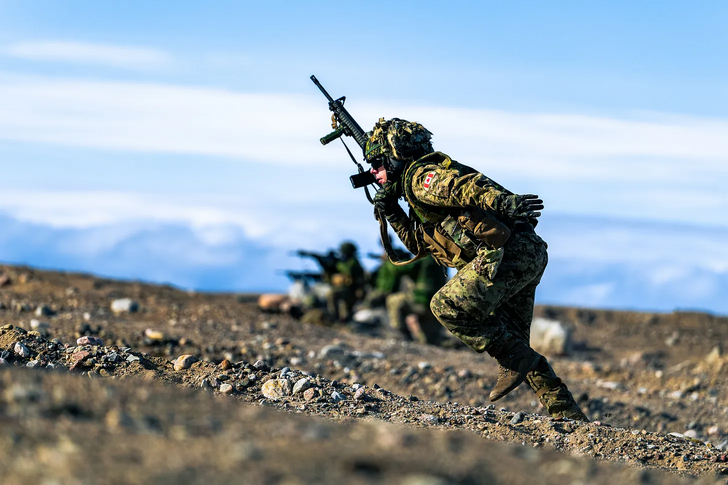
Canadian Armed Forces photo.
The amount of defence spending we’re talking about here is something that we have not thought about at all in recent generations. It’s a good thing. But it’s going to create some real challenges that we need to start thinking about, and coming up with solutions for, right away.
The numbers look something like this: the government had already announced a $9-billion influx of money into national defence, as well as a little bit of creative accounting, all with the goal of getting our spending up to the NATO two-per-cent-of-GDP target immediately, instead of on the absurdly prolonged trajectory the last prime minister deemed appropriate. A big part of this — and a welcome part — was a pay raise for members of the Canadian Armed Forces, particularly those at the lower scale of the pay grids for enlisted personnel and officers. One of the major problems the military has had in recent years is retaining trained personnel, and a pay raise is a tried-and-true way of helping address that. It also has the effect of juicing our spending at a time when our allies were looking for a tangible commitment. It’s a win-win.
But then there’s the rest of the spending: over $80 billion over the next five years, with a goal of getting up to the new NATO target of five per cent in only nine years, by 2035.
The Line supports this. We support this wholeheartedly. It makes us want to do cartwheels in the streets — and we would, if not for justified concerns for our joints and lower backs. (And dignity, though that’s less an issue.) But we do need to flag how transformative that level of investment would be.
Here’s the simplest way to put this. Almost our entire debate over defence in recent decades has been around the two-per-cent target. Nominally, the Canadian Armed Forces have certain capabilities that were suited to our national willingness to spend around two per cent of GDP. In reality, because of chronic under-funding, a lot of the capabilities we claim to have on paper didn’t really exist in reality. Units were badly undermanned. Equipment either didn’t exist or was not in serviceable condition or was long-since obsolete. Shortfalls of money and trained personnel were cutting into training exercises and basic upkeep on weapons, gear, and facilities. This prolonged fiscal starvation, combined with a fairly high level of demand on the forces for missions abroad and at home, had the effect, year after year, of hollowing out the force.
Getting spending up towards two per cent will help turn that around. This is conditional — and it’s a big condition — on fixing the military’s procurement problems. We could budget a trillion for the military, but it’s not going to make a difference if we have the same broken processes that need 10 to 15 years to actually get from an identified operational need to a signed contract. But still, if only in the big-picture sense, getting to two per cent will actually flesh out the Canadian Armed Forces into the organization that already existed on paper.
That’s good. That would be a big step up. But the problem is, as your Line editors have been screaming into the void for years, even the fully fleshed-out and realized version of the Canadian Armed Forces that existed on paper is too small for the current global environment, and lacks many critical capabilities that will be necessary to effectively fight — or even simply survive — on the battlefield. We need to do things we cannot currently do, and we need to do a lot more of all the things we’re already doing. That’s going to mean a bigger naval fleet, a larger army and a larger air force. That’s just the reality — our current force structure, even if fully manned and ready, is not large enough to meet all our needs.
That’s where the other tens of billions of dollars come in. There’s simply no way around the fact that this amount of money, combined with geopolitical reality and political rhetoric, is pointing to an inescapable conclusion: the Canadian Armed Forces are going to get a lot bigger. A lot bigger. We are looking at a substantial increase in the size of the regular forces, and probably an even larger increase in the size of the reserves.
Indeed, you may have seen this article recently in the Ottawa Citizen, by defence reporter David Pugliese. In it, he discusses proposals being prepared at National Defence Headquarters to establish a new reserve force of approximately 400,000 troops. The Line can confirm the general thrust of Pugliese’s reporting. We have no idea what the politicians will eventually sign off on, and we won’t be surprised if they get weak-kneed when some of the details are laid out before them, but discussion of a massive expansion of the Canadian Armed Forces, on a scale we haven’t seen since the Second World War, is indeed happening in certain rather important rooms in Ottawa.
November 3, 2025
“Vice-Admiral Angus Topshee more or less kiboshed the notion of building new submarines here in Canada”
Assuming that this government or the next one follows through with current plans, the Royal Canadian Navy (RCN) will replace the four current British-built Victoria-class submarines with up to a dozen new subs based on either the German Type-212CD design or the South Korean KSS-III. There is no reason at all that these new submarines need to be built in Canada, as there is no existing shipyard with any experience in this kind of vessel and no chance that creating a domestic submarine industry would be anything more than a perpetual money-sink. Our existing shipyards can, at a stretch (and at a significant cost increase), build surface ships from small motorboats up to frigates, destroyers, and larger supply ships, but there’s always a hefty premium for building the hulls here because once the order is complete, the shipyard can rarely use that skilled workforce and their specialized expertise to build more ships for other navies, so the yards shrink, the workers move on and a decade or so later, we have to start all over again from basically nothing.
Submarines are even more specialized than the ships the RCN is likely to buy, and there’s almost zero chance an allied navy or a neutral power would choose to have submarines built in Canada. The head of the RCN, Vice-Admiral Topshee clearly recognizes this:
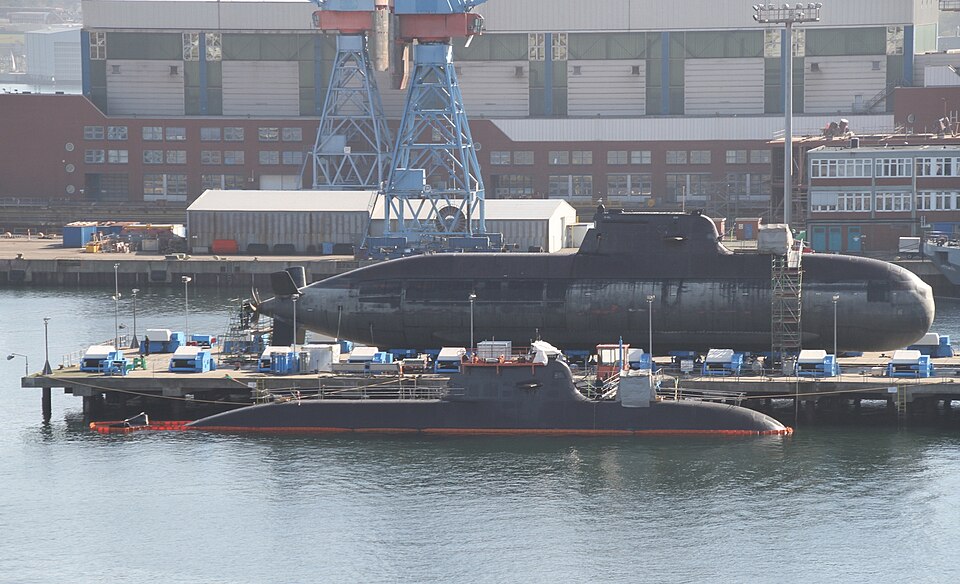
Type 212 submarines at the HDW shipyard in Kiel, Germany, 1 May 2013.
Photo by Bjoertvedt via Wikimedia Commons.
On Thursday in South Korea, Royal Canadian Navy Vice-Admiral Angus Topshee more or less kiboshed the notion of building new submarines here in Canada. He cited two major concerns: One, that we need these submarines “quickly.” And two, that our demand for submarines couldn’t possibly sustain an operation on its own.
“A submarine industry requires a consistent production line, and to be able to build enough submarines … to sustain a production line will be a real challenge,” Topshee said at the Hanwha Ocean Shipyard, where he, Defence Minister David McGuinty and Prime Minister Mark Carney tickled the periscope on one potential replacement for Canada’s aging-out Victoria-class subs.
Both Hanwha and ThyssenKrupp say it’s technically possible they could build the subs in Canada; it would just take a long time to lay down the infrastructure, and we’re in an uncommon hurry. We are assured plenty of Canadian steel and sweat will go into maintaining them.
And I suspect that won’t be very controversial, if at all. We’ve had American submarines, British submarines and German submarines in the past. Submarines are just something that are not made in Canada, like a lot of other things: jumbo jets, fighter planes, aircraft carriers, pineapples, cellular telephones, home electronics.
And we’re fine with it. Aside from the odd Avro Arrow obsessive, everyone seems to accept we’ll be buying new fighter jets off the peg from abroad — assuming we ever come to a final decision on which to buy, of course.
The question is, why isn’t that controversial? Or, why is it by contrast seen as controversial to buy surface vessels from abroad. Whoever’s fault it is, Canadian shipbuilding for the navy is a scrapyard of blown deadlines, outrageous cost overruns and sometimes outright failure. If we’re happy with South Korean or German subs, why not South Korean or German or Danish frigates and destroyers — or passenger ferries, for that matter?
Until this silly “elbows up” narrative took hold, no one seemed to care very much where our ferries were built: Marine Atlantic sails Chinese-built ferries between Cape Breton and Newfoundland with barely a whisper of controversy. But the entire political class is now essentially united against BC Ferries’ decision to buy Chinese ferries from the same shipyard. The fact that BC Ferries needs ferries almost seems like an afterthought.
ROKS Shin Chae-ho, a KSS-III submarine at sea on 4 April, 2024.
Photo from the Defense Acquisition Program Administration (DAPA) via Wikimedia Commons.
Update: Noah posted a Q&A session with his readers that included some comparisons of the two contending designs for the Canadian Patrol Submarine Project (CPSP):
Q4. Have you had a chance to compare the AIP on the Ks III & 212CD yet with respect to Time underwater. There are different numbers floating around with new systems?
The truth is that no manufacturer is going to give you the accurate endurance. None. That is a closely guarded secret. I can say the KSS-III is higher, though out of respect for everyone and to not get myself in trouble I won’t say numbers. Both have endurance of several weeks and fit the HLMR.
I do plan to go into details about the systems themselves soon though, so I’m not leaving it alone!
Q5. The Type 212 has been described as an “ambush” submarine silently lying in wait for Russian subs. What advantages does the 212 bring to the Pacific?
Understand that both the KSS-III and Type 212CD are products of different needs and philosophies. Both focus on different strengths, in this case the 212CD puts almost all its efforts into being as stealthy and quiet as possible.
Its not just about ambush. Its about survival. The Type 212CD is designed to operate in the shallow, tight waters of the Baltic, and the littoral regions of the North Sea. That isn’t just about submarines but also being survivable against a dense field of Russian Maritime Patrol Aircraft and Anti-Submarine Helicopters.
That means a lot of effort was taken to ensure they’re as quiet and undetectable as possible. That’s where things like the Diamond-Shaped hull are supposed come into play, the use of non-magnetic stainless steel.
A lot of its value comes in what role you expect it to play. It is still an excellent asset in the littoral regions of the pacific, however it isn’t optimized for prowling around the open ocean, deep-diving nature of the Pacific. That is the domain of platforms like the KSS-III, at least in my opinion.
That doesn’t mean it can’t, but just as the KSS-III can also operate in the littoral regions of the Baltic doesn’t mean it’s optimized too. That’s the thing about CPSP. There’s a lot of requirements, a lot of different environments we expect these subs to operate in, and both [designs] focus on different priorities.
The advantages it has as a stealth-optimized platform don’t disappear. It could easily act in complement to other assets like U.S. and future Australian SSN [which] are more optimized for operations in the wider Pacific.
Strengths and weaknesses.
Update, the second: South Korea looks to be joining the nuclear-powered navy club with a new class of Korean subs to be built in Philadelphia using US navy nuclear propulsion technology.
South Korea has been wanting to get in the SSN club for a long time. Good on them for their persistence.
I’m not sure how this will work out. The Philadelphia Shipyard, even at its heyday, never built nuclear powered ships of any kind.
The South Koreans build a solid conventional submarine, the KSS-III that they offered to Canada recently, but nuclear submarines are at another level. Besides the infrastructure issues specific to nuclear shipbuilding at the shipyard that would need to be addressed, there is the fact that the U.S. nuclear workforce and hardware providers are already behind schedule with expected demands. While another yard is great, whoever is going to successfully solve those two structural issues needs superhuman abilities and one heck of a funding line.
Comments Off on “Vice-Admiral Angus Topshee more or less kiboshed the notion of building new submarines here in Canada”
September 17, 2025
“It would be a grave error to scrap NORAD”
J.L. Granatstein makes the case that abandoning NORAD in a fit of pique over the antics of the Bad Orange Man would be worse for Canadian national defence interests and might not even be noticed in Washington DC:
There are beginning murmurings that Canada should get out of the North American Aerospace Defence agreement (NORAD). Given the Trump administration’s hostile tone — its 51st state suggestions, its tariffs, and its growing concerns with Arctic defence — the United States has become a difficult partner and a threat to Canadian sovereignty. But would this be a sensible decision for Ottawa to make?
Not at all. In the first place, NORAD is a joint alliance to defend North America against Russian, Chinese, or other potential attackers. Canada provides aircraft, radars, personnel, and expertise to this role that serves our national interests. It would be a grave error to scrap NORAD and to take on the role of defending our part of North America on our own. It would also be hugely expensive.
The problem, however, is that the Trump administration is right: Canada is, in fact, not doing enough today to defend our portion of North America and protect our sovereignty in the region.
The Royal Canadian Air Force has 1980s vintage CF-18s flying patrols and occasional larger surveillance aircraft monitoring traffic in Arctic waters; there are snowmobile and ATV patrols of Canadian Rangers armed with rifles; and a few army exercises in the north each year. The Royal Canadian Navy has a half dozen new Arctic Offshore Patrol Vessels that have limited utility in Arctic waters and are very lightly armed, and the Canadian Coast Guard (CCG) has only one 66-year-old icebreaker capable of clearing thick ice. The CCG is now under the authority of the Department of National Defence, but its members, unlike those in the Canadian Armed Forces, are unionized, and its vessels are unarmed. This could be a problem in a conflict.
Yes, Ottawa has promised to do more. The Trudeau government agreed to the $38.6 billion NORAD Modernization Plan, which includes the new Northern Approaches Surveillance System featuring the Arctic Over-the-Horizon Radar and a Polar Over-the-Horizon Radar, enhancing early warning and threat tracking from the North for air and maritime threats. These systems will not be fully operational until the 2040s.
There’s more, but it’s behind the paywall.
Comments Off on “It would be a grave error to scrap NORAD”
September 11, 2025
The CH-148 Cyclone helicopter – the navy’s flying lemon
Over at Noah’s True North Strategic Review, a question came up about the Cyclone helicopters in Royal Canadian Navy service and whether the navy would include Cyclone landing pads on the upcoming Canadian Continental Defence Corvette design:
Q6. Any updates on the Cyclone helicopter and its replacement? I’ve read that the class is grounded and it’s already an orphan. Has it rolled into NTACS?
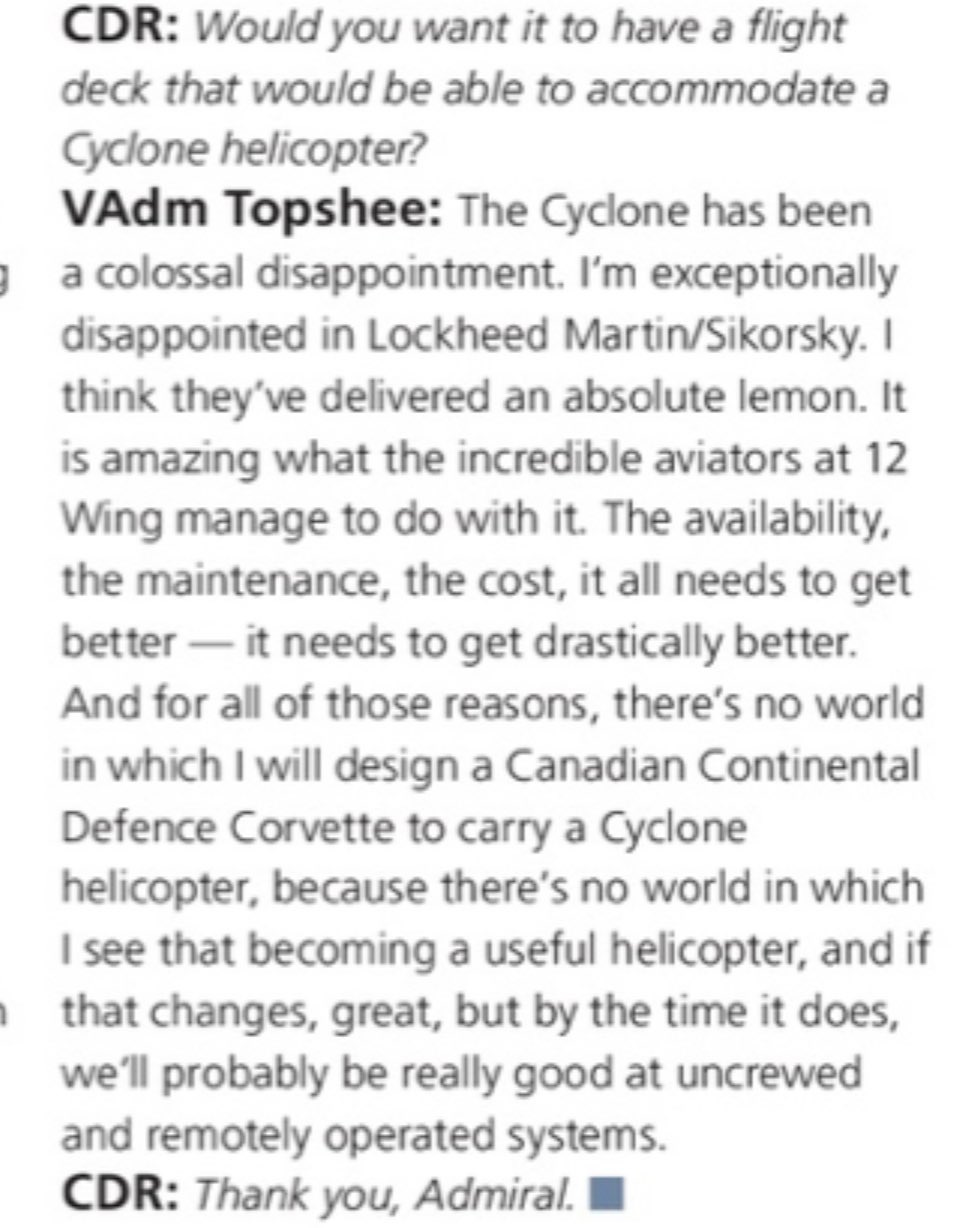
You probably heard our favorite Vice-Admiral absolutely tearing them apart lol. The fleet was grounded due to parts issues, a long-standing problem with the Cyclone fleet. In fact everything about the Cyclone is a problem.
I’ll let Mr. Topshee explain:
So yeah, the fleet was grounded or should I say the majority of the fleet is still grounded. Not all of them anymore, but still the majority last I heard like two weeks ago?
Of course even before the grounding the fleet was in bad shape. Nearly half haven’t flown this year, and again the majority is still grounded. Link 11 deprecated back in January/February? Lockorsky is asking ~$20,000,000 an aircraft to upgrade to Link 16, and even then it will take about two/three years to get the entire fleet upgrades.
And it ain’t like Link 16 is some optional capability. It is quite literally the standard. You can’t do much without it.
This isn’t counting other capabilities set to deprecate or in need of upgrading on the way to Block 2.1 … All to support, yes, an orphan fleet that we are paying tooth and nail to keep going.
And it isn’t like Lockheed is winning here. They reported a $570 million loss on the Cyclone this year. Quite literally no one is winning here. We are all suffering to keep these birds flying, lord forbid if we try to keep them going into the 2040s as planned.
Cyclone isn’t a new helicopter. It’s a product of 1990s requirements, from a contract signed twenty years ago. It still has yet to reach its final Block 2.1 state. I get why it’s frustrating to everyone. I’m glad Topshee said the quiet part out loud. Call them what they are.
I’m of course missing things, I know. I wont go into the entire history and issues with the fleet (yet) but I will say that I truly believe there is no fixing them by this stage. The navy has been using modified Hammerheads to fill the gaps and future UAS will likely take some role.
Unmanned systems aren’t at the level though to fully replace the capabilities a maritime helicopter like the Cyclone brings to the table. The loss of the fleet is a loss of capabilities. Eventually something has to give.
I don’t wanna go to into the Cyclone right now, as I’m currently working on something for it. However there are a lot of issues, more than the public knows.
As for NTACS? There is no plans to include the Cyclone. At least not right now. The NTACS team went back to the drawing board over the summer to hammer out what they want. We’ll see what comes of it.

Pre-delivery Sikorsky CH-148 Cyclone helicopter, 4 April, 2012.
Photo by Gerry Metzler via Wikimedia Commons.
Comments Off on The CH-148 Cyclone helicopter – the navy’s flying lemon


