
Real Time History
Published 20 Mar 2026As the war in the Pacific develops, the United States takes the fight to Japan itself – by crippling its economy, destroying its industry, and crushing civilian morale. To do this, American submarines and heavy bombers wage campaigns beneath the sea and above the clouds. And even 80 years later, there’s a fierce debate about which of these campaigns did more to bring Japan to its knees – perhaps even more than the atomic bombs.
(more…)
August 26, 2026
Who Destroyed the Japanese Economy in WW2?
Comments Off on Who Destroyed the Japanese Economy in WW2?
August 11, 2026
How the Royal Navy’s budget cuts built foreign navies
Warships & Warriors
Published 10 Apr 2026When the United Kingdom’s Ministry of Defence faces a budget crisis, the rest of the world goes shopping. Welcome to Warships And Warriors! Today, we are exploring the global “Ghost Fleet” of the Royal Navy.
Through decades of cyclic Strategic Defence Reviews, the UK has repeatedly cut its fleet, selling off highly capable surface combatants, submarines, and massive amphibious assault ships decades before the end of their mechanical lifespans. In this video, we track down these decommissioned British warships to see how middle-power navies in South America, Eastern Europe, and Southeast Asia have transformed them.
From Brazil snapping up the Royal Navy’s amphibious heavyweights like HMS Ocean (now the Atlântico) and HMS Bulwark, to Chile bolting advanced missile systems onto ex-British Type 22 and Type 23 frigates, we uncover how foreign navies are gaining massive frontline capabilities at bargain prices. We also look at the strategic transfers of Upholder-class submarines to Canada, armed patrol vessels in Bangladesh, and the legally complex deployment of Sandown-class minehunters in the Black Sea.
0:00 – The Royal Navy Fire Sale
01:16 – Chapter 1: The Amphibious Heavyweights (Brazil)
04:31 – Chapter 2: The Frigates (Brazil, Chile & Romania)
07:16 – Chapter 3: The Submarines (Canada)
08:36 – Chapter 4: The Offshore Upgrades (Bangladesh & Philippines)
10:27 – Chapter 5: Clearing the Minefields (Lithuania, Greece, Ukraine & Estonia)
13:01 – Chapter 6: Mapping the Deep (Bangladesh)
13:48 – The Wrap-Up & The Tragic Fate of the Type 22 Batch 3
(more…)
Comments Off on How the Royal Navy’s budget cuts built foreign navies
August 10, 2026
Was Canada’s Victoria-class submarine deal a massive procurement failure?
Dominion Defence Review
Published 8 Aug 2026Plagued by chronic low availability while also being expensive to maintain, the purchase of used British submarines seems to be a good reminder that a low sticker price isn’t everything …
Comments Off on Was Canada’s Victoria-class submarine deal a massive procurement failure?
July 8, 2026
Don’t call them “U-boats”!
In his latest post for The Line, Matt Gurney violates the cardinal rule of discussing German naval equipment … don’t call ’em “U-boats”!
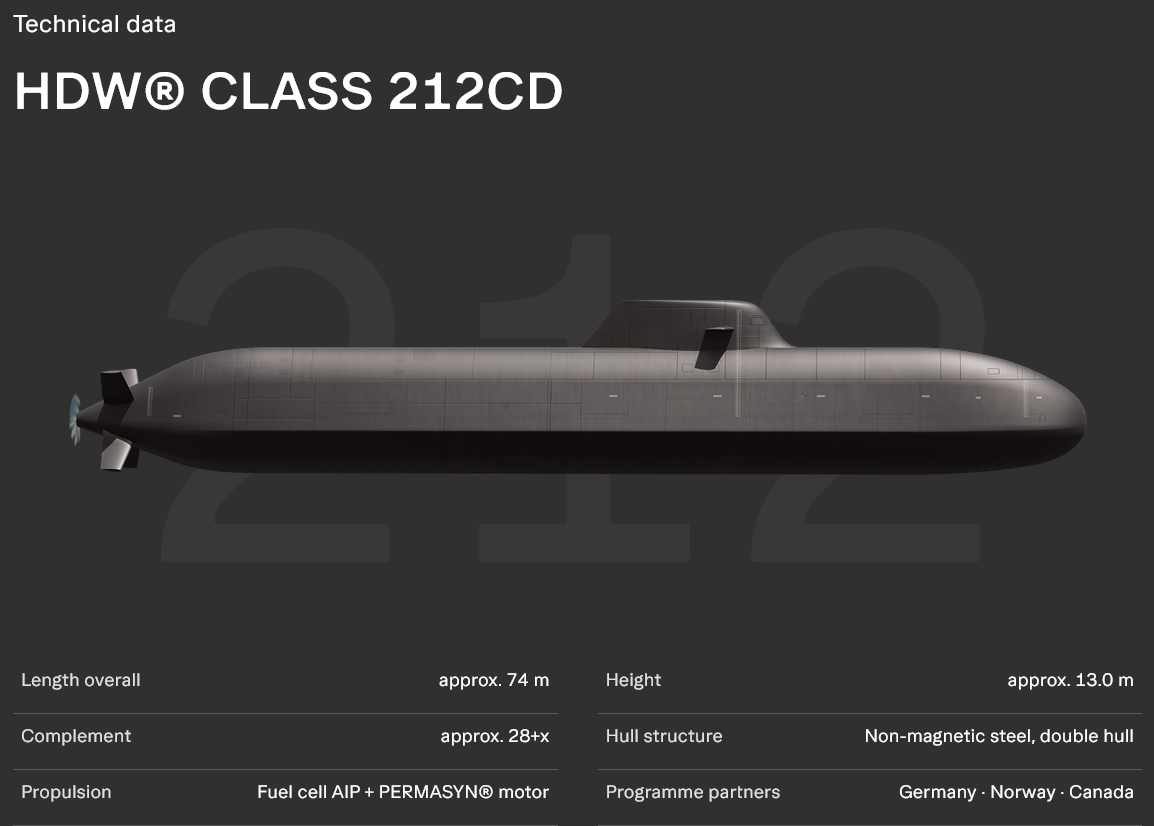
In Halifax on Monday, Prime Minister Mark Carney announced that Canada had chosen a preferred vendor for our new fleet of patrol submarines. Canada will (probably) be going with a German-Norwegian consortium that was offering the Type 212CD submarine, and not the South Korean boats offered by Hanwha. The prime minister said it was a close finish between the two competitors and noted that either design would have met Canada’s needs. The decision announced Monday is not a final purchase order but rather a determination of who our preferred partner would be. The prime minister said that if the negotiations with TKMS, the German company offering the 212CD, did not go well, Hanwha remained an acceptable option.
Personally, I was rooting for the Koreans. I liked their submarine’s ability to launch missiles vertically, which would’ve given the Canadian fleet some powerful strike options. I also tripped a little over the thought of Canadians in U-boats — I suspect many historically minded Canadians will also blink hard at that little twist of fate. But I fundamentally agree with the prime minister — either boat is fine for our purposes. The 212CD will be an excellent asset once it enters Canadian service (presumably with a snappier name).
Sooner would be better. The prime minister noted repeatedly during his remarks on Monday that the government was moving quickly to make this announcement, having settled on a preferred partner five years ahead of the original schedule. This is true, and I give the prime minister full credit for that. I would also note that the schedule was already ridiculously long. We actually should have begun replacing the submarines a decade ago. The PM’s comments reminded me that I had written a column about the urgent need to just get on with replacing the submarines when we had last announced another cycle of refurbishments to keep the current fleet in service because we had yet again delayed a decision on a replacement.
I found my old article. I wrote it seven years ago.
That was bad. Carney accelerating it is good. It’s also good that we are looking at a much larger fleet of submarines, going from four to as many as 12. Submarines are very complicated machines. For every boat you want available for service, you need three or four in your fleet. This gives you a large enough fleet to have an operational submarine available while others undergo maintenance or refits or participate in training exercises with their crews. The four Victoria-class submarines Canada possesses today mean that we typically might have one available for service at any given time, so a fleet of 12 will give us a much more robust presence. Given that we claim three oceans, and that the world is pretty much a dumpster fire these days, having a submarine available on each coast at all times seems like a good idea.
Time is of the essence. Germany and Norway, the prime minister said, have offered to allow Canada to cut ahead of them in line for deliveries of the submarines, which are already under construction but haven’t yet entered service. Given the decrepit state of our elderly existing fleet, that was obviously a meaningful sweetener, and the PM said the first boats could be in Canadian service in seven or eight years, which is pushing the Victorias to their limits, but should work. We hope?
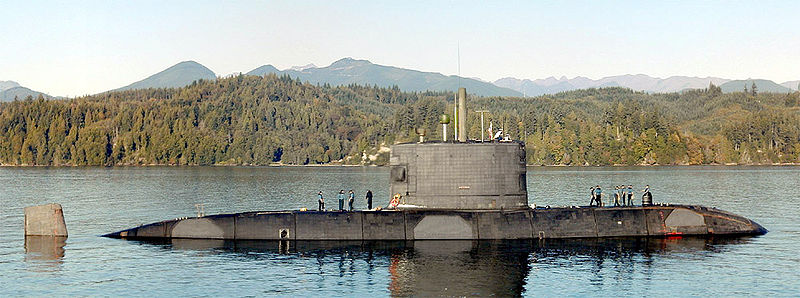
HMCS Victoria, one of four ex-Royal Navy submarines in Canadian service, will have to carry on in service — as much as the class can carry on — until the early 2030s.
Image via Wikimedia Commons.
Comments Off on Don’t call them “U-boats”!
July 7, 2026
Canada decides to buy German submarines
I wouldn’t say I’ve been closely following the Canadian Patrol Submarines Project (CPSP), but I was interested enough to do a bit of reading about both of the contending bidders and their offerings. Based on my understanding of the RCN’s needs, I expected the South Korean KSS-III submarine to be the final winner, but I was wrong: Prime Minister Mark Carney announced that the German/Norwegian TKMS Type 212CD submarine had been selected instead.
Type 212 submarines at the HDW shipyard in Kiel, Germany, 1 May 2013.
Photo by Bjoertvedt via Wikimedia Commons.Submarines enable the Royal Canadian Navy (RCN) to defend threats near and far from Canada’s shores. Yet, our current fleet is aging, with only one of four submarines seaworthy. With the longest coastline in the world, Canada’s ability to deploy underwater surveillance capability is critical. Our security and sovereignty depend on them.
Today, at Canadian Forces Base Halifax, the Prime Minister, Mark Carney, announced that Thyssenkrupp Marine Systems (TKMS) has been selected as the preferred supplier to begin negotiations for delivering Canada’s next fleet of submarines to the RCN. This will be the largest defence procurement in Canadian history, and it will equip the RCN with the capabilities they need to keep Canadians safe.
With ultra-low acoustic and magnetic signatures, TKMS’ 212CD is one of the stealthiest submarines in the world. It is capable of Arctic patrol, undersea surveillance, special forces deployment, and it is fully NATO-interoperable. These submarines provide an unparalleled combination of advanced technology and lethality that will enable the RCN to detect, track, deter and, if necessary, defeat adversaries in all three oceans bordering Canada. This procurement will bolster Canadian security through a platform shared by Germany and Norway, two of Canada’s closest Allies.
The Government of Canada and TKMS will now enter into negotiations to finalise the contracts and all arrangements required to deliver the requirements of the CPSP. Canada will conclude contracting no later than the end of 2027, with the first four submarines to be delivered ahead of schedule, in 2034. In the event that negotiations with the preferred supplier are unsuccessful, Canada may designate Hanwha Ocean as the preferred supplier and enter into negotiations.
The CPSP is being advanced by the Defence Investment Agency and aligns with Canada’s Defence Industrial Strategy. Under the Build-Partner-Buy framework, the project demonstrates the Partner approach, with collaborations with trusted Allies to develop and deliver capabilities while ensuring industrial and economic benefits for Canada. The CPSP will prioritise investments across the Canadian supply chain, to create high-paying jobs, leverage Canadian defence industries, and maximise benefits for Canadian workers and businesses.
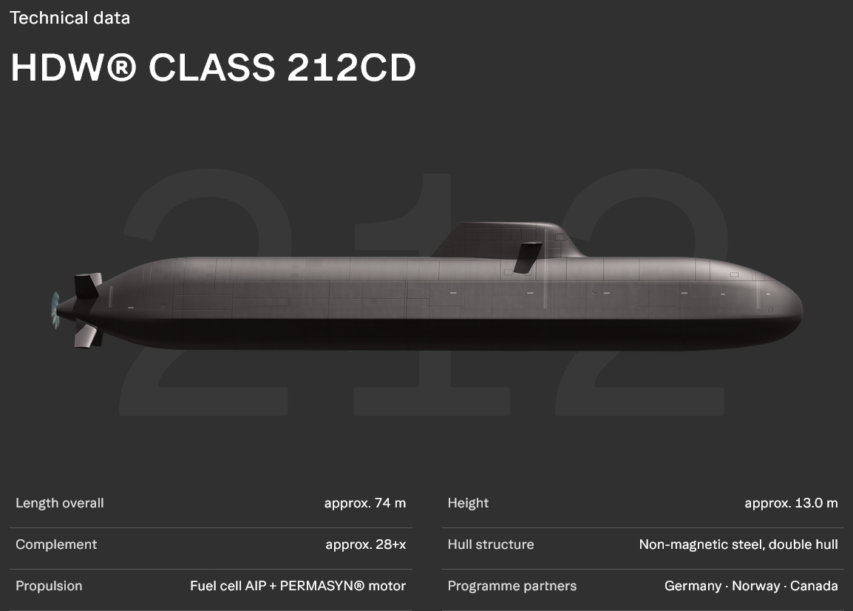
Noah comments on the press release information and some wider issues to do with the CPSP:
And with this, the long-awaited Canadian Patrol Submarine Project finds its home. What started as an ambitious RFI back in 2024 has quickly turned into one of the most consequential, publicized, and dynamic projects, I would say, in Canadian history.
TKMS and Kongsberg, operating as Team GERNOR, have claimed the preferred supplier designation from the federal government. As always, there is no contract today. The selection of a preferred supplier merely sets the table for negotiations to a final contract.
While the federal government will want to move quickly, and I’m sure that the Navy would like to see the contract signed, it is highly likely that comes in 2027. The typical “quick” timeframe is about a year. Keeping in mind, of course, that CPSP will be the largest procurement contract in federal history,1 and in this case also includes additional negotiations on build slots for submarines from both Germany and Norway.
[…]
There was no universal consensus, and I know this choice didn’t come easy for anyone. Both sides put all they could into it. Yet in the end, the GERNOR option pulled ahead. The European focus was championed heavily by those in the PMO as an opportunity to open doors and integrate Canadian industry into the wider European ecosystem, especially as European interest in Canadian expansion grows.
At the end of the day, that ecosystem came out on top. In the final weeks and months of the competition especially, the banner of Europe rallied to the call of unity, to stand with their hands at the back of Team GERNOR. That push, and that united front, is very likely what pushed that sense of alignment forward.
You don’t need to look far for it. Just after CANSEC, Italy’s Fincantieri, a noted ally of TKMS, signed a new MOU with Magellan Aerospace to investigate the potential production of heavyweight torpedoes and undersea countermeasures, building off the proposed investment TKMS plans to make.
While not in the 212CD network, Fincantieri is in the family, and they, among others, are also looking to Canada and our choices. It is the first example of the TKMS family taking notice and making proactive moves to jump in and secure capacity in a future Canadian submarine industry; and, as I understand it, far from the only one being discussed.
Another outside addition: Navantia of Spain and TKMS have also recently signed an MOU to investigate collaboration on naval shipbuilding. While this new agreement is young, I am also led to believe that Navantia is looking to Canada with interest, building off some of their previous engagements with industry.
Increasingly, the European front is united in industry, in the political sphere, and diplomatically to present the 212CD not as a German-Norwegian partnership but as a foundational Canada-Europe partnership that will build off the foundation of agreements like SAFE and the EU-Canada Security and Defence Partnership to create a united Atlantic front that promotes collaboration and joint investment, and opens the European market to Canadian industry.
- NR – “the largest procurement contract in federal history” … Canada’s major military purchases happen so rarely and always taking as long as bureaucratically/politically possible, so every ship, aircraft, helicopter, or tank purchase has a good chance of being the next “largest procurement contract in federal history”.
June 26, 2026
QotD: The submarine war against Japan
The Second World War witnessed two concurrent campaigns by which submarines were used in an attempt to economically isolate and degrade an island nation enemy. One of these attempts was remarkably successful. In the Pacific, US Submariners sunk millions of tons of Japanese shipping — more shipping, in fact, than Japan had possessed at the outbreak of war. A brutally effective submarine campaign against Japanese tankers affected a near perfect starvation of Japan’s war machine: after intaking 40% of East Indies crude production in 1942, only 5% would reach Japanese shores in 1944. This was a cataclysmic decline which Japan could not survive, owed largely to the 155 tankers sunk by American submarines in 1943 and 1944. In the final year of the war, American boats were able to undertake the ultimate dream of submarine theorists: a close blockade of the Japanese home islands, with American submariners prowling practically every inlet and bay.
The success of the American submarine campaign was genuinely astonishing, and created a near perfect asphyxiation of the Japanese war economy, with imports of virtually every vital industrial input plummeting to near zero by 1944. Admiral Charles Lockwood, who commanded the Submarine Force Pacific Fleet, was probably only slightly boasting when he later told an instructor at the Naval Academy:
Now don’t teach those midshipmen that the submariners won the war. We know there were other forces fighting there, too. But if they kept the surface forces and the flyboys out of our patrol areas we would have won the war six months earlier.
Despite the phenomenal success of America’s submarine operations against Japan, the American war on Japanese shipping generally receives scant attention. To take just one example, Francis Pike’s magisterial and colossal tome on the Pacific War relegates American submarine operations to an appendix. In contrast, there is an astonishing volume of literature devoted to the war’s other grand submarine campaign: the so-called Battle of the Atlantic. Germany’s famous U-boats attempted a similarly strategic interdiction war against shipping to the British home isles. Unlike the American submarine force in the Pacific, however, the U-boats failed.
Big Serge, “Wolf Packs: Battle of the Atlantic”, Big Serge Thought, 2025-12-12.
Comments Off on QotD: The submarine war against Japan
May 8, 2026
How Hitler Wasted Germany’s Deadliest Weapon – Nazi Rearmament 01 – U-Boat Type VIIC
World War Two and Spartacus Olsson
Published 7 May 2026Early in World War II, German U-boats came dangerously close to starving Britain into submission. The Type VII submarine — especially the VIIC — became the backbone of the Kriegsmarine‘s Atlantic campaign, sinking thousands of Allied ships and threatening to win the Battle of the Atlantic.
But despite its devastating effectiveness, the U-boat war ultimately failed — and not just because of Allied countermeasures.
In this documentary, Spartacus Olsson breaks down how Adolf Hitler’s strategic miscalculations, competing naval doctrines, and direct interference undermined Germany’s most effective naval weapon. From the clandestine development of submarines after the Treaty of Versailles, through Admiral Karl Dönitz’s vision of a tonnage war, to the catastrophic losses of German submariners, this episode examines how Nazi rearmament translated into wartime reality — and failure.
Featuring detailed analysis of Type VII design, production, deployment, and combat performance, this video reveals how industrial limitations, political priorities, and technological shifts turned a war-winning weapon into a death trap.
This standalone episode complements the Death of Democracy series by showing what Hitler actually did with Germany’s rearmament- and why it fell short.
Comments Off on How Hitler Wasted Germany’s Deadliest Weapon – Nazi Rearmament 01 – U-Boat Type VIIC
April 5, 2026
How To Let the People Pay For War – Death of Democracy 10 – Q2 1935
World War Two and Spartacus Olsson
Published 4 Apr 2026June 1935: Adolf Hitler reassures the world with promises of peace — while secretly accelerating Germany’s path to war. In this episode of Death of Democracy, we examine how Hitler manipulated international diplomacy and domestic opinion in the second quarter of 1935. From the collapse of the Stresa Front to the signing of the Anglo-German Naval Agreement, foreign leaders were drawn into a dangerous illusion. Meanwhile, inside Germany, antisemitic violence escalated, press censorship intensified under Joseph Goebbels, and economic realities worsened under Hjalmar Schacht’s policies.
Drawing on firsthand accounts from William L. Shirer and Victor Klemperer, this episode reveals a society caught between fear, propaganda, and growing dictatorship.
How did Hitler convince both his people and world leaders that he wanted peace – while preparing for war?
Watch to understand how democracies can be misled – and what happens when we fail to act.
(more…)
Comments Off on How To Let the People Pay For War – Death of Democracy 10 – Q2 1935
March 17, 2026
Will Canada Outpace the UK in Surface Fleet Numbers?
Warships & Warriors
Published 13 Mar 2026The Royal Canadian Navy (RCN) is facing a critical turning point in 2026. Caught between a massive 20% personnel shortfall and the urgent need to project power globally, Canada is being forced to make difficult decisions, including the early retirement of eight Kingston-class warships. However, despite these severe manning challenges and aging hardware, Canada is quietly executing one of the most ambitious naval modernisation programs in the Western world.
In this video, we break down the complete state of the Royal Canadian Navy’s surface and subsurface fleet in 2026. We explore the twilight years of the Victoria-class submarines, the heavy burden placed on the aging Halifax-class frigates, and the massive success of the new Harry DeWolf-class Arctic and Offshore Patrol Vessels.
Looking to the future, we analyse Canada’s generational leap in naval technology. With the highly advanced River-class Destroyers entering production, boasting AEGIS combat systems and Tomahawk missiles, and a new fleet of conventionally powered submarines on the horizon, the RCN is transforming into a Tier 1 maritime force. But with 15 new destroyers and up to 12 new corvettes planned, is Ottawa actually taking its future maritime defence more seriously than London?
(more…)
Comments Off on Will Canada Outpace the UK in Surface Fleet Numbers?
February 20, 2026
The Canadian Patrol Submarine Project
The Royal Canadian Navy is planning to replace its four current conventional submarines, the British-built Victoria class with a dozen new conventional submarines from either South Korea or Germany (a joint German-Norwegian design). Michael J. Lalonde, a former Canadian intelligence officer, goes through the requirements for the new submarines, the two contending designs’ strengths and weaknesses, and makes his own recommendation for the RCN’s next submarine class:
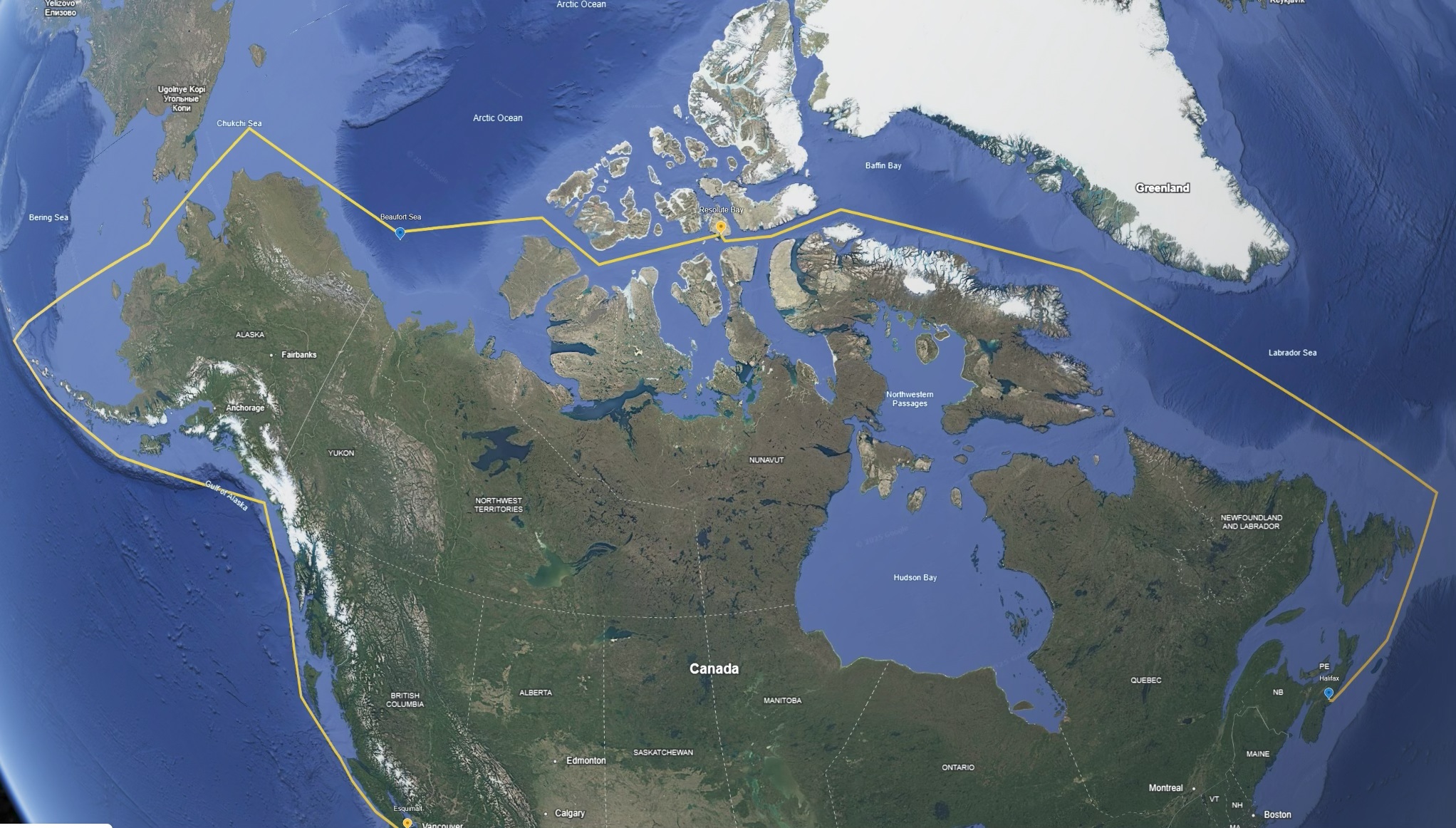
Rough transit routes to Canada’s Arctic from Esquimalt BC and Halifax NS
The first step is to assess what the Government of Canada wants out of its new submarine fleet and what capabilities it will need to achieve its objectives. I’m starting here because there is a common misconception that Canada needs submarines exclusively for Arctic patrol and surveillance, which is false. While it’s true that Arctic sovereignty and security are quite rightfully a preoccupation for the government, patrolling Canada’s Arctic is not the only capability Canada needs out of its new fleet. However, it is the most common argument in favour of a submarine fleet since Arctic sovereignty remains popular within Liberal and Conservative circles alike, along with mainstream media.
Unfortunately, this narrative forces a lopsided conversation about the role these new boats will be expected to play over the coming decades. In addition to Arctic operations, these subs will be expected to deploy far into the North Atlantic with NATO and push across the Pacific to support the Indo-Pacific Strategy. Ottawa’s own defence policy update ties submarine recapitalization to contributions with allies in both theatres.
This implies a blue-water capability, which means these conventionally powered submarines must be able to deploy and fight in the open ocean, far from home ports and daily logistics, for extended periods. This requires long range and endurance for transoceanic transits, sustained submerged persistence through air independent propulsion (AIP) and high-capacity batteries to minimize snorkelling, and habitability and maintenance margins that keep the crew and systems effective past the 30- to 60-day mark. Simply put, the new boats must be able to cross an ocean, remain covert and lethal on station, and deliver effects.
The government further stipulated specific capabilities that the new submarines must have in one of its press releases stating “Through the Canadian Patrol Submarine Project (CPSP), Canada will acquire a larger, modernized submarine fleet to enable the Royal Canadian Navy to covertly detect and deter maritime threats, control our maritime approaches, project power and striking capability further from our shores, and project a persistent deterrent on all three coasts.”
What caught my attention here is the ability to project power and striking capability further from our shores. Power projection is synonymous with a blue-water capability; however, a striking capability, which I take to mean a land strike capability, is not typical for a conventionally powered SSK, which are typically armed only with torpedoes to take out other submarines or surface vessels.
To sum up, Canada’s new subs must be able to:
- Patrol the Arctic with under-ice capability year-round
- Deploy with NATO in the North Atlantic and support Canada’s commitment to the Indo-Pacific Strategy – A blue-water capability
- Remain submerged for three weeks or more at a time
- Covertly detect and deter maritime threats
- Control Canada’s maritime approaches
- A range of 7000 + nautical miles
- Project power far from home ports
- Anti-surface and subsurface warfare
- Land-attack capability via cruise and/or non-nuclear ballistic missiles
- Insert Tier-1 special operators on coastal infiltration missions
- Conduct intelligence, surveillance, and reconnaissance in Canadian maritime approaches and abroad.
With that out of the way, let’s look at what each submarine can do.
He outlines the two competing designs and how they could meet the RCN’s needs and then plumps for the South Korean KSS-III for its stronger case for meeting those needs in the wider ocean environments than the German/Norwegian Type 212CD:
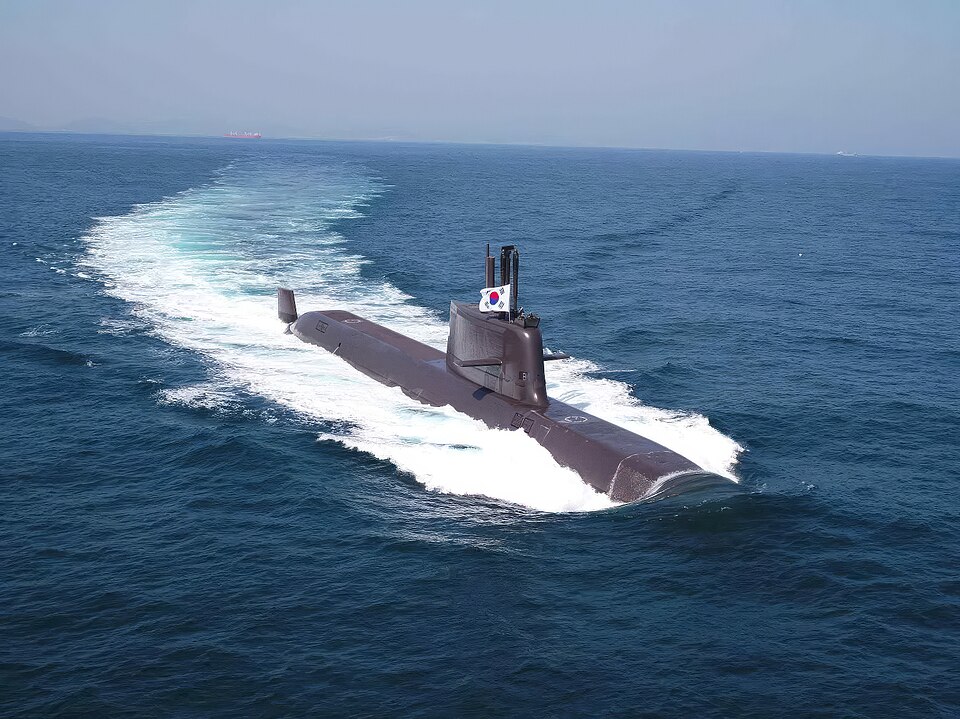
ROKS Shin Chae-ho, a KSS-III submarine at sea on 4 April, 2024.
Photo from the Defense Acquisition Program Administration (DAPA) via Wikimedia Commons.
The KSS-III is the only conventional submarine that can meet all of Canada’s requirements. It combines the blue-water reach and endurance demanded by transoceanic tasking with a vertical launch system that enables credible land-attack and complex anti-surface strike options, supported by lithium-ion batteries that lengthen quiet submerged persistence and improve sortie tempo on distant stations. Its larger hull and higher automation provide the habitability and crew margin needed for 30 to 60 day deployments from Halifax and Esquimalt to the North Atlantic, the Indo-Pacific, and the Arctic ice edge, while remaining within the conventional, non-nuclear profile Canada has set. The design’s modern combat system and sensor suite can be integrated with Canadian and allied command, control, and targeting architectures, and the bilateral sustainment framework required with South Korea can be structured by contract to include full technical data access, in-country training pipelines, and an industrial workshare that anchors through-life support domestically. The delivery cadence proposed for a 2026 award would shorten Canada’s reliance on the Victoria class and reduce associated sustainment exposure during transition, while an initial Canadian order of up to twelve boats would give Ottawa a controlling voice over configuration management, growth paths, and export-variant standards for the life of the class.
Comments Off on The Canadian Patrol Submarine Project
February 5, 2026
On The Line with Vice-Admiral Angus Topshee, commander of the Royal Canadian Navy
The Line
Published 3 February, 2025Today on On The Line, Matt Gurney is joined by Vice-Admiral Angus Topshee, commander of the Royal Canadian Navy, for an extended, wide-ranging conversation recorded in the library of the Royal Canadian Military Institute in downtown Toronto. The discussion ranges across geopolitics, the state of the world, the state of Canada’s navy, what’s going right for the fleet, and what still needs to improve.
First, a correction from your host. During the conversation, Matt incorrectly stated at several points that Canada intends to procure 15 new submarines. Admiral Topshee was too kind to interrupt him during the recording, but the correct number is 12. That mistake was entirely Matt’s, and he regrets the error.
With that out of the way, the conversation spans the globe. Admiral Topshee discusses what’s happening in Europe with Russia and Ukraine, and in the Pacific, where growing Chinese power and influence is challenging long-held assumptions about global security. There’s also extensive discussion of the Arctic, why it matters, and what is changing there. Procurement comes up as well — shipyards, new ships for the fleet, and what it will actually cost to deliver on plans that now enjoy broad political support.
They also spend time on what Canada itself needs to sustain a much larger navy and armed forces. Do we have enough bases? Enough reservists? Are people being enrolled into the navy quickly enough? And how, realistically, could Canada expand its forces rapidly in a time of war?
It’s a long, free-ranging conversation about geopolitics, the evolution of warfare, and the future of the Royal Canadian Navy. Check it out today on On The Line. And special thanks to the Royal Canadian Military Institute for hosting this recording of the podcast. For more like this, visit ReadTheLine.ca, and as always, like and subscribe.
0:00 Intro
0:26 Vice-Admiral Angus Topshee
54:16 Outro#OnTheLine #RoyalCanadianNavy #AngusTopshee #CanadianForces #Geopolitics #ArcticSecurity #NavalPower #CanadaDefence #MattGurney
Comments Off on On The Line with Vice-Admiral Angus Topshee, commander of the Royal Canadian Navy
December 8, 2025
Eating aboard a US Submarine during World War 2
Tasting History with Max Miller
Published 1 Jul 2025Slow-cooked steaks with tomatoes and onions with mashed potatoes and gravy
City/Region: United States of America
Time Period: 1945Being a crew member aboard a submarine during World War II was one of the most dangerous jobs in the US military with a fatality rate of over 20%. This, and the extremely cramped and uncomfortable quarters, were why the food aboard a US sub was really good. If nothing else, at least you had delicious food to keep you going.
These steaks cook up to be fall-apart tender and delicious, and the mashed potatoes have wonderful flavor, even if the texture is a little different from regular mashed potatoes. They kind of remind me of the mashed potatoes I’d get as a kid in school, which were also probably made from dehydrated potatoes.
SWISS BEEF STEAKS
Portion: 1 (6-ounce) steak.
100 PORTIONS
Beef, bone-in……60 pounds
OR
Beef, boneless……42 pounds
Flour……2 pounds……1/2 gallon
Salt……6 ounces……3/4 cup
Pepper……1/2 ounce……1 3/4 tablespoons
Fat……2 pounds……1 quart
Tomatoes……12 pounds, 12 ounces……2 No. 10 cans (6 1/2 quarts).
Onions, sliced……6 pounds……4 1/2 quarts
Salt……1 ounce……2 tablespoons
Flour (for gravy)……1 pound……1 quart
Water, cold……
Cut meat into 6-ounce steaks 1 to 1 1/2 inches thick.
Sift together flour, salt and pepper. Pound into steaks.
Cook steaks in fat until browned on both sides. Place in roasting pans.
Add tomatoes. Cover with onion slices. Sprinkle with 1 ounce salt.
Cover pans. Cook in slow oven (300°F.) 3 hours or until steaks are tender.
Drain liquid from Swiss steaks. Make a paste of flour and water. Stir into steak liquid. Cook until thickened. Pour over steaks. Reheat.MASHED POTATOES (Using dehydrated, shredded potatoes)
Portion: Approx. 4 1/2 ounces (approx. 2/3 cup).
100 PORTIONS
Water……5 pounds, 8 ounces……2 gallons
Potato shreds, dehydrated, precooked……5 pounds……2 gallons
Salt……3 ounces……6 tablespoons
Milk, liquid, hot……3/4 gallon
Butter, melted……1 pound……1 pint
Heat water to vigorous boil. Pour over potatoes. Cover.
Let stand in warm place 15 minutes or over low heat 10 minutes.
Add salt. Stir vigorously 15 to 20 minutes or until smooth.
Add milk and butter. Whip until light. Serve immediately.
— The Cook Book of the United States Navy by the United States Department of the Navy Bureau of Supplies and Accounts, Washington, D.C., 1945
Comments Off on Eating aboard a US Submarine during World War 2
November 22, 2025
Why did the US Enter WW1?
The Great War
Published 11 Jul 2025In early 1917, the United States was still neutral in the First World War. Meanwhile, German leaders were getting desperate — if they couldn’t find a way to break the war of attrition on the Western Front, the Allies would probably defeat them. The result was multiple gambles that staked everything on a quick victory with the risk of drawing the US into the war.
(more…)
Comments Off on Why did the US Enter WW1?
November 3, 2025
“Vice-Admiral Angus Topshee more or less kiboshed the notion of building new submarines here in Canada”
Assuming that this government or the next one follows through with current plans, the Royal Canadian Navy (RCN) will replace the four current British-built Victoria-class submarines with up to a dozen new subs based on either the German Type-212CD design or the South Korean KSS-III. There is no reason at all that these new submarines need to be built in Canada, as there is no existing shipyard with any experience in this kind of vessel and no chance that creating a domestic submarine industry would be anything more than a perpetual money-sink. Our existing shipyards can, at a stretch (and at a significant cost increase), build surface ships from small motorboats up to frigates, destroyers, and larger supply ships, but there’s always a hefty premium for building the hulls here because once the order is complete, the shipyard can rarely use that skilled workforce and their specialized expertise to build more ships for other navies, so the yards shrink, the workers move on and a decade or so later, we have to start all over again from basically nothing.
Submarines are even more specialized than the ships the RCN is likely to buy, and there’s almost zero chance an allied navy or a neutral power would choose to have submarines built in Canada. The head of the RCN, Vice-Admiral Topshee clearly recognizes this:
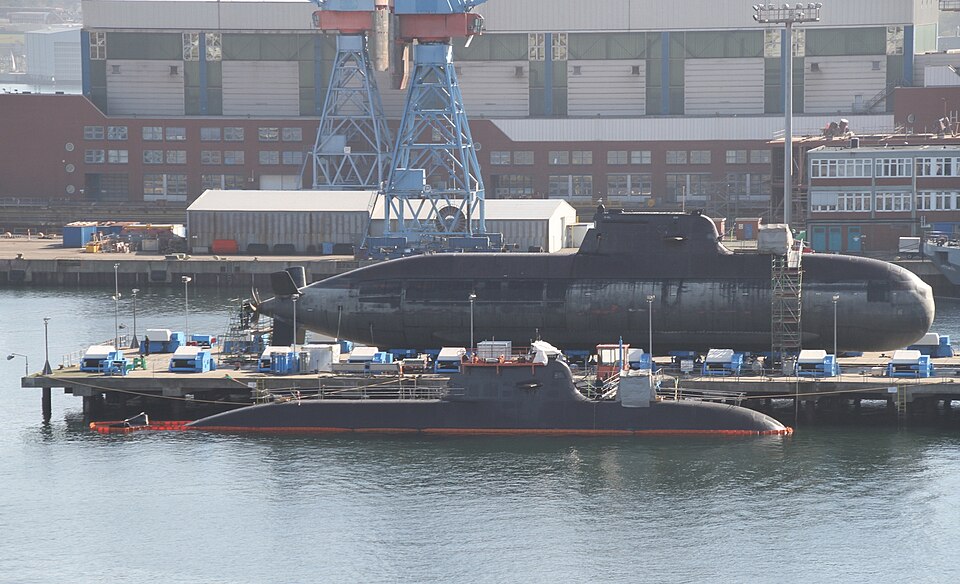
Type 212 submarines at the HDW shipyard in Kiel, Germany, 1 May 2013.
Photo by Bjoertvedt via Wikimedia Commons.
On Thursday in South Korea, Royal Canadian Navy Vice-Admiral Angus Topshee more or less kiboshed the notion of building new submarines here in Canada. He cited two major concerns: One, that we need these submarines “quickly.” And two, that our demand for submarines couldn’t possibly sustain an operation on its own.
“A submarine industry requires a consistent production line, and to be able to build enough submarines … to sustain a production line will be a real challenge,” Topshee said at the Hanwha Ocean Shipyard, where he, Defence Minister David McGuinty and Prime Minister Mark Carney tickled the periscope on one potential replacement for Canada’s aging-out Victoria-class subs.
Both Hanwha and ThyssenKrupp say it’s technically possible they could build the subs in Canada; it would just take a long time to lay down the infrastructure, and we’re in an uncommon hurry. We are assured plenty of Canadian steel and sweat will go into maintaining them.
And I suspect that won’t be very controversial, if at all. We’ve had American submarines, British submarines and German submarines in the past. Submarines are just something that are not made in Canada, like a lot of other things: jumbo jets, fighter planes, aircraft carriers, pineapples, cellular telephones, home electronics.
And we’re fine with it. Aside from the odd Avro Arrow obsessive, everyone seems to accept we’ll be buying new fighter jets off the peg from abroad — assuming we ever come to a final decision on which to buy, of course.
The question is, why isn’t that controversial? Or, why is it by contrast seen as controversial to buy surface vessels from abroad. Whoever’s fault it is, Canadian shipbuilding for the navy is a scrapyard of blown deadlines, outrageous cost overruns and sometimes outright failure. If we’re happy with South Korean or German subs, why not South Korean or German or Danish frigates and destroyers — or passenger ferries, for that matter?
Until this silly “elbows up” narrative took hold, no one seemed to care very much where our ferries were built: Marine Atlantic sails Chinese-built ferries between Cape Breton and Newfoundland with barely a whisper of controversy. But the entire political class is now essentially united against BC Ferries’ decision to buy Chinese ferries from the same shipyard. The fact that BC Ferries needs ferries almost seems like an afterthought.
ROKS Shin Chae-ho, a KSS-III submarine at sea on 4 April, 2024.
Photo from the Defense Acquisition Program Administration (DAPA) via Wikimedia Commons.
Update: Noah posted a Q&A session with his readers that included some comparisons of the two contending designs for the Canadian Patrol Submarine Project (CPSP):
Q4. Have you had a chance to compare the AIP on the Ks III & 212CD yet with respect to Time underwater. There are different numbers floating around with new systems?
The truth is that no manufacturer is going to give you the accurate endurance. None. That is a closely guarded secret. I can say the KSS-III is higher, though out of respect for everyone and to not get myself in trouble I won’t say numbers. Both have endurance of several weeks and fit the HLMR.
I do plan to go into details about the systems themselves soon though, so I’m not leaving it alone!
Q5. The Type 212 has been described as an “ambush” submarine silently lying in wait for Russian subs. What advantages does the 212 bring to the Pacific?
Understand that both the KSS-III and Type 212CD are products of different needs and philosophies. Both focus on different strengths, in this case the 212CD puts almost all its efforts into being as stealthy and quiet as possible.
Its not just about ambush. Its about survival. The Type 212CD is designed to operate in the shallow, tight waters of the Baltic, and the littoral regions of the North Sea. That isn’t just about submarines but also being survivable against a dense field of Russian Maritime Patrol Aircraft and Anti-Submarine Helicopters.
That means a lot of effort was taken to ensure they’re as quiet and undetectable as possible. That’s where things like the Diamond-Shaped hull are supposed come into play, the use of non-magnetic stainless steel.
A lot of its value comes in what role you expect it to play. It is still an excellent asset in the littoral regions of the pacific, however it isn’t optimized for prowling around the open ocean, deep-diving nature of the Pacific. That is the domain of platforms like the KSS-III, at least in my opinion.
That doesn’t mean it can’t, but just as the KSS-III can also operate in the littoral regions of the Baltic doesn’t mean it’s optimized too. That’s the thing about CPSP. There’s a lot of requirements, a lot of different environments we expect these subs to operate in, and both [designs] focus on different priorities.
The advantages it has as a stealth-optimized platform don’t disappear. It could easily act in complement to other assets like U.S. and future Australian SSN [which] are more optimized for operations in the wider Pacific.
Strengths and weaknesses.
Update, the second: South Korea looks to be joining the nuclear-powered navy club with a new class of Korean subs to be built in Philadelphia using US navy nuclear propulsion technology.
South Korea has been wanting to get in the SSN club for a long time. Good on them for their persistence.
I’m not sure how this will work out. The Philadelphia Shipyard, even at its heyday, never built nuclear powered ships of any kind.
The South Koreans build a solid conventional submarine, the KSS-III that they offered to Canada recently, but nuclear submarines are at another level. Besides the infrastructure issues specific to nuclear shipbuilding at the shipyard that would need to be addressed, there is the fact that the U.S. nuclear workforce and hardware providers are already behind schedule with expected demands. While another yard is great, whoever is going to successfully solve those two structural issues needs superhuman abilities and one heck of a funding line.
Comments Off on “Vice-Admiral Angus Topshee more or less kiboshed the notion of building new submarines here in Canada”
October 13, 2025
North Africa Ep. 3: Stukas, Submarines … and a Trap
World War Two
Published 11 Oct 2025Feb 19, 1941 — North Africa flares up as German air and naval pressure around Tripoli and Benghazi intensifies and the first ground clashes break out near El Agheila. This episode follows X Fliegerkorps strikes, Royal Navy submarine successes (including the sinking of the cruiser Armando Diaz), and the shipment of men and matériel that leads to the new Deutsches Afrikakorps. British command, distracted by events in Greece, underestimates Axis moves, setting the scene for an ambush of Commonwealth patrols and the opening shots of the Desert War.
(more…)
Comments Off on North Africa Ep. 3: Stukas, Submarines … and a Trap


