Josh Bortolotti
Published 5 Jun 2026Connaught Range Primary Training Centre
The Canadian Army is in the final stages of testing for the C25 General Service Rifle, the first weapon being delivered by the Canadian Modular Assault Rifle project. Since awarding the contract to Colt Optics to provide the 1-6x LPVO, key stakeholders are brought out to Connaught Range to fire the weapon from differing distances and provide feedback. Some members of the Army Headquarters also got the opportunity afterwards to have a familiarization shoot with the C25 and C26.
C25 General Service:
Colt MRR 5.56x45mm (13.7″ barrel)
Colt Optics 1-6x Low Power Variable Optic (LPVO)
Millbrook Strategic Sciences Multi-Function Muzzle Device (MFMD)
Magpul Back Up Sights and FurnitureC26 Full Spectrum:
Colt MRR 5.56x45mm (15.7″ barrel)
Colt Optics 1-10x Low Power Variable Optic (LPVO)
Millbrook Strategic Sciences Multi-Function Muzzle Device (MFMD)
Magpul Back Up Sights and Furniture
October 9, 2026
CMAR – Canada’s Newest Service Rifle – 2026
September 11, 2026
“The Army we have is not the Army we need”
The Canadian Army is re-organizing and the most visible sign of the new organization is the reconstitution of the 1st Canadian Division:

Formation patch for the 1st Canadian Division during the First World War.
On Sept. 10, the Canadian Army undergoes one of the largest changes in its history as it transitions from divisions responsible for geographic regions in Canada to divisions with purpose-driven mandates.
“The Army we have is not the Army we need“, said Lieutenant-General (LGen) Michael Wright, Commander of the Canadian Army, in Inflection Point 2025, which laid out the rationale for and plan to launch a full-scale modernization of the Canadian Army.
This means 3rd Canadian Division, which has represented Western Canada for nearly 40 years, will be stood down on Sept. 10.
In its place will stand up 1st Canadian Division, which will assume command of the Canadian Army’s three Regular Force brigade groups — 1 Canadian Mechanized Brigade Group (1 CMBG), 2 CMBG and 5 Groupe-brigade mécanisé du Canada (5 GBMC) — and 6th Canadian Combat Support Brigade (6 CCSB), the brigade designed to enable the rest of the Army to conduct its operations. In addition, 1st Canadian Division will also assume command over three newly formed formations: 1st Canadian Artillery Brigade, 1st Canadian Sustainment Brigade and 3rd Canadian Light Infantry Regiment.
It’s all part of a push to move the Army away from “contribution warfare,” explained LGen Wright on the Feb. 4 edition of the Canadian Army Podcast. Going forward, the goal is to equip and position the Army to be capable of participating in major combat operations as an equal partner.
If you, like me, were wondering where the 3rd Canadian Light Infantry Regiment came from, it’s composed of existing battalions from the other regular infantry regiments, reducing them each to just their first and second battalions:
The first of the three new formations being stood up as part of 1st Canadian Division is 3rd Canadian Light Infantry Regiment, which is a reassignment of existing units. The third battalions from the Princess Patricia’s Canadian Light Infantry, Royal Canadian Regiment and Royal 22e Régiment will be brought together to form the new regiment. LGen Wright explained the new formation will “ensure [the Army is] able to respond with high-readiness forces at scale”.
I’m sure there’ll be no morale issues at all with three battalions-worth of trained infantrymen being rebadged to a brand new unit with no history, traditions, or battle honours. And I’m sure we needed a few more combat postings for Colonels kicking around with nothing much to do …
August 28, 2026
“The Maple Mujaheddin Insurgency is not going to happen”
Of all the potential military conflicts facing the west, a US invasion of Canada has to be among the least likely — not just because it’s been attempted more than once in the past. For one thing, I don’t think even the best social media posting is going to bring ordinary Americans around to getting boots on the ground across the 49th parallel … there’s remarkably little passion about seizing our maple syrup and confiscating our strategic reserves of poutine among voters. Unlike places that Americans have strong feelings about, Canada just doesn’t move the needle.
The Operational Art of War has the first of a promised three-part series on Operation Maple Stomp, the biggest and best invasion of Canada — everyone says so:
In the latest round of “let’s do everything the dumbest way possible” the two nations in the world sharing the most in common keep taking to social media to fantasize going to war with each other.
It is deeply annoying, brings out the worst tendencies on both sides, and (to my mind worst of all) illustrates no one understands the Operational Art of War!
Americans take to social media and claim Canada doesn’t have a military, the military wouldn’t fight and be so outnumbered that resistance would collapse within hours.
Canadians usually agree the conventional war would be over in an afternoon, but then America would face a long and bloody insurgency (just wait till Uncle Sam meets the Maple Mujahedeen!).
Google AI’s idea of what a Canadian Insurgent looks like.
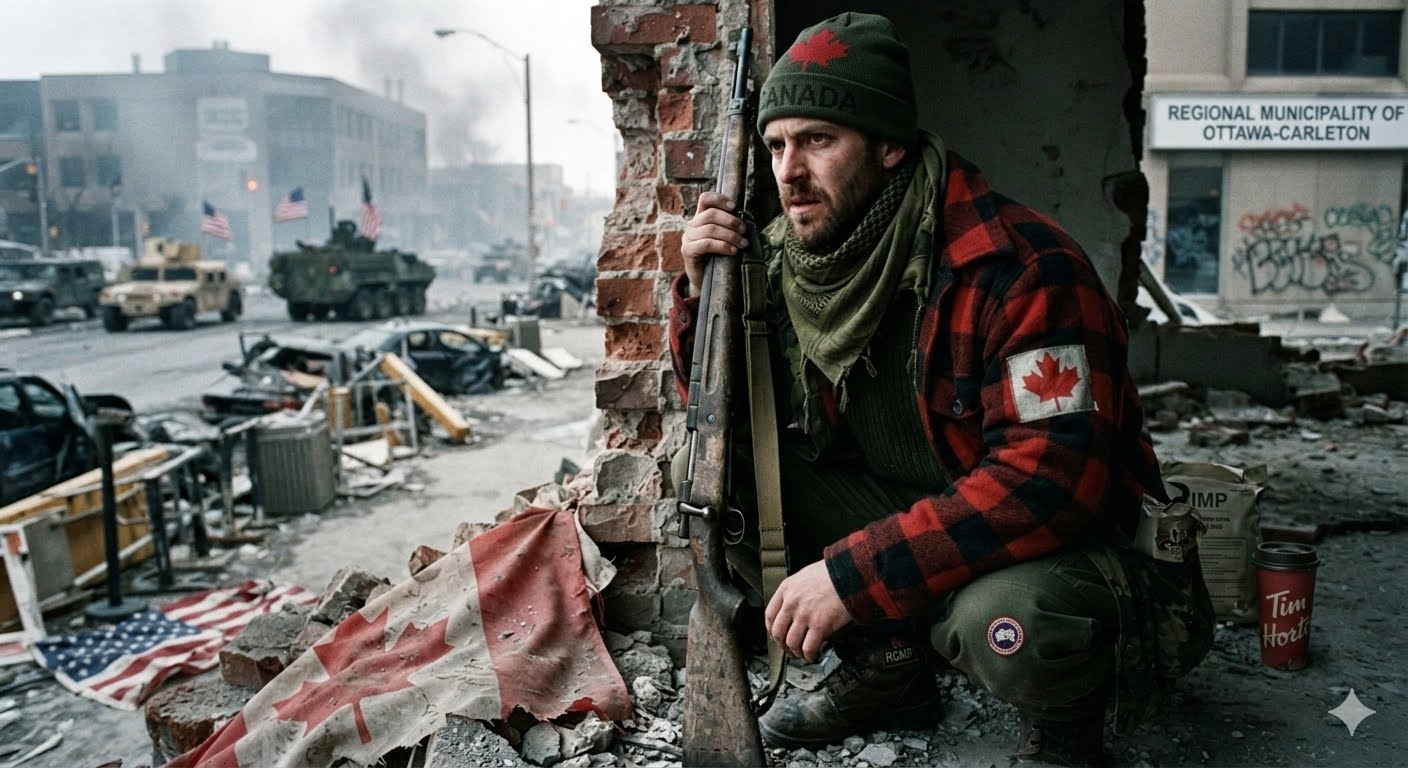
You can definitely count me as a member of Team Mere-matter-of-marching, at least as far as the tactical operations necessary to occupy the most populous parts of Soviet Canuckistan. Here’s a sketch map that Big Serge updated for the 2020s, based on the mid-1930s details for an attack on southern Ontario from War Plan Red:
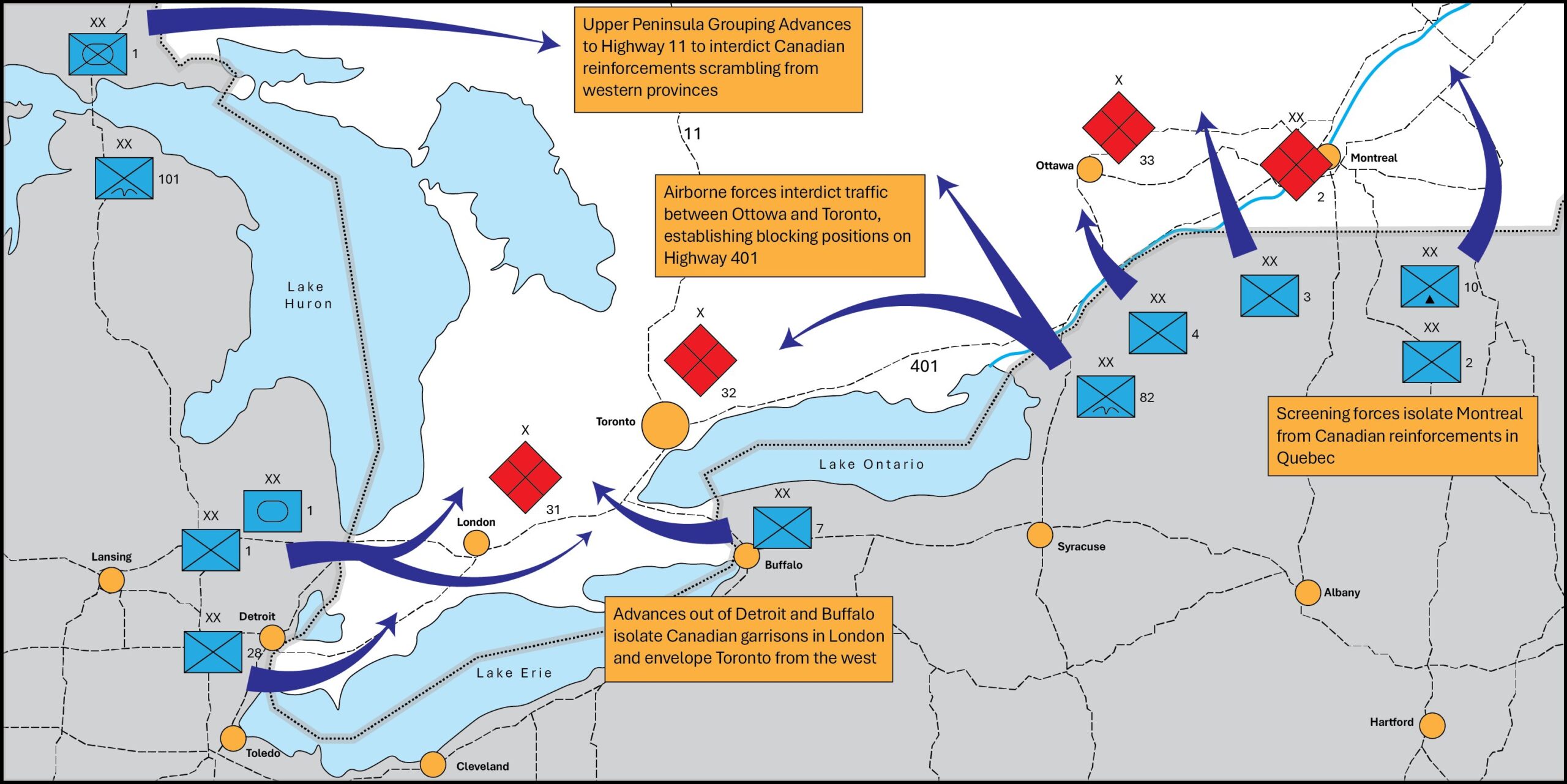
Manifest Destiny, 2025? Big Serge’s updated map for the old US War Plan Red for a military invasion of Canada.
The distances are short enough and the chances of significant military resistance low enough, that US Army vehicles would probably not need to refuel before reaching the initial stop-lines for their advance. Canadian infrastructure is not pre-wired for destruction, so unless local hotheads manage to temporarily block road bridges, volume of traffic will be a bigger friction factor than actual defensive fire.
Trump’s legions would reap the benefit of more than a century of demilitarized populations and the (small, but real) Canadian military being oriented to expeditionary operations rather than home defence. But taking the territory is only the first step. There are Canadians scattered throughout the continental United States, looking and sounding pretty much like any other American, and it wouldn’t take too many of them to decide that Trump’s fight was also their fight. Canada isn’t the only one enjoying the benefits of decades of lack-of-worry about homeland defence. Look how exposed the US has been to Islamic terrorists who, for the most part, don’t look or sound like Americans and still managed to pull off one of the greatest terror attacks of the modern age.
I mean, don’t misread what I’m saying here: the US would win. That’s not even remotely in doubt. There are at least ten of you for every one of us, and more of you have military training and access to personal weapons. (One wonders if the Canadian government’s fanatic devotion to civil disarmament is a kind of pre-surrender to this imagined US invasion we’re discussing …)
But the cost of winning might be more than even the most government-worshipping progressive might be willing to pay. We look like you. With a few exceptions (French-speaking Quebecers and Newfoundland-speaking Newfoundlanders, mostly), we fit in very well with you. We come from very, very similar cultures (some like Vancouver vlogger J.J. McCulloch argue it’s the same culture). Rather than a war of conquest, this would be much more like that “Second Civil War” that’s been so much a topic of conversation on far left and far right social media. The kind of civil war that takes far too long to settle back into peaceful co-existence.
You don’t like government surveillance? Too bad, bucky, because every level of government is going to be eager to ensure that you’re a good, loyal American … at all hours of the day and in everything you do. Cut down a Flock camera? That’s not going to be a mere vandalism issue … that’s tantamount to treason. What if that Flock camera was watching one of those undercover Canucki guerilla fighters?
Don’t like the feds watching every financial transaction? Too bad, bucky, ’cause you giving $5 to that sketchy Canuck for some bootleg maple syrup might be funding a terror attack on your nearest USAF base.
To fight the threat of Canuck infiltration, your every car trip will need to be logged, and your patterns of travel will need to be recorded and analyzed. Who you talk to will also need to be observed, in case one of your buddies is a covert maple-slurping spy!
Oh, wait, there’s more from the Operational Art of War:
There Won’t Be a Maple Mujahadeen
If the United States annexes Canada, there will not be a long-standing violent insurrection by a nation of hunters. The Maple Mujahadeen isn’t going to happen.
A successful insurgency has several requirements:
- A pre-existing structure to organize around;
- The structure having access to weapons;
- The insurgent group not having a future in the new regime; and
- The broader population being willing to shelter the insurgency.
Canada does have factions that meet all four of these factors, but spread across different factions. Like any complex modern society, Canada does have pre-existing structures of voluntary organizations. Virtually none of them are organized around any kind of collective defense or skills that easily translate to an insurgency.
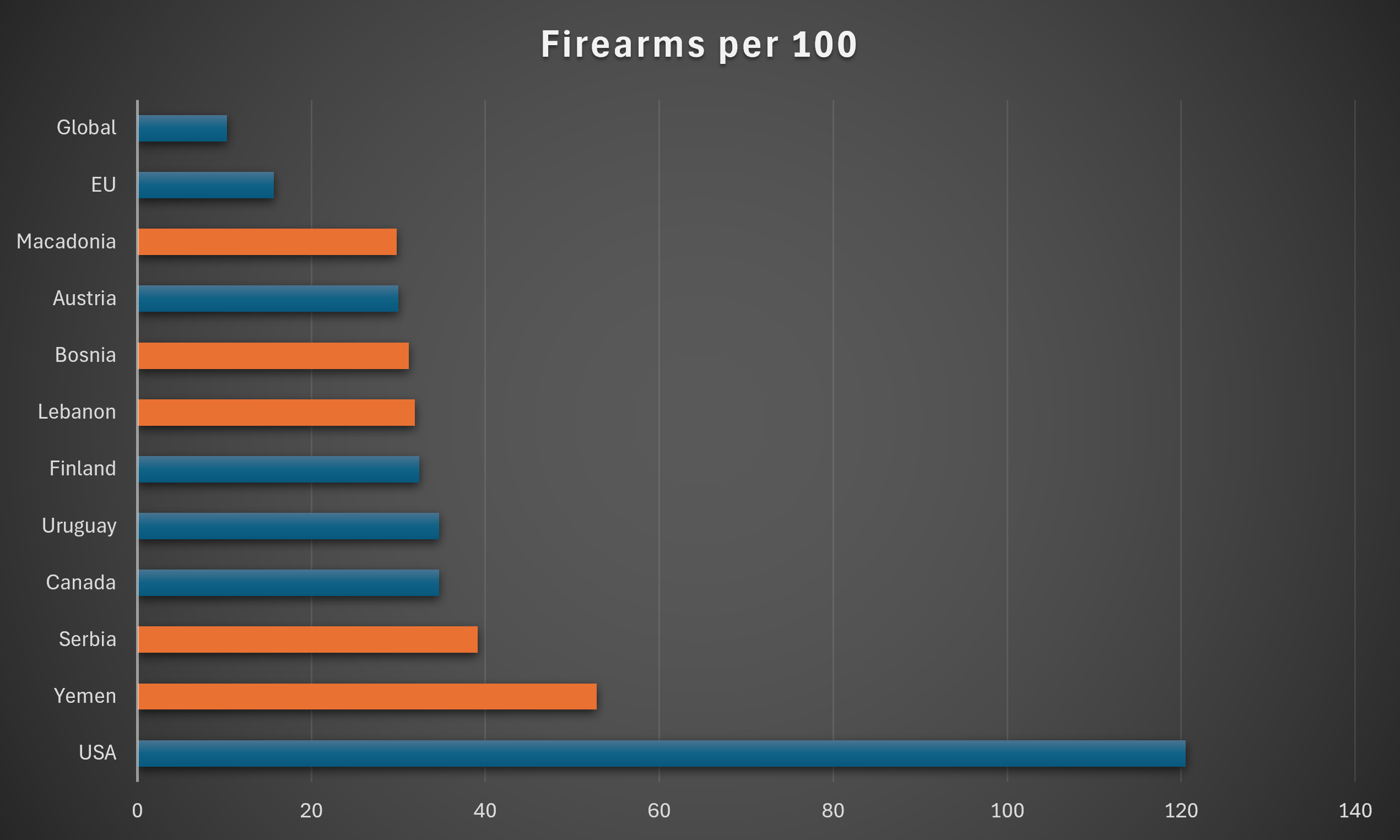
For #2 (access to weapons) you either need armed citizens, government weapons cashes or weapons brought in by a rival power supporting the insurgency. In Canada’s case, the only viable supply of weapons for an insurgency is its armed citizens. As with most statistics, Canada only looks like a gun free country because it’s beside America.
The graph below shows the top 10 countries for estimated firearms per 100 people, plus the EU and global average for comparison (excluding countries with a population under one million). Countries that were recently warzones are in orange, as their rate of firearm ownership is something of a special case.
The number for Canada is likely too low. This is based on a 2017 data set, and firearm ownership is growing faster than the population. It also assumes there are five unregistered firearms to every registered firearm in Canada. The last time Canada had hard data on unregistered firearms (2003 to 2012) the ratio was 10:1. Assuming a similar ratio today, firearms per 100 jumps to 1/2 that of America and nearly 4x the European average.
July 8, 2026
Don’t call them “U-boats”!
In his latest post for The Line, Matt Gurney violates the cardinal rule of discussing German naval equipment … don’t call ’em “U-boats”!
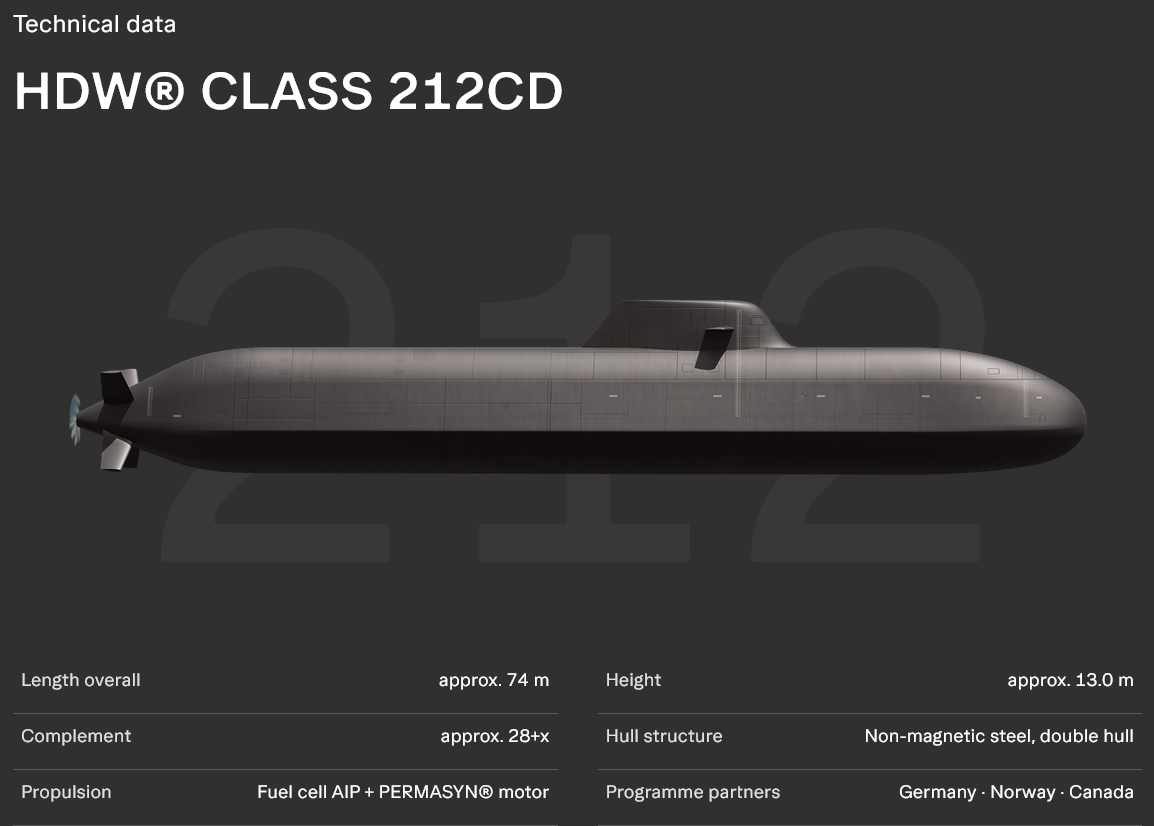
In Halifax on Monday, Prime Minister Mark Carney announced that Canada had chosen a preferred vendor for our new fleet of patrol submarines. Canada will (probably) be going with a German-Norwegian consortium that was offering the Type 212CD submarine, and not the South Korean boats offered by Hanwha. The prime minister said it was a close finish between the two competitors and noted that either design would have met Canada’s needs. The decision announced Monday is not a final purchase order but rather a determination of who our preferred partner would be. The prime minister said that if the negotiations with TKMS, the German company offering the 212CD, did not go well, Hanwha remained an acceptable option.
Personally, I was rooting for the Koreans. I liked their submarine’s ability to launch missiles vertically, which would’ve given the Canadian fleet some powerful strike options. I also tripped a little over the thought of Canadians in U-boats — I suspect many historically minded Canadians will also blink hard at that little twist of fate. But I fundamentally agree with the prime minister — either boat is fine for our purposes. The 212CD will be an excellent asset once it enters Canadian service (presumably with a snappier name).
Sooner would be better. The prime minister noted repeatedly during his remarks on Monday that the government was moving quickly to make this announcement, having settled on a preferred partner five years ahead of the original schedule. This is true, and I give the prime minister full credit for that. I would also note that the schedule was already ridiculously long. We actually should have begun replacing the submarines a decade ago. The PM’s comments reminded me that I had written a column about the urgent need to just get on with replacing the submarines when we had last announced another cycle of refurbishments to keep the current fleet in service because we had yet again delayed a decision on a replacement.
I found my old article. I wrote it seven years ago.
That was bad. Carney accelerating it is good. It’s also good that we are looking at a much larger fleet of submarines, going from four to as many as 12. Submarines are very complicated machines. For every boat you want available for service, you need three or four in your fleet. This gives you a large enough fleet to have an operational submarine available while others undergo maintenance or refits or participate in training exercises with their crews. The four Victoria-class submarines Canada possesses today mean that we typically might have one available for service at any given time, so a fleet of 12 will give us a much more robust presence. Given that we claim three oceans, and that the world is pretty much a dumpster fire these days, having a submarine available on each coast at all times seems like a good idea.
Time is of the essence. Germany and Norway, the prime minister said, have offered to allow Canada to cut ahead of them in line for deliveries of the submarines, which are already under construction but haven’t yet entered service. Given the decrepit state of our elderly existing fleet, that was obviously a meaningful sweetener, and the PM said the first boats could be in Canadian service in seven or eight years, which is pushing the Victorias to their limits, but should work. We hope?
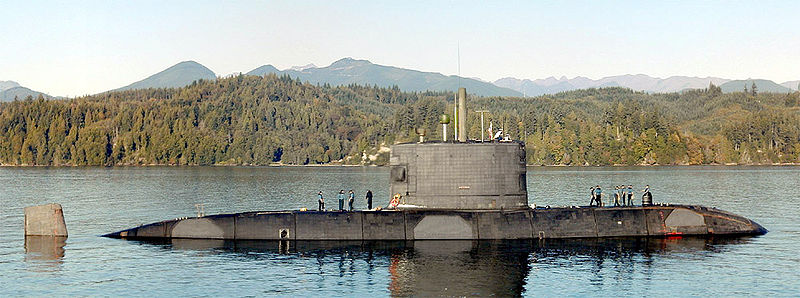
HMCS Victoria, one of four ex-Royal Navy submarines in Canadian service, will have to carry on in service — as much as the class can carry on — until the early 2030s.
Image via Wikimedia Commons.
July 7, 2026
Canada decides to buy German submarines
I wouldn’t say I’ve been closely following the Canadian Patrol Submarines Project (CPSP), but I was interested enough to do a bit of reading about both of the contending bidders and their offerings. Based on my understanding of the RCN’s needs, I expected the South Korean KSS-III submarine to be the final winner, but I was wrong: Prime Minister Mark Carney announced that the German/Norwegian TKMS Type 212CD submarine had been selected instead.
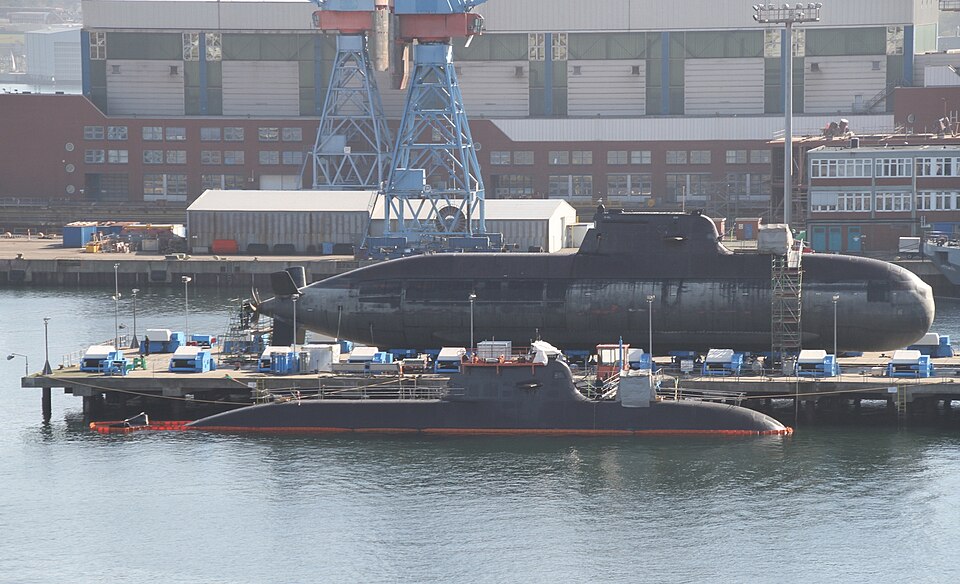
Type 212 submarines at the HDW shipyard in Kiel, Germany, 1 May 2013.
Photo by Bjoertvedt via Wikimedia Commons.Submarines enable the Royal Canadian Navy (RCN) to defend threats near and far from Canada’s shores. Yet, our current fleet is aging, with only one of four submarines seaworthy. With the longest coastline in the world, Canada’s ability to deploy underwater surveillance capability is critical. Our security and sovereignty depend on them.
Today, at Canadian Forces Base Halifax, the Prime Minister, Mark Carney, announced that Thyssenkrupp Marine Systems (TKMS) has been selected as the preferred supplier to begin negotiations for delivering Canada’s next fleet of submarines to the RCN. This will be the largest defence procurement in Canadian history, and it will equip the RCN with the capabilities they need to keep Canadians safe.
With ultra-low acoustic and magnetic signatures, TKMS’ 212CD is one of the stealthiest submarines in the world. It is capable of Arctic patrol, undersea surveillance, special forces deployment, and it is fully NATO-interoperable. These submarines provide an unparalleled combination of advanced technology and lethality that will enable the RCN to detect, track, deter and, if necessary, defeat adversaries in all three oceans bordering Canada. This procurement will bolster Canadian security through a platform shared by Germany and Norway, two of Canada’s closest Allies.
The Government of Canada and TKMS will now enter into negotiations to finalise the contracts and all arrangements required to deliver the requirements of the CPSP. Canada will conclude contracting no later than the end of 2027, with the first four submarines to be delivered ahead of schedule, in 2034. In the event that negotiations with the preferred supplier are unsuccessful, Canada may designate Hanwha Ocean as the preferred supplier and enter into negotiations.
The CPSP is being advanced by the Defence Investment Agency and aligns with Canada’s Defence Industrial Strategy. Under the Build-Partner-Buy framework, the project demonstrates the Partner approach, with collaborations with trusted Allies to develop and deliver capabilities while ensuring industrial and economic benefits for Canada. The CPSP will prioritise investments across the Canadian supply chain, to create high-paying jobs, leverage Canadian defence industries, and maximise benefits for Canadian workers and businesses.
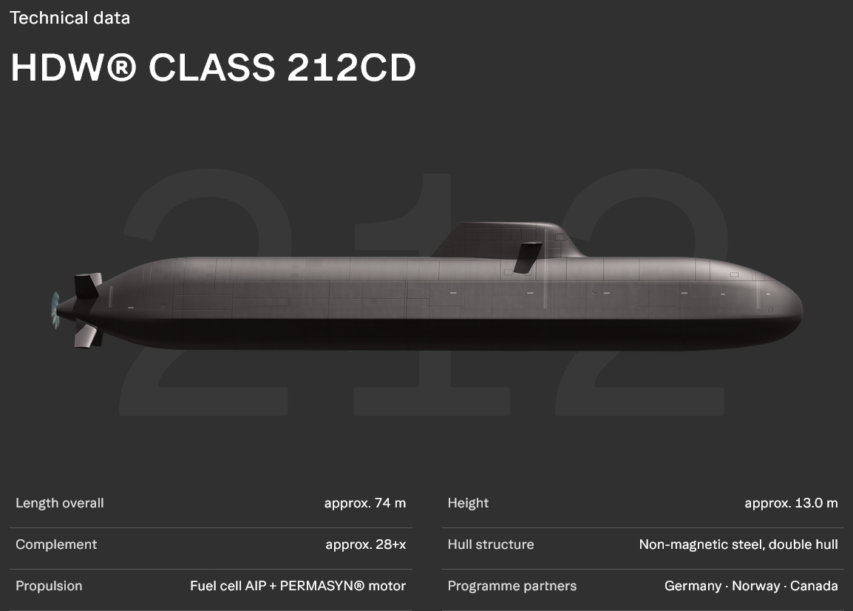
Noah comments on the press release information and some wider issues to do with the CPSP:
And with this, the long-awaited Canadian Patrol Submarine Project finds its home. What started as an ambitious RFI back in 2024 has quickly turned into one of the most consequential, publicized, and dynamic projects, I would say, in Canadian history.
TKMS and Kongsberg, operating as Team GERNOR, have claimed the preferred supplier designation from the federal government. As always, there is no contract today. The selection of a preferred supplier merely sets the table for negotiations to a final contract.
While the federal government will want to move quickly, and I’m sure that the Navy would like to see the contract signed, it is highly likely that comes in 2027. The typical “quick” timeframe is about a year. Keeping in mind, of course, that CPSP will be the largest procurement contract in federal history,1 and in this case also includes additional negotiations on build slots for submarines from both Germany and Norway.
[…]
There was no universal consensus, and I know this choice didn’t come easy for anyone. Both sides put all they could into it. Yet in the end, the GERNOR option pulled ahead. The European focus was championed heavily by those in the PMO as an opportunity to open doors and integrate Canadian industry into the wider European ecosystem, especially as European interest in Canadian expansion grows.
At the end of the day, that ecosystem came out on top. In the final weeks and months of the competition especially, the banner of Europe rallied to the call of unity, to stand with their hands at the back of Team GERNOR. That push, and that united front, is very likely what pushed that sense of alignment forward.
You don’t need to look far for it. Just after CANSEC, Italy’s Fincantieri, a noted ally of TKMS, signed a new MOU with Magellan Aerospace to investigate the potential production of heavyweight torpedoes and undersea countermeasures, building off the proposed investment TKMS plans to make.
While not in the 212CD network, Fincantieri is in the family, and they, among others, are also looking to Canada and our choices. It is the first example of the TKMS family taking notice and making proactive moves to jump in and secure capacity in a future Canadian submarine industry; and, as I understand it, far from the only one being discussed.
Another outside addition: Navantia of Spain and TKMS have also recently signed an MOU to investigate collaboration on naval shipbuilding. While this new agreement is young, I am also led to believe that Navantia is looking to Canada with interest, building off some of their previous engagements with industry.
Increasingly, the European front is united in industry, in the political sphere, and diplomatically to present the 212CD not as a German-Norwegian partnership but as a foundational Canada-Europe partnership that will build off the foundation of agreements like SAFE and the EU-Canada Security and Defence Partnership to create a united Atlantic front that promotes collaboration and joint investment, and opens the European market to Canadian industry.
- NR – “the largest procurement contract in federal history” … Canada’s major military purchases happen so rarely and always taking as long as bureaucratically/politically possible, so every ship, aircraft, helicopter, or tank purchase has a good chance of being the next “largest procurement contract in federal history”.
June 22, 2026
ADATS – Air Defense Anti-Tank System; Canada’s high tech cold warrior
Polyus
Published 19 Jun 2026While designed mainly in Switzerland, over the years its identity became distinctly Canadian. It was produced in Toronto by Oerlikon Aerospace Canada and was operated by Canadian forces from 1988 to 2011. This is the story of the Air Defense Anti-Tank System, or ADATS
ADATS was a very interesting and highly advanced air defense system designed to fight a cold war that never materialized. It was operated for a little over 20 years, so it was by no means a flash-in-the-pan. Unfortunately, Canada has since given up its short ranged air defense capability and all of the human expertise that was built up over the years. Hopefully in the future a new system can be acquired and Canada can again expand its sovereign air defense capabilities.
This video was made without the use of Artificial Intelligence (No AI). Long live people power!
0:00 Introduction
0:29 European Background
2:09 Technical Details
4:05 Engagement Sequence
5:38 Comparison to other Systems
6:06 Canadian Adoption
7:48 American Testing
8:32 Thai Adoption
8:57 Advanced Variants
10:23 ConclusionMusic:
“Denmark” – Portland Cello Project
“Your Suggestions” – Unicorn Heads
April 27, 2026
UOTCAF – EP 003 – PPCLI (Patricias)
Stormwalker Group
Published 5 Dec 2025Join Mario Gaudet, former Army Reservist and military brat, in Episode 3 of “Units of the CAF” as we delve into the legendary Princess Patricia’s Canadian Light Infantry (PPCLI).
Discover their early history, unique uniform quirks and cap badge story, plus their valor in WW1, WW2, the Cold War, and Afghanistan — featuring the most decorated soldiers from each era.
Sources:
•General PPCLI History: https://www.canada.ca/en/department-n…
•Sgt. George Harry Mullin VC (WW1): https://vcgca.org/our-people/profile/…
•Maj. John Keefer Mahony VC (WW2): https://veterans.gc.ca/en/remembrance…
•Sgt. Tommy Prince MM (Cold War/Korea): https://en.wikipedia.org/wiki/Tommy_P…
•WO Patrick Tower SMV (Afghanistan): https://en.wikipedia.org/wiki/Patrick…
•Additional Regimental Details: https://ppcliassn.ca/ppcli-the-regime…#PPCLI #CanadianArmy #MilitaryHistory #CAF #WW1 #WW2 #KoreanWar #Afghanistan #VictoriaCross #Veterans #CanadianForces
April 23, 2026
Arctic defence – Canada can’t “go it alone”
On the social media site formerly known as Twitter, Lee Humphrey explains a few of the reasons that we can ignore Prime Minister Mark Carney’s claims that Canada can defend the north without US assistance:
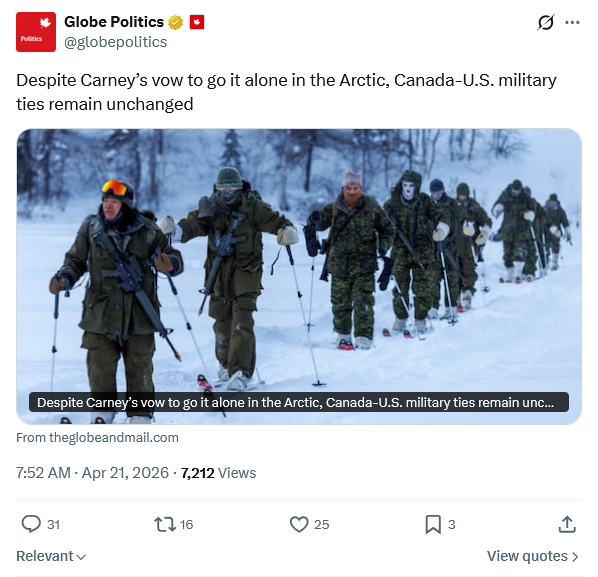
Canada is not capable of going it alone & is not going it alone. It’s a lie to say otherwise.
The majority of new radars being bought to replace existing radars will be from US companies, all our radars including the Australian built OTH radar will use US military satellites to communicate with monitoring stations in the US & Canada.
The armed drones we are buying are built in the US & will use US military satellites to communicate with their ground based controllers.
The subs we are spending $40 billion on are not capable of safely patrolling under sea ice for more than 11 continuous days before they have to turn around & get to clear water so we will continue to rely on US nuclear powered subs to track Russian & Chinese subs who are in sovereign CDN arctic waters.
Over the last year, US fighter aircraft have had to respond to 3 separate incidents that the RCAF were unable to respond to at all or in a timely way.
CDN’s who still believe Trump is going to invade need to realize just how many opportunities he keeps missing 😎
Reality sucks especially when national security or national sovereignty is at stake but the reality is that not only can we not operate independently at home, we can’t & haven’t been capable of operating independently for 60 years now!
April 16, 2026
UOTCAF – EP 002 – Royal 22e Régiment (R22R)
Stormwalker Group
Published 11 Nov 2025Units of the CAF: Episode 2 – R22R
Join your host, Mario Gaudet, as he confuses his brain by talking about French stuff in English, and dive into the epic saga of the Royal 22e Régiment, Quebec’s legendary “Van Doos”, in Episode 2 of “Units of the CAF”.
From their 1914 founding as the first French-speaking battalion in WWI and their heroic stand at Vimy Ridge, and at Ortona in WWII, to Korea’s Hill 355 raids and Afghanistan’s dusty patrols, we spotlight decorated heroes like Joseph Kaeble (VC, WWI), Paul Triquet (VC, WWII), Léo Major (DCM, Korea), and modern heroes aswell. Explore their iconic cap badge featuring the motto “Je me souviens” adopted in 1925.
Whether you’re a veteran, history buff, or just a fan of military trivia, this one’s for you.
#Royal22eRegiment #VanDoos #CanadianArmy #MilitaryHistory #CAF #QuebecPride #WWI #WWII #KoreaWar #AfghanistanWar
March 30, 2026
Canada’s official bilingualism benefits only one of the two “founding” peoples
Canada has been officially a bilingual country for decades, but it hasn’t made most Canadians capable of effective use of both official languages, especially in the western half of the country. Instead, with the imposition of mandatory bilingualism for most federal civil service roles, it’s functioned as a strong bias in favour of bilingual Quebeckers and against Canadians from majority anglophone provinces. Given that government jobs have been growing at a far faster rate than private-sector jobs, this injustice is fuelling anger and support for separatism in the west:
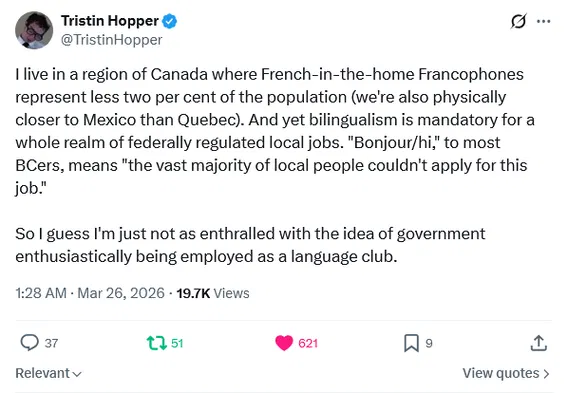
This is why French Immersion schools function as “private schools for the middle class” … it provides access to lucrative and secure government jobs for the children of the bourgeoisie, excluding most working class kids.
It’s a uniquely ridiculous Canadian story.
Two Canadian pilots were killed in a freak accident at LaGuardia airport and yet Canadian news coverage has been dominated by outrage over the fact that the CEO of the pilots’ airline, Michael Rousseau of Air Canada, released a condolence video that had French captions but no spoken French!
Though one of the two dead pilots was French Canadian, near as I can tell, none of the anger at Rousseau’s video is coming from anyone associated with the victims themselves, but rather the Canadian political class and punditocracy. Prime Minister Carney denounced the video for lacking “judgment” and “compassion,” and a bunch of other politicians have said similar things, particularly in Quebec, where the legislature passed a unanimous motion demanding Rousseau’s resignation. There have been a ton of angry anti-Rousseau editorials in all the leading Canadian papers.
It is obviously a highly performative, almost ritualistic, almost religious outrage occurring mostly so members of the Canadian establishment can collectively affirm one of their shibboleths: the country’s elite should be bilingual.
On social media, however, the reaction has been quite different, with ordinary Canadians expressing frustration and annoyance at the distasteful nature of it all. Two men are dead and this is what our betters are yapping about? An old debate — long stigmatized, but never successfully suppressed — has resurfaced: why are we doing this bilingualism thing at all?
I’ve been arguing against the Canadian elite’s cult of official bilingualism for a very long time. To the extent I have a controversial reputation in Canada and don’t get invited on things very much, it’s in large part because I’m very outspoken on this issue, which is often treated as the one line you’re not allowed to cross. Hating trans people or saying October 7 wasn’t so bad … those are edgy opinions that can be forgiven. Questioning bilingualism is a much more unforgivably toxic take, because it’s seen as offending Quebeckers, and a lot of elite Canada wants to be on Quebec’s good side.
But I also feel this is one issue where I’m very, very obviously in the right, and where I have the least self-doubt. There aren’t many issues where I feel I could hold my own in some Jubilee-style “Surrounded” debate bro type thing, but this is one.
So, with that being said, let me attempt to engage with some of the arguments you see made in favor of not just official bilingualism, but the idea of Canada requiring a bilingual ruling class in particular.
Canada is a bilingual country, so it makes sense for the Canadian government, and other Canadian national institutions, to provide nationwide services in both French and English.
Canada is a bilingual country by law, but not by fact. Canada is in fact an overwhelmingly English-speaking country. According to the 2021 census, 87% of Canadians can speak English while 11% can speak only French and about 2% can speak neither. Of this four million Canadians who can only speak French, 96% are located in the province of Quebec. Excluding Quebec, the rate of Canadians who can speak English rises to 97.8%.
It’s sensible for things in Quebec to function mostly in the French language, given about 94% of people in the province can speak it. It’s sensible for things outside of Quebec to operate mostly in English for the same reason. In both Quebec and the rest of Canada there is a very small minority of people, mostly in urban centers, who cannot speak the dominant language of where they live, so it’s reasonable for accommodations to be made for their needs on a case-by-case, community-by-community basis.
What is decidedly not reasonable, however, is to blindly organize all public (and in some cases, private) operations in this country as if there exists some substantial unilingual French-speaking minority everywhere from Newfoundland to Nunavut that is helpless without services specifically tailored to them — a minority in need of French-speaking receptionists and clerks and cops and teachers and librarians and journalists and guides and managers and lawyers and judges and HR departments and all the rest, all accessible at all times, anywhere in Canada.
For Canada’s service sector to go above and beyond in seeking to accommodate the needs of a unilingual French population in provinces and territories outside of Quebec that either barely exists or is substantially overshadowed by other linguistic minorities is to engage in a preposterous misallocation of resources simply to pay tribute to a bilingual fantasy version of Canada that’s never actually existed.
UOTCAF – EP 001 – The Royal Canadian Regiment – SWG
Stormwalker Group
Published 24 Oct 2025Dive into the rich legacy of the Royal Canadian Regiment (RCR) in the premiere episode of “Units of the CAF”, hosted by ex-reservist Mario Gaudet.
This 15-minute narration explores the RCR’s origins in 1883 as Canada’s first permanent infantry unit, the symbolism of their iconic “VRI” cap badge, unique uniform features, and their heroic battles from the North-West Rebellion to Afghanistan. We also spotlight some of the regiment’s most decorated soldiers.
Whether you’re a history buff, military enthusiast, or proud Canadian, this series honors the sacrifices and traditions of the Canadian Armed Forces.
(more…)
March 24, 2026
“We will no longer rely on others to defend our Arctic security”
In The Line, Matt Gurney reacts to Prime Minister Mark Carney’s unforced confession that Canada has been freeloading on US military protection for generations and yet is only now making the beginnings of moves to address it:
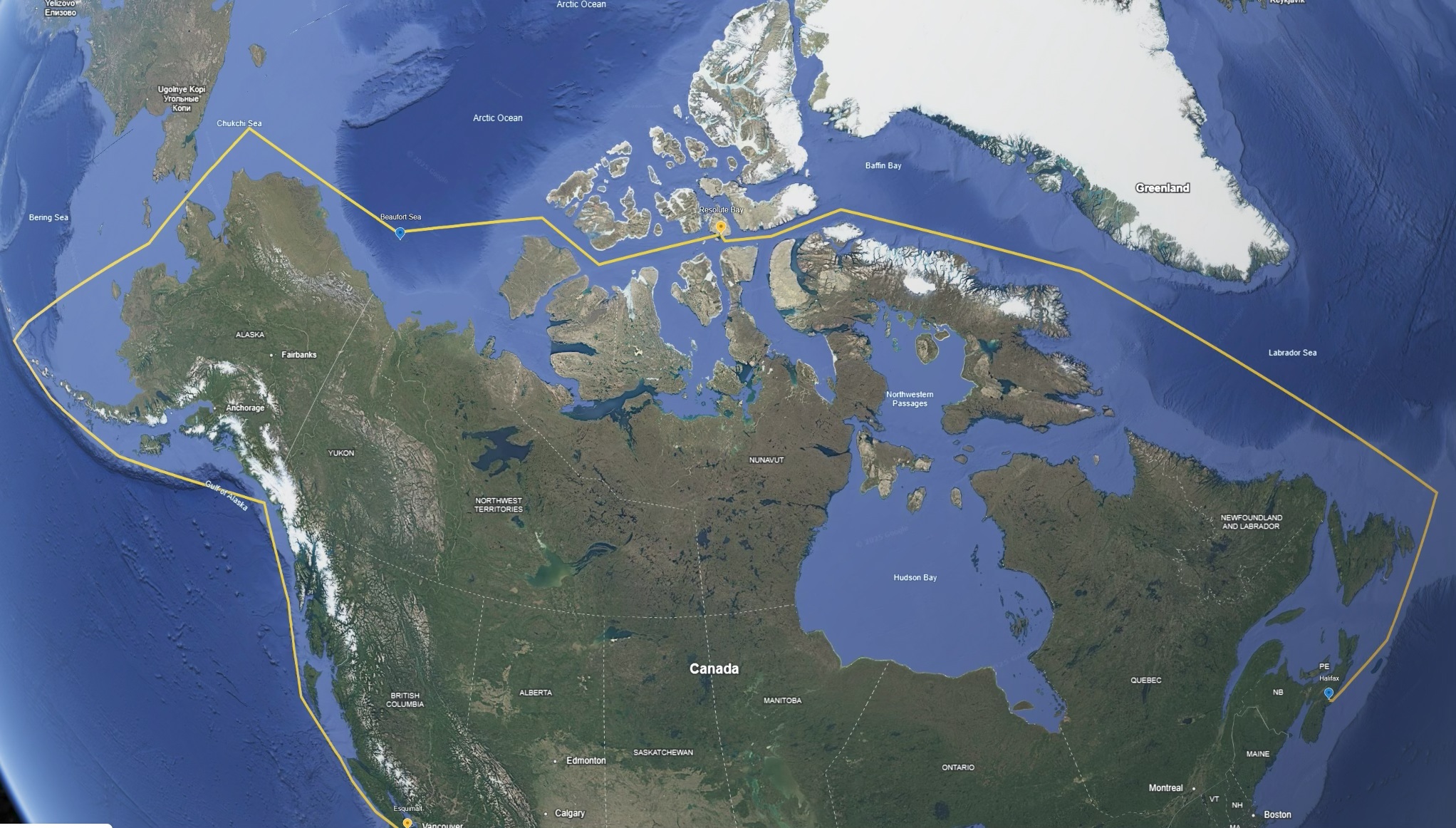
Rough transit routes to Canada’s Arctic from Esquimalt BC and Halifax NS
There is a fascinating if glum confession buried inside Prime Minister Mark Carney’s recent announcement, given in the company of Canadian Armed Forces personnel in Yellowknife, of how Canada will spend $35 billion to build and upgrade existing military infrastructure. The major spending announcement was augmented by Carney’s promise to submit four northern road, electricity and port projects to the Major Projects Office for expedited (we hope) approval and completion.
The announcements are interesting, even if the bulk of the military spending was actually just re-announcing stuff Justin Trudeau had announced years ago. Nothing new there, alas. Even so, it was the phrasing of the PM’s remarks that jumped out at me. Striking a familiar tone, Carney said, “We will no longer rely on others to defend our Arctic security or to fuel our economy. We are taking full responsibility for defending our sovereignty.”
I like it! I’m glad we’re doing it.
What the hell were we waiting for? How did we ever get to a place where no longer relying on others to defend our security and fuel our economy became a decisive shift in policy worth highlighting in an announcement?
What was wrong with us?
This is not a column aimed at Carney. I’ve been dismayed and discouraged by a lack of progress on some key files so far, but I will grant that we won’t be able to truly judge this announcement for some time, and that he does at least seem more interested than other recent PMs in getting Canada’s military capability back to where it must be. So, for all the Carney fans out there, you can sheath your swords. I get it. I’ll keep watching and waiting, but my impatience is growing.
But I still think the broader question is still worth asking, even if we agree, for now, to leave Carney himself out of it. Why were we relying on others to defend our own territory? Or fuel our economy? Why were we not taking full responsibility for defending our sovereignty? How did that even happen?
There are some admitted historical factors here, including the fact that Canada was spun up as an independent state out of the British Empire, and obviously counted on the support of that empire for much of our early history. That set a tone, clearly. In more recent generations, there was also the obvious reality that the United States’s desire for continental security was always going to involve a lopsidedly large U.S. commitment, just due to the massive disparity between our populations and economies.
Let’s grant that at the outset. Our history and geography have conditioned us to view domestic defence as a collaborative effort where we are a junior partner even in our own territory — maybe not in a legal sense, but in practical one.
The point here isn’t to lament that Canada never had a fleet as large as the Royal Navy in the 1910s, nor an air force as large as the U.S. Air Force in the 1950s. We can all agree and understand that Canada’s contribution was always going to be more modest and given our massive landmass and air and sea approaches, Canadian defence was always going to be made much simpler with the cooperation of a friendly larger ally or benefactor.
But gosh, we really leaned into the helplessness, didn’t we?
Matt is happy that the PM seems more involved in taking Canadian territorial defence seriously, and there’s no dispute that this is a national concern that has been neglected for … well … decades, generations even. I’ve heard some attribute the withering of Canada’s defence establishment to the “peace dividend” after the collapse of the Soviet Union, but it actually began in 1968 with the first Trudeau era. We’re not going to be able to rectify six decades of neglect in a couple of years, no matter how many new programs and purchases are announced.
And not to be a Debbie Downer, but remember that the federal government has been addicted to the sugar high of making announcements and getting tongue-bathed by the tame media enough that the same project would get announced and re-announced for sometimes years before anything tangible resulted. The new Arctic defence announcements were, as Matt noted, already stated government policy before Carney entered politics. How many more dips in the PR bath will it take before anything real is implemented?
March 23, 2026
Canada’s NEW Rifle – the CMAR
The Armourer’s Bench
Published 22 Mar 2026The Canadian Armed Forces are set to adopt variants of Colt Canada’s MRR as the Canadian Modular Assault Rifle (CMAR). The announcement stated that more than 65,000 rifles will be procured over the next 5 years to replace the Colt Canada C7 rifles and C8 carbines currently in Canadian service.
Be sure to check out our accompanying article for this video here – https://armourersbench.com/2026/03/22/canada-adopts-new-rifle/
February 14, 2026
QotD: Canada and its military – a history of neglect
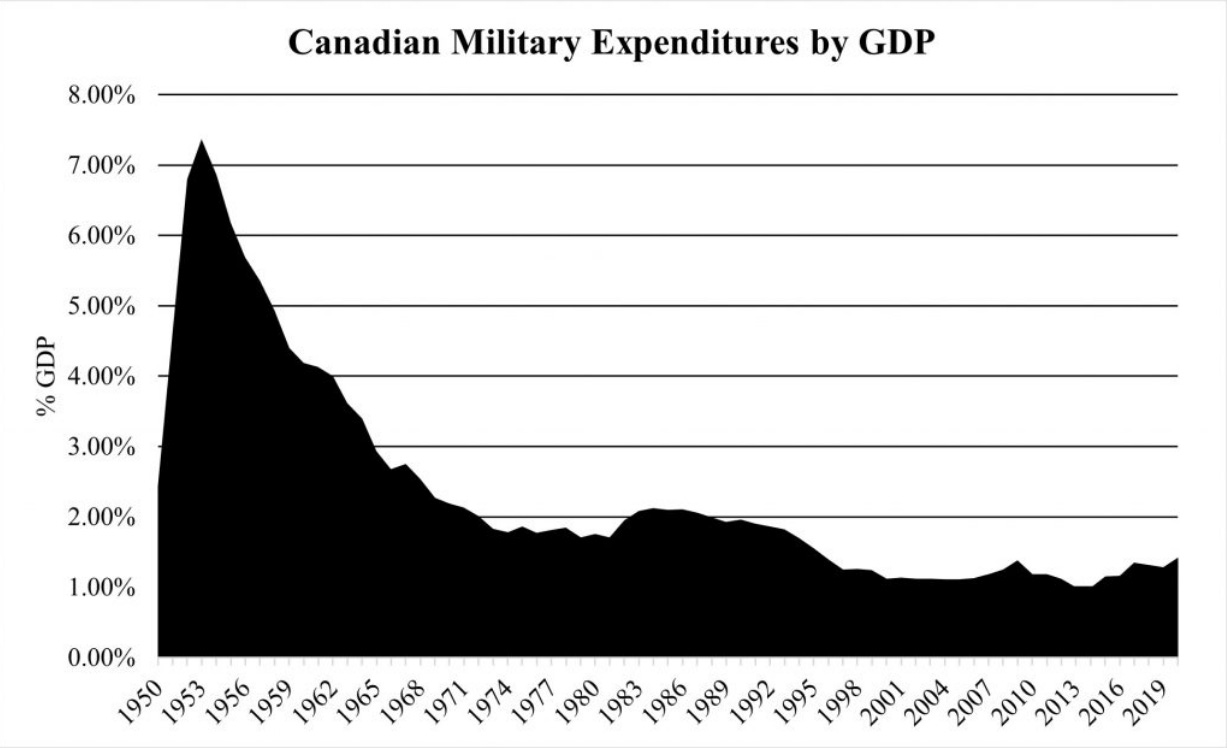
Canada’s military was not always a punchline. At the end of World War II Canada had the world’s third-largest navy, complete with our own aircraft carrier, and over a million men under arms. Since then military spending has steadily declined, from a high of around 7% of GDP in the early 50s to around 1% today, where it’s hovered since the end of the Cold War.
Canada is protected to its east and west by the Atlantic and Pacific oceans, both of which are patrolled by the powerful navy of the friendly superpower to the south, the only country with which Canada shares a land border, which we have long bragged is the longest undefended frontier in the world. Our only other neighbouring country is Russia, and while Russia is a decidedly unfriendly superpower, in practice Canada’s populated south is separated from the Russian Federation by thousands of kilometres of howling arctic wastes which provide an even better natural defence than the oceans.
Cozy and secure in our continental cocoon, Canada has allowed its military to atrophy into a vestigial appendage akin to the stubby wings of flightless birds on isolated Pacific islands, useful only for emotive displays. So far as the Liberal Party is concerned, “emotive display” is, indeed, the only real purpose of the military. Ever since Lester B. Pearson1 was awarded the Nobel Peace Prize for inventing the concept of “peacekeeping” to de-escalate the Suez Crisis (thereby helping to drive the final nail into the coffin of the British Empire), the Canadian military’s primary purpose has been to conduct third-world relief missions. Peacekeeping carries no particular benefit to Canada, but it is of great benefit to politicians, who get to preen in front of the camera as important humanitarian statesmen. The purpose of the Canadian military isn’t to win wars, to defend the country, or to conquer distant lands: it’s to make Liberal Party politicians feel good about themselves.
When the CAF fails to live up to its making-liberals-feel-good mission, Canada’s liberal establishment reacts like a frustrated child taking out her vindictive cruelty by throwing her dolls against the wall. The Somalia Affair is probably the best example of this dynamic. The Canadian Airborne Regiment, an elite commando unit whose core competencies were jumping out of airplanes to break things and kill people, was deployed in Somalia with the contradictory goal of keeping a non-existent peace, a mission to which they were singularly ill-suited. Somalis being Somalis, the Airborne base was immediately subjected to continuous infiltration and theft. A handful of the violent lunatics in the regiment reacted by capturing thieves and torturing them to death, which they had the poor sense to document with photographic evidence; later, photographs emerged of one of the airborne troopers wearing a moustache man t-shirt while raising his arm at a prohibited angle, which wasn’t criminal exactly but was very bad PR. Instead of punishing the guilty troops individually, for instance with field courts martial followed by summary hanging, the Liberal Party flew into a rage and disbanded the regiment for having committed the unforgivable sin of making them look bad. This dragged on in the media for years, sullying the honour of not only the Airborne Regiment but of the entire military. The Somalia affair unfolded over thirty years ago, but the liberal establishment holds it over the heads of the CAF to this day.
In addition to providing politicians with regular hits of the pleasantly addictive buzz of telescopic philanthropy, peacekeeping also has the great advantage of being cheap. Not only does peacekeeping not require all that many troops, you don’t even need tanks, fighter jets, destroyers, or aircraft carriers to distribute aid packages to refugees. Therefore the Canadian military essentially does not have these things. The CAF has a grand total of 112 forty-six-year-old Leopard II main battle tanks (of which roughly half are down for maintenance at any given time), a whole 138 forty-two-year-old CF-18 Hornet fighter jets (of which 89 are operational), twelve Halifax class frigates (of which about half are in drydock at any given time), an intimidating four Victoria class diesel-electric submarines (which are forty-five years old, and all but one of which is out of commission), and zero bombers, zero attack helicopters, zero destroyers, zero troop transports, zero battleships, and zero aircraft carriers. The pathetic size of the Royal Canadian Navy is particularly embarrassing given that Canada has the longest coastline in the world, at 243,042 kilometres, essentially all of which Ottawa expects Washington to defend on its behalf. Airlift capacity is so limited that the CAF essentially cannot deploy overseas without allied logistical assistance.
By contrast with its decrepit armaments, the CAF has 145 generals: it has more generals than it does tanks. This top-heavy general staff is only about a third the size of the US military’s, despite the American military being 20x larger by personnel and 32x larger by budget.
From the perspective of the Laurentian elite, a weak military is actually a political advantage. If Canada effectively does not have the ability to project military force, Ottawa can simply plead lack of capacity when America asks for assistance. It enables Canada to duck out of involvement in America’s various imperial wars, letting Washington shoulder the burden of the Pax Americana while chirping from the sidelines about how the big bad bible-thumbing American bully is so mean, and how peaceful, ethical, liberal, humanitarian Canada is so nice because Canada spends its money on healthcare instead of bombs. It isn’t a morally superior position, of course: it’s simply shameless dependence and shameful parasitism.
John Carter, “The Canadian Political Class is Ideologically Incapable of Rebuilding the Military”, Postcards From Barsoom, 2025-11-13.
- The man who, as prime minister, replaced the red ensign’s ethnic heraldry with the maple leaf’s corporate logo.
January 26, 2026
The 2026 US National Defence Strategy
Noah looks at the recently released American National Defence Strategy and identifies areas of interest (or concern) for Canada (edited for typos):
The 2026 National Defense Strategy is out, and with it we get a few references to Canada. While our mention is little, and when there is it is fairly mundane, there is a message. You either step up or get stepped over. [NR: This has always been true, but administrations in the past have been more coy about it than President Trump … who is the opposite of coy. On the other hand, the Canadian government has been quite blatant about giving mere lip service to shared US-Canadian defence interests and slacking off completely on any serious work to keep the Canadian Armed Forces in a state to be able to do what the government pretends to want.]
This policy was shadowdropped in the middle of the night, so I decided to quickly rush to get just about anything out about it. This isn’t a full analysis, but more a quick rundown with some personal thoughts for those who want the quick go of whats happening.
To start, here are the direct mentions of Canada:
We will engage in good faith with our neighbors, from Canada to our partners in Central and South America, but we will ensure that they respect and do their part to defend our shared interests. And where they do not, we will stand ready to take focused decisive action that concretely advances U.S. interests.
The policy continues:
Canada also has a vital role to play in helping defend North America against other threats, including by strengthening defenses against a missile, and undersea threats. In addition, U.S. partners throughout the Western Hemisphere can do far more to help combat illegal migration as well as to degrade narco-terrorists and prevent U.S. adversaries from controlling or otherwise exercising undue influence over key terrain, especially Greenland, the Gulf of America, and the Panama Canal.
The strategy itself is fairly domestic in focus, with repeated mention of the Western Hemisphere and borders as the key areas for which the United States should focus. It takes a backseat approach to the Indo-Pacific, favoring a collaborative approach to Chinese containment that focuses on “peace through strength”, instead of what the NDS refers to as “confrontation”.
In this regard, it is funny that despite criticisms today from President Trump regarding Canada’s trade deal with China, as well as criticism over an apparent lack of Canadian support for Golden Dome, the NDS further states that “President Trump seeks a stable peace, fair trade, and respectful relations with China.” [NR: I think Noah is being a bit naive here … Trump wants to deal with China as a normal trading partner, but China’s actions in so many ways show that China doesn’t want to reciprocate.]
The strategy further states that “Our goal in doing so is not to dominate China; nor is it to strangle or humiliate them. Rather, our goal is simple: To prevent anyone, including China, from being able to dominate us or our allies.”
On today’s Golden Dome comments, I wanna take note that Canada has been discussing participation fairly openly and trying to figure out in what ways we can align even without full participation. There is no indication the current government is against Golden Dome.
The RCAF has its own IAMD study underway in Canadian Shield. It is already fairly well aligned to what the Americans are doing. People will focus on space-based interceptors and such, but Golden Dome is far more extensive than that. There’s much we align on without joining.
Canada is also undertaking its own extensive modernization of both NORAD and space-related assets, both of which will significantly contribute to Continental Defence in a variety of different ways. That includes OTHR and F-35, yes, but is so much more extensive.
From autonomous vehicles in the Arctic to ground- and space-based optical capabilities, AEW&C aircraft, new satellite constellations for both communication and surveillance, domestic launch investments, and even establishing a VLF communication capability.
There is so much going on that can and will contribute to collective Continental Defence. Much more than I believe anyone truly knows about, even myself. We need to highlight and promote these investments if we want mentalities to change and people to recognize the effort.