Quotulatiousness

August 22, 2025

Resolved – This country’s youth will not fight to defend this country

Filed under: Cancon, Government, Military — Tags: , , — Nicholas @ 03:00

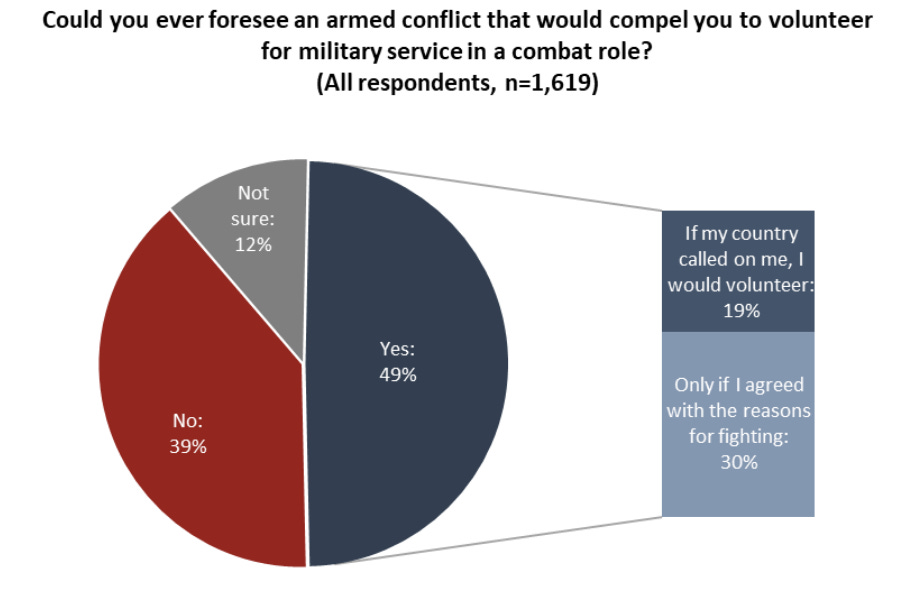
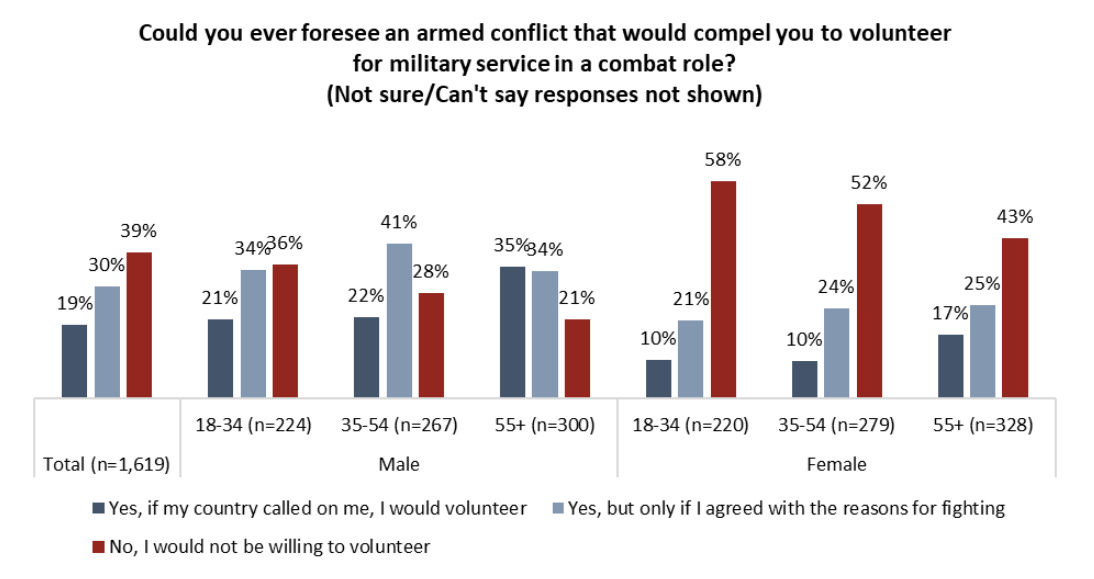
On Tuesday, John Robson discussed the results of a recent Angus Reid survey that, among other things, indicated that Canadians are at least as anti-military as they’ve been since the first Trudeau government:

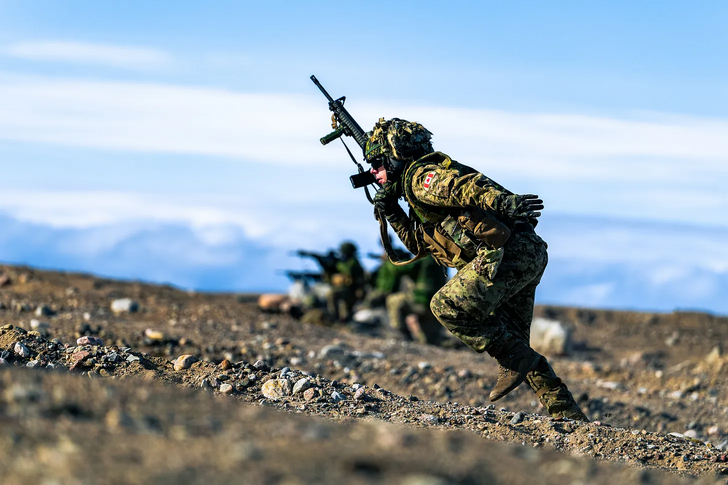
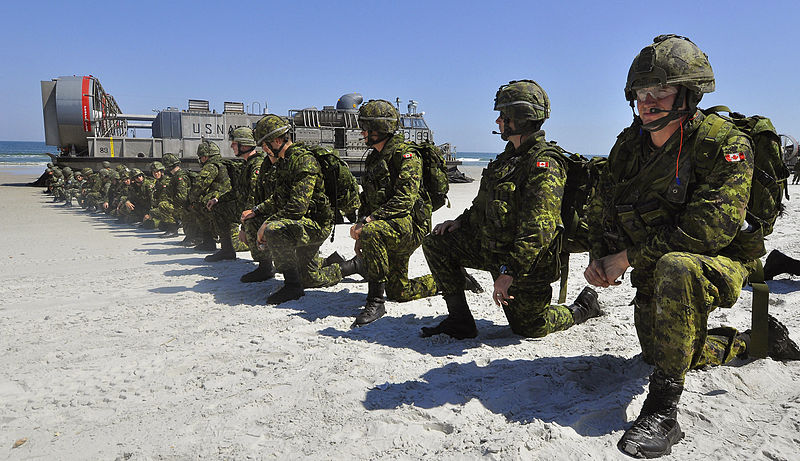
Canadian soldiers set a perimeter position after disembarking a U.S. Navy landing craft during a simulated amphibious landing, 24 April 2009.
U.S. Coast Guard photo by Petty Officer Seth Johnson via Wikimedia Commons.

The National Post reports an Angus Reid survey finding that a significant majority of us favour compulsory voluntary service by the youth of today. Which might sound like a bracingly traditional Jordan Peterson clean-your-room, stand-up-straight, shoulders-back attitude until you read the fine print, which would risk making Peterson ill if he weren’t already. Because it turns out we want to conscript them to work in health care so we get stuff we didn’t pay for, not to defend the country because if ye break faith and so on.

According to the survey, 74 per cent of respondents want young people to have to give a year of their lives to bolstering our failing, structurally unsound socialized medical system. Respondents were also in favour of mandatory service in support of the environment (73 per cent), “youth services” (72 per cent), whatever it might be, and “civil protection” (70 per cent). But when it comes to (ugh) national defence, just 43 per cent supported it, with 44 per cent opposed.

Spending on comfort while barbarians undermine the city walls lacks prudence as well as dignity. As I observed in a long-ago graduate-school debate about American national security, it didn’t matter how wonderfully progressive the Dutch social welfare system was in 1940 when the Nazis came calling. And we too seem to have our priorities backward.

If I might confuse the government by discussing principles of political economy, there are good reasons why national defence is considered a binding duty on those able to contribute to it. First is the “free rider” problem that everyone benefits from successful protection of the community, especially, at least in a narrow and hedonistic sense, if you send some other chump to die for your freedom while you recline comfortably at home.

Second is the moral consideration that, as John Stuart Mill famously if uncharacteristically put it, “War is an ugly thing, but not the ugliest of things: the decayed and degraded state of moral and patriotic feeling which thinks that nothing is worth a war, is much worse”. Which comes from, yes, his “Principles of Political Economy”.

Mill was no warmonger. As he immediately continued, “When a people are used as mere human instruments for firing cannon or thrusting bayonets, in the service and for the selfish purposes of a master, such war degrades a people”.

But not all wars are like Russian President Vladimir Putin’s invasion of Ukraine, let alone Hamas’s attack on Israel. As the anything-but-bellicose Mill added, “A war to protect other human beings against tyrannical injustice; a war to give victory to their own ideas of right and good, and which is their own war, carried on for an honest purpose by their free choice — is often the means of their regeneration”.

August 1, 2025

The sad saga of the CH-148 Cyclone helicopters in Canadian service

Filed under: Cancon, Government, History, Military, Weapons — Tags: , , , — Nicholas @ 03:00

In the National Post, Tom Lawson and Gaëlle Rivard Piché argue for the Canadian government to learn from long and bitter past experiences while they “reconsider” the F-35 purchase for the RCAF … specifically the mind-numbing and depressing saga of obtaining helicopters for the Canadian Armed Forces. First, a quick recap of the helicopter story from a post back in 2012:

Pre-delivery Sikorsky CH-148 Cyclone helicopter, 4 April, 2012.
Photo by Gerry Metzler via Wikimedia Commons.

  • In 1963, the CH-124 Sea King helicopter (a variant of the US Navy S-61 model) entered service with the Royal Canadian Navy.
  • In 1983, the [Pierre] Trudeau government started a process to replace the Sea Kings. That process never got far enough for a replacement helicopter to be ordered.
  • In 1985, the Mulroney government started a new process to find a replacement for the Sea Kings.
  • In 1992, the Mulroney government placed an order for 50 EH-101 Cormorant helicopters (for both naval and search-and-rescue operations).
  • In 1993, the Campbell government reduced the order from 50 to 43, theoretically saving $1.4B.
  • In 1993, the new Chrétien government cancelled the “Cadillac” helicopters as being far too expensive and started a new process to identify the right helicopters to buy. The government had to pay nearly $500 million in cancellation penalties.
  • In 1998, having split the plan into separate orders for naval and SAR helicopters, the government ended up buying 15 Cormorant SAR helicopters anyway — and the per-unit prices had risen in the intervening time.
  • In 2004, the Martin government placed an order with Sikorsky for 28 CH-148 Cyclone helicopters to be delivered starting in 2008 (after very carefully arranging the specifications to exclude the Cormorant from the competition).
  • Now, in 2012, we may still have another five years to wait for the delivery of the Cyclones.

A few data points in addition to that list:

  • In 2009, the government granted Sikorsky two more years to begin deliveries … and waived the penalty fees for late delivery.
  • In 2011, the government announced it would impose late delivery fines on Sikorsky.
  • In 2012, Sikorsky announced the delay of the first batch of “interim” helicopters until 2013.
  • In 2015, the first six helicopters were delivered so RCAF crews could begin training, with two more later in the year.
  • In 2018, the first operational deployment of a Cyclone had the helicopter embarked on HMCS Ville de Quebec as part of Operation Reassurance.
  • In 2021, 19 of the 23 helicopters delivered were taken out of service for cracks in the tail assemblies.
  • In January 2025, the 27th helicopter was delivered to the RCAF.

Based on this lengthy and expensive process, Lawson and Piché write:

In 1992, the Progressive Conservative government signed a $4.8-billion contract with a European consortium to replace the aging Sea King helicopters deployed aboard Royal Canadian Navy (RCN) ships. For purely political reasons, when the Liberals came to power the following year, they cancelled the deal — incurring $500 million in termination penalties — and set out to find a more politically acceptable solution. That search dragged on for over a decade, culminating in a 2004 contract with Sikorsky to procure 28 CH-148 Cyclone helicopters.

What the government failed to realize — or chose to overlook — was that Sikorsky was not offering a ready-made military platform. Instead, it proposed to adapt its civilian S-92 model into a maritime helicopter fit for military use, with the hope of replicating the global success of its venerable Sea King.

But developmental issues plagued the project from the outset. The original delivery schedule of 2009 slipped repeatedly, prompting then-minister of national defence Peter MacKay to call the procurement “the worst in the history of Canada”. By 2014, the program was on the brink of cancellation. Only a tense meeting between senior ministers and Sikorsky’s president salvaged the deal, leading to a revised agreement that saw the Cyclone finally enter operational service in 2018.

Yet the challenges did not end there. The Cyclone has consistently posted poor serviceability rates. A crash that cost the lives of six Canadian Armed Forces members in early 2020 was linked to inadequate documentation and flawed software. More recently, the fleet has again been largely grounded — this time due to a shortage of spare parts. The Commander of the RCN has voiced public frustration over the shortage of deployable helicopters, even threatening to replace them with drones if necessary.

To be fair, Sikorsky is not solely to blame. It offered an attractive idea: a modern fly-by-wire maritime helicopter based on a successful civilian platform. The government accepted, underestimating the complexity of the transformation. The key lesson here — one that directly applies to the current fighter jet debate — is that there is enormous risk in buying aircraft, like the Cyclone, that exist in limited numbers worldwide.

The best path forward with the Cyclone may now be to phase out the fleet and absorb the sunk costs. A more reliable option could be the MH-60 Seahawk, also made by Sikorsky. Unlike the Cyclone, the Seahawk is a proven design, with nearly 1,000 units in active service with the U.S., Australian and some NATO navies. While it would be politically awkward to cancel a Sikorsky platform only to purchase another from the same manufacturer, pragmatism must prevail. Perhaps a deal could be struck to return the Cyclones for parts, recouping some value through the civilian S-92 supply chain.

July 12, 2025

Organizing two new divisions for the Canadian Army

Filed under: Cancon, Military — Tags: , — Nicholas @ 03:00

To emphasize, these are just strong rumours and have not been formally announced or confirmed by the Department of National Defence or the Canadian Armed Forces:

Let’s start with the major aspect of today’s rumours, restructuring. This has been a hot topic for the last few months and one I have been very hesitant to put in here due to the conflicting and volatile information.

However with plans approved in the last few weeks, as well as going though about four different people for verification, I think I’m finally in a position where I can confidently put this out there.

The new army will be centered around three [two?] divisions, broken down between the regular, reserve, and a support division. The working designation for these two new Divisions are the 6th and 7th.

The 6th Division will be comprised of:

  • 1 CMBG
  • 2 CMBG
  • 5 CMBG
  • 1x Light Infantry Regiment
  • 1x Fires Brigade
  • 1x Protection Brigade
  • 1x Sustainment Brigade

The 7th Division will be the reserves and rangers and has been, at least in some documentation, been referred to as the “Continental Division”. I sadly don’t have much on the Seventh.

This is the info that I have as of now. I am still working on gathering more details but this is the basic structure of how the future army will look. Obviously some of you were expecting more, and hoped to see something more radical done.

Some of you will be very happy with this and how straightforward it is. It is a plan that makes sense and is within realistic expectations. As always, we take these as speculation and not as fact. Plans can change but I am fairly confident that this is the active plan.

July 4, 2025

Another military procurement cock-up … this time it’s the C-19 rifles of the Canadian Rangers

Filed under: Bureaucracy, Cancon, Military, Weapons — Tags: , , , , , — Nicholas @ 03:00

The Canadian Rangers, one of the least-known parts of the Canadian Armed Forces, are a mainly Inuit reserve force operating in the Canadian north. They’d been equipped with WW2-era Lee Enfield rifles since the 1940s and the weapons were getting too old to perform the task so the CAF’s procurement folks settled on a Finnish rifle manufactured under license by Colt Canada. The Rangers, operating primarily as small patrols or as individuals, didn’t need the high firepower of a modern infantry rifle and the harsh climate they work in meant that a bolt-action rifle was desired. Bolt-action rifles are not new technology, so you’d think the CAF procurement would have been pretty straightforward, but no, they managed to miss something critical in the specifications they issued for the contract. And because the rifles met the published specifications, it’s on the CAF rather than the manufacturer to make sure that the weapons are safe to operate by the Canadian Rangers:

A Canadian Ranger handles the military’s new C-19 rifle. Shortly after the rifles were sent to Ranger units, red dye from the stocks started appearing on the hands of the soldiers when the weapons were exposed to wet conditions. (Credit: Canadian Armed Forces)

Canadian Rangers who use their new rifles in the rain are finding their hands covered in red dye because the stocks on the weapons can’t handle moisture, according to newly released military records.

The problem was discovered in May 2018 as the new C-19 rifles were initially being distributed to Canadian Ranger units as part of a $32.8-million contract with Colt Canada. The .308 C-19, which is equipped with a red stock, replaced the Lee Enfield .303 rifle that had been used by Canadian Rangers since 1947.

Under the contract, the new rifles were required to withstand extremely cold temperatures in the Arctic as well as moderate-to-high humidity in the coastal and forested regions of the country.

“Obviously from a health and safety perspective having dye released onto the skin is not a good situation,” Arthur Hall, who is with the Department of National Defence’s small arms program, noted in a May 9, 2018 email regarding the C-19.

Further complaints continued to come in from Ranger units who also found the stocks were cracking.

“The issue is that when exposed to moisture the red dye in the stock will run, and will discolour the hands of the user,” Luke Foster of the Directorate of Soldier Systems Program Management, pointed out in a July 3, 2018 email. “This is also an indication that the stocks are not properly protected from the elements.”

One report from an officer assigned to the Rangers noted he took his new rifle outside in the rain for only five minutes before returning indoors. Once back inside he noticed the weapon was dripping red dye. “I held the weapon for approximately 5-10 mins and it stated to stain my hand,” Captain T.M. Collier wrote in a May 9, 2018 email.

The documents, acquired by the Ottawa Citizen, were released under the Access to Information Act.

Department of National Defence officials, however, say it will be up to taxpayers to cover the costs of replacing the stocks on the 6,800 new rifles. That cost is estimated to be up to $10 million.

June 18, 2025

Fixing the CAF will require a lot more than just money

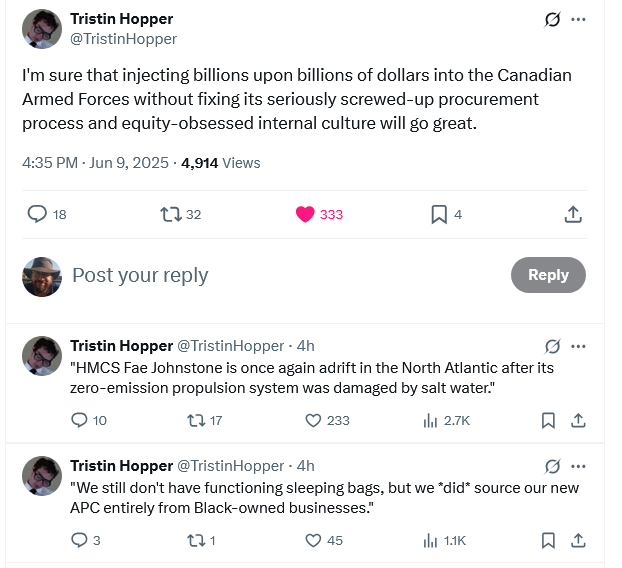
The Canadian Armed Forces are in a dire state. I could literally have written that in any year since I started blogging in 2004 … with brief, unsustained funding boosts for unplanned military commitments here and there that actually made the overall situation worse rather than better. Canada’s military procurement system seems incapable of doing anything quickly … or inexpensively, so pouring billions more into a broken process won’t work out well. There used to be a meme about being able to get whatever you wanted — “good, fast, cheap … pick two”. The CAF can’t even get one of those options.

We’ve had surprising numbers of media folks paying attention to the crippling recruiting crisis, as even on current funding, the CAF is short thousand and thousands of soldiers, sailors, and aircrew. Sadly, but predictably, most of that media attention looks at the shortfall of new recruits being trained for those jobs, which is true but incomplete. The biggest problem on the intake side of the CAF is the bureaucratic inability to bring in new recruits in anything remotely like a timely fashion. The last time I saw annual numbers, the CAF had huge numbers of volunteers coming in the door at recruiting centres, but getting the paperwork done and getting those volunteers into uniform and on to job training was an ongoing disaster area. More than seventy thousand would-be recruits applied to join the CAF and the system managed to process less than five thousand of those applicants and get them started on their military careers.

At a time that we’re losing highly trained technicians in all branches to overwork, underpay, and vocational burn-out, we somehow lack the competence to take in more than one in twenty applicants? That is insane.

In the National Post, Michel Maisonneuve says much the same as I just did, but rather more coherently:

I’m told the Treasury Board has already approved the new funds, making this more than just political spin. Much of the money appears to be going where it’s most needed. Pay and benefit increases for serving members should help with retention, and bonuses for re-enlistment are reportedly being considered. Recruiting and civilian staffing will also get a boost, though I question adding more to an already bloated public service. Reserves and cadet programs weren’t mentioned but they also need attention.

Equipment upgrades are just as urgent. A new procurement agency is planned, overseen by a secretary of state — hopefully with members in uniform involved. In the meantime, accelerating existing projects is a good way to ensure the money flows quickly. Restocking ammunition is a priority. Buying Canadian and diversifying suppliers makes sense. The Business Council of Canada has signalled its support for a national defence industrial strategy. That’s encouraging, but none of it will matter without follow-through.

Infrastructure is also in dire shape. Bases, housing, training facilities and armouries are in disrepair. Rebuilding these will not only help operations but also improve recruitment and retention. So will improved training, including more sea days, flying hours and field operations.

All of this looks promising on paper, but if the Department of National Defence can’t spend funds effectively, it won’t matter. Around $1 billion a year typically lapses due to missing project staff and excessive bureaucracy. As one colleague warned, “implementation (of the program) … must occur as a whole-of-government activity, with trust-based partnerships across industry and academe, or else it will fail.”

The defence budget also remains discretionary. Unlike health transfers or old age security, which are legally entrenched, defence funding can be cut at will. That creates instability for military suppliers and risks turning long-term procurement into a political football. The new funds must be protected from short-term fiscal pressure and partisan meddling.

One more concern: culture. If Canada is serious about rebuilding its military, we must move past performative diversity policies and return to a warrior ethos. That means recruiting the best men and women based on merit, instilling discipline and honour, and giving them the tools to fight and, if necessary, make the ultimate sacrifice. The military must reflect Canadian values, but it is not a place for social experimentation or reduced standards.

They finally did retire the Sea King, long after almost everyone else did. All CAF equipment is expected to have far longer working lives than any of our allies’ equipment.

June 10, 2025

Mark Carney’s big defence spending announcement

Filed under: Cancon, Government, Military — Tags: , , , , , — Nicholas @ 05:00

On Monday Morning, Prime Minister Mark Carney was in Toronto to make a major announcement on Canada’s military spending. After being one of the worst freeloaders in the western alliance, Canada was spending far less on the Canadian Armed Forces than the 2% of GDP we’d promised our NATO partners several years ago. Of course, at the same time that Canada seems to be finally getting serious about defence priorities, the rest of our allies are talking seriously about raising the agreed-upon target to 5%:

Chris Lambie in the National Post says it’s a C$9 billion bump in direct military spending in this (unbudgeted) year:

Canada’s plan to add more than $9 billion to defence spending this year was praised by military watchers Monday, but they cautioned that the country is shooting at a moving target.

Prime Minister Mark Carney announced the country would meet its commitment in this fiscal year of hitting the two per cent of gross domestic product mark that was agreed upon by NATO countries more than a decade back.

“It’s very encouraging that the prime minister has come out this early in his mandate and made such a strong commitment to defence,” said Vincent Rigby, a former top intelligence adviser to former prime minister Justin Trudeau, who spent 14 years with Canada’s Department of National Defence.

“You’ve gone from the former prime minister talking about the two per cent as a crass mathematical calculation to the current prime minister saying, no, this is actually a serious commitment. We committed to it 10 years ago and even before that. And we have to do it because we owe it to our allies. But we also owe it to the Canadian people. He made it quite clear this is about protecting Canada, protecting our national interests and protecting our values.”

New spending could do a lot to improve crumbling military infrastructure, said Michel Maisonneuve, a retired Canadian Army lieutenant-general who has served as assistant deputy chief of defence staff, and chief of staff of NATO’s Allied Command.

“The housing on bases is horrible,” Maisonneuve said.

He’s keen on Carney’s plan to participate in the $234-billion ReArm Europe program.

“This will bolster our ability to produce stuff for ourselves” while also helping the Europeans to do the same, Maisonneuve said.

“All the tree huggers are going to hate that, but that’s where we are today in the world.”

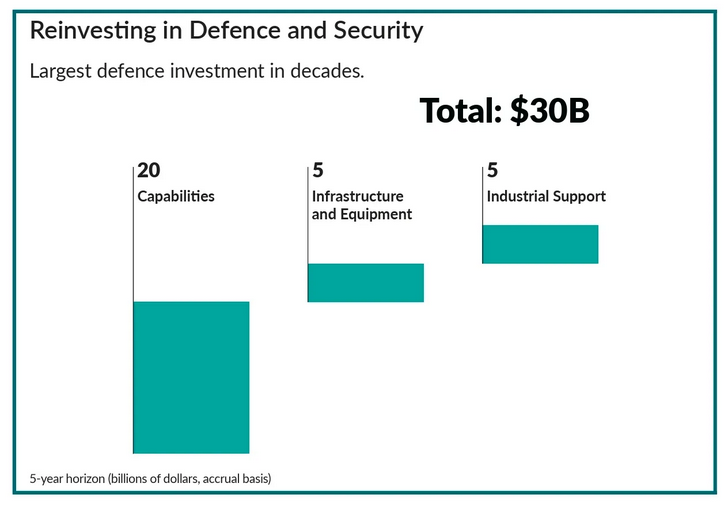
Carney’s cash injection includes $2.6 billion to recruit and retain military personnel. The military is short about 13,000 people. It aims to boost the regular force to 71,500 and the reserves to 30,000 by the end of this decade.

“There is no way we can protect Canada and Canadians with the strength that we have now,” Maisonneuve said.

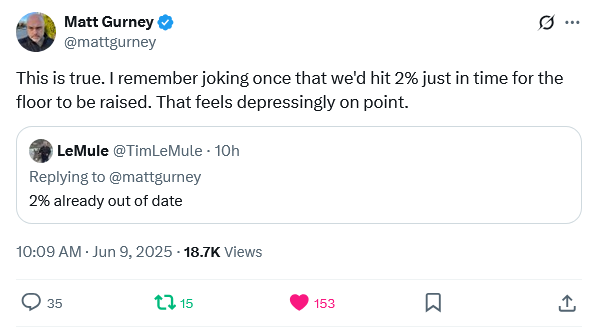
Later in the day, Matt Gurney made some preliminary comments on the social media site formerly known as Twitter (I imagine he’ll have more to say in an upcoming Line post):

I’ve had a chance to actually look at some of the details of what was announced today for Canada’s defence. Overall, I am very supportive of everything that’s been announced.

There are some caveats. Or at least notes.

1. The new spending is mostly aimed at flushing out existing capabilities, not adding new ones.

That’s fine! We need to do that, definitely. I just don’t know if the public understands how much money we could sink into the military without actually adding any new capabilities. All we would do is backfill capabilities that we currently claim to have that don’t really exist.

2. Billions of additional dollars are going toward very basic things. More money to retain existing personnel. Apparently more money to build out recruitment. Spending more money to bring equipment and facilities up to state of proper repair.

Same as above. All good! Needed. Smart.

3. Some of what’s being announced today is entirely a matter of how we’re budgeting stuff. Certain existing expenditures are being redesignated as defence expenditures.

That’s okay! Some of our allies count things toward their defence total that we don’t. Everybody cooks the books a little bit, and I have no objection to this.

4. Everything being announced today should have been done years ago.

The only note I really have to add here is how the longer [Mark Carney] is Prime Minister, the harder it gets to explain away some of the shocking inactivity of his immediate predecessor.

5. None of this is going to be enough.

Remember, all we’re doing here is building out existing capabilities so that they are actually real things, not just things that exist on paper. That’s good. But the actual work of recapitalizing, expanding and adapting the military for 21st-century conflict hasn’t really begun yet. Everything announced today is a necessary start to getting that done. But the hard work is still to come.

And so are the really eye-watering numbers.

Of course, there are definite downsides to just opening up the spending taps the way things currently are set up:

He’s not wrong.

May 14, 2025

Carney’s new cabinet – remarkably similar to Trudeau’s cabinets

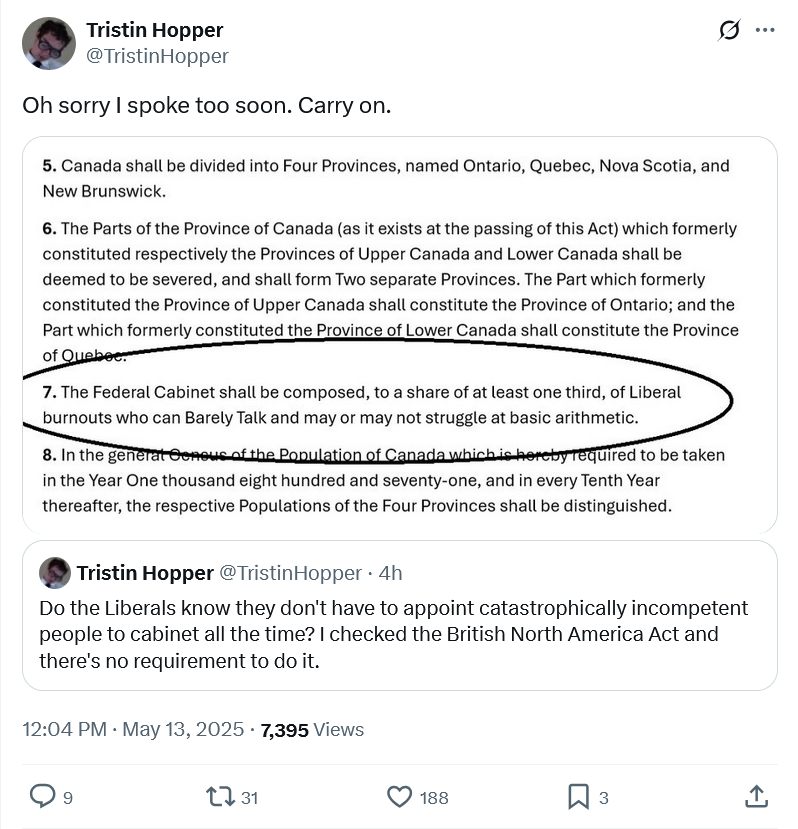
Prime Minister Mark Carney talked as if he was initiating a new era in Canadian politics, but when it came to nominating his first cabinet, it’s plus ça change, plus c’est la même chose with most of the same cast of incompetents, crooks, lickspittles, and fart-catchers. Justin Trudeau would feel right at home:

Prime Minister Mark Carney promised change, a new way of doing things at speeds never before seen. Yet to help him do this, he is relying on the same old, tired, incompetent ministers who got us into the mess we’re currently in.

The Liberals will trumpet the large number of new faces in Carney’s 28-member cabinet — there are 15 MPs who have never served before.

But the top tier of ministers — the ones sitting in the front row at the swearing-in ceremony on Tuesday — were all former Trudeau acolytes, cabinet ministers now committed to rescuing us from a crisis of their own making.

In the front row was Sean Fraser, our new justice minister and attorney general, and the man who, under former prime minister Justin Trudeau, was responsible for immigration and then housing, two files he spectacularly failed at. If we want to know how bad Fraser was in those jobs, we need only look to Carney’s election platform.

“The last time we faced a housing crisis at such a broad scale was after the Second World War”, read the platform. This crisis “has left younger generations facing rents, down payments and mortgage payments so high that it turned housing into a barrier to opportunity instead of a cornerstone of opportunity”.

What about Fraser’s record at immigration? According to the Liberal platform, the Trudeau government let immigration “grow at a rapid and unsustainable pace”.

In December, when Liberal fortunes were in the toilet, Fraser announced that, for family reasons, he was quitting politics. Strangely, after the party witnessed a reversal in the polls, he announced he was returning.

In Carney’s eyes, Fraser’s blundering on two key files qualifies him to become justice minister. The only thing worse than Fraser as a cabinet minister may be Carney’s judgment.

Also in the front row was Chrystia Freeland, who served as deputy prime minister and finance minister under Trudeau and is now returning to cabinet as minister of transportation and internal trade.

Freeland’s record is best summed up, again, by the Liberal platform: “Business investment in Canada has dropped from 14 per cent of GDP in 2014 to 11 per cent in 2024, undermining long-term economic growth”.

Meanwhile, long-time Trudeau lieutenant Mélanie Joly, whose reign at foreign affairs was about as successful as Fraser was at housing and immigration, moves to industry.

Well, if we’re stuck with Carney’s retreads, at least we can laugh about ’em. Through the tears:

Noah has some faint praise for the new minister of National Defence and the new Secretary of State for Defence Procurement:

Welp it’s official. Bill Blair is out.

I cant say that it’s overly shocking. I don’t think anyone truly expected Blair to be MND by the end of today. While I will give Blair some credit for holding the fort, most of you already know I wasn’t his biggest fan.

He was a great placeholder who was able to smoothly roll out the plans left to him. He also did have several good public showings, such as his efforts in Korea last year. I will give credit where it is due.

However, he was also uninspiring, too passive in his role, and while I have no doubt he took it seriously, was never going to be a great long-term option. He had long overstayed his welcome […] Now he’s out completely from cabinet and in his place we have not one but two new ministers on the defence profile!

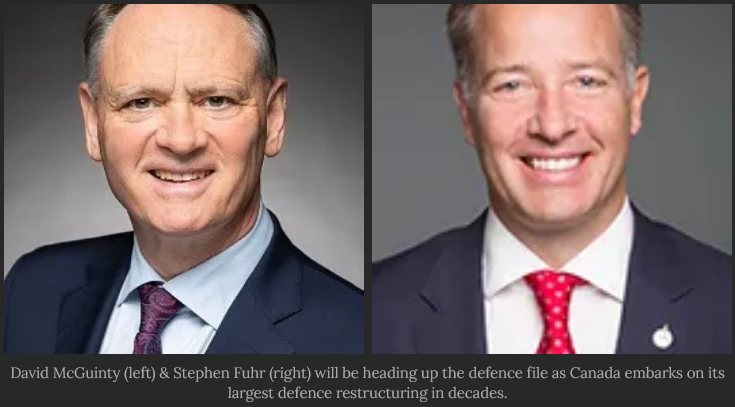
David McGuinty, best known for his eight-year stint as Chair of the National Security and Intelligence Committee has taken the reigns as the new Minister of National Defence While Kelowna MP and veteran Stephen Fuhr will take on a new role as Secretary of State for Defence Procurement.

In this role Fuhr will work under McGuinty specifically to tackle the file of Defence Procurement ahead of the establishment of the DPA. He is one of eight new secretaries of state that will operate on a “junior” level in cabinet.

Now McGuinty wouldn’t have been my first pick. I will openly admit that, but it is hard [not] to argue that he is the most prepared for the role, and likely the best we have available.

McGuinty previously held the NSICOP chair from 2017 all the way until December when he was appointed Minister of Public Safety. He has a background in International Development before becoming a parliamentarian, including stints with UNICEF.

He isn’t coming into this without a background on the current security climate we’re facing. He certainly can’t be said to be ill-prepared to take the role at a time when CAF and the DND are at one of their most pivotal moments in restructuring.

March 24, 2025

Canada could learn from the Finnish example

Filed under: Cancon, History, Military, USA, Weapons — Tags: , , , , — Nicholas @ 05:00

US President Donald Trump tossed several grenades into the still waters of Canadian defence platitudes and forcefully called attention to the clear fact that Canada has been a world-leader in defence freeloading since the late 1960s. In The Line, Tim Thurley suggests that Canada should look more closely at how Finland has maintained its sovereignty with a larger, militarily dominant, and unpredictable neighbour for more than a century:

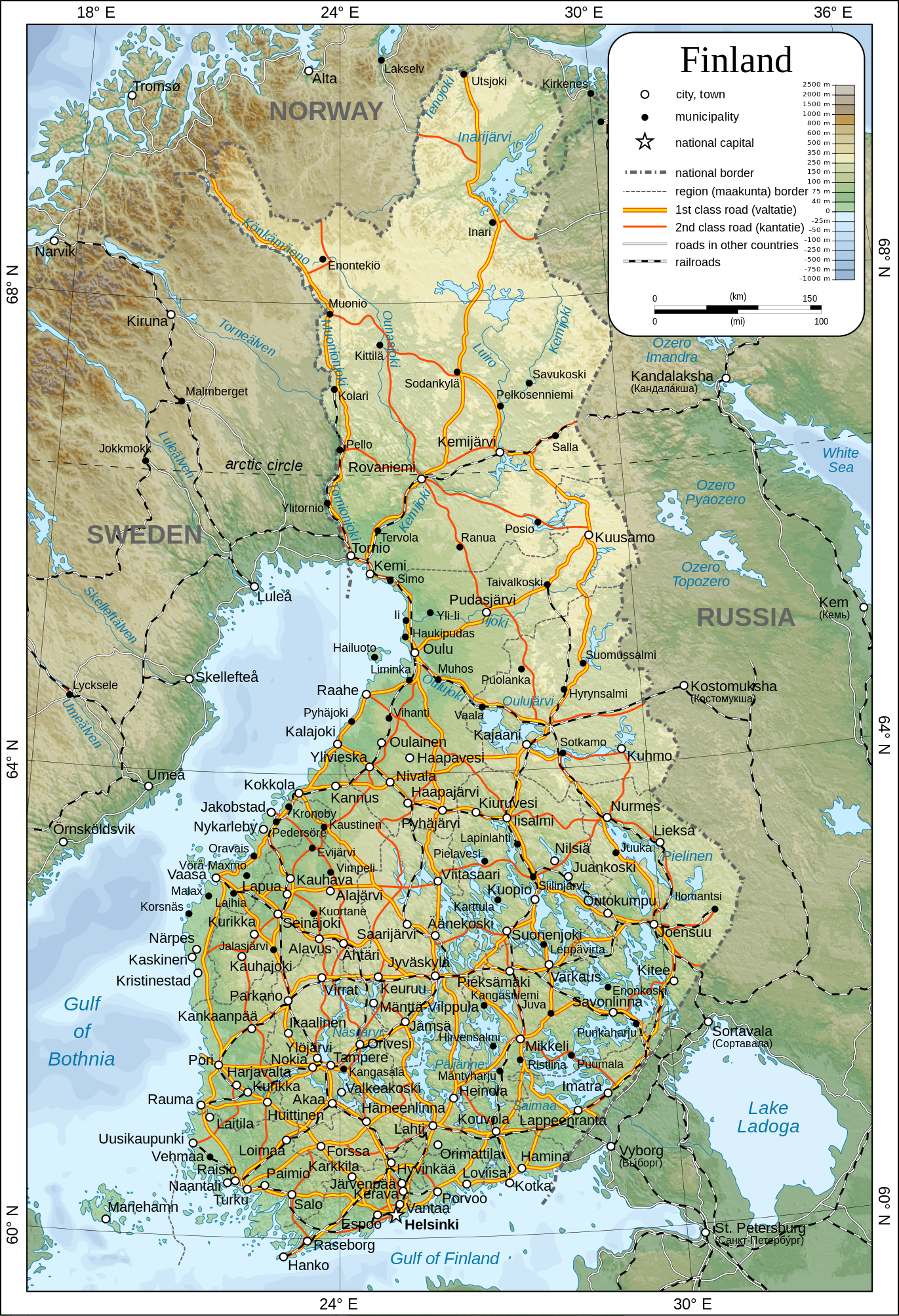
Map of Finland (Suomen kartta) by Oona Räisänen. Boundaries, rivers, roads, and railroads are based on a 1996 CIA map, with revisions. (via Wikimedia – https://en.wikipedia.org/wiki/File:Map_of_Finland-en.svg)

Canadians pretended we didn’t need to take defence seriously. We justified it with fantasies — the world wasn’t that dangerous, threats were distant, and America would rescue us if needed. That delusion is dead. U.S. Republicans and some Democrats don’t trust us to defend our own territory. Trump openly floated annexation and made clear that military protection now comes at a price — potentially statehood. Canadian military leaders now describe our closest ally as “unpredictable and potentially unreliable”. And even when America was a sure bet, our overreliance was reckless. Sovereignty requires self-defence; outsourcing it means surrendering power.

We should take cues from nations in similar situations, like Finland. Both of us border stronger powers, control vast, harsh landscapes, and hold valuable strategic resources. We’re internally stable, democratic, and potential targets.

We also share a key strength — one that could expand our military recruitment, onshore defence production, rebuild social trust, and bolster deterrence: a strong civilian firearms tradition.

We should be doing everything we can to make that tradition a bigger part of Canadian defence, and a larger part of our economy, too.

That may sound absurd to some Canadians. It shouldn’t. Finland is taking full advantage by attempting to expand shooting and military training for civilians both through private and public ranges and the voluntary National Defence Training Association. Finland is seeking to massively upgrade civilian range capacity by building 300 new ones and upgrading others to encourage civilian interest in firearms and national defence, and is doing so in partnership with civilian firearm owners and existing non-government institutions.

Multiple other states near Finland are investing in similar programs. Poland is even involving the education system. Firearm safety training and target practice for school children are part of a new defence education curriculum component, which includes conflict zone survival, cybersecurity, and first aid training. Poland’s aim is to help civilians manage conflict zones, but also to bolster military recruitment.

Lithuania and Estonia encourage civilian marksmanship as part of a society-wide comprehensive defence strategy. The Lithuanian Riflemen’s Union, one of the small nation’s most recognizable institutions, is a voluntary government-sponsored organization intended to prepare civilians for resistance to an occupying power. It has 15,000 members in a population of 2.8 million. The Estonian Defence League trains mostly-unpaid civilian volunteers in guerrilla warfare. It has an 80 per cent approval rating in Estonia, where over one in every 100 men and women with ordinary jobs have joined to learn defence techniques, including mastering standard-issue military service rifles that they may keep at home, ready to fight on a moment’s notice.

These strategies are modern. These countries are no strangers to cutting-edge modern warfare, necessitated by a common border with an aggressive Russia. But technologies like drones are not a replacement for a trained and motivated citizenry, as the Ukraine conflict illustrates. Against a stronger and more aggressive neighbour, these societies deter and respond to aggression through organized, determined, and trained populations prepared to resist attackers in-depth — by putting a potential rifle behind every blade of grass.

Canada, meanwhile, is spending money to hurt our own capacity. It’s coming back to bite us. The Trudeau government misused civilian firearm ownership as a partisan political wedge and ignored the grave flaws of that strategy when they were pointed out, hundreds of times, by good-faith critics. Thousands of firearm models have been banned at massive and increasing expense since 2020 despite no evident public safety benefit. In the recently concluded party leadership race, Mark Carney pledged to spend billions of dollars confiscating them. Government policies eliminating significant portions of business revenue have maimed a firearm industry that historically contributed to our defence infrastructure. Civilian range numbers, which often do double-duty with police and even military use, plunged from roughly 1,400 to 891 in five years. Without civilians to maintain ranges for necessary exercises and qualification shoots, governments must assume the operating expenses, construct new ranges, or fly participants elsewhere to train.

March 6, 2025

HMCS Bonaventure – The Pride of Canada’s Fleet

Filed under: Britain, Cancon, History, Military — Tags: , , , , , , — Nicholas @ 02:00

Skynea History
Published 22 Oct 2024

For today’s video, we’ll be looking at the last of Canada’s aircraft carriers. Not typically a navy you associate with that kind of ship, but the Canadians actually operated three during the Cold War.

The third, HMCS Bonaventure, is an interesting one. A small ship, that operated aircraft at the very edge of her capability. And routinely baffled American pilots in the process.

Yet, she was also a ship that came to an end before her time. Decommissioned and scrapped, right after an expensive (and extensive) mid-life overhaul. In what is generally seen as a bad political move, more than anything to do with her capabilities.
(more…)

February 12, 2025

Poilievre’s outlined plan for the Canadian Arctic gets the CDR Salamander seal of approval

Filed under: Cancon, Military, Politics — Tags: , , , — Nicholas @ 05:00

Although most of the attention is on the still ongoing Trump tariff tantrum, there is still the required battle-space preparations going on for the next federal election. Conservative leader Pierre Poilievre discussed his proposals for improving national security in the Arctic, and CDR Salamander is enthusiastic:

Pierre and Ana Poilievre at a Conservative leadership rally, 21 April, 2022.
Photo by Wikipageedittor099 via Wikimedia Commons.

… here are the highlights as I see them.

  • Canada’s Arctic is under threat. 75% of Canada’s coastline is in the far north, and 40% of her landmass. Canada needs to become self-sufficient.
  • In the fall of 2022, the Canadian military found Chinese monitoring buoys in the Arctic.
  • A Royal Canadian Navy frigate shadowed a Chinese research vessel in the Bering Strait off Alaska last year (thank you RCN friends, we don’t have any frigates nor naval bases in Alaska because … our leaders don’t understand much outside Norfolk, San Diego, or the Potomac).
  • Russia is building new bases and infrastructure in the Arctic.
  • Canada will take back control of Canadian waters, sky, and land.
  • The Canadian military today is weakened and her allies no longer respects her.
  • Canada does not have a permanent military presence in the Arctic.
  • When Prime Minister, he will increase Canadian forces by:
  • – Doubling the size of the Canadian Rangers from 2,000 to 4,000 Rangers.

    – Acquire two additional polar heavy icebreakers for the Royal Canadian Navy by 2029 on top of the two current icebreakers being built for the Canadian Coast Guard.

    – Will build Canada’s first permanent Arctic military base since the Cold War. It will be CFB Iqaluit. 100% of the cost of the base will come out of the Canadian foreign aid budget and will be up and running within two years of Poilievre becoming Prime Minister.

    – New submarines.

  • Bringing wasted foreign aid back to Canada.
  • If Canada wants to be a sovereign, self-reliant nation, it must take control of their north, secure its borders, and stand on its own two feet.
  • Canada cannot count on the Americans to do it for them.

Further on in this speech, Poilievre speaks out strongly against some of the statements of President Trump and his administration, and that is fine for me. Were I Canadian, I would say very similar things. This is OK. Friends can have disagreements now and then, but for every one item that causes friction, we will always have nine items that bring us together.

It’s all good.

February 4, 2025

The FN C1A1 – Workhorse of the Cold War Canadian Army

Filed under: Cancon, History, Military, Weapons — Tags: , , , , — Nicholas @ 02:00

On Target Canada
Published 20 Jan 2020

Time to get a closer look at a rifle I have spent a lot of time with in the past. The FN C1A1, used by the Canadian Army from the mid 1950s to the late 1980s.

Enjoy!
(more…)

January 18, 2025

Buying military surplus is often a bargain, but buying new military equipment is usually a financial black hole

The Canadian government has — since at least 1968 — always viewed major equipment purchases for the Canadian Armed Forces first and foremost as “regional economic development” projects which channel federal dollars into vote-rich areas in need of jobs or to reward provinces and regions for their support of the party in power. This virtually always requires getting all or most of the manufacturing/construction/assembly done in Canada.

To most people this sounds sensible: big military equipment acquisitions mean vast sums of taxpayer money, so why shouldn’t as much of that money as possible be spent in Canada? The answer, in almost every case, is that it will usually be VASTLY more expensive because Canadian industry doesn’t regularly produce these exotic, spendy items, so new factories or shipyards will need to be built, all kinds of specialized equipment will need to be acquired (usually from foreign sources), companies will need to hire and train new workforces, etc., and no rational private industries will spend that kind of money unless they’re going to be guaranteed to be repaid (plus handsome profits) — because CAF equipment purchases come around so infrequently that by the time the current batch need to be replaced, the whole process needs to start over from the very beginning. It would be like trying to run a car company where every new model year means you shut down the factories, fire the workers, destroy the tools and jigs and start over from bare ground. Economic lunacy.

Items like clothing, food, non-specialized vehicles (cars, trucks, etc.) may carry a small extra margin over run-of-the-mill stuff, but it will generally be competitive with imported equivalents.1 Highly specialized items generally won’t be competitively priced exactly because of those specialized qualities. The bigger and more unusual the item to be purchased, the less economic sense it makes to buy domestically. As a rule of thumb, if the purchase will require a whole new manufacturing facility to be built, it’s almost certainly going to be cheaper — and usually faster — to just buy from a non-domestic source.

How much more do Canadian taxpayers have to shell out? Carson Binda has some figures for current procurement boondoggles:

Take the new fleet of warships being built for the Royal Canadian Navy – the River Class Destroyers. The Canadian River Class is based on the British Type 26 Frigates.

The Brits are paying between $1.5 and $2.2 billion in Canadian dollars per ship. Meanwhile, Canada is paying upwards of $5.3 billion per ship, according to the Parliamentary Budget Officer.

That means we’re paying double what the Brits are, even though we are copying their existing design. That’s like copying the smart kids’ homework and still taking twice as long to do it.

If we paid the same amount per ship as the British did for the 15 ships of the River Class, we’d save about $40 billion in procurement costs. That’s twice as much money as the federal government sends to Ontario in health-care transfer payments.

[…]

Prime Minister Justin Trudeau’s government bungled F-35 fighter jet procurement is another example of taxpayers losing out on military procurement contracts.

In 2010, the Harper government announced plans to buy 65 F-35 fighter jets for an inflation-adjusted cost of $190.8 million per unit.

The Liberal government canceled that procurement when it came to power. Fast forward to 2023 and the Trudeau government announced the purchase of 88 F-35s at an inflation-adjusted cost of $229.6 million per unit.

That massive increase in cost was totally avoidable if the Liberals would have just kept the Harper-era contract.

[…]

Because so much budget is wasted overpaying for big ticket items like ships, jets and trucks, soldiers aren’t getting the basics they need to keep Canadians safe.

The defence department bureaucrats can’t even figure out how to buy sleeping bags for our soldiers. National Defence spent $34.8 million buying sleeping bags that were unusable because they were not warm enough for Canadian winters.

Recently, Canadian soldiers sent to Ottawa for training had to rely on donated scraps of food because the military wasn’t able to feed them. Soldiers have gone months without seeing reimbursements for expenses, because of bureaucratic incompetence in our cash-strapped armed forces.


    1. Note, however that during the 1980s, the Canadian army wanted to buy Iltis vehicles that were built in Germany at a $26,500 cost per unit. Getting the work done under license in Canada by Bombardier more than tripled the per-vehicle cost to $84,000.

    January 13, 2025

    Muttering something about “manifest destiny” while glancing north

    Filed under: Cancon, Media, Politics, USA — Tags: , , , , , — Nicholas @ 05:00

    The Line‘s weekly dispatch is, as usual, mostly behind the paywall but the portion visible to cheapskates contains much of interest:

    Manifest Destiny, 2025? Big Serge’s updated map for the old US War Plan Red for a military invasion of Canada.

    It’s no coincidence that as Canada’s leadership devolved into its own navel, the very-soon-to-be-inaugurated Donald Trump escalated his provocations. This week, Trump threatened to use “economic force” to push Canada to bend the knee. Meanwhile, we cannot help but notice that the idea of a Canadian state is starting to gain significant traction in even moderate and mainstream American conservative circles. Meanwhile, we’ve got Alberta Premier Danielle Smith supping with Kevin O’Leary and Jordan Peterson down in Mar-a-Lago.

    Tap tap. May we suggest that you peruse the safety cards tucked into the back of your seat, buckle up, and take note of your nearest emergency exits?

    Whether we are talking about some kind of economic union, or a full-blown annexation, the fact that at least some in America are reviving the term “Manifest Destiny” is a possibility that we can no longer afford to dismiss as mere trolling. While we hope that the Trump administration is going to be so bogged down with other policy priorities that “Canada 51” is soon overshadowed, your Line editors have been game theorying out a host of possible scenarios and … none of them look great. If Trump et al get serious about this idea — and, again, we have no way to know if they will get serious about this idea — then we at The Line fear that Canada is in for some serious turmoil in the coming few months.

    As I said in an email to Severian the other week, “… Canada will have very little ability to react to whatever Hitler, er, I mean “Trump” will do as soon as he’s inaugurated. It was clear before this that Trudeau cared very little about ordinary Canadians’ lives, but this really is dereliction of duty on a cosmic scale. If Trump does follow through with that huge tariff, the Canadian economy is likely to collapse, as we’re so deeply intertwined with the US on so many levels. Sadly, this might make it even more attractive to Trump, as it would absolutely encourager les autres on a global scale. If the BOM is willing to destroy the economy of his closest trading partner, what might he do to France? Or Germany? Or South Korea?” Back to the dispatch:

    To explain our alarm, let’s first look at another news item to cross the desk. This week, Justin Trudeau travelled south to attend the funeral of Jimmy Carter, and stopped at the CNN studios for a quick interview with Jake Tapper on the way through.

    On the whole, we think his interview was fine. Look, Trudeau’s been through a lot in the last few days, and considering the circumstances, it’s not reasonable to expect a breakthrough performance. So we’re being a bit unkind to nitpick, but something he said during that interview deserves scrutiny.

    Justin Trudeau got far too comfortable with being treated as a progressive superstar, not only among the sycophants with CBC nametags but even on the international stage … perhaps especially on the international stage. Trudeau was always inclined to the performative in everything he did, and he might well only feel fully alive when cameras are rolling. The evidence certainly seems to point in that direction.

    The “most prolific Canadian actor” meme was mildly amusing during Trudeau’s first term in office, as he went out of his way to put on elaborate costumes and to perform for the audience. This sort of thing was understandable if not particularly welcome to those who wanted Canada to be taken seriously by our allies and trading partners. It was clichéd to joke about what novelty socks Trudeau was wearing at any given international event … because it was his trademark. As was the clearly diminished respect he got as his time in office went on.

    When asked about Trump’s provocations, Trudeau affirmed Canadians’ pride in their own sovereignty by noting — half jokingly, we presume — that we fundamentally define ourselves as “not American”.

    Firstly, this is not a particularly diplomatic jibe to be launched at actual ordinary Americans; it made us wince to consider how it must have landed to CNN’s ordinary watching audience.

    Secondly, if the only way in which Canadians can define themselves nowadays is “not-American”, Jeez, that’s an extraordinarily thin peg upon which to hang a hat.

    This stuff matters.

    It is to wince. However, even that pathetic response was better than launching into yet another diatribe about Trudeau’s firm conviction that Canadians are all genocidal white supremacist morons, I guess.

    The ability of a population to withstand neighbourly aggression — “economic force”, if you will — depends on two things. The first is internal social cohesion and identity. The second is what the aggressor is willing to do or offer in order to secure capitulation.

    In this case, the second part of that equation is outside our control. So we look to the first: does Canada have a strong sense of self right now? Do its leaders command the moral authority necessary to create the social cohesion required to withstand a period of sustained material sacrifice?

    If we are “not Americans”, it rather asks the question why aren’t we Americans? And, more crucially, what are we actually willing to give up in order to preserve that independence?

    A people can be rallied to make extraordinary sacrifices for a greater ideal, including the ideal of independent nationhood. Look at the sacrifices of blood and treasure made every day in Ukraine, for example.

    If necessary, Canadians can band together and survive on lentils and supply managed dairy and eggs for many months or years. We can pull together through a period of inconceivable material hardship — but only if we’re doing it for something. Canadians, as per usual, can talk a big game, but how many of us are willing to suffer a real collapse of our quality of life to preserve a quasi-ironic, tautological, or negative self-identity?

    Before Trudeau’s time in office, I wouldn’t have thought to question Canadians’ pride in their country and willingness to defend it. Nearly ten years later, Trudeau and his minions have done a fantastic job of undermining any kind of patriotic enthusiasms in our “post-national state”, haven’t they?

    We at The Line don’t believe there is even a vanishingly small chance of the Americans using martial force to secure Canada — and if they choose to amass a brigade at the border on Monday morning, we’re all taking the Pledge of Allegiance by noon, so let’s not grace this fantasy with a lot of real consideration.

    I’d love to refute that, but it’s probably true, at least in the more densely populated areas of southern Canada … the US could send a brigade north to Vancouver, another to Calgary, another to Winnipeg, and one to Montreal. Thanks to the lower lakes, it’d take a bit more to secure Toronto and Ottawa but not a lot more. We literally couldn’t stop them, both because our very limited troops are not positioned to stop an invasion from the south and because they’re not even close to being in a ready-to-move condition. Even our local reserves would have to be notified, travel to their local armouries, be issued weapons and the very limited amount of ammunition kept in local storage and by the time they were ready, there’s a foreign flag waving over Queen’s Park and Parliament hill.

    Big Serge’s map at the top of this post vastly overstates the number of US troops necessary to secure the major population areas.

    However, it is worthwhile to imagine it as a pure thought experiment: what would you really be willing to give up in order to continue to be “not-American”.

    Your investment savings? Your property? Your house? Would you sacrifice the life of your child, or your grandchild, to preserve the legal independence of Canada?

    We ask this question not because we think it’s going to come to that, but rather because these questions test the integrity of our national concept. They allow us to examine our resilience, and our willingness to withstand an assault of an economic or moral nature. And, folks, we’re just not convinced that our national resilience is very high at the moment.

    Well, I’m sure a lot of new Canadians would want the rest of us to defend the place while they take advantage of all the government and corporate positions that need to be “diversified” … surely us evil white supremacists are willing to lay it all on the line for a more diverse society, right?

    It was interesting to us to note, this week, that the most powerful moral appeal for the concept of nationhood was proposed in a Globe and Mail oped by Jean Chrétien. While we salute the old patriot, we can’t help but point out that he’s, well, very old — 91, to be precise.

    We at The Line have a sneaking suspicion that Canadian patriotism and, more importantly, a willingness to make serious sacrifices to preserve that patriotism, is going to decline precipitously by age cohort in any well-constructed survey of the topic.

    Would the young fight to preserve Canada against the Russians or the Chinese? Yes, we think our fellow Canadians could absolutely be called upon to make serious sacrifices to circumvent the rule of autocrats and dictators. But to prevent being subsumed by the — checks notes — wealthiest and most powerful democratic nation on earth (presuming America stays that way)? A nation that shares almost all of our essential values; one that looks and sounds just like us, and would probably provide a better set of opportunities to our kids? The place an increasing number of us are going to do start business and receive timely medical care?

    Why?

    Why would we do that? Can someone — anyone — please articulate a vision, here? Is anyone in our leadership class even trying?

    It’s been noted many times that people are willing to charge even bare-handed into machine guns and cannons for things like “Liberté, égalité, fraternité“, but nobody is going to man the ramparts for “peace and good government”.

    We put a lot of the blame for this on Justin Trudeau, and on the identitarian politics that consciously sought to undermine national legitimacy in the pursuit of progressive ends. But, if we’re being honest, we think this complacency of identity predates these social movements by many decades.

    The Liberal Party as an institution owns a lot of it for the ways in which the “Natural Governing Party” has tied national identity to its preferred partisan policy options, at the direct expense of more transcendental and bi-partisan national self concepts. The Liberals have usurped “Canada” into a party brand

    The national flag is effectively the Liberal Party flag … thanks Mr. Pearson!

    and marshalled the very concept of “patriotism” to build consensus for picayune material entitlements. Trudeau couldn’t even help but do this in his CNN interview with Jake Tapper this week: “We delivered $10-a-day childcare. We’re delivering a dental care program that provides free dental care for people who don’t have coverage. We’re moving forward on a price on pollution that puts more money in the pockets of eight out 10 Canadians.”

    We suppose Trudeau found that argument very compelling argument to Americans marvelling at Canada’s inability to meet its basic NATO commitments.

    The weird thing is that Trudeau could have deflected a lot of these criticisms by our NATO allies almost painlessly without spending any more money directly on the Canadian Armed Forces“It’s well known that Justin Trudeau has no time for military issues, but it’s surprising that he hasn’t done a few things that wouldn’t increase the actual spending on the CAF, but would be “bookkeeping” changes that would shift some existing government spending into the military category, like militarizing the Canadian Coast Guard. (That is, moving the CCG from the Fisheries and Oceans portfolio into the National Defence portfolio, not actually putting armaments on CCG vessels. Something similar could be done with the RCMP, switching it from Public Safety to National Defence with no other funding or operational changes.) That Trudeau hasn’t chosen to make even these symbolic changes shows that he actively opposes fulfilling the commitment his government has made twice in the last ten years for reasons of his own.”

    This tactic has been very electorally effective for the Liberals, no doubt, but it’s also reduced the idea of “Canada” to a smug transactional exchange. “Canada” as nothing more than what provinces and citizens can wheedle out of the commonweal in transfer payments, equalization cheques, and grandiose but poorly executed national program spending. At least we’re better than America, though, right? We’re “not American!” — we’re so much more thoughtful and compassionate, as evidenced by the entitlements we’ve voted for ourselves, secure in the knowledge that the troglodytes to the south will spend and bleed and die for our coddled asses if Russia lobs a missile from the North.

    Canada has become a question of what we, citizens, are able to get, rather than one of what we’re willing to give. And we’re smarmy, preachy assholes about it, to boot. (There’s a very famous political quote we could drop in here about what citizens can do for their countries and vice versa, but you’ll know why we aren’t, if you can guess the quote! It would be a little on the nose.)

    A nation that is unwilling to make serious sacrifices of blood and treasure to protect its own sovereignty is a nation that is going to cease to be a nation sooner or later — and if we judge Canada by its commitment to its military, ours is a nation that has regarded itself as a quasi-ironic post-modern punchline for many generations now.

    January 12, 2025

    Big Serge updates War Plan Red for a 2025 invasion of Justin Trudeau’s “post-national” “genocide” state

    Filed under: Cancon, Military, USA — Tags: , , , , , — Nicholas @ 05:00

    After the farcical attempt by outgoing PM Justin Trudeau to pretend that he somehow has changed his mind and now likes and wants to defend the country he’s described variously as a “post-national state” with no core beliefs, steeped in white supremacy and misogyny, and still engaged in “genocide”, Big Serge suggests the US invasion plan should change like this:

    When Trump invades Canada, the key will be rapid advances in the opening 48 hours to take advantage of Canada’s odd force disposition.

    The country’s political and economic center of gravity is the urban corridor from Toronto to Montreal, but a significant share of the Canadian Army is dispersed, with large garrisons in Quebec, Halifax, and the western provinces. Only handful of brigades are garrisoned in the critical theater.

    The war will be won quickly and decisively, without massive destruction of Canadian cities, if American forces can establish blocking positions to isolate the urban corridor from peripheral Canadian garrisons. In this maneuver scheme, we utilize highly mobile elements including 1st Cavalry Division and airborne forces to block the highways into Toronto, while an eastern screening group isolates the urban centers from reinforcements scrambling in from Quebec.
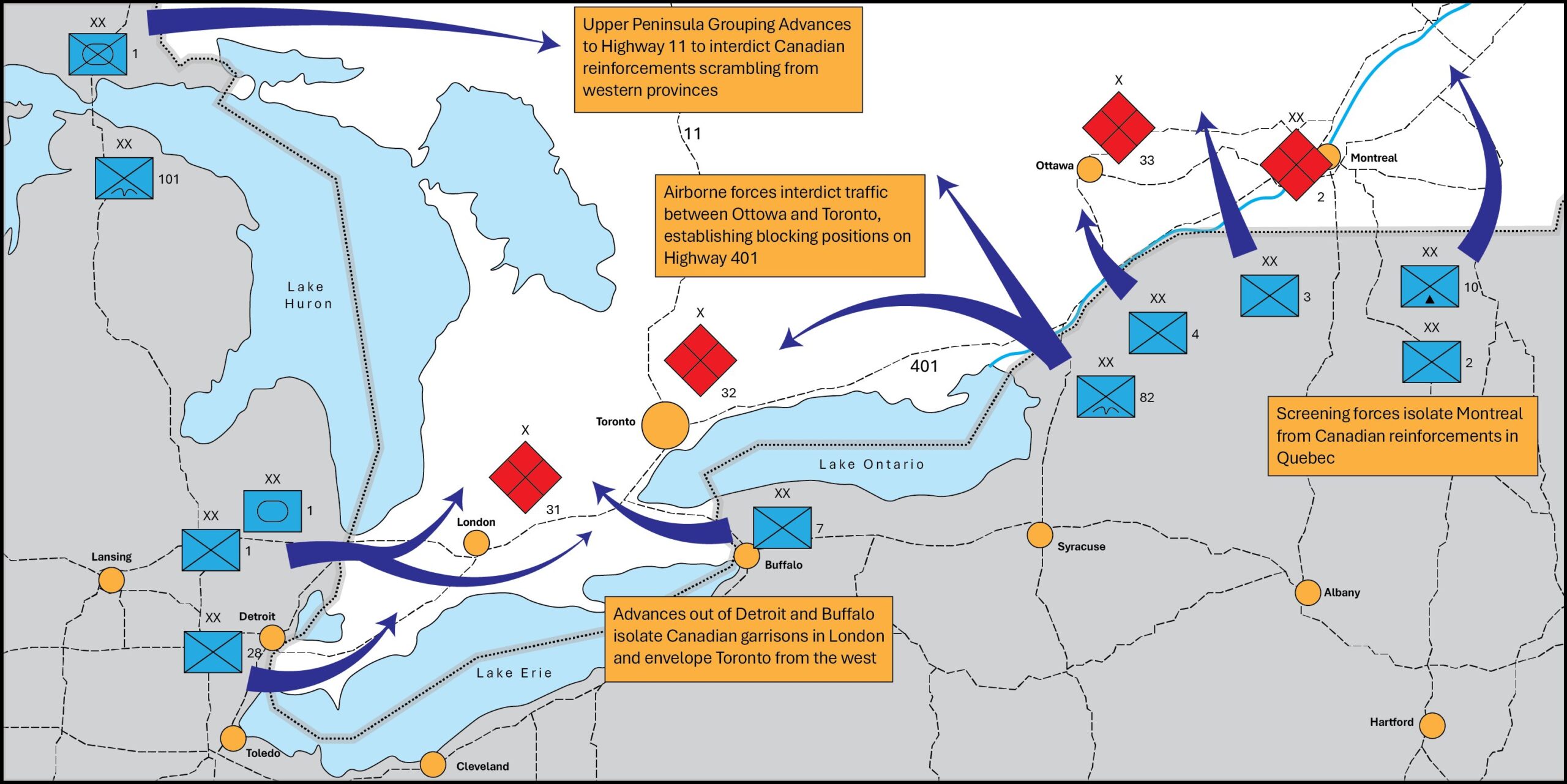
    We envision inserting HIMARS at operational depths via Chinook slings, saturating Canadian road traffic with rocketry. A mobile firebase (“Firebase Maple”) will be established north of Toronto near Lake Simcoe that will have a dominant position over the city’s northern approach.

    With reinforcements unable to scramble into the critical theater and Toronto severed from the cities in the eastern corridor, the Canadian 31st and 32nd Brigade Groups will be isolated and destroyed. Unconditional surrender is anticipated within 14 days.

    If there is a Canadian insurgency, we’re calling it the Maplejideen.

    As an addendum, artillery airlifted onto Isle Royale in Lake Superior will support an advance out of Minnesota towards Thunder Bay, which will add an additional level of interdiction on Canadian reinforcements moving eastward by rail.

    People are so mad about this!

    And after much kerfuffle among the easily trolled, he suggests:

    There’s no community note on this post which means it has been fact checked as true by real patriots.

    As to why Trump would want to invade a frozen failed state on the brink of bankruptcy, even Big Serge doesn’t have an answer.

    January 6, 2025

    If you’ve ever been in any military organization, you’ve encountered this

    Filed under: Bureaucracy, Cancon, Military — Tags: , , , — Nicholas @ 04:00

    Shady Maples on the frequent issue needing a particular piece of equipment, but … bureaucracy:

    Have you heard the one about the soldier and supply technician?

      Soldier: I need a sleeping bag.

      Supply Tech: We’re not issuing sleeping bags right now.

      Soldier: I can see a sleeping bag on the shelf right there.

      Supply Tech: But that’s my last sleeping bag! If I issued that one then I wouldn’t have any left in stock. I need to keep at least one sleeping bag in stock in case someone needs it.

      Soldier: Yes! That someone is me! I need the sleeping bag!

      Supply Tech: Look, my job is to keep the shelves stocked. See the sign on the door? It says Stores, not Gives. If I give you that sleeping bag then we’ll be out of stock.

      Soldier: But I need the sleeping bag.

      Supply Tech: You’ll have to come back after we restock.

      Soldier: Fine, when are you restocking sleeping bags?

      Supply Tech: When we’ve depleted our current stock.

    This is barely a joke, I’m convinced it’s a script that supply techs learn in Borden.1 A common variant involves a soldier trying to get a piece of kit ahead of a training exercise. The supply tech tells them they can’t have the kit because they don’t need it. If the soldier needed the kit then it would be issued to them and since it’s not issued to them they don’t need it. I have personally had that conversation multiple times with everyone from lowly supply techs to quartermasters up to Life Cycle Material Managers in ADM(Mat). A notable one involved asking the depot in Montreal to send my unit a specific piece of optical equipment2 which we desperately needed, only to be told that they could not release that kit to us because the Army divesting it. My unit had just taken on a new capability that required this kit, why were they throwing this equipment away? “Nobody uses it anymore.” But I’ll use it, I’m telling you that I’m going to use it! My appeal failed, the depot had to divest because no one used the kit and they wouldn’t let us use the kit because they had to divest. I subsisted by borrowing equipment from other units off-the-books.

    Pic related, from Patrick McKenzie.

    There is a deep and difficult-to-articulate emotion that I feel whenever I have interactions like this. It’s a middle shade of anger, frustration, sadness, and loathing triggered by a people who so are so lost in process that they stop caring about real-world outcomes. Via Scott Alexander’s Links For December, I just learned? that Scott Aaaronson coined the term “blankface” for people like this:

      What exactly is a blankface? He or she is often a mid-level bureaucrat, but not every bureaucrat is a blankface, and not every blankface is a bureaucrat. A blankface is anyone who enjoys wielding the power entrusted in them to make others miserable by acting like a cog in a broken machine, rather than like a human being with courage, judgment, and responsibility for their actions. A blankface meets every appeal to facts, logic, and plain compassion with the same repetition of rules and regulations and the same blank stare — a blank stare that, more often than not, conceals a contemptuous smile.

    Once, my 2IC3 was trying to access a childcare benefit intended to reimburse members for babysitting when they are in the field or called in for overnight duties. My 2IC enquired about reimbursement but word came down from Ottawa that she wasn’t eligible since since had not used a licenced childcare provider. Nevermind that there are no licenced providers offering overnight childcare in our geographic area. When my 2IC submitted a grievance for her exclusion from the policy, the grievance analyst rejected it on the grounds that, since she never applied for the benefit (after being told she wasn’t eligible), she had not technically been denied anything. The analyst recommended applying for the benefit in order to be denied and then submitting another grievance based on that denial. At a time when the CAF is desperately trying to attract and retain female leaders, you know what really makes our case? Nickle-and-diming single moms over $70 of childcare. The analyst’s rejection letter made me feel like maybe Ted Kacynski had a point.

    In his blog post, Scott Aaronson used Dolores Umbridge as the canonical example of a blankface. Umbridge is conspicuous do-gooder who uses her positional authority to make life miserable for everyone around her. As the story progresses and she accrues more power to her office, it becomes apparent that her virtuous posturing conceals a cruel authoritarian heart. Scott noted that:

      The most despicable villain in the Harry Potter universe is not Lord Voldemort, who’s mostly just a faraway cipher and abstract embodiment of pure evil, no more hateable than an earthquake. Rather, it’s Dolores Jane Umbridge, the toadlike Ministry of Magic bureaucrat who takes over Hogwarts school, forces out Dumbledore as headmaster, and terrorizes the students with increasingly draconian “Educational Decrees”. Umbridge’s decrees are mostly aimed at punishing Harry Potter and his friends, who’ve embarrassed the Ministry by telling everyone the truth that Voldemort has returned and by readying themselves to fight him, thereby defying the Ministry’s head-in-the-sand policy.

    Voldemort is evil, yes, but he is a moral agent who chooses and sacrifices according to his principles. The series pits his perverse will-to-power against the protagonists heroic defence of good. Unlike Voldemort, Umbridge doesn’t have any vision or principles, her only goal appears to be rigorous application of Ministry rules and procedures. She is not an agent of evil so much as its midwife, allowing evil to spread by obstructing any effort to stop it.


      1. CFB Borden is the home of Canadian Forces Logistics Training Centre, a place that nobody says anything good about, especially the loggies.

      2. This piece of kit was specialized enough that I would effectively dox myself if I told you what it was.

      3. 2IC: Second-In-Command.

    « Newer PostsOlder Posts »

    Powered by WordPress