
Forgotten Weapons
Published 13 Apr 2026The design for the St Chamond 75mm field gun was initially created by Mexican small arms designer Manual Mondragon, who worked extensively in artillery as well as small arms. As Mexico had no domestic artillery production capability, he worked with the engineering team at St Chamond under Emile Rimailho to complete the design, and Mexico purchased 100 of these guns by 1910, forming the backbone of Mexican Army artillery during the period. The gun is a screw breech rapid fire piece, using fully self-contained ammunition (both shrapnel and HE projectiles). It fires a 12-16 pound shell at about 1650 fps, with a range of about 6500 meters.
In September 1914 the French government panic-ordered a batch of these guns, but then reconsidered and cancelled its order in favor of simplifying logistics with just the more common Mle 1897 75mm guns. That decision changed again in 1915, with an order for 200. These were not formally classified by the French Army, but St Chamond called them the Mle 1915. The gun was identical to the original Mexican pattern except revised to use the same ammunition as the Mle 1897 (the classic “French 75”) instead of its original slightly different cartridge. These guns were initially used for general field service, but pulled off the line when it became apparent that their recoil systems were not really able to handle the stresses of the constant firing required. Instead, they were used as the main armament for the initial 210 St Chamond heavy tanks (less the first 48 that did not receive main guns). After these were used up, the Mle 1897 was used instead.
One final element of combat service for the guns took place in 1948, when Mexico sold 32 of them to Israel, where they were used in Israel’s war of independence. Three examples remain on display in Israeli museums today, more than anywhere else. The one I am looking at today is a Mexican contract piece made in 1904, registered in the US as a live and transferrable Destructive Device.
(more…)
September 1, 2026
St. Chamond 75mm field gun: From Mondragon to WW1 tanks to Israel
May 1, 2026
Spain joins the awkward squad
At The Conservative Woman, Bepi Pezzulli outlines a few ways that the Spanish government is moving in quite different directions than their NATO allies and fellow EU members:

Torre del Oro (Tower of Gold) – Calle Almirante Lobo, Seville – Spanish flag” by ell brown is licensed under CC BY-SA 2.0 

 .
.
Spain’s Prime Minister Pedro Sánchez wants the privileges of alliance without the duties of one. Madrid remains in Nato, hosts critical American military infrastructure, and speaks the language of Atlantic solidarity – but only when convenient. On the central strategic questions of the age – Russia, Israel, and the wider Western posture in the Mediterranean – it increasingly behaves like a spoiler. What is troubling is that Spain is not merely posturing: it is rewriting its entire conception of statecraft, treating alliance as a shield, hostility as leverage, and strategic ambiguity as a governing doctrine.
When Washington needed alignment, Sánchez offered obstruction. When Israel faced existential war, Madrid offered moral lectures. When the West sought energy discipline against Moscow, Spain found room for Russian gas. All while preserving the old imperial obsession with Gibraltar and extracting advantages from London over the Rock.
Spain has discovered the pleasures of consequence-free hostility. That needs to end.
Anti-Americanism with diplomatic immunity
Sánchez has carefully cultivated the old European left’s anti-American reflexes: Nato when subsidised, moral neutrality when sacrifice is required. His government publicly resisted support for American military operations linked to Iran escalation and signalled clear reluctance to facilitate use of Spanish bases such as Rota and Morón for operations that might implicate Madrid politically. The message was unmistakable: American security guarantees are welcome but strategic co-operation is negotiable. The rhetoric matched the policy. “No to war” was not merely a slogan for domestic consumption. Sánchez is deliberately positioning Spain as the righteous dissenter against Washington’s harder strategic line.
At the same time, Spain maintained substantial imports of Russian gas well into the European sanctions era. While pipeline politics consumed Brussels, Madrid benefited from a convenient moral distinction: condemning Moscow loudly while continuing commercial accommodation where useful. The formal sanctions architecture left open some loopholes, and Spain was happy to live inside them.
An ally that profits from ambiguity while others bear the strategic burden is not an ally in the full sense. As US War Secretary Pete Hegseth noted, “An alliance cannot be ironclad if in reality or perception it is seen as one-sided”.
From criticism of Israel to open diplomatic hostility
On Israel, Sánchez has moved beyond criticism into active diplomatic confrontation. Recognition of Palestine was presented as humanitarian principle. In practice, it rewarded maximalism at the worst possible moment. Madrid helped transform October 7 from a terrorist massacre demanding strategic clarity into another European seminar on Israeli restraint. Spain became one of the loudest governmental amplifiers of the anti-Zionist campaign in Western Europe. Ministers normalised rhetoric that blurred the distinction between criticism of Israeli policy and systematic delegitimisation of the Jewish state itself. Arms restrictions followed. Then diplomatic actions. Symbolism became policy.
Gibraltar: Madrid’s imperial nostalgia
Spain’s sanctimony would be easier to tolerate if it were not paired with its own colonial fixation. For decades, Madrid has pursued sovereignty claims over Gibraltar with theological persistence. Brexit offered a fresh opening. With Brussels behind it, Spain extracted a remarkably favourable negotiating posture over the future relationship of the Rock with both the European Union and the United Kingdom. London, in the hands of the most Europhile government in recent history, conceded far more than many British voters imagined when they heard the word “sovereignty”. Spain never abandoned the long game. It simply learned to play it through institutions until a weaker opponent appeared. Madrid insists Gibraltar is unfinished history. Fair enough: is it not time then to conclude the same about Ceuta and Melilla?
April 29, 2026
Three views on the Iran conflict
In The Conservative Woman, Alex Story outlines the three distinct ways that western opinions differ on the ongoing struggle with Iran:
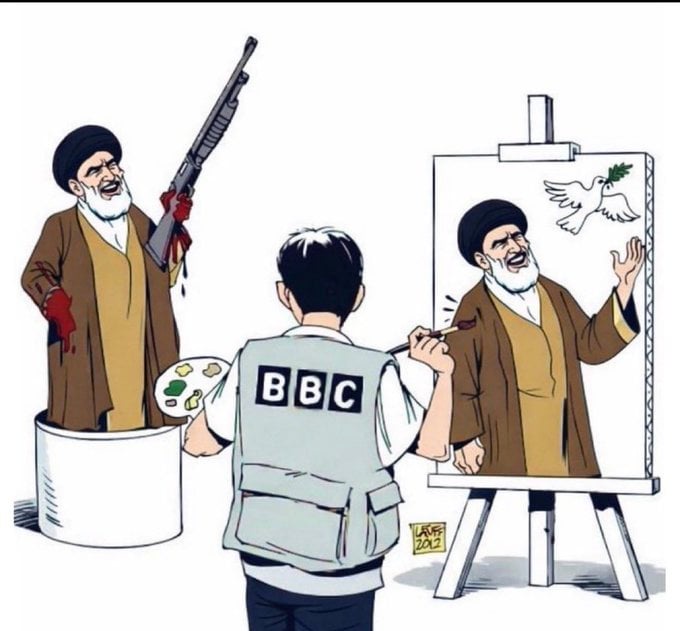
The BBC has a long history of … careful wording in describing events in Iran since 1979. I don’t think this cartoon is unfair in portraying that.
TRUTH is the first casualty of war.
Opinions on a conflict depend deeply on the prevailing culture, erasing nuance in the process. The less of it there is, the easier it is to convince yourself of your righteousness and your opponents’ wickedness.
For instance, the Iranian question divides the world in three main groups.
The first staunchly believes that the Israeli tail wags the American foreign policy dog, working around the clock to recreate Israel’s “from the river of Egypt to the great river, the River Euphrates” Old Testament borders as described in Genesis 15:18.
The second will accept the long-standing Islamic Republic of Iran’s evil nature and its core philosophy of perpetual warfare leading in due course to the unbeliever’s submission but are sceptical if it can be removed solely by this war. As David, an exiled Iranian, said: “I’m caught between wishing for the end of the regime and the very real prospect of its entrenchment through external violence”.
The third will argue that the Iranian leadership should be obliterated. Ending the regime’s five-decades long barbarism, exemplified by the slaughter of “40,000 Iranians” across the country in January 2026 in Prince Reza Pahlavi’s recent words, would make the world a better place. Having lived by the sword, the mullahs should die by the sword, they will say, adding that few will miss them.
Positions turn into intellectual fortresses at the speed of light, fed by a constant stream of “news” destined to further harden preconceived ideas. Little is provided that offers any hope of peaceful co-existence. Data is used, ignored and abused, thus ensuring escalation and lying becomes the accelerator for a world on its irrevocable path to war.
But while truth dies early in the antagonists’ deadly exchanges, war eventually reveals it, and its revelations tend towards the astounding.
In our case, for instance, it has become crystal clear that Britain is now effete, irrelevant and defanged. It is a flotsam on rough international seas, bullied by some, ridiculed by others and ignored by all who have not yet emasculated themselves.
The United Kingdom, the former global hegemon and only European country to come out of the Second World War justified, is not the same country it once was, dismantled stone by stone by an establishment haughtily bent on demise over decades and encouraging others, partially successfully, to follow them down to the Gates of Hades.
Our end, however, cannot all be pinned on Starmer, Hermer, Sands, the Fabians and purple-haired socialists.
He then goes on to make the case that only a counter-revolution will rescue Britain from its current path to misery and global irrelevance.
April 19, 2026
Simple rules for judging commentary on the Iran situation
You’ve probably noticed that I don’t include a lot of content on Iran or Ukraine these days. That’s largely because the fog of war propaganda is too dense for much reliable information to come to us and be subject to any kind of fair analysis. Lorenzo Warby has a few rules to suggest to those of you trying to sift real information out of the noise — both specifically on the Iran conflict and also more generally for these kinds of low-signal/high-noise conflicts:
There is a lot of poor quality commentary about on the current Iran War — or, as the Chinese call it, the War in West Asia. Fortunately, there are two simple tests that winnows out much of the noise so you can focus on signal.
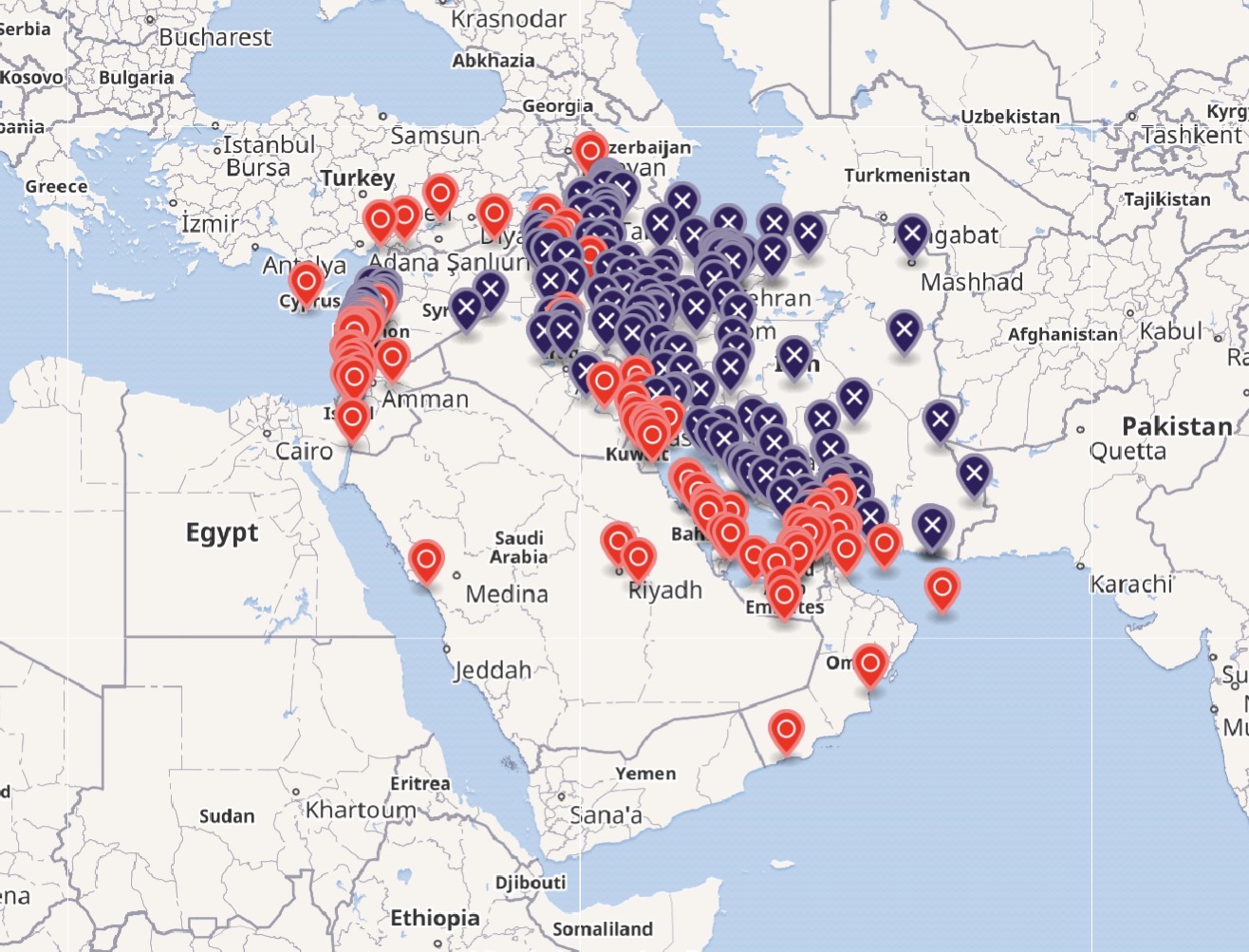
Locations struck by:
– United States and Israel (blue)
– Iran, Hezbollah, Houthis, and PMF (red)First Easy Test
Would this commentator ever admit that Trump had done something positive?
If the answer is no, ignore them. They are not commenting on the War, they are commenting on Trump. They are just providing anti-Trump talking points for this particular issue.
Second Easy Test
Does this commentator pay any attention to the record of the Islamic Regime? Its record of domestic repression, including various mass executions and mass killings of protesters? Its record in supporting and constructing proxies: in Lebanon, in Gaza, in Yemen, in Iraq, in Syria, in …? The record of those proxies and how they disrupt and degrade those countries? Its record in promoting terrorism across the globe? Its record in massive economic and environmental dysfunction …?
If the answer is no, ignore them. This is especially so if what they do comment on is Israel. They are not commenting on the War, they are commenting on Trump and on Israel. They are just providing anti-Trump, anti-Israel talking points for this particular issue.
The more of a regime of internal exploitation the Islamic Regime has become, the more it has built up its proxy forces. The more it built up its proxy forces, the more disruptive and destructive it has become.
[…]
Third, More Subtle, Test
The third test is about how wars work. Does the commentator understand that good strategy in war is a decision-tree? If you do X and Y happens, then follow up with Z. If you do X and A happens, follow up with B.
If they do not understand that, if they treat successful war strategy as being able to operate according to some plan so what the opponent does in response to it does not matter, then they do not understand war, and you can ignore them.
A classic way to fail in military affairs, is to not treat military action as a decision-tree, but to continue with the previous plan of action despite some crucial change in circumstances.
April 10, 2026
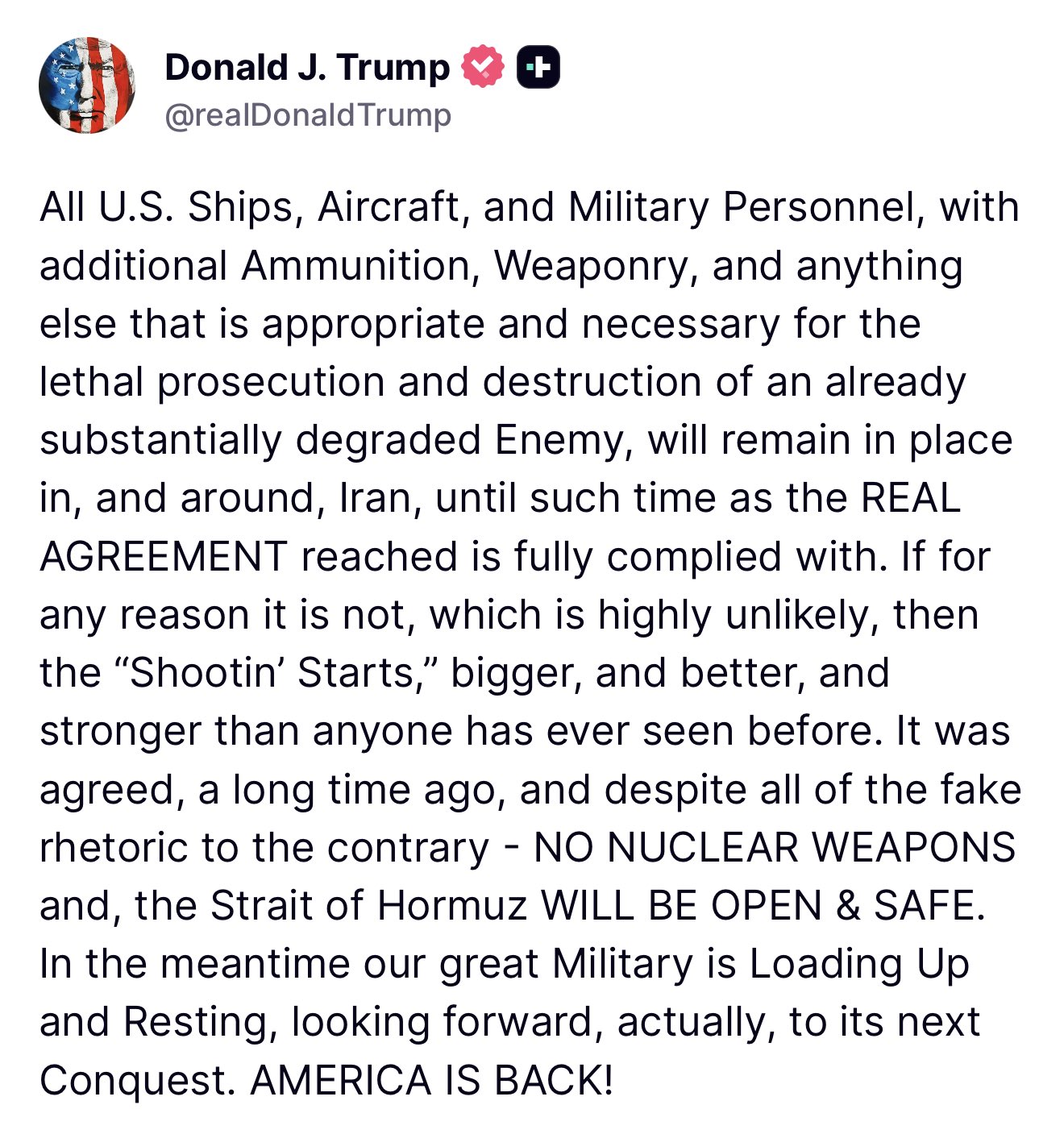
Trump’s intemperate, irresponsible, unhinged rants … worked?
For all that Trump’s habitual form of social media post seem to frequently dance on the edge of incoherence — if not insanity — his track record is far better than his critics give him credit for. I thought his most recent blustering threats against the Iranian leadership would be counter-productive, but something approximating a ceasefire began just before his deadline. As Brendan O’Neill put it, this gives Iranian civilization a bit of a reprieve, but what about the West?
Imagine calling for the destruction of a civilisation. Imagine dreaming about violently scrubbing an ancient nation from the face of the Earth. Imagine flirting with the idea of obliterating a land with thousands of years of rich history. I am referring, of course, to the activist class and its annihilationist hatred for the Jewish State. For nearly three years, these people have beat the streets and swarmed the digital networks to agitate for the erasure of Israel, all the way “from the river to the sea“. President Trump’s juvenile bluster on Iran has nothing on their existential loathing for the Jewish homeland.
The frenzy of the past 48 hours, following Trump’s potty-mouthed and threatening social-media posts about Iran, has felt unhinged. The nukes are coming, influencers wailed. Trump must be “removed as president” in order to “prevent a catastrophe that our species will never recover from”, said the Guardian‘s Owen Jones. Within hours of this giddy apocalypticism, this huddled descent of the chattering classes into the pit of End Times prophesying, Trump had done what many of us expected he would: struck a kind of deal. The great detonation was not of a nuclear bomb but of the common sense of the cultural establishment. That’s the only thing that got vaporised yesterday.
Then there was the sheer cant. It was Trump’s ominous yelp that “A whole civilisation will die tonight” that got leftists and liberals frothing. It’s genocidal lunacy, they said. Let’s leave to one side that the target of his digital ire appeared to be the Islamic Republic, not Persia. “Forty-seven years of extortion, corruption and death will finally end”, he said. The more striking thing is the industrial-level gall of a cultural elite that is devoted to the dismantling of Israel, puffing itself up in fury over Trump’s hyperbole on Iran.
I agree that “A whole civilisation will die tonight” is a chilling thing to say. That’s why I’m so horrified by the frenzied anti-Zionism of our times. Our intellectual classes furiously deny Israel’s “right to exist”. Our activist classes openly call for Israel’s excision from the family of nations, by intifada (violence) if necessary. Our celebrity classes cheer the armies of anti-Semites (Hamas, Hezbollah) that were founded with the express intention of vaporising the Jewish nation. One minute the keffiyeh set is accusing the likes of Pete Hegseth of being in the grip of an anti-Iranian “bloodthirst”, the next it’s chanting for the death of the Jewish nation’s soldiers.
Future historians will marvel at the brass neck of an influencer class that took 24 hours off from calling for the destruction of Israel to bash Trump for posting about the destruction of Iran. I raise this not to be facetious but to draw attention to the moral disarray here on the home front that has been so spectacularly exposed by events in Iran. For it is undeniable now – we are surrounded by people who salivate over the violent disappearance of Israel but who fret over the withering of the Islamic Republic. They have taken sides – the side of the barbarous regime that dreams of “Death to America” over the side of the democratic state rebuilt by Jews in the aftermath of the Holocaust. I’m delighted the Persian civilisation is safe – now what about the West’s?
March 10, 2026
Iran in the news
As I mentioned last time, as I don’t try to stay on top of the “breaking news” cycle, I’m not feverishly refreshing all my social media feeds to get the latest dope about the latest confict with the Islamic State. It’s not that I don’t care, but that as with all modern wars the ratio of signal to noise renders almost all of it worthless for finding out what’s actually happening. At Postcards from Barsoom, John Carter tries to gather his thoughts on the issue, subject to the same kind of informational constraints:
When I sit down to write, I usually have some idea of what I want to say – not only a topic I want to address, but a specific message I want to communicate. This is not going to be one of those essays. My feelings on the war on Iran are conflicted, to say the least. Nor do I feel that I understand enough about what’s happening to say much of substance. Nevertheless, on a matter that is of such potentially world-shaking import, I owe it to you not to be silent. So I’m setting out here to try and organize my thoughts on the matter. Whether they come to some conclusion or not, I have no idea. If nothing else, perhaps this will serve as a jumping off point for further discussion in the comments. Many of you, I’m sure, will have strong opinions on the subject, and many will also possess insights that I do not.
Will this war be of world-shaking import? That is perhaps the core of the matter. If it is not, and the principle of Nothing Ever Happens holds, then bombing Iran will not actually matter that much. A month from now, or even a couple weeks, the bombardment will fade back into the news cycle, the storm and fury of a million passionately articulated hot takes fading back into the warm, frothing ocean of discourse.
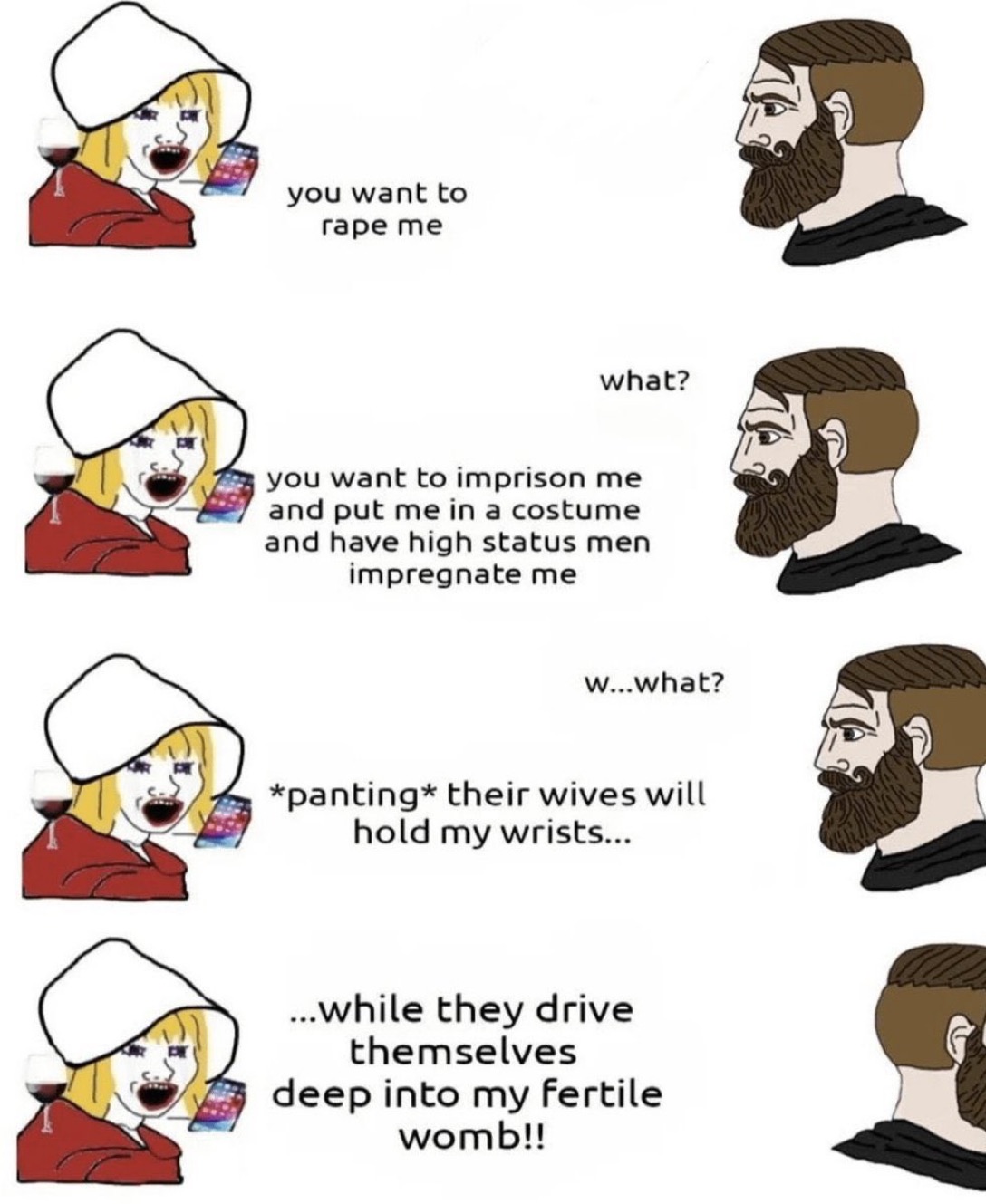
Certainly this has happened before. Trump has bombed Iran’s nuclear research facilities a few months ago, and assassinated the Iranian Revolutionary Guard Commander Qasem Soleimani a few years ago. Every time this kind of thing happens there are panicked shouts that thermonuclear Ragnarok is imminent, alongside outraged cries that Zion Don has betrayed MAGA by engaging in precisely the foreign interventionism that he repudiated, that he has been captured by the Neocohens, and that We Will Not Die For Israel. In each case, nothing much happened. Iran raised the red flag of revenge, or the gold flag of implacable annihilation, or the black flag of this time we really mean it, all of which amounted in practice to a few rockets being fired ineffectually in Israel’s general direction, to be absorbed by an Iron Dome that really seems to work quite well. There was no World War III. There were no boots on the ground. As I saw someone observe recently, We Will Not Die For Israel has become the groyper version of the Handmaid’s Tale: no one is actually asking anyone to die for Israel; there are no imminent plans for mass conscription; therefore protestations that one will resist a non-existent draft amount to the same kind of lurid masturbatory fantasy as declarations that one would never, pant, allow oneself to be confined in a harem, pant pant, and turned into, pant pant pant, breeding stock.
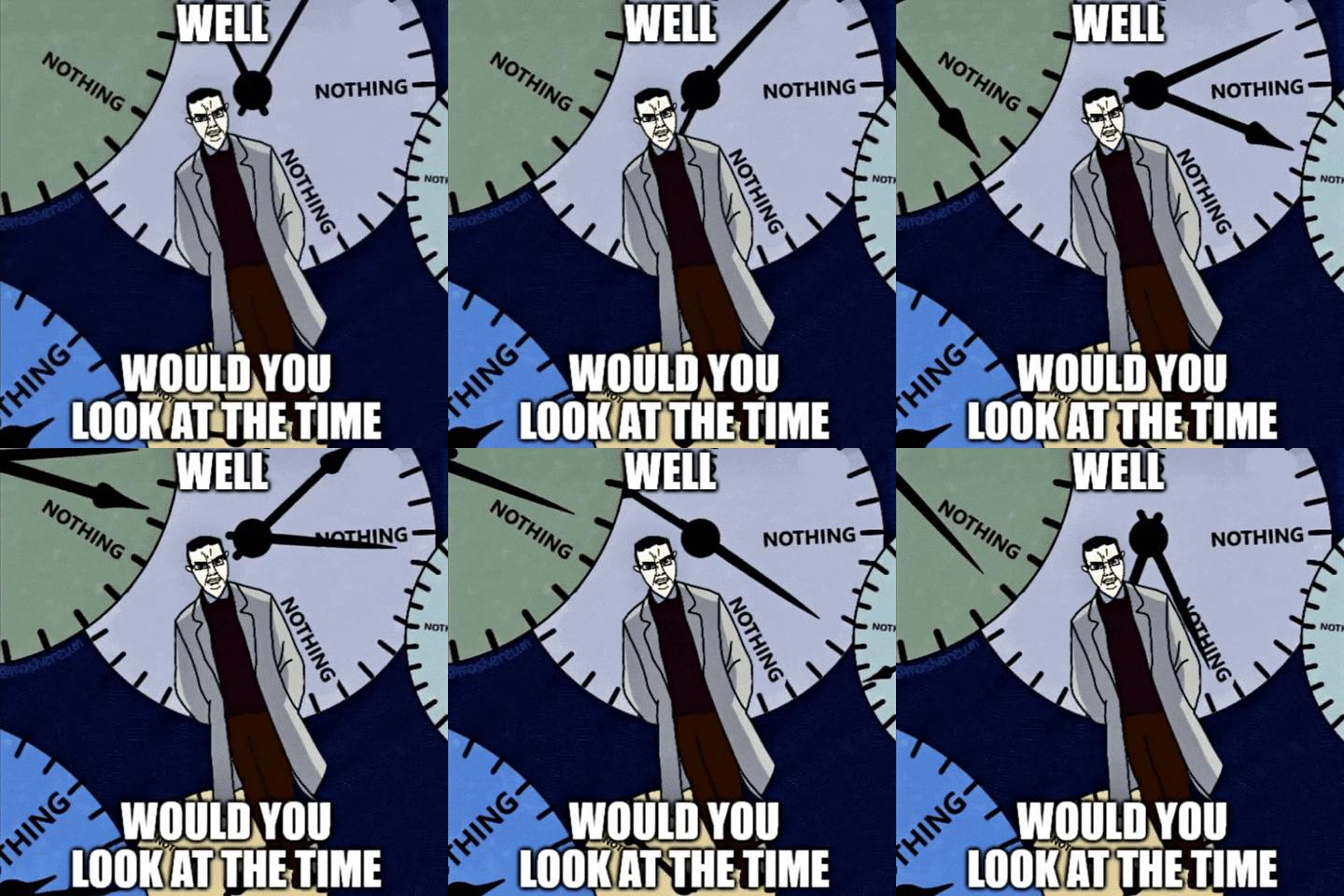
Brief pause for meme:
And back to John Carter:
Maybe that will change. Maybe a year from now I’ll be ruefully eating those words, as American boys are being shipped off by their hundreds of thousands to run around blinded by Russian electronic countermeasures in the cold mountain passes of the Zagros, getting picked off by snipers and shredded by Chinese drones.
But I doubt it.
Modern warfare doesn’t have much use for conscript armies. That lesson was learned in Vietnam: conscripts generally have poor morale, they aren’t highly motivated, they aren’t usually of the highest quality, and so they are of limited usefulness on the battlefield. Soldiers are highly trained professionals who have chosen the military as a career. That makes them much less likely to mutiny. Moreover, modern warfare is highly technical: soldiers have to be extremely well trained to be any use at all. The young men who volunteer for military service usually do so with some hope of adventure and even danger. As such, they often positively look forward to war.
None of this should be taken to imply that Israel hasn’t played a massive role in orchestrating and precipitating this war. They clearly have. Marco Rubio let this slip when he admitted that part of the reason the US attacked when they did was that Israel had signalled that they were going to attack with or without America’s blessing or assistance; since Iran would certainly direct some of its retaliation against the Little Satan towards the regional assets of the Great Satan, America’s hand was forced. This is a bit like when your shithead friend has had one Jameson’s too many and you sit down next to him at the bar only to find that he’s about to throw hands at some asshole you’ve never met: you’re liable to take a punch to the nose no matter what you do, so you might as well have your friend’s back. You can call him a shithead later.
Israel’s involvement goes much deeper than this, of course. Zionism’s penetration of American conservatism is hardly a secret. There are Dispensationalists all over the Republican party, including the Secretary of War Peter Hegseth, and probably Marco Rubio (though technically he’s a Catholic). Republicans who shrug off open anti-white bigotry systematically directed against America’s core population in essentially all of its universities react with fury to campus anti-Semitism, threatening to withhold funding from any institutions that tolerate hurt Jewish feelings. Then of course there’s the big guy himself. Trump has never been much of a Christian, still less an evangelical ZioChristian, but he seems to have undergone something of a religious awakening after divine intervention saved his life in Butler, Pennsylvania. And who can blame him? It certainly doesn’t seem implausible that since then, Trump has been influenced by Zionists who have convinced him that G-d saved him so that he could save America and, more importantly, G-d’s Chosen People. “You are the second coming of Cyrus the Great” would be an appealing narrative to a man with a vast ego. It would be even more appealing given the political and economic support it would come with. Certainly there would be no shortage of avenues for approach: Trump’s daughter is married into the tribe, after all.
March 3, 2026
Iran in the news
I haven’t bothered trying to keep up with the firehose of “news” about the combined US/Israeli operations against the Islamic State, as much of what is initially reported will be re-stated, retracted, refuted, and other words starting with “R” until something vaguely resembling objective analysis can be done. There are uncounted mainstream, specialist, and advocacy sites and there’s no point trying to keep up with them (for me, anyway). Here are a few bits of internet flotsam on issues arising from Operation Brass Balls (or whatever name they chose for it):
First up, J.D. Tuccille on the legality around President Trump’s decision to strike Iran:
The BBC has a long history of … careful wording in describing events in Iran since 1979. I don’t think this cartoon is unfair in portraying that.
The world is undoubtedly a better place after the killing of Iran’s supreme leader Ayatollah Ali Khamenei and roughly 40 of his murderous colleagues by joint Israeli and American military strikes. Iran’s Islamist regime has slaughtered its own people while encouraging terrorism around the world for decades. But those strikes carry serious risks and costs. Are they worth the tradeoffs? The Trump administration should have made its case to Congress and the already skeptical public and satisfied the Constitution’s requirements by doing so.
War Without Debate
On Saturday, the U.S. and Israel launched much-anticipated strikes after claiming negotiations with the Iranian regime over the status of its nuclear weapons program had stalled.
“A short time ago, the United States military began major combat operations in Iran,” President Donald Trump announced. “Our objective is to defend the American people by eliminating imminent threats from the Iranian regime — a vicious group of very hard, terrible people. Its menacing activities directly endanger the United States, our troops, our bases overseas, and our allies throughout the world. For 47 years the Iranian regime has chanted ‘death to America’ and waged an unending campaign of bloodshed and mass murder, targeting the United States, our troops, and the innocent people in many, many countries.”
True enough. The president recited a litany of crimes in which the Islamist regime has been implicated, including the 1983 bombing of the U.S. Marine barracks in Beirut by Iranian proxy Hezbollah, and the October 7, 2023, Hamas attack on Israel, which Iranian forces helped plan. To this list we can add the attempted assassinations of Iranian dissident Masih Alinejad in Brooklyn and of then-presidential candidate Trump himself. Trump also called out Iran’s efforts to acquire nuclear weapons. And he urged the suffering Iranian people, who have weathered brutal attempts to suppress protests, to take advantage of the military strikes to overthrow the regime.
Unfortunately, this was the first time many Americans — members of the public and lawmakers alike — heard the Trump administration make a somewhat coherent argument for taking on Iran’s government. It came as strikes were already underway despite the Constitution reserving to Congress the responsibility to “provide for the common Defence”, “to declare War”, “to raise and support Armies”, and “to provide and maintain a Navy”. Lawmakers were informed of the attack on Iran, but only after the country was committed to hostilities and their related dangers and expense.
Congress and the People Were Never Consulted
“I am opposed to this War,” Rep. Thomas Massie (R–Ky.) objected. “This is not ‘America First’. When Congress reconvenes, I will work with @RepRoKhanna to force a Congressional vote on war with Iran. The Constitution requires a vote, and your Representative needs to be on record as opposing or supporting this war.”
Rep. Ro Khanna (D–Calif.) shares Massie’s skepticism towards military action. He and Massie might have voted against authorizing war with Iran even if they’d heard the administration’s arguments. Or perhaps they and other lawmakers would have been persuaded. We don’t know, because the president didn’t make a case until bombs and missiles had already been launched.
Andrew Doyle on the need for regime change:

The end point of armed conflict is impossible to predict. In her book On Violence (1970), the philosopher Hannah Arendt argued that when it comes to political violence, “the means used to achieve political goals are more often than not of greater relevance to the future world than the intended goals”. However well planned and executed, wars have a tendency to spiral out of control in ways never envisaged.
Whether Donald Trump’s decision to attack Iran will pay off depends upon the fates as much as anything else. The goal is regime change, which – given the appalling tyranny under which the Iranian people have suffered for five decades – is admirable and just. Yet the numerous unknown variables make this war the biggest risk that Trump has yet taken as president.
This war has the potential to escalate and engulf the entire region. Iran is already striking neighbouring Arab states allied with the US in a scattershot and desperate manner. With the death of the Ayatollah, it may be that the regime will be forced into a ceasefire while it seeks to re-establish its power. Yet the scenes of wild celebration on the streets of Iran would suggest that domestic revolution is its greatest threat. If the Islamic Revolutionary Guard Corps (not the country’s national army, but a kind of Praetorian guard for the mullahs) can be turned, the regime will fall.
Perhaps the worst case scenario is a widespread power struggle between competing militias and separatist groups. The IRGC itself could fragment, and we may see the kind of chaos that ensued after the Iraq war of 2003. The Trump administration has the advantage of the latest military technology and will insist that this enterprise will never require “boots on the ground”. It may be right, but who knows what factions will emerge with no centralised authority?
Those of us without a crystal ball should get used to the phrase: “we don’t know”. Various social media pundits are asserting with absolute certainty where all of this will lead. They would be wise to exercise greater caution. After the Twelve-Day War last June in which Israel and the US destroyed much of Iran’s nuclear infrastructure and air defence capabilities, many on the “America First” right were quick to prophesy the advent of World War III. Their claims to clairvoyance were unfounded.
CDR Salamander argues in favour of the punitive expedition as a legitimate tool in the nation’s war locker:
I support the strikes on Iran because it firmly fits into a view I have held on the use of national military power for decades, based on thousands of years of military practice. If you are not up to speed with the thousands of Americans dead and maimed by the Islamic Republic and its proxies over the last 47 years, then I have nothing more to discuss with you.
While I understand the academic argument of many that before any action takes place, there is a whole series of hoops, barriers, and puzzles of our own creation that we need to go through — I firmly believe that not only are those Constitutionally unnecessary for punitive expeditions in 2026, if done, needed and deserved strikes like we have seen in Iran could not take place without
Fortunes were made, institutions funded, and employment justified for legions under the old and failed post-WWII process swamp and GWOT nomenklatura that gave us unending and stillborn conflicts. To go that route again wouldn’t just be folly, it would be a self-destructive folly to refuse to change in the face of evidence.
I’ve seen older versions of OPLANS for Iran. Huge, bloody, and frankly undoable. They were only that way because they met the requirements of an old system that everyone nodded their heads to because all the smart people from Johns Hopkins, Harvard, Princeton and all the usual places said we had to do it this way.
Enough. Bollocks to all that. They have been measured the last quarter century and have been found wanting.
A series of events since October 7, 2023, including the 2024 election, has opened a window to do what we have not been able to do for a whole host of reasons — and there is a debt waiting to be paid.
We’ve been here before with Iran. In the modern context, we sank two warships and three speedboats of the Islamic Republic of Iran Navy in 1988 during Operation Praying Mantis as punishment for damaging USS Samuel B. Roberts (FFG 58) and Iran’s mining international waters in the Persian Gulf. We’ve played slap-n-tickle with them here and there while they have brutalized us at every turn when they are not brutalizing their own people.
Yes, it’s personal — but part of the reason we have been hesitant is that our national security intellectuals have been stuck in a world view that prevented action, by design.
Though not exclusive, the Powell Doctrine’s “Pottery Barn Rule” (that it appears he got from one of Thomas Frack’n Friedman’s columns), made it appear that we could only take action if we took the entire country and then remade it in our image.
We know how that operationalized over the last couple of decades.
We’ve done plenty of punitive expeditions in our nation’s history — but in the last few decades as a certain pedigree of policy maker held sway over our national security doctrine, it fell out of favor.
They failed the nation. Their institutions failed the nation. Their worldview was little more than a self-licking ice cream cone of self-regard.
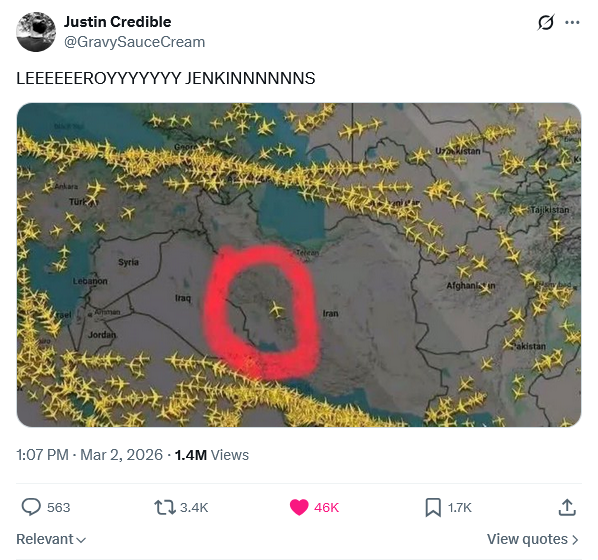
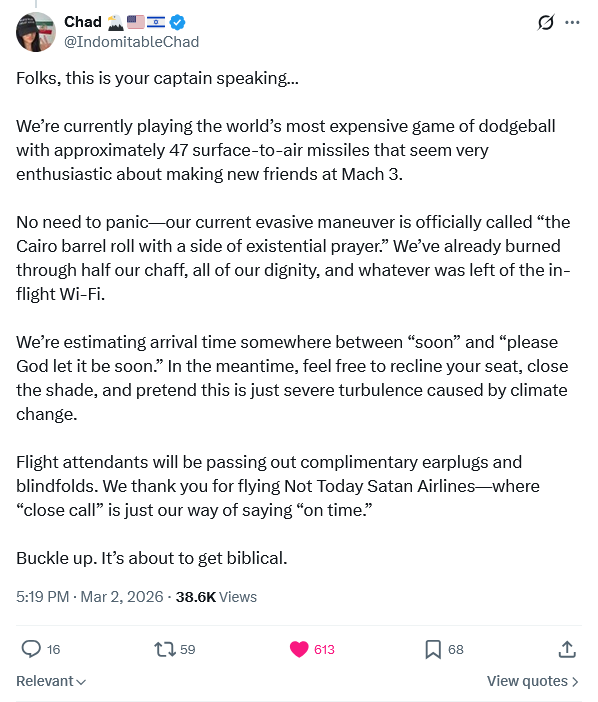
There are also those who can find the funny aspects of any serious situation:
February 10, 2026
QotD: The (historical) walls of Jericho
These strategic (and operational) considerations dictate some of the tactical realities of most sieges. The attacker’s army is generally going to be larger and stronger, typically a lot larger and stronger, because if the two sides were anywhere near parity with each other the defender would risk a battle rather than submit to a siege. Thus the main problem the attacker faces is access: if the attacker can get into the settlement, that will typically be sufficient to ensure victory.
The problem standing between that attacking army and access was, of course, walls (though as we will see, walls rarely stand alone as part of a defensive system). Even very early Neolithic settlements often show concerns for defense and signs of fortification. The oldest set of city walls belong to one of the oldest excavated cities (which should tell us how short the interval between the development of large population centers and the need to fortify those population centers was), Jericho in the West Bank. The site was inhabited beginning around 10,000 BC and the initial phase of construction on what appears to be a city wall reinforced with a defensive tower was c. 8000 BC. It is striking just how substantial the fortifications are, given how early they were constructed: initially the wall was a 3.6m stone perimeter wall, supported by a 8.5m tall tower, all in stone. That setup was eventually reinforced with a defensive ditch dug 2.7m deep and 8.2m wide cutting through the bedrock (that is a ditch even Roel Konijnendijk could be proud of!), by which point the main wall was enhanced to be some 1.5-2m thick and anywhere from 3.7-5.2m high. That is a serious wall and unlikely the first defensive system protecting the site; chances are there were older fortifications, perhaps in perishable materials, which do not survive. Simply put, no one starts by building a 4m by 2m stone wall reinforced by a massive stone tower and a huge ditch through the bedrock; clearly city walls [were] something people had already been thinking about for some time.
I want to stress just how deep into the past a site like Jericho is. At 8000 BC, Jericho’s wall and tower pre-date the earliest writing anywhere (the Kish tablet, c. 3200 BC) by c. 4,800 years. The tower of Jericho was more ancient to the Great Pyramid of Giza (c. 2600 BC), than the Great Pyramid is to us. In short, the problem of walled cities – and taking walled cities – was a very old problem, one which predated writing by thousands of years. By the time the arrival of writing allows us to see even a little more clearly, Egypt, Mesopotamia and the Levant are already filled with walled cities, often with stunningly impressive stone or brick walls. Gilgamesh (r. 2900-2700 BC) brags about the walls of Uruk in the Epic of Gilgamesh (composed c. 2100) as enclosing more than three square miles and being made of superior baked bricks (rather than inferior mudbrick); there is evidence to suggest, by the by, that the historical Gilgamesh (or Bilgames) did build Uruk’s walls and that they would have lived up to the poem’s billing. Meanwhile, in Egypt, we have artwork like the Towns Palette, which appears to commemorate the successful sieges of a number of walled towns
So a would-be agrarian conqueror in Egypt, Mesopotamia or the Levant, from well before the Bronze Age would have already had to contest with the problem of how to seize fortified towns. Of course depictions like these make it difficult to reconstruct siege tactics (the animals on the Towns Palette likely represent armies, rather than a strategy of “use a giant bird as a siege weapon”), so we’re going to jump ahead to the (Neo)Assyrian Empire (911-609 BC; note that we are jumping ahead thousands of years).
Bret Devereaux, “Collections: Fortification, Part I: The Besieger’s Playbook”, A Collection of Unmitigated Pedantry, 2021-10-29.
December 17, 2025
“The ‘liberal international order’ – a technocratic oligarchy sustained by tightly interlocked institutions”
Last week, Len D. Pozeram wrote about how the real (but mostly unacknowledged) American empire is facing unprecedented challenges and may indeed be in serious decline:
“The Empire’s Mask is Slipping”, The Libertarian Alliance
For generations, Americans were sold a saccharine myth: that our nation’s vast global presence — its military bases on every continent, its endless wars, its economic interventions — was all done in the name of “freedom” and “human rights”. This was the sales pitch. Washington, we were told, was the benevolent policeman of a dangerous world, upholding a Pax Americana designed to uplift humanity.
But for those willing to look beyond the rhetoric, the truth was never hidden — only ignored. This narrative was never more than a sophisticated marketing campaign, engineered to pacify a domestic public and legitimize imperial conquest abroad. From the very beginning, the post-WWII global order was not about freedom, but about power — and who would control it after the collapse of the old European empires.
With the fall of the British Empire, America did not merely “step up” to defend the West — it seized control of the imperial machinery and rebranded it. The British financial aristocracy gave way to a new though related American elite, its nucleus formed around Wall Street banks, the military-industrial complex, Big Oil cartels, and, increasingly, a rising Zionist lobby with ambitions stretching far beyond Tel Aviv.
Under the guise of “containing communism” or “defending democracy”, this new managerial class waged a quiet war against genuine national independence movements across the globe. Countries seeking to control their own resources, chart their own destinies, or resist Western financial domination were systematically targeted for destabilization or outright annihilation.
Guatemala in 1954. Iran in 1953. Indonesia in 1965. The Congo. Chile. Nicaragua. Greece. Even Australia, whose 1975 constitutional crisis remains a textbook case of covert Anglo-American regime change. The public, of course, was kept in the dark. History books were rewritten. Journalists who strayed from the script were destroyed or silenced. CIA fingerprints are now visible in dozens of these cases — operations sanctioned not to spread freedom, but to preserve a system of elite extraction and control.
This system — often referred to in polite company as the “liberal international order” — is, in fact, a technocratic oligarchy. It is sustained by tightly interlocked institutions: the Federal Reserve, the IMF, the World Bank, NATO, and a sprawling Intelligence Community whose true loyalties lie not with the American public, but with transnational networks of finance, energy, and geopolitical strategy. To the extent that ideology plays a role, it is the convergence of evangelical apocalypticism and messianic Zionism — two religious currents that have dangerously informed U.S. foreign policy since the Reagan era.
Yet today, this system is beginning to eat itself. The ideology of endless war, and top-down control has run up against hard limits: financial, and political. The de-dollarization trend in the Global South, the rise of multipolar alliances like BRICS, and the exposure of elite criminality — from Epstein to the endless intelligence scandals — are all symptoms of imperial overstretch and rot.
We are watching the slow collapse of an empire built not on democratic values but on lies, coercion, and institutionalized greed.
From a slightly different viewpoint, Spaceman Spiff maintains that the narratives that have been used to direct and control political thought in the west are in the process of collapsing:
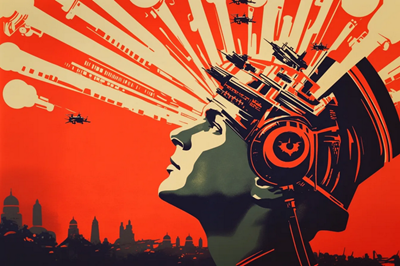
Image from Postcards from the Abyss
As reality intrudes the naivety behind many sacred cows is exposed. The emperor is naked and his supporters look equally naked. The narratives driving their fantasies are failing.
The big three issues common in the West illustrate why people are noticing.
Diversity and immigration
The promotion of diversity as a strength is a consequence of blank slate thinking, a belief disparate populations are substantially the same with most observable differences due to environment only.
This is at odds with what we observe, the significant range in ability and proficiency between distinct groups that becomes apparent when we interact. So artificial variety is sold as a positive in an attempt to downplay the homogeneity that gets better results.
The consequence of this is quotas, where arbitrary rules are enforced to ensure a diverse outcome.
This destroys competency even if we ignore the potential for conflict when foreigners are imported in large numbers.
The main effect of pushing this absurd policy seems to be the rise of ethnic awareness among those who must step aside to accommodate it. How could it not? When people are excluded because of their ethnicity it becomes important to them.
This is not what advocates of diversity intended but is already happening.
Climate
Climate and energy policy is based on anti-scientific magical thinking. With the current emphasis on carbon dioxide we are told a tiny portion of our atmosphere is responsible for most of the future changes that will cause widespread harm. There is no evidence for such claims.
The reality of climate is different from the narrative. It is resilient, as many things are. Our obsession is arrogance. A belief we matter more than we do.
Intellectuals are prone to get lost in their theories of how the world ought to work. Activists then latch on to their utopian ideas to gain some sense of meaning in their lives.
Society also has people lacking conscience who will profit from anything no matter how much damage it causes. Combining these two, dreamers with schemers, is often lethal. Seemingly opposing forces, left-wing activists and capitalist profiteers, can cooperate even if they embrace distinct beliefs.
As many memes remind us, if you have corporate sponsorship you are not the resistance. This is precisely what we see.
Narratives begin to collapse as we witness ruthless corporations promote feelgood nonsense about climate while fleecing taxpayers in the background. Many are noticing.
And the effects of suicidal climate goals are difficult to hide. Every closed factory or power station kills another element of credibility.
Socialism
Socialism is based on the idea an educated elite can make decisions for us all while simultaneously conditioning us to be better versions of ourselves. It ignores all of history and everything we have learned of human psychology to embrace a literal fantasy utopia that no one has even come close to realizing.
Nothing sums up the bankruptcy of our intellectuals more than their inability to reject this failed ideology.
But it also shows us the Anglo-Saxon instinct to restrict others’ control over us is the only way to counter it.
It teaches us of the wisdom of documents like Magna Carta or the Bill of Rights, designed to constrain the powerful regardless of their motives, ambitions or mental state. Rare moments of historical sanity that remind us what effective countermeasures can look like.
It would seem this lesson must be relearned every few generations. But we are learning it. Real life is reminding us why we must limit government and its agents no matter how inconvenient.
Bad ideas are inevitable. It is the ability of activists and the powerful to enact them many are now waking up to as narratives visibly fail.
October 30, 2025
Arab-Israeli War, 1973 (Yom Kippur War)
Real Time History
Published 6 Jun 2025On October 6, 1973, Israelis celebrating the holiday of Yom Kippur are shocked by news of a mass two front attack in the Sinai and Golan Heights. Egypt and Syria, two nations still reeling from their humiliating defeat by Israel in 1967, smash through Israeli defenses.
(more…)
October 28, 2025
The End of European Superpowers? The Suez Crisis – W2W 050
TimeGhost History
Published 26 Oct 2025Egypt nationalizes the Suez Canal, Israel strikes under a secret Sèvres pact, and Britain and France launch Operation Musketeer, only to meet U.S. and UN pressure that forces a ceasefire at midnight.
UN peacekeeping is born, Nasser’s stature soars, and Eden’s government collapses as Suez ends the illusion of old imperial power.
(more…)
October 20, 2025
Carney’s trip to Egypt, without the pesky Canadian media tagging along
I guess it’s slightly to Prime Minister Mark Carney’s credit that he was able to get a last-second invitation to attend President Trump’s latest international triumph … we all know how Mr. Carney loves him a nice photo op. But it was almost unprecedented that he nipped over to Egypt without taking any of the usual flappers and fart-catchers of the Canadian media along with him:
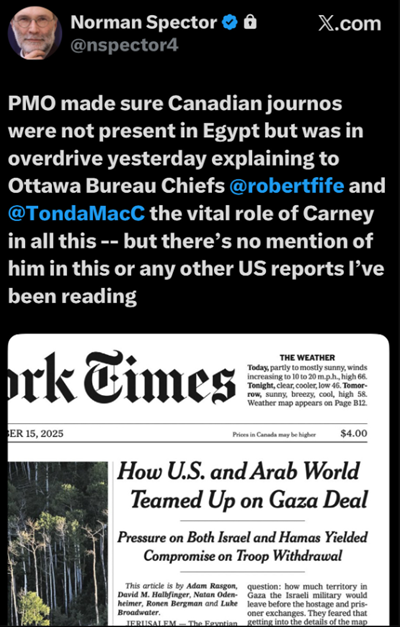
X-post by former PMO chief of staff Norman Spector, who noticed something was up concerning how the Prime Minister’s team got its message out
Image and caption from The Rewrite by Peter Menzies
Last week, the Parliamentary Press Gallery (PPG) and I had something in common.
We were both dismayed.
They, because they weren’t invited to join Prime Minister Carney on his last-minute trip to Egypt for a photo opp; Me because most of them didn’t seem all that interested in looking into the circumstances of the PM’s hasty departure and instead allowed themselves to be played in the most appallingly obvious manner.
What got the PPG’s knickers twisted was that they weren’t invited to accompany Carney when he departed Ottawa in a rush to get to the Egyptian resort of Sharm El Sheikh, a popular spot on the Red Sea for the world’s glitterati. It took PPG President Mia Rabson a couple of days to issue a statement, but she made it clear the PPG disapproved:
The Parliamentary Press Gallery was not informed in advance of the Prime Minister’s trip to Egypt to participate in the Middle East Peace Ceremony on Oct. 12-13, […] The Gallery is disappointed and dismayed at the exclusion of Canadian media from the event and expresses in no uncertain terms that this must never happen again.
It is unprecedented that Canadian media be entirely excluded from a Canadian prime minister’s foreign trip.
The only reporting I could find on this was in Politico, where it was recorded that the PMO had posted this notice: “6:30 p.m. The Prime Minister will depart for Sharm el-Sheikh, Egypt, to attend the signing of a Middle East peace plan. Closed to media.”
What first caused my jaw to drop and to become, like Rabin, disappointed and dismayed, were the stories left unpursued. On the morning of Oct. 12, Canada was not listed as among the countries invited to join in the “peace summit” associated with the ceasefire deal reached between Israel and Hamas. If it had been, the prime minister may not have had to charter a private jet because the usual Royal Canadian Air Force planes and crews were, as City News‘s Glen MacGregor reported, unavailable.
There are two lines of journalistic inquiry there, neither of which appears to have been of interest. The first is: how can Canada’s military be so poorly equipped that there isn’t at all times a fully-equipped aircraft and crew on standby and is this an issue that will be addressed in the future? The second is: how did we wind up getting invited to the peace summit? Comments by US President Donald Trump indicate that we weren’t initially considered important enough to be on site but phoned to ask if we could join the party. (The Line — which doesn’t accept government subsidies — noticed.)
Trump, in remarks to media said: “You have Canada. That’s so great to have, in fact. The president called and he wanted to know if it’s worth — well he knew exactly what it is. He knew the importance. Where’s Canada, by the way? Where are you? He knew the importance of this.”
What was pursued, at least in comments online by journalists, was Trump’s inability to identify Carney by his correct title. (In an exchange that followed, Carney sarcastically thanked Trump for elevating him and, in response, was told “at least I didn’t call you governor”. Ha ha.)
Everyone is free to make their own decisions, but if Canada had to call Trump to ask to be invited, Canadians need to know if that means we are in the president’s debt. Trump, after all, seems like the sort of guy who keeps score.
But it’s what followed that really got creepy. While Canadian reporters were not allowed to accompany the prime minister to Egypt, someone who says he or she was on the plane started phoning around to tell reporters what happened. And they went for it. The Globe and Mail, Toronto Star and Politico all reported unverified statements emanating from a single, unnamed source. The Globe‘s Robert Fife reported that “a senior government official” said that while Carney and others thought they were just in Egypt for a photo opp, during a four hour wait for Trump to arrive from Israel “Mr. Carney had back-and-forth conversations with a group of leaders”.
So, after a bit of ritual humiliation — par for the course with Trump and Carney — the PM got to have unstructured/unfocused chit-chat with other diplomatic rag-tag and bob-tail clinging to the President’s cape. Not a good look, but Canadians must be getting inured to their national leaders being treated as, at best, an afterthought.
August 12, 2025
Negev 7: Israeli Scales up to a 7.62 NATO Machine Gun
Forgotten Weapons
Published 31 Mar 2025The Israeli Negev machine gun had a rather long development cycle, beginning in 1985 but not seeing final completion and issue until 1997. Once on the market, it proved to be a pretty successful weapon, used by the Israeli military and also a number of export client around the world. In 2012, IMI released an improved newer version, the Negev 7. This was made exclusively as a 7.62mm NATO caliber gun, as opposed to the original Negev which was only made in 5.56mm NATO.
(more…)
August 2, 2025
Canada’s PM “… has a job which, like that of most politicians, requires low intelligence and moral vacuousness”
At Essays in Idleness, David Warren explains why Canadian political leadership is so desperately uninspiring … except to our enemies and ill-wishers:
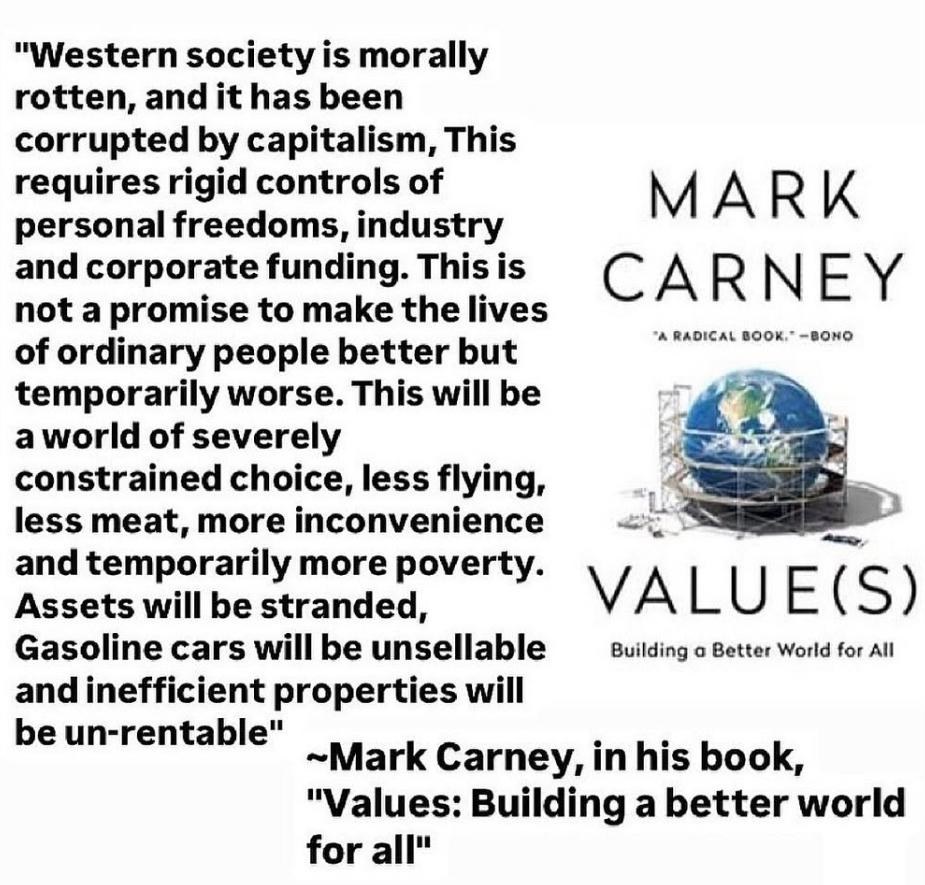
The Canadian prime minister — currently Mr Mark Carney — has a job which, like that of most politicians, requires low intelligence and moral vacuousness. At his cleverest he may exhibit a species of rat cunning. His views on Israel and the Middle East are quite uninteresting, for no rat cunning is required. He simply observes that an anti-Semitic policy is necessary, now that Muslim immigration exceeds the Jewish vote.
Not one good thing has come out of the Liberal Party since Louis St-Laurent was defeated in 1957. He, at least, achieved mediocrity. But what can we do? Canada’s population is one with the Liberals.
What happened on October 7th, 2023 — the slaughter of huge numbers of mostly unarmed Jews when Palestinians got outside the Gaza perimeter — can happen again and again. It will happen as long as Palestinians are, from childhood, taught or brainwashed to kill Jews throughout their education and social systems. I also protest against the disproportionate Israeli response. I think the Israelis have been much too restrained.
My model for “Palestine” would be Germany, or Japan. These formerly vicious nations became harmlessly bourgeois after they unconditionally surrendered to the United States and allies. It is ludicrous to think we should have offered them a peace deal, instead.
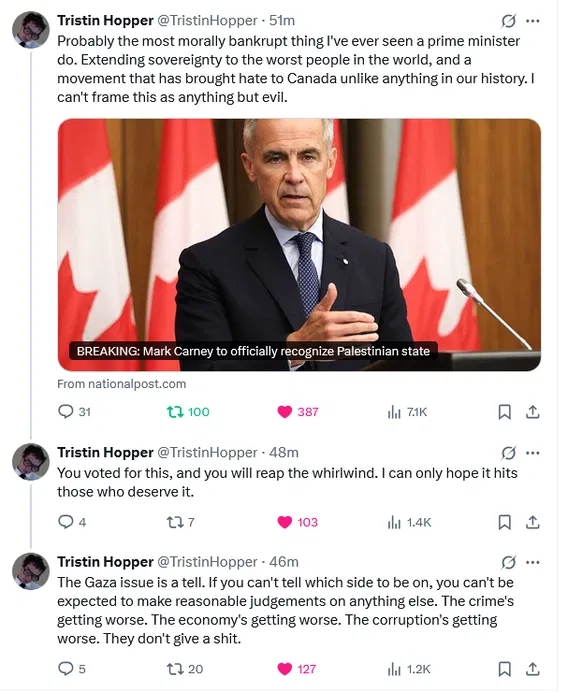
Damian Penny points out the sad truth that we get more obstinate even in support of a terrible idea when someone tries to bully us out of it:
… I find myself torn between being frustrated with my own government and simultaneously outraged by another government trying to bully us out of a policy decision with which I disagree.
I don’t expect most other Canadians to feel so conflicted, however. Trump may not realize it (nor care one bit even if he does understand it) but he just made it more likely that Canadian voters will rally around the flag.
This flag, specifically.
Nothing, and I mean nothing, has the motivational power of your opponent pushing back against you. That social media has given us a new and effective way to yell at and insult each other across partisan lines is part of the reason partisanship has become so much more entrenched in recent years.
And that includes me. During the last election campaign it was when I argued with Liberals on Facebook that I found myself feeling less like a Conservative voter and more like a Conservative militant, and my sparring partners likely felt the same way, only in the opposite direction.
Now, replace political partisanship with nationalism, and the effect becomes that much stronger.
Of course, hardcore supporters of either side won’t be moved. (That Carney is placing any conditions at all on Palestinian statehood, and saying a two-state solution remains the ultimate goal, makes him a filthy Zionist genocidaire as far as that crowd is concerned.) But sometimes it’s easy to forget that most people simply don’t pay as much attention to, and aren’t nearly as emotionally invested in, this conflict as much as we very online types are.

July 25, 2025
The ongoing conflict in Gaza
On his Substack, John Spencer responds to a New York Times op-ed that claims Israeli forces in Gaza are engaged in genocide:
In his New York Times op-ed titled “I’m a Genocide Scholar. I Know It When I See It“, Omer Bartov accused Israel of committing genocide in Gaza. As a professor of genocide studies, he should know better. Genocide is not defined by a few comments taken out of context, by estimates of casualties or destruction, or by how war looks in headlines or on social media. It is defined by specific intent to destroy a national, ethnic, racial, or religious group in whole or in part. That is a high legal bar. Bartov did not meet it. He did not even try.
I am not a lawyer or a political activist. I am a war expert. I have led soldiers in combat. I have trained military units in urban warfare for decades and studied and taught military history, strategy, and the laws of war for years. Since October 7, I have been to Gaza four times embedded with the Israel Defense Forces. I have interviewed the Prime Minister of Israel, the Defense Minister, the IDF Chief of Staff, Southern Command leadership, and dozens of commanders and soldiers on the front lines. I have reviewed their orders, watched their targeting process, and seen soldiers take real risks to avoid harming civilians. Nothing I have seen or studied resembles genocide or genocidal intent.
Bartov claims that five statements by Israeli leaders prove genocidal intent. He begins with Prime Minister Netanyahu’s comment on October 7 that Hamas would “pay a huge price”. That is not a call for genocide. It is what any leader would say after the worst terrorist attack in the nation’s history. He also cites Netanyahu’s statements that Hamas would be destroyed and that civilians should evacuate combat zones. That is not evidence of a desire to destroy a people. It is what professional militaries do when fighting an enemy that hides among civilians.
Bartov presents Netanyahu’s reference to “remember Amalek” as a smoking gun. But this is a phrase from Jewish history and tradition. It is engraved at Israel’s Holocaust memorial, Yad Vashem, and also appears on the Holocaust memorial in The Hague. In both places, it serves as a warning to remain vigilant against threats, not as a call for mass killing.
He also highlights Defense Minister Gallant’s use of the term “human animals” to describe Hamas fighters. That is not a war crime. After the slaughter, rape, and kidnapping of civilians on October 7, many would understand or even share that reaction.
Unable to find intent among those actually directing the war, Bartov turns to far-right politicians like Bezalel Smotrich and Nissim Vaturi. These individuals do not command troops, issue orders, or shape battlefield decisions. I have studied the actual orders. They focus on destroying Hamas, rescuing hostages, and protecting civilians whenever possible. Their rhetoric is irrelevant to the legal case.
Israel has taken extraordinary steps to limit civilian harm. It warns before attacks using text messages, phone calls, leaflets, and broadcasts. It opens safe corridors and pauses operations so civilians can leave combat areas. It tracks civilian presence down to the building level. I have seen missions delayed or canceled because children were nearby. I have seen Israeli troops come under fire and still be ordered not to shoot back because civilians might be harmed.
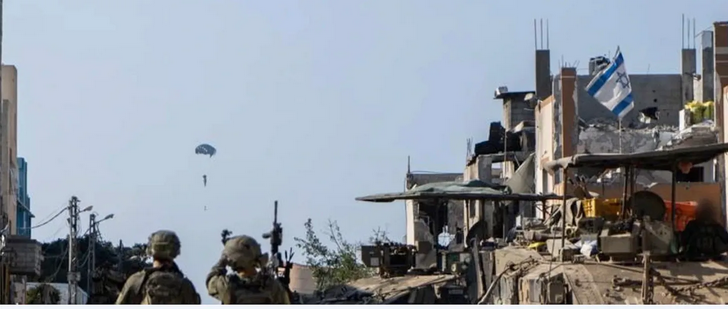
Israel has delivered more humanitarian aid to Gaza than any military in history has provided to an enemy population during wartime. More than 94,000 trucks carrying over 1.8 million tons of aid have entered the territory. Israel has supported hospitals, repaired water pipelines, increased access to clean water, and enabled over 36,000 patients to leave Gaza for treatment abroad.


