
seangabb
Published 29 Mar 2026Greece: A Brief History, c.700 BC – 500 AD
How did the Greeks recover from what looked like total defeat? In this lecture, we pick up the story at the darkest moment of the Persian invasion. Athens has fallen. The Acropolis has been burned. Xerxes appears on the verge of total victory. And yet, the Greek resistance does not collapse.
We examine the extraordinary political and strategic crisis of 480 BC, including:
– The evacuation of Athens and the transformation of the city into a “nation at sea”
– The internal divisions within the Greek alliance
– Spartan reluctance to defend central Greece
– The decisive leadership of Themistocles
– The strategic importance of naval powerAt the centre of this lecture is the question of strategy: should the Greeks abandon the north and defend the Peloponnese, or risk everything in a naval battle at Salamis?
This is the turning point of the war — not yet a victory, but the moment at which survival becomes possible.
August 30, 2026
The Ancient Greeks 05 – The Greeks Fight Back 1 – The Way to Salamis
August 28, 2026
“The Maple Mujaheddin Insurgency is not going to happen”
Of all the potential military conflicts facing the west, a US invasion of Canada has to be among the least likely — not just because it’s been attempted more than once in the past. For one thing, I don’t think even the best social media posting is going to bring ordinary Americans around to getting boots on the ground across the 49th parallel … there’s remarkably little passion about seizing our maple syrup and confiscating our strategic reserves of poutine among voters. Unlike places that Americans have strong feelings about, Canada just doesn’t move the needle.
The Operational Art of War has the first of a promised three-part series on Operation Maple Stomp, the biggest and best invasion of Canada — everyone says so:
In the latest round of “let’s do everything the dumbest way possible” the two nations in the world sharing the most in common keep taking to social media to fantasize going to war with each other.
It is deeply annoying, brings out the worst tendencies on both sides, and (to my mind worst of all) illustrates no one understands the Operational Art of War!
Americans take to social media and claim Canada doesn’t have a military, the military wouldn’t fight and be so outnumbered that resistance would collapse within hours.
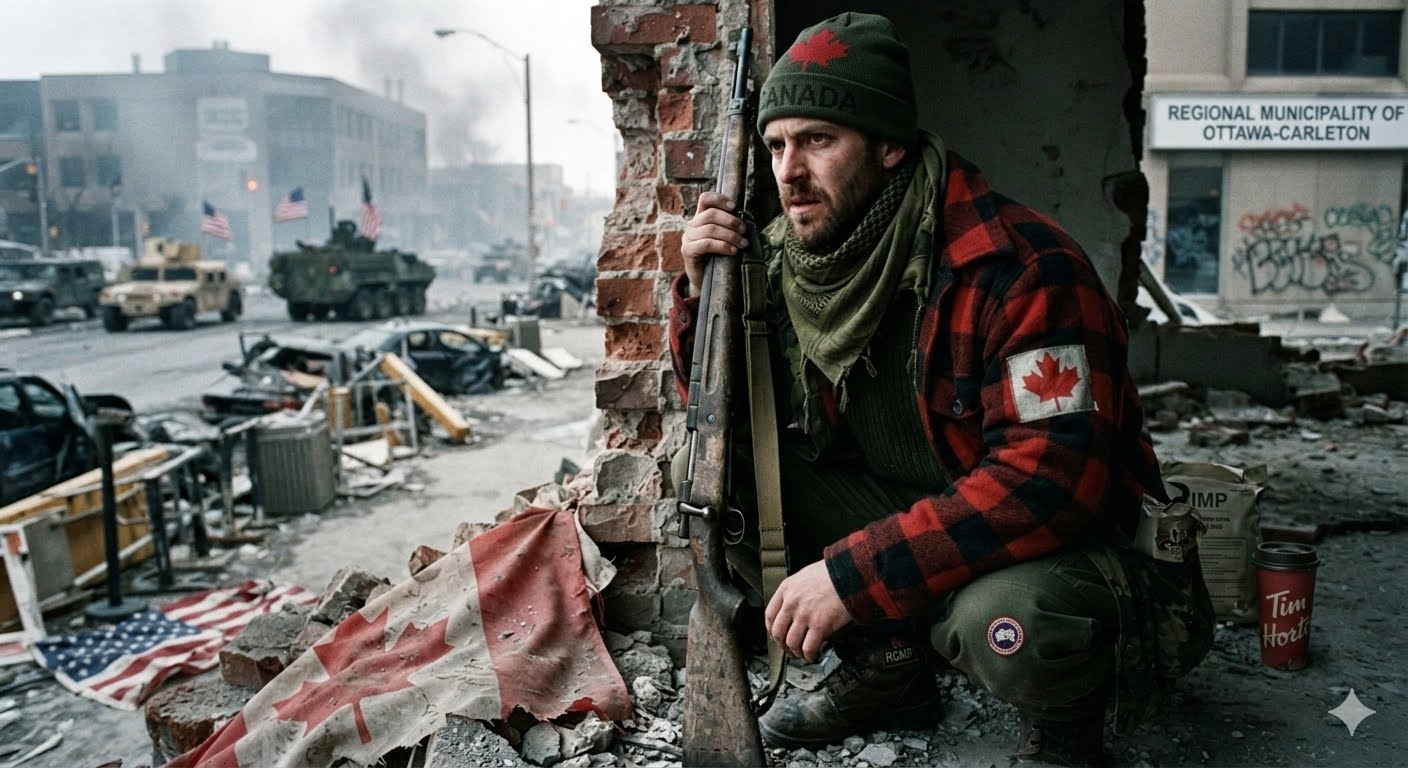
Canadians usually agree the conventional war would be over in an afternoon, but then America would face a long and bloody insurgency (just wait till Uncle Sam meets the Maple Mujahedeen!).
Google AI’s idea of what a Canadian Insurgent looks like.
You can definitely count me as a member of Team Mere-matter-of-marching, at least as far as the tactical operations necessary to occupy the most populous parts of Soviet Canuckistan. Here’s a sketch map that Big Serge updated for the 2020s, based on the mid-1930s details for an attack on southern Ontario from War Plan Red:
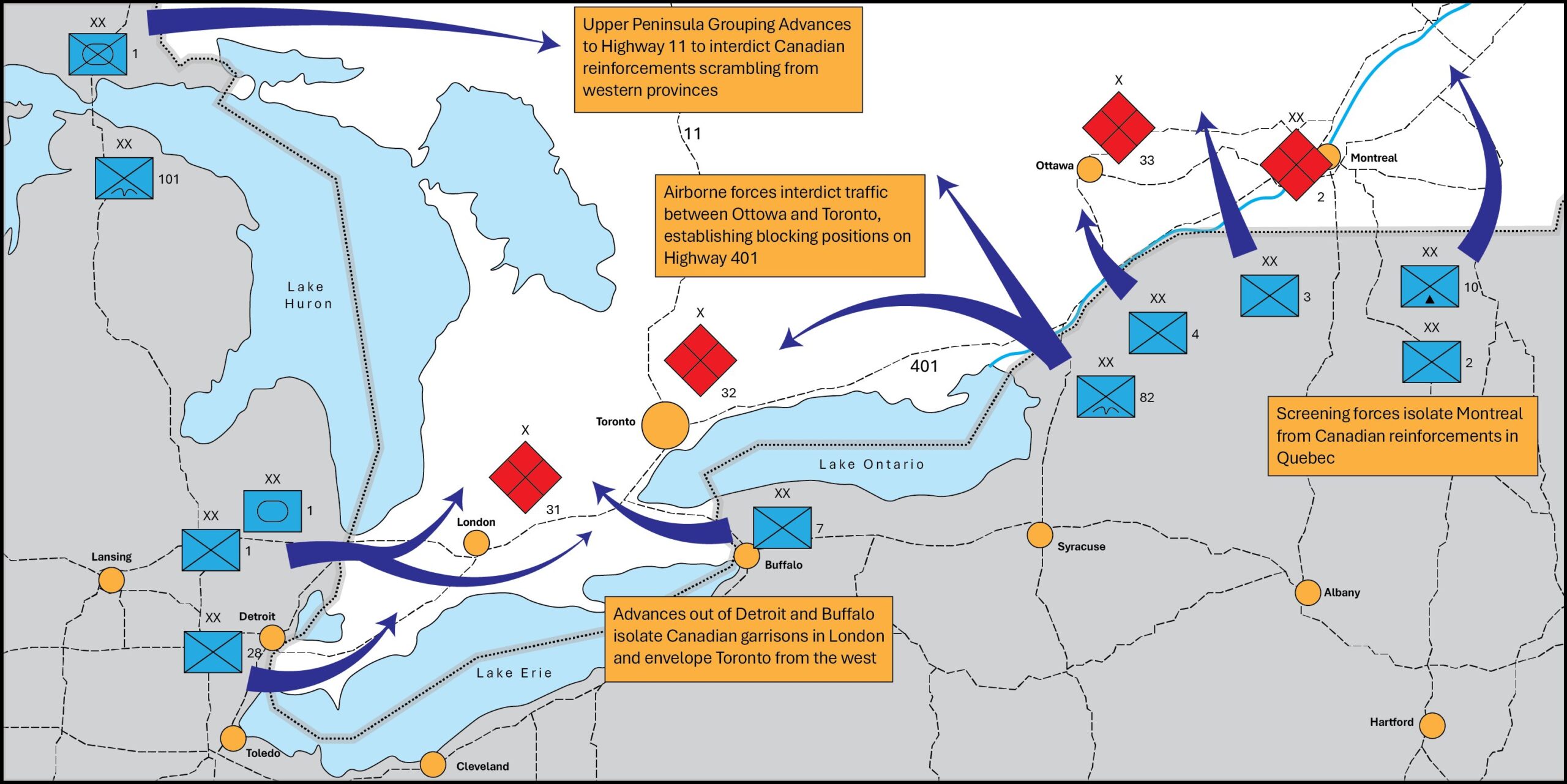
Manifest Destiny, 2025? Big Serge’s updated map for the old US War Plan Red for a military invasion of Canada.
The distances are short enough and the chances of significant military resistance low enough, that US Army vehicles would probably not need to refuel before reaching the initial stop-lines for their advance. Canadian infrastructure is not pre-wired for destruction, so unless local hotheads manage to temporarily block road bridges, volume of traffic will be a bigger friction factor than actual defensive fire.
Trump’s legions would reap the benefit of more than a century of demilitarized populations and the (small, but real) Canadian military being oriented to expeditionary operations rather than home defence. But taking the territory is only the first step. There are Canadians scattered throughout the continental United States, looking and sounding pretty much like any other American, and it wouldn’t take too many of them to decide that Trump’s fight was also their fight. Canada isn’t the only one enjoying the benefits of decades of lack-of-worry about homeland defence. Look how exposed the US has been to Islamic terrorists who, for the most part, don’t look or sound like Americans and still managed to pull off one of the greatest terror attacks of the modern age.
I mean, don’t misread what I’m saying here: the US would win. That’s not even remotely in doubt. There are at least ten of you for every one of us, and more of you have military training and access to personal weapons. (One wonders if the Canadian government’s fanatic devotion to civil disarmament is a kind of pre-surrender to this imagined US invasion we’re discussing …)
But the cost of winning might be more than even the most government-worshipping progressive might be willing to pay. We look like you. With a few exceptions (French-speaking Quebecers and Newfoundland-speaking Newfoundlanders, mostly), we fit in very well with you. We come from very, very similar cultures (some like Vancouver vlogger J.J. McCulloch argue it’s the same culture). Rather than a war of conquest, this would be much more like that “Second Civil War” that’s been so much a topic of conversation on far left and far right social media. The kind of civil war that takes far too long to settle back into peaceful co-existence.
You don’t like government surveillance? Too bad, bucky, because every level of government is going to be eager to ensure that you’re a good, loyal American … at all hours of the day and in everything you do. Cut down a Flock camera? That’s not going to be a mere vandalism issue … that’s tantamount to treason. What if that Flock camera was watching one of those undercover Canucki guerilla fighters?
Don’t like the feds watching every financial transaction? Too bad, bucky, ’cause you giving $5 to that sketchy Canuck for some bootleg maple syrup might be funding a terror attack on your nearest USAF base.
To fight the threat of Canuck infiltration, your every car trip will need to be logged, and your patterns of travel will need to be recorded and analyzed. Who you talk to will also need to be observed, in case one of your buddies is a covert maple-slurping spy!
Oh, wait, there’s more from the Operational Art of War:
There Won’t Be a Maple Mujahadeen
If the United States annexes Canada, there will not be a long-standing violent insurrection by a nation of hunters. The Maple Mujahadeen isn’t going to happen.
A successful insurgency has several requirements:
- A pre-existing structure to organize around;
- The structure having access to weapons;
- The insurgent group not having a future in the new regime; and
- The broader population being willing to shelter the insurgency.
Canada does have factions that meet all four of these factors, but spread across different factions. Like any complex modern society, Canada does have pre-existing structures of voluntary organizations. Virtually none of them are organized around any kind of collective defense or skills that easily translate to an insurgency.
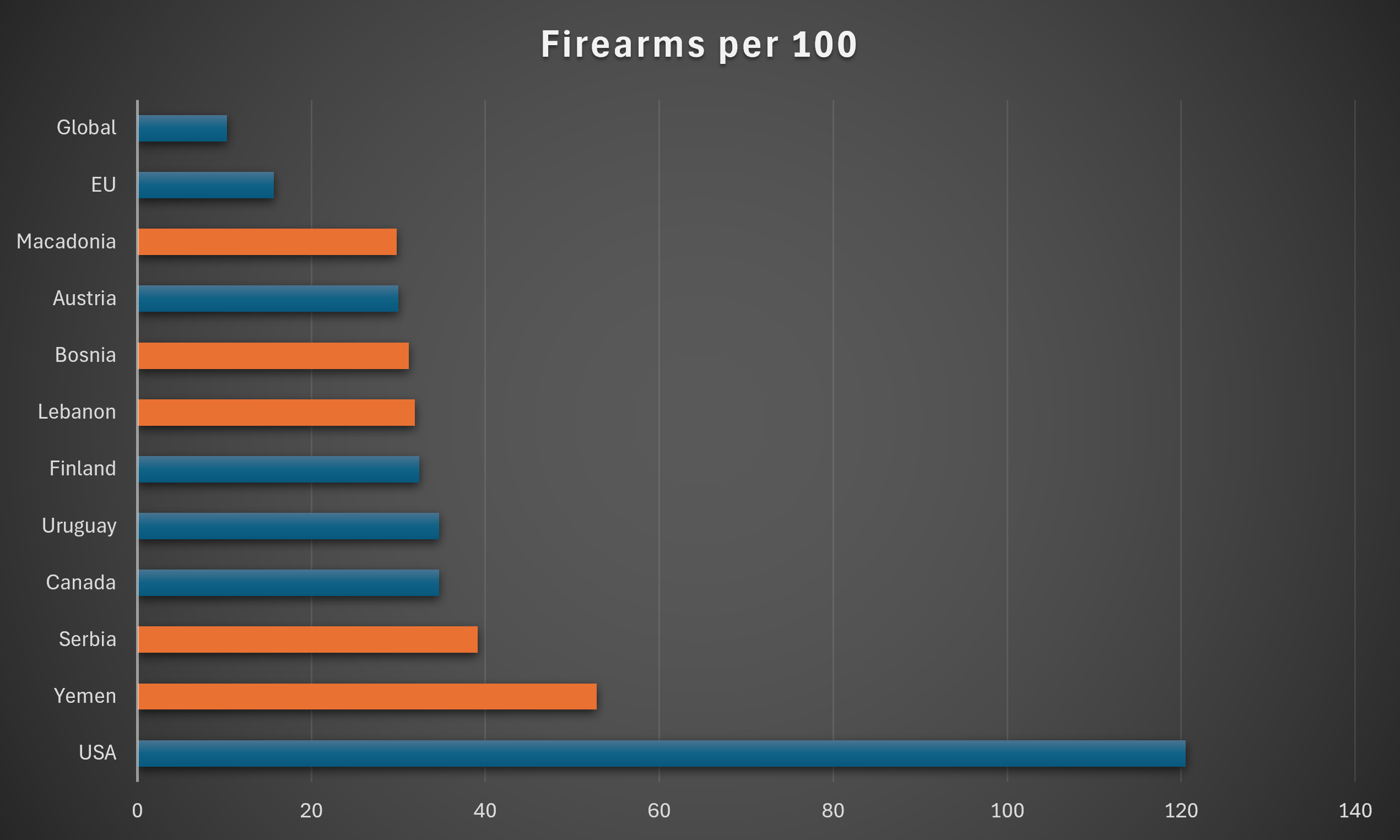
For #2 (access to weapons) you either need armed citizens, government weapons cashes or weapons brought in by a rival power supporting the insurgency. In Canada’s case, the only viable supply of weapons for an insurgency is its armed citizens. As with most statistics, Canada only looks like a gun free country because it’s beside America.
The graph below shows the top 10 countries for estimated firearms per 100 people, plus the EU and global average for comparison (excluding countries with a population under one million). Countries that were recently warzones are in orange, as their rate of firearm ownership is something of a special case.
The number for Canada is likely too low. This is based on a 2017 data set, and firearm ownership is growing faster than the population. It also assumes there are five unregistered firearms to every registered firearm in Canada. The last time Canada had hard data on unregistered firearms (2003 to 2012) the ratio was 10:1. Assuming a similar ratio today, firearms per 100 jumps to 1/2 that of America and nearly 4x the European average.
August 26, 2026
Who Destroyed the Japanese Economy in WW2?
Real Time History
Published 20 Mar 2026As the war in the Pacific develops, the United States takes the fight to Japan itself – by crippling its economy, destroying its industry, and crushing civilian morale. To do this, American submarines and heavy bombers wage campaigns beneath the sea and above the clouds. And even 80 years later, there’s a fierce debate about which of these campaigns did more to bring Japan to its knees – perhaps even more than the atomic bombs.
(more…)
August 25, 2026
The new missile gap – between manufacture and deployment
Edward Luttwak offers some suggestions to help explain why the vast and lavishly funded US Military-Industrial Complex seems incapable of manufacturing enough weapons to allow the US military to fight more than a brief demonstration war before running short of the things that go boom:
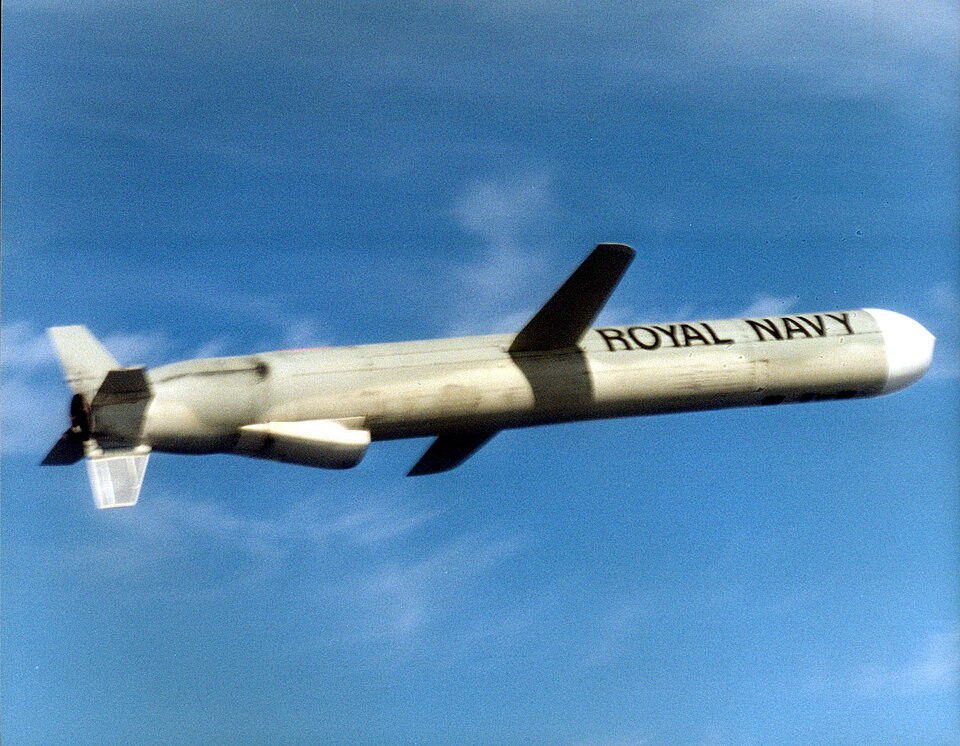
Royal Navy Tomahawk Land Attack Missile (TLAM) in flight.
MOD photo via Wikimedia Commons.
It is a strange thing indeed that among the countless stories about America’s shortage of long-range weapons — a truly crippling scarcity that now both limits President Trump’s strike options against the Islamic Republic, and might weaken responses to other looming threats — I have not found one that raises the most elementary question of all: why?
Why was Iran attacked with scarce and expensive BGM-109 Tomahawk Land Attack Missiles — costing around $3 million each — rather than ordinary gravity bombs dropped by fighter-bombers? Accuracy cannot be the answer: with so-called “JDAM” guidance kits, regular bombs become very accurate indeed, and they are still simple enough to be mass-produced cheaply.
Nevertheless, US forces had launched 850 Tomahawk missiles against Iran by 27 March this year, amounting to almost half the country’s global stockpile, though the Pentagon has since announced a huge $22.9 billion contract for more Tomahawks. Air-launched AGM-158 missiles, some of whose models can fly up to 1,000 miles, and which cost as much as $1.6 million apiece, were also used, along with Army’s Precision Strike Missiles are yet more expensive.
What makes these missiles so costly is their great virtue: they are all so-called “stand-off” weapons, which can safely be launched hundreds of miles from their targets. This means an attacker’s aircraft can remain outside enemy air space, where they could be exposed to detection by radars, and then to interception by air-defence fighters and surface-to-air missiles. There is simply no way of producing such missiles cheaply. They need powerful rocket propulsion and complicated electronic guidance to fly such vast distances and hit their targets successfully.
[…]
Nor, of course, are the implications here limited to Iran and the Gulf. Having needlessly used so many stand-off missiles to target Iran, US inventories are worryingly low in the event of the “Chinese contingency”: the invasion of Taiwan that Xi Jinping, unlike his predecessors, refuses to rule out. Any Chinese assault might start with subversion, with the activation of Chinese agents in Taiwan’s armed forces, but amphibious landings would have to follow — against which Tomahawk missiles would be the prime US weapon, alongside local anti-ship missiles.
But having examined all these technical details, we nonetheless arrive at something else entirely, a much more intractable problem than any munitions shortage could ever be: a fundamental change in the entire American attitude to war, which I described as “post-heroic” as far back as the Nineties when its first signs emerged.
This amounts to a truly drastic shift. What started with a proper striving to limit the casualties of war by every means possible — starting with prudent statecraft to avoid war in the first place, and extending to prudent tactics — has now devolved into the current predicament: whereby the US must spend billions on extremely elaborate stand-off missiles so as to further reduce risks to its pilots, which were already very low to begin with, against the vainglorious and incompetent Iranian enemy.
Of course, it’s always a possible explanation that the big defence contractors felt the need for another boost in their income, so it wouldn’t take much to persuade friends in the War Department or in the US Navy to toss a few more TLAMs at Iranian positions …
The Halftrack That Made Blitzkrieg Possible
World War Two
Published 23 Aug, 2026The tanks get the glory. But Blitzkrieg could not work on tanks alone.
The Sd.Kfz. 251 was designed to solve one of the fundamental problems of armored warfare: how do you keep infantry moving fast enough to fight alongside the Panzers? Germany’s answer was an armored half-track that helped turn infantry from a slow-moving follow-up force into an integral part of the Panzer division’s combined-arms assault.
In this German Rearmament special, we trace the Sd.Kfz. 251 from clandestine development under the restrictions of the Treaty of Versailles to its first production runs on the eve of World War Two. We examine its design, its role in the emerging doctrine of Bewegungskrieg, its deployment in Poland and France, and the extraordinary range of variants that turned it into one of the Wehrmacht’s most versatile vehicles.
But the 251 also exposes the limits behind the image of a fully mechanized German war machine. It was complicated and expensive to manufacture, there were never enough of them, and most German infantry continued to march or rely on horses and trucks. Even as production soared later in the war, Germany’s shortages of fuel, materials, manpower, and industrial capacity increasingly overwhelmed the advantages its engineers and tacticians had created.
The Sd.Kfz. 251 helped make the early German style of armored warfare possible. It also became another example of a sophisticated weapon system serving a war of aggression that Nazi Germany ultimately lacked the resources to sustain.
This is the story of the half-track that made Blitzkrieg possible.
Never Forget.
August 24, 2026
The Ancient Greeks 04 – The Persian Invasion 4 – The Fall of Athens
seangabb
Published 26 Mar 2026Greece: A Brief History, c.700 BC – 500 AD
What happens when resistance fails?
In this lecture, we examine the dramatic collapse of Greek resistance after Thermopylae and the advance of the Persian army into central Greece. With the Spartan force destroyed, the road to Athens lay open.
We explore:
– The consequences of Thermopylae
– The evacuation of Athens under Themistocles
– The Persian capture and destruction of the city
– The psychological and strategic impact on the Greek world
– Why, at this moment, Persian victory seemed inevitableThis is the darkest point of the war for the Greeks — a moment when everything appears lost, and yet the story is far from over.
August 23, 2026
Why This “Foreign” Commonwealth Truck Was Built In 800,000 Units And Supplied Every Front
BritishWarLegends and BritishWarArmory
Published 31 Mar 2026The Canadian Military Pattern truck was built by two rival factories in Ontario for a nation of eleven million people. It ended up supplying the British Eighth Army across North Africa, Italy, Normandy, and Burma — and Canada built more of them than Germany, Italy, and Japan built trucks combined.
Almost nobody knows it existed.
When Rommel captured two thousand of them at Tobruk in 1942, he didn’t scrap them. The Afrika Korps pressed them straight into active German service. An enemy with his own purpose-built military trucks chose to keep using captured Canadian vehicles instead.
The full forgotten story.
Update: I generally try to avoid watching or re-posting clearly AI-generated slop, but this was the first video I’d encountered discussing the hundreds of thousands of CMP trucks that Canada built during WW2. At some point between me scheduling the video and today, the channel has been banned. You’ve undoubtedly seen CMP vehicles in WW2 stills or movie footage, as they’re pretty distinctive – https://en.wikipedia.org/wiki/Canadian_Military_Pattern_truck
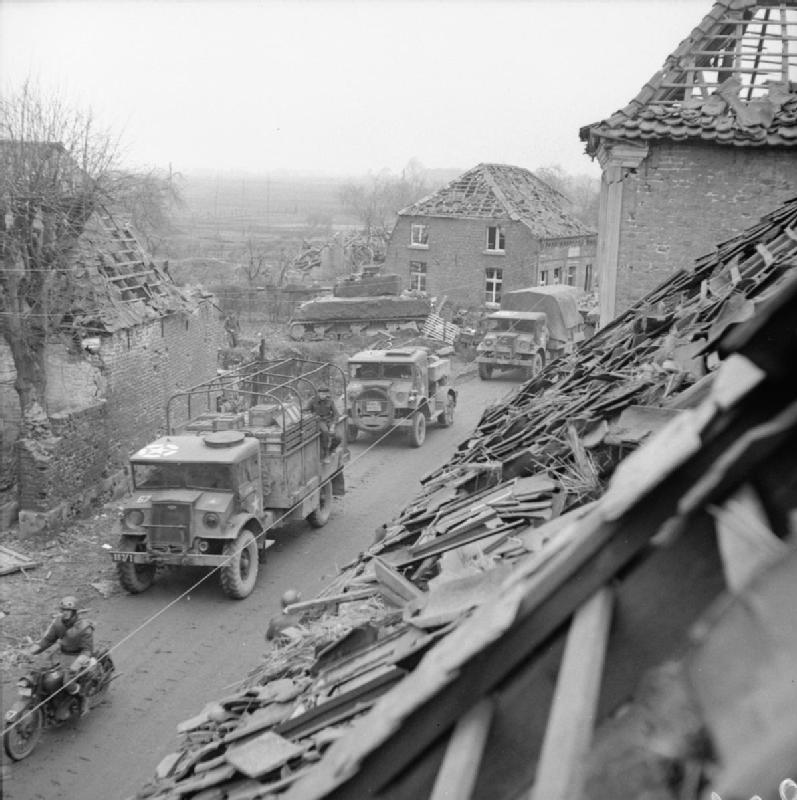
From The British Army in North-west Europe 1944-45,
CMP lorries passing through Uedem, 2 March 1945.
Photo by Carpenter (Sgt), No 5 Army Film & Photographic Unit, Photograph B 14966 from the Imperial War Museums via Wikimedia Commons.
August 20, 2026
The Ancient Greeks 04 – The Persian Invasion 3 – The Road to Thermopylae
seangabb
Published 25 Mar 2026Greece: A Brief History, c.700 BC – 500 AD
Why did the Greeks resist — and how did they organise their defence?
In this lecture, we follow the formation of the Greek coalition against Persia and the strategic decisions that led to the famous stand at Thermopylae. Against overwhelming odds, a divided collection of city-states came together to resist the greatest power in the known world.
We examine:
– The creation of the Hellenic League
– Spartan leadership and Greek strategy
– The selection of Thermopylae as a defensive position
– The parallel naval strategy at Artemisium
– The events leading up to the battleThis lecture sets the stage for one of the most famous last stands in history, showing that Thermopylae was not an isolated act of heroism, but part of a carefully considered defensive strategy.
August 16, 2026
The Ancient Greeks 04 – The Persian Invasion 2 – Logistics and Diplomacy
seangabb
Published 24 Mar 2026Greece: A Brief History, c.700 BC – 500 AD
How do you move an empire to war? This lecture examines the extraordinary logistical and diplomatic preparations behind Xerxes’ invasion of Greece. We explore how the Persian Empire assembled one of the largest armies in ancient history and the immense challenges of supplying and coordinating such a force.
At the same time, we examine the diplomatic pressure placed on the Greek states, including demands for submission and the divisions this created within the Greek world.
– The scale and organisation of the Persian army and navy
– Supply lines, engineering, and preparation
– The bridging (and scourging) of the Hellespont
– Persian diplomacy and the demand for “earth and water”
– Greek responses: submission, neutrality, and resistanceThis lecture shows that the invasion was not simply a military campaign, but a vast imperial operation combining force, intimidation, and political calculation.
August 12, 2026
The Korean War Week 112 – The Chinese Take Siberia – August 11, 1952
The Korean War by Indy Neidell
Published 11 Aug 2026There’s heavy fighting in the field this week for a position the US Marines call Siberia. Behind the scenes there’s worry, though, as the US Army is more and more facing a manpower crisis. They are, however, training ever more South Korean troops to one day hopefully bring all their own troops home from the Korean peninsula, and leave it defended by the locals.
August 10, 2026
Was Canada’s Victoria-class submarine deal a massive procurement failure?
Dominion Defence Review
Published 8 Aug 2026Plagued by chronic low availability while also being expensive to maintain, the purchase of used British submarines seems to be a good reminder that a low sticker price isn’t everything …
July 17, 2026
British logistics in the Falklands, 1982
A new post at the Operational Art of War considers the amazing achievements in logistical support that allowed the British to re-take the Falkland Islands so soon after the Argentine invasion in 1982:
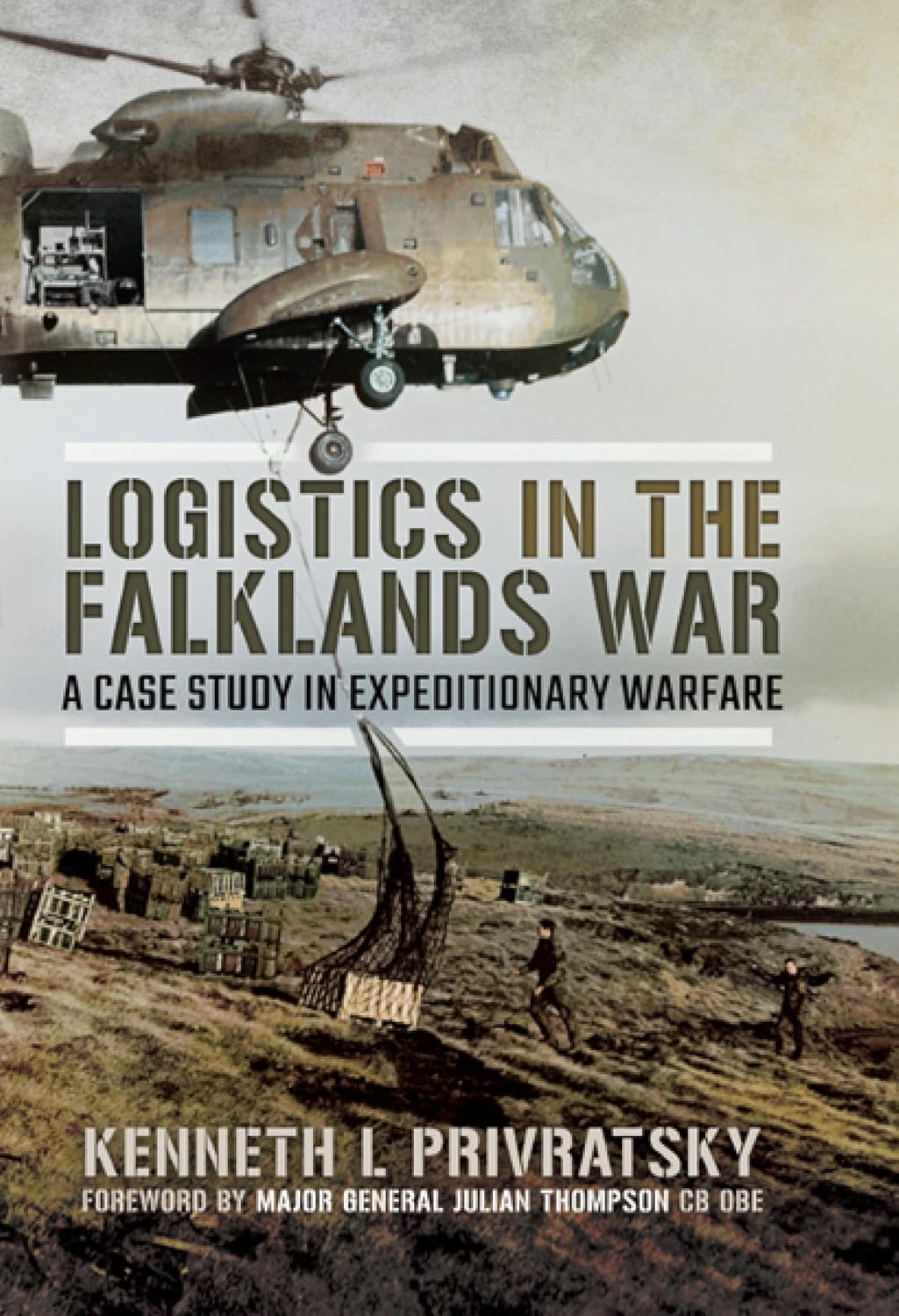
This post is largely highlights from a book I think everyone should buy, called Logistics in the Falklands War: A Case Study in Expeditionary Warfare by US retired MGen Privratsky.
[…]
I read the book as part of a long term project on the history of command and communications in the Falkland War. I couldn’t figure out how the British managed to pull off victory given the logistical challenges, so I purchased this book hoping to find answers.
Having now read the book I know WHAT the British did to win the war, but I have ZERO clue how they managed to make it work. The conditions and limitations they faced were so much worse than I thought.
I can honestly say this is the most interesting book I have read in years, which is a shock to me as I’m typically as bored by logistics as the next non-logistician. It was genuinely more engaging and entertaining than the battlefield accounts of that war.
The Logistics Challenges of the Falklands War
The task eventually given to the British task force was to retake the Falkland islands from the Argentines. This was a daunting task, both logistically and in terms of the actual ground combat.
Strategic Logistics
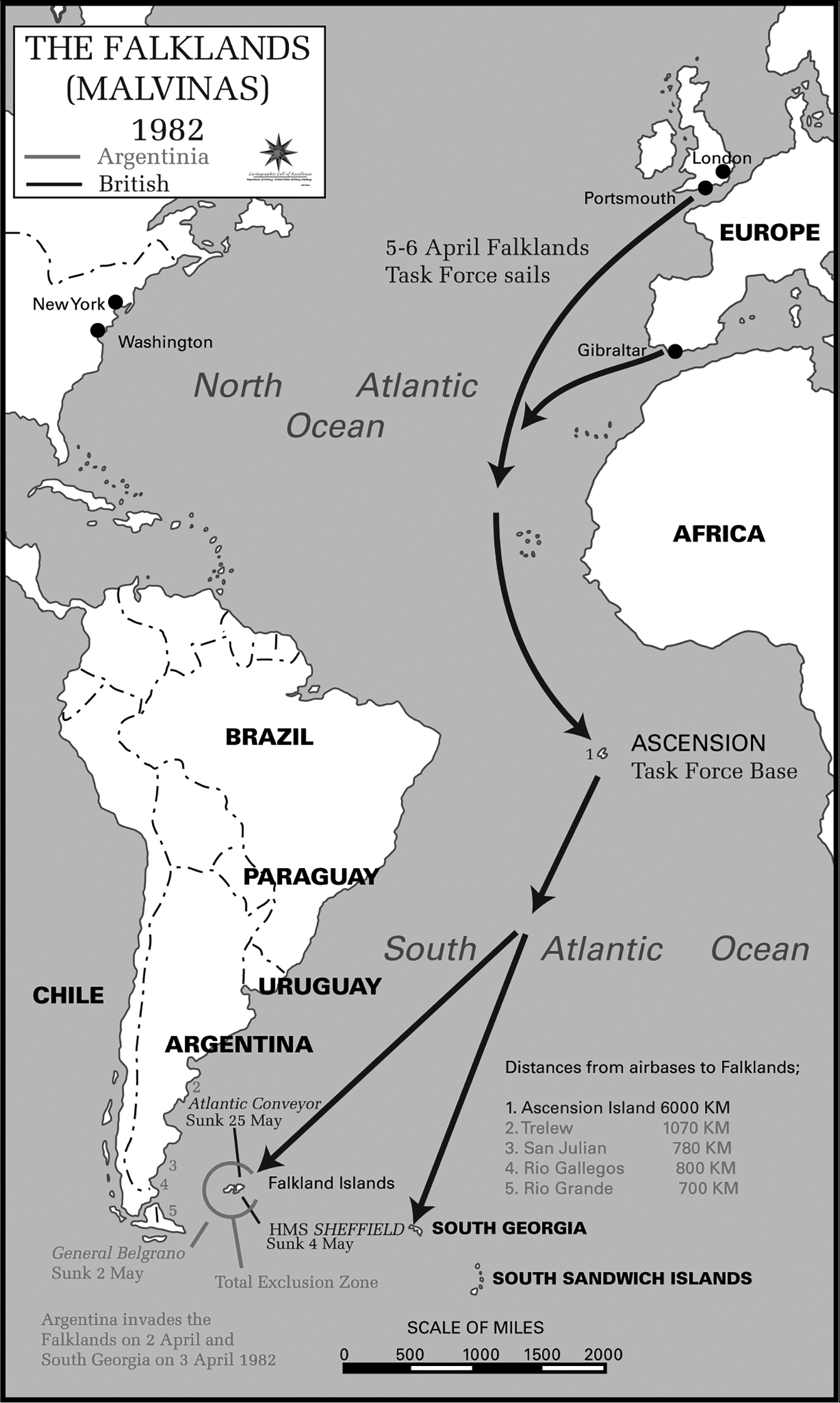
Strategic logistics is providing the lifeline of supplies, personnel, maintenance and health care between the home country and a staging area about 300km outside the combat zone. British strategic logistics involved a link from England to a small British held island half way between Brazil and Africa called Ascension. This link was 4,300 miles (6,900 km) by sea from Portsmouth. It had an airport and one jetty capable of handling one or two small commercial ships.
The next link was a further 3,600 miles (5,800 km) from Ascension to a logistics loitering area about 200 miles (320 km) short of the Falkland Islands. This was just a box drawn on a map in the middle of the ocean where the larger supply ships would loiter, outside the range of the Argentine air force.
[…]
Tactical Logistics
Tactical Logistics holds a few days’ supply (eventually the BSA/DSA held about 30 days supply ashore at San Carlos) but it’s main job is to move supplies, broken equipment, replacements and injured personnel between the BSA/DSA and the manoeuvre units.
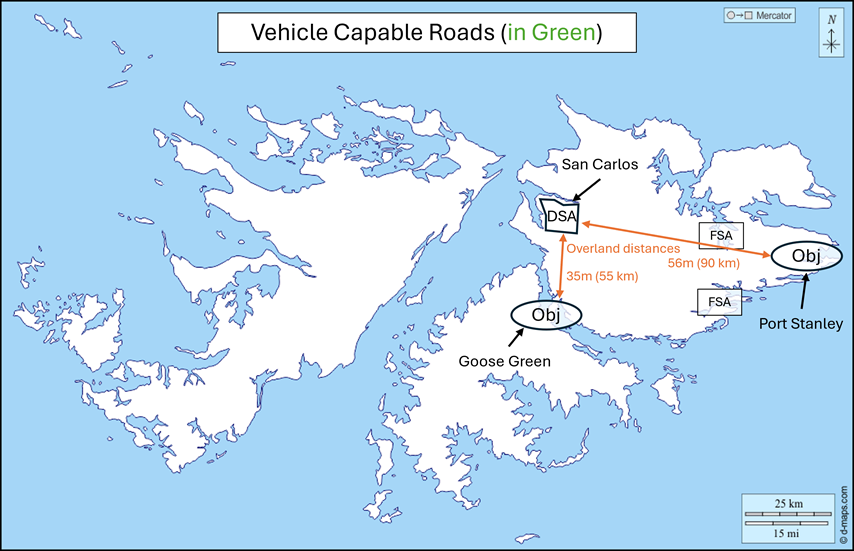
Normally the backbone of Tactical Logistics is trucks. Here there was a problem, as the image below is a comprehensive of all the paved and unpaved vehicle capable roads in the Falklands, excluding those in the vicinity of Port Stanley.
“Roads? Where we’re going Marty we don’t need roads.”
The details of tactical logistics take up several chapters of the book. The brief version is:
- The troops marched from the DSA to the Objective;
- For the attack on Port Stanley two days supply of Ammunition, Shells, fuel and shells were brought to the two Forward Support Areas (FSAs) along with skeletal field hospitals;
- Helicopters spent about 2 weeks bringing the artillery from the DSA to outside Port Stanley; and
- Limited emergency resupply of ammunition and casualty evacuation was available from the FSA to the troops in combat. However, most of the ammunition going brought and casualties evacuated rearward was done on foot over what can charitably be described as walking tracks.
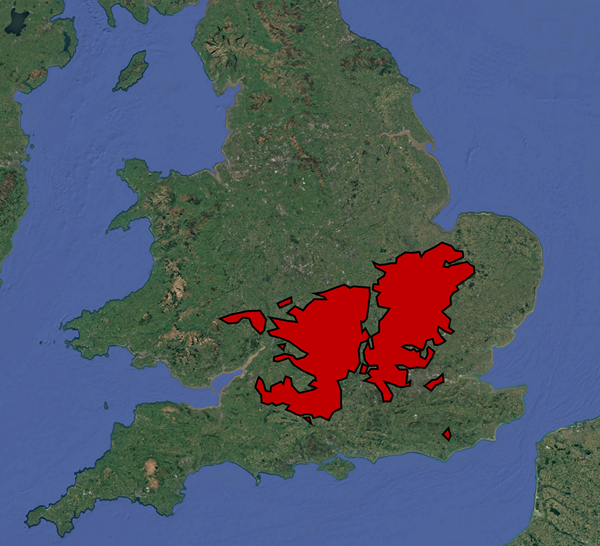
Tactical Logistics in the Falklands was so difficult because there were no roads and the distances involved were enormous. While the orange arrows above give a sense of the distances involved, the image blow shows the size of the Falkland Islands superimposed over England.
[…]
Conclusion
Prior to reading Logistics in the Falklands I couldn’t quite figure out how the British managed to pull a victory out the hat, given the challenges of projecting power literally on the opposite end of the globe. Having read the book I am now convinced the British military in 1982 was either the best improvisational armed force in history or under some kind of Divine mandate.1
- Maybe both.
July 10, 2026
Defensive driving is more important today than ever before
At some point, the Canadian and provincial governments decided that the safety of their citizens was a lower priority than ensuring that temporary foreign workers — many of whom apparently understand little or no English or French — had to be given commercial trucking licenses and set loose on the King’s Highways:
Absolutely insane‼️
But this is something I’ve been raising the alarm on for years.
The Canadian trucking industry, which almost a third of it is gray/black market now, have been captured by foreigners and empowered by Ottawa.
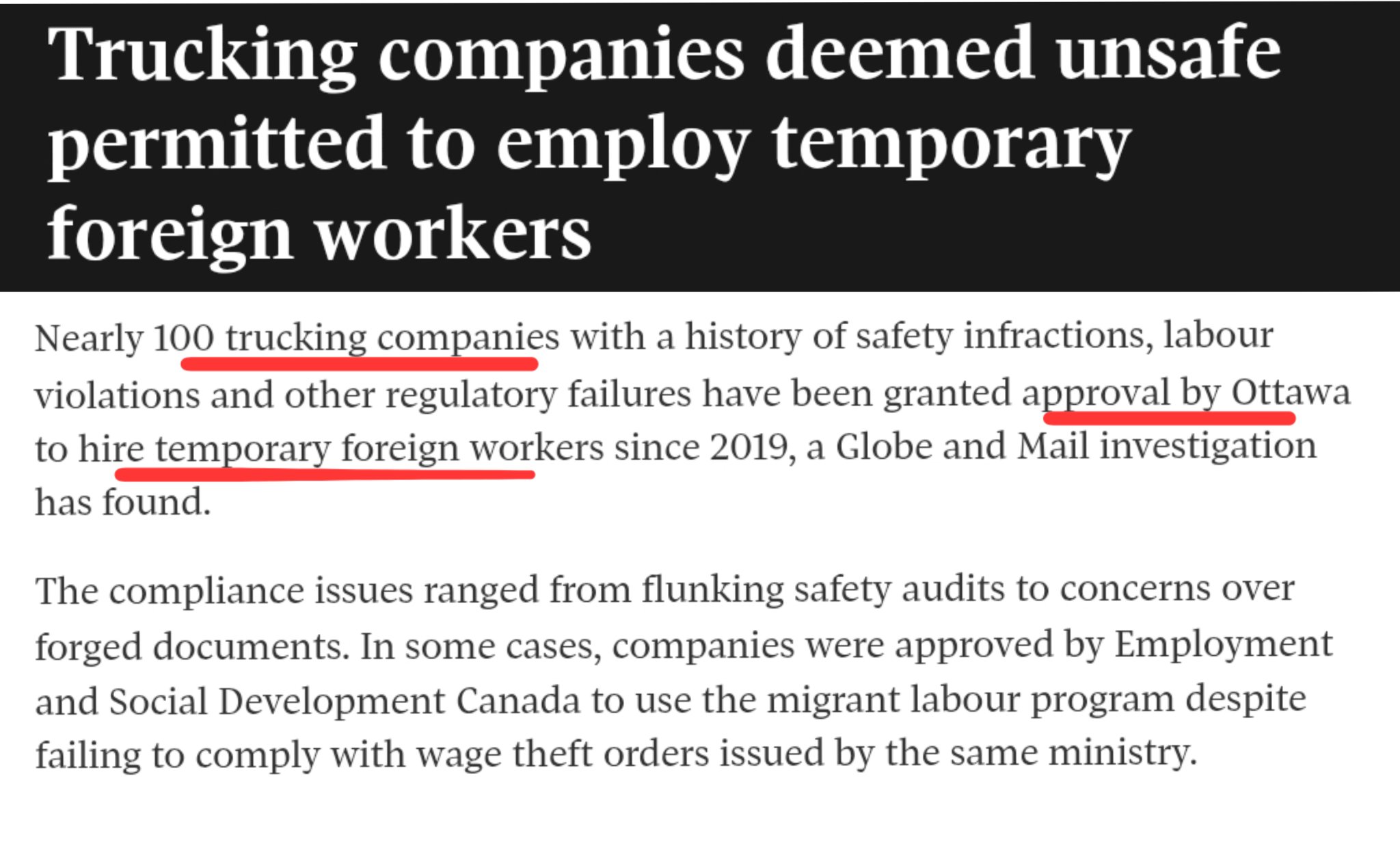
100 trucking companies with a history of safety infractions, labour violations and regulatory failures were approved by the Liberals to mass immigrate temporary foreign workers.
Canadians are losing their lives on our roads every day by foreigners who shouldn’t be in Canada that the Liberals allowed scam organizations to bring in and who shouldn’t be behind the steering wheel to begin with. Then the Liberals and activists judges won’t even deport these people.
Many trucking companies that lose license to operate or get hit with infractions would just change provinces of operations and name – sometimes not even the name, and would just keep operating because there is no proper systems raising red flags and no one investigates. Complete incompetence.
Many operate in Alberta, Saskatchewan and Ontario and move around these provinces.
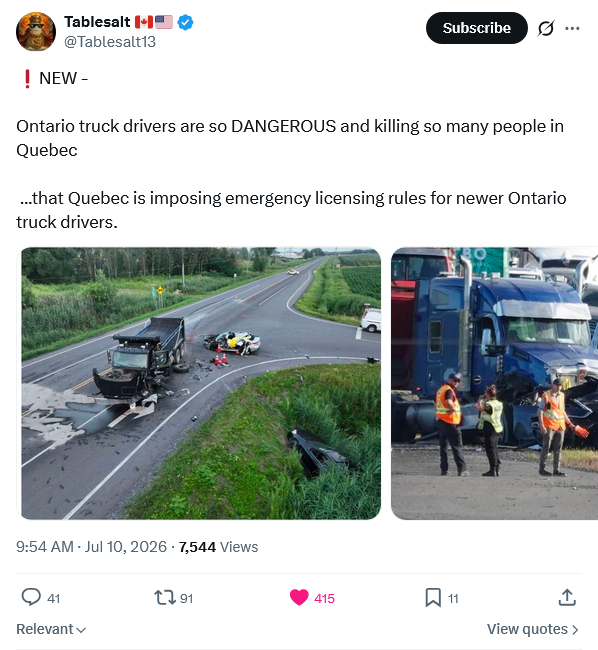
Update: Quebec has taken official notice of the situation.
June 28, 2026
QotD: Getting cloth to market in the ancient and medieval world
Transport costs remain a significant factor in the organization of textile trade. Prior to the invention of the steam engine and thus the train, moving lower value goods in any kind of bulk overland any significant distance was prohibitively expensive. In contrast, seas and rivers represented blue roads and highways, allowing for far cheaper and faster transport of bulk goods. The typical estimate, derived from the Diocletian’s Price Edict (and thus dating to the Late [Western] Roman Empire, so this is with the system of Roman roads; take those away and things get even worse for land transport) is that the ratio of the cost of land, river and sea transport was roughly 20:4:1, with sea transport thus being four times cheaper than river transport and twenty times cheaper than road transport for bulk goods (like fabric).
It should thus be of little surprise that regions involved in major textile production for export were often concentrated either on coasts or on rivers that were navigable to the sea (one may map the regions Pliny lists as major wool and linen exporters to find that they are all accessible by sea). While the sheep themselves may be grazed part of the year up in the uplands far from the coast, one of the great advantages of transhumance is that the sheep may transport themselves under the care of their shepherds to villages and lower pastures not too far from coastal towns which may serve as centers of textile production and major points of sale.
Now those transport costs become less and less significant the more valuable the goods being transported are. For a bulk good like grain (or common wool), transport may represent a majority of the costs. But if one is shipping something extremely valuable (particularly valuable per unit weight), the cost of acquisition at the source (and the profits of final sale) are much larger relative to the transport costs and less efficient methods of transportation become useful, thus the viability of silk and other expensive luxury goods being transported overland across Eurasia on the famous Silk Road.
Very high value fabrics didn’t need to come from so far afield though. In the Roman world, the province of Asia (corresponding roughly to western Turkey today) had several notable centers of production for particularly high valued textiles (on this, see I. Benda-Weber, “Textile Production Centers, Products and Merchants in the Roman Province of Asia” in Gleba and Pásztókai-Szeöke, op. cit.). Thyateira’s guild of purple-dyers (the πορφυροβάφοι) seem to have had trade contacts for their wares – wool dyed Tyrian purple via the murex snail – all over the province as well as in Macedonia and Italy. Weavers in the region were also known for producing fabrics with complex woven patterns and Miletus, one of the major ports in the region, had as noted the reputation for producing the best dyed wool in the Mediterranean. Such fabrics were highly valued and we find evidence that such fabrics were bought not merely by the Roman elite, but also made overland as far as Persia where such wares were valued at the Achaemenid (550-330 BC) court.
Neverthless, not all fabrics moving through trade in antiquity or the middle ages were rare or high value fabrics. As Jinyu Liu notes in a study of inscriptions relating to the textile trade, “coarse wool and wool of medium quality, and products made of these non-luxury wools dominated the market” in the Roman Empire, often being “pulled” through trade towards both large population centers in the interior of the empire and towards the Roman armies in the frontier provinces, both of which must have outstripped local production in their demand for textiles (Liu, “Trade, Traders and Guilds (?) in Textiles” in Gleba and Pásztókai-Szeöke, op. cit.). This trade included not just fabrics but also ready-made products like garments or blankets which must have been aimed at fairly modest people, neither the very poor (who couldn’t afford them) nor the wealthy (who wouldn’t have been caught dead in “ready-made” one-size-fits-no-one clothing), but rather the middling urban workers and common soldiers (and perhaps small farmers, though we might assume their households would produce most of their own textiles in the countryside where wool and flax, being agricultural and pastoral products, might be more available).
In Medieval Europe, just as in the ancient world, the centers of textile trading tended to follow the water as it made transport easier. England was a major wool-producing center in the high and later Middle Ages (and into the Early Modern period), with J.S. Lee (op. cit., 9) estimating production per capita exploding from around 1.3 pounds per person in the early 1300s to 7 pounds by the 1550s as the textile production system in England reoriented towards export. Wool products, produced in towns mostly in towns that were nearly coastal or had river-access flowed down by coastal trade and up the Thames to London to either be sold and used there or to be further exported to the dyers and fabric markets of the Low Countries (where fabrics could use the Rhine to travel further into the continent) or to be bought by the merchants of the Hanseatic League and so head into the Baltic.
Bret Devereaux, “Collections: Clothing, How Did They Make It? Part IVb: Cloth Money”, A Collection of Unmitigated Pedantry, 2021-04-09.
June 26, 2026
QotD: The submarine war against Japan
The success of the American submarine campaign was genuinely astonishing, and created a near perfect asphyxiation of the Japanese war economy, with imports of virtually every vital industrial input plummeting to near zero by 1944. Admiral Charles Lockwood, who commanded the Submarine Force Pacific Fleet, was probably only slightly boasting when he later told an instructor at the Naval Academy:
Now don’t teach those midshipmen that the submariners won the war. We know there were other forces fighting there, too. But if they kept the surface forces and the flyboys out of our patrol areas we would have won the war six months earlier.
Despite the phenomenal success of America’s submarine operations against Japan, the American war on Japanese shipping generally receives scant attention. To take just one example, Francis Pike’s magisterial and colossal tome on the Pacific War relegates American submarine operations to an appendix. In contrast, there is an astonishing volume of literature devoted to the war’s other grand submarine campaign: the so-called Battle of the Atlantic. Germany’s famous U-boats attempted a similarly strategic interdiction war against shipping to the British home isles. Unlike the American submarine force in the Pacific, however, the U-boats failed.
Big Serge, “Wolf Packs: Battle of the Atlantic”, Big Serge Thought, 2025-12-12.


