Ben Duval looks at the implications of the quote above (attributed to Moltke the Elder) and shows that there were indeed lessons to be learned from that conflict:
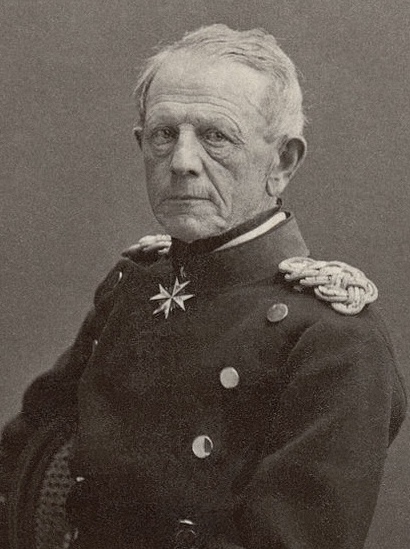
Chief of the Prussian General Staff Helmuth von Moltke the Elder (1800-1891).
Photo by Carl Günther via Wikimedia Commons.
A famous, if apocryphal, quote attributed to Moltke dismissed the American Civil War as “two armed mobs chasing each other around the country, from which nothing could be learned”. There were certainly lessons to be learned — it could hardly be otherwise in so long and intense a conflict. The war showcased many new technologies on a large scale, including rail and telegraph, while the growing accuracy of firearms showed the growing importance of field fortifications in pitched battle. It also gave witness to many expedients and innovations, including the first known employment of indirect fire (although that would take much longer to be appreciated).
Nevertheless, the readiness with which Moltke’s spurious quote was accepted is suggestive of fundamental differences between Europe’s large professional armies and the hastily-raised volunteers that fought for both North and South. The Civil War saw a mobilization of unprecedented scale, expanding from a pre-war regular army of 15,000 to a total of nearly 2 million at its peak.
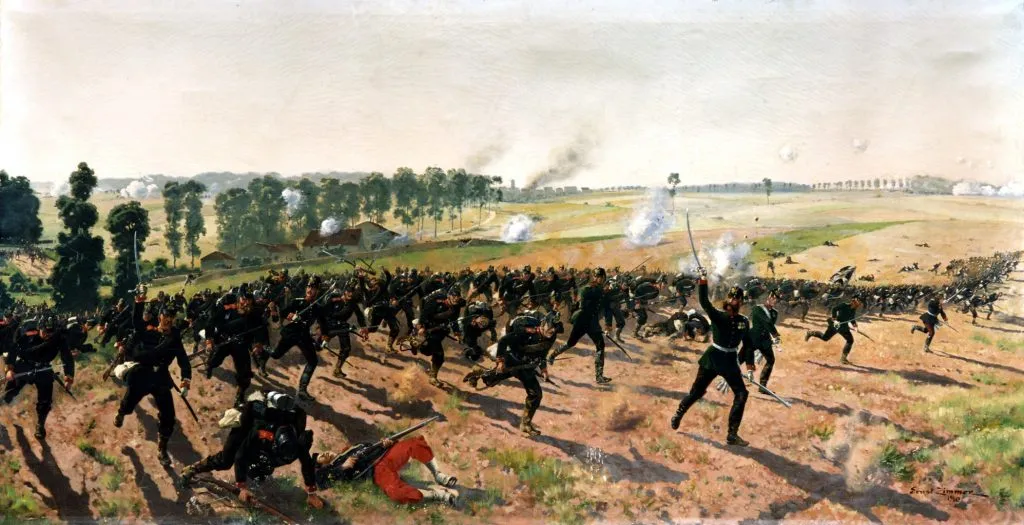
At some critical battles, like Antietam, many regiments had mustered bare weeks before. At best, these soldiers could handle their weapons reasonably well; large-scale maneuvers in the heat of combat were out of the question. Even long-serving formations did not have much of a chance to redress these deficiencies, as demonstrated by the disjointed conduct of Pickett’s Charge. What immediate lessons could the Prussian and French, efficiently maneuvering under fire at Gravelotte or Mars-la-Tour, have learned from Civil War armies?
Prussian attack at Gravelotte on 18 August 1870.
Lessons at the Right Level
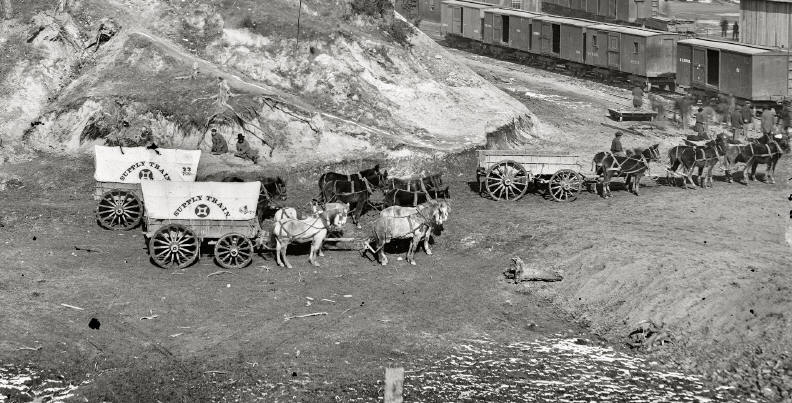
Perhaps not much at the tactical level, but there was plenty to be learned at the operational. Never before had railroads been employed at such scale to shift troops within and between theaters; nor the telegraph, which was used to coordinate such movements. Efficient logistical services allowed both sides to undertake bold maneuvers involving massive numbers of troops (it is noteworthy how many generals had previous experience working for railroad companies, and how many more went on to high management or board positions after the war).
Union supply wagons loading up at a railhead.
But the point also holds more broadly, beyond the particular technical specialties of 1860s America. Whenever tactics alone cannot suffice—either because both sides are extremely skilled, as in the First World War, or because organizational breakdowns rule out more complex maneuvers — decisive action can by default only occur at the operational level. This was an essential point in Saladin the Strategist. Muslim and Crusader armies, through long experience fighting each other, had developed unique fighting styles tailored to blunt each other’s edges: barring a fluke, decision could only be won through some higher-level maneuver.
In such cases, the fighting capabilities of an army matter less in any absolute sense than in their ability to effect a particular operational scheme. Tactical proficiency is but one variable among many, and not necessarily the most important. Whether a general is dealing with poorly-trained militia or long-serving professionals, it is above all their relative odds that factor into his calculations.