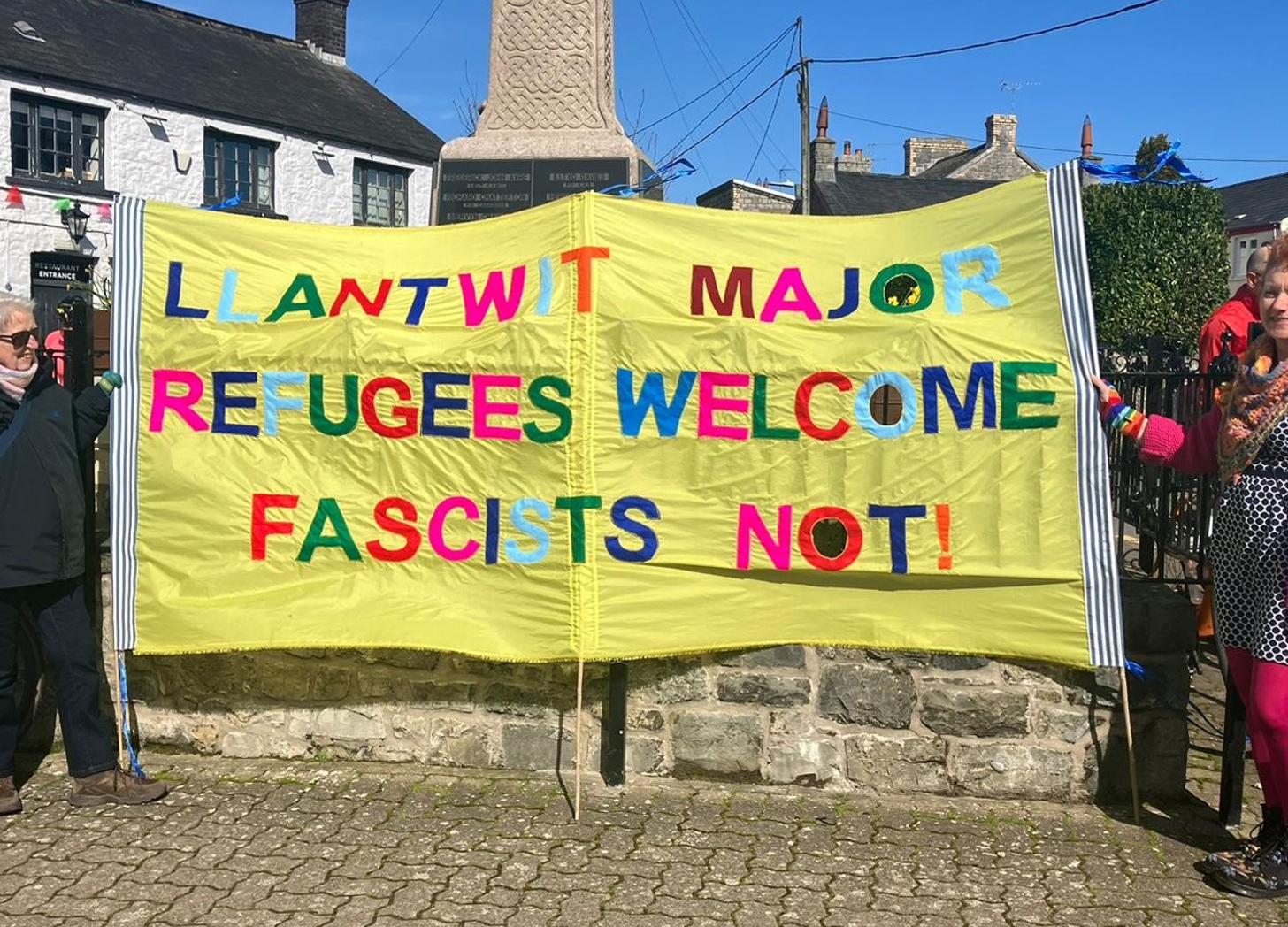
On Substack, Mark Collett recounts the sad tale of good intentions leading to very unwelcome results in a little Welsh town that was determined to welcome in foreign refugees:
“Those whom the gods would destroy, they first make mad.”
This phrase does not have a single, definitive creator but it is instead a modern English phrasing of an ancient Greek concept that evolved over thousands of years. The core meaning of the phrase comes from the classical Greek concept of Atë, which is an infatuation or moral blindness sent by the gods to punish human hubris. The earliest recorded variation appears in Sophocles’ tragedy Antigone (c. 441 BC), where a chorus remarks that evil eventually seems good to a man whose mind a god is leading to ruin. Sophocles noted even then that it was an old and famous maxim – possibly existing for hundreds of years before he used the term. However, the phrase finally took its exact, modern-day form in 19th-century American literature with the Reverend William Anderson Scott publishing the phrase exactly as it is written today in his book Daniel, a Model for Young Men, which was published in 1854, he called it a “heathen proverb”.
[…]
There is probably no better modern application for this “heathen proverb” than as a means to describe white liberals. These champions of social justice are so desperate to endorse a progressive ideology and to embrace people from other racial and cultural groups, that it often leads to their downfall. So convinced are white liberals not only of the nobility of their cause, but they are also totally sure that when their beliefs and theories are applied in the real world that they will result in the establishment of a rainbow utopia in which all people will live in blissful harmony. This is why the truth to these people is like garlic to a vampire. As such, no amount of facts, figures or even real-world examples of the potential pitfalls that could result from enacting the policies they support can dissuade the white liberal from their political path. And often, the hubris of white liberals can lead to their downfall, and sometimes, this affects more than a lone individual, sometimes, this hubris leads to the downfall of an entire community.
Photo from Mark Collett
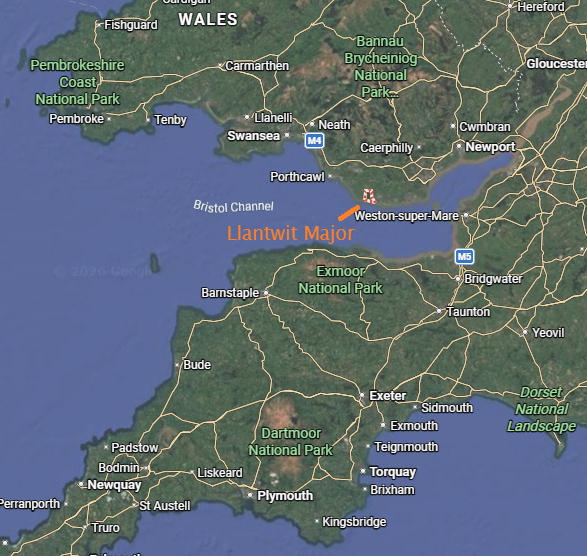
And on the South Coast of Wales, in a small seaside town named Llantwit Major, it could be said that the residents became the living embodiment of this “heathen proverb”, that they went “mad” – however this madness was definitely not the work of the gods. The madness that had taken over the minds of the people of Llantwit Major was a form of suicidal hubris that sprang forth from their misplaced beliefs in tolerance, diversity and multiculturalism. And it was their faith in these beliefs that caused them to embrace their own demise in a desperate attempt to prove how progressive and open minded they were. This is the story of a small Welsh town of less than 10,000 people who willingly and enthusiastically welcomed a swamping number of migrants into their community and how their overwhelming arrogance resulted in a migrant camp being built in the very centre of their tiny, and previously homogenous, Welsh community.
But this wasn’t just a case of blind virtue signalling – it was possibly the most glaring example of liberal hubris on a group level that has been witnessed in recent years. The residents of Llantwit were warned of their impending fate, but not only did they ignore these warnings, but they besmirched and attacked those who they should have heeded. When it was announced that migrants would be headed to Llantwit, many nationalists were eager to help the town’s residents, and plans were made to arrange a demonstration in the area in order to assist the locals in pushing back against the proposals. But the hubris of the townsfolk caused them to reject this generous offer of help, and instead, those who wished to warn local residents of the dangers posed by such a scheme were met with resistance. This local resistance was so strong that the BBC ran a glowing article praising the people of Llantwit titled: “Patriotic Alternative: The town fighting the far-right with Welsh cakes”.