Quotulatiousness

August 24, 2026

It’s no wonder that people have lost trust in formerly prestigious institutions

Filed under: Britain, Education, Media, Politics, USA — Tags: , , , , , , — Nicholas @ 05:00

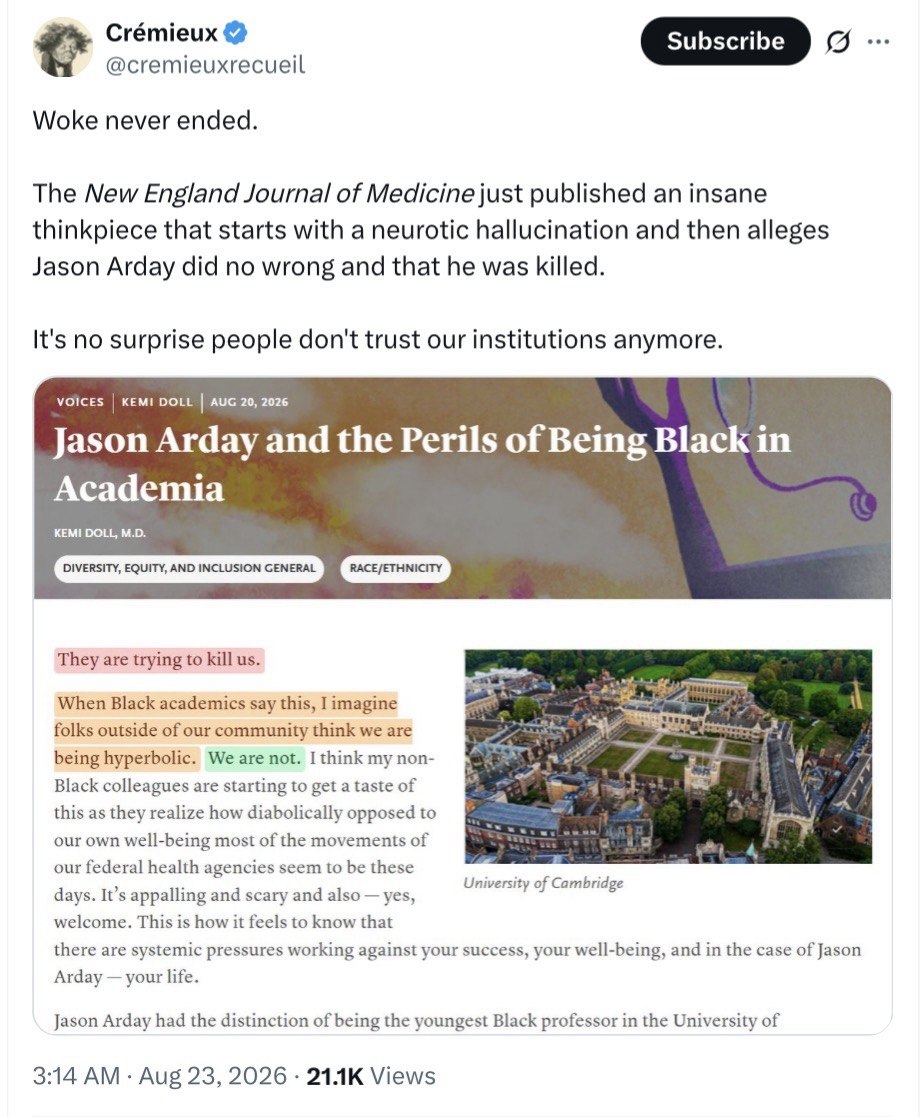
Lorenzo Warby on the two cases that are currently front-and-centre with the terminally online left, one a recently deceased academic grifter and another a confessed multiple murderer (of her own children):

We are currently observing attempts to turn the late Jason Arday — a fabulist who produced nothing of intellectual merit — and Lindsay Clancy, a woman who murdered her three children, into moral heroes. The former is allegedly a martyr for the cause of anti-racism and care for the neurodivergent/autistic, the latter for motherhood — or at least postpartum depression and psychosis. Both are construed as victims.

There is a real push to put the truly awful into Affluent White Female Urban Liberal. It’s almost as if there are some issues with feminisation. On the other hand, a woman being an open supporter of Lindsay Clancy is an excellent negative signal for men.

Just when you think progressivist purity spirals can’t get any worse, they do. Thus, we not only get the above hagiographical elevations of the grotesquely unworthy, we also see the physical mutilations of trans-surgery used to rehabilitate female genital mutilation.

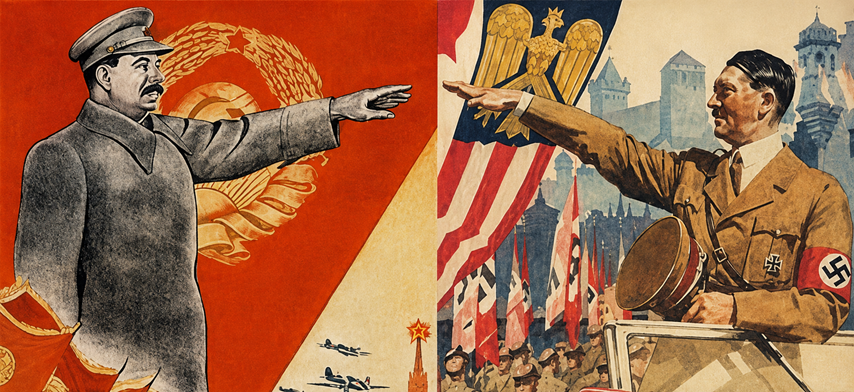
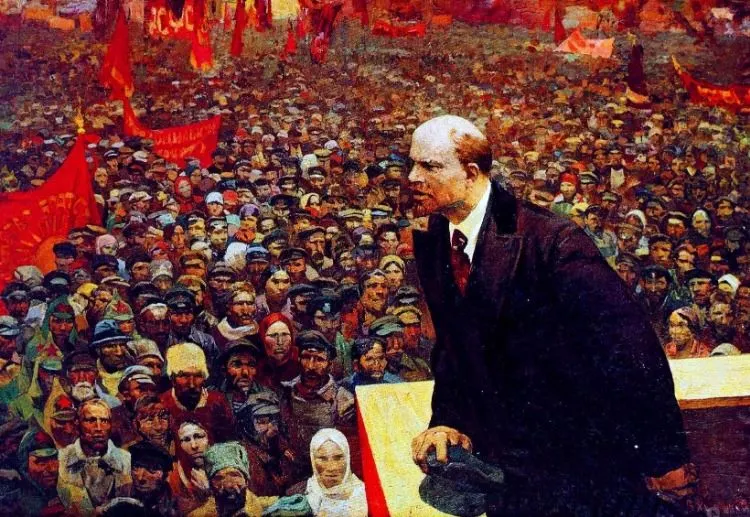
But, of course, any such surprise is having far too contemporary a focus. Left-progressivism has a long history of elevating some of history’s most appalling monsters, most tyrannical mass murderers — Lenin, Stalin, Mao — as heroes of world-history and human liberation.

The use and abuse of moral mascots

The worse a group or individual behaves, the more progressives like them. If a group is noted for high levels of violence or various social dysfunctions, left-progressives adopt them as moral mascots.

The concept of such mascots comes from economist Thomas Sowell. Mascots are people or individuals that “the Anointed” — those who see themselves as at forefront of human liberation — adopt to be extolled and defended. This is connected to Thomas Sowell’s analysis of Constrained and Unconstrained political visions.

The Constrained Vision says there are no complete solutions, there are just trade-offs, all the way down. Human nature is one of those constraints. Biologist E.O. Wilson‘s famous observation about Communism — great idea, wrong species — is a pithy expression of the Constrained Vision.

In the Constrained Vision, history is an enormous memory well where we learn about ourselves. This is because the humans who made history are just like us. Their experience, their triumphs and failures, even their mundanities, are lessons for us.

History is contingent, it has no particular direction. The Constrained Vision finds it easy to take people’s choices as having authority because there is no direction of historical travel to which they must conform.

The Unconstrained Vision denies that human nature is a constraint in that way, so it’s possible to create a society of transformative human liberation. History is not a source of lessons, but a record of failures to achieve that liberation — a record of corruption and sin.

Moreover, history has a proper direction — towards transformative human liberation or another, related telos. Hence, choices that support that direction are legitimate, those that go against it are not. The politics of the Unconstrained Vision turns elections into legitimating rituals: citizens’ votes are blocked from overturning any of the policies the Anointed have decided represent history’s proper direction.

The Anointed evince what writer Wesley Yang labels the non-electoral politics of institutional capture. If you want to see that in its most complete form among the Western democracies, PM Tony Blair’s debauching of Britain’s constitutional order through quangoes, human rights legislation that empowered judges over elected ministers, and devolving decision-making to the EU — thereby massively increasing the degree to which elections became legitimating rituals that change remarkably little — is the current gold standard case. However, all Western democracies face similar pressures, albeit to considerably differing degrees.

The commitment of The Anointed to this vision of human liberation gives them such a sense of trumping moral authority that they see themselves as owning morality. They have the right-to-decide what is moral and then to impose their decisions on everyone else.
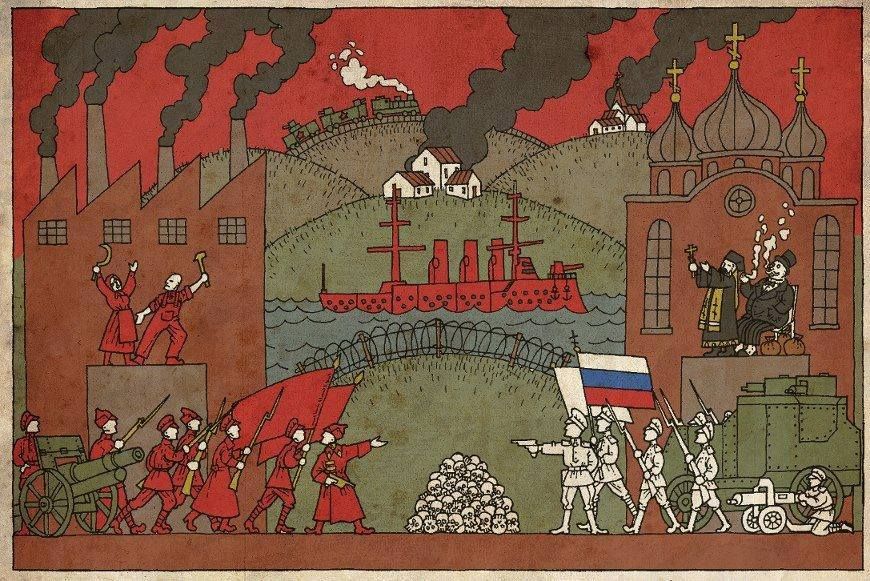
“Communism is an ideology designed to liquidate nations”

I nearly skipped this post by Celina, as it started off appearing to be pretty much of interest only to Australians, but that was just the opening sections:

The Bolsheviks were the first governing power of the modern era to write the suppression of “national enmity” into a systematic criminal code. The RSFSR Criminal Code of 1922 penalised agitation and propaganda arousing national enmity or dissension, its successor, the 1926 Code, carried the provision forward as Article 59-7, under the chapter dealing with especially dangerous crimes against the order of administration, punishing “propaganda or agitation directed towards arousing national or religious enmity or discord”, with sharply escalated penalties, up to and including death, where the offence occurred in wartime or amid mass disturbances. From the earliest years of the Soviet state, in other words, speech about nationality was not a civil-society problem to be argued out, but a category of state crime sometimes punishable by death.

To understand why, it is necessary to understand something about communism that conservatives and libertarians have largely obscured. If you ask the average conservative what communism is, he will most likely start discussing government ownership, five-year plans, bread queues etc.

Communism, from this point of view, is essentially capitalism with the economic settings reversed. The government “does and owns everything“. This is why so much conservative analysis eventually degenerates into horseshoe theory: fascists liked government intervention and communists liked government intervention, therefore fascism and communism were basically versions of the same thing.

But that completely misses the ideological conflict which defined twentieth-century Europe. Communism was not just some economic theory about who should own what. It was an internationalist theory about who you are.

Communism is an ideology designed to liquidate nations. Literally.

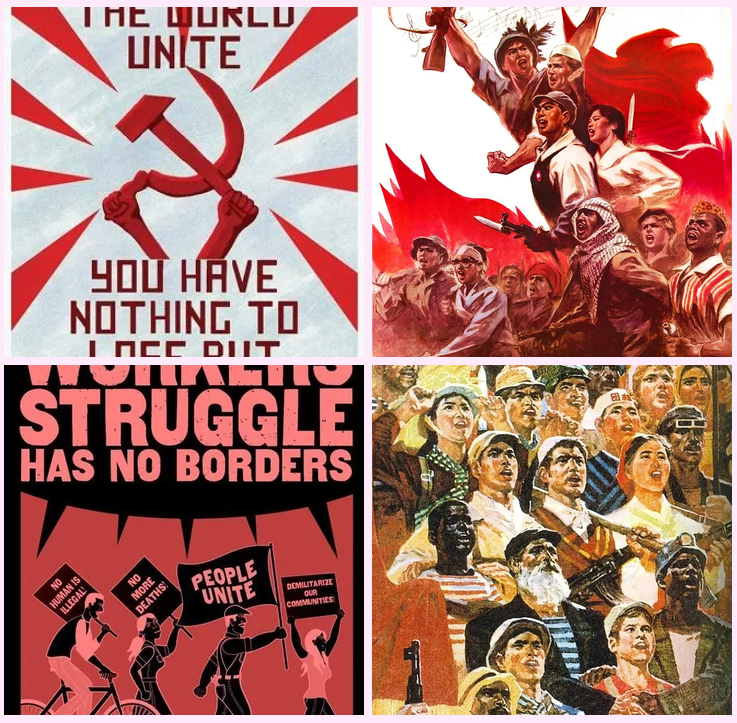
Marxism insisted that the fundamental political division of mankind was class. The worker was not ultimately supposed to understand himself principally as English, German, Italian, French or Russian. He belonged to the proletariat. His historical interests were shared with workers beyond the borders of his own country, while his supposed national solidarity with his own bourgeoisie concealed the class relationship upon which capitalism depended. Hence the language that runs through the entire communist tradition: Workers of the world, unite; The proletariat has no fatherland; No war but class war. You’re not Italian, you’re not German, you’re the proletariat, and all you have to lose is your chains.

The political logic here is blatantly obvious. Nationality competes with class consciousness, patriotism competes with proletarian internationalism. The nation tells a German worker that he shares something profound with another German who happens to own a factory. Marxism tells him that this solidarity is false and his real political brother is the French, Russian or Italian worker standing on the other side of the border.

That is why the nation became one of the great obstacles confronting revolutionary socialism. The theory said workers possessed common international class interests. Yet, history repeatedly demonstrated that workers continued to behave like members of nations.

In 1914, the workers of Europe did not unite against their governments and refuse the coming war. They rallied overwhelmingly to their respective countries. Socialist parties fractured along national lines. Men who Marxists expected to understand themselves as an international proletariat marched into battle as Germans, Frenchmen, Russians, Austrians and Britons. And the same problem returned after the Bolshevik Revolution.

That is why the great twentieth-century conflict between communism and nationalism was not accidental. It was ideological. Communism was internationalist not in the banal sense that communists in different countries cooperated with one another, but in its conception of history itself. The nation was something history would ultimately transcend. Lenin said this openly: socialism aimed not simply to bring nations closer together, but eventually to “merge them“. Elsewhere he described the centralised state as a historical step towards the future “socialist unity of the whole world“.

Stalin, grasping this principle, forged civic nationalism as the indispensable stepping-stone toward that communist universalism. Inside the borders of the revolutionary state the old nationalities were to be liquidated into a single Soviet identity: you are not Ukrainian, you are not Russian, you are not Jewish, you are not Georgian, you are a Soviet patriot, loyal only to the revolution. That state, once purged of national loyalties, would then project its universalist ideology outward, seeking global hegemony by liquidating, in turn, every nation that still dared to resist it.

Update, 25 August: Welcome, Instapundit readers! Have a look around at some of my other posts you may find of interest. I send out a daily summary of posts here through my Substackhttps://substack.com/@nicholasrusson that you can subscribe to if you’d like to be informed of new posts in the future.

Trade negotiations degrade into full-on trade war

Filed under: Cancon, Economics, Government, Media, Politics, USA — Tags: , , , — Nicholas @ 03:00

As I mentioned the other day, I don’t believe Prime Minister Mark Carney ever intended to reach a trade agreement with the United States, because it was far better for his domestic political situation to have the US — and especially Donald Trump — as a focal point for retired Canadian boomers to trigger a two-minute hate. Every time the name Trump appeared in a state-sponsored newspaper or TV story, Carney’s popularity went up. After a decade of economic stasis and relative decline under Justin Trudeau, Carney’s more staid persona told the boomers that “the adults were back in charge”, yet Carney’s policies have been largely the same as Trudeau’s with a bit less hamming it up for the cameras.

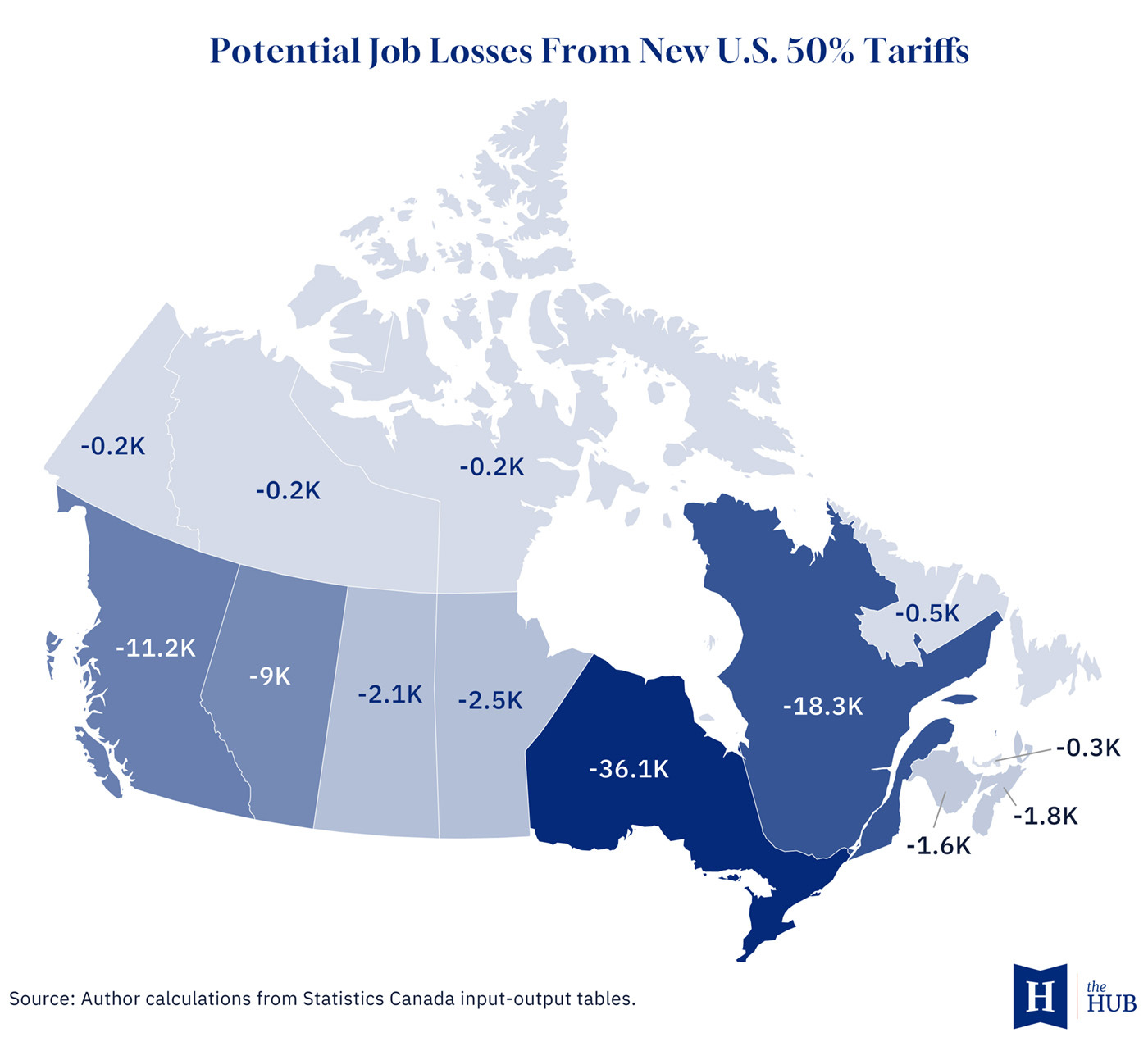
On his Substack, Brian Lilley considers the potential economic damage of the increased tariffs:

“You’re at war when you get attacked, we got attacked.”

That’s what Prime Minister Mark Carney said when he was asked why it sounded like was going to war after his Saturday morning speech.

Carney used references to war multiple times in his speech and during his Q & A with reporters.

“We’re stronger now than when the United States started this trade war. More unified, more determined, more ambitious,” he said in his speech.

Not sure that I believe that to be the case, though we could be if we take the right steps, something I was writing about in my latest column for the Sun.

Previously, I have questioned whether we should consider this a trade war between Canada and the United States. The Americans say they don’t see it that way, they see it a change in trade policy, an attempt to rebalance trade.

My thinking that perhaps the Americans were right was that calling it a trade war put us in the wrong mindset. Canadians were looking for a fight with the Americans, many still are and are happy that Carney walked away from this deal.

Of course, for the devoted “Elbows Up” crowd, no deal was always the best deal. They foolishly believe we can and should walk away from the United States.

After this latest round of tariffs though, I’m fine calling it a trade war.

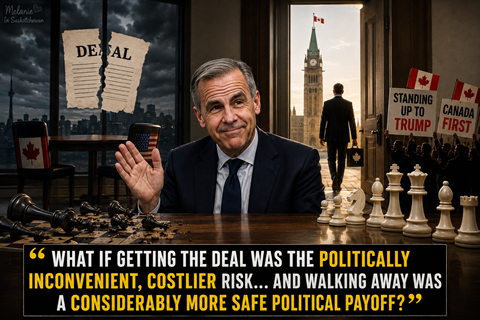
Melanie in Saskatchewan calls it “the most convenient failed trade deal in Canada”:

AI-generated image from Melanie in Saskatchewan

Imagine, if you will, a prime minister first installed and then elected, because Canadians believed he was uniquely equipped to deal with Donald Trump. Our hypothetical prime minister has impeccable credentials, international connections, central banking experience, serious suits, and the reassuring manner of a man who appears to know exactly which fork to use while the dining room burns down around him.

Most importantly, his political identity rests on one enormously useful proposition: Only he can handle Trump.

Now imagine the negotiations aren’t going particularly well. Not outright disastrous, at least not yet. Just difficult. Canada makes concessions. Ottawa drops the Digital Services Tax, removes most retaliatory tariffs, and American alcohol and supply management are on the table.

Still, negotiations continue, but then something changes.

On August 18, Trump postpones the new 50 per cent tariffs for three days after the two sides report “substantial progress”. By August 20, Canada’s trade minister says they’re “very close” to a deal. Reporting suggests the agreement under discussion could halve steel and aluminum tariffs and reduce tariffs on Canadian-built vehicles from 25 to 15 per cent.

And then … poof!

No deal. Do not pass go, consider this farce terminated.

The 50 per cent tariffs take effect. Carney suspends negotiations, the Canadian negotiators come home, and Ottawa announces retaliation. Washington says Canada backed away from commitments while Ottawa resolutely asserts Washington changed the terms at the last minute.

Well, that’s pretty fricking interesting, isn’t it?

So naturally our hypothetical prime minister takes to the airwaves and explains exactly what happened. Except he doesn’t, not with any actual clarity.

He speaks for more than twenty minutes, probably moistly, wandering from storms and changing climates to sovereignty and resilience, then through infrastructure, LNG, nuclear power, housing, defence, diversification and investment. By the time he finishes, we’ve practically navigated the entire federal government, several industries and the weather forecast.

Canada, we learn, is “master in our own home”. Well, isn’t that just terrific! What happened to the bloody trade deal?! Carney says the Americans introduced new terms that were “uneconomic” and “unfair”. They “asked too much and offered too little”. Who is going to draw the short straw and tell Carney those are adjectives and conclusions, and not terms?

Then comes a particularly curious bit. Carney says Washington also sought restrictions affecting Canada’s future trade relationships with other countries.

Other … countries.

But he never actually tells us which countries Washington was talking about, exactly what restrictions were being demanded, or which “certain sectors” he meant when he admitted the Americans wanted Canada to coordinate tariffs against other countries. Stranger still, Carney conceded that Canada could actually see merit in some of it as part of the right deal.

So which countries? Which sectors? And which parts of this supposedly unacceptable assault on Canadian sovereignty did you actually find reasonable? Suddenly the man who just spent twenty minutes talking develops an acute shortage of proper nouns.

The Ancient Greeks 04 – The Persian Invasion 4 – The Fall of Athens

Filed under: Greece, History, Middle East, Military — Tags: , , , , , , , — Nicholas @ 02:00

seangabb
Published 26 Mar 2026

Greece: A Brief History, c.700 BC – 500 AD

What happens when resistance fails?

In this lecture, we examine the dramatic collapse of Greek resistance after Thermopylae and the advance of the Persian army into central Greece. With the Spartan force destroyed, the road to Athens lay open.

We explore:

– The consequences of Thermopylae
– The evacuation of Athens under Themistocles
– The Persian capture and destruction of the city
– The psychological and strategic impact on the Greek world
– Why, at this moment, Persian victory seemed inevitable

This is the darkest point of the war for the Greeks — a moment when everything appears lost, and yet the story is far from over.

QotD: The difference between “book smart” and “street smart”

Filed under: Education, Quotations — Tags: , , — Nicholas @ 01:00

    Joca @jocadbz
    Translated from Portuguese
    How many geniuses have you heard about in recent years? They all had very superior IQs and were supposedly going to change the world
    Know what happened? Nothing. Nothing ever happens

We hear a lot of people go on about the difference between “book smart” and “street smart”.

But psychologists who test and study intelligence know there’s no such thing. Smart is smart. So is this all just a way of coping with envy of higher IQs?

No. We’ve all met that guy who is clearly very intelligent, but can’t seem to accomplish anything outside a cloistered academic environment.

But we always seem to find him in a academic environment, don’t we?

“Book smart” is an incorrect name for a person who is intelligent, but has been mentally and psychologically harmed by an educational system, to the point where he can’t actually use that intelligence properly for tasks outside that environment.

Ironically, the more a child is obviously intelligent, the more the education system conspires to destroy him … because everyone with a “degree in education”, almost without exception, is either actually stupid, or is himself the end product of this same sort of mental mutilation.

Here’s how it works.

There are two types of intelligence tasks: answer tasks and result tasks.

A result task is graded by the reaction of the environment to your work. Either your software runs, or it doesn’t. Either your rockets fly, or they don’t. Customers buy millions of your product, or none.

You have unlimited tries unless you run out of money, but there’s no partial credit, and you can’t talk the universe into accepting your answer if it doesn’t.

Result tasks typically require a lot of work, are data-intensive, and have lots of sub-problems, because the ones that didn’t are already solved.

Result tasks are why we care about smart at all. Because smart people are the ones who can do this. And every human advancement or achievement ever was a result task.

Answer tasks are quite different. They are artificial problems created by a human being for another human being, whose goal is to produce the known answer.

Tasks like this have useful features. They can be tightly calibrated for appropriate difficulty. They are easy to grade. They can be used to teach particular subjects or skills.

But there are certain things they don’t teach.

How to do the boring parts that don’t impress anyone with how talented you are.

How to fail and try again.

How to change the question instead of answering it, because the question itself was wrong.

How to absorb from others what they had to learn the hard way, instead of reinventing the wheel.

How to deal with problems that have no solutions, only tradeoffs.

How to work with others and pass the ball.

How not to adapt instead of freezing when the universe gives the exam before the lesson.

How to substitute the adequate you can afford for the ideal you can’t.

How to prioritize what is needful over what is elegant or cool.

Without this learning, and other similar lessons, the talent child turns into an adult with an unbalanced intellectual development, like a bodybuilder who skipped far too many leg days.

You’ll find a lot of men like this in academia because it provides them with a sheltered, tightly controlled environment, where the problems are abstract if not utterly fake, and the persuasiveness of a solution trumps its workability.

They tend to scorn achievers, especially achievers with modest academic credentials or none, and this invites scorn in turn from people with real jobs.

But really what they are is victims. Entire campuses and networks full of what was potential greatness, crippled in it youth by bureaucracies that claim to serve it.

Homeschool your children.

Give them projects, not puzzles.

Teach them to build things.

Devon Eriksen, the social media site formerly known as Twitter, 2026-05-05.

Powered by WordPress