Quotulatiousness

August 20, 2026

“It is not strength difference that leads schoolboy teams to regularly beat women’s national sporting teams”

Filed under: Business, Health, Sports — Tags: , , , , , — Nicholas @ 06:00

It’s a common observation that teenage boys’ teams can compete — and beat — professional or national competitive womens’ teams in many sports. I’d always assumed that greater male muscle mass and overall strength were the primary reason for this, but Lorenzo Warby points out that strength differences do not completely explain the competitive disparity:

Babylon Bee pokes fun at the US Women’s Team

Social media provides the technology to strongly increase the social signalling and the shunning and shaming that moralises disagreement in service of shared status games. To put it another way, social media upscales social/relational aggression that attacks people’s social standing on the basis of ostentatious moral or social concern.

Because believing X is such performative way of grading people, believing-X makes you a good person creates purity-spirals as people up-the-ante to make their signal — their moral piety display — more salient and reduce competition for positions. It also attracts and empowers the personality disordered — specifically Cluster B’s — as believing-X makes you a good person requires so little to join the status game and advantages those who are manipulatively unrestrained. In other words, it acts as a negative character test, that selects for people of bad moral character.

The inability to admit ever being wrong goes with the moralising of disagreement and identity-through-belief.

Social media does not enable the up-scaling of physical aggression, although it does enable the transmission of threats of such. By contrast, social media — with its electronic mobbing — is a very effective medium for emotional or relational aggression. As women, the physically weaker sex, are particularly inclined to be quite protectively self-deceptive about their own aggression — it is “just” moral or social concern — that leads to both intense aggression and denial of its existence: “there is no such thing as cancel culture”/”it is just a shift in moral, in social, concern”.

Screenshot

Social media can be particularly toxic for adolescent girls. Adolescents often lack a settled or robust sense of self, tend to be very wrapped up in how other people see them, and have a weak sense of their effect on others. All this is even more so for people-focused adolescent girls, who are both particularly prone to engage in — and be vulnerable to — emotional or relational aggression and to seek socially-protective identities. It is plausible that growing up with the excesses of social media increases support for control of speech, including making hate speech a live issue.

More things-focused boys are much more likely to retreat into playing games (both online or physical games) or some other physical activity. The greater female focus on people makes adolescent girls more vulnerable to social media-generated aggression, identity confusion and comforting cognitive refuges and conformism; the greater male focus on things creates a divergence between young male and female perspectives, aggravated by the strong female social preference for other females.

Survey of British women done for The New Statesman.

Due to strong, even at times intense, sex-differentiated selection pressures, in human evolution, human males are systematically better at forming and operating teams than women. Among women, it is the most masculinised personalities — lesbians and tomboys — who tend to be better at teams and teamwork, though they are still generally not as good at it as men.

The operating principle is that men are more likely to suppress their emotions to perform their designated role (in a team, in an organisation). Women are more likely to subordinate their designated role (in a team, in an organisation) to their emotions. Hence, for example, women and girls are more likely to be aggressive towards fellow team members during a game than are men and boys. Hence also — as we will see — male-dominated institutions have been better at catering for women and girls than female-dominated institutions have been at catering for men and boys.

It is not strength difference that leads schoolboy teams to regularly beat women’s national sporting teams. From adolescence on, boys and men are systematically stronger than girls and women of the same age: but even a fit 14 year old boy is not likely to be stronger than a fit, athletic 21 year old sportswoman. It is difference in male and female cognitive and behaviour patterns that leads to teenage boys sporting teams beating national women’s teams.

Institutions — to be functional — generally have to been scaled-up teams. That women are systematically worse at teams than men means that the feminisation of institutions and organisations tends to degrade their functionality. For example, female “emotions-as-threat” tone-policing makes it harder to generate trust, as people curate their interactions. Men and boys make outrageous jokes and rib and insult each other to test whether the others will fold under pressure. The social flattening of tone policing generates much more uncertainty, because it produces far less revealing information, so less trust.

The more differences of opinion are seen as threat, insult or moral failure, the more destructively conformist the institution or organisation is likely to be. This both acts to block feedback and enable the entrenchment of structures of conformist not-noticing.

One way out of this is to have strong standards in favour of truth and robust use of evidence. This, in turn, requires willingness to enforce such standards, which many women find emotionally confronting to do, as they are far more primed to read emotions as threat. Retreating from enforcing standards and boundaries on the grounds of being “inclusive” gives emotional — and so moral — cowardice a warm inner glow via a patina of self-righteousness. An emotionally-comforting retreat from enforcing standards then aids the entrenchment of emotionally-comforting opinion conformities.

That women tend to be self-deceptive about their own aggression — passing it off as moral or social concern — can be highly corrosive to the internal operation of an organisation or institution. In particular, it can be an effective way to block inconvenient information or concerns. All of this makes an information-restricting conformity likely to develop, and become entrenched, within an organisation as it becomes more female-dominated while making it less functional in enforcing standards, so delivering services.

Women are much less likely than men to have friends of lower socio-economic standing — as those of lower social standing are generally not a good social return on the emotional investment that female friendships are based on. Given the biological expense of human children, focusing on getting a good social return for one’s emotional investment was a successful reproductive advantage. For more team-oriented men, one never knows when someone of lower socio-economic status might be useful on your team.

Feminisation — that is, the increasing pervasiveness of more female-typical behaviour patterns — thus raises issues of weakening social solidarity. One of the striking things about contemporary Western societies is how little active concern that female university graduates show for people, including other women, of lower socio-economic status within their own societies. They have very little sense of how very different the experience of women in very different social milieus can be, and they do not socialise with such women to find out.
The Frankfurt School – The most destructive intellectual project of the 20th Century

People tend to underestimate how influential intellectual movements can be, as they rarely get outside attention until they’re deeply entrenched in the university system. The Frankfurt School‘s damage record is unmatched by any other intellectual movement of the era:

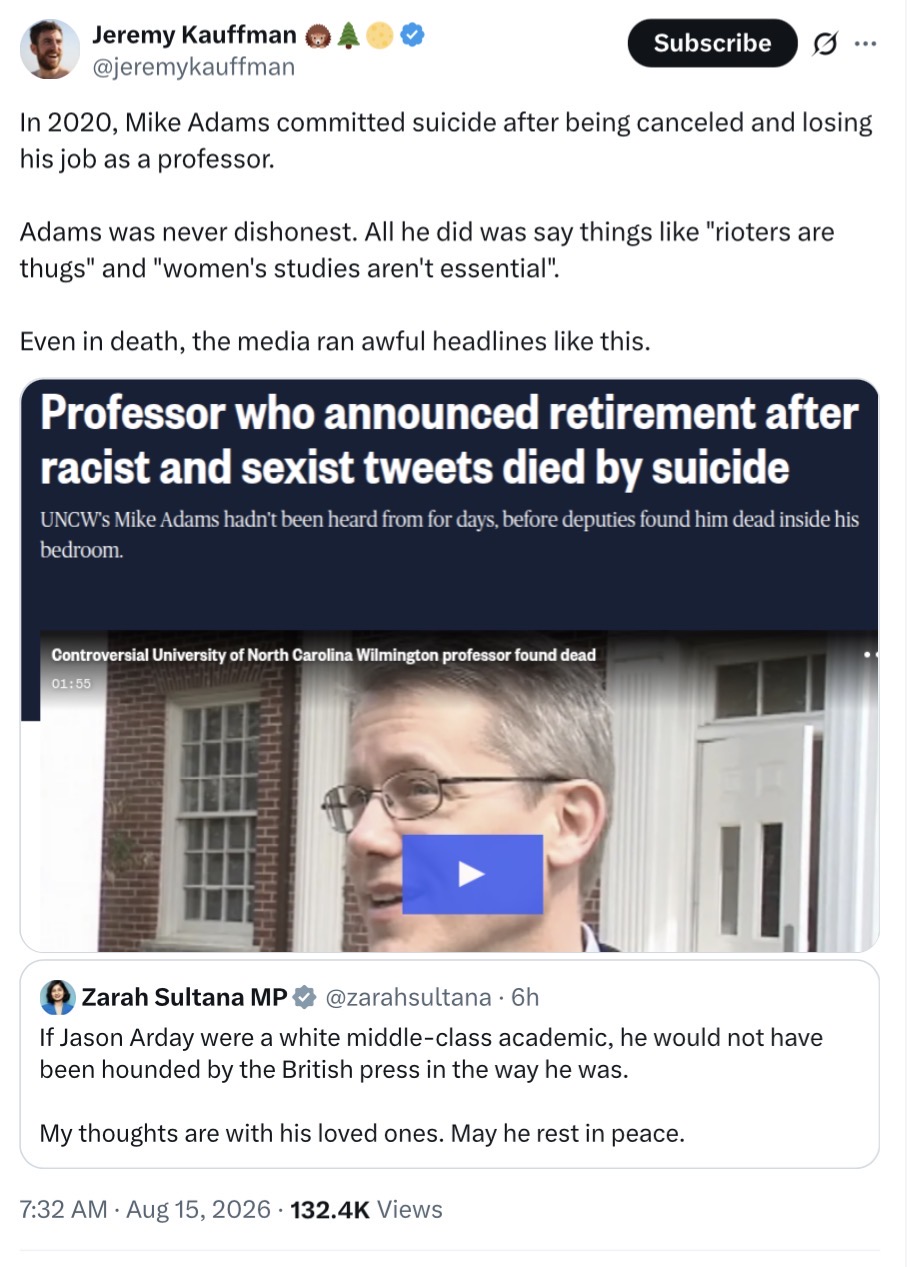
Notable members of the Frankfurt School in Heidelberg, April 1964 at the Max Weber-Soziologentag. Max Horkheimer is front left, Theodor W. Adorno front right, and Jürgen Habermas is in the background, right, running his hand through his hair. Siegfried Landshut is in the background left.
Photograph by Jeremy J. Shapiro via Wikimedia Commons.

The Most Destructive Intellectual Project of the Twentieth Century.

The Frankfurt School. You should know what it was, what it built, and why you are still living inside it.

1. The Institute for Social Research was founded in Frankfurt in 1923 and relocated to Columbia University in 1934 when Hitler came to power. The civilization they had decided to dismantle gave them refuge when another tried to kill them. They spent the next five decades producing the theoretical infrastructure for that dismantling. Western civilization itself was the problem: reason, the Enlightenment, the family, tradition, authority. Not reformed. Dismantled.

2. They called it Critical Theory – and the name is the program. Everything is to be criticized; nothing is to be built. In The Dialectic of Enlightenment (1944), Adorno and Horkheimer argued that Western reason — the reason that produced Newton and the rule of law — contained the seeds of Auschwitz. Not that reason had been misused, but that reason itself, taken to its conclusion, produces the death camp. This was not a critique of institutions. It was an indictment of the civilization itself.

3. Adorno gave them the psychological weapon. The Authoritarian Personality (1950) classified conservatism, religious faith, patriotism, and the traditional family not as political positions but as symptoms of a proto-fascist personality. If you believe in the nation or the father’s authority, you are pre-fascist. The opponent was no longer wrong – he was sick. You don’t argue with a pathology. You treat it. This made dialogue impossible. You don’t persuade someone who is wrong; you diagnose someone who is sick. Politics becomes therapy, and disagreement becomes pathology.

4. Marcuse gave them the political weapon. Repressive Tolerance (1965) argued that tolerating wrong ideas is itself oppression. True tolerance therefore requires suppressing intolerant ideas. The left decides which ideas are intolerant. Everyone else is silenced – not despite tolerance, but “in its name”. Censorship dressed in the vocabulary of liberation.

5. The generation that read Marcuse at Columbia, Berkeley, and Yale went on to run universities, media, foundations, NGOs, content moderation departments, and the EU regulatory apparatus. They implemented the argument sincerely because they had been taught it as philosophy. This was the Frankfurt School’s greatest achievement: it produced true believers.

6. French Theory picked up the tools and made them aesthetic. Foucault made the critique of power literary. Derrida made the critique of meaning philosophical. Deleuze made the critique of identity elegant. A political program became a cultural sensibility. You can argue with a program. A sensibility is in the air you breathe. By the time these ideas reached the American campus through the French conduit, they were no longer ideology. They were the water. The fish did not know they were wet.

7. A civilization stands on three pillars: truth exists and is accessible to reason; good is distinguishable from evil; and there is an inheritance worth transmitting. The Frankfurt School attacked all three – systematically and with considerable intellectual sophistication. It produced a generation that knows how to deconstruct and has forgotten how to build. That sees power everywhere and beauty nowhere. The ultimate achievement was to make destruction feel like progress. Every inherited institution became suspect; every constraint became oppression; every act of preservation became reactionary. Deconstruction became the default, while construction became something that needed to justify itself.

The answer is not another theory. It is the thing the Frankfurt School most feared: the builder who simply builds, the scientist who follows the evidence, the father who transmits what was transmitted to him.

The deconstruction machine runs on the assumption that nothing is worth building.

Prove it wrong.

Tell the truth, have courage, and build.

The Korean War Week 113 – The Battle of Bunker Hill – August 18,1952

Filed under: China, History, Military, USA — Tags: , , , , , , , — Nicholas @ 04:00

The Korean War by Indy Neidell
Published 18 Aug 2026

There’s plenty of action as Chinese troops battle with the US Marines over Hill 112- now known as “Bunker Hill”- throughout the whole week. Back in the USA, questions continue to circulate about the government’s strategy of limited war in Korea. The conflict looks set to play a key role in the 1952 Presidential Election, as candidates Dwight D. Eisenhower and Adlai Stevenson begin to feel the scrutiny of the American public.

00:00 Intro
00:19 Recap
00:41 The Battle of Bunker Hill
05:16 Marine Artillery
06:13 The Peace Talks
07:51 Limited War
11:45 The Presidential Candidates
13:44 Summary
13:57 Conclusion

“It’s a form of libel by sleight-of-hand”

Filed under: Books, Britain, Law, Liberty, Media, Politics — Tags: , , , — Nicholas @ 03:00

On his Substack, Andrew Doyle discusses the fine art of writing libellous things about someone without quite giving enough legally actionable material for the victim to have a chance to retaliate successfully:

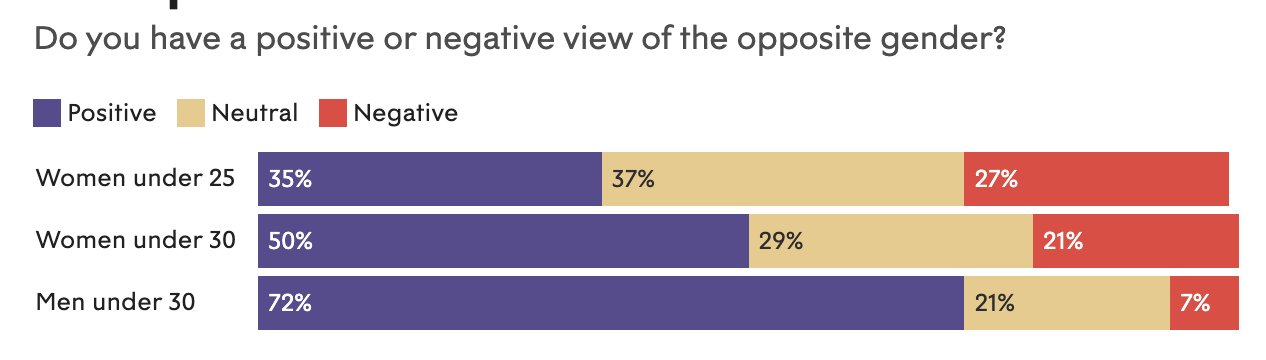
Simon Edge on GB News.
Screencap from Andrew Doyle

How does one libel an opponent and get away with it? I’ve lost count of the number of people online who’ve made false accusations against me. Sometimes I’m a fascist, other times a communist. Sometimes I’m a homophobe, other times a degenerate sodomite. Some have branded me a “racist” for supporting Martin Luther King’s ideal of a colour-blind society. White supremacists have denounced me as a traitor for my opposition to racism.

It’s all noise, of course, and best filtered out. These aren’t serious people, and no serious person would believe their smears. However, last week an author called Simon Edge, well-known in gender-critical circles, published a blog post about me that I can only describe as defamatory. He’s very lucky that I’ve no appetite for litigation, but I think it’s worth discussing the nature of his smearing technique because it’s become so common among activists of the more mendacious ilk.

It’s a form of libel by sleight-of-hand. Perhaps we should call it prestidefamation. Here’s how it works. You take a series of unremarkable facts, out-of-context quotations and tenuous associations, arrange them in a suggestive manner, omit any contrary evidence, invite the reader to draw the worst possible conclusion and then congratulate them for drawing it.

Edge has done precisely this. I have a long and well-documented record of opposing fascism and the far right. I’ve written books and articles about it, spoken about it endlessly on television, radio and podcasts. My latest book The End of Woke makes the case against all forms of authoritarianism, and opens with an epigraph explicitly attacking Nazi ideology. Yet Edge has managed to write an article insinuating that I support Nazis. It would be like writing a piece about Oscar Wilde’s robust and unwavering heterosexuality.

Here’s how he did it. Recently, it was announced on X that Oldspeak Books, which bills itself as “Britain’s only centre-right bookshop”, has closed its doors. The manager posted a message on social media to explain.

    Over time, it became increasingly difficult to maintain a welcoming environment due to the constant hostility I experienced. The uncertainty around which customers were genuine, made it hard for me to greet everyone warmly, and my customer service suffered.

This looked like a clear case of cancel culture to me and, since Oldspeak had been kind enough to stock my books, I reposted her message with a comment to the effect that it was a shame that she had been pressurised into closing her shop. This was, according to Edge, my first foray into the murky world of fascist apologism. Who knew it could be so easy?

The Ancient Greeks 04 – The Persian Invasion 3 – The Road to Thermopylae

Filed under: Greece, History, Middle East — Tags: , , , , , , , — Nicholas @ 02:00

seangabb
Published 25 Mar 2026

Greece: A Brief History, c.700 BC – 500 AD

Why did the Greeks resist — and how did they organise their defence?

In this lecture, we follow the formation of the Greek coalition against Persia and the strategic decisions that led to the famous stand at Thermopylae. Against overwhelming odds, a divided collection of city-states came together to resist the greatest power in the known world.

We examine:

– The creation of the Hellenic League
– Spartan leadership and Greek strategy
– The selection of Thermopylae as a defensive position
– The parallel naval strategy at Artemisium
– The events leading up to the battle

This lecture sets the stage for one of the most famous last stands in history, showing that Thermopylae was not an isolated act of heroism, but part of a carefully considered defensive strategy.

QotD: George Bernard Shaw’s role as Stalin’s useful idiot

George Bernard Shaw stood in Stalin’s USSR in 1931, watching millions starve to death, and declared there was no famine at all. The Nobel Prize-winning playwright didn’t just stay silent about the horror unfolding around him. He actively promoted the lie that would help Stalin cover up one of history’s greatest atrocities.

Shaw toured Ukraine during the height of the Holodomor, when Soviet grain requisitions had stripped peasants of every scrap of food. Conservative estimates put the death toll at 3.5 million Ukrainians. Shaw saw the empty villages, the skeletal survivors, the mass graves. Then he signed a public letter praising Stalin’s “remarkable progress” and told Western journalists that reports of famine were capitalist propaganda.

Why would an intelligent man become Stalin’s useful idiot? Shaw believed in central planning with religious fervor. He thought brilliant intellectuals like himself could design society better than millions of individuals making their own choices. When confronted with central planning’s inevitable result (mass death), he chose to lie rather than admit his ideology killed people. Shaw preferred beautiful theory to ugly facts.

Shaw deliberately used his celebrity status to give Stalin cover while Ukrainian children died of starvation. He returned to Britain and spent years defending Soviet policies, even as refugee testimonies and photographic evidence exposed the genocide. The man who wrote about moral awakening in Pygmalion had abandoned his own moral compass entirely.

Free market economists warned that socialist calculation was impossible, that without prices and property rights, economies would collapse into chaos and death. Shaw dismissed these warnings as bourgeois nonsense while standing ankle-deep in their vindication.

Handre, The social media site formerly known as Twitter, 2026-05-13.

Update, 21 August: Welcome, Instapundit readers! Have a look around at some of my other posts you may find of interest. I send out a daily summary of posts here through my Substackhttps://substack.com/@nicholasrusson that you can subscribe to if you’d like to be informed of new posts in the future.

Powered by WordPress