
Quotulatiousness

August 6, 2026

More threads unravelling from Professor Jason Arday’s backstory

Filed under: Britain, Education, Media — Tags: , , , , — Nicholas @ 06:00

As I mentioned the other day when I first noted this fascinating tale, I don’t think I’d heard of Professor Jason Arday before this week, so pretty much any new facets of the story will be news to me. Here’s an extensive survey of what’s been revealed so far by Donna Louise Flowers:
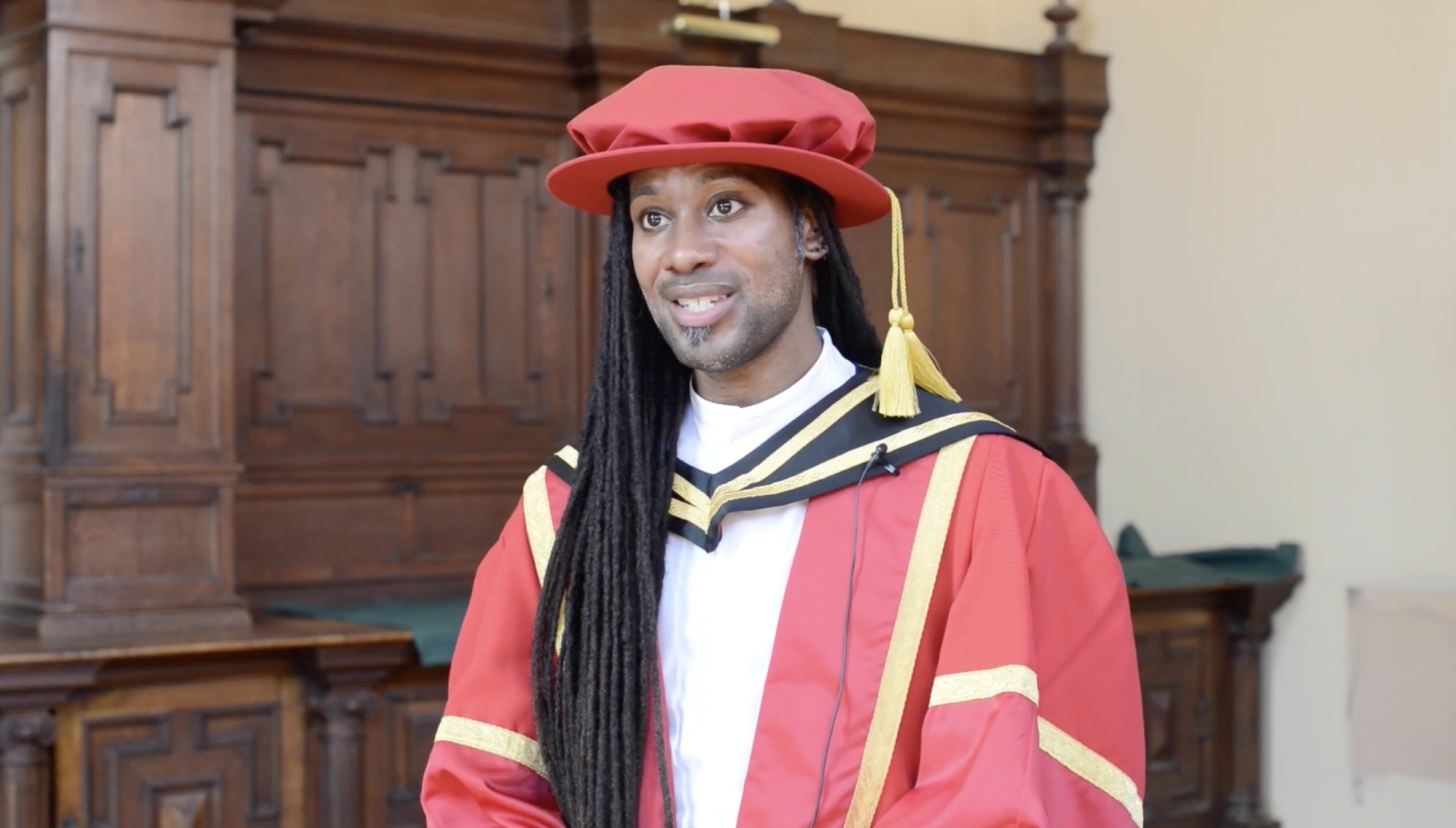
Cambridge professor Jason Arday
Image from Andrew Doyle

Cambridge Knew in 2023

On 19 May 2023 Martyn Hammersley emailed Hilary Cremin, Head of the Faculty of Education, and Rhys Morgan, Head of Policy. He flagged substantial plagiarism in Arday’s 2018 paper, including quotes attributed to Arday’s own interview subjects that matched quotes from another researcher’s participants. (emails first reported by Nathan Cofnas and later confirmed in The Telegraph)

On 21 June 2023 Morgan replied that it was “not within our remit”. Cremin said Arday had the department’s full support.

That is three years of Cambridge knowing. Everything that followed sits on top of that decision.

In the BBC’s 2023 video marking his appointment, Cremin went further. She said: “We are so lucky to have you. You are the best in the world in terms of the research that you do.” (BBC video, 2023)

Eight months later, on 2 February 2024, Arday was appointed to ITV’s Cultural Advisory Council. Sixteen months after the concerns were raised, on 19–20 September 2024, he led sessions on equity, diversity and inclusion at the National Aspiring Vice Chancellor Development Programme at Bolton.

He was teaching the next generation of vice-chancellors while the questions about his own record remained unanswered by the institution that employed him.

[…]


The Claims, Laid Out Together

Here, in one place, is the full set of claims Jason Arday has made about his life:

  • Diagnosed with autism and global developmental delay at the age of three.
  • Non-verbal until the age of eleven.
  • Unable to read or write until the age of eighteen.
  • Four to five hours of speech therapy every day from the age of three.
  • A mother with five degrees.
  • A benign brain tumour removed a fortnight before his PhD viva, which wiped his memory of the entire thesis; he re-learned it and still passed.
  • Two further brain tumours diagnosed after the PhD, later found to be benign.
  • Deaf in one ear.
  • Ran 30 marathons in 35 days, the last nine after sustaining a hairline fracture that made his leg swell to twice its normal size.
  • Covered 300 miles in three days.
  • Covered 600 miles in six days (later quietly amended in some citations to twelve days).
  • Raised £5.5 million for more than 80 charities.
  • Installed water points in South America and West Africa with WaterAid.
  • Received a severed pig’s head at his parents’ home.
  • Faced a knife-wielding masked man.
  • Received bullets in the post, rape threats against his daughter, threats to make him “top himself”, and other forms of intimidation including corrosive substances and mutilated animals.
  • Came through a professional football club’s academy system and later played semi-professionally.
  • Was on the verge of turning professional at snooker.
  • Awarded an MBE in 2017 and turned it down.
  • Olympic Torch Bearer for London 2012.
  • Appeared in the ITV documentary series Seven Up!
  • Obtained a Masters degree in “psychodynamic practice” from Birkbeck and became a qualified counsellor.
  • Held visiting professorships at the University of Glasgow and Ohio State University.

This is the origin story as it has been told. Almost none of it has been independently verified. Several of the most dramatic claims have been directly contradicted by the organisations or records that should corroborate them.


That is the real failure.

In the rush to be diverse, to be inclusive, to champion a Black, autistic, working-class success story who ticked every box, almost no one stopped to ask the simplest question of all: when you look at these claims as a totality, how plausible are they?

Each claim on its own might have been given the benefit of the doubt. Taken together they form a pattern that should have been obvious long before Carter-Ruck letters and police complaints were required to shut the questions down.

The institutions that elevated the legend spent years repeating it. When the contradictions began to surface they did not investigate. They defended. They edited the websites quietly. They called the scrutiny a vile campaign. They treated the act of checking as the real offence.

Jason Arday did not need to invent a modest success story. He invented a legend. And for years almost no one dared to ask whether any of it was real — because he is Black, and in the current climate that was supposed to be enough.

It was not enough. And it never should have been.

Update: Reportedly after Cambridge opened an investigation into the plagiarism allegations, Professor Arday has submitted his resignation.

Jason Arday, who was touted as the university’s youngest black professor, announced on Wednesday that he was resigning effective immediately from both the university and Jesus College. His resignation came just hours after Cambridge had said it opened an investigation into the allegations after “new information” came to light.

In a statement published by the Good Law Project, Arday said that the “relentless accusations” had taken a “profound toll” on him. He added that he has decided to resign for his “own wellbeing”.

“I have tried to continue because I believe deeply in the values of higher education, in rigorous scholarship, and in the transformative power of universities. I have tried because of my students, my colleagues and the countless people who have written to tell me that my journey gave them hope,” he wrote. “But there comes a point when the personal cost becomes too great. I have a family. I want to be present for them. I want to reclaim some peace, some privacy and some semblance of an ordinary life. I no longer wish to feel as though I am living under a constant spotlight, where every aspect of my life is subject to public examination and judgement.”

The next shoe was funny enough that I assumed it was from the Babylon Bee, but apparently is not parody:

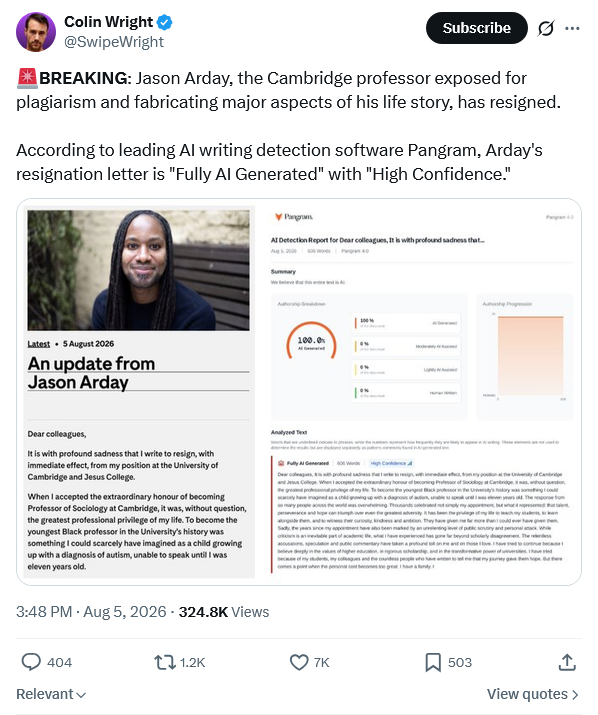
Following Arday’s resignation letter, social media users claimed that the statement itself appeared to have been AI-generated. According to Panagran, the leading AI writing detection software, Arday’s resignation statement was deemed to be 100 percent AI-generated.
Frederick Alexander decrys the fools that bought Arday’s fantastic stories as nothing but the truth and moved mountains to get him advancement at all costs:

The main entrance of Jesus College, Cambridge from Jesus Lane.
Photo by Verbcatcher via Wikimedia Commons.

We may never know the full extent of Jason Arday’s talents. Perhaps he also sang the difficult half of Milli Vanilli, crossed the Atlantic on a lilo with a shattered pelvis, and designed the SpaceX rocket catcher in the margins of his PhD thesis. There is, in truth, no claim he could have made that the intellectual class would not have believed, provided it flattered their view of themselves as good and righteous people.

Did it not occur to him that someone might check? Confronted by the Guardian, Arday has since offered a defence that will live on his Wikipedia page forever despite the efforts of its editors: “To be honest with you, I thought you’d just believe me. Why would I lie?”

It’s probably the most honest thing he’s ever said. More importantly, it describes the workings of his career in the sort of plain language that the sociology department hadn’t quite trained out of him. He thought the Guardian class would believe him because he understood that they wanted to believe him. They were falling over themselves to grant legitimacy to anything he said simply because he was the one saying it. His story bore out their politics, advertised their virtue and bolstered their status. Scrutiny would only spoil the party.

Perhaps this explains why Arday’s writing also got a pass. Here, for instance, is Arday explaining … well, you figure it out.

    As the researcher, textual units concerning the narratives and biographies were identified based on the criteria that the identified themes were fit for purpose in supporting the themes associated with the study.

You would get more sense from a gibberish generator. Academic writing is hell at the best of times, but sociology has mumbo-jumbo built in. Banalities disappear beneath layers of abstraction presumably in an effort to make them sound deep or insightful. Next to this, the plagiarism comes as a relief, another person’s sentences at least making the effort to mean something.

The writing should be disqualifying by itself, but it’s not like Arday tiptoed into the academy while nobody was looking. Cambridge signed him up in the manner of a Premier League football team landing the next Ronaldo, but on the strength of highlight reels that turned out to be AI-generated.

The remarkable thing is not merely that Arday appears to have invented stories about himself. Lots of people do that. I did it when I was nine, trying to convince people I was invisible. Nobody appointed me to a professorship at one of the country’s most prestigious universities. Or rather, formerly prestigious universities. Who can look at these institutions now and not see the wreckage of ideological capture?

They’re calling the fallout “a vile campaign” to undermine Arday’s credibility – of course they are. It’s a smear by “right-wing newspapers” intended to embarrass Arday and those who elevated him. Of course it is. But the embarrassment was born of their own vanity and gullibility. They demanded that everyone believe the story, then labelled anyone who checked it as morally suspect and worthy of a police investigation.

Nearly 15,000 people have signed an open letter declaring the allegations “entirely false”, even as the evidence points the other way. How long before they withdraw their names, reframe events and reposition themselves as the full truth comes to light? Soon they will talk solemnly about the importance of integrity, dissociate themselves entirely from Arday – yesterday a useful idiot, today a serious liability – and somehow still make it about race and right-wing bigotry. This stuff is hardcoded. The rest is just presentation.

The administrators who made the appointment will survive with a few bruises, scapegoating Arday until the media get bored of it. Then they’ll pick up where they left off, a little more careful next time – running the checks, scouring the next candidate’s PhD for plagiarism, testing every fantastical claim against reality, except where reality conflicts with ideology. Which is likely most of it.
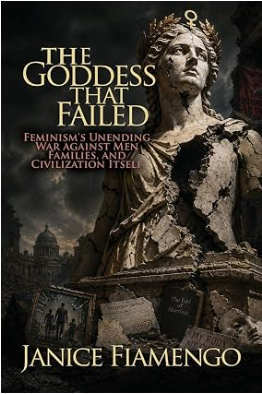

The Goddess That Failed by Janice Fiamengo

Filed under: Books, Media, Politics — Tags: , , , , — Nicholas @ 05:00

On her Substack, Janice Fiamengo shares the foreword to her new book, The Goddess That Failed: Feminism’s Unending War Against Men, Families, and Civilization Itself:

Feminism poses a threat to everything good in western culture, perhaps especially to women’s capacity to love, reason, and exercise self-restraint.

I was an adherent of feminism before I became a critic. I have felt its euphoric exultation and its self-flattering conviction of moral purity. Later, I recognized its hubris and moral hollowness.

I am familiar with feminism’s core texts, from Mary Wollstonecraft to Mary Anne Franks, having studied them and believed in them for years. I understand the psychology and the history of the movement because I lived inside it for many years.

Unlike others who have criticized feminism’s excesses, I contend that although there are some moderate feminists, there was never a moderate feminism inspired by reasonable goals and untainted by anti-male fanaticism. Feminism did not go wrong at some point in history, whether after the Second Wave or before, whether in anti-sex or pro-sex zeal. It was always rooted in resentment and envy, warped by utopian longings and false notions of female moral superiority.

Decades of feminist grievance-mongering and accusation have led inevitably to our present time of ceaseless complaints, anti-western causes, hysterical accusation, rampant divorce, a declining birthrate, millions of abortions, and anti-male cruelty. Feminism has undermined and will continue to undermine the stability and viability of all western societies.

From the first occasions when I began to speak and write about feminism in 2012 and 2013, I encountered the same response from feminists: “What you are describing is not real feminism” or “Those feminists do not speak for all feminists”, and so on.

I am regularly accused of hating myself, of hating other women, and/or of seeking male approval. I am accused, by those who have never studied feminism, of not understanding feminism.

It’s true that not all feminists are as fervid as an Andrea Dworkin or a Sally Miller Gearhart. They do not all fantasize, as Gearhart did (to much congratulation and gushing praise), about how much better life would be if the number of males could be reduced to 10% of the human population. They do not rhapsodize, as Mary Daly did, about a decontamination of the earth through such a reduction. They do not make jokes about killing men as a public service, as Mona Eltahawy did.

But it’s also true that such vicious women, and the many others who have lent their malign energies to the movement, have never been disavowed by other feminist leaders. In fact, feminists’ lack of shame before bloodthirsty feminist pronouncements is remarkably consistent.

True, there are many varieties of feminism, not all of them agreeing on every point: radical feminism, socialist feminism, lesbian feminism, post-colonial feminism, intersectional feminism, eco-feminism, animal rights feminism, abolitionist feminism, trans-inclusive feminism, feminism for sex-based rights, maternal feminism, and even (most bizarrely) conservative or reactionary feminism. Some extend their compassion to victim groups other than women, such as trans women, illegal immigrants, Palestinians, or the environment.

Such distinctions do not concern me because none makes a real difference.

None escapes the victim mentality: the belief that the history of humanity up until the present moment has been a history of (privileged, white) men oppressing women and other innocent victims; and that because of their alleged greater suffering and moral innocence, particular care and attention must be paid to women and to their unique capacity for empathy and social justice.

No version of feminism escapes the binary logic whereby the world is divided up into (sometimes intricate, overlapping) categories of oppressor and oppressed, victim and victimizer, to be treated differently and valued differently according to their identity category.

Because it thinks in terms of groups and divides the world into innocent and guilty, feminism is incapable of devising universal principles or pursuing individual fairness or freedom. It is distorted by its victim thinking, incapable of extending empathy to those feminists see as oppressors, and incapable of demanding accountability from those feminists see as victims.

B-29 Superfortress – A $3.7bn Trial By Fire

HardThrasher
Published 5 Aug 2026

The Boeing B-29 Superfortress was the most advanced bomber of World War Two — but also one of the most troubled and expensive aircraft ever built, and was plagued with flaws.

Developed at extraordinary speed, the B-29 could fly higher, faster and further than earlier heavy bombers while carrying a formidable bomb load.

It introduced pressurised crew compartments, remote-controlled gun turrets, advanced fire-control systems and enormous Wright R-3350 engines. But it couldn’t hit a barn door with its guns, had urine in the brakelines and engines which kept exploding due to all the flammable metal in them.

This video explores how the B-29 was designed, why it cost more than the Atomic Bomb to develop and how the United States overcame these challenges to get it into the war.

And yes, this is purely an excuse for me to make videos about the bomber war in the Pacific, so yar booh sucks 😊

00:00 Introduction
01:47 MOAR, MOAR, MOAR
05:48 Origin Story
12:52 Built It And They Will Come
17:57 The Battle of Kansas
19:12 Root Causes – The Key Problems
23:59 So Wright It’s Wrong
32:39 Conclusions

Sources

1. Pace, S., Boeing B-29 Superfortress, Crowood Press, 2003 p.53
2. Werrell, K.P., Blankets of Fire, US Bombers over Japan during World War II, Smithsonian Institution Press, 1996, p.82
3. Werrell, K.P., p.68
4. [Deleted Section]
5. Pace, S., p.23
6. Sixteenth Census of the United States, 1940–1940, NAID: 16660414
7. Werrell, K.P., p.75
8. Le May & Yenne, Superfortress – The Boeing B-29 and American Airpower in World War II, Westholme Publishing 2007 (original published 1988 by McGraw) p.78
9. Le May & Yenne, p.78
10. Werrell, K.P., p.80
11. Le May & Yenne, p.80
12. Werrell, K.P., p.67
13. Werrell, K.P., p.67
14. Werrell, K.P., p.80

Extreme political polarization

Filed under: Media, Politics — Tags: , , , — Nicholas @ 03:00

On the social media site formerly known as Twitter, Krzysztof Szczawinski sees the current extreme polarization of political views as being no longer merely ideological:

The Left and the Right are not two different ideologies. They have grown apart to become two different civilizations.

What characterizes a civilization is its relation to morality, to truth, to beauty, to wealth – and the relation of people to power and to reality itself. By this measure, the division is not political. It is civilizational. And Feliks Koneczny — the Polish scholar who mapped civilizational systems with greater precision than anyone before or since — described exactly this architecture a century ago.

The Right represents what remains of Western Latin civilization – the tradition that inherits Roman law, Greek philosophy, and Christian morality, and from that inheritance builds: individual liberty, equality before the law, orderly competition between individuals, free speech, private property, subsidiarity, classical beauty, monogamous marriage, the dual system of private and public law, and — most fundamentally — the primacy of morality over law. Not that law is the codification of morality, but that law must be consistent with morality. Power is not above ethics. What is wrong for the individual is wrong for the state.

The Left represents an amalgamation of what Koneczny called Byzantine, Turanian, and other eastern civilizational systems – characterized by centralism, the omnipotent state, the fusion of law and morality into a single power, and the subordination of the individual to the collective. In these systems, whatever power decrees becomes moral by definition. There is no external moral standard against which power can be judged. Hence the centralism, the bureaucracy, the etatism, the social justice that replaces individual justice, the family defined by the state rather than preceding it. And hence the violence, the lies, the censorship – because in a system where power is morality, opposition is not merely wrong. It is evil.

The most fundamental difference: in the Latin civilization, morality stands above law. In the Byzantine-Turanian systems of the left, there is only one law — which is simultaneously the moral code — and it is whatever the ruler decides. This is not a difference of policy. It is a difference of civilizational architecture. It runs all the way down.

Some will say a balance is needed – a yin-yang between order and creative destruction, between conservatism and progress. This was once true. It is no longer. The Left has ceased to be a force of renewal within Western civilization and has become a force for its demolition – operating not within our civilizational framework but against it, with incompatible rules and incompatible values. Different civilizations do not compete like tennis players who accept the same rules. They fight for power with no rules and all available means – violence, lies, and morally incompatible systems. Bringing a gun to a tennis match is not competition. It is conquest.

The good news: most people are not ideologically committed to either side. They are attached to prosperity, to safety, to beauty, to the life that Western civilization actually produces – and they can be brought back to it, once they understand what they are being asked to abandon. The civilizational argument, clearly made, is the most powerful argument available. Not left versus right. Not conservative versus progressive. Latin civilization versus its opponents. Freedom, morality above power, and the individual who cannot be reduced to a subject – versus the state that decides everything, including what is moral.

The good life versus the state oppression.

Once you see the civilizational map, the political map becomes legible. And once the political map is legible, the choice is not difficult.

The End of Eternity: Micromanaging History, Killing the Future

Filed under: Books — Tags: , , — Nicholas @ 02:00

Feral Historian
Published 3 Apr 2026

Isaac Asimov’s The End of Eternity can be read as a tangent to his Foundation series, an artifact of the optimism that permeated the years immediately preceding the dawn of manned spaceflight, or as a critique of central planning and social engineering. It also has a bit more character development than is typical for Asimov’s concept-focused writing.

00:00 Intro
04:33 Noys and Space
09:25 Closed Loop
11:14 The Superman
16:17 Losing the Stars
20:31 Ending Eternity
(more…)

QotD: John Nicholson, a Muslim saint who really hated India

John Nicholson really, really hated India. This was unfortunate for him in one sense, since he spent nearly his entire life after the age of sixteen there, until he died — violently — while still a young man. But in another sense, it really worked out for him, since it afforded him the opportunity to live out his dream, which was to abuse Indian people. Clearly, he was a complicated man.

[…]

[The First Anglo-Afghan War (1838-1842)] began with the British efforts to replace Afghan Emir Dost Muhammad with a more pliant leader, which in a pattern seen from the days of Alexander onward, involved an invasion, an attempt at a pacification, followed by a grim and growing awareness that the place is full of some of the most brutal and fractious people on Earth and is simply ungovernable, which terminates in a costly retreat, the country itself returning to its customary barbarism, efforts to change it having had all the effect of flinging an encyclopedia into a chimp enclosure. For the British, this meant early success, then an overwinter occupation in which their position deteriorated, then a mass uprising, whereupon they negotiated with the locals for a peaceful exit upon surrendering their arms. The retreating British were of course betrayed and massacred. One man made it out.

Nicholson, serving as an adjutant officer with a native regiment, had earlier been taken prisoner, and endured horrific conditions as such. He watched as his Hindu soldiers refused — to a man — to convert to Islam, and were executed one after the other. After having been released, he discovered that his younger brother Alexander had been murdered and mutilated by the Afghans while retreating with the rest of the army. The entire effort had been a great traumatic waste.

One might expect that Nicholson would hate the Afghans and perhaps revise upward his estimation of the brave Indian soldiers who had served under him. But while he did indeed revile the Pashtun tribesmen (“the most vicious and bloodthirsty race in existence”) he actually seems to have disliked them slightly less than the Hindus, perhaps on the grounds that no one that eager to kill Indians can be all bad. Indeed, he seems to have learned there some harsh lessons concerning what it would take to actually accomplish anything in the subcontinent, doctrines he would apply fastidiously and thoroughly. In many ways, he went a bit more native than he would have cared to admit.

After the war, Nicholson was promoted and given a series of administrative jobs, where he became well-acquainted with the chaotic political situation in the Punjab region. Mostly under the control of the Sikh Empire, the area had long been contested ground between that new faith and Islamic invasions from the Mughals to the southeast and the Afghans through the Khyber Pass to the west, not to mention restive Hindu Rajputs and Marathas to the south. The unstable (then and now) region of Kashmir lay to the north, and the whole of the region was plagued by innumerable bandits and warlords. The BEIC ruled through direct administration, client kings, and various alliances, the latter two of which its political officers (“politicals”) had to interact with on a regular basis. It was very much a situation out of George R. R. Martin’s fever dreams, constant betrayals, perversions of every kind, and even a Ramsey Bolton-esque Sikh despot who flayed men alive for amusement.

Nicholson was in charge of the Bannu area, where he rapidly made a name for himself as a local administrator. The whole of the Bannu was infested with bandits of all kinds, from jihadis to Hindu cultists to normal brigands, and the people lived in constant fear of their depredations. Nicholson had no real interest in bettering lives, but he had even less interest in allowing any Indian, anywhere, to challenge his authority. So he set about fixing the problem as only he could.

Nicholson arrested and executed scores of bandits, rapidly processing them through his very efficient court system. The idea of impartially dispensing justice without respect to person or affiliation was quite new to the area, but Nicholson made sure the locals adjusted quickly, tolerating not even the slightest hint of disrespect from anyone, no matter who he was. When a local Muslim leader casually spit on the ground in front of him, Nicholson made him kneel and lick it up. Anyone who failed to display prompt obedience to his commands he had flogged immediately, and was the bane of servants, who were often the causal recipients of hurled cups and dishes. He was a very hands-on leader, not the least hesitant to get them dirty in a quite literal sense. At one point, when his local police were unwilling to pursue a dangerous gang leader, Nicholson rode alone to the man’s village, approached him on the street, and killed him with his sword after the suspect failed to submit to arrest. Nicholson kept his severed head on his desk pour encourager les autres.

Interestingly, such draconian brutality seems to have actually made Nicholson popular. He was harsh, unyielding, and wholly indifferent to their culture, but that very indifference made him unassailable to anything but his sense of duty. He was unbribable, as the people of India had absolutely nothing he wanted, and his complete contempt for their social norms meant that Hindu, Muslim, or Sikh, Brahmin or outcast, Aryan or Dravidian, all got the exact same treatment, prompt and thorough. His mad fearlessness meant that he was similarly immune to threats. Criminals, whoever they were, received savage punishment, but the law-abiding were left in peace; Nicholson had no desire to “improve” them or their society like his contemporary Macaulay. In a real sense, for the first time, the diverse people of the area were free, under Nicholson’s rule, to live as they wished without the violent misery that had previously characterized the region. It was a multicultural success story, festooned with the occasional decapitated head.

This being India, the people expressed their feelings towards him in particular ways. A body of wild Pashtun raiders, admiring Nicholson’s capacity for ruthless violence and his grim charisma, attached themselves to him as a personal guard, fedaykin to his Muad’Dib, serving without pay and loyal only to him. In a theologically fecund area with a strong tradition of syncretism and cults of personality, Nicholson naturally became the object of worship for a group of fanatical devotees. He in turn naturally despised this, having his worshipers flogged as public nuisances, but this only served to increase their devotion to their inscrutable, violent deity. In some parts of India, the Cult of Nikal Seyn survived as a Shia devotional movement, with Nicholson cast as a Muslim saint bringing justice to a war torn land. The last member died in 2004.

Librarian of Celaeno, “The Man Who Hated India”, The Library of Celaeno, 2026-05-04.

Powered by WordPress



