Quotulatiousness

September 21, 2026

“The completion of the Parkinsonian cycle”

Filed under: Architecture, Britain — Tags: , , — Nicholas @ 05:00

In The Critic, Ioannes Chountis de Fabbri shows how Parkinson’s Law still applies long after C. Northcote Parkinson’s work:

“Admiralty Arch” by Leonard Bentley is licensed under CC BY-SA 2.0 .

In 1958, C. Northcote Parkinson, a prescient observer of bureaucracies, noted how perfection of planned layout is achieved only by public institutions on the point of collapse. Parkinson’s observation is prima facie paradoxical. Yet when an institution is growing during an exciting time of expansion, even adventure, there is little time to design the perfect headquarters. That luxury is afforded later, when all the important work has been completed.

Take St Peter’s Basilica, for example. It was designed only after the political power of the Papacy had been significantly curtailed. Or the Palace of Nations, opened in 1936, when the League of Nations’ failure as an institution was already evident. Even Buckingham Palace was expanded at a time when the monarch had assumed a rather ceremonial role in the constitution.

I’ve written about Parkinson and his sardonic observations in these august pages before, but what brought him to my mind again last week was the sight of the renovated Admiralty Arch. Parkinson might have traced the long arc of decline as far as decay but stopped short of its final stage. We may rejoice, for we have now arrived at the terminus: once a building has become both perfect and symbolic, it is at last available to be sold off for a song or leased out. We might call this the completion of the Parkinsonian cycle.

Admiralty Arch is a familiar fixture of the London landscape. Raised at the initiative of King Edward VII in memory of his mother, it became the home of Britain’s naval command. It was where Sir Winston Churchill designed his not-always-successful naval expeditions. It will soon open its doors again as a new member of the Waldorf Astoria hotel family. Some connection with the past will be at least retained through the Pol Roger champagne served at its bar.

What is happening in the Mall is symbolic of a wider drift. Half a mile down the road, the Old War Office in Whitehall was converted (guess what?) into a luxury hotel. In Covent Garden the old cells of Bow Street are also now a hotel curiosity. The grand County Hall, which continues to stare somewhat antagonistically across the Thames at Parliament, now welcomes not county councillors but visitors as a hotel and, at least more imaginatively, an aquarium.

If luxury hotels are not your cup of tea, fret not, for the tyranny of “adaptive reuse” has a downmarket cousin. The humbler ruins of Middle England have been put to new purposes. A former British Home Stores — that cathedral of the affordable cardigan – in Slough was discovered last year to have been converted into a huge marijuana farm. Seventeen hundred plants thrived under grow-lamps in the same aisle where once school uniforms could be purchased, whilst the cultivators were dozing on a mattress by the fire exit. At least the building was, in the developer’s immortal phrase, “brought back into use”.

A short check-in on what’s happening in Canada

Filed under: Cancon, Europe, Media, Politics — Tags: , , , , , , — Nicholas @ 04:00

As I’ve mentioned before, even though I’m Canadian I don’t cover a lot of Canadian stories unless it has broader international interest. That said, I do think it’s worth the effort for non-Canadians to occasionally get some insight into what new insanity is going on above the 49th Parallel. The Rewrite has a helpful summary of recent news from the Maple Gulag that may be of interest:

For a Canadian blog, I get a lot more non-Canadian visitors.

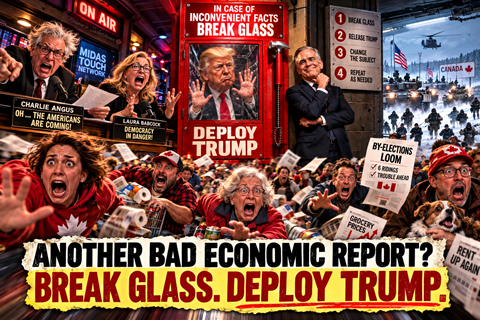
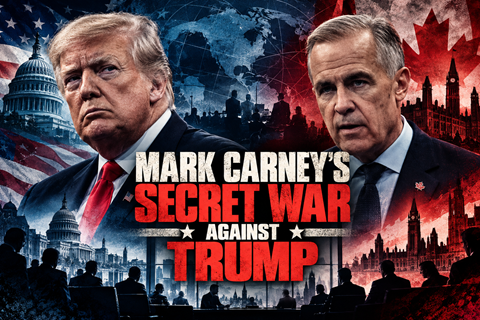
It looks like Canadians are about to cheerfully reconnect with what they were taught for a decade is their unforgivable colonial past. First, the Wall Street Journal (WSJ), primarily citing unnamed sources, reported that Prime Minister Mark Carney was hoping to make Canada an associate member of the European Union. But then CTV News, quoting a senior PMO official, reported Canada wasn’t seeking EU membership “in any capacity.” Paul Wells wrote a column explaining how WSJ had torqued the story and then Carney, who tends to get truthy under pressure, as Brian Lilley pointed out, told reporters he wasn’t seeking anything called membership but something something else something something. A couple days later, EU President Ursula von der Leyen disagreed with that line when she declared in a speech that she wanted to join with Canada at the “highest level possible” and she’d be happy to welcome Canada as an “associate member.” In response, the Financial Times reported other EU leaders were thinking, uh, not so much about the whole thing but good luck Canada and the Daily Mail chimed in with news Brussels was in an uproar. Then, proving it was right all along, WSJ quoted a Canadian official saying “We were the ones who proposed associate membership”, which Carney and his office had denied.

US President Donald Trump said if Canada joins the EU with a hostile intent (the qualifier having been omitted in some Canadian reports), the USA will bring in more EU tariffs. Our PM recaptured headlines with a speech promoting an undefined but aspirational union and flew home to a nation that polls indicate is now wildly enthusiastic about embracing settler culture even while the Daily Telegraph said the whole thing was already unraveling.

The challenge for journalists was to make sense of all this prestidigitation while wondering if maybe they should have taken the time to ask who Carney was hanging out with during his recent vacay in Tuscany. Many were left wondering if PMMC could do this without Parliamentary approval which, as every working journalist should know, he can, partly because they let him. When it comes to treaties, it’s a one-man show. Credit the Toronto Star‘s Althia Raj for noting in regards to Carney’s plan to further privatize major airports that “The Liberal government has no mandate to do this”.

While The Line‘s Jen Gerson and others were taking umbrage with the PMO’s preference for foreign media, John Ivison was getting some decent insider dirt for National Post on how vigorously bureaucrats are resisting the PM’s need for speed — a concept with which they are notoriously unfamiliar.

A further chapeau to Brian Passifiume for the scoop on how, while Carney is urging us to buy Canadian, his government hired an American company to run his Toronto investor match making sessions.

I have frequently pointed out that the mystery of why Germans supported Hitler and the National Socialists in the 1930s comes down largely to the value of non-stop propaganda: ordinary Germans read the newspapers and listened to the radio and the messages they got were increasingly co-ordinated to praise the party and the work of its leader and to demonize enemies of the state. What brought it home to me was just how efficiently Canadian relic media spare no effort to praise our very own Dear Leader and belittle the opposition or private citizens who don’t automatically wave their elbows on demand:

Putting on the neuroscience hat for a minute.

When people are called “traitors” simply for saying Canada should negotiate a workable deal with the United States, something interesting is happening psychologically.

The brain has a fast threat-response pathway and a slower regulatory pathway. The amygdala can detect a perceived threat almost immediately and trigger a stress response.

When people feel they are losing control or fear social judgment, cortisol can rise. Under enough perceived threat, slower prefrontal-cortex functions such as weighing evidence, considering alternatives and regulating emotional reactions can become less dominant.

Now add politics.

If Trump, the United States, Canadian sovereignty and national loyalty become emotionally loaded symbols, a disagreement over tariffs can stop being treated as an economic question. It becomes: “Are you with us or against us?”

That is where tribal thinking can take over.

Calling somebody a traitor because they want negotiations is the fast response. The slower question is: What outcome produces the least economic damage for Canadians? What does retaliation cost us? What can Canada realistically gain through negotiation? What happens to workers, farmers and businesses if there is no deal?

You can oppose a deal after doing that analysis. You can support one. The important part is how you reached the conclusion.

I saw much the same psychological process during COVID. Questions that should have involved evidence, probabilities, costs, benefits and changing information often became tests of political identity and loyalty. Once that happens, people defend the tribe first and examine the evidence second.

The neuroscience doesn’t tell us which political side is automatically correct.

It does tell us why fear, loss of control, social judgment and group identity can push people toward rapid emotional responses, while stepping back and deliberately examining evidence requires more cognitive regulation.

Sometimes the most rational thing you can do is refuse the loyalty test and ask the boring question:

What actually works?

Price controls work … but not the way they’re intended to

Filed under: Business, Economics, Government, History, USA, WW2 — Tags: , , , , — Nicholas @ 03:00

Politicians love to intervene in markets, trying to impose their preferred solution to “problems” like high prices. But markets don’t work the way politicians think they do:

Price ceilings don’t manage markets, they destroy them. In 1946 the US meat market collapsed because of it.

The Office of Price Administration set beef ceiling prices during World War II. Ranchers and meatpackers adapted: some held cattle rather than sell at a loss, others shifted product to black markets, and slaughter volumes dropped. The OPA briefly lifted controls in mid-1946 under pressure. Beef flooded back into stores almost immediately.

Then Congress, drowning in constituent complaints about inflation, reimposed ceilings in August 1946. Slaughter collapsed within weeks. By October 1946, beef virtually disappeared from American grocery store shelves. You could walk into a butcher shop in Chicago or New York and find nothing. Scarcity was manufactured entirely by Washington bureaucrats setting prices below what producers needed to cover costs.

Mises explained the mechanism precisely: a price ceiling creates a shortage, which produces political pressure for rationing and further controls, spiraling into comprehensive economic disorganization. The OPA ran that experiment in real time on the American food supply.

President Truman ended meat controls on November 9, 1946. Beef returned within days. The supply existed the entire time. Ranchers and packers simply refused to sell at confiscatory prices, and they were correct to refuse. Coercive price suppression causes economic destruction, and 1946 proved it at the grocery counter.

Custom-Order Walthers: Model HP and P38 in 7.65mm Parabellum

Filed under: Germany, History, Military, Weapons, WW2 — Tags: , , — Nicholas @ 02:00

Forgotten Weapons
Published 8 May 2026

When Walther first developed the P38, it was designated the Heerespistole — “Army Pistol”. Only after getting official Wehrmacht adoption did it get the designation P38. Walther offered models with both designations for commercial sale, albeit not to just anyone. Army officers, Party members, and other high-placed individuals could get pistols from Walther outside military orders. About 20,000 such guns were made during the war, and a tiny subset of them — just 225 — were made specifically in 7.65mm Parabellum instead of 9mm Parabellum. Today we are looking at two examples of those.
(more…)

QotD: Military doctrine

Filed under: History, Military, Quotations — Tags: , — Nicholas @ 01:00

Doctrine. Something I keep promising to write about and then don’t. Doctrine is, “the body of formal knowledge that tells a fighting force how it is expected to fight” (Parshall and Tully, 83). it is not a plan for a specific war, but the general planning framework a military brings to every war; think of it like a very complex list of “best practices”. This is necessary because war is too complex to make this stuff up on the fly. That said, just because a military has a written out doctrine doesn’t mean they can execute on that doctrine; the doctrine may call for things that military (or its political leaders) are simply not capable or willing to do. That said, a military that finds itself operating well outside its own doctrine is likely in trouble. Russian maneuver warfare doctrine generally goes by the moniker Deep Battle or Deep Operations (Глубокая операция) and to say that the Russian Armed Forces [in the 2022 invasion of Ukraine] have not managed to pull off their doctrine in practice is a significant understatement.

Bret Devereaux, “Miscellanea: A Very Short Glossary of Military Terminology”, A Collection of Unmitigated Pedantry, 2022-03-25.

September 20, 2026

“Honest” graft

Filed under: Business, Government, History, USA — Tags: , , , , — Nicholas @ 05:00

Politicians and corruption go together like wine and cheese but not like crime and punishment for some reason. It’s almost as though the path to wealth and influence goes through political connections rather than economic efficiency and innovation. Chris Bray points out the difference between the “honest” graft of days gone by and the kind of all-consuming corruption we see far too often these days:

Tammany had honest graft: They said they would build a bridge or a park, and then they built it. The cost would be sort of not nakedly obscene, and no money would be missing if there was an audit. But by the most remarkable coincidence, the land where the park or the highway or the approaches to the bridge would go turned out to be owned by very close friends of the Tammany machine, who then got paid a nice little premium for the acquisition of land that was needed for a public purpose, and maybe the people who sold the concrete and the lumber and supplied the labor also turned out to be awfully close friends of the politicians who approved the project, but at the end, there’s the bridge. There’s the new highway, and it cost something within shouting distance of what you would expect the thing to cost. It added up, but they did some fairly polite stealing. There was respect in it. It wasn’t honest, but it wasn’t wide-open looting.

An extremely common form of graft in American politics is the “Three Bs” that Robert Caro famously described in Texas politics: beef, bourbon, and blondes. Cocktails, steak dinners, and maybe if you were a legislator who played ball a nice young lady came and visited your hotel room during the legislative session. But that graft was about topics like who got the state highway contract. Some money traded hands, there was dishonesty in the allocation of public resources, and the highway got re-paved.

The Quality Learing Center model, or the high-speed rail model, or the 800 hospices in Los Angeles with patients that never died, all represent a model of grift that comes from a culture of complete shamelessness. In California, nearly 700 non-profit corporations exist to provide shelter to the homeless, and over 500 non-profit corporations exist to prevent homelessness and provide social services to the homeless or to people who may become homeless. There’s quite a bit of overlap between those categories, so there aren’t 1200+ non-profits, but there are hundreds, and they have billions of dollars in income.

Some are entirely legitimate and do real work. There are people in California who will be fed and sheltered tonight by a non-profit corporation that will keep them from sleeping on the street. It’s not at all my argument that no one in any non-profit anywhere ever does anything real. But the overall picture is theft, and the premise that the flood of money is ending homelessness (or is meant to) is a lie, and a dark one. Gavin Newsom presented his ten-year plan to end chronic homelessness in 2008.

A Panzer For All Seasons – Panzerkampfwagen IV – Nazi Rearmament 06

Filed under: Germany, History, Military, Weapons, WW2 — Tags: , , , , , , , — Nicholas @ 04:00

World War Two
Published 19 Sep 2026

The Panzerkampfwagen IV began life as a short-barreled infantry-support tank. By the middle of World War II, it had become Germany’s principal medium gun tank, carrying thicker armor and a long-barreled 7.5 cm gun capable of confronting the Soviet T-34 and KV-1.

It was the only German tank to remain in continuous production throughout the war. From Poland and France to North Africa, Kursk, Operation Bagration, and the ruins of Berlin, the Panzer IV survived through constant adaptation. Its weight grew from roughly 17.5 to 25 metric tons, while its role changed from specialized support vehicle to the dependable workhorse of the Panzerwaffe.

But every upgrade imposed a cost. Greater weight strained a chassis already approaching its practical limits, while increasingly powerful Allied tanks and anti-tank weapons steadily overtook its protection. Even after the Panther entered service, production problems and mechanical failures ensured that Germany could never dispense with the older Panzer IV.

In this episode of our Nazi Rearmament series, we trace the Panzer IV from its secret origins under the restrictions of the Treaty of Versailles through its wartime evolution and postwar service with the Syrian Army. It is the story of a remarkably adaptable weapons system, the industrial limitations of Nazi Germany, and the murderous war of aggression that this tank was built to serve.

Check out our episode about Panzer III: • The Backbone of the Nazi Panzer War – Panz…

There are wedding gifts and there are wedding gifts

Filed under: Media, Politics, Russia, USA — Tags: , , , , — Nicholas @ 03:00

Gift-giving has been a thing since caveman days, they say, but sometimes gifts carry strings along with them that are impossible to ignore, or as The Grim Historian puts it, “never let a mobster pay for your wedding”:

Nothing says “just a wedding gift” like the benefactor whose role stayed secret until ProPublica had to put an arrow over his head.
Photo: Laura Gordon Photography via Instagram; annotation/source: ProPublica.

My Grandma Ella had a rule about gifts, usually delivered while waving a wooden spoon over a white apron so stippled with tomato sauce it could have been entered into evidence.

She would say, “Never accept gifts. That’s how a rich man turns you into a beggar.”

That may sound cynical, but no Italian survives a lifetime of weddings, funerals, Sunday dinners, and relatives saying “forget about it” without learning that generosity has a very long memory.

A gift creates an imbalance. You give me something. Now I am indebted to you. Sure, you may insist it is “just a gift.” But I have seen enough crisp white envelopes exchange hands to know there are gifts, and then there are … gifts.

Say I give you a hundred dollars and tomorrow you hand me a hundred dollars back, congratulations…we have invented banking. Or say you sign up for my breathtakingly grim history newsletter. I have provided you a service in exchange for your 5 ducats, but we are all clear on the bargain.

But suppose I give you something you can’t return. Not tomorrow. Not next year. Now the books stay open. And a man who keeps your books open is not your friend. He owns a piece of you.

Which brings us to Donald Trump Jr.’s wedding and who owns him.

ProPublica reporters Justin Elliott, Brett Murphy, Joshua Kaplan and Alex Mierjeski reported this week that Umar Kremlev — a Russian businessman closely associated with Vladimir Putin — gifted Trump Jr. and Bettina Trump quite the wedding shindig in the Bahamas.

According to records and interviews ProPublica reviewed, Kremlev paid to rent a private island, covered an elaborate fireworks show, and had his team help organize the festivities. There were helicopters, seaplanes, oceanfront villas, and a five-tier funfetti cake flown in from Florida. So not exactly the crystal punch bowl from Aunt Linda.

Fortunately, after ProPublica published its story, the newlyweds fessed up. Yes, Don Jr. and Bettina Trump have a wealthy Russian benefactor (sorry, “friend”) granting party favors. Then they made a statement that would have my Italian grandmother shaking her mano fica.

“Friendship doesn’t require a political motive. Generosity doesn’t automatically come with an agenda. And sometimes a wedding gift is simply a wedding gift.”

Just a gift.

What Caused the War of 1812?

Real Time History
Published 17 Apr 2026

The War of 1812 broke out after a series of escalations between Great Britain and the still young United States. The impressment of American sailors into the Royal Navy desperate to crew their ships in the ongoing war against Napoleon, the question if the US could trade with Britain and France at the same time and thus profit of the war, all came to a head after failed negotiations.
(more…)

QotD: Brexit – the process is the punishment

Filed under: Britain, Europe, Government, Politics, Quotations — Tags: , , , , — Nicholas @ 01:00

Shortly after the results of the Brexit referendum were declared and Mr. Cameron resigned as Prime Minister, the French newspaper, Le Figaro, published a little cartoon. Two French peasants are looking across the Channel towards England, and one says to the other (or words to this effect), “They do things differently over there. They pay attention to referendum results.”

Well, yes and no. There is little doubt that a large part of the political class, the upper bureaucracy and the intelligentsia did their very best to prevent, or at least obstruct, Britain’s departure from the European Union. The Prime Minister who followed Mr. Cameron, Mrs. May, was herself in favour of remaining, and yet she was put in charge of the negotiations on the British side. This was like putting an ardent pacifist in charge of an army, and indeed she managed to negotiate a deal that (from the British point of view) was the worst of both worlds.

It should have been obvious from the first that Brexit was an existential question for the European Union, as well as for Britain, of course. If Britain prospered, or simply failed to suffer greatly, after Brexit, this would have been a disaster for the European Union, in the populations of which there was significant and growing scepticism of or opposition to the “European Project” (it is the only project I know whose end is never stated, though I suspect it is a superstate in whose administration politics in the normal sense of elections, appeals to public opinion, etc., are not to be allowed to intrude). An example had to be made, and in effect has been made. No other member state will want to go through what Britain has gone through these last four years. The light must not be worth the candle.

Theodore Dalrymple, “European Empire, Fractured”, Law & Liberty, 2020-11-10.

September 19, 2026

International travel used to be a true luxury: it’s going back to being a luxury again

Filed under: Business, USA — Tags: , , , , — Nicholas @ 05:00

I was never a serious globe-trotter and international flights were something I did on the company’s dime or rare trips back to England to visit family. But it was still theoretically possible for someone in my very middle-class cohort to travel extensively for fun. (No longer, of course, as my pension definitely wouldn’t stretch as far as airline tickets.) As Copernican points out, we’re looking at a future — indeed a very near future — where there will be a revived “Jet Set” where it is only the wealthy who can afford to travel:

With the creation of datacenters, artificial constructs, and global internet, being away no longer comes with the same psychological independence that it once did. Many are so hopelessly reliant on the noosphere that they can scarcely function without direct contact to it in one form or another. Particularly zoomers.1 Thus, the idea of “space” becomes as much cognitive as it is physical. Without the cognitive disconnection, the physical disconnection means nothing, and with Starlink now providing access literally anywhere, the wild is often perceived as just as observed and restricted as anywhere else.

The thesis of this argument is that luxury will no longer mean space away from other people (though there will always be a demand for that) but that the near-future will see a sort of throwback philosophy regarding luxury. The capacity to travel.

    This article was instigated by recent news updates regarding the airline industry. Namely, that many airline companies are ripping out economy class seating to make space for luxury seats and suites. Simply put, the poor can no longer afford to travel, and many among the former middle-classes cannot either.

Travel is increasingly becoming an economy restricted to the wealthy, international travel even more so. This is something that should be considered when one considers a backup country.2

We see the influencers who once peddled their lifestyles in Dubai and Mexico quietly rolling back home. Part of that is the cost of frivolous travel, and part of that is the result of global instability. I purchased international plane tickets immediately before and after the crisis in the Strait of Hormuz, and the difference in price expressed more than a news article on the oil crisis ever could.

It is unlikely I’ll be traveling internationally again for the foreseeable future.

More, it’s unlikely many people will be traveling much for the foreseeable future at all. Business moguls, billionaires, and those who absolutely must show up in person, sure. But the average vacationer is not likely to lightly book a flight from Las Vegas to Tokyo. As the costs associated with travel increase, the heartland of the United States and the isolated villas to which the wealthy once flocked will see their own membership slowly contract.

    One of the reasons why the wealthy prefer owning vacation homes in those places is due to the fact that other wealthy people live there. As that network begins to slowly contract, so too will the value of possessing property in those locations.

The price spikes are likely to be sticky. Those with dreams of the cost of gasoline, diesel, or jet fuel coming back down are (I think) delusionally hopeful. If the inflation of the last few years since the pandemic has demonstrated anything, it’s that enshitification can affect all industries, and once it has, it doesn’t tend to go away. Regardless of how the conflict in Iran goes, the new higher prices are functionally baked into the global economy. That will be its own can of worms for governments to untangle.3

    At least there’ll be fewer girls traveling to Brazil to get their body-count reset via the best grift I’ve ever heard of. Soon the trip there will cost more than the $13,000 “treatment”. Seems like a lot of trouble when an AI-partner can just validate all your delusions for you at home.


  1. About half the population now suffers from a degree of Nomophobia. That is the fear of being without a mobile connectivity device. For those individuals, the concept of being “away from people” is meaningless. Constant connection to the feed has become a psychologically ingrained state. Effectively, such people require a constant connection to the collective human psyche to the point that their sense of self relies on it.
  2. Conceptualizing the Collective Unconscious of a People

  3. The Billionaire tendency to purchase bunkers in various parts of the world is truly impressive. We’re talking multi-billion dollar facilities built simply to afford these individuals not merely a sense of safety, but a place away from the rest of humanity. They’re buying themselves spiritual and physical space of their own.
  4. The United States has already floated the idea of a Diesel Export Ban. The US economy runs almost exclusively on Diesel fuel for big-box trucks shipping food and goods around the country. It’s among the least efficient systems globally, but permits people to live anywhere with a (relatively cheap) connection to the intercontinental road network. With the price of diesel now cresting $6 a gallon, it may well reach an unsustainable point for low-value goods. Thus, the consideration of an export ban. Banning diesel exports would preserve low(er) prices in the United States proper while forcing foreign nations to eat the cost on the international market.

CAMRA and the fight to save British beer in the 70s

Filed under: Britain, History, USA — Tags: , , , — Nicholas @ 04:00

On his Substack, Henry Jeffreys recommends a couple of YouTube videos that beer fans might find interesting:

Every so often I vow that I am going to stop wallowing in nostalgia and engage with some contemporary culture: watch some new films, read a new book, and maybe even listen to some new music. But then I discover a treasure trove of old Jonathan Meades documentaries on Youtube and I’m lost. There’s so much good stuff on there that I am very tempted to cancel my Netflix subscription and take out Youtube premium, which means I won’t have to watch the incredibly irritating adverts. That’s another thing that’s not as good as it used to be.

Here’s a few booze-linked things that I’ve been watching recently.

[…]

The battle for Britain’s pint

I’ve long been a real ale enthusiast, in fact I wrote something for the Daily Telegraph on the subject earlier this month. My father was an early member of CAMRA, the Campaign for Real Ale. Meades refers to the organisation, not altogether negatively, I think, as “anti-metropolitanism, anti-modernism”. There’s something distinctly Hobbity about tilting at progress and, to some extent, winning. Live, unpasteurised beer was becoming a rarity by the 1970s, and now it’s easy to find in almost every town and village that still has a pub. It was described as “the most effective consumer pressure group in Europe”.

This documentary from 1977 looks at the battle to save Britain’s traditional beer. It’s particularly worth watching for the young bearded earnest CAMRA members at their conference. There were also a surprising number of women. It makes you realise that while real ale has a stuffy image today, at the time it was fashionable. It was a youth movement, not a bunch of reactionary old men, but young people seeing a problem and doing something about it. It is inspiring. If it wasn’t for these earnest, bearded young men and women (mainly without beards), then much of what we take for granted about British beer would no longer exist. The movement also inspired American craft beer, which in turn inspired British craft beer. It is hard to overstate how important CAMRA was for beer around the world.

Whicker’s World — Englishmen in New York

If you want to see what the state of American beer was like in the early 1980s, watch Alan Whicker’s documentary about Englishmen living in New York. The star is entrepreneur Mancunian Richard Wrigley, who is behind the Manhattan Brewery Co. He says at one point: “I like good beer and there wasn’t any in the States”, and compares the local brew to Perrier. He has taken over a gigantic derelict industrial building and is trying to turn it into a brewpub with brewing equipment from Germany. He’s even shipped over two dray horses at vast expense. Wrigley is completely unflappable, confident that they will open in two weeks even though the work is nowhere near finished. Whicker is such a great interviewer, warm and avuncular, but he keeps pressing Wrigley about the expense and where the money is coming from.

Amazingly the brewery, which cost over a million dollars, did actually open, but it struggled to make money and eventually closed in 1995. Richard Wrigley, who died in 2022, is a fascinating character. He’d make a great subject for a feature film. There’s something of a chancer about him, slightly slippery but very charming. At one point Wrigley says that he has been described as a “conman”, but the Americans mean it as a compliment. It’s well worth reading up on the story of the Manhattan Brewery Co. While it failed, the head brewer Garrett Oliver would go on to make beer at the Brooklyn Brewery in 1994 — a company that would transform beer in New York. By the time I visited the city for the first time in 2003, good beer was everywhere.

Internal migration patterns in the United States

Filed under: Bureaucracy, Business, Economics, Education, Politics, USA — Tags: , , , , , — Nicholas @ 03:00

It’s become a commonplace to see yet another tech company pulling up stakes and leaving California … and the state government seems determined to get rid of many of their biggest economic contributors with new legislation to make life harder for companies and wealthy individuals (see the second item, for instance). But it’s not just California losing population to other states:

Universities in the NCAA Southeastern Conference.
Map from Wikimedia Commons

Americans have long expressed their political preferences at the ballot box and their economic preferences with moving vans. Increasingly, they are expressing a third preference — where their children attend college — and the destination looks remarkably like the other two.

In 2025, North Carolina gained more than 84,000 residents from other states, more than any state in the union. Texas added over 67,000. California lost more than 229,000, and New York lost nearly 138,000, continuing a migration that has by now acquired the character of a rout rather than a trend. Yet few have noticed that the same states drawing families and factories are drawing something else: students, and with them, the institutions built to educate them.

For most of the 20th century, the hierarchy of American public higher education was as fixed as the Electoral College map of a one-party era. Berkeley, Michigan, Wisconsin — these were the names invoked when a public university wished to be mentioned in the same breath as Harvard. They remain formidable.

But formidable is no longer synonymous with singular.

Consider what the Southeastern Conference, or SEC — an organization whose reputation was built on forward passes rather than research grants — has quietly assembled. Texas A&M enrolls more than 79,000 students, a figure that would have seemed a typographical error a generation ago (see here and here). The University of Florida enrolls roughly 56,000 (see here, here, and here). Collectively, SEC institutions now educate more than half a million students, with total enrollment around 620,000 (see here and here), a statistic that ought to interest university presidents in blue states rather more than it apparently does.

This is not the result of some coordinated Southern strategy hatched in a statehouse. Universities are lagging indicators of demography, not leading ones. States that attract families acquire, in due course, college students. States that generate jobs retain their graduates rather than exporting them, as Rust Belt states have exported so much else.

States that welcome capital acquire, eventually, the tax base with which to build ambitious public institutions. Ambition, it turns out, is portable. The family that leaves Illinois for Tennessee brings its expectations for its children along with the furniture, and both eventually find a permanent address in Knoxville or some other city in the Volunteer State.

Affordability, too, plays its part, and Americans have noticed that a nationally respectable degree from a Southern flagship costs a fraction of what state flagships elsewhere demand for a comparable credential, at a moment when the public’s confidence in the value of a degree generally has become, to put it charitably, provisional.

One of California’s most impactful proposed pieces of legislation has been their “Billionaire tax”:

California’s proposed “billionaire’s tax” on the assets of wealthy state residents enjoys a slim lead in the polls leading up to the midterm elections, though so do two measures that, if they draw more votes, could render the scheme unenforceable. That makes for a high-stakes battle as many prosperous Californians are already fleeing to escape a tax that could force them to surrender ownership stakes in companies they’ve founded. Even if it doesn’t pass, a new report warns that the proposal is based on faulty research and could do vast economic damage.

[…]

The Wealth Tax Scheme Is Based on Unusual Accounting

Now, a new report finds the proposed wealth tax is not only dangerous for California’s economic prospects; it’s also based on bad research. According to the report’s author, Independent Institute research fellow Kristian Fors, “this proposal has been heavily influenced by the work of UC Berkeley professors Emmanuel Saez and Gabriel Zucman to justify the concept of wealth taxation”. Saez and Zucman have generated news headlines with their claims that the wealthy are undertaxed in comparison to lower-income Americans. But as Fors points out, the estimate that drew so much news coverage claimed that “the overall tax rate for the top 400 richest households in the nation was 23 percent”, while just a year earlier, Saez and Zucman “estimated that the top 1 percent paid an overall tax rate of approximately 36 percent; the authors found a share of 41 percent for the top 0.001 percent of earners in the most recent year of their survey, a category encompassing billionaires and high multimillionaires”.

The discrepancy, according to Fors, comes from how the economists treat corporate income taxes. Conventional analysis assumes that corporate taxes burden shareholders, workers, and consumers as the tax gets passed on. That results in the earlier estimate of a 41 percent tax rate for the wealthiest. To reach their much lower 23 percent estimated rate, Saez and Zucman used a non-standard analysis — and while the results of that approach won news coverage, they weren’t subject to peer review.

“Saez and Zucman’s empirical work on the California billionaire tax proposal retains these same unconventional accounting practices from 2019 without addressing their conflict with the mainstream corporate tax incidence literature,” cautions Fors.

The Independent Institute report observes that privacy laws prevented Saez and Zucman from drawing on personal income tax and other financial records. They relied on the Forbes 400 list, and “a 2010 study by a group of IRS statisticians found that the Forbes 400 dramatically overestimates the net worth of individuals in their lifetimes when compared to probate records of their estates after death”. Adjusting for that discrepancy produces estimates of “an average effective tax rate of 38 percent between 2018 and 2020, as compared to the 24 percent claimed by Saez and Zucman for this period”.

How Britain’s oldest Proof House still tests modern military weapons

Filed under: Britain, History, Military, Weapons — Tags: , — Nicholas @ 02:00

BFBS Forces News
Published 12 May 2026

For nearly 400 years a succession of Proof Masters have been making sure firearms in the UK are safe, stopping dangerous guns from being used.

Every firearm, whether it’s for military use or not, has to go through something called a proofing process.

This is a series of tests to make sure the weapon is not only made properly, but it can withstand the pressure generated by modern-day ammunition.

QotD: Islam and the rise of Western hegemony

Filed under: History, Quotations, Religion — Tags: , , , — Nicholas @ 01:00

Governments across the Islamic world began to adopt constitutions that directly contradicted what Muslims had always believed was the perfect and eternal law given to them by God. Simultaneously, they began to sign up to international bodies that, despite their claims to neutrality, were shot through with the ideological assumptions of the West. The most significant of these was the United Nations, which in December 1948 issued a definitive statement of its guiding principles: the Universal Declaration of Human Rights.

This, which claimed in its preamble that acknowledgement of “the equal and inalienable rights of all members of the human family is the foundation of freedom, justice and peace in the world”, was in reality not at all as “universal” as it affected to be. Standing recognisably in a line of descent from the proclamations of the French Revolution, it served as well as a repudiation of some of the more foundational assumptions of Islamic theodicy.

The concept of human rights was an alien one to Islam. Muslims, traditionally, had not believed in natural law. There were only laws authored by God. The insistence of United Nations agencies on “the antiquity and broad acceptance of the rights of man” derived, not from the great inheritance of the Sunnah, but from the philosophes of the 18th century. Tellingly, the Universal Declaration of Human Rights had been signed — where else? — in Paris.

Western hegemony over the Islamic world, then, did not end with the collapse of direct rule over it by the European powers. Western values, Western assumptions, Western concepts of law, all of them packaged and marketed as “universal”, continued to exercise an overweening dominance in global affairs. If this was true for Muslims in lands that had sought to reconstitute themselves as nation states, then how much more so was it for Muslims who, in the decades that followed the Second World War, travelled to Europe, and settled there in growing numbers.

Tom Holland, “The age-old tension between Islam and France”, UnHerd, 2020-11-02.

Older Posts »

Powered by WordPress