Quotulatiousness

September 12, 2026

Berlin after 1918 … the decadence the Nazis fought

Filed under: Germany, Health, History — Tags: , , , , , , , , — Nicholas @ 05:00

The period after the First World War in Weimar Germany was a huge break with the Wilhelmine past, especially in Berlin and some other large cities. Hitler wasn’t wrong about the moral decadence of the 1920s and the reaction helped build his movement. At The Grim Historian, Carlyn Beccia illustrates what life was like in Berlin for those who fully indulged in the excesses of the new liberalized society that so outraged Hitler and his supporters:
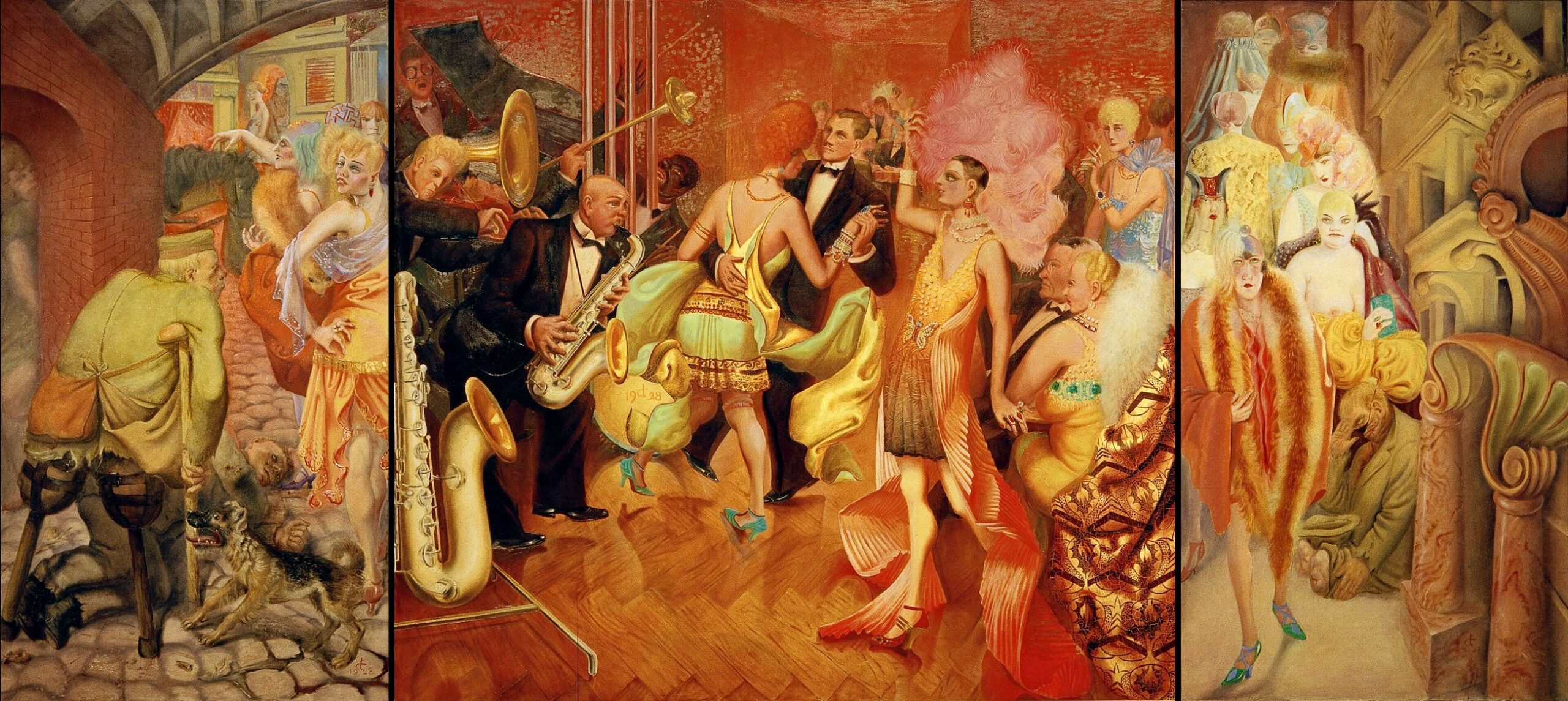
Metropolis by Otto Dix, 1927–1928,
Kunstmuseum Stuttgart

It’s 1929, and Berlin is having the kind of night respectable people will later insist never happened.

Neon bleeds across wet pavement. A taxi hisses past, throwing gutter water onto a woman whose dress has misplaced most of its back. Somewhere below street level, a trumpet murders a respectable German melody while a girl in a tuxedo leans in to kiss another girl.

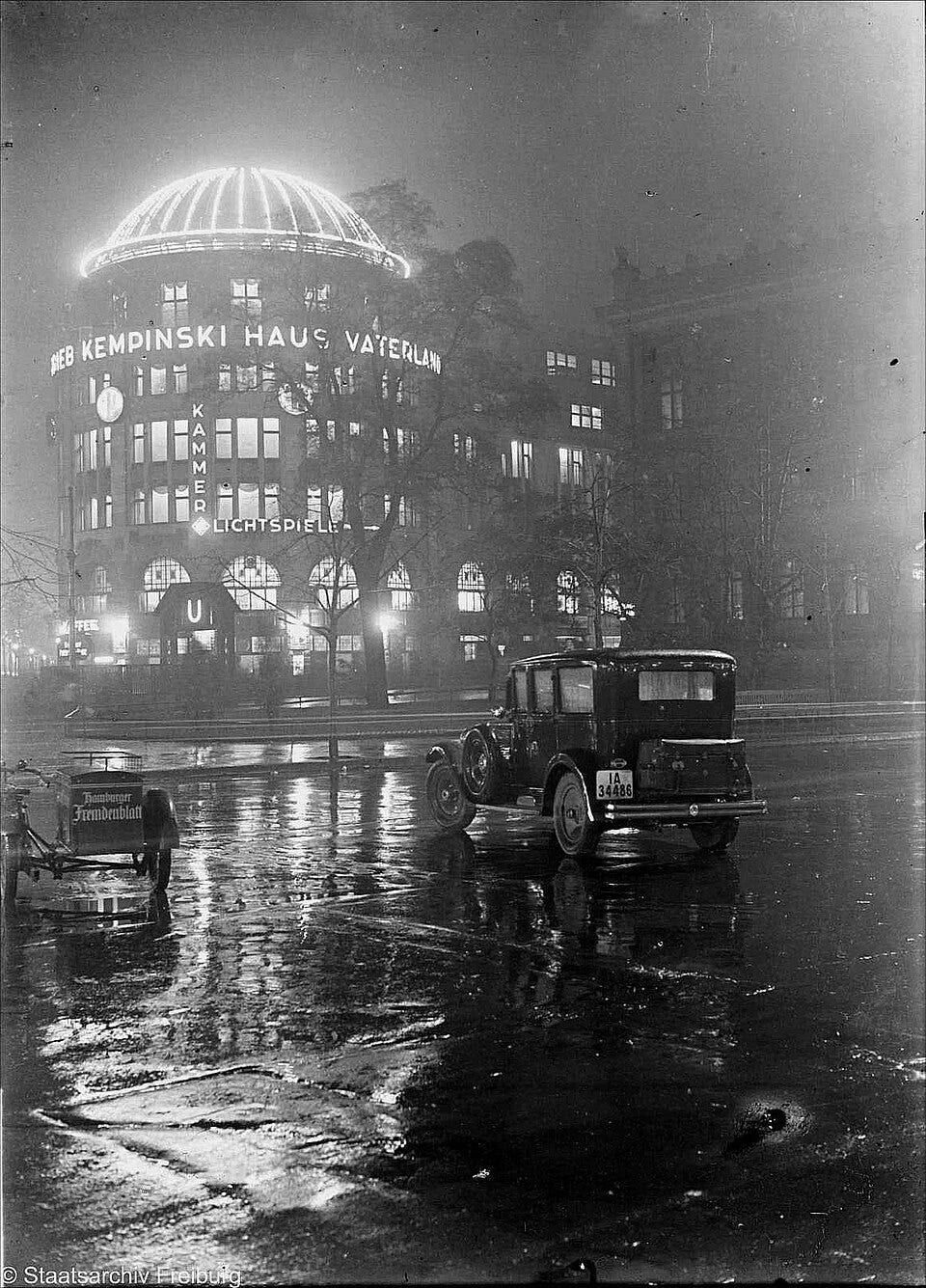
Berlin, 1929: Haus Vaterland, where Berliners could drink, dance, dine around the world, and enjoy an hourly fake thunderstorm over the Rhine because subtlety had apparently taken the night off. The pleasure palace could accommodate as many as 8,000 people.
CC BY 4.0

She goes in. Another comes out laughing. The door swings.

They call these women the Neue Frau — “new woman”. Hair bobbed to the jawline as though she took a knife to the nineteenth century. Hemline at the knee, one stocking laddered at the ankle.

The new woman works behind a counter at a department store. When the doorman holds out his hand, she pays him with her own wages from her own bank account. Today, we would call these progressive women “girlbosses” while silently hating ourselves for not having a less cringy word.

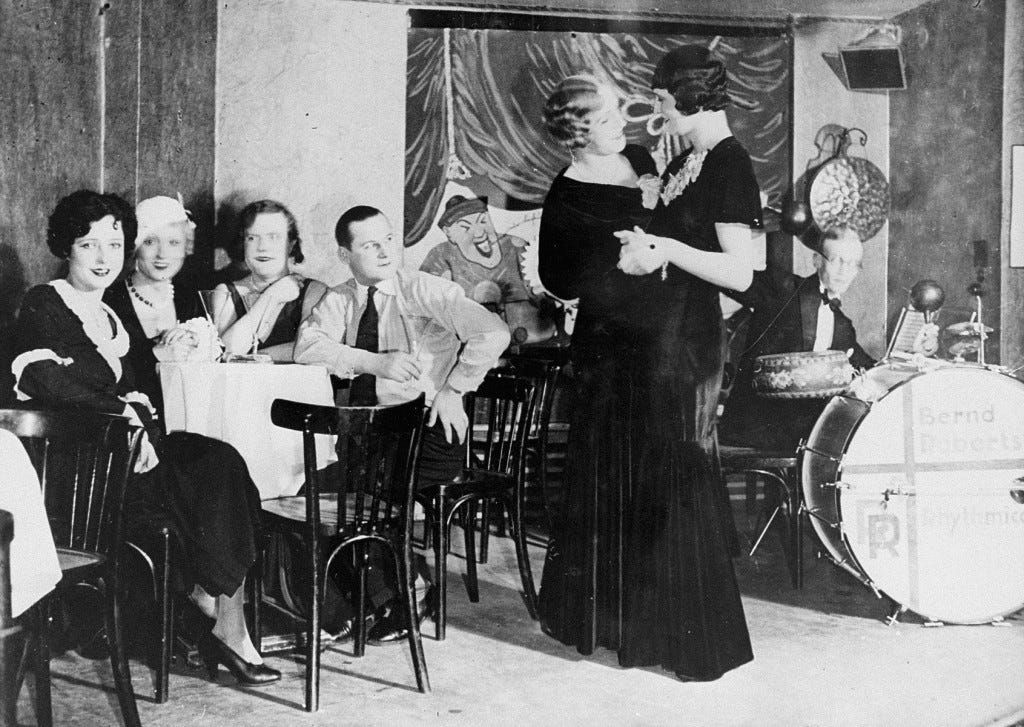
Berlin, 1929: Two women dance at the Eldorado, where lipstick, tuxedos, and heterosexual expectations were all optional. Four years later, the Nazis shut it down.
Bildarchiv Preussischer Kulturbesitz, via United States Holocaust Memorial Museum, Holocaust Encyclopedia

Other young women belonged to a more slippery category Berliners called the Halbseidenen — the “half-silks”. Half-silk was fabric woven partly from real silk and partly from cheaper thread. The fabric was glossy enough to pass at a distance, suspect once you got close.

The nickname landed on women who were equally difficult to classify — shopgirls, dancers, sexually independent working women, occasional prostitutes, girls dressed just a little better than their wages should have allowed.

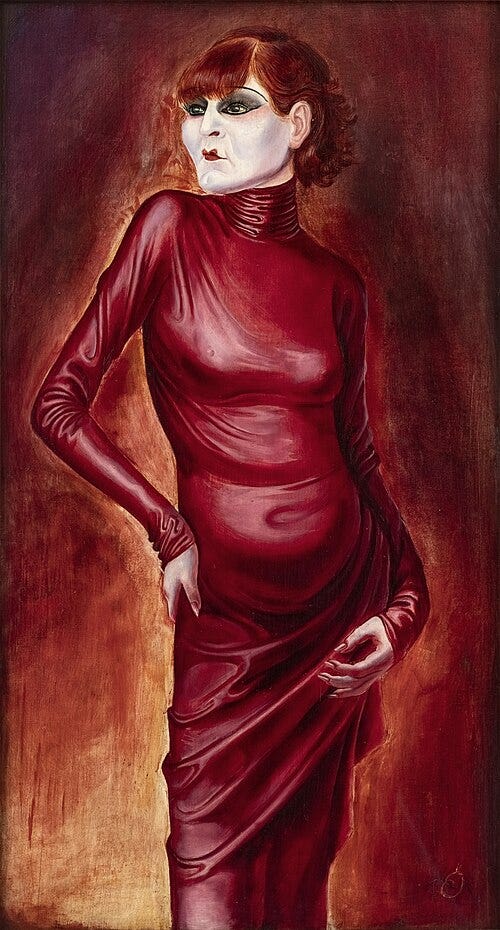
These women do not dance politely. Anita Berber, Berlin’s cocaine-addicted queen of nude dance, had made Dances of Vice, Horror and Ecstasy infamous. Grosz and Otto Dix paint Lustmord — sex murder — as a genre, and sell it.

Otto Dix –  Portrait of the Dancer Anita Berber, 1925
Public Domain

Inside the club, smoke curls from red-stained lips like a genie escaping its lamp. Champagne sweats in silver buckets and sloshes in chipped glasses. A folded banknote, a razor’s quick flash, two white lines cut across a mirror while dancers stamp and spin inches away.

Women arrive as men, men arrive as women, and bankers disappear into back rooms with people their bankers’ wives would not have invited to luncheon.

This particular den of iniquity has competition. Weimar Berlin supports somewhere between 65 and 80 gay bars and another fifty lesbian ones.

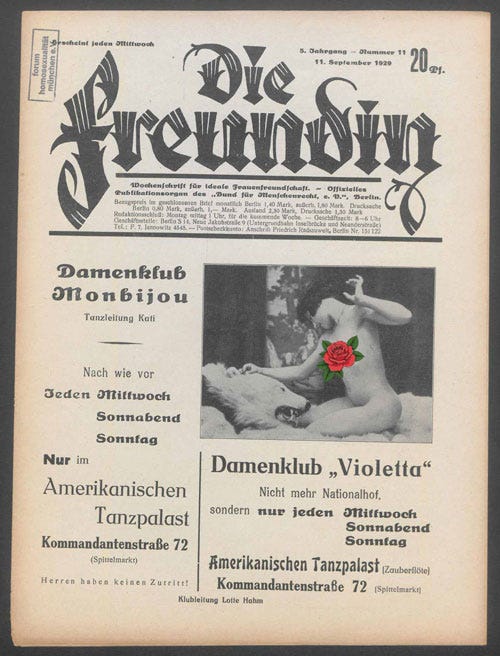
And the sexual revolution does not stop at closing time. It is sitting on the newsstands. By the end of the decade, more than twenty publications cater to gay, lesbian and gender-nonconforming readers — romance serials, political essays, personal ads, and club listings. A lonely girl in Leipzig can get Die Freundin without ever setting foot in a dancehall.

Berlin, 1929: Die Freundin, Germany’s lesbian weekly, advertises two women’s clubs at the Amerikanischer Tanzpalast. The fine print reads: “Men are not admitted.” I added the flowers. Weimar Berlin did not. | Forum Queeres Archiv München.

Across town, Magnus Hirschfeld has spent years trying to drag sex out of whispers and into science. The physicians in his Institute for Sexual Science would soon help pioneer some of the first gender-affirming surgeries. The institute also offers birth control and counseling, and works with Berlin police on “transvestite passes” — documents that let trans people walk the city without being arrested for their clothes.

Berlin has somehow managed to give gender nonconformity paperwork.

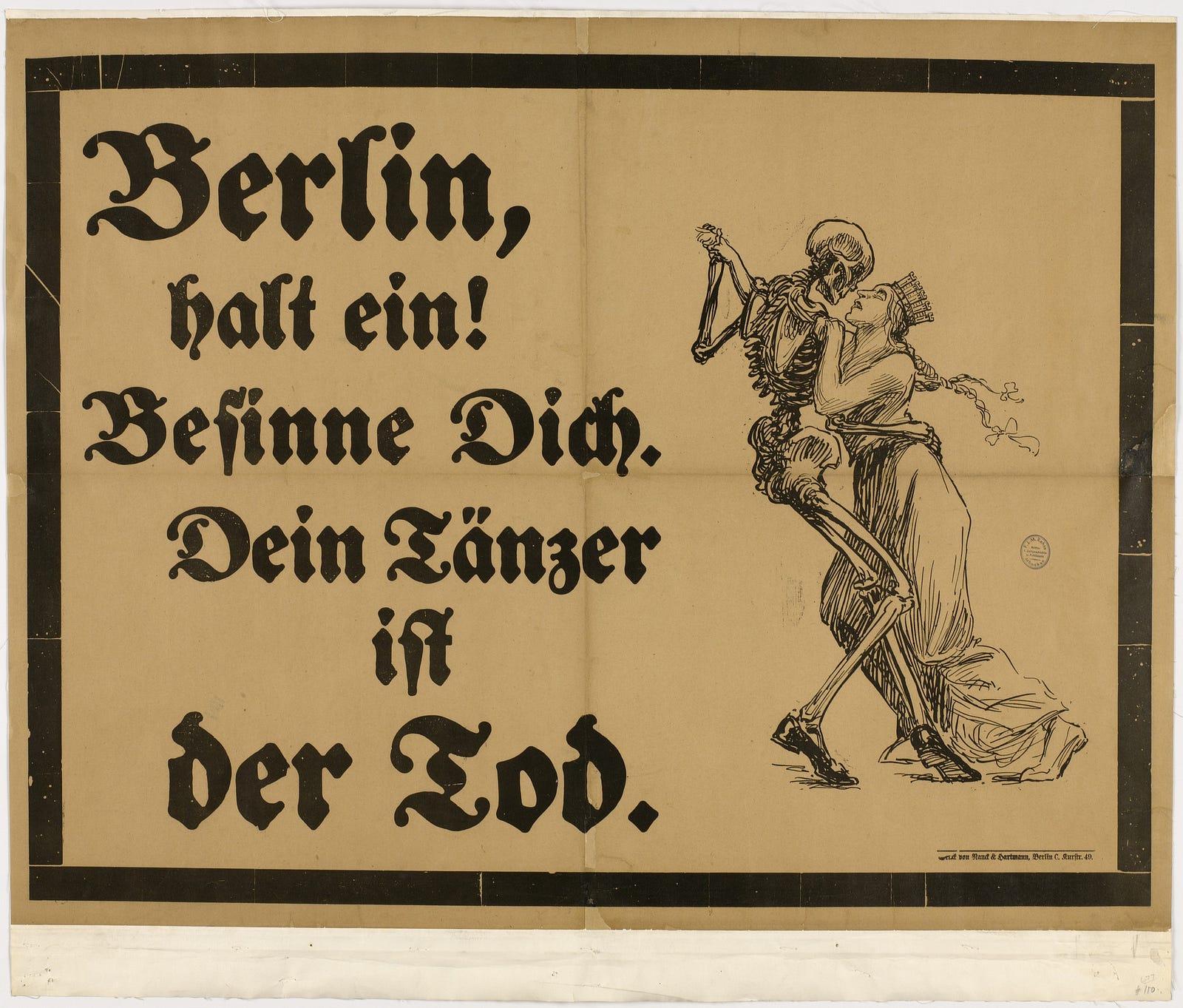
Not everybody finds this charming. Berlin has been hearing the opposite sermon since the republic was born. Ten years earlier, in the political convulsions after World War I, a poster showed a crowned Berlin locked in a waltz with a skeleton, “Berlin, halt ein! Besinne dich. Dein Tänzer ist der Tod” — Berlin, stop. Come to your senses. Your dance partner is Death.

The poster was not about lesbians in tuxedos. It came from the political chaos of 1919. But the accusation is already there.

Berlin is losing itself. It must return to the past and what once made it great.

Of course, by the late 1920s, the people making that nostalgic argument have begun pointing at sex. In 1927, Wilhelm Frick warns that homosexuality will lead to the “disintegration of the German people”. Large numbers of Germans describe Weimar’s new sexual visibility as decadent, immoral, and evidence of national degeneration. Right-leaning religious organizations and parties preach family, restraint, and traditional German culture.

Looking back on the inflation era, Austrian writer Stefan Zweig remembered the city transforming into “the Babel of the world”, with gay bars multiplying like mushrooms and transvestite balls so extravagant he thought ancient Rome had been outdone.

Berlin read the room. Berlin went on dancing, spending, and fucking.

Berlin, 1919: Ten years before Fritz stands outside our nightclub, Berlin is already being warned about its dance partner. “Stop! Come to your senses! Your dancer is Death.” | Van Santen, Berlin, Stop! 1919.
Lithograph. Library of Congress Prints and Photographs Division. Public Domain

Berlin’s own tourist bureau was advertising Jeder einmal in Berlin! — everyone should visit Berlin at least once. In 1929, nearly 1.7 million guests did.

But not everyone enjoyed watching Berlin turn its private vice into a tourist attraction.

Because while people inside experienced liberation, and the moral right experienced decadence and national decline, young men experienced something else.

Exclusion.
How the Roman Republic Collapsed Into Civil War

Filed under: Europe, History — Tags: , , , , , , — Nicholas @ 04:00

Who was Gaius Marius’ son, and how did he set out to bring down his father’s rival, Sulla? Which two rising stars in Sulla’s faction, Crassus and Pompey, would go on to bring down the Republic, with Julius Caesar? And, how did a momentous battle in the East see Sulla elevated to the master of Rome?

Join Tom and Dominic as they reach the climactic conclusion to the remarkable rise of one of Rome’s greatest generals: Lucius Cornelius Sulla, a man who would destroy his rivals, win victories in the east, and ruthlessly change the destiny of the Roman Republic forever.

0:00 The Roman Republic Implodes
0:40 Sulla’s Return
3:05 Cinna and the Marians
8:03 Cinna’s Disastrous Plan
12:20 Sulla’s Enemies Collapse
14:07 Crassus Joins Sulla
17:01 The Rise of Pompey
21:16 Marius the Younger
24:13 The Marian Cause Collapses
25:03 The Samnites March on Rome
26:03 The Battle of the Colline Gate
28:45 Anthropic
29:57 Sulla Takes Control of Rome
35:05 The Proscriptions Begin
41:18 The End of the Marians
42:41 Pompey the “Teenage Butcher”
44:20 Pompey Demands a Triumph
47:28 Sulla’s Great Paradox
48:02 Sulla Becomes Dictator
51:27 Rebuilding the Republic
54:00 Sulla Gives Up Power
55:30 Sulla’s Wild Retirement
58:42 The Death of Sulla
59:58 Did Sulla Doom the Republic?
1:01:54 Why Didn’t Sulla Become Emperor?
1:02:46 Julius Caesar Learns from Sulla
1:04:01 Cicero Bonus Episode

“STOP POWER TOOLS! the signs say. WOODWORKING UNDER THREAT!”

Filed under: Technology, Tools, USA, Woodworking — Tags: , , , , — Nicholas @ 03:00

On the social media site formerly known as Twitter, ESR has a thought experiment for us:

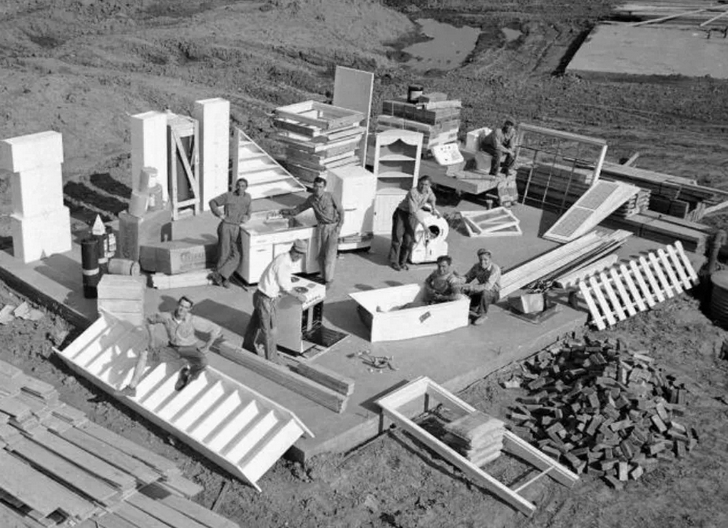
Prefabbed components and appliances for a Levittown home.
Image from Construction Physics.

Imagine it’s the 1940s. You’re a carpenter. Power tools are beginning to replace hand tools for ordinary work. Furthermore, jobs that would have been impossible or ruinously expensive are suddenly within reach.

You show up at a worksite one fine morning and it’s being picketed. STOP POWER TOOLS! the signs say. WOODWORKING UNDER THREAT!

Puzzled, you accost one of the demonstrators and ask him why he has a signboard in his hand rather than tools.

“Power tools are a menace!” he says. “How are you going to train apprentices if they can’t feel the wood through their hands?”

“What happens when we can chew through aged quality timber faster than we can grow new trees?”

“Carpentry isn’t just a set of skills and habits, it’s a mindset. It won’t be any true carpenters left if we let this go on.”

You inquire further and discover that they have plans. Plans to exclude from any job they work on any craftsman who has ever used a power tool or even spoken approvingly about them.

Meanwhile, inside the picket line, a house is going up. Men are working. Cutting and joining the framing is going faster than you could have imagined 10 years ago.

You look at the workers. You look at the demonstrators. One group is talking. The other is getting stuff done. One group looks like the past, the other like the future. In this moment, you get to decide which group you’re going to join.

This post was not about carpentry.

Model 1867 Trapdoor: A Unique Rifle for West Point Cadets

Filed under: History, Military, USA, Weapons — Tags: , , , , — Nicholas @ 02:00

Forgotten Weapons
Published 24 Apr 2026

When the US military academy at West Point opened in 1802, one of the things it did was train cadets in rifle drill. The cadets were as young as 14 at that time, and the standard US infantry rifle was quite long and heavy, and it was not well suited to cadet use. A series of shortened and converted rifles were used until 1830, when Springfield made its first model of rifle specifically for the cadets. From that year forward, each new service rifle was accompanied by a slightly smaller version for West Point. In 1867 the first Trapdoor Springfield (aka Allin conversion) cadet rifle was introduced.

The 1867 Cadet Trapdoor was unusual in that it was not a shortened version of the regular rifle. Instead, it used a whole bunch of unique parts, including a different lock plate, hammer, and breechblock. The barrel was reduced to 29 3/4 inches, it used the .50-55 cartridge, and it had no provision for sling swivels. Only 424 of these rifles were made before a new cadet model was introduced in 1869 which used standard parts. Two further Cadet models of the Trapdoor would follow in 1873 (the .45 caliber change) and 1884 (change to sights and other details), and these were the last cadet rifles made by Springfield. The next rifle after the 1884 Trapdoor was the Krag-Jorgenson, and by this time minimum age at West Point was up to 17 and the Krag was a much handier rifle to begin with — so a Cadet model was not necessary.

The American Society of Arms Collectors has an excellent paper on Cadet rifles written by David Hanes, which is publicly available here:
https://americansocietyofarmscollecto…
(more…)

QotD: The spiritual immune system

Filed under: Health, Quotations, USA — Tags: , , , , , — Nicholas @ 01:00

The Left (as always for rhetorical convenience) controls everything. You want to keep your kids away from the Poz entirely, you need to go no-shit Amish.

But first, keeping them totally away from anything is doing them a disservice. I think Escriva would strongly agree with this — we are commanded, after all, to be IN the world, not OF it. It’s a two-part command. The Poz is a disease, yes, and diseases can kill, but look at the aftermath of covid. Who are the unhealthiest people in society right now? The folks who got vaxxed and triple-boosted and spent two years hiding under their beds in a hazmat suit. Every minor sniffle hits them like a sledgehammer now, because they spent two years screwing up their own immune systems.

Second, and closely related, the fight is in the small things. People see you avoiding everything and you look like a wimp. Where I grew up, every high school had the Bible Camp Kids. They were their own little clique. They went everywhere together and tried to live as Amish-ly as possible. And everybody knew what happened to the Bible Camp Kids when they went off to college. You could set your watch by it: Two semesters in, and she’d have a tattoo and a face piercing and would either be knocked up or out of the closet.

They had no spiritual immune system.

Fighting and failing in the small things builds up your defenses for the big things. Not only that, people respect fighters. You failed, but you fought — you can hold your head high. As opposed to “You didn’t fail, but only because you tucked tail and ran”. Nobody respects those guys. It sucks to lose. But it’s far worse to “win” by never trying. Worst of all is to wallow in your defeat. Get up! Fight!

Severian, “The Way Ch. 10: Scruples”, Founding Questions, 2022-07-10.

Powered by WordPress