Quotulatiousness

September 14, 2026

The demands for reparations should be rejected, firmly

Filed under: Africa, Britain, History, Middle East, USA — Tags: , , , , , — Nicholas @ 05:00

Large-scale slavery has been a dead letter in most parts of the world since the Slave Trade Act of 1807 made the transportation of slaves illegal within the British empire and on the high seas where the Royal Navy patrolled. Legal abolition of slavery followed in 1833 with the Slavery Abolition Act. Chattel slavery in the United States was ended by the American Civil War. The last major power to allow slavery was the Ottoman Empire, which was dissolved after the First World War. Slavery still exists … mostly in the Islamic world and in the criminal underworld elsewhere, but is no longer an almost universal condition. (Despite ridiculous recent claims, slavery was not “invented” in 1619: pretty much every civilization we know of had forms of slavery from before the earliest cities were built.)

Despite nearly 200 years since the suppression of the slave trade and the abolishment of the institution, many countries are now presenting claims for reparations to Britain for the history of slavery. And feeble-minded politicians are treating these claims as though they are somehow morally correct despite all the evidence of history. On his Substack, Spaceman Spiff demands that we treat these grifters firmly and refuse any such future claims:

I came across a video that explains how absurd modern views on European colonization are. Accusations of racism aimed at our ancestors are meaningless since everyone was racist. Only one group attempted to be non-racist. Transcript below.

    The Maori were racist towards other Pacific Asian tribes. I mean, everyone is a racist if by that term we mean the assumptions by GROUP A that members of GROUP B are inferior and deserve to be conquered if they can be.

    That is a universal human phenomenon and it arises from evolutionary needs for basically in-group solidarity. So racism is the standard default position for all peoples.

    To say that the Europeans were racist is just to state the obvious because all peoples were racist.

    If it is not a statement of the obvious then it’s patently false. And by that I mean that if I were to judge the racism of the Europeans vis-a-vis the places they conquered, compared to the racism of other groups at the time, we find the Europeans much less racist. And if we were going to put it on a spectrum the only anti-racists in the whole world at the time of European colonialism were the Europeans. Because they were the ones who went abroad and said, these peoples have the capacity to be just like us. These people deserve freedoms. These people deserve to be freed from slavery. They deserve to be developed. They deserve to be civilized, which of course is seen as a sort of great racist act but it is quite the opposite.

    It is the act of saying all peoples have the potential to be self-governing, to be flourishing, to have a written language, history, arts and culture. This was the great anti-racist campaign that European colonialism represented. So that’s why I say it is simply a statement of the obvious or it is patently false.

The video calmly debunks the notion European colonization was driven by racism. Quite the opposite. It was an early form of anti-racism on a global scale based on a belief everyone deserved a high standard of living like Europeans.

This quirk of Western man has encouraged calls to pay reparations for the slave trade thanks to our continuing concern with the welfare of out-groups, a preoccupation unique to Europeans and shunned by the rest of the world even today.

Pay us in cash, guilty Westerner

It has become fashionable to suggest Britain and America pay reparations for the transatlantic slave trade. This is partly because of Britain’s involvement in European colonization of Africa, and partly the presence of slaves in the USA and some British colonies in the Caribbean.

The facts surrounding the abolition of slavery are well documented. They represent one of the most astonishing acts of decency in history, all the more amazing as one of those countries was the unchallenged global superpower of its day. There was no one else strong enough to make them do it; it was entirely voluntary.

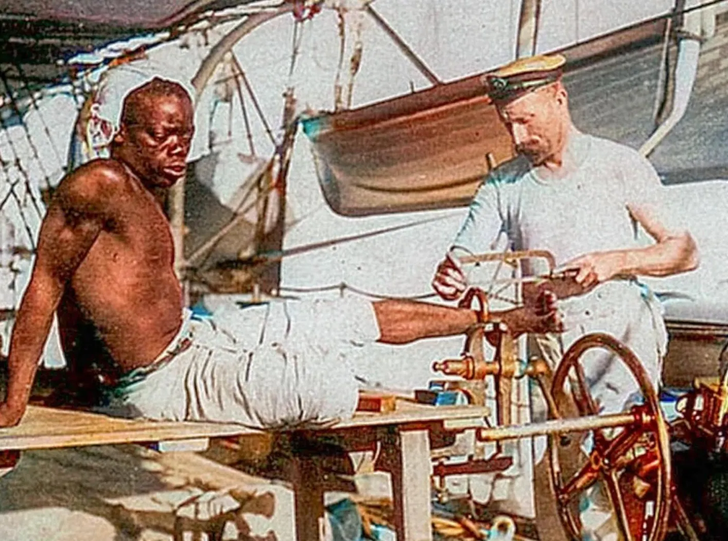
Manacles being removed by Able Seaman Joseph Chidwick in 1907 from an enslaved man who had worn the leg irons for three years. HMS Sphinx operated off the coast of Oman in the Arabian sea and attracted a number of slaves from a nearby slave-trading village whom the British immediately freed.

Britain’s actions were quickly followed by France and then the USA which led to the abolition of slavery throughout most of the world.

And yet reparations have become a rallying call among some. Everyone from the United Nations to individual countries like Jamaica and Ghana are baying for blood.

Underlying the drive is the additional charge of racism, a very modern idea.
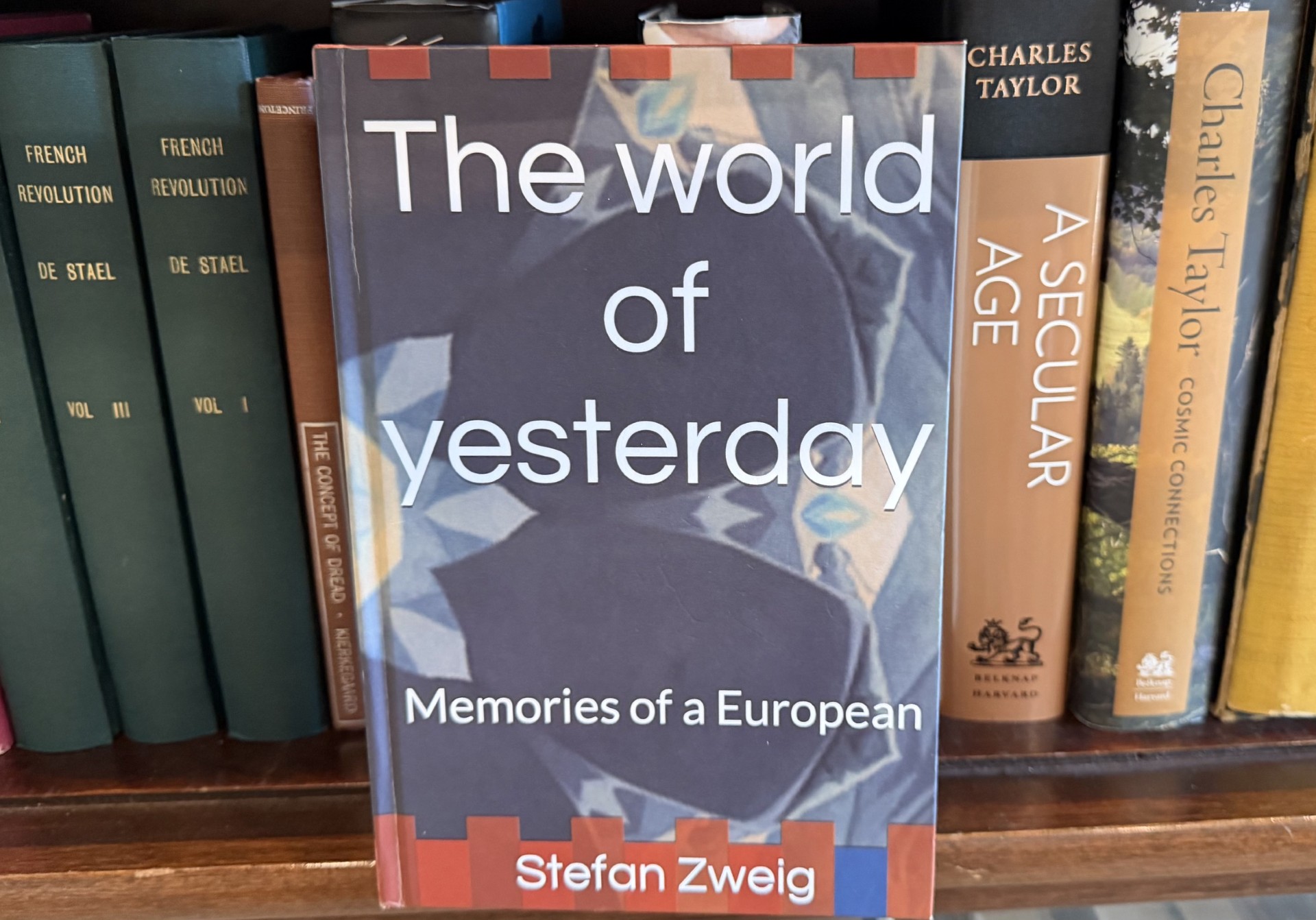
Stefan Zweig’s The World of Yesterday

Filed under: Books, Economics, Europe, History — Tags: , , , , , — Nicholas @ 04:00

I’d heard a bit about Stefan Zweig but I’d never read any of his work. Ted Gioia’s review of The World of Yesterday certainly makes me a bit more likely to pick up a copy:

Photo from The Honest Broker

My most recent find is Stefan Zweig’s account of how Vienna went from nineteenth century elegance, prosperity and cultural flourishing to warmongering and hyperinflation. His book The World of Yesterday may be the single best memoir from a survivor of societal collapse from the 20th century — and deserves to be far better known.

I call Zweig a survivor, but that’s not entirely true. He somehow managed to stay alive during World War I (not an easy task for a young man in Central Europe), and the subsequent economic crisis. But World War II forced him into exile, and he committed suicide in Brazil in 1942.

He was a broken man by then — and he feared Hitler was too powerful to stop. So Zweig, one of the greatest writers and thinkers of his generation, ended it all with an overdose of pills.

Just a few years earlier, Zweig had gained renown as the most widely translated contemporary author in Europe. In Germany, his books sold 20,000 copies on the first day — even before a single advertisement had appeared. But that now changed.

“Not a single one [of my books] is available in Germany today,” he lamented at the end of his life. “Those who still possess a copy keep it carefully hidden.” And the same was true in France, Italy and other countries under fascist control.

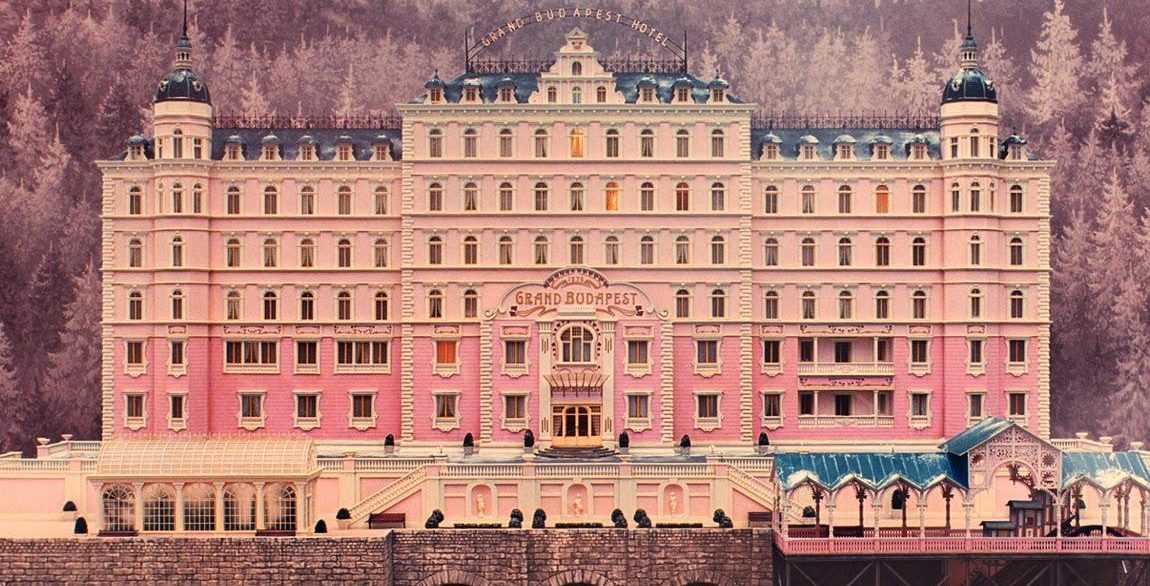
Zweig is best known today as the inspiration behind Wes Anderson’s film The Grand Budapest Hotel. “It’s basically plagiarism”, the director has admitted. But Zweig ought to be remembered more for his writings, especially this final work from his pen.

Stefan Zweig is now remembered as the inspiration for The Grand Budapest Hotel.

His fiction is also sadly under-appreciated. And it’s very readable — Zweig was a specialist in short novels with fast-paced plots. I highly recommend 24 Hours in the Life of a Woman, and Chess as starting points. Zweig also had a knack for mini-biographies (see, for example, his stellar book on Montaigne).

The day before he died, he mailed his manuscript of The World of Yesterday to a publisher. It was released posthumously, and is now recognized as a defining document in how things go bad. Over the course of 500 pages, Zweig starts with the peace, prosperity, and cultural flourishing of the final years of the Habsburg Empire, and then shows, step by step, how a healthy, vital society self-destructed.

The entire book is well worth reading. I will only discuss a small part of it here — covering the hyperinflation following World War I. But this book is so rich in observations and telling details, I could easily devote several articles to it without coming close to exhausting its riches.

Zweig lived through the currency collapse twice — first in Austria (where he lived across the road from an odd young man named Adolf Hitler), when the crown devalued rapidly. Then he moved to Germany, where hyperinflation was even worse.

The stories he tells are so fanciful, you might think he was writing a fable in the style of Jorge Luis Borges. Consider his story of beer-swilling tourists.

The story starts when the Austrian currency collapses in value. Germans quickly learn how to take advantage of this, by crossing the border to buy up cheap merchandise — but with unforeseen consequences:

    Finally, at the instigation of the German government, a border guard was appointed to prevent all consumer goods from being bought in the cheaper Salzburg instead of in the home stores … But one article remained free, which could not be confiscated: the beer that one had in the body.

    And the beer-drinking Bavarians calculated from day to day on the exchange rate slip whether, as a result of the devaluation of the crown, they could drink five or six or ten liters of beer in Salzburg for the same price they had to pay at home for a single liter.

    A more splendid lure could not be imagined, and so crowds of women and children moved over from neighboring Freilassing and Reichenhall to afford the luxury of swilling as much beer as their stomachs could hold. Every evening the station was a veritable pandemonium of drunken, bawling, spitting hordes of people; some who overloaded themselves had to be carried to the carriages on the trolleys usually used to transport suitcases …

    Of course the happy Bavarians had no idea that they were in for a terrible revenge. For when the crown stabilized and the mark, on the other hand, plummeted in astronomical proportions, the Austrians crossed over from the same station to get cheaply drunk in their turn, and the same spectacle began a second time, but in the opposite direction.

This imbalance between currencies created other surreal scenes.

    Incredible as the fact may seem, I can corroborate it as a witness that the famous luxury Hotel de l’Europe in Salzburg was for a long time rented out entirely to English unemployed people who, thanks to the abundant English unemployment benefits, lived here more cheaply than in their slums at home.

Performative Canadian politics again

Filed under: Business, Cancon, Economics, Europe, Government, Media, Politics, USA — Tags: , , , , — Nicholas @ 03:00

Prime Minister Mark Carney came to power promising that he was the best-qualified to deal with the US government on trade issues. Canadians assumed that this meant he’d be able to get as fair a trade deal with President Trump’s administration as possible. What he really meant was that he could do the most damage to cross-border trade relations in order to “pivot” to the EU and to China. He never intended to settle US-Canadian trade conditions, and his actions clearly show he was always putting the negotiations dead last in his priority list. And, thanks to the government’s generous subsidies to the relic media, instead of grilling him and his ministers for their blatant failures, they instead try to hold the opposition to account for things they have no control over.

On the social media site formerly known as Twitter, L. Wayne Mathison points out that it makes no economic sense for Canada to become part of the European Union as Carney now says he’s working toward:

This strikes me as remarkably stupid economic strategy.

Diversifying Canadian trade makes sense. Pretending Europe can somehow replace the economic relationship we have with the United States does not.

The United States is next door. Our railways, pipelines, electricity grids, manufacturing supply chains and energy markets have been integrated for generations. Even after the trade fight intensified, 71.7% of Canadian merchandise exports still went to the United States in 2025.

And Canada already has CETA with the European Union. Roughly 98% of EU tariff lines on Canadian goods became duty-free when CETA took effect, eventually rising to about 99%. If Canadian companies see profitable opportunities in Europe, they already have extraordinarily good market access.

So what exactly do we gain from some invented “associate membership” beyond CETA?

Potentially European regulatory obligations, political entanglements, financial contributions and pressure to harmonize Canadian rules with decisions made in Brussels, all to sell more goods across an ocean to markets that cannot duplicate the geographic advantage of the United States.

Norway rejected EU membership twice. Iceland opened accession negotiations and eventually walked away without joining. Both understood that you can have close economic relations with Europe without surrendering unnecessary national autonomy.

Canada should trade aggressively with Europe, Asia and everyone else who wants our products. But our first priority should be fixing the relationship with our largest customer, removing our own interprovincial trade barriers, building pipelines and ports, and making Canada competitive again.

Picking a fight with the neighbour who buys most of your exports and then announcing that Brussels might become your new best friend isn’t economic sophistication.

It looks like desperation dressed up as grand strategy.

George Orwell according to family and friends – Writers & Wordsmiths

Filed under: Books, Britain, History — Tags: , , — Nicholas @ 02:00

BBC Archive
Published 21 Mar 2026

This programme contains attitudes of its time.

Recollections of George Orwell by his wife Sonia Orwell, sister Avril Dunn, and friends Malcolm Muggeridge and Cyril Connolly. [Original billing]

“From early in his writing career, Eric Blair adopted the nom de plume, which he is now universally known. He became George Orwell. In his will, he emphatically directed that no biography of him should be written. And to insure his wishes were respected, effectively covered up his traces. Blair hid behind Orwell.”

The man behind Nineteen Eighty-Four, Animal Farm and The Road to Wigan Pier was elusive, but in this programme family and friends share memories of the influential author.

Clip taken from George Orwell: 1903-1950, originally broadcast on 20 November, 1965.

QotD: “We have Homo Sovieticus in America”

Institutions tend to only find data they want to find, so the City of Los Angeles last counted street deaths among the homeless — in their description, “Deaths of Unhoused People” — from 2023. There were 900. Sample detail: “Black people were 31% of deaths. Black people are only 8% of the City’s general population, but are 33% of the City’s unhoused population.”

The last numbers from Los Angeles County as a whole were for 2024, when 2,208 homeless people died on the streets. County officials celebrated, because that number was a sharp reduction, and a reflection of the success of programs like overdose intervention teams stationed around public parks.

Remember those numbers, and let’s talk about something else for a moment before we come back to them.

The Soviet writer Aleksandr Zinoviev told a joke that speaks fluent Californian: “In some institution a routine meeting was in progress. There were two points on the agenda: 1) the construction of a barn; 2) the creation of an abundance of consumer goods under communism. As they didn’t have enough planks to build the barn, they moved on at once to the second question.”

Maybe that joke doesn’t land if you don’t live in Los Angeles or Seattle, but from here it’s flawless. Take a quick look at the campaign page for María Elena Durazo, a state senator who just won a seat on the Los Angeles County Board of Supervisors. Infrastructure and fire departments are in bad shape in the place where elected officials think that government exists to provide “economic justice” that restructures communities. When government exists to pay your rent, 911 response times soar.

They can’t fix a street, so they move on at once to managing all of society.

Here’s what Senator Durazo boasts about on her “Meet Maria” page: “Arrested over 13 times for leading non-violent Civil Rights and Worker Rights protests”. It’s the line that appears below “State Senator” on her list of accomplishments. Gentry socialists have high-status-marker arrest credentials, without the burden of low-status prosecution and jail terms.

Zinoviev gave us the term “Homo Sovieticus”, describing the human creature that shaped itself around the postures and predilections of Soviet culture. Humorless, a sanctimonious scold, a deeply selfish schemer while professing adoration for collectivism, comfortable reciting official slogans without feeling the need to believe them or examine them, reflexively conformist, not worried about truth. (X) has been advanced as party doctrine, so (X) is correct, and anyone suggesting (Not-X) is highly suspect. The official account is always correct.

We live among these people. We have Homo Sovieticus in America.

Chris Bray, “Homo Cosmopolitus Won’t Count the Costs”, Tell Me How This Ends, 2026-06-10.

Powered by WordPress