Quotulatiousness

October 31, 2026

Carney’s EU dreams hit a rough patch

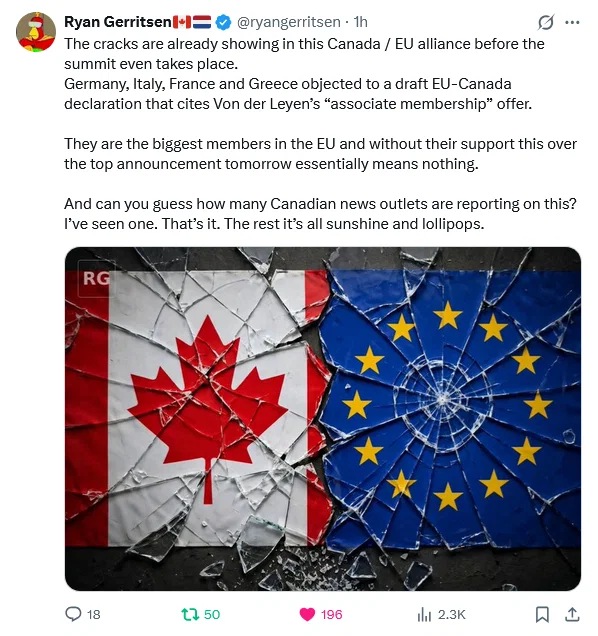
Canada’s propaganda outlets are doing everything they can to hide the fact that Carney’s EU love affair is going badly.

Although Canadian voters weren’t given any advance notice, the clear goal of Prime Minister Mark Carney is to move Canada deep into the orbit of the European Union. While I think this is a terrible idea, it’s very attractive to the urban managerial class in Toronto, Montreal, and Vancouver … they tend to think of the rest of Canada as being knuckle-dragging, low IQ chuds anyway, and already consider themselves to be simpatico with the Eurobureaucratic elites. Fulfilling Carney’s dream would go down well with those folks (who are already disproportionally Liberal voters). On Substack Notes, GJS links to an article on the attempt to Europeanize Canada saying:

Urban sophisticates are intoxicated by the idea of Canada “becoming more European” because they envision themselves lolling away the hours swilling café au laits and Beaujolais in quaint city squares, debating the meaning of life and whether Parmigiano Reggiano is superior to Le Gruyère. Tim Hortons, trucks and SUVs, and brutish blue collar workers will all instantly evaporate into the sky, and there’ll be no more talk of crude and barbaric matters like hockey, natural resource extraction, or Nickelback. Don Cherry and Stephen Harper will be erased from our history and we’ll ride bicycles with baguettes tucked under our arms.

At Haultain Research, Marco Navarro-Génie discusses eight things that make Carney’s EU dreams unrealistic and unlikely to come true:

How does a country become more sovereign by joining a union that makes rules but cannot vote on them? Prime Minister Mark Carney told the European Parliament this week that Canada will.

Ursula von der Leyen offered the title of “first associate member” the day before, and he welcomed it, then said at his press conference that the term was hers. But the term has no substance yet. No treaty article defines an associate member, no text sets out what Canada would take on or give up, and the two sides have agreed only to “define together” what the words mean. The sovereignty he promised rests, for now, on an aspiration with a name. The question is how it could ever work.

Start with what nobody disputes. Canada sells roughly seven of every ten export dollars to one customer, and that customer has spent almost two years proving it will use the fact against us. Albertans have been saying this since Quebec and BC blocked new pipelines to tidewater. Ottawa treated the complaint as a regional grievance, killed Northern Gateway, let Energy East die, and bought Trans Mountain only after its owner gave up. If the federal government has finally discovered that Canada needs more customers, the West welcomes the conversion, however late. Closer ties with Europe are part of any sensible answer; Europe is wealthy, democratic, and already bound to us by a trade agreement. Its future, however, is questionable.

The argument rests on emotional primacy and the claim that a closer embrace makes Canada freer.

Eight things about that claim do not add up.

The first is the use of the word sovereignty. Mark Carney used it six times in Strasbourg. He defined it as a country’s ability to make its own choices without being dictated to. Then he listed what he wants from Europe: common standards for artificial intelligence, pooled computing power, an integrated market for financial services, membership in European research and student programmes, alignment on energy and digital rules. How much of that requires Canada to follow rules made by institutions in which it has no seat and no vote? Members surrender powers and get a vote in return. A non-member who follows the rules gets the obligations without the empowering vote.

At Davos in January, Carney had a phrase for accommodating a hegemon. He called it “the performance of sovereignty while accepting subordination.” Everyone understood which hegemon he meant. The sentence today fits Brussels without changing a word.

The second is the title. Ursula von der Leyen offered Canada the chance to become “the first associate member of the EU.” Carney said that the substance matters; the substance has a name. The Union’s treaty provides, in Article 217, for agreements “establishing an association” with outside countries. Turkey has had one since 1963 and is still in the antechamber; nobody with an association agreement is a member. The adjective in von der Leyen’s sentence is inaccurate. It describes an old arrangement.

The third is where the word associate comes from. Official Canada has spent a decade repudiating colonialism: the 2008 parliamentary apology, the Truth and Reconciliation Commission, Justin Trudeau accepting the word genocide, a new citizenship oath, the Vimy Memorial removed from the passport, Canada Day cancelled in city halls, names changed, and statues pulled down.

Now the same official Canada seeks its independence in the embrace of a project founded by colonial powers, with the development of their colonies written into its birth certificate. The Treaty of Rome of 1957 devoted a whole chapter, Part Four, to “the Association of Overseas Countries and Territories“, meaning the colonies of France, Belgium, Italy and the Netherlands, from the Congo to Saint-Pierre-et-Miquelon, twenty-five kilometres off Newfoundland.

That chapter is where the word “association” enters the Union’s law. It survives as Articles 198 to 204, and its annex still lists Greenland and Saint-Pierre. Canada would be the third North American party to an association with Brussels; the other two hold the word under the colonial chapter.

On Sunday (September 20) the Prime Minister flies to Saint-Pierre, French colonial territory a short boat ride from the Burin Peninsula, to affirm sovereignty beside President Macron, whose country, let me remind you again, has not ratified CETA. Nobody in Ottawa seems to have looked up St.-Pierre’s address.

Ottawa claims to fight second-hand colonialism at home but embraces it in the splendour of colonial metropoleis.


Halloween Special: War of the Worlds

Filed under: Books, Britain, Humour, Media — Tags: , , , , , , — Nicholas @ 04:00

Overly Sarcastic Productions
Published 30 Oct 2026

Look! Up in the sky! It’s a bird! A scavenger bird feasting on the corpses of the enemies we once believed invincible! And all I did was sneeze into its open mouth a couple times!

ESR reads the amicus briefs in the Chicago AR-15 ban appeal

Filed under: Law, Liberty, Media, Politics, USA, Weapons — Tags: , , , , , — Nicholas @ 03:00

I don’t follow the twists and turns of US gun laws — it’s depressing enough trying to follow Canada’s determined attempts to suppress private gun ownership — so I wasn’t aware of a US Supreme Court case coming up soon:

Remember the scene from the movie “Billy Madison” where the judge says “… what you’ve just said is one of the most insanely idiotic things I’ve ever heard. At no point in your rambling, incoherent response was there anything that could even be considered a rational thought. Everyone in this room is now dumber for having listened to it. I award you no points, and may God have mercy on your soul.”

I’ve been reading the anti-gun-rights amicus briefs in Viramontes v. Cook County, the case challenging Chicago’s ban on AR-15s (thank you @MorosKostas for making them generally available on X). They are like that — a ferrago of absolutely dizzying stupidity.

I’m used to the graboids making dodgy, crappy arguments, because what else can they do really? They don’t have any good ones. Their normal rhetoric isn’t designed to persuade the disinterested, merely to provides a colorable excuse for a judge that already agrees with their position to put a judicial stamp on it. Usually, though, they manage to utter at least a plausible simulation of intelligence.

This, though … these briefs are a whole ‘nother level. The quality of writing and argument is so bad that I repeatedly found myself rereading sentences I had just run my eyes over to verify that, yes, they did actually go there.

What does it all mean?

The fun, paranoid theory would be that the graboids have been infiltrated and this is deliberate sabotage by pro-2A law clerks. Could this be? Naah … but it’s telling that this is actually a tempting idea.

My actual theory is that everybody involved with this litigation knows that the anti-2A side was doomed from the beginning, so they’re not sending their best. They’re doing just enough to comply with somebody’s political direction.

If you trace it back far enough, you probably get to some politician grifting money from the Bloomberg and Soros advocacy machines. Wacky incentives leading to Kabuki theater, everyone involved performing an increasingly stylized and threadbare simulation of competence.

The oral arguments on December 2nd are going to be *lit*.

Dracula’s Paprika Hendl from Bram Stoker’s 1897 Novel

Filed under: Books, Europe, Food, History — Tags: , , , , — Nicholas @ 02:00

Tasting History with Max Miller
Published 21 Oct 2025

Chicken in a creamy paprika sauce with galuska dumplings

City/Region: Hungary
Time Period: 1892

The first part of Bram Stoker’s Dracula is the journal of Jonathan Harker as he travels from England to Transylvania, which is written similarly to a modern travel blog. He makes note of the food that he eats, notably “a chicken done up some way with red pepper, which was very good but thirsty”. He calls it “paprika hendl” because Transylvania was part of the Austro-Hungarian Empire at the time, and hendl is a German word for chicken, but today we know it as chicken paprikash.

This recipe from 1892, just five years before Dracula was published, is absolutely delicious. While Jonathan thought that his supper was “thirsty” (or spicy, causing him to drink a lot), this recipe uses sweet paprika and has a lovely flavor without the heat. The galuska are a lovely accompaniment, but you could also serve this forth with rice or other noodles. It’s a perfect homey, heartwarming dish for the fall and winter months.

    Put a piece of fat the size of a large egg into a pot … When the fat is hot, add two finely chopped onions and a tin spoonful of fine red paprika, then immediately add the chicken … salt it, pour on half a liter of water, cover and, stirring often, let it simmer for half an hour. Meanwhile take care that it does not boil to pieces. When the chicken is tender, prepare a gravy thickening with 3 deciliters of very good sour cream and a small spoon of flour. Pour this into the chicken broth, stir it well, and boil together … Serve it on a long platter, surrounded by egg barley or galuska (dumplings).
    — Valódi Magyar Szakácskönyv, 1892

(more…)

QotD: Gerald Gardner, Margaret Murray and the rise of modern Wicca

Filed under: Books, Britain, History, Quotations, Religion — Tags: , , , — Nicholas @ 01:00

The other major theorist to shape Gardnerian practice was Margaret Murray. Although Hutton reviews Murray’s influences, she stands above them all as the scholar who most thoroughly and influentially articulated the theory now associated with her: not only that substantial aspects of European paganism survived the introduction of Christianity and centuries of inadequate catechism, but that the witch trials of the 16th and 17th centuries were a major effort to suppress this surviving pagan religion. Her 1921 book The Witch-Cult in Western Europe lays out the model, and Murray includes distinctly Frazerian elements about ritual kings who were sacrificed or self-sacrificed (though now with the added element that these corn kings were allegedly syncretized with the Horned God, an aspect that reflects Pan, as a motif popular with literary figures associated with Hermetic Order of the Golden Dawn).

Her terser but equally influential version of the theory was in the entry for “Witchcraft” that she wrote for the Encyclopedia Britannica, which published it from 1929 to 1968.1 For generations, if you heard about Salem and wanted to get more information about witches, you would go to the library and find the Encyclopedia Britannica, (or if you were fancy, the installment plan-financed set on your own bookshelf), reach for the “W” volume, and a few paragraphs in go, “Wow, real witches, amazing!” Murray’s theory has thus been extremely influential. Whenever a Wiccan refers to their religion as “the Old Religion” or a feminist refers to “the Burning Times”, they are alluding to Murray’s theory.

Murray had a big influence on Gardner (and wrote the foreword to his short book Witchcraft Today). Gardner claimed he did not invent Wicca but had been inducted into a coven with centuries of historical continuity, and while this claim was implausible it reflects Murray’s emphasis on an underground witch cult. Among the places Gardner describes this liturgy was his novel, High Magic’s Aid, which he would circulate to potential initiates to gauge their reaction to the rituals described therein.2 “The witch religion portrayed [there],” Hutton writes, “is that of Margaret Murray’s God of the Witches, in virtually every detail, including its dedication to a single male deity of fertility, whose name is given here (again taken from Murray) as Janicot”. The practitioner implementing the ideas of the theorist is classic performativity: there was no pagan witch religion in early modern Europe, but Murray’s claim that there had been was among the most important raw material from which Gardner created an actual pagan witch religion in mid-20th century Britain.

Through all this, there is the question of how so many 20th century scholars got it so wrong — especially given that in the 19th century, both scholars and popular culture understood that witch hunts were moral panics and mass hysteria.3 Black-Scholes-Merton may not have been a perfect description of options prices, but it got much closer to the truth than the idea of pagan survivalism, which is almost completely wrong. Hutton repeatedly notes the importance of relevant expertise, and how often the proponents of pagan survivalism lacked it. Many folklorists influenced by Frazer were simply amateurs, but Murray had legitimate scholarly expertise: she was a respected Egyptologist. This background left her equipped to see a pagan society saturated with magic, but led to a false positive when applying that gaze to Christian medieval and early modern Europe. Nonetheless, in the mid-20th century, Murray’s ideas became accepted in British academia and were integrated into K-12 history textbooks.

However, Hutton notes that such acceptance was mostly from people who did not actively research the witch trials. In contrast, witch trials were an active research area in the United States, and so American scholars remained skeptical even as the Murray thesis became taken for granted in the UK. And while it might be tempting to congratulate America for our pragmatic empiricism, Hutton notes that there was also a subtext of Americans favoring the “persecution of innocents” model for witches because it had become a popular metaphor for the Second Red Scare, as in Arthur Miller’s 1953 play The Crucible. American scholars of the 1950s and 1960s may have gotten the history of witch accusations in the 16th and 17th centuries right because they saw it as metaphor for the history of the 1930s through 1950s … which the Venona cables show they got wrong.

Gabriel Rossman, “GUEST REVIEW: The Triumph of the Moon, by Ronald Hutton”, Mr. and Mrs. Psmith’s Bookshelf, 2025-12-01.


  1. Fortunately cranks writing the encyclopedia is an issue safely in the past.
  2. “Check out my fantasy novel (that describes the counter-cultural religion with transgressive rites that I actually practice and wish to induct you into)” is a more elaborate version of using plausibly deniable indirect speech to broach a taboo proposition.
  3. Volume 2 of Charles Mackay’s 1841 Extraordinary Popular Delusions and the Madness of Crowds contains a lengthy section on the early modern witch hunts that captures the 21st century scholarly consensus that witch hunts were the result of a moral panic and opportunistic expression of grudges as abetted by poor legal process. Mackay’s history differs from the current scholarly consensus only in failing to understand that witch trials were most aggressive in weak states, especially those whose establishment of religion was sufficiently tenuous as to be threatened by popular sentiment that the prince exercised insufficient brutality in defending the populace against hostis humanis generis.

October 30, 2026

Neo-kremlinologists still find value in The E-Communist, er, I mean The Economist

In The Critic, Chris Bayliss explains how the once-great Economist can still have uses in its much decayed pro-managerialist guise:

Despite what people say, The Economist is still worth reading. This is true for two reasons — firstly whilst the depth of its analysis is not what it once was, it still covers the domestic affairs of a range of developing countries that would be too obscure for other news outlets. Secondly, it is because its editorial line can give fascinating hints about the tectonic movements of managerial elite opinion. Gauging a group of people whose view of the world is driven entirely by consensus is generally a very predictable game — until the moment it isn’t. And it is The Economist we can sometimes look to for the early signs of a change of course.

For us neo-kremlinologists, the magazine has been unduly generous in the last week, providing two interesting snapshots into the neuroses and instincts of the lumpenintelligentsia at the present moment. Before I go any further, it is important to add that these people are not uniformly specious or slow on the uptake — like the Soviet intelligentsia in the 1970s, it includes many highly intelligent and perceptive people, who may be thoughtful or even forthright about the crises that beset us, but only discreetly and on an individual basis. In the atmosphere of stultifying intellectual conformity that they inhabit, what matters is what they feel comfortable discussing and admitting to one another in public, because it is that which shapes the direction of policy. And it is on that that the Economist‘s cachet can be helpful, by virtue of the freedom it lends its unbylined writers to think aloud.

It was the more recent of the two articles that has garnered the most attention. An article titled “Do immigrants from some countries commit more sex crimes?” on 25th October admitted that, yes, they do. The piece was accompanied by a graphic showing — on a logarithmic scale — the rate at which immigrants in Britain were convicted of sexual crimes, by nationality, relative to that of British nationals. The graphic showed very clearly that nationals of countries in non-EU Europe, Sub-Saharan Africa and the Middle East were substantially more likely to be convicted of sexual crimes than British nationals, with people from Afghanistan way out ahead of any other group. EU nationals, meanwhile, were slightly less likely to be convicted of such offences, and East Asians and Australasians even more underrepresented in the statistics. People from the Americans and the Caribbean were, on average, roughly equal to British nationals in their prolificness.

On social media, it was the graphic which prompted the most voluble response; particularly the use of the log scale which, visually, seemed to minimise the scale of the sevenfold disparity between the Afghan rate of sex crime conviction, and the British average. This seemed to hark back to arguments that took place during the Covid pandemic in which the use of log scales for graphs showing the number of new infections or deaths flattened the lines on the graphs and, critics claimed, made the scale of the pandemic seem less severe than it was. But whereas the use of log scales for naturally exponential processes such as viral transmission is in line with standard scientific practice, it is usually considered less appropriate — or even misleading — when the point of narrative interest is the additive difference between two figures, rather than multiplicative growth. Nevertheless, it is perfectly possible that the decision to use a log scale was made in good faith, in the interests of conserving page space.

Arguments about the x-axis notwithstanding, it is still a big deal that The Economist would print this. The fact that certain groups of migrants — especially illegal arrivals and asylum seekers from highly unstable countries — are disproportionately likely to commit rape or sexual assault has been one of the most powerful anti-immigration arguments in recent years. It is a point that defenders of the status quo have often been highly sensitive about. In polite and liberal circles, the idea of even looking for a link between national and ethnic origins and sex crimes has hitherto been considered inherently racist and demagogic. In September 2025, an open letter titled “Women against the Far Right” — which was signed by a long list of prominent leftish politicians and celebrities — included the statement that “there is no evidence that people seeking refuge are more likely to commit acts of sexual violence”. This was an easily verifiable or falsifiable objective claim, which they clearly took no effort to verify or falsify, on the reasonable-enough grounds that such data ought to be extremely hard to come by in Britain.

Update, 31 October: Welcome, Instapundit readers! Have a look around at some of my other posts you may find of interest. I send out a daily summary of posts here through my Substack – https://substack.com/@nicholasrusson that you can subscribe to if you’d like to be informed of new posts in the future.

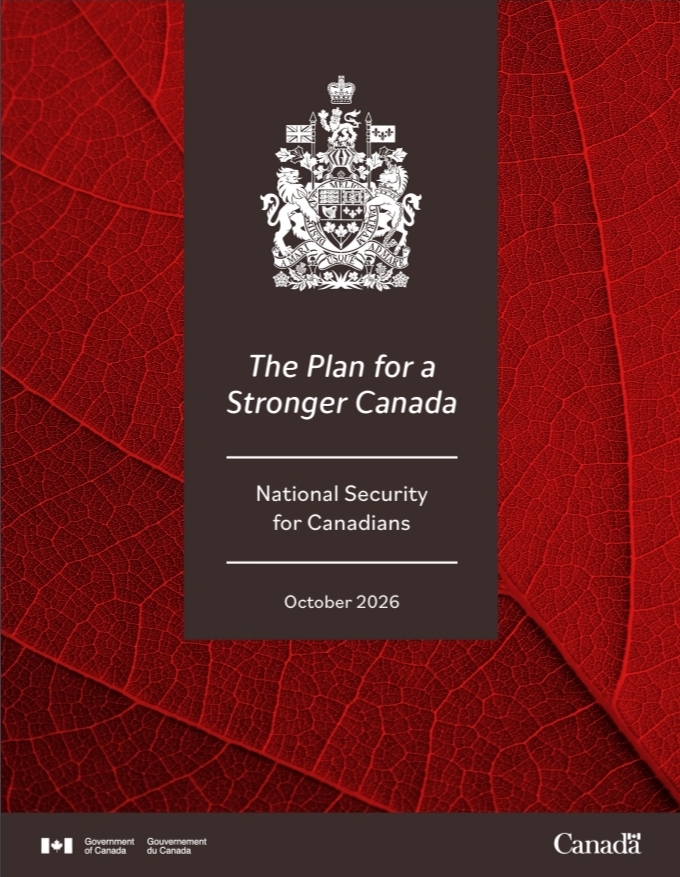
New National Security Policy – The Plan for a Stronger Canada

Filed under: Cancon, Government, Military — Tags: — Nicholas @ 05:00

At True North Strategic Review, Noah discusses the latest formal revision of the federal government’s national security policy:

Canada has a new national security policy!

After much anticipation, Canada’s new national security policy has finally been released after some delay. Then-Prime Minister Trudeau directed officials in 2024 to deliver a renewed policy in 2025. That policy had been pushed back and delayed as we transitioned into the Carney era, until a relatively quick, almost surprise drop today.

Canada’s last national security policy was Securing an Open Society back in 2004 (when I was in kindergarten) under Paul Martin’s Liberal government. It was billed as the first policy of its kind in Canada, coming off several major events and crises all arriving in the same period. 9/11, the Madrid train bombings, SARS, the 2003 blackout …

It came with $690 million in new initiatives and built the foundation that much of the current system still bases itself on, including the Integrated Threat Assessment Centre, the Government Operations Centre and the Public Health Agency of Canada.

It also promised a National Security Committee of Parliamentarians, which wouldn’t exist until 2017. Its first chair was David McGuinty, now the Minister of National Defence. That was followed by the International Policy Statement in April 2005, and then a progress report a month after. That was the last time we had such a policy published, over twenty years ago.

Unlike Securing an Open Society, the new policy is more a framework rather than a plan, running at 11 pages of actual information. It presents:

  • Five areas of national interest
  • Eight Strategic Capabilities
  • Five foundations, which will each get their own detailed policy

We’re going to try and break this down as we usually do for these kinds of strategies, but with a bit of a difference in how we usually do it. While usually we go line by line, breaking down the strategy piece by piece, there isn’t a whole lot to go off of here. It is after all only really 11 pages, many of which are recaps and such.

So, like the EU Arctic Strategy, we will instead be focusing on the main points that matter to us. I highly recommend in turn that you read the whole policy yourself. Again, it isn’t that long in the slightest.

I Built a REAL Woodworking Vise for Almost Nothing

Filed under: Tools, Woodworking — Tags: , , , — Nicholas @ 04:00

Rex Krueger
Published 29 Oct 2026

    AI-generated video summary

    Rex Krueger demonstrates how to construct an affordable face vise for a workbench using readily available materials like black iron pipe and basic hardware. This project aims to offer woodworkers a functional alternative to expensive cast-iron options, with design considerations provided for achieving smooth, reliable operation through custom tracking.

There are useful idiots and then there are extremely useful idiots

Filed under: Asia, Media, Politics — Tags: , , , , , , — Nicholas @ 03:00

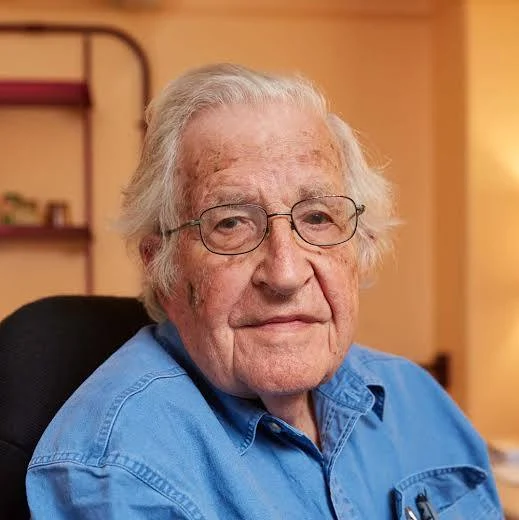
On the social media site formerly known as Twitter, Handre recounts the efforts of Noam Chomsky to minimize the atrocities happening in Cambodia because he strongly preferred to blame the west for all of the wrongs in the world:

Noam Chomsky, the “Father of modern linguistics”, looked at evidence of industrial-scale murder and decided the real problem was Western media bias.

By 1977, Pol Pot’s Khmer Rouge had already killed roughly 1.7 million Cambodians through execution, forced starvation, and slave labor. Chomsky, writing with Edward Herman in “Distortions at Fourth Hand”, treated survivor testimony and refugee accounts as State Department fabrications, preferring the far lower body counts published in sympathetic leftist sources.

The intellectual gymnastics required to reach that conclusion were extraordinary. Chomsky dismissed Father Ponchaud’s firsthand reporting, questioned Francois Ponchaud’s credibility directly, and leaned on a 1977 State Department document to suggest deaths numbered in the thousands, not hundreds of thousands. He applied maximum skepticism to anti-communist sources and near-zero skepticism to anything that cut against American foreign policy narratives. The methodology was selective to the point of being fraudulent.

Chomsky was not a fringe figure typing in a basement. He held an MIT professorship and commanded enormous intellectual authority among Western leftists. When he cast doubt on Cambodian atrocity reports, journalists and academics listened. Real people died while influential intellectuals debated whether their deaths were sufficiently well-sourced.

Collectivist ideology requires enemies to function. When the Khmer Rouge built their agrarian utopia by emptying Phnom Penh at gunpoint and executing anyone wearing glasses, Chomsky’s instinct was to protect the ideological project by attacking the messengers. Ideology over corpses.

From the .50 M2 to the Mk7 16 Inch Turrets: All the Guns of the USS New Jersey

Filed under: History, Military, USA, Weapons, WW2 — Tags: , , , , , , — Nicholas @ 02:00

Forgotten Weapons
Published 4 Jul 2026

I had a chance to spend some time on the USS New Jersey, today docked in Camden NJ as a public museum ship. Today we are going to go through all of the weapons systems on the New Jersey, starting from the humble .50-caliber M2 machine guns and going up to the massive 16″ Mk7 guns in the three-gun turrets. The New Jersey was refitted several times, adding and removing different weapon systems for deployments from World War Two to Desert Storm, so not all of these guns were in place simultaneously — but they are all part of the story of the ship.

Many thanks to the awesome staff of the New Jersey for their hospitality and to World of Warships for making the visit possible!
(more…)

QotD: Opus Dei

Filed under: Quotations, Religion — Tags: , , , , — Nicholas @ 01:00

Opus Dei means “God’s work”, and while I don’t expect everyone to go out and join, that’s THE principle — work! Everything, no matter how small, contributes to final victory. You are the message. You are the work. Everybody, no matter how old or infirm or weak or poor or whatever, can do something. Dress well. Stand up straight. Sit down in a public park and read a book, a real physical book, not some glowing screen. If you’re walking and you see trash, pick it up. Set some great art as your computer’s background at work. Listen to some classical music. Put a quote from a Dead White Male on your email auto-signature.

Something, anything. Why? Because fuck them, that’s why. They’re ugly and stupid and base, because all those things — ugliness and stupidity and baseness — are just a degraded version of contemptus mundi, contempt for the world. That’s what nihilism IS, at bottom — fake and gay contemptus mundi. “This world is all there is; this world is awful; therefore the only thing to do is wallow in awfulness. We choose ugliness and stupidity and baseness for their own sake, because we choose to wallow.”

The world isn’t awful. It’s beautiful. Even if you don’t believe your Creator made it just for you — and He did, but you can choose not to believe that — just listen to the “Ode to Joy”. There’s at least as much beauty as ugliness in the world, however it got here and whatever its purpose. Maybe it really IS all meaningless, just atoms and void. Even so, why wallow? Choose what’s beautiful while you can enjoy it. And even if you can’t enjoy it for its own sake, choose it because the Left will hate you for it.

Stick a thumb in their eye at every opportunity. Make that your number one scruple, because seriously: Fuck them, that’s why.

Severian, “The Way Ch. 10: Scruples”, Founding Questions, 2022-07-10.

October 29, 2026

“A rumor got going recently that Donald J. Trump was dying”

Filed under: Media, Politics, Religion, USA — Tags: , , — Nicholas @ 05:00

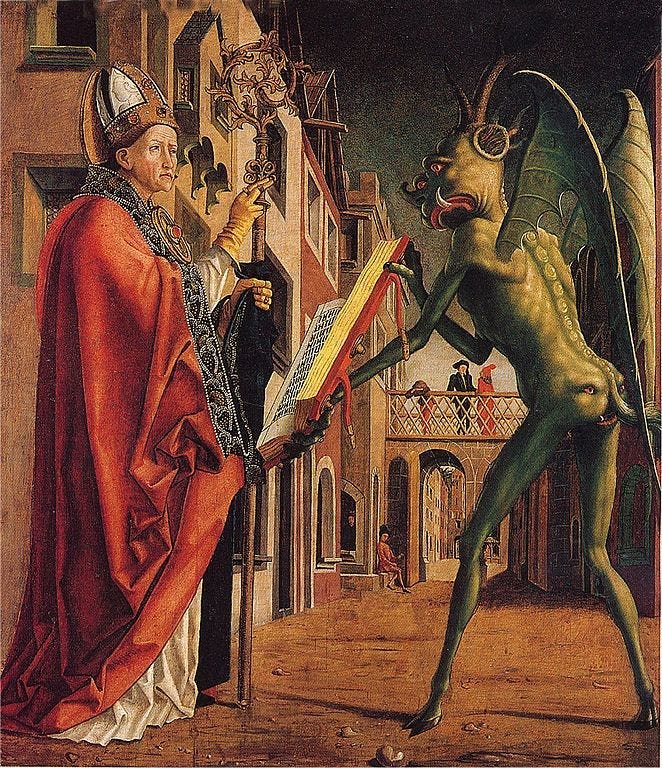
I should note up front that I’m not Catholic and I don’t know much about the theological inner workings of the Catholic church, so I’m going on faith (sorry) that Carlyn Beccia is giving a fair interpretation of these details:

“The Devil Presenting St. Augustine with the Book of Vices”
Michael Pacher, c. 1455 – Public Domain

A rumor got going recently that Donald J. Trump was dying. Like really dying. And once I explain how this rumor grew legs, it will all make perfect sense. Sort of.

But first, you need a little Catholic education. Don’t worry. I will make this slightly less painful than kneeling for 2 hours.

In the Catholic religion, a priest doesn’t put his hands on you just because he likes you. There are rules for holy touching. (I promised my Italian aunts no priest/pedo wise cracks. Resisting …)

Typically, the laying on of hands occurs ONLY during specific sacramental moments. A bishop does it at Confirmation and during Holy Orders — the ritual that turns a man into a priest. Confession once had it too. And of course, a priest lays his hands upon a sick or dying person during Last Rites or what is now called the Anointing of the Sick. (The Catholic Church used to wait until you were dying to offer divine intervention, but they loosened the rules for sick people after they realized you might need help surviving the American healthcare system.)

If you grew up evangelical, this tacit rule may sound strange. Evangelicals are constantly laying hands on people. Somebody gets a promotion, has a headache, can’t find their car keys, and … boom. Suddenly, six people are standing around them with their eyes closed, calling upon the Holy Spirit.

Sure, a Catholic priest can occasionally bless you outside the sacraments, but the Vatican has put that on a short leash. Denver’s previous archbishop, Samuel Aquila, said these blessings should be done preferably in private and must never become a “semi-liturgical act”. Under Fiducia Supplicans, a spontaneous blessing must be brief and simple, with no ritual that creates confusion.

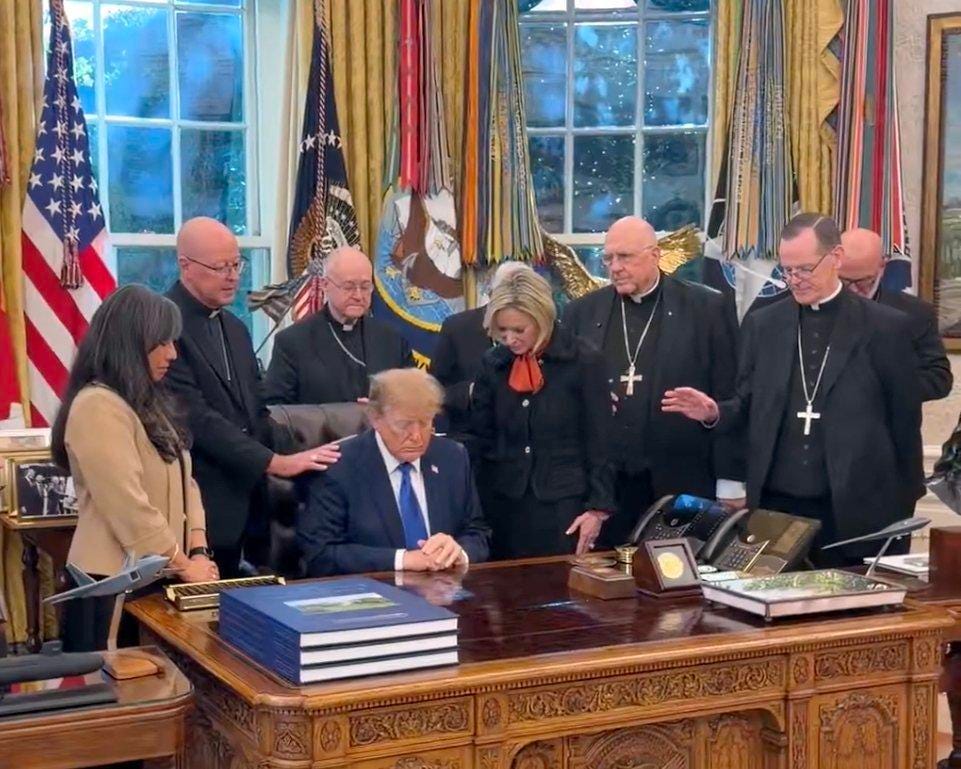
Which is why one might be understandably confused after the White House circulated this picture of Catholic bishops huddled around Donald Trump in what appears to be a holy circle jerk.

Trump getting blessed during his naptime. Video posted on X Oct. 22, 2026, by the administration’s communications staff
Photo and caption from The Grim Historian

Yep. Confusing.

Now, as you can imagine, the Pope’s PR team was very busy after this photo made the rounds. Milwaukee Archbishop Jeffrey Grob issued a public apology three days later. He said the bishops expected a private discussion and had not consented to publicly distributing the images.

In other words, this Oval Office blessing was supposed to be a secret.

Naturally, Catholics wanted to know — what sacrament were they performing? Which is why many Catholics just assumed Trump was dying.

I have some theories about what is going on in this picture, and it is not thoughts and prayers for their desired midterm result. Let’s just say if James Madison had seen this photograph, his head would have spun around like Linda Blair’s in The Exorcist.

So let’s start there.

Retelling (distorting) Indian history for propaganda purposes

Filed under: Britain, History, India, Politics — Tags: , , , — Nicholas @ 04:00

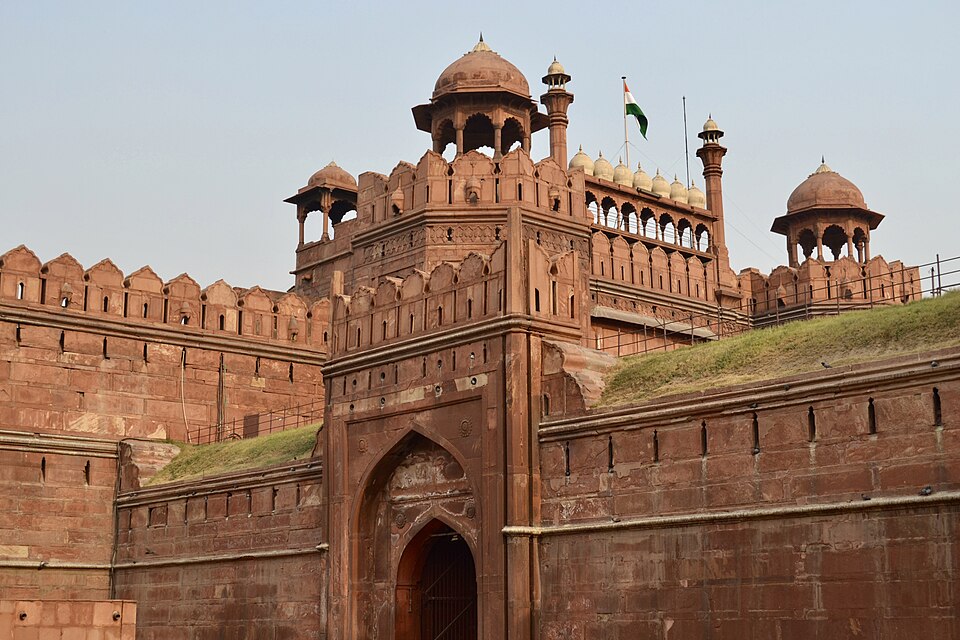
On a recent visit to the Red Fort in Delhi [Wiki], one of the most historically significant structures surviving from Mughal times, Dr. Robert Lyman toured the museum and found that the decolonialist fanatics have taken over historical interpretation:

The entrance to the Red Fort Museum.
Photo by Amit Ranjan via Wikimedia Commons.

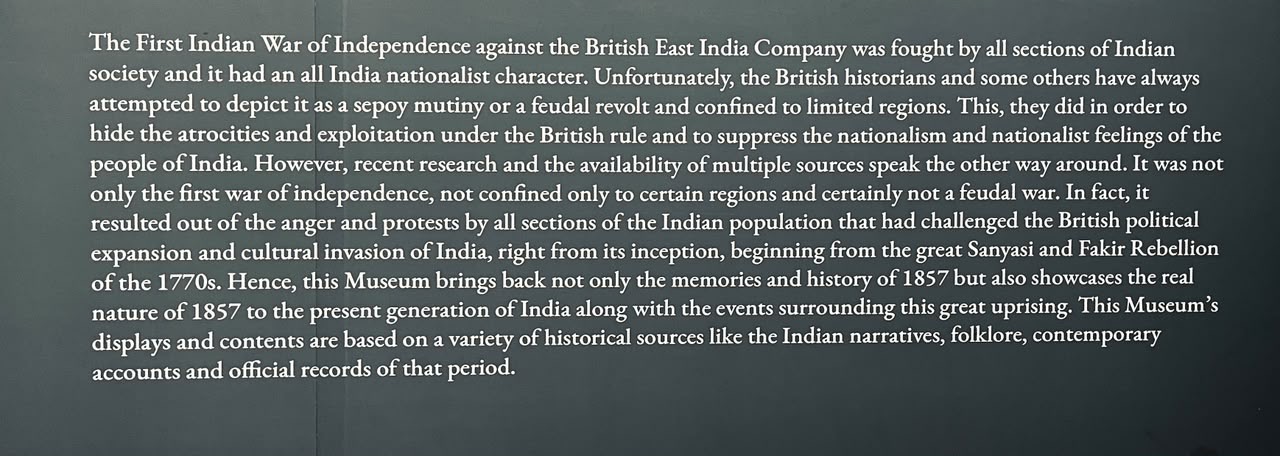
I popped into the museum at the Red Fort in Delhi today. I hadn’t been here since 2019, and I’d been told that the museum had been revamped. I was pleased, because the last time I’d been here it was tired. But what I encountered was both shocking and worrying. I am all for having a divergence of opinion on historical matters, and I am as conscious as anybody of the sensitivities that exist on the subject of 1857. Likewise, we all increasingly aware of the heavily-biased historical narratives forced on people in various parts of the world, and worry about them. I have been acutely aware of the “decolonisation” process in India in recent years. But I wasn’t expecting to find such flagrant nonsense being perpetrated in the holy-of-holies of Indian independence, the Red Fort, today.

But nonsense it was, displayed in bold, assertive strokes, designed to present a definitive account of the birth of modern India from the trauma of British colonialism.

The first was a warning that naughty British historians still pushed a line contrary to the truth known to all true Indians that the “war of independence” was a popular rebellion against rampant imperial oppression:

That this is chock full of contestable assertions should be obvious to all but a few unhinged Oxford academics (you know the ones I mean) and the Guardian.

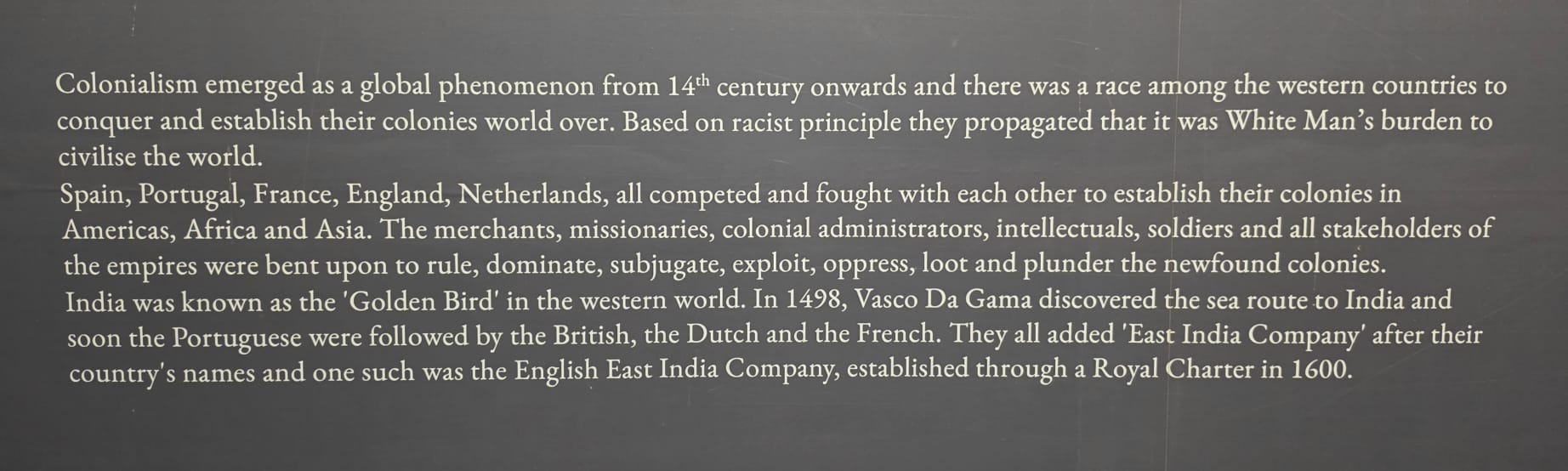
There are three floors of this stuff. As one enters a fascinating definition of colonialism is presented:

I wonder what the Romans would have made of this silliness.

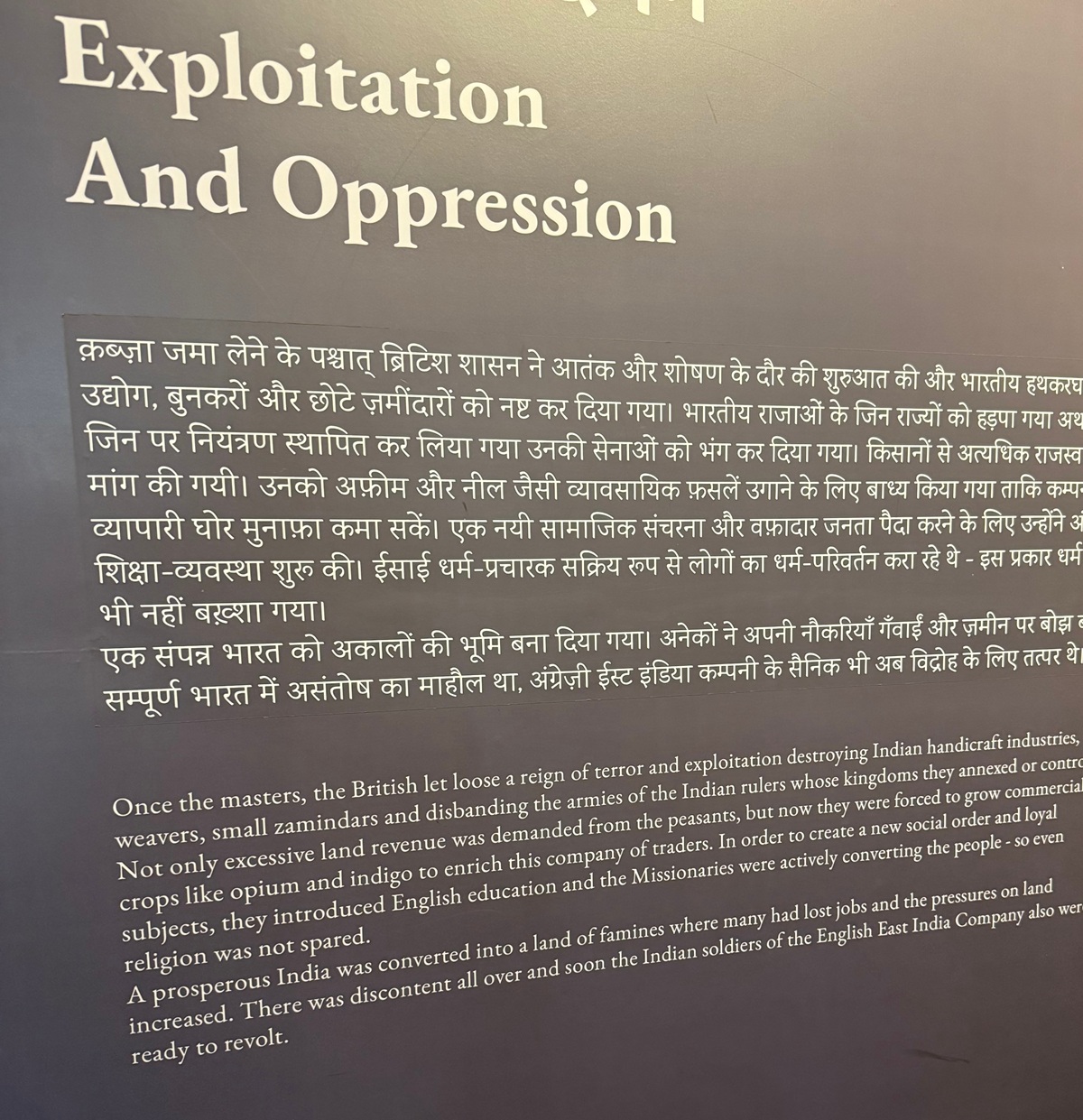
Likewise, I hesitate to describe the following as history, let alone an intelligent analysis of the economic impact of colonialism. When I first came across the subject at university in the 1980s it was presented as the Marxist view of history. It was vacuous and unintelligent at the time, and remains so today:

On the Christianity point, I’ve done my own count and have calculated that from a population of 200 million across the sub-continent at the time there were 120,000 Britons (including 40,000 troops) and of this number about 450 were ordained. It was going to take a long time to Christianise India on this basis …

Yezhovshchina – “the Yezhov times”

Filed under: Government, History, Russia — Tags: , , , — Nicholas @ 03:00

On the social media site formerly known as Twitter, Krzysztof Szczawinski outlines the career of the man who was indispensable to Soviet dictator Josef Stalin, until he suddenly wasn’t … and got erased in his turn:

Yezhov – The Butcher.

His old boss once said he had never met a more ideal worker: “Give him a task and you don’t need to check on him – he’ll get it done. He has only one shortcoming: he doesn’t know when to stop.”

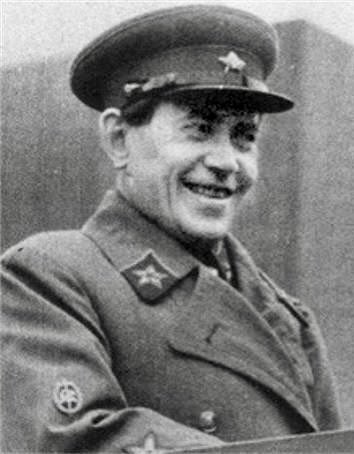
Nikolai Yezhov was a small man, barely five feet tall, a former factory worker with little schooling who rose through the Party as a diligent, obedient bureaucrat. He was exactly the man the system needed.

A small and vicious man – in power, he drank heavily and liked to go down to the prisons to watch interrogations – sometimes joining the beatings himself. When his wife had an affair with the novelist Mikhail Sholokhov, Yezhov had their hotel room bugged and listened to the recordings. He watched his own bedroom just as he watched over the whole country.

His philosophy fit in one sentence: better that ten innocent people suffer than one spy escape. English law had said the opposite for centuries: better that ten guilty men go free than one innocent suffer. That one reversal is the whole difference between a civilization and a terror.

In 1936, Stalin put him at the head of the NKVD. The old boss who had praised him was shot in the terror that followed.

The West calls it the Great Purge. Russians remember it as the Yezhovshchina – “the Yezhov times”. But it was not a frenzy. It was a plan.

An order of July 1937 gave every region a quota: so many to be shot – the “first category” – and so many to be sent to the camps – the “second category”. Local chiefs competed to fulfill the plan and asked Moscow to raise their limits. Moscow usually agreed.

Torture was authorized from the top. Then came the national operations – Germans, Latvians, Finns, and above all Poles. Order 00485, signed by Yezhov, hunted an organization that did not exist. The verdicts came in albums, a few lines per person. In Moscow, two signatures sealed them – Yezhov’s and the prosecutor Vyshinsky’s – hundreds of death sentences at a sitting.

The wives of the condemned went to the camps. Their children went to orphanages.

Propaganda posters showed him crushing a many-headed snake in a spiked glove. His name means “hedgehog”, and “hedgehog gloves” is the Russian idiom for an iron grip.

In two years, around seven hundred thousand people were shot.

Then the machine needed a culprit. In 1938, Beria arrived as his deputy, and by November Yezhov was out. In April 1939 he was arrested, tortured with the methods he had perfected, and made to confess to being a spy. At his secret trial, he asked that Stalin be told he would die with his name on his lips. He was shot in February 1940.

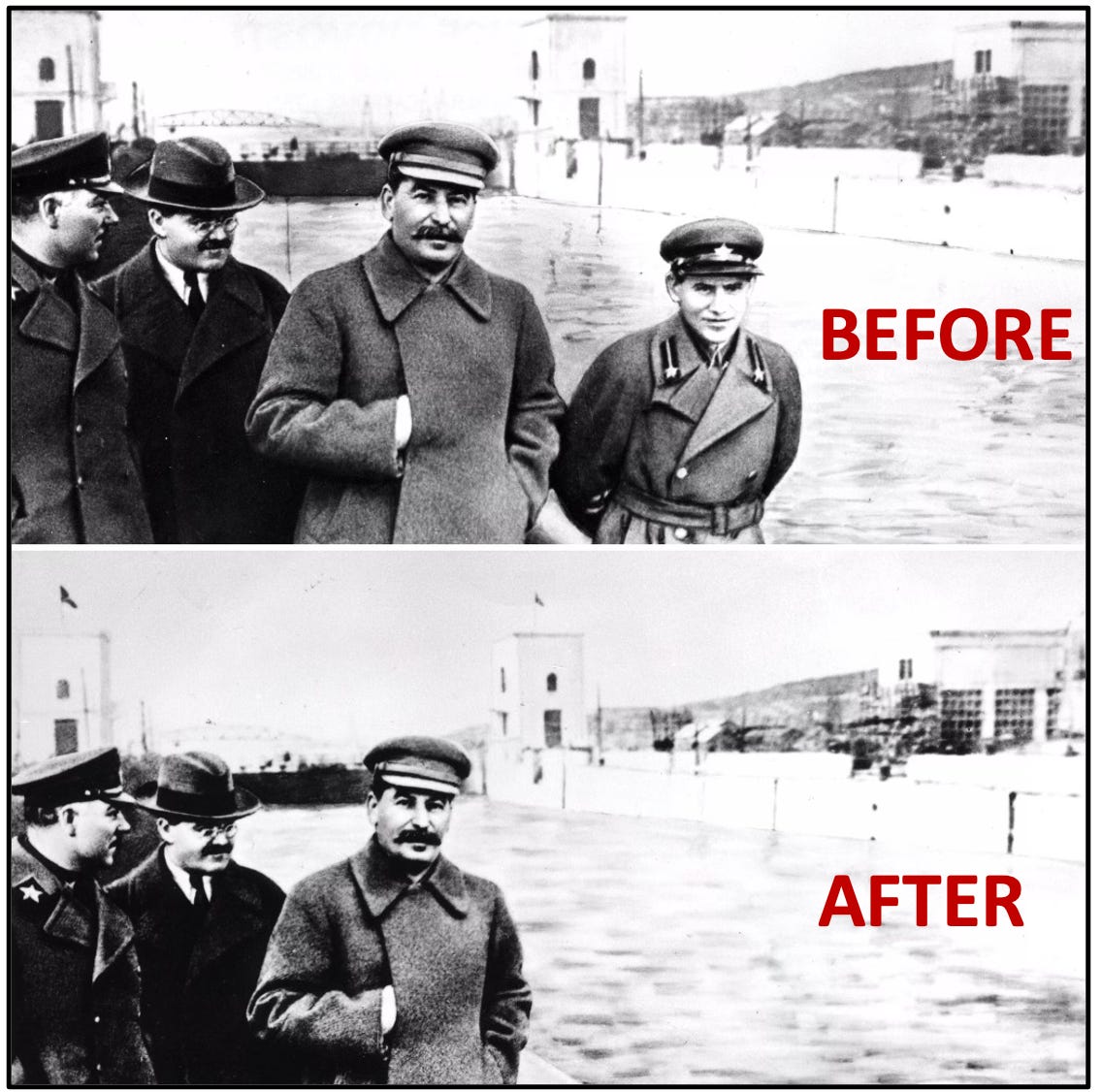
Then he was erased – from the photographs, from the records, from the story. The terror kept his name, Yezhovshchina, so that it would not carry the Master’s.

His adopted daughter was sent to an orphanage, like the children of his victims.

The machine is never satisfied. It always needs the next name on the list – and, when the time comes, the name of the man who made the lists.

Feeding the Last Tsar of Russia – Pelmeni for Nicholas II

Filed under: Food, History, Russia, WW1 — Tags: , , , — Nicholas @ 02:00

Tasting History with Max Miller
Published 5 May 2026

Pan-fried pelmeni with smetana and fresh dill

City/Region: Russia | Siberia
Time Period: 1861

For one of the most powerful people in the world, Tsar Nikolai Romanov, or Nicholas II, preferred rather unassuming foods. Instead of the extravagant French dishes that were served in the Russian court, he liked simple traditional dishes, like these Siberian pelmeni.

They are simple, but they are very good. With just beef, onion, salt, and pepper, these dumplings are delicious. I think the best way to prepare them is to boil and then pan fry them so you get a nice crispiness, but you can serve them as a soup as well. The only thing I’d change is to make them a little smaller. Elena Molokhovets is very specific on the size they should be, but I think you should make them whatever size you prefer.

    Using a knife, scrape 1 1/2 lbs first-quality beef from the short loin. Add 1 finely chopped and squeezed-out raw onion, sieved black pepper, and salt. Use this filling to make pelmeni … If the beef is lean, use 1 lb beef and 1/2 lb finely chopped kidney suet. Boil the pelmeni in salted water or in bouillon in a separate saucepan … These pelmeni are best made the size of kolduny or shaped like small ears … Siberians prepare pelmeni for several occasions at once, sprinkling them lightly with flour so they do not stick together. Then they are frozen and boiled in salted boiling water as needed.
    — A gift to young housewives by Elena Molokhovets, 1861

(more…)

Older Posts »

Powered by WordPress