
Quotulatiousness

October 14, 2026

He really is the model of a modern Major-General

Filed under: Media, Politics, USA — Tags: , , , , — Nicholas @ 05:00

InfantryDort reacts to a retired US general’s opinions on public executions on X (that is, the post is on X, not the executions … but now that I think on it …)
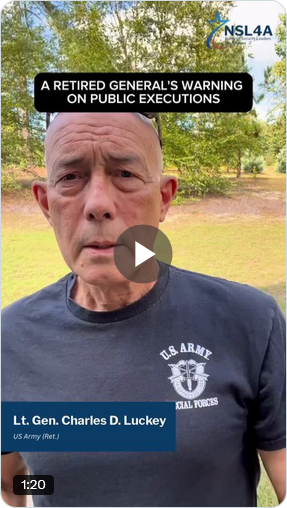
Why does it consistently appear that the criteria to be a General officer is historical illiteracy, suicidal empathy, and being toxically egalitarian? How did we get here?

This one thinks its “fundamentally unamerican” to publicly execute people. Well I guess George Washington is unamerican too. Or Abraham Lincoln.

You know what’s “fundamentally unamerican”, General? Simping for terrorists.

I hear this guy talk and I can’t help but think: no wonder GWOT didn’t end the way we wanted it to. The militarily crucial act of killing people disgusts this type of leader.

No wonder why it was so easy for guys like him and Stan McChrystal to make us practice “courageous restraint” on the battlefield. Letting the enemy gain the upper hand in every engagement, on purpose.

Out of what? Some wayward sense of nobility? That we’re the “good guys”?

No, General. Being the good guys doesn’t mean allowing our enemies to have a monopoly on violence. WE MUST HAVE THE MONOPOLY ON VIOLENCE.

Why am I constantly explaining this to Generals? Especially of the retired variety? Why am I having to explain that killing people is not only important to our profession, but for protecting western civilization itself?

The bar for General officer has been so low it’s practically in the basement. And no matter what institutional changes we make, these types always choose themselves to replace…. themselves.

So it’s more of the same. Same bad experience, same bad channel. Same feckless worldview. Incapable of victory. Incapable of common sense. Incapable of doing their jobs. But completely capable of making Instagram videos about how mean and cruel we’ve become.

BEING MEAN AND CRUEL TO OUR EVIL ENEMIES IS THE ENTIRE POINT!

Pathetic filth.

To which Tom Kratman responds:

Did I ever … hmmm … maybe not. Wait a sec …

Not only will you be rated or senior rated by about 100 people, in 30 years in the Army, but you can never have pissed one of them off. These men, however, will range from the bright to the ignorant, the moral to the immoral, and will have vastly diverging experiences which will drive their judgment. And you cannot disagree with them if you want stars. It would be one thing if they were all the same and you learned to echo just one theme. But when they are all different, and you still agree with every trivial thought they ever had, it can only be because you lack any center of your own, any moral compass whatsoever, since everything in the military has a moral aspect to it. In other words — with only very rare exceptions; I thought well of Foss, LeMoyne, and Petraeus, for example — the man who rises to stars usually has nothing, no values of worth, inside him.

Which is worse than contemptible; it’s absolutely pathetic, given how useless it is to become a general.

True story: Some people thought there were stars in my future. There came a day, early 1988, I was on my second company command, of three, and I was shooting the crap with the brigade commander in his office. I’d been ambivalent about stars for some time by then, but it was a very amorphous thing. I couldn’t have told you why. Eventually, I realized that my brigade commander (Annapolis, oddly enough) was trying to mentor me into stars. “You need to do this, Tom, then you need to do that. Then you need to …”

And it all came clear, an epiphany, a blinding flash of the obvious, and I said, “Sir, I don’t want to be a general.”

“Wha … what … WHAT?”

So I stood up, walked across the office to his LCE tree, and took his helmet in hands.

“Sir, do you remember General Meyer?”

“Shy Meyer? Chief of Staff?”

“Yes, sir, him.”

“Sure.”

“Sir, Meyer was a reformer. He had a bag full of good ideas for improving the Army. I counted thirty-seven once, about half and half trivial and important. I may have missed some.”

“Yes, so?”

Then I turned the helmet around to point at him the two silly bits of glow in the dark tape on the camouflage band around the helmet. “Sir, of all that, this is all that’s left of Meyer. Everything else is gone. In a matter of a few years it’s as if he never existed. So what, sir, would be the point of becoming a general, if, even if I rose to be Chief of Staff of the Army, I could not possibly have a good and lasting effect?”

Which is, in any case, why I turned to writing. My brigade commander didn’t get it; he still tried to stick me as the incoming CG’s Aide, but I wanted nothing to do with that.

The Korean War Week 121 – America Has Had Enough! – October 13, 1952

Filed under: China, History, Military, USA — Tags: , , , , , — Nicholas @ 04:00

The Korean War by Indy Neidell
Published 13 Oct 2026

The UN delegation walks out of the Panmunjom Peace Talks this week, after the Communist side refuses all of their proposals to solve the POW repatriation issue. A major naval training exercise off the coast comes to its end, with disappointing results, and in the field the Battle of White Horse Hill, the deadliest battle so far this year, rages all week long.

00:34 Recap
00:57 Naval Training Exercise
04:31 Harrison Walks Out
06:41 White Horse Hill
13:47 Operation Showdown
14:34 Summary
14:50 Conclusion
16:39 Memorial

There’s nothing preventing the Canadian government from using propaganda

Filed under: Cancon, Government, Media, Politics — Tags: , , , — Nicholas @ 03:00

And now that the majority of the relic media are addicted to government subsidies, the propaganda efforts are that much more effective:

Here’s something that not many Canadians both know and understand in Canada. There are currently zero laws in place regarding our Government’s ability to use propaganda against it’s citizens.
Not only can they do it, but they have teams of behavioral scientists & psychologists figuring out how to do it effectively.

In 2016 there were only 6 federal employees in the role. Since 2021 there are now over 70

In the Public Health Agency of Canada (PHAC) there are over 16

Immigration, Refugees and Citizenship Canada there are over 5

Treasury Board Secretariat over 3

Environment and Climate Change Canada over 2

And there are more working in the Privy Council Office

During Covid they admitted to using these individuals to push COVID-19 compliance up amongst the population, They ran research surveys & experiments to test messaging and interventions, and designed choice architecture or communications to drive desired behaviours.

These ghouls manufactured consent amongst the population & nudged people to make decisions they didn’t want to.

Fast forward to today and what we are witnessing in regard to the U.S. and Europe. They are using the same tactics to convince people that the U.S. is our enemy & the EU is our savior. Stop falling for their propaganda, step back and think for a moment, why are they bombarding you daily with anti-U.S. rhetoric, climate fear, pro EU messaging. Are you being manipulated to accept their plan’s & decisions.

Star Trek: Yesterday’s Progressivism

Filed under: Economics, Media — Tags: , , , , — Nicholas @ 02:00

Feral Historian
Published 12 Jun 2026

Star Trek has always been a progressive cultural phenomenon, but that was in the last century. Now, Star Trek is older than most of its fan base and in some ways has started to look fairly conservative. This not only reminds us how relative those terms are, but also makes us ask, is Star Trek still relevant? Or perhaps more relevant than it ever was?

00:00 Intro
01:42 TNG, Discovery, and the Orville
04:16 Auroville
06:52 History Didn’t End
08:59 Social Cohesion as Technology
13:40 Step Back to Go Forward

🔹 Patreon | patreon.com/FeralHistorian
🔹 Ko-Fi | ko-fi.com/feralhistorian
🔹 and Merch! | feral-shop.fourthwall.com

QotD: The rise of the Reform Party of Canada

A rejection of the new Canada, especially the largesse and overreach of the federal government into economic matters, was the perfect match for importing the new kind of libertarian-infused conservatism that became dominant in the 1980s with figures like Reagan and Thatcher. “Small government” conservatism provided a solid ideological foundation on which to build a new kind of conservatism to oppose aspects of the new regime, and it was also one that didn’t require nostalgizing for the old Dominion.

This small government conservatism wasn’t a homegrown ideology, it was adopted and imported from elsewhere. America especially. The dominant paradigm in postwar American conservatism became the fusionism that was associated with publications like National Review, and eventually became a dominant political force in Ronald Reagan. The success of this fusionism also made it appealing, and ready-made, to be imported to Canada and fused with this rejection of big government Liberal nationalism. In the process, Canadian conservatism begins to sound more American.

I’m not using this pejoratively and I don’t see this so much as a form of cultural imperialism. The adoption of this kind of conservatism made sense in response to the new Liberal nationalism. But it does present some serious problems for Canadian conservatism. This anti-nationalism and small government conservatism will appeal to some, especially in the West, but it’s not something that a national movement could be forged around.

This is what I mean when I say lots of conservatives don’t like Canada all that much. In adopting small government American conservatism, this kind of conservatism sounds like an American critique of Canada. Canadian healthcare looks “socialist” to American conservatives, and small government ideologues in America look at Canada and see big government “Soviet Canuckistan.” This is what Canadian conservatives adopting this kind of ideology sometimes sound like, and you can see why this has limited electoral appeal.

Ben Woodfinden, “True North Patriotism and a Distinctly Canadian Conservatism”, The Dominion, 2020-10-20.

Powered by WordPress


