Quotulatiousness

October 18, 2026

Singapore: The rise of Lee Kuan Yew

At The Wrong Side of History, Ed West continues his review of Lee Kuan Yew’s autobiography, detailing the difficult period after the British withdrawal from overseas military commitments “East of Suez”, including the vast naval base in Singapore and the Royal Air Force’s Changi air base:
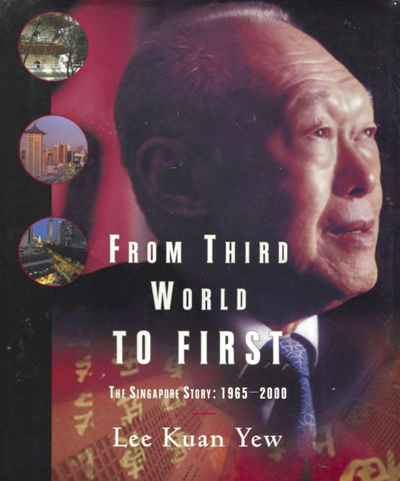
October 31, 1971, and the British are saying goodbye to their military base in Singapore, the city where the empire endured its greatest humiliation. Three years earlier, an increasingly straitened former imperial power had announced its immediate closure as part of their withdraw east of Suez. For the recently independent city-state, this was a disaster, and prime minister Lee Kuan Yew had done his best to postpone the big day. The city already suffered from high unemployment, and Britain’s military accounted for 20 per cent of Singapore’s GDP, providing 30,000 direct jobs and 40,000 in support.

Yet retreat was inevitable, and when the day came British forces were given a ceremonial send-off, Lee writes in his memoir, the withdrawal carried out with “good intentions, goodwill and good faith”. After 150 years in the Strait, the British were gone, handing over the airbase to the colony they created for the symbolic fee of one dollar.

Lee had cut his teeth in the independence movement, but the city-state could not survive without protection. As with many small countries which had depended on the British, Singapore now shifted its allegiances to its successor state, the United States of America.

The imperial retreat presented a huge financial headache for the former anti-colonial activist, but increasingly a more personal sense of unease. “I feared that slowly but inexorably British influence would decline”, he writes: “and American influence expand. For my generation born and bred in empire, it was not an easy change. I had to come to terms with American power without a British buffer. The British had enforced their will with a certain civility. The Americans were different, as I could see from the way they dealt with South Vietnamese leaders, and even with Thai and Filipino leaders who were not in as parlous a position as those in Saigon. America was a power on the ascendant, with bulging muscles and a habit of flexing them.”

Lee had built up a good relationship with both Harold Wilson and Edward Heath, and used this to delay the withdrawal for as long as possible. He had less luck in getting the British to help Singapore train their army, something they had done with Malaysia where the threat of communist insurgency necessitated it. Neither were most of the other newly independent states willing to help: Egypt’s Nasser recognised Singapore and sent good wishes, but ignored his requests for military aid. India’s prime minister Lal Bahadur Shastri also said no, so he turned to another small post-colonial nation surrounded by hostile neighbours. When a small group of Israelis arrived in November 1965, they had to keep their existence a secret to prevent unrest from the Malay minority. “To disguise their presence, we called them ‘Mexicans'”, he recalls: “They looked swarthy enough”.

The Chinese here traditionally shunned military service, “a historical legacy of the predatory habits of soldiers during the years of rebellions and warlords in China”. As trading people they looked down on the military as a career choices, and he quotes the Chinese saying “a good lad does not become a soldier, good steel does not become nails”.

Lee also had to negotiate the problem of “representation” which mars all multicultural societies. Under the British, the city had been policed by Malays, often recruited from Malaysia itself, as well as the more neutral Gurkhas. Now “we had to find some way to induct more Chinese and Indians into the police and armed forces to reflect their population mix”, otherwise they would not be accepted as legitimate. “We wanted the people to regard our soldiers as their protectors – a reversal from the days when army and police uniforms aroused fear and resentment as symbols of colonial coercion”.

Conscription, unpopular under the British, was reintroduced, and the authorities even set up military cadet corps in all secondary schools, although his colleague Goh Keng Swee reflected that “the Spartan approach to life does not come about naturally in a community that lives by buying and selling”. As with Israel, another small state formed by a market-dominant minority, they were forced to adapt their way of life to survive; yet rather than become the new Sparta, Singapore focussed on becoming the new Corinth, a commercial centre where great fortunes could be made. When the British finally withdrew, RAF Changi Air Base became Changi Airport, a transport hub which came to epitomise the city’s commercial success.
Tiger I: A Tank Too Heavy For Hitler’s War? – Nazi Rearmament 10

Filed under: Germany, History, Military, Weapons, WW2 — Tags: , , , , — Nicholas @ 04:00

World War Two
Published 17 Oct 2026

The Tiger I was one of World War II’s most feared tanks. But could its powerful 88 mm gun and thick armor compensate for the demands it placed on Germany’s factories, mechanics, and supply lines?

From competing Henschel and Porsche prototypes to combat at Leningrad, Kursk, Tunisia, and Normandy, we examine the Panzerkampfwagen VI Tiger I beyond its legendary reputation. Its firepower and protection made it a formidable opponent, but manufacturing, transporting, maintaining, and recovering this 57-ton heavy tank required resources Nazi Germany could increasingly ill afford.

In this episode of Nazi Rearmament, we explore:
• The Tiger I’s armor, armament, engine, and suspension
• The development contest between Henschel and Porsche
• Production costs, industrial constraints, and forced labor
• Early mechanical failures and later battlefield performance
• Heavy tank battalions and the capture of Tiger 131
• Why tactical successes could not resolve Germany’s strategic failures

Was the Tiger the deadliest beast of WWII, or a tank too heavy for Hitler’s war? Its history reveals how an effective battlefield weapon could still fall short of the war effort that produced it.

Fifty years of French decline

On X, auto-translated from the original French, Guillaume Herblot laments the dynamic, innovative France of fifty years ago in contrast to the sclerotic bureaucratic swamp it is today:

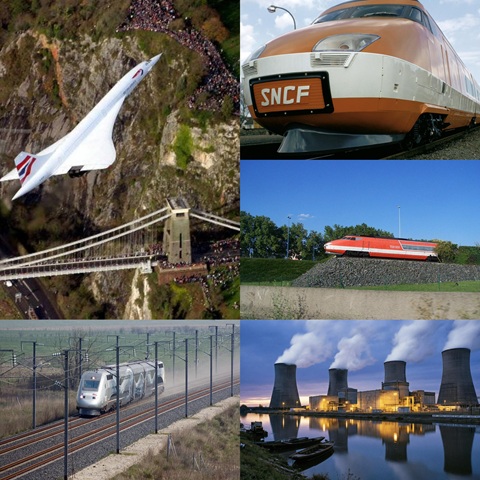
In France, we invented the Concorde.

In 1969, it took off and reached Mach 2, a symbol of Gaullist grandeur, designed to challenge the Americans.

In 1972, the TGV 001 broke the world speed record on turbine power (318 km/h).

In 1981, the electric TGV connected Paris to Lyon at 260 km/h. In 2007, it shattered the world rail speed record: 574.8 km/h.

In the 1970s, the Messmer Plan launched the largest civilian nuclear program in history: 58 reactors, providing up to 70-80% of our electricity, an energy independence that the whole world envied.

Dassault, Sud-Aviation, EDF, Framatome, SNCF: our engineers were the best. We were ten to twenty years ahead of almost everyone else.

Then 1981, Mitterrand. Massive nationalizations (banks, steel, chemicals, electronics, aeronautics). The 39-hour workweek. Auroux Laws. Exploding social charges. All-powerful unions. Punitive taxation. Rigidified labor laws.

In less than fifty years, socialism transformed a country of conquering engineers into a country of strikes, offshoring, and relative stagnation.

Industry went from about 28% of GDP to 11%.

The Concorde was abandoned. Our nuclear program was nearly dismantled for decades due to deadly political choices.

This isn’t fate; it’s the price of an ideology that preferred to redistribute and regulate rather than build and innovate.

A word to the wise.

On the topic of France and the French, it is rather surprising to find that as recently as the French Revolution, “French” was almost exclusively the language of the court, the mercantile middle classes in urban areas, and the church. Most “Frenchmen” spoke local dialects that had little in common with formal French:

A double guillotine
Musée de la Révolution française via Wikimedia Commons.

Just a few decades earlier [than 1900] the country was still a maze of local languages, while rural areas of 18th Century France were in many ways a foreign country.

“Most subjects of Louis XVI spoke their own language or dialect”

In the 1740s, the astronomer Jacques Cassini (son of the more famous astronomer Giovanni Cassini, for whom the saturnal probe is named), sent an expedition out to fully map the country for the first time. When one of its geometers climbed Mont Gerbier de Jonc, “he could take in at a glance several small regions whose inhabitants barely knew of each other’s existence”, author Graham Robb writes in The Discovery of France: A Historical Geography from the Revolution to the First World War. (My primary source for most of what follows).

    To walk in any direction for a day was to become incomprehensible […] The people who saw the sun set behind the Gerbier de Jonc spoke one group of dialects; the people on the evening side spoke another. Forty miles to the north, the wine growers and silk-weavers of the Lyonnais spoke a different language altogether, which had yet to be identified and named by scholars. Yet another language was spoken in the region the traveller had left the day before, and though his own mother tongue, French, was a dialect of that language, he would have found it hard to understand the peasants who saw him pass” (3-4).

The insularity was especially pronounced in this region, the mountainous Massif Central, where “roads and byways came and went with the seasons … rivers were unnavigable” and “links to the rest of France practically non-existent”. Accentuating it was the truculent nature of the locals, who soon hacked Cassini’s geometer to death, apparently believing that a strangely clothed man pointing odd metal instruments at rocks was a sorcerer who was behind recent crop failures. A century later, another geographer said this region was best-viewed by balloon, but “only if the aeronaut can remain out of range of a rifle” (Robb, 5). But most other parts of France were only a little better. This was a country that was four-fifths rural at the time of the Revolution; “almost a third of the population (about ten million people) lived in isolated farms and cottages or in hamlets with fewer than thirty-five inhabitants and often no more than eight” (Robb, 13).

The French monarchy had tried to impose the French language from above, “requiring priests and those in liberal professions to speak French, and for church registers and public acts to be kept in French”. But “such controls only affected the surface of life in much of France”, Peter McPhee writes in A Social History of France: 1789-1914. “Most subjects of Louis XVI spoke their own language or dialect and lived within distinctive cultures of perception, language and ritual.”

Grégoire’s survey

In the first few years of the Revolution, the Abbé Henri Grégoire conducted a survey of language use in the whole country, asking each town hall questions like: “Did the people of the region have their own patois?” and “Could it be used to express intellectual concepts or was it riddled with obscenities and oaths?”

Everybody knew that the border regions included non-French speakers — Bretons, Basques, Flemings and Alsatians. And much of southern France spoke not French but a different Romance language, Occitan or langue d’oc. But even the ostensibly “French” or “Occitan” areas “turned out to be a muddle of incomprehensible dialects”.

    In many parts, the dialect changed at the village boundary. Several respondents claimed that differences were perceptible at a distance of one league (less than three miles) and sometimes just a few feet, as the writer from Périgueux explained: ‘The patois’s reign ends at the river Nizonne. It is amazing to cross this little stream and to hear an entirely different patois, which sounds more like French’. In the Jura, there were ‘almost as many different patois as there are villages’. Even plants and stars had their own local names, as if each little region lived under a different sky. (Robb, 50-51)

Though the patois (“‘language’ proper is spoken only in the capital”, the Encyclopédie wrote) were most prevalent in the countryside, peasants weren’t the only speakers.

    The city of Lyon was a hive of micro-dialects: ‘The river people, the butchers, the silk-workers, the fish-wives and the herb-sellers each have a language all their own’. In some southern regions, rich people, priests, scholars, lawyers and tradesmen all spoke the local dialect and ‘felt ill at ease when speaking French. If certain quartiers of Paris had been included in the questionnaire, the Abbé might have added the communities of migrant workers who lived in the capital and whose dialects had a noticeable effect on the speech of Parisian workers. (Robb 52)

During the Revolution, in one Gascon département, “priests complained of peasants falling asleep during the reading of decrees from the Assembly, ‘because they [did] not understand a word, even though the decrees [were] read in a loud and clear voice and [were] explained’. In consequence, successive assemblies encouraged the translation of decrees into local languages …” (McPhee, 38).

After his survey — presented to the National Convention on the very same day Robespierre was elected as the convention’s president — Grégoire concluded that “while France was the language of civilized Europe, France itself had no more than three million ‘pure’ French-speakers (11 per cent of the population), and many of them were unable to write it correctly”. More than six million couldn’t speak French at all, another six million “could barely conduct a conversation in it” (Robb 53).

In fact, Grégoire’s figures “were almost certainly an underestimate”.

    Seventy years later, when official statistics treated a few days at school or the merest smattering of French as evidence of an ability to speak the language, many or most of the communes in fifty-three out of eight-nine départements were said to be non-French-speaking. In 1880, the number of people who felt comfortable speaking French was estimated to be about eight million (just over one-fifth of the population). Robb 53.

On page 54, he has an interesting map showing the spread of official French and dialects in 1863.

Coriolanus and Science Fiction

Filed under: History, Media — Tags: , , , — Nicholas @ 02:00

Feral Historian
Published 19 Jun 2026

Coriolanus is on a core level a story about loyalties, the personal and the tribe. It’s a rich field for science fiction, and this story hinges on a delicate balance of loyalties that can change drastically in different sci-fi settings.

The original edit of this relied heavily on the 2011 film, but for copyright reasons I’m using different performances as examples here. Apologies for any edits that seem a tad off.

00:00 Intro
03:00 The Tribunes
04:50 A World Elsewhere
07:25 Martius and Aufidius
12:39 Loyalties

Corrections: 13:07 I know, I’m technically using “geopolitical” incorrectly.

It also occurs to me that there is a bit of a Coriolanus influence on my book (shameless plug incoming) Stellar Drift, available now. amazon.com/dp/B0GTVXK4CN

And of course book 1 in the series, Ninti’s Gate as well. amazon.com/dp/B0CYXH9BWD
🔹 Patreon | patreon.com/FeralHistorian
🔹 Ko-Fi | ko-fi.com/feralhistorian
🔹 and Merch! | feral-shop.fourthwall.com

QotD: The historian’s only real skill

Filed under: History, Media, Quotations — Tags: , — Nicholas @ 01:00

After a few decades studying and teaching History, my basic conclusion is that the Historian’s only real skill is noticing. Everything else — dogged archive work, good writing, excellent teaching — is what the Cajuns call lagniappe (pronounced “lon yop”). Nice to have, but unnecessary. Noticing, that’s the thing. And of course Steve Sailer was right: PostModern life — all of it, stem to stern — is just a war on noticing.

And I’m not sure that’s a skill that can be taught. Maybe a little bit, probably “modeled” more than “taught”. It starts with healthy skepticism. Back when Facebook was first starting out, I’d bring in my “ridiculousness of the day” to class. You know how they did back then (and no doubt still do) — someone would find some fascinating “historical” fact and make a meme out of it. We’d go over it in class. Look, kids, not only is this not true, there’s no way it could possibly ever have been true. Let’s think it over […]

In other words, every single thing about that article is a lie … but what is it designed to accomplish, because I promise you, students, it’s not there by accident. Lots of people got paid a lot of money to put that together and publish it. Who, and to what end?

History class is about the only place you’re allowed to do that anymore. I always made a big deal out of “interrogating sources” for that reason. Can we trust anything reported about the past? How much weight do we have to put on the individual reporter? How do we judge social positions, weigh motives? What, if anything, are facts, and what relies on our own judgement? How can we make our judgement better?

Annnnnd that’s why there’s no more History class. It has been reduced to multiple choice tests, if for no other reason than the traditional essay gives the professor too many opportunities to point out this kind of error. What evidence do you have for that assertion? You seem to be making this or that assumption; why? Here’s an error of logic — your conclusion in paragraph 3 doesn’t follow from the evidence presented in paragraph 1. You’re either missing something, or you drew the wrong conclusion. Revise and resubmit for partial credit …

Obviously that kind of thing can’t be allowed to continue, comrades.

Severian, “History and Human Survival”, Founding Questions, 2022-09-27.

Powered by WordPress