Quotulatiousness

October 2, 2026

Britain’s best general in World War II

Filed under: Britain, History, India, Japan, Military, WW2 — Tags: , , , , — Nicholas @ 05:00

If you’ve been following for a while, you’ll know that I’m a big fan of Field Marshal Bill Slim, the best but also least well known British general of the Second World War. His achievements in Burma and India are overshadowed in popular memory by the struggle against the Nazis in Europe and the vast Pacific campaigns against the Japanese by primarily American forces. In recent years, there’s been a bit more attention paid to the XIV Army’s long and bitter fight, but there’s always more to discover about that incredible struggle:
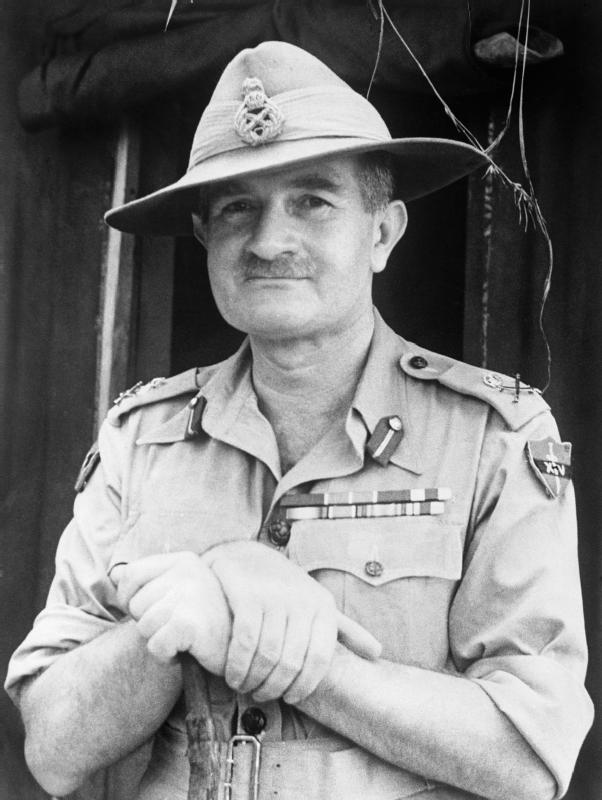
Field Marshal Sir William Slim (1891-1970), during his time as GOC XIVth Army.
Portrait by No. 9 Army Film & Photographic Unit via Wikimedia Commons.

    But I see him clear, with that robber-baron face under the Gurkha hat … looking like a rather scruffy private with a general’s tab — which of course is what he was.

    – one of General Slim’s soldiers remembers

A search on Amazon using the term “military memoir” yields more than forty thousand results. With so many choices, why read Field Marshal William Slim’s World War II memoir entitled Defeat into Victory? Interestingly enough, there are two answers. The short answer was revealed in 2011 when the National Army Museum in London held a debate and a public poll to answer the question — Who is Britain’s greatest general? Great Britain, of course, has a long and distinguished military history with a great many famous military commanders who could all vie for this honor. In what turned out to be a surprise to many, Field Marshal Slim tied with the Duke of Wellington as the winner. So, if you are considering whether to read Slim’s memoir, ask yourself — how much do you know about someone who might be one of the greatest generals in history?

Before continuing this essay with a longer, more structured answer about the value of Slim’s memoir, a few words about William Slim himself. He began his military career as a temporary lieutenant at the beginning of World War I, without the benefit of a university education or Sandhurst training. By the end of World War I, he had achieved a sterling military record — wounded twice, awarded the Military Cross and temporarily promoted to major. He spent the inter-war years assigned to the Indian Army and was notably associated with the 6th and 7th Gurkha Rifles. At the beginning of World War II, he was given brigade command in East Africa and then command of the 10th Indian Division in the Middle East. His memoir begins in early 1942 when Slim is suddenly and unexpectedly told to leave his command and report immediately to Army Headquarters in India. The summons was so abrupt that Slim thought he was being relieved of command. He didn’t know it at the time but he was about to spend the rest of the war in India and Burma.

A distinct three-act narrative arc forms the structure of his book. In Act I (1942), Slim takes command of Burma Corps. This was an ad hoc two-division force that was in the middle of conducting a fighting retreat while being overwhelmed by the surging Japanese Army. Slim and his men end up suffering through a one hundred day, nine-hundred-mile retreat back to India in what historians have called the longest retreat ever conducted by a British army. By May 1942, the remnants of his Corps finally reached safe haven in India.

In Act II (1943), Slim regroups, retrains and resupplies his forces in preparation for his reconquest of Burma. This was not as straightforward a task as it sounds. Slim now commands the Fourteenth Army which, at its height, consisted of nearly one million soldiers and was one of the largest armies in the world. But the size of the Fourteenth Army was not as striking as the diversity of its composition. Slim had to make a disciplined, cohesive and effective fighting force using regiments from England, Scotland, South Africa, Nigeria, Kenya and a vast array of Indian units including Sikhs, Rajputs, Pathans and Gurkhas from Nepal. Later in the war, Slim described a routine tactical operation: “The Japanese had for some time been harassing 28 East African Brigade Group … and a Punjabi battalion had been sent in to stiffen it”. The Japanese counterattacked “and a British battalion was hurriedly transferred from the east bank and joined them”. One routine tactical operation — involving allied soldiers from three continents.

In Act III, (1944-45), Slim and his army return to Burma and achieve triumph after triumph. The first triumph is the battle of Imphal (March-July 1944). The famed novelist George MacDonald Fraser was a young Scottish soldier in Slim’s Fourteenth Army and he later wrote; “I imagine that every teenager today has heard of Stalingrad and Alamein and D-Day but I wonder how many know the name of Imphal … where Japan suffered the greatest catastrophe in its military history”. The subsequent battle of Meiktila (February- March 1945) was equally significant and has been characterized by British military historian Corelli Barnett as, “the cleverest, boldest and most brilliant single British victory in World War II”. By mid-1945, Slim’s victorious Fourteenth Army had retaken Rangoon and destroyed the Japanese army in Burma.

There are three dimensions to Slim’s memoir that make it so memorable. It is a tale well-written, it is a tale of wonder and it is a tale filled with wisdom.

Generational incomprehension

Filed under: Bureaucracy, Business — Tags: , , , , , , — Nicholas @ 04:00

On Substack Notes, GenX Anecdotes expresses the frustration a lot of Gen X/Generation Jones folks have felt in their dealings with Millennial and Gen Z co-workers, supervisors, and managers:

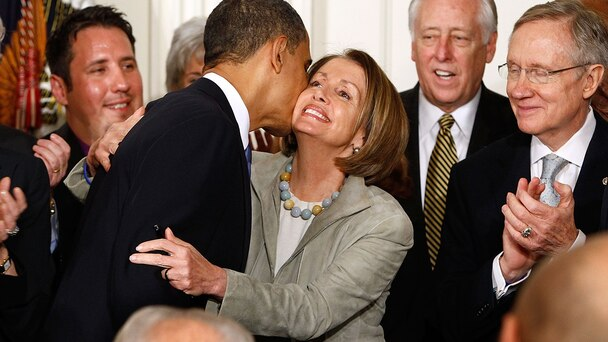
Experience tells me that I need to add an eye-catching graphic to every non-video post, but finding appropriate images is sometimes difficult. I hope GenX Anecdotes won’t mind me using yet another meme instead of something more sober and appropriate to her point.

One of the things people tell you when you are young about getting old is how quickly it sneaks up on you.

What they don’t tell you, is that it’s not linear or obvious. It’s not like you have a specific moment where you think “OK. NOW I am middle aged”. It doesn’t work like that. You remain “you”.

You might change your outlook over time. You might get wiser (hopefully) and more content with who you are. You might have more serious responsibilities. More experiences and memories to draw upon. But you’re still YOU.

For me, I don’t really feel like I’m that much “older” going about my day-to-day business doing my thing. I actually still feel quite young in myself in many ways.

It’s how the world greets you that’s different. And that’s when little things will remind you. It gives you a kind of shocking “jolt”.

Being around younger people is what really brings it home. And I don’t mean kids or young teens. I mean young adults. Or even adults in their 30s who tell you they feel “old”.

I am in my mid 50s.

When someone in their late 20s or 30s tells me what year they were born it blows my mind.

When they were born in a year that I clearly remember, feels like last month to me, and when I was well into adulthood, that’s when it really hits home.

Also, it’s how younger people view you and act around you.

In my last job, most people were in their 20s and 30s.

I won’t lie. Some of them treated me like garbage. Like I didn’t exist.

I was a bit of a “cute” novelty to them. Like “aaawww bless her”.

I had the misfortune of being “trained” in one of my part-time jobs I had when my daughter was in junior school, by a 20 something. The job was a local convenient place holder during school hours.

What she was showing me was very “basic” and tedious. But if I questioned anything about it like “why can’t we just do this instead? Surely that would make more sense?”

She looked at me, not like someone who had 30 plus years experience working in different industries who might have a point. But someone “old” and passed it, who didn’t understand.

Like a silly backwards old woman who had no idea.

The amount of times I would say “Yeah. I DO get it. I am just wondering why it’s done this way? It seems a bit impractical?”

She looked at me blankly. Like I was asking her why water is wet …

I learned to just shut up and do the bloody tedious thing in the convoluted, dumb way. Because … because … that’s how it’s done.

Then I knew all those 20/30 year olds just saw me as an annoying old relic who “didn’t understand” how things worked.

I was there about a year before moving house.

I couldn’t wait to leave.

One of the HR women hauled me in at one point to give me an “appraisal”. There I was with a 20 something asking me if I was “happy at work” and going through other annoying questions on her ipad.

She obviously was irritated that I wasn’t taking the whole fake charade “seriously” enough. She wanted me to give her bullshit standard answers that she could tick a box to.

But I kept saying things that weren’t “tick box” worthy.

And that just signified further to her that “I didn’t understand” what was going on.

Oh I understood.

I just didn’t want to play along.

And just to emphasise how insane this whole scenario felt.

She still lived with her Mum and Dad and had soft toys on her desk.

That’s what getting “old” feels like.

Those who are attracted to power are the ones least capable of using it wisely

Filed under: Media, Politics, USA — Tags: , , , , — Nicholas @ 03:00

Lord Acton, something, something, corrupts absolutely:

Power selects for a specific personality type, and it is not yours.

F.A. Hayek spelled this out in 1944. In a centrally planned system, the people who rise are not the most competent or the most honest. They are the most willing to exercise force against strangers, the most comfortable with contradiction, and the most skilled at coalition-building through favors rather than merit. Government filters for the bad ones from the start.

The mechanism is straightforward. Political power means controlling resources you did not earn. Capturing that control requires outcompeting rivals who have no ethical constraints. A principled candidate refuses to promise contradictory things to different voter blocs. An unprincipled one does it without blinking. The unprincipled one wins. Repeat this selection pressure across hundreds of electoral cycles and you get the U.S. Congress in 2026: a body where the average member has held office for over a decade, raised millions from interested parties, and delivered almost nothing measurable to the people who voted for them.

Bureaucracy compounds the problem. Once entrenched, state agencies attract people who want authority without accountability. You cannot fire most of them. The FDA, the TSA, the Federal Reserve all function this way, staffed by individuals whose career advancement depends on expanding the agency’s reach, never on serving you efficiently.

Explaining the Yugoslav / Zastava M70 Series of Rifles

Filed under: Europe, History, Military, Weapons — Tags: , , , , , — Nicholas @ 02:00

Forgotten Weapons
Published 30 May 2026

Yugoslavia never received a technical data package or license for the AK; they reverse engineered the system themselves in the 1960s. In the process, they created a version of the AK noted for its ruggedness. In addition, they added a number of features to facilitate rifle grenade usage. Over the course of many iterations the rifle remained designated the M70, leading to a lot of confusion about what models are what. Today we are going through the whole series of changes.

M70 – Original milled receiver, with bolt hold-open, fixed stock, and screwed-in barrel
M70A – Underfolder version of the M70

M70B – Milled receiver, pinned-in barrel, standard magazines, fixed stock
M70AB – Underfolder version of M70B

M70B1 – Stamped receiver (1.5mm), bulged trunnion, fixed stock
M70AB1 – Stamped receiver (0.9mm), flat trunnion, underfolder
M70AB2 – Stamped receiver (1.5mm), bulged trunnion, underfolder

Thanks to Zastava USA for making this video possible!
(more…)

QotD: Ketchup, US vs British

Filed under: Britain, Food, Quotations, USA — Tags: , — Nicholas @ 01:00

Let’s start with the one sauce that theoretically bridges our cultures: tomato ketchup. Surely, I thought, this crimson staple would be the same everywhere. How wrong I was.

American tomato ketchup is unapologetically sweet – basically a tomato-flavored sugar delivery system that goes perfectly with everything from french fries to scrambled eggs (yes, we do that). It’s thick, rich, and designed to be squeezed with abandon.

British tomato ketchup, I discovered, has more of an edge. Less sweet, more vinegar-forward, with a thinner consistency that actually enhances rather than masks the food it touches.

Heinz may have started in America, but the British version tastes like its more sophisticated cousin who studied abroad and came back with refined tastes.

The real revelation? Many Brits find American tomato ketchup cloyingly sweet, while I initially found British tomato ketchup disappointingly tart. It took a few months of adjustment before I appreciated the more nuanced British approach – though I still secretly prefer the American version on certain foods.

Turns out it’s not just my imagination. American Heinz uses high fructose corn syrup while the British version uses regular sugar, which explains why my taste buds were a bit confused.

Marianne Jennings, “Beyond Ketchup & Ranch Dressing”, An American’s Guide to British Life, 2025-05-25.

Powered by WordPress