History Rage Podcast and HardThrasher
Published 26 Jul 2026Was the legendary B-17 really brilliant — or dangerously overrated wartime myth?
The B-17 Flying Fortress is one of the most iconic aircraft of the Second World War — but what if its reputation doesn’t match reality?
In this explosive episode of History Rage, host Paul Bavill welcomes aviation historian and YouTube creator Will Carver aka @hardthrasher to challenge one of the biggest myths of Allied air power. Known for his sharp analysis and uncompromising views, Will argues that the B-17’s legendary status owes more to storytelling, culture, and Hollywood than battlefield performance.
From its origins in 1930s military theory to the brutal realities of daylight bombing over Germany, this episode digs into why the aircraft that symbolised American courage may not have delivered the technical superiority it promised.
What You’ll Learn in This Episode:
• Why the B-17 Flying Fortress became such a powerful cultural icon
• The real limitations of its bomb load, range, and survivability
• How daylight precision bombing proved far harder than planners expected
• The truth about the Norden bombsight and its controversial testing history
• Why raids like Schweinfurt exposed devastating weaknesses
• How aircraft design decisions limited bomb capacity and effectiveness
• Why the courage of crews matters even more when the technology strugglesDespite its fearsome reputation, the B-17 often carried smaller bomb loads than British heavy bombers and struggled to defend itself against increasingly capable German fighters. Its reliance on formation flying reduced speed, altitude flexibility, and survivability — sometimes with catastrophic results.
Why This Episode Matters
This episode isn’t about mocking history — it’s about understanding it properly.Will makes a powerful point: praising equipment as flawless risks overshadowing the extraordinary bravery of the crews who flew it. Many airmen climbed aboard knowing the risks were immense, flying into intense flak and fighter opposition regardless. Their courage deserves recognition grounded in truth, not mythology.
November 21, 2026
The B-17 Was Crap with Will Carver (aka Lord Hardthrasher)
QotD: The Late Bronze Age Collapse
We need to be clear, to begin with, that while we have scattered fragments of epigraphic evidence (that is, inscriptions), almost all of our evidence for the Late Bronze Age Collapse is archaeological. Without archaeology, we would remain largely in the dark about this event. But archaeological evidence also brings with it challenges: it can tell you what is happening (sometimes) but often not why and dating with precision can be challenging. Most of what we’re tracking in understanding LBAC is site destruction, identified by the demolition of key buildings or “destruction layers” (often a thin layer of ash or rubble indicating the site was burned or demolished), but dating these precisely can be difficult and there are always challenges of interpretation.
With that said, the Late Bronze Age Collapse is a sequence of site destructions visible archaeologically from c. 1220 BC to c. 1170 BC, which are associated with the collapse or severe decline of the major states of the region (the Eastern Mediterranean and Middle East). We generally conceptualize these destructions as a “wave” moving in sequence beginning in the Aegean, moving over Anatolia, sweeping down the Levant and arriving in Egypt but in many cases my sense is the chronology is more complex than that. Many sites in the path of this “wave” were not destroyed, with some declining slowly and others declining not much at all; other sites (I have in mind Tiryns) see the destruction of their political center but the decline of the urban settlement around it happens slowly or later.
First, we ought to set the stage of the Late Bronze Age. What really marks out the Late Bronze Age (c. 1500 BC to c. 1200 BC) from earlier periods is that the emerging state systems in Mesopotamia, Syria, Anatolia and Egypt had expanded to the point of coming quite fully into contact with each other, with a significant degree of diplomatic, economic and cultural interconnectedness, to the point that we sometimes refer to the “Late Bronze Age Concert of Powers” (evoking 19th century European balance of power politics) when talking informally about them.
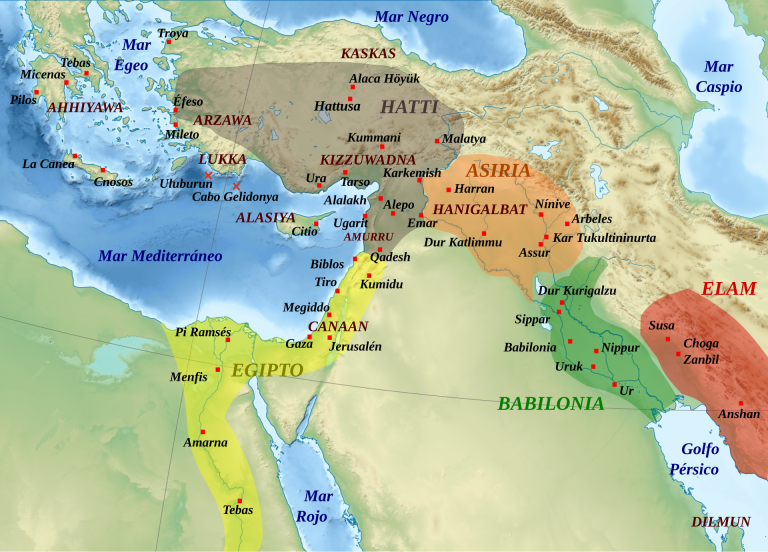
Wikimedia Commons map (in Spanish, there wasn’t an English version, but it will do) of the rough political situation in the 1200s BCE. The Hittite Empire (labeled as the “Hatti“, another name it went by, after another major ethnic group within it) in Anatolia, the Assyrian (Asiria) Empire in N. Mesopotamia, Kassite Babylon (Babilonia) in S. Mesopotamia and (New Kingdom) Egypt.
Now I should caution, we often provide these nice neat maps of the Late Bronze Age powers (and they’re useful to a degree) but the borders of these states were quite fuzzy – their outer “possessions” were often tributaries under the rule of local kings which might be weakly attached to the imperial center. Nevertheless, going from East to West: southern Mesopotamia was dominated by the “Middle Babylonian” Empire, ruled by the Kassite dynasty (the Kassites being an ethnic group who had taken power around 1530 BC) while northern Mesopotamia was dominated by the Middle Assyrian Empire (from about c. 1350 BC). Anatolia and the Northern Levant was controlled by the multi-ethnic Hittite Empire, which seems to have sparred regularly with the New Kingdom of Egypt which controlled Egypt and the southern Levant. Basically all of these powers had less settled, often pastoral peoples in their hinterlands which presented on-going security challenges for them.
These larger imperial states were more economically complex as well. In particular, their large armies required significant amount of bronze which – because its core ingredients of tin and copper effectively never occur in the same place – demanded substantial long-distance trade, though trade was hardly only in copper and tin, but also included other high value goods and even (where feasible) bulk staples. So while these powers clashed regularly, at the elite level (if not at the level of the subsistence economy) they were also reliant on each other to some degree.
Finally, at the edge of this state system is the Mediterranean and especially the Aegean. In the Aegean – in Greece and Crete especially – we see effectively miniature versions of these state structures, complete with (by Near Eastern Standards) itty-bitty palaces (the Minoan urban centers on Crete had come under Mycenean (=Greek) rule in c. 1450, the palaces there largely abandoned). Cyprus shifted between being nominally subordinate to either the Hittites or the Egyptians but seems to have mostly run its own affairs and was integrated through trade into the state system.
As noted above, LBAC starts perhaps as early as 1220 or so, and what we see in very rough sequence is as follows.
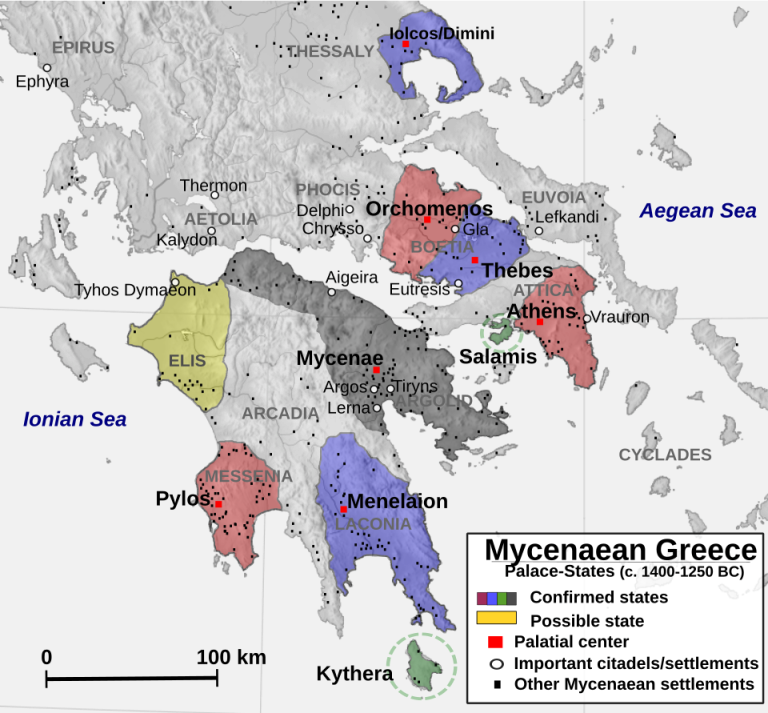
As far as I know, we still generally think the earliest rumblings are instability in the Mycenean Greek palace states. Things had been unstable in this area for a few decades and we have some scattered destructions (Thebes) and intensified fortifications around 1250, suggesting things were not going great in Greece. Then from c. 1200 to c. 1180 we see the destruction or collapse of basically all of the palace centers in Greece. In some cases the urban core continues for a while, in other cases it doesn’t – in a number of cases, once the site is abandoned, it is not reinhabited (e.g. Mycenae itself, the largest of the palace centers).
Via Wikipedia, a map of major Mycenaean palace centers and proposed palace states.
As we’ll see below, the impact in Greece is greater than basically anywhere else because the collapse of the LBAC is more severe in Greece than basically anywhere else.
Meanwhile, the Hittite Empire was itself not in good shape when this started. As far as we know, the Hittites were very much on the “back foot” in the late 1200s, pressured by the Assyrians and Egypt and so potentially already short on resources when their neighbors to the West began imploding. As far as I know, precise dates are hard to nail down for this, but the Hittite Empire in the early 1100s comes apart under pressure and by 1170 or so it is gone. That collapse of imperial power is matched by a significant number of site destructions across Anatolia, including the Hittite capital at Hattusas and the large settlement at modern Hisarlik, now fairly securely identified as ancient Troy. Some (like Troy) were rebuilt, others (like Hattusas) were not, but centralized Hittite power was gone and there’s a marked reduction in urbanization and probably population.
Moving into the Northern Levant, Syria and Northern Mesopotamia, we see Assyrian power – which had been advancing before, you’ll recall – contract sharply alongside more site destructions, though again chronology is tricky. One of the key sites here is Ugarit, a major Bronze Age Levantine coastal city which was destroyed c. 1190 – before the last of the Mycenean palaces (but after the first of them). The city’s destruction in fire preserved clay tablets with diplomatic messages from the local king of Ugarit (a Hittite vassal) frantically writing to his Hittite superiors for reinforcements in the face of significant (but frustratingly unnamed) threats prior to the destruction of the city.
That said, destruction in the Fertile Crescent is very uneven. The Middle Assyrian Empire contracts, but does not collapse, while the Kassite Dynasty in Babylon clearly suffers some decline, but largely stabilizes by the 1160s before being run over by the Elamites in the 1150s. Site destructions in the Levant are uneven and some key Bronze Age centers like Sidon and Byblos were not destroyed and remained major centers into the Iron Age.1 My understanding is that while there was significant decline in the southern Levant, it is hard to pin any specific large-scale site destruction to the 1220-1170 period.
Finally we reach Egypt in a period we refer to as the “New Kingdom” (1570-1069); we can trace politics more clearly here due to surviving Egyptian inscriptions. Egypt was also in a weakened position going into this crisis, facing pressure from Libyan raiders coming overland from the West and also some internal instability. In c. 1188, civil war broke out as the last queen of the reigning 19th dynasty was unable to retain control, leading to revolt and the seizure of power by Setnakhte and the 20th dynasty; his son Ramesses III took power in c. 1185. Things didn’t get easier from there as we hear reports of renewed Libyan incursions in c. 1180 (coming from the west) followed almost immediately by an invasion by the “sea peoples” (see below) who were evidently fended off in at least two major battles, the Battle of the Delta (c. 1179ish?) and the Battle of Djahy (c. 1178ish?).
Egypt holds together, but there’s a fair bit of evident economic strain (likely climate based, see below) and the ability of Egypt to project power outside of Egypt seems largely spent by the end of the reign of Ramesses III; his successors do not appear to have been able to right the ship and Egyptian power continued to fragment and decline, with the dynasty stumbling on until it collapsed in 1077 leading to the Third Intermediate Period (“Intermediate Periods” are the term for periods of fragmentation within Egypt).
I should note in this overview that our understanding of this sequence of collapses and declines has changed significantly. The idea of the Late Bronze Age Collapse has been around since the early 1800s when historians first noticed that the end of the Greek “Age of Heroes” (linked by them to the Fall of Troy, which the (Classical) Greeks believed happened in 1184) seemed to map neatly on to the failure of the Egyptian 19th Dynasty. As archaeologists in the later 1800s and early 1900s started actually excavating the Greek “Age of Heroes” (thus discovering the (Mycenaean) Greek Late Bronze Age, which we term the “Late Helladic” period (c. 1700-c. 1040 BC)) and then finding site destructions dateable within a band of perhaps 1250 to 1150 BC in Greece, Anatolia, Syria and the Levant the idea of a general collapse around the legendary date for the Fall of Troy picked up a lot of steam.
My sense of the scholarship is that this “civilizational collapse” narrative has been drawn back a bit as it becomes clear that some sites were not destroyed and also that some site destructions or abandonments happened significantly later or earlier than the relatively tight 1220-1170 BC time frame that emerged for the core of the collapse. No one (that I know of) is arguing there was no LBAC – there was clearly an LBAC – but the scale of the collapse remains something of a moving target as we excavate more sites, adding them to lists of sites that were destroyed, declined or (sometimes seemingly randomly) were spared.
And the list of sites that were not destroyed is significant. Of note, Athens very clearly has a Mycenaean citadel on the Acropolis (which can’t be excavated because the Acropolis is in the way, but it is very obviously there) but there’s no break in settlement in Athens. Already mentioned, Byblos and Sidon remained very prominent centers before and after, while Jerusalem and Tyre, both apparently minor settlements before LBAC (and not destroyed) will become increasingly prominent in the Iron Age Levant. Likewise the great cities of Egypt and Mesopotamia remain, few to no site destructions in either regions. At the same time, many settlements that escape destruction do not escape decline: in many cases these cities continue to shrink (and some places that escape destruction, like Tiryns, shrink slowly rather than vanishing all at once) or grow visibly poorer in a longer process. So the moment of destruction comes with a long “tail” of decline stretching out decades.
So to summarize, the Late Bronze Age Collapse is a series of site destructions, abandonments and declines running from roughly 1220 to roughly 1170 (though decline continues after this point) distributed quite unevenly through the interconnected Late Bronze Age Mesopotamian-and-Eastern-Mediterranean world. Greece and Anatolia are severely impacted, the Levant somewhat less but still fairly strongly, while the states of Egypt and Mesopotamia do not collapse but enter long periods of decline.
What that description leaves out, of course, are causes and effects.
Bret Devereaux, “Collections: The Late Bronze Age Collapse, A Very Brief Introduction”, A Collection of Unmitigated Pedantry, 2026-01-30.
- Sidon and Byblos, alongside Tyre (settled in the Bronze Age, but only prominent in the Iron Age) would be the most powerful and prominent Phoenician cities in the early Iron Age.
November 20, 2026
Protecting vulnerable women from predatory men
First, we must agree that adult women are competent, responsible individuals with their own agency, right? No debate about it. Except … we’re not always supposed to hold women responsible when it comes to their personal relationships, for reasons:

Russell Brand and friends (Brand is the one with the heaviest eye make-up).
Following the conviction of Russell Brand, Joanna Gray has asked why some women are drawn to “promiscous and predatory men”.
Her answer is that some women suffer the aftershocks of a childhood lacking in proper fatherly love. Such women seek to satisfy their “deep biological imperative to mate”, only they may do so with the wrong kind of men.
How might these women be protected, asks the lead to Gray’s article.
On Gray’s account, 3.1 million girls in England and Wales experience living apart from one of their biological parents – mostly their father.
This means that the number of women who are vulnerable in the way that Gray describes – women whose emotional development was seriously adversely affected by lack of a loving father in a manner to be taken into account and protected – is potentially enormous.
And that number does not even include those women who grew up in outwardly stable family homes where the father was nonetheless often or mostly absent or inattentive.
The question that follows from Gray’s argument, therefore, is whether it is possible to reliably take any woman as a consenting adult, or whether so many women may have been so emotionally starved as girls that even their explicit consent must be understood and protected as the unconscious expression of an elongated pattern of compulsion.
Gray writes that “it is encouraging that the law is finally catching up with some of the rape gang perpetrators, Brand and others”.
In listing Brand alongside the rape gang perpetrators, Gray surreptitiously diminishes a categorical difference between them: victims of the rape gangs are typically underage girls; Brand’s accusers are almost all adult women.
Gray thereby exposes her basic position, which is that adult women who engage with promiscuous men are effectively underage to the extent that they are playing out the emotional conditions of their girlhood.
On this account, there is little or no difference between the moral, perhaps also the legal, status of underage girls and some (3.1 million or more?) seeming-women. The first are not consenting adults because they are not adults. The second are not consenting adults: either because they only seem to be consenting, or because it is impossible to tell if they only seem to be consenting or are really consenting.
There is a trend for reframing adult people as so subject to systems, structures, inputs of all kinds, that they are not truly autonomous.
Adult people are everywhere described as pawns of a force beyond their ken or control, be it white privilege, patriarchal entitlement, the post-colonial condition or childhood trauma.
This justifies the administration of adult people, not as free agents but en masse: by edicts from national and supra-national governments or by health, education and other programmes aimed at demographics or even entire populations.
The view of millions of adult women as mired in their girlhood, living out the effects of neglect by fathers and therefore in need of protection (what kind of protection? protection by whom?) participates in this trend, which denigrates the rational autonomy of adult people by the emphasis on large-scale forces that operate upon them.
Skull and Bones: “the secret center of WASP conspiracy”
I don’t think I heard of Skull and Bones [Wiki] until it became a conspiracist talking point about the Bush family … and it was supposed to be shocking and horrifying to discover that wealthy and well-connected men clubbed with other wealthy and well-connected men. Not being American, the first time I heard the name “Yale” was in an episode of Gilligan’s Island (“Heavens, a Yale man!“). So … Skull and Bones:
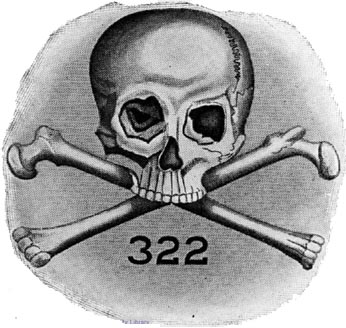
Skull and Bones logo
For generations, the collective American consciousness imaged Skull and Bones to be the secret center of WASP conspiracy. A remote situation room on Deer Island where presidents, CIA spooks, and media manipulators performed occult rituals and tortured voodoo doll recreations of Saddam Hussein. These days, it’s a place where boomer libs and NGO strivers sit around playing adult card games.
Founded in 1832, Skull and Bones was Yale’s most prestigious secret society. A 2000 thriller called The Skulls starring Joshua Jackson and Paul Walker depicted repressed WASP prepsters meeting in the so-called “Tomb” to plot world domination and other nefarious hijinks. The illustrious alumni list includes three former Presidents: William Howard Taft, George HW Bush, and George W Bush as well as his 2004 opponent John Kerry. Financiers like Stephen Schwarzman and Steven Mnuchin, spooks like William Buckley Jr. and McGeorge Bundy, and even actors like Paul Giamatti were mixed in.
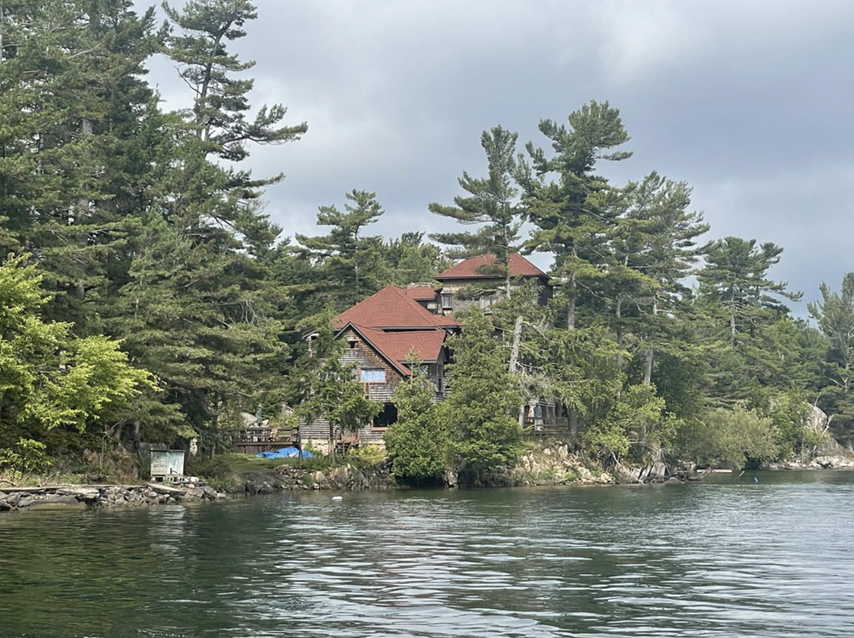
Deer Island in the St. Lawrence river, owned by the Yale secret society, Skull and Bones.
The Bushes represented a long lineage of baseball team captains who were tapped. Leaders of fraternities, sports teams, and debate societies were the obvious choices. Traditional noblesse oblige prioritized the big men on campus who best embodied Yale’s motto: “For God, for Country, and for Yale”.
Every year, fifteen juniors are tapped to join. There is no application process. They are selected by the graduating senior class based on who they find impressive. All the other secret societies do the same. For Yalies who started building their resumes in elementary school, “Tap Night” is the culmination of a lifetime of striving.
Lanny Davis, a Bonesman who was hazed by W and became a Clinton confidant, described the criteria in the 1968 yearbook:
If the society had a good year, this is what the “ideal” group will consist of: a football captain; a Chairman of the Yale Daily News; a conspicuous radical; a Whiffenpoof; a swimming captain; a notorious drunk with a 94 average; a film-maker; a political columnist; a religious group leader; a Chairman of the Lit; a foreigner; a ladies’ man with two motorcycles; an ex-serviceman; a negro, if there are enough to go around; a guy nobody else in the group had heard of, ever …
I have fond memories of the several weekends in the mid 2010s I spent on Deer Island with a group of friends, hosted by a Bones member. Like the society itself, much of Deer Island burned down but was never rebuilt. Still, the sunsets were magical, especially with shrooms. Swimming and spearfishing in the brisk currents of the St. Lawrence was invigorating. Wandering through unkempt trails without a worry in the world about getting lost in place or time.
Trolling the tourist boats was particularly fun. They sailed close enough that we could hear tour guides talking about the conspiracy theories related to Skull and Bones. We obliged them by shouting retarded things that would encourage the normies to go deeper down the rabbit hole.
[…]
In today’s modern progressive Skull and Bones, intersectionality reigns over the reimagined version of exclusivity and hierarchy. The heads of the LGBTQ, black, and Muslim student clubs took over the inside track.
Following the 2020 campus struggle sessions, Skull and Bones tapped an entirely non-white class. Yes, you read that right. The secret society of George Bush and John Kerry, of Paul Walker and Joshua Jackson, was now entirely non-white. The young Maoist members removed portraits of old white members from the walls of the tomb. AWFLs (affluent white female liberals) and falafels replaced the chads. Perhaps it is fitting that the Bushes and private equity guys were banished by the kids of immigrants they imported for cheap labor. And some, I assume, are good people.
“The kind of people to whom dishonesty is second nature”
I rarely dip into the great big bowl of excellent posts at David Thompson’s blog — because you all are, of course, regular vistors there, right? — but I had to make an exception for this one for its subject matter:
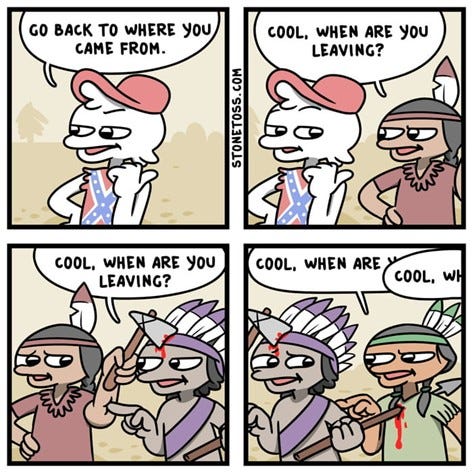
I suppose you could think of land acknowledgements as a lesson in pretending, a schooling of the young and credulous in how to be, or seem, progressive. To master the expected pretence. The required affectations.
Readers are invited to imagine the state of mind required to be, for instance, a white journalism student and sitting through an interminable sermon about your alleged “racial guilt” and your “white supremacist colonial mindset,” your innate racial wrongness.
To put up with such shite, regularly, without booing and throwing things does seem a big ask. To inhibit such urges would, I think, take practice. So many struggle sessions.
Setting aside the non-trivial matter of tribal conquests and annexing prior to the arrival of White Devils – the massacres and scalping raids, the child abductions and slavery, the ritual torture – all presumably conducted without tearful hand-wringing – and setting aside the non-trivial issue of whether those doing the theatrical atoning intend to surrender their belongings and bugger off, the whole dynamic of land acknowledgements seems a little odd.
I mean, I’m not sure how one “mends relations,” as claimed, by endlessly reminding the descendants of violent, primitive tribes that their ancestors were dethroned by people capable of building an actual civilisation in which one might wish to live. One with wheeled vehicles, paved roads, literacy and time-keeping, sanitation and dentistry, things of that kind.
A civilisation sufficiently rich to indulge in the fatuous posturing of land acknowledgements as if they were somehow meaningful and sincere.
But such is the progressive mind.
Aimpoint Square: An Ambitious Failed Prototype
Forgotten Weapons
Published 24 Jul 2026Between 1990 and 1993, Aimpoint experimented with a red dot optics that was pretty ambitious on several fronts. It used a rectangular window to maximize field of view for hunting rifles and shotguns (this was still Aimpoint’s main market at this point). It used a solar panel on top as a backup power source, and it was almost entirely made of plastic, including the main collimating lens. Unfortunately, the project proved unsuccessful, largely because of manufacturing challenges with the plastics. The body was difficult to keep properly rigid, and it was difficult to make a sufficiently precise main lens out of plastic.
QotD: The key sin of Hellenic civilization was the betrayal of Greek autonomy
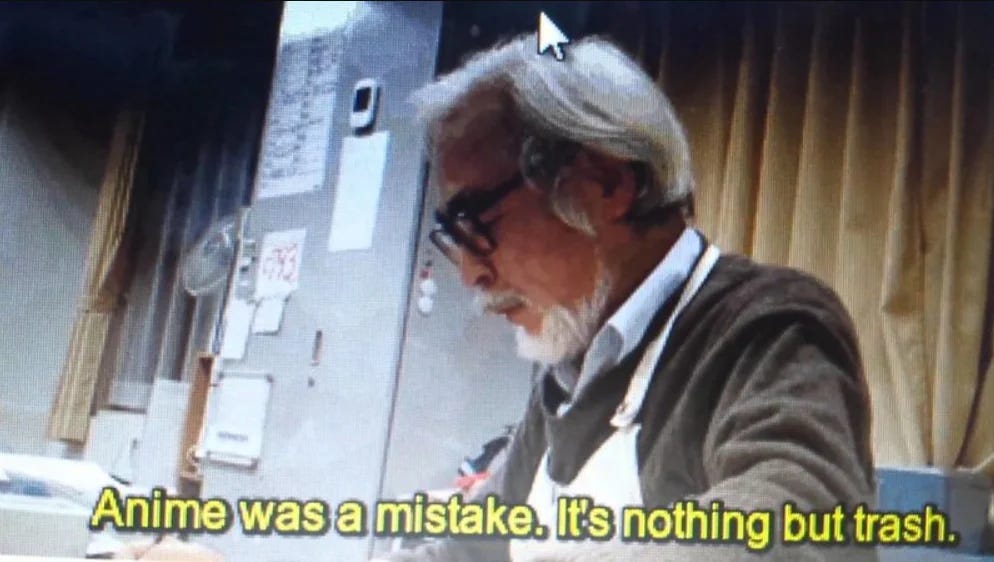
If you’re at all online (condolences if so), you may have seen this meme once in your life.
The man in the image is Hiyao Miyazaki, director of some of the most famous anime films of all time (Spirited Away, My Neighbor Totoro, and more). The quote is fake, but inspired by real comments a jaded Miyazaki once made in an interview:
Some people spend their lives interested only in themselves. Almost all Japanese animation is produced with hardly any basis taken from observing real people, you know. It’s produced by humans who can’t stand looking at other humans. And that’s why the industry is full of otaku!
In short, anime has been ruined because it is now made by people whose sole life experience is being die-hard anime fans. And so, far too often, anime has simply become a mixture of fanservice, self-referential masturbatory impenetrability, and crass wish fulfillment. It has minimal artistic merit because the creators are pure consumers, with nothing real or interesting to say.
Fortunately, Green is here to tell you that this exact same wretched pattern was already around in Alexandria, Athens, and Antioch during the 3rd century BC. The greatest poetic innovation of the Hellenistic Age is pastoral poetry. And what is pastoral poetry? That’s right, low-effort wish fulfillment:
Pastoral poetry … is invariably produced by urban intellectuals who have never themselves handled a spade, much less herded sheep, goats, or cattle, in their lives. … It grafts a kind of yearning idealism onto a reality that was, in fact, peculiarly harsh and unrewarding. … That this should be an exclusively urban phenomenon is no accident. The real shepherd or farmer knows, too well, that his life is poor, dangerous, backbreaking, and without respite. The pastoral dream, then, is the special property of the gentleman poet, living on patronage from a Ptolemy or an Augustus: when Marie-Antoinette played at being a milkmaid, the charade did not require her to get up at four in the morning and milk obdurate cows in freezing weather with chilblained hands.
The pastoral genre peaks in silliness with the ancient romance Daphnis and Chloe, where two young shepherds are too innocent to know about sex — an absurdity once you remember they live around livestock. Yet as silly as it is, the pastoral endlessly recurs in history, always there to satisfy the craving for cheap nostalgia or easy escapism. It could be the most enduring art form pioneered by the Hellenistic age.
… Or it would be, if not for the slop they were churning out in the theater. There, the Hellenistic growth industry is the New Comedy. Just as with pastoralism, the defining feature of New Comedy is escapism. The satire of Aristophanes (so biting it got Socrates killed) gives way to stock characters and flimsy plots totally detached from real-world concerns. New Comedy is a landscape of “comfortable cliché and romantic fantasy”. Every story has a happy ending. Twenty-three hundred years before television, the Hellenistic Greeks invented the stale network sitcom. In one of the funniest digressions I’ve ever read in a serious history book, Green dedicates half a chapter to a detailed, scene-by-scene thrashing of the most popular Hellenistic playwright, Menander (he of the “papyrological accident”):
[Menander’s corpus] abounds in situational idiocies. Take the Arbitrators (Epitrepontes) … a young stud, Charisios (“Charmer”), having raped one Pamphile (“Darling”) during the inevitable night festival, gets married, only to discover, first, that the girl he married has a baby five months later, and then, as a dénouement, that she was also the girl he raped, and that the child is therefore presumptively his. … Disbelief, though suspended, keeps breaking in. Why, we may legitimately ask, did Charisios not have the problem of her five-months’ child out face-to-face with his wife instead of listening to the servants? Why, instead, does he simply walk out on her in a huff and take up with Habrotonon, a guitar-strumming floozy with the usual heart of gold? No play otherwise, the cynic might answer; rational plots are not exactly Menander’s forte.
… [W]e are being asked to accept as fact that the soap-opera plots, the popular aphorisms, the commonplace moral values, stock characters, stereo-typed opinions, and cliché-ridden dialogue were all concessions made by this intellectual and creative paragon to the Aunt Ednas of the Athenian bourgeoisie, whereas any flashes of brilliance that can be detected in his work are ascribed to the genius he was forced to restrain while pursuing the bitch-goddess success. In that case, quite apart from the innate immorality of such a proceeding (once a whore, always a whore, as Orwell remarked in a very similar modern context), one can only point out that Menander’s essay in self-prostitution did him singularly little good. Eight victories in over a hundred attempts is hardly the record of a clever crowd-pleaser.
Not all art was mass-market schlock. Some of it fell on the other end of the scale: Works so dense and learned they were nearly unreadable. To cite merely one line from Lycophron of Chalcis’s poem Alexandra:
“The centipede lovely-faced stork-colored daughters of the Bald Lady struck maiden-slaying Thetis with their blades” (22–24) simply means that Paris’s hundred-oared ships, built of timber from Bald Mountain (Phalakra) in the Troad, painted with the apotropaic eye on their bows, hulls pitch-black, like storks (more plausible than white, the other prevalent color of European storks), dipped their oars in the sea, more particularly the Hellespont (since this claimed the life of the maiden Helle), Thetis qua sea nymph being used by synecdoche to represent the sea itself. Every line requires this kind of exegesis.
Who wanted this? In truth, almost nobody, but that was the point. “[B]eginning in the fourth century, literature moved away from the public arena, to become the property of a private, very often subsidized, intellectual minority.”
Normally all this negativity would get grating, but Alexander to Actium would be a lesser book if Green admired his subject more. The fact he doesn’t, and why he doesn’t, is what elevates this book from merely informative to exceptional.
Because, besides being fun, all of Green’s jabs and bitter humor serve a purpose. They answer a central question about the book itself and the era it describes. Superficially, the Hellenistic era seems like the Ancient Greeks at their apex. They were culturally and politically dominant over half the Mediterranean. They had spectacular wealth, plundered from Persian treasuries or extracted from Egyptian fellaheen. Their cities were larger and their patronage more lavish than any prior era. So why does the average well-educated Westerner know almost nothing about them, while knowing a lot about the comparatively tiny city-state of Athens?
Simple: because beneath the mighty empires, so impressive on a map and so rich when seen as museum exhibits, the world of a Hellenistic Greek was miserable. His governments were tyrannical, exploitative, decadent, and distant. His economy was one of ever-fewer masters and ever-more slaves. His religion no longer satisfied and was abandoned en masse by the elites who once safeguarded it. And then, looming over the horizon, there was the ever-rising Roman superpower, culturally backward yet militarily unstoppable, chipping away at Greek power so steadily that the Greeks accepted they were doomed decades before actually being conquered.
This was more than just tough times. It was a great civilization going into eclipse. It was an age defined by “… loss of self-confidence and idealism, displacement of public values, the erosion of religious beliefs, self-absorption ousting involvement, hedonism masking impotent resentment, the violence of despair, the ugliness of reality formalized as realism, the empty urban soul starving on pastoral whimsy, sex, and Machtpolitik.”
Why were the Greeks in a psychological funk? The word that comes to mind again and again is autonomy.
Golden age Greece was a Greece of countless poleis, individual city-states constantly in competition with one another: Athens, Sparta, Thebes, Corinth, Argos, and so on. Citizens were part-time magistrates, jurors, lawmakers, and soldiers. A man seeking status almost always sought it by becoming a great man in his own city, but even if he was a person of no consequence he had a direct stake in his city’s success and a role to play in achieving it. A man’s gods were the gods of his city, worshipped since time immemorial, with few people asking awkward questions about where they came from or whether they were, strictly speaking, actually real. In the Greece of city-states, the squabbles were petty, but never meaningless. In a land without kings, every man was a player character.
It was this quarrelsome, decentralized patchwork that produced the Greek miracle: the birth, in a remarkably short period, of the Western world’s foundational works of philosophy, history, science, and drama.
With Alexander’s godlike achievements, though, that old Greek world crumbled. Suddenly, Greek civilization was dominated by massive kingdoms, ruled by kings whose only claim to legitimacy was that they or their fathers had won their lands at the tip of a spear. These kings quickly took a liking to the trappings of Oriental rulership, styling themselves first as “saviors” and then simply as “gods,” spectacularly above and apart from the people they ruled. Their kingdoms were essentially for-profit estates run for the benefit of the mighty god-kings. Alexandria, the crown jewel of the Hellenistic world, home to the Great Lighthouse and Great Library, was effectively a giant consumer good for the Ptolemaic royal family, where all the surplus of Egypt’s countryside had to be shipped, on pain of death. In a city of perhaps half a million, royal palaces occupied as much as one-third of the land.
In the decades of war that followed Alexander’s death, the Greek cities soon learned that their future was to be in a constant state of servility to one overlord or another. The “freedom of the Greeks” changed from a point of pride to a pathetic sham:
The cities went through the motions of freedom, but in the last resort they did so on sufferance. What they really felt about their de facto subjection can be inferred from the carefully euphemistic terminology employed … [Officials] had “spent time with” the king, or had “gone abroad” with him, or had “enjoyed his friendship”: anything to circumvent the notion of paid service, and perhaps a residual unwillingness to face the grim fact of political impotence. It is significant that later this objection fades: by 200 the honorand’s court title is being expressed openly, without circumlocution.
This is where my boyish enthusiasm to learn more about the great Hellenistic empires led me astray, because while vast empires look so impressive on a map and are so fun to play in a 21st-century video game, they gradually destroyed what had made the Greeks such a dynamic civilization. Instead of reflecting civic pride, great temples and festivals simply displayed the profligacy of rulers. Patronage emanating from a tiny handful of elites led to sycophancy and parasitism. The desire of ruling dynasts to preserve power at all costs, coupled with ignorance of economics, led to a suffocating stagnation like that seen in many an Oriental despotism.
Blake Neff, “GUEST REVIEW: Alexander to Actium, by Peter Green”, Mr. and Mrs. Psmith’s Bookshelf, 2025-10-20.
November 19, 2026
Books? How old-fashioned
I’ve been noticing more and more when I’m forced to sit in a waiting room that I’m often the only person actually reading a physical book … some are distracted by the omnipresent TV screens (usually with the sound off, thank goodness, but not always) but most are staring into their pocket molochs, the wrecktangles. Books are becoming less and less a part of peoples’ daily lives, including the time children spend in school. James Pew implores us to return to books for our own sakes:
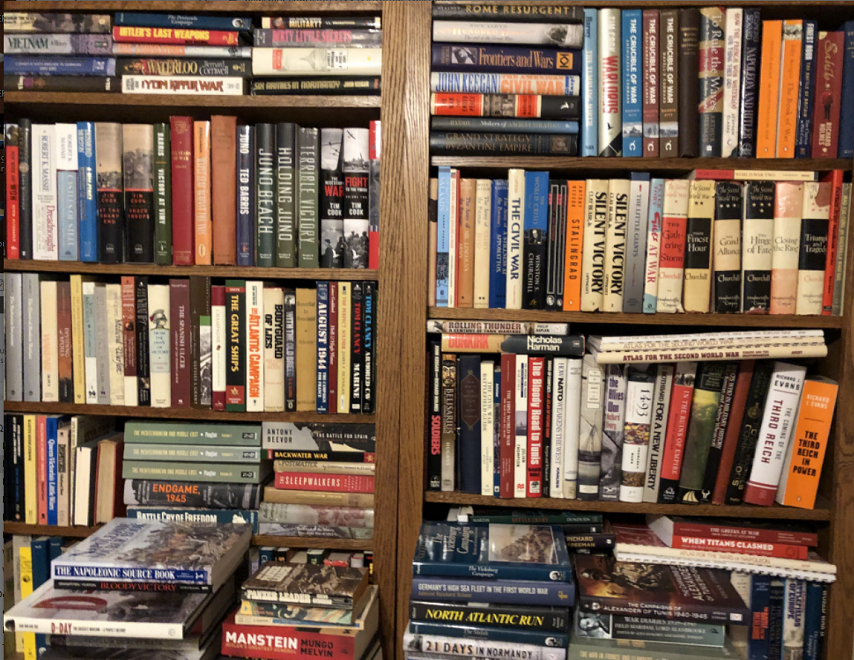
Books are the answer.
(Books) are no longer an important part of the lives of students. “Information” is important, but profound and beautiful books are not where they go for it. They have no books that are companions and friends to which they look for counsel, companionship, inspiration, or pleasure. They do not expect to find in them sympathy for, or clarification of, their inmost desires and experiences.
— Allan Bloom, The Closing of the American Mind (1987).Friends, Romans, countrymen, lend me your ears. At the precise moment in which I write these words, all are implicated, the lot of us, complicit in scandalous folly of inestimable proportions. We have gone, nay we have slid downward, fallen away from a worthy and self-actualizing path, into an abysmally irrational state hostile to the enlightenment reason which guided our extraordinary age of progress for so many generations. We have turned so completely to the new media — and inward where it directs us — to the new technologies that display video and connect users through cyber worlds. This turning has engendered a post-literate condition, where each and practically every person plays a role but sadly pays a hefty price for their wayward participation.
The antidote is quite simple, and I beg you: Turn back to books.
A literary revival is what is needed more than anything. The reasons for this are many and worth arguing for over several essays where key planks can be expounded, on a general thesis of the existential import of literacy, which should be understood as something far beyond the ability to decipher words or master grammar, but a higher order which in part trains one’s mind to grapple with complex ideas, while accustoming it to modes of introspection and examination involving a myriad of phenomena plucked from human affairs, such as moral puzzles, ambiguities or contradictions. Along with the near infinite variety of things encountered throughout the spectrum of good and evil, that kaleidoscopic tapestry of human condition. But alas, have you noticed how cold young people have become?
But the shelves of the libraries and bookstores found in our communities still hold the greatest stories of the grandest wonders, the bravest heroes, the most eloquent feats of chivalry, full of romance and adventure and mystery and tragedy and magic. My friends, my friends, why hast thou forsaken books? What madness have we wrought upon ourselves? We have turned from deeply thoughtful, to comparatively thoughtless. There was a time, within the broad container of this modern period, where we regularly explored the depths, but today our digital lives barely tempt us to skim the surface. The media mediates us, reduces us, and sidelines our most complex and nuanced human aspects, where the sublime mystery of it all once energized common everyday ponderings wrapped up and smeared with the stuff that dreams were made of. There was eloquence and astonishment and miracles. Where have they gone?
We have been distracted into shallowness at the concurrent moment when relentless suggestion and over-stimulation pushed and prodded us to emotional states impervious to rational modes of being. We transformed into feelings creatures who inherited magical realms from thinking creatures who once had the audacity not just to dream and conceive of those enchanted realms, but to actually construct them.
Literature, for all its fantasy and thaumaturgy, when it pervades a society, creates a state essentially of reified magic. A resplendent sorcery casting spells somehow as capable of transferring the stores of civilization, as of delighting and dazzling those who receive it. There is no high tech modern society that did not emerge from a sophisticated literate one. It is not enough that books still exist, that the geniuses of tomorrow will find them and devour them. It is a general democratized condition of high literacy we are after. This is what will most harness and unleash the potential creative energies found within each person. The mind must ripen through literacy, and high forms of it, damn it — I must not stop repeating this! In developing craniums, latent creative forces must be unlocked, nurtured, and fed with the stories of mankind. The books of myth and fairy tales are the most important books in the elementary school library, and this should be obvious. I don’t think it is. It would be in a society where print literacy was the dominant medium.
Progressives on Elon Musk – “Sentence first, verdict afterwards”
Once upon a time, long ago in the far distant past of a few years ago, Elon Musk was one of the “good” billionaires according to the progressives. His Tesla electric cars were the vehicles all good leftists wanted to have (except for those purists who wanted nobody to have private vehicles under any circumstances). Then … horrors … he plummeted from progressive heaven to become one of the chief devils in Trump’s hell, and now the people who used to love him want him in prison. They don’t know what crimes he may have committed, but they’ll figure that out after he’s been stripped of his wealth and clad in an orange jumpsuit:

Trump, Vance, and Musk as America’s Triumvirate – Grok
What crime did he commit? Well, Katie Pavlich tried to get a Democrat lawmaker to say, and that went about like you’d expect.
Texas Democratic Rep. Gene Wu found that out when he appeared on NewsNation and tried to explain why billionaire Elon Musk should face criminal prosecution. Host Katie Pavlich asked him to identify an actual crime, and things got awkward fast.
What makes the exchange particularly interesting is that Wu, the minority leader of the Texas House Democrats, is a former felony prosecutor in the Harris County District Attorney’s Office. You would think that identifying a potential criminal offense would come naturally to him.
“Can you give us some of the examples of […] what you think that those things may be? It’s a pretty, pretty extreme charge,” Pavlich asked.
“All I do is read the news and watch the news,” Wu replied. “And what I have seen on the news is that Elon may have committed crimes against the United States by his actions in Ukraine. […] I don’t know. I just read what I read.”
Pavlich wasn’t about to let that answer slide.
Wu then started moving the goalposts, claiming there should be an investigation to see if he committed a crime.
The problem is, that’s not what Wu initially claimed. He claimed there were specific crimes Musk may have committed. Then, when pressed for specific charges, everything fizzled out.
There’s a reason for that.
See, for them, Musk’s actual crime is everything I laid out in yesterday’s post. He undermines everything they claim, and so they despise him. He’s proof that success is possible and that free enterprise is better at pretty much everything than the government ever will be.
Which would be fine if Musk also toed the line like so many other billionaires. He doesn’t, though. He’s not shaking leftist hands and pretending that everything is fine with their hatred for the rich. He’s not playing nice with the Left, who never played nice with him.
So, all that’s happened is that Musk did something they hated more than usual, particularly with regard to Ukraine supposedly misusing Starlink, and decided that now they needed to start a witch hunt.
“Show me the man and I’ll show you the crime,” the Soviet enforcer said, and the Left is still playing by those rules.
Canada After America
At Dominion Review, Brian Graff reviews a recent book by Ricardo Hausmann and Eric Protzer (and published by Ken Whyte’s Sutherland House):

It seems like Prime Minister Mark Carney spends more time outside of Canada than in it, since he travels so much to conferences, meetings with other world leaders, or to sign yet another free trade deal.
Carney is by education and profession an economist, and essentially Anglo-American economists are neoliberals who believe in free trade deals and the freer flow of goods, services, capital, and even people across borders. Even if Canada was not in a trade war with the US, this would likely be Carney’s approach to trade and foreign relations. When all you have is a hammer, everything looks like a nail. Carney’s approach is not that rigid; he is willing to do creative deals, notably one with Brazil where Canada will subsidize the preservation of some of the Amazon.
But clearly, since the start of 2025, Carney’s, and Canada’s, greatest external threat has been Donald Trump and his approach of reversing much of the US foreign policy and trade policy undertaken since World War Two; the policies which led Canada to increasingly closer integration with the US in foreign policy, defence, and trade. The US is no longer a reliable partner for other nations, particularly Canada.
About a month ago I heard about a new book that looked at how Canada could meet the challenges brought about by the US showing itself to be an unreliable partner, under Trump and quite possibly under future presidents, even if the next one is not a populist Republican adopting some or all of his approaches to Canada and the world. The book is Canada After America: A strategy for Prosperity in a Changed World written by Ricardo Hausmann and Eric Protzer, and published by Sutherland House in Toronto.
The prologue of the book includes this description of it and its authors:
Canada After America is a critical intervention into this ongoing debate. It is written as part of the McGill Max Bell Lectures on economic policy, launched in 2023, to provide the analysis and practical ideas our country needs to plan for a more prosperous future. While previous books in the series discussed climate, competition, and immigration policy, this year we focus squarely on Canada’s growth challenge.
Our co-authors are the renowned Venezuelan economist Ricardo Hausmann, founder of the Harvard Growth Lab — the world’s pre-eminent centre for applied growth policy — and his colleague Eric Protzer, a Canadian economist with expertise in economic growth and development. Over the past two decades, the Harvard Growth Lab has worked with governments in more than thirty countries — including developed economies like Japan, Australia, and the United States — to diagnose the key constraints on growth, identify paths to diversification, and develop tailored policy solutions. Its core working assumption is that the biggest barriers to and opportunities for growth are place-specific and cannot be addressed with a one-size-fits-all economic theory or formula.
Now, Harvard is one of those great American “brands” that stood for excellence, like Tiffanys, or Cadillac, but having read this book, I was sadly disappointed.
The book’s authors are economists, but they get a lot wrong about Canada, and Canada’s history, even though one is Canadian. But then they also have the usual blind spots, priorities or views typical of Anglo-American economists.
But even so, the books do contain several dozen interesting graphs and some ideas and analysis I found valuable. Overall, it missed the target.
What Medieval People Ate When Traveling
Tasting History with Max Miller
Published 19 May 2026Bars of pine nut, ginger, and honey candy
City/Region: England
Time Period: c. 1390Travelers have always loved snacks. For me, it’s peanut M&Ms. For the medieval European, it might’ve been something like this candy. Bringing your own food was recommended by medieval travel guides, and it needed to be things that would keep and travel well. The classic go-to was hardtack (clack clack), but something much tastier is this pine nut candy. While not everyone could afford it as sugar was quite expensive, it would be a welcome treat on the road for those who could.
This candy can either be chewy, hard like a brittle, or somewhere in between based on how hot you cook the sugar. Mine was in between, and it was absolutely delicious. The pine nuts are the dominant flavor, and you get the hint of ginger at the very end. Feel free to customize this candy even further by adding different spices or nuts. Cinnamon, galangal, black pepper, almonds, and hazelnuts would all be delicious and period appropriate.
Payn ragoun
Take honey and sugar of cyprus and clarify them together, and boil it with easy fire, and keep it well from burning and when it hath boiled a while, take up a drop thereof with the finger and do it in a little water, and look if it hangs together; and take it from the fire and do thereto pinenuts the thriddendele & powdered ginger, and stir it together till it begin to thicken, and cast it on a wet table; cut it in strips and serve forth with fried meat, on flesh days or on fish days.
— The Forme of Cury, c. 1390
QotD: The strange modern re-birth of socialism
Why, then, has socialism come back into vogue in our time — and in America, of all places?
To answer this question, it is helpful to turn back to Schumpeter. It will be remembered that he argued, first, that capitalism’s propensity for “creative destruction” was also a source of weakness; second, that capitalism tends towards oligopoly, not perfect competition; third, that capitalism “creates, educates and subsidizes a vested interest in social unrest”, namely intellectuals; and, finally, that socialism is politically attractive to bureaucrats and (many) democratic politicians. All four tendencies are visible in the United States today. Although policy makers have been successful in reducing the volatility of output and the rate of unemployment since the financial crisis — and very successful in raising the prices of financial assets above their pre-crisis level — the relative losers of the past decade have been succumbing in alarming numbers to what Case and Deaton have called “deaths of despair”. A number of authors have noted the decline in competition that has afflicted the United States in the recent past, most obviously — but by no means only — in the information technology sector, which has come to be dominated by a handful of network platforms. The American academy is now skewed much further to the left than it was in Schumpeter’s time. And, just as Schumpeter might have anticipated, a new generation of “progressive” politicians has come forward with the familiar promises to soak the rich to fund new and bureaucratic entitlement programs. It is noteworthy that younger Americans — nine out of ten of whom now pass through the country’s left-leaning college system — are disproportionately receptive to these promises.
Niall Ferguson, “Capitalism, Socialism and Nationalism: Lessons from History”, 2020-02.
November 18, 2026
Winning: “Democrats believe they’ve found an odd secret sauce to holding power: focus on hot-button issues where they’re guaranteed to alienate much of the population”
Conservatives are still trying to recover from the shock of the US midterm election results, but the Democrats have hit on a sure-fire winner to solidify their support for the next Presidential election campaign:

Just weeks after winning midterm elections in which both major parties were wildly unpopular, but voters were especially angry at Republicans over economic concerns and corruption, Democrats believe they’ve found an odd secret sauce to holding power: focus on hot-button issues where they’re guaranteed to alienate much of the population. I’ve already written about the donkey party’s renewed attacks on school choice, but its partisans are also coming after self-defense rights.
Americans Voted on Economics and Corruption
In the aftermath of the midterms, NBC News polling found “many voters said they viewed the midterm election as a rebuke of President Donald Trump’s performance”. Pollsters reported “an overwhelming majority said the economy is in rough shape (75%)” and that “government corruption was also a key issue”, though voters split over which party can be trusted to fight it. In fact, majorities expressed unfavorable views of both the Democratic Party (53 percent) and Republican Party (59 percent).
This was an election in which Republicans were rejected, and Democrats were selected by default as the maybe-less-bad option. There was no embrace of any agenda, just hope that fresh faces in office would address public worries over dollars, cents, and self-dealing.
Of course, Democrats immediately went on the warpath against school choice. Given the broad popularity of education options with the public, that’s certainly a bold decision, and one indicating freedom-averse public teachers’ unions rank higher than voters in donkey party esteem.
Democrats Ignore Voters To Emphasize Their Anti-Gun Obsessions
Also interesting is Democrats’ decision to revive their efforts to disarm Americans at a time when AP–NORC finds that “few voters (11%) listed ‘guns’ as a top three issue motivating their vote this cycle”. There aren’t many topics more contentious than the rules around weapon ownership and use. Nor is there any issue that’s more clearly being resolved by public action rather than by legislation and debate; owning and carrying firearms have become increasingly popular with an ever-broadening share of the population. Going after guns is guaranteed to anger a lot of voters Democrats need to remain in office.
And yet, many members of the newly (briefly?) ascendant party are doing just that.
“Emboldened by their unexpected majority in the Texas House of Representatives after the 2026 midterm election, Democratic lawmakers have introduced a spate of bills aiming to curb gun rights in the Lone Star State”, reports Stephan Kapustka of The Texan. Proposed restrictions include a “red flag” law that would allow judges to deprive people of firearms without due process, making it a felony for those aged 18–21 to purchase semiautomatic rifles, and unenforceable mandatory background checks on private firearm sales. Proposals also include rules about storage of firearms and a backdoor gun registry.
The Korean War Week 126 – We Have Hydrogen Bombs! – November 17, 1952
The Korean War by Indy Neidell
Published 17 Nov 2026At the beginning of November the US successfully tested the world’s first hydrogen bomb, producing a much stronger blast than any man made explosion ever before, and this week the world learns about it, producing worry, paranoia, and fear for the future. In the field, the fighting of the past six weeks calms down as winter begins to set in, and a plan is presented in the UN to try and put an end to the war.
00:00 Hook
01:07 Active Fighting
02:52 Communist Numbers
05:04 The Air War
06:29 The Menon Plan
10:33 The Bomb
14:42 Summary
14:58 Conclusion
The Smartphone plague – seduced by the shiny wrecktangle
On Substack, Spaceman Spiff urges us to break our dependence on the omnipresent smartphone … or as he refers to it, “the wrecktangle”:

Many are entranced with the smartphone. An always there, always-on toy with endless fun things to do.
Phone zombies are everywhere, holding their device in their hands, unable to let go, like drugged toddlers.
We know what this is doing to people. We are aware it is being exploited by big business and social engineers.
Humanity is being diminished, one dopamine hit at a time.
The effect of smartphone dependency
It is no secret the smartphone has changed the world because it has changed people.
The most obvious effect of excessive phone use is the shortening of attention spans. Constant scrolling and jumping between exciting content channels is damaging our ability to focus.
Everything is on demand whenever we want. We no longer have to wait for anything, and increasingly we lack the capacity to wait at all.
Learned impatience makes complex tasks requiring sustained attention difficult to accomplish.
This creates a feedback loop that destroys how our brains manage rewards. We expect instant hits. Over time the process speeds up, we need rewards at ever faster frequencies.
Algorithms trap us in echo chambers of our own making. Apps providing content deliver more of what we click on. We barely see alternative views. Any notion of a bigger picture is quickly lost.
This distorts perception. We can become convinced fringe views are normal, so anything outside this becomes extreme no matter how banal.
More generally we forget living through screens is not living at all. Watching the riot unfold on a phone feels real, but is safe. Its destructiveness is softened. Much can be edited out of the footage to soften its impact.
This is true of everything. Screen life is a facsimile of real life, close enough to rob us of living the full experience we are designed for while delivering thrills that mimic the highlights.
Young men get hits from playing computer games, but while sitting in an armchair inside a house instead of in trenches surrounded by mud or real danger. Women get their drama and gossip from reality TV and social media, but in the end are investing in strangers making money.
The artificiality is overlooked when it is still exciting, but is always there in the background, eroding our real lives.
The destroyed reward centres make for a life similar to a junkie. Lots of little hits are chased until nothing works and normal life becomes unbearable in its banality. Life’s possibilities are buried under a mountain of effort you are no longer capable of.
Our present existence is fleeting. None of us have time for this self-abuse.