Quotulatiousness

November 2, 2026

High-trust minority populations have huge advantages in low-trust communities

Filed under: Business, Economics, History — Tags: , , — Nicholas @ 05:00

But on the flip side, those advantages can raise resentment against the minority if their social and economic position improves too obviously against that of the communities they inhabit. Lorenzo Warby finishes his short series of essays on the Marxist labels of “capitalism” and “capitalist”:

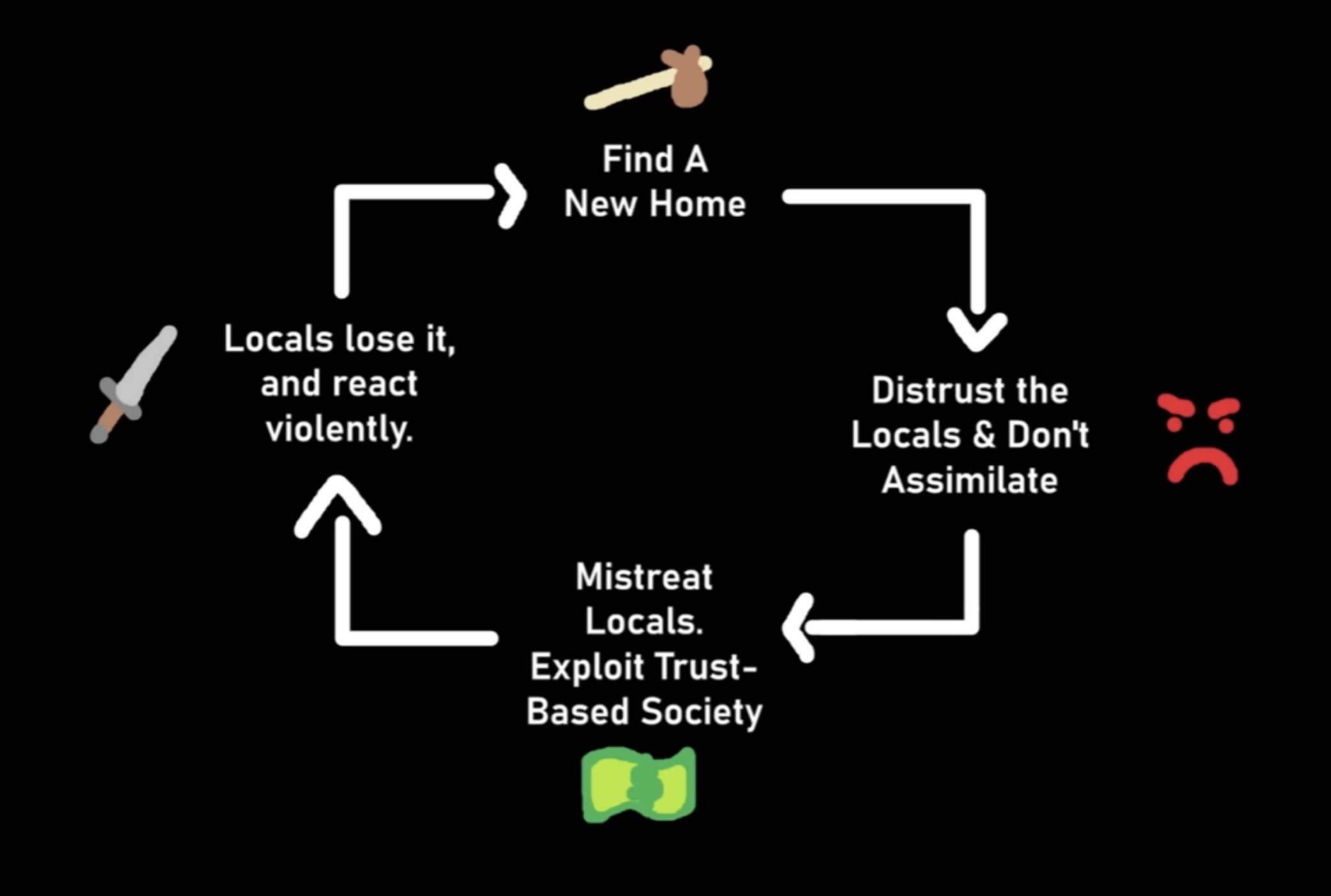
For another example of what dreadful terms capitalism and capitalist are, consider market-dominant minorities such as overseas Chinese (particularly Hakka), overseas Indians (particularly Gujaratis), overseas Lebanese (particularly Maronites), Jews, Igbos, the Sogdian diaspora … These are groups with strong internal trust and reputation networks that give them strong information — and so coordinating, anticipation and risk-management — advantages over people in the wider society. This is especially true in low-trust societies. Such market-dominant minorities have advantages in engaging in commerce and in creating and using capital.

Capital is not magical. It does not spontaneously arise or get used well. It has to be created and applied. Not only that, it is very clear that groups and polities vary greatly in their capacity to create and use capital. It is that — highly variable — creation and use that is crucial.

Capital has to be coordinated; it has to be used in service of sufficiently correct anticipation of commercial and other conditions; there has to be risk management. These things are all information and feedback questions.

Market-dominant minorities are so because of their advantages in information and feedback — including how they use that information and feedback. (If I wanted to summarise problems with contemporary Western democracies in a single phrase, it would be broken feedbacks.)

It turns out, that their human and social capital and their culture — that is, their norms, skills, outlooks and connections — are the real advantages of market-dominant minorities. None of these features are mere products of capital; not even those that count as capital.

Nor is this capital that you can just add from outside. They cannot be readily incorporated into some arithmetic function of labour and capital (such as a Cobb-Douglas production function). Since these features are so much about human agency, and information and normative landscapes, it is a open question whether calling human and social capital forms of capital is, in itself, misleading.

Part of the problem for market-dominant minorities is precisely that their use of information is “invisible” to outsiders. (It is also invisible to Marxist Theory.) It is thus easy to accuse them of “cheating”, of being “social parasites”.

As history shows again and again, convince a group of Homo sapiens that that group over there are parasites — and that you and yours would be better off without them — and one has set the scene for massacre, for mass murder. A principle that the entire history of Revolutionary Marxism, of Communism, displays even more vividly: every single Marxist mass murder was legitimated by the parasites charge. This is why the labour theory of value is a primer for mass murder.

Communism has been so murderous because it labels entire classes as parasites. Nazism was so murderous because it labelled entire races as parasites—indeed, also as toxic, exploitive parasites—and created a realm of destroyed states that stripped people of the protections of citizenship: regions where Nazi race extermination was more deadly to the population than even Stalinism. In both cases, creating the golden future required eliminating the human blocks to the same.

In the case of market-dominant minorities, the very interior clannishness that gives them information, reputation and feedback—so trust—advantages can also lead to genuinely exploitive behaviour towards outsiders. Periodic massacres and expulsions of market-dominant minorities is a pattern going back many centuries, across states and civilisations. (China provides some dramatic examples, while Chinese diasporas have also been victims of such.)

Over the centuries, various market-dominant minorities have instantiated some version of this meme.

Those strong internal connections within market-dominant minorities can be very much a two-edged sword. Whatever role capital plays in all this, it is very much derivative of the underlying dynamics of human action: especially of information and normative landscapes.

Poland? Attempted Coup? What’s going on?!

Filed under: Europe, Government, Politics — Tags: , , , , — Nicholas @ 04:00

Steven Barrett – Barrister
Published 31 Oct 2026

A description of the lead up to, and the fundamental disagreements about the EU that led to armed police on the streets of Warsaw threatening Judges.

H/T to Perry de Havilland at Samizdata for the link.

On X, Brivael le Pogam posted:

🚨 European union and globalists just crossed a line it can’t uncross. And almost nobody noticed. 🚨

⚠️ Friday night in Warsaw, the president of Poland’s Constitutional Tribunal was suspended for a month. Within hours, police sealed off the building. The head of the country’s highest court was left standing outside the gates of his own court. Protesters cut the chain on the gate with a saw. The President of Poland turned his plane around mid-flight to Senegal and rushed home in the middle of the night.

Donald Tusk’s response: “Restoring the rule of law is our duty. There is no other way.”

Read that again. Restoring the rule of law with riot police around a constitutional court.

⚠️ Whether you like PiS and its judges is not the point. The point is the precedent. A government just showed that you can push out the head of a supreme court through an internal maneuver, secure it with uniforms, and call it “the rule of law.” The next government, whoever it is, now has the playbook.

And Brussels? Not one word of condemnation.

The same Brussels that froze billions for Poland for years in the name of judicial independence. That triggered Article 7. That unlocked everything within weeks the moment the “right” government took power.

⚠️ The message to 450 million Europeans is crystal clear: the rule of law is no longer a rule. It’s a label. You stick it on your allies and peel it off your enemies.

And that’s exactly where everything breaks.

A civilization rests on one thing: trust in the rules. That the rule applies to you the same as to me. That a judge doesn’t depend on who won the last election. When that trust dies, everything else follows. Slowly at first. Then all at once.

Look around.

⚠️ Security: a high-intensity war on our doorstep for over four years, armies we let wither for three decades, a defense that still depends on Washington, and a continent unable to decide anything fast.

⚠️ Economy: energy we can’t afford, industry packing up and leaving, not a single tech giant at American or Chinese scale, growth running in place, and a regulatory machine that produces more rules than companies.

⚠️ Politics: governments hanging on by a handful of votes, voters who no longer believe anyone, and trust in institutions at rock bottom everywhere.

At the top, an elite that spent twenty years telling us everything was fine, that the project was irreversible, that the only real danger was “populists.” They’re taking on water from every side. And they know it.

When a system feels its legitimacy slipping through its fingers, it does exactly what Warsaw just did: it replaces persuasion with force, and calls it virtue.

It never starts with a spectacular collapse. It starts with one institution bypassed “for a good cause.” Then a second. Then you stop counting.

🚨 Warsaw, October 30, 2026. Remember the date.

The other dominoes are already tipping.

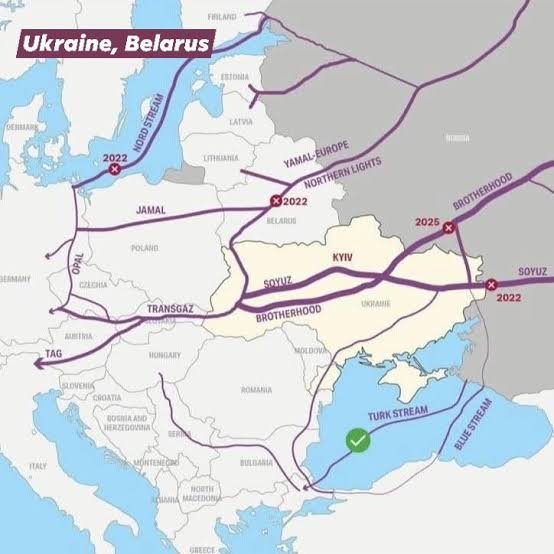
Also on X, Dariusz Wiewiórka points to the pipelines, essential to Germany, that run through Poland as the key to understanding the dispute:

I’ll explain to you exactly what’s happening in Poland.

After the destruction of Nord Stream, the German industry fell into an extreme crisis and is simply dying without cheap Russian gas. Due to the war in Ukraine, it’s through Poland that the last two functioning pipelines from Russia to Germany are running. Yamal with a capacity of 33 billion m³ and the Druzhba oil pipeline. Germany, to save its industry, must take control of Poland, and that’s exactly what they’re doing. The rest is just background.

HR delenda est!

Filed under: Bureaucracy, Business, Technology — Tags: , , , , , — Nicholas @ 03:00

I’ve mentioned a few times before my utter contempt for the HR profession, due to my own experiences with job-seeking after a sudden health crisis kept me out of the working world for nearly a year. The last time I’d gone looking for work in 2009, the economy wasn’t doing great but I still got occasional interviews and eventually got hired after a few months. In late 2016, when I was able to return to work, I found that almost every company had gone to automated HR software systems and I got exactly two interviews over nearly ten years, despite 30 years of experience in the specific field in which I was applying for work. And one of those interviews was due to having met the hiring manager in a previous job. I eventually tired of the rigmarole of applying (upload resumé, then cut-and-paste the entire thing into their fill-in-the-field where it hadn’t managed to extract the data from my resumé, then off into the bit-bucket with the application, never having reached an actual human being … or even an HR harpy).

Alexander Troutner documented the HR industry’s secrets and got himself elected as the HR world’s Emmanuel Goldstein for his trouble:

“Help Wanted” by dreamsjung is licensed under CC BY-SA 2.0 .

On August 27th, I published a YouTube video titled, “Yes, You ARE Getting Auto-Rejected“.

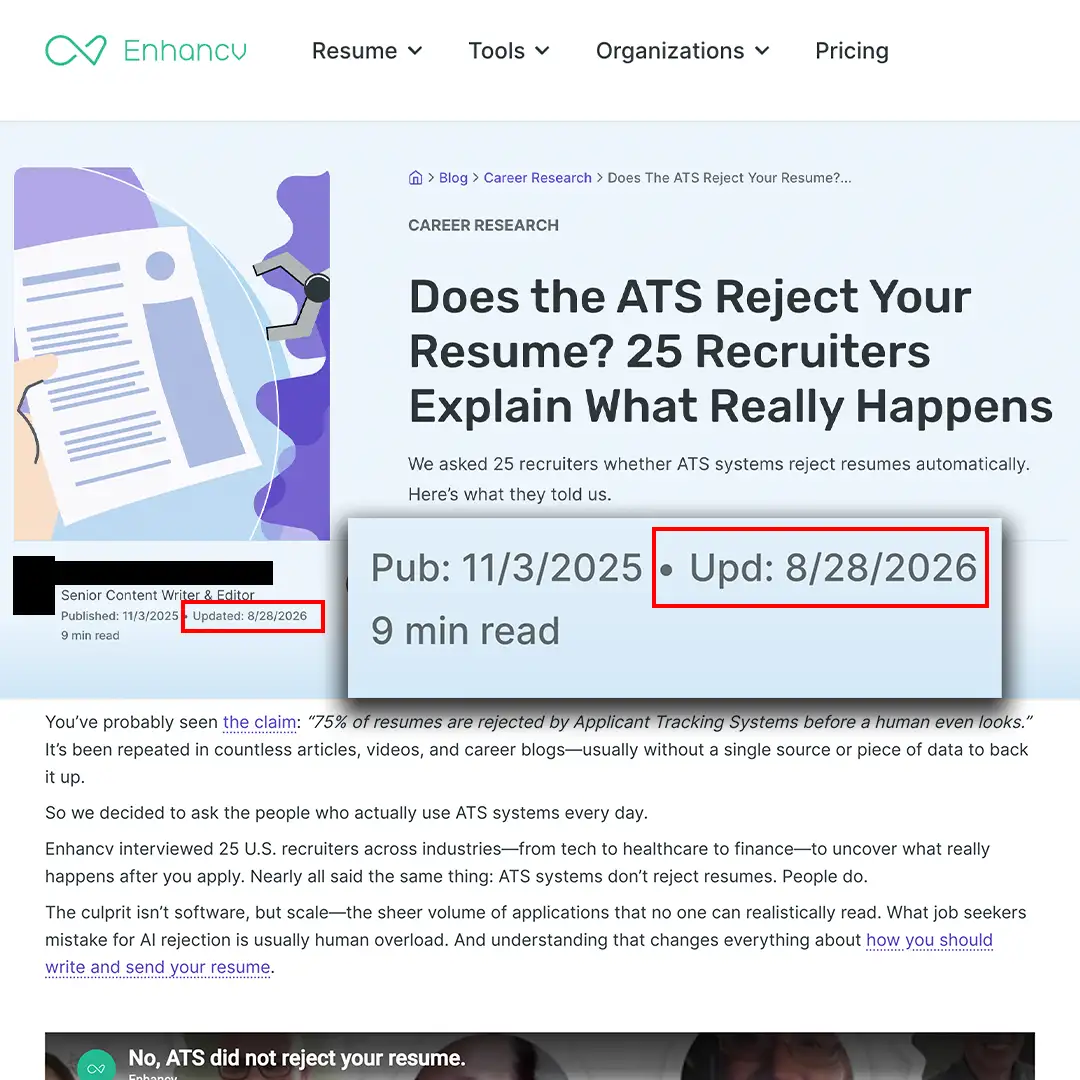
In that video, I debunked a viral Enhancv survey arguing that 92% of American recruiters do not use ATS in order to auto-reject jobseekers’ resumes.

And I mean it when I say “viral:”

I found hundreds of examples of ATS companies, HR news outlets, and recruiter influencers across LinkedIn, Reddit, and YouTube all sharing this story — oftentimes using it as evidence to sell their own resume-writing products or AI-driven hiring software.

You can read my original article if you’re interested in the details, but LONG story short:

  • I argued that the Enhancv survey was too small and heavily biased.
  • I argued that their definition of “auto-rejection” was too narrow, as it did not include situations where “knockout” questions, fit scores, and other criteria forced ATS to auto-reject resumes.
  • I found evidence from government testimonies, university research, employment lawyers, and journalists proving that ATS do, in fact, auto-reject candidates for pointless, and often illegal, reasons.
  • And I argued that some companies and HR personnel might knowingly be using these broken hiring tools as a legal scapegoat to avoid getting sued for employment crimes.

The initial response to my video was modest and predictable.

“Yes, You ARE Getting Auto-Rejected” received over 100,000 views in its first day, and Enhancv actually updated their article with more nuance.

[…]

A week later, I started to receive dozens, and then eventually hundreds, of notifications from HR professionals, LinkedIn “Top Voices”, and recruiter influencers responding to my video/article about ATS auto-rejection.

However, virtually none of them were making substantive or evidence-based arguments against my video.

Instead, they were resorting to name-calling, personal attacks, and demonstrably untrue (and likely defamatory) accusations of me being a fraud or a scammer.

I had become the victim of a social media dogpile.

    (I won’t fill this article with screenshots, but if you’d like to see more examples of their comments, I’ve linked that portion of my response video here. They range from unprofessional to downright disgusting.)

Because of the scale of this dogpile, its public-facing nature, and the fact that these were influencers with millions of cumulative followers attacking me, I knew that I could not respond directly to the dozens of comments and reposts mocking me on LinkedIn.

So instead, on September 4th, I published a YouTube video titled, “I Turned the Entire HR Industry Against Me“.

And that video went algorithmically ballistic.

Within days, it hit over 1 million views, empowered thousands of jobseekers on YouTube, Reddit, and LinkedIn to express outrage over recruiter behavior, and led large creators like Damon Cassidy to respond to this situation.

There was also a fairly large institutional response where Directors of career centers, CEOs of companies, and Board Members of professional organizations expressed support for my work and apologized for the actions of these recruiters.

The internet was overwhelmingly on my side … But why?

In hindsight, I had accidentally done 3 very threatening things to the livelihood, authority, and egos of these HR personnel:

  1. I debunked a myth that they were using to make money.
  2. HR people, ATS companies, and LinkedIn influencers NEED you to believe that the job market isn’t broken, and that it’s YOUR fault if you’re unemployed.

    […]

  3. I entered their professional status bubble without needing their approval.
  4. (I know that sounds like something ChatGPT would say, but I swear I wrote this article myself.)

    HR is cliquey.

    […]

  5. I successfully reached their target audience — jobseekers.
  6. Attention is currency in the 21st century.

    So for recruiter influencers in particular, it can be deeply unsettling when someone doesn’t play by your rules, and yet still manages to garner more attention than you.

Return of the King: On the Scouring of the Shire

Filed under: Books, Britain, Media — Tags: , , — Nicholas @ 02:00

Feral Historian
Published 3 Jul 2026

“The Scouring of the Shire”, omitted entirely from the film, ties together many of Tolkien’s key themes. While Gondor shows us a contrast between the mythic Kings of old and the mundane Stewards that followed them, Saruman’s fall and revenge on the Shire shows the same transformation of evil, from a dark wizard in a tower to little men hiding behind titles and rules.

00:00 Intro
03:50 Depersonalizing Authority
05:38 The King and the State
07:04 Mythic vs Mundane
10:28 Boromir

QotD: Organizing a Roman Republican army

Filed under: Europe, History, Military, Quotations — Tags: , , , , , — Nicholas @ 01:00

… the recruits return on the appointed day and are reassembled, probably on the campus Martius (the field of Mars, just outside the city), which in any case is where the whole process will end up moved to in the first century (probably to accommodate the larger number of Roman citizens). Moving the process outside of the ritual boundary of the city, the pommerium, would have been important, because the power of certain Roman magistrates to command armies (imperium, a crucial concept we’ll deal with when we get to the series on the Republic) only exists fully outside this boundary. It also keeps them from being hassled by the Tribunes of the Plebs (a distinct and entirely different office from the military tribunes!), whose powers don’t exist outside the pommerium. That said, Polybius doesn’t tell us where this part takes place and I don’t myself know of any source that explicitly does.

I should stop to note that this phase gets short shift in the scholarship. Brunt, Italian Manpower (1971) 625ff somehow manages to miss it entirely, conflating it with the selection of recruits in Phase I, but it is clearly a distinct stage in the process. Polybius is not subtle here: after the oaths are taken, the [military] tribunes dismiss the recruits (Polyb. 6.21.6), designating a time and place for them to reassemble without arms and then when they show up then (Polyb. 6.21.7), they are divided into units, are ordered to get their equipment and then sent home again (Polyb. 6.26.1) to reassemble one more time (Polyb. 6.26.2) when the army is properly formed. That is three clear stages: selection, apportionment and mobilization, which occur on different days in different places.

The function of this phase is the division of recruits into their constituent units. First the pedites (again, “infantry”) are split into four types: velites, hastati, principes and triarii. Polybius notes that the “youngest and poorest” are assigned to the velites, then the next to the hastati, and so on, creating a sliding scale by both wealth and age; one paragraph down he reiterates that the velites are mostly the youngest soldiers (Polyb. 6.22.1). In practice, we know that the centuries of the pedites were stratified by wealth and that wealthier soldiers were expected to bring heavier, more expensive kit (even Polybius notes this, Polyb. 6.23.14). The equipment of the velites, who were light infantry skirmishers that screened and supported the legion, would have been much cheaper than the equipment of the rest of the infantry (who were all armored, heavy infantry), so I think the right reading of Polybius is that the velites consist of both the young of all of the classes of pedites (putting green soldiers in a position to both prove their courage, but also one where if they falter it doesn’t cause the line to collapse; light infantry can retreat and advance freely) as well as the very poorest of the pedites who couldn’t afford heavier equipment even if they wanted to.1

The velites carry a sword (Livy tells us it is the same sword as the heavy infantry, the gladius Hispaniensis, Livy 38.21.13), a small shield (the smaller version of the parma; cavalry use a larger version of this shield), and javelins (Livy clarifies they carry seven of them; these are lighter javelins, the hasta velitaris, Livy 26.4) along with a modest helmet.2 The velites themselves emerge as a distinct arm of the Roman army during the Second Punic War, but an integrated light infantry skirmish force existed earlier; it’s not clear how the velites would have differed from earlier light infantry leves milites or rorarii. Perhaps not very much.

Meanwhile the heavy infantry (hastati, principes and triarii) carry a large oval shield (the scutum), a sword (the gladius Hispaniensis, a versatile cut-and-thrust sword), two heavy javelins (pila), and wear both a metal helmet (the ubiquitous bronze Montefortino-type) and body armor. Poor soldiers, Polybius tells us, wear what in Latin is a pectorale (and thus in English a “pectoral”); this gets represented as a single smallish bronze plate over the upper-chest, but our evidence for this equipment suggests a more complete cuirass consisting of a front and back plate joined by side and shoulder plates, with a broad armored belt protecting the belly, a sort of “articulated breastplate” […] Wealthier Romans were required to furnish themselves with mail. Once again, the fact that the tribunes are likely to have access to the census, and thus the self-reported wealth figures of the recruit’s households (tied to their century assignment) is going to facilitate these divisions.

Each class (except the velites) then elect ten senior centurions and ten junior centurions, with the very first fellow elected being the primus pilus, the most senior centurion of the legion. Centurions then handpick their supporting officers (the optio). We are given no clues as to how this election would be accomplished, but the numbers here we’re now dealing with are fairly small (1200 infantry per type, except just 600 triarii), so the procedures here don’t have to be that complex. The centurions then assist the tribunes in breaking up each class into maniples (120 men) and centuries (60 men), with the velites being attached to the maniples of the heavy infantry rather than getting their own, because they’re a supporting force. Meanwhile, the cavalry is being divided as well into ten squadrons, each with three officers (decuriones), who have their own optiones.

Once all of those divisions are complete, the tribunes instruct the men on how they are to arm themselves and then send them home (Polyb. 6.26.1). I should note here the Paton translation (rev. Walbank and Habicht, but I don’t think they change anything here) reads, “The tribunes having thus organized the troops and ordered them to arm themselves in this manner dismiss them to their homes” but a more strictly literal translation would run, “The tribunes, having made the divisions and given them orders concerning equipment then dismiss the men to their homes”. There’s an assumption worked into the translation that soldiers arm themselves; I think this assumption is correct, but it is not required by the text.

But of course the staging of this process only really makes sense if soldiers do self-equip. Otherwise, why send them all to their homes at this stage, when you have the entire army gathered and divided into units? If equipment was state issued, it’d be trivial to hand it all out right at this stage and then march off to war. Instead, soldiers are dispatched home with orders concerning their equipment.

Meanwhile, the process for the socii is running in parallel. We know basically nothing about this stage of their process, but it is certainly happening. All Polybius tells us is that “the magistrates [of the socii], choosing the men and administering the oath in the manner above described, send them off, appointing a commander and a paymaster” (Polyb. 6.21.5). The implication is that the socii have a similar process to the Romans (albeit in miniature as there are many communities of socii who collectively provide about as many troops as the Romans, so their dilecti – whatever name they really went by – will be much smaller). This is reflective of the Roman attitude towards the socii – they do not care how the troops are raised or paid, only that they are raised. So long as the socii show up at the appointed time with the right gear, ready to fight, the Romans are fine with the process.

But the system here mirrors the Roman one quite strongly. Each Roman army has a presiding magistrate (like a consul) and an assigned financial magistrate (a quaestor), just as each socii detachment has a commander and a paymaster. The commander of these socii units show up in our sources as praefecti cohortium and seem to have been drawn from the local elite of those communities (just like the Romans). So while the Romans are dividing into units and then heading home to buy, fetch or borrow their equipment, the socii are at work recruiting their own troops to the numbers and of the types demanded at the dilectus, arming them, making arrangements for their pay (the Romans supply food, but not pay, for the socii) and then sending them to the planned rendezvous.

Bret Devereaux, “Collections: How To Raise a Roman Army: The Dilectus“, A Collection of Unmitigated Pedantry, 2023-06-16.


  1. In Polybius’ day, there may have been significant overlap between these two definitions just because Roman military success was likely to put enough loot in the pocket of a seasoned veles to enable him to afford the equipment of the heavier infantry.
  2. Perhaps in some cases a leather or textile head-covering rather than a metal one; evidence here is very thin.


Powered by WordPress