Quotulatiousness

October 8, 2026

Singapore’s journey from British colony to independent economic star

Filed under: Asia, Books, Britain, Economics, Government, History — Tags: , , , — Nicholas @ 05:00

At The Wrong Side of History, Ed West reviews the autobiography of Lee Kuan Yew, the first prime minister of an independent Singapore and the man most responsible for its amazing economic success:
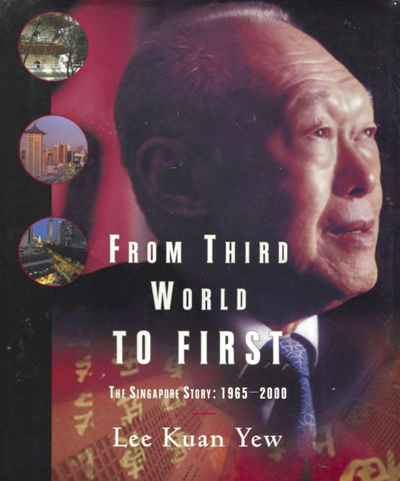
There are few political memoirs as readable as Lee Kuan Yew’s From Third World to First, but then there were few politicians like him. Arguably the greatest statesman of the post-war era, Lee led Singapore out of a failed federation with Malaysia, turning a poor and precarious little nation into a dazzling success story, now twice as rich as Britain, its former colonial ruler.

While many things have been written about Lee, the most interesting are by the man himself, with his early years covered in The Singapore Story, published in 1998. The sequel mixes memoir, analysis on international affairs, his own personal philosophy and a how-to guide to statecraft. As he puts it: “There are books to teach you how to build a house, how to repair engineers, how to write a book. But I have not seen a book on how to build a nation out of a disparate collection of immigrants from China, British India, and the Dutch East Indies …” It’s safe to say that he’s cornered that particular market.

It is a strangely cinematic story, almost fit for Hollywood: a man battling to save his small nation against the odds, who must feel that all is lost but struggles on and ultimately wins. Singapore’s identity, unlike that of most young countries, was not forged on the battlefield with swords and guns, but by markets, driven by a determined belief in economic growth, social order and hard work. Only these goals would allow it to overcome its severe demographic challenges, and avoid the violent fate of many post-colonial societies. Defying what experts thought was the direction of history, it became the most successful, and significant, city-state since the Renaissance.

The situation to start with was desperate, and Lee can be seen crying in black and white video footage from August 1965, when he announces that his city has been kicked out of Malaysia, a rare case of a state achieving independence against its will. As he puts it: “Some countries are born independent. Some achieve independence. Singapore had independence thrust upon it.”

Singapore was poor and cursed by its combustible demography. Twice the size of the Isle of Wight — and roughly the same shape — it nestles at the bottom of the Malay peninsula and to its south, just an hour’s ferry ride, is the giant of Indonesia. Neither neighbour was friendly, and Indonesia’s declared regional policy of Konfrontasi – Confrontation – was not reassuring.

Under Stamford Raffles in 1819, the British had founded Singapore as a trading post out of a collection of villages inhabited by Malays and a long-established community of overseas Chinese. Its position at a choke point was crucial for control of the sea lanes between the Far East and Indian Ocean, and under British rule it flourished as an entrepôt. Free trade was its foundational belief, and its hands-off rulers allowed the Chinese in particular to express their entrepreneurial skills; as its economy grew, Chinese migration increased, and by the time of independence they constituted about three-quarters of the population, with Malays accounting for 15 per cent and Indians the remainder.

Born in 1923 as the eldest of five, Lee was something of a father figure to his three brothers and sister, their actual father being a somewhat irresponsible and distant figure, and he certainly exemplified Adler’s birth-order theory, becoming the conscientious elder sibling to an entire nation.

The great-grandson of Hakka-speaking immigrants, Lee came from the somewhat Anglicised Straits Chinese elite. Often British in their mindset, Lee describes himself as “the last Victorian” and this worldview would shape Singapore’s history. He attended the English-speaking Raffles College, where he met his future wife, Kwa Geok Choo, another lawyer and a formidable individual in her own right; the two often finished first and second in exams.

Lee would have gone on to great things in any case, but he happened to come of age in a notably turbulent period. If worldviews are indeed shaped by the events of an individual’s twentieth year, for the budding young law student it was the fall of Singapore in February 1942, the British Empire’s greatest defeat and humiliation. Lee noted at the time that, whatever happened next, this was the end of European rule.

Utah’s VPN rules don’t fare well in court

Filed under: Law, Liberty, USA — Tags: , , , , — Nicholas @ 04:00

Like many other jurisdictions, Utah wanted to apply age restrictions to online sites “to protect the children”. It didn’t go well in court:

“Virtual Private Network (VPN)” by Infosec Images is licensed under CC BY 2.0 .

As I write, I have my virtual private network (VPN) set to show me as surfing the internet from Berlin, Germany, despite my location in Arizona, for no good reason other than that I can. Given that Germany has rather tight restrictions on speech, this is probably the reverse of how a VPN is usually used between the two countries, but it illustrates the utility of technology that anonymizes internet traffic and lets users pick their points of origin to bypass censorship and surveillance. Germans can bypass controls on “hate speech” and insults directed at politicians, the Chinese can work around restrictions on Winnie the Pooh memes, and people in places like Utah can ignore intrusive age-verification rules.

That’s why it’s important that a federal court just paused enforcement of Utah’s effort to regulate VPNs.

Utah Pushes Age Verification and Targets VPNs

“Signed into law earlier this year, SB 73 attempted to regulate adult websites by requiring them to block VPN users or to identify the physical location of visitors using them or similar tools that mask their network traffic,” the Electronic Frontier Foundation’s (EFF) Rindala Alajaji details in a response to the case. “It even went so far as to prohibit websites from offering instructions on how to use a VPN to bypass these checks. This made Utah, to EFF’s knowledge, the first state in the nation to target the use of VPNs to avoid legally mandated age-verification gates.”

Utah was sued over the law by Aylo Freesites Ltd. and Aylo Group Ltd., the owners of Pornhub. The plaintiffs didn’t challenge the law’s age-verification requirements but went after its insistence that the law applies if a user is “actually located” in Utah without regard to the use of “a virtual private network, proxy server, or other means to disguise or misrepresent the individual’s geographic location to make it appear that the individual is accessing a website from a location outside this state”.

Utah’s focus on VPNs and similar tools comes after decades of technological innovation intended to allow internet users to bypass censorship, firewalls, and surveillance imposed by authoritarian regimes that want to monitor and muzzle dissidents. VPNs, perhaps the most popular of the tools, route internet traffic through intermediary servers, encrypting data in the process and concealing users’ locations. That’s extremely handy for people suffering under oppressive rule. In recent years, though, speech restrictions have been increasingly imposed by nominally liberal democratic governments.

VPNs are a good thing, and any government attempting to crack down on their use “to protect the children” is up to no good.

Central planning also centralizes the importance of “who you know”

Filed under: Business, Economics, Government, Politics — Tags: , , , , — Nicholas @ 03:00

On the social media site formerly known as Twitter, Handre points out the other thing that socialized economies share with one another: the overwhelming importance of “friends”, “connections”, and “family” in generating unearned wealth and power.

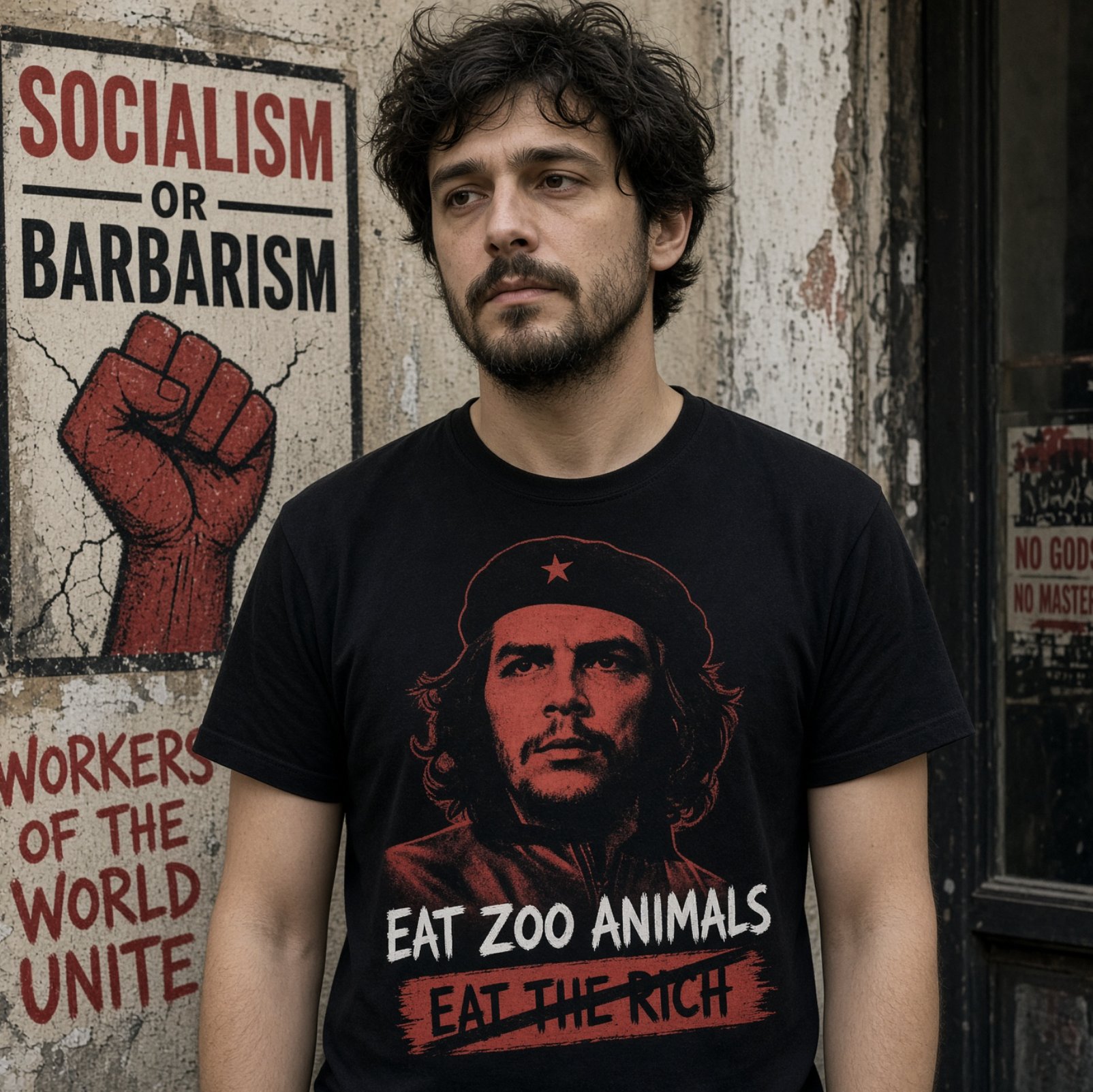
AI-generated image from @Handre on X

Socialism concentrates power, and concentrated power concentrates wealth. Hugo Chavez spent two decades screaming about imperialist oligarchs while his own daughters accumulated the kind of fortune that would embarrass a Rockefeller.

Maria Gabriela Chavez holds assets estimated at $4.2 billion, making her Venezuela’s wealthiest individual by a comfortable margin. Her father nationalized over 1,200 private companies between 2002 and 2012.

The mechanism is straightforward: When the state controls production, distribution, currency, and courts, political proximity becomes the only productive investment. You don’t build a business; you cultivate a minister. Chavez’s inner circle stole through socialism, using currency controls, preferential exchange rates, and state contracts as the instruments.

Meanwhile, the Venezuelan poverty rate crossed 80 percent in 2024. Infant mortality climbed. The bolivar collapsed so completely that Venezuelans began pricing transactions in dollars just to preserve basic calculation.

Ludwig von Mises proved mathematically in 1920 that socialist planners cannot rationally allocate resources without prices generated by voluntary exchange. No prices, no signal. No signal, no coordination. Shortages follow as surely as math follows addition.

This while Venezuela sits atop the world’s largest proven oil reserves. Poverty there is entirely manufactured. Chavez’s family lives in Caracas and Miami on wealth extracted from people who cannot buy protein. The ideology that promised to eat the rich ended with the people eating the zoo animals.

Dining on the Supersonic Concorde

Filed under: Britain, Food, France, History, Technology — Tags: , , , , — Nicholas @ 02:00

Tasting History with Max Miller
Published 14 Apr 2026

Roasted lobster tails with creamy beurre blanc served with smoked salmon roses with caviar

City/Region: France
Time Period: 1970s

The luxury dining experience that came with the exorbitant price tag of a ticket aboard the supersonic airliner Concorde (about $9,000 in 2026 money for a one-way ticket from New York to London) included an exclusive lounge experience at the airport and continued with a multi-course meal in the air.

Here I’m recreating a dish from a photo aboard Concorde of smoked salmon shaped into roses, garnished with crème fraîche and caviar. The caviar served aboard Concorde would have been beluga, of course, but feel free to opt for a more reasonably priced alternative. I used white sturgeon caviar, which was still a bit of a splurge.
(more…)

QotD: Headlines for modern audiences

Filed under: Food, Humour, Media, Quotations — Tags: , , — Nicholas @ 01:00

I considered some eye-catching modern headlines for this one.

Popcorn: you’re making it wrong. This is a classic formulation that produces both anger and curiosity. It’s confrontational and contemptuous, but you think hey, once I learn the secret, I can smirk at other people who don’t know the true way.

We talked to popcorn experts. Here’s why they say you should smear butter on your chest. This style has become the norm, and appeals to people who regard themselves as the sort of people who respect the experts. They trust the popcorn science.

The FDA has banned this poison from popcorn: here’s what we know. Then you discover there’s some 1964 rule that forbids using DDT on corn.

Gut doctor begs: stop doing this with popcorn (Picture of a doctor pointing at a cadaver with its chest blown out from the inside)

Sorry. The closest I can come is this:

If you stop eating popcorn on a regular basis, an unexpected thing happens: it becomes unappetizing. It ceases to be something you consider as “food”. It’s stuff you’d put in a box of plates to keep them from chipping.

But, you say, I make absolutely delightful popcorn with butter and salt! I don’t doubt it. Everything is better with butter and salt. You could say that popcorn is just a delivery mechanism for butter and salt. Golden, rich butter, seeping into the tiny caverns of the detonated kernel, salt falling like snow on Christmas Eve –

Hold on, be right back; I really want some popcorn now.

James Lileks, “Experts say these are the most overrated headlines; number 4 is scary”, LILEKS (James), 2026-07-06.

Powered by WordPress