Quotulatiousness

October 20, 2026

Singapore’s unique approach to multiculturalism

In the third and final (?) part of Ed West‘s review of Lee Kuan Yew’s memoirs, he describes the multicultural issue in Singapore and how it was addressed to reduce racial tensions in the city state:
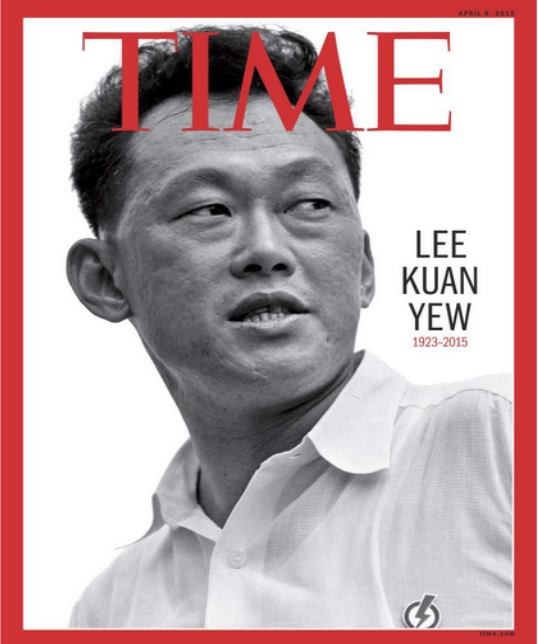
Singapore led the way in becoming the first truly multicultural democracy, but this entailed sacrifices. Because segregation was a major driver of inter-communal tension, so the new Housing and Development Board, as well as providing much needed homes, brought with it the revolutionary idea of neighbourhood quotas. This meant the vast majority of Singaporeans being allocated a flat, on which they had a 99-year lease, in purposefully desegregated housing blocks. The city would never again suffer from race riots.

Parliamentary seats were also reorganised to ensure that every constituency had a representative from each group. “Without this arrangement, the Chinese majority in all constituencies would most likely return Chinese candidates”, he wrote. Voters “preferred one who empathised with them, spoke the same dialect or language and was of the same race. All candidates who have campaigned know this only too well. It was going to be difficult if not impossible for a Malay or Indian candidate to win against a Chinese candidate.”

Lee had a hard-headed approach to multiculturalism, as only someone who was truly multicultural could. As one of the Straits Chinese elite, English was his “master language”, but he spoke Malay well, more like a peranakan — a local-born Chinese — rather than a totok, a recent Chinese immigrant. For his annual speech, which could take up to two hours, Lee would address the audience first in Malay, then Hokkien, and finally in English. Hokkien would later be replaced by Mandarin, even though “for many Chinese Singaporeans, dialect is the real mother tongue and Mandarin a stepmother tongue”.

Lee’s view of multiculturalism also directed his approach to the law. An early experience of defending rioters in 1951 during the “Jungle Girl” disturbances had left him sceptical of the jury system, and he had it abolished in 1969, except for murder trials. Lee saw juries as incompatible with a multi-racial society, but he also believed that many people were too irrational to make such a decision.

He wrote how “a Straits Times court reporter who had watched many jury trials gave evidence … that superstitious beliefs and a general reluctance to take responsibility for severe punishment, especially the death sentence, made Asian jurors most reluctant to convict. They preferred acquittal or conviction on a lesser charge. The reporter said he could predict that whenever a pregnant woman was a member of the jury there would be no conviction on a murder charge, for otherwise her child would be born cursed. After the bill was passed and jury trials were abolished, there were fewer miscarriages of justice arising from the vagaries of jury sentiments.”

Singapore’s tough approach to crime became world famous, and curiously this was partly inspired by his experiences of the Japanese occupation, after which “I did not accept the theory that a criminal is a victim of society”.

He wrote how “punishment then was so severe that even in 1944-1945, when many did not have enough to eat, there were no burglaries and people could leave their front doors unlocked, day or night. The deterrent was effective. The British used to have whipping with a cat-o’-nine-tails or rattan in Singapore. After the war, they abolished whipping but retained caning (with rattan). We found caning more effective than long prison terms and imposed it for crimes related to drugs, arms trafficking, rape, illegal entry into Singapore, and vandalising of public property.”
October 18, 2026

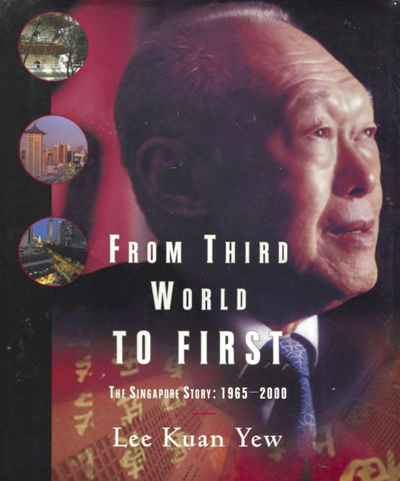
Singapore: The rise of Lee Kuan Yew

At The Wrong Side of History, Ed West continues his review of Lee Kuan Yew’s autobiography, detailing the difficult period after the British withdrawal from overseas military commitments “East of Suez”, including the vast naval base in Singapore and the Royal Air Force’s Changi air base:

October 31, 1971, and the British are saying goodbye to their military base in Singapore, the city where the empire endured its greatest humiliation. Three years earlier, an increasingly straitened former imperial power had announced its immediate closure as part of their withdraw east of Suez. For the recently independent city-state, this was a disaster, and prime minister Lee Kuan Yew had done his best to postpone the big day. The city already suffered from high unemployment, and Britain’s military accounted for 20 per cent of Singapore’s GDP, providing 30,000 direct jobs and 40,000 in support.

Yet retreat was inevitable, and when the day came British forces were given a ceremonial send-off, Lee writes in his memoir, the withdrawal carried out with “good intentions, goodwill and good faith”. After 150 years in the Strait, the British were gone, handing over the airbase to the colony they created for the symbolic fee of one dollar.

Lee had cut his teeth in the independence movement, but the city-state could not survive without protection. As with many small countries which had depended on the British, Singapore now shifted its allegiances to its successor state, the United States of America.

The imperial retreat presented a huge financial headache for the former anti-colonial activist, but increasingly a more personal sense of unease. “I feared that slowly but inexorably British influence would decline”, he writes: “and American influence expand. For my generation born and bred in empire, it was not an easy change. I had to come to terms with American power without a British buffer. The British had enforced their will with a certain civility. The Americans were different, as I could see from the way they dealt with South Vietnamese leaders, and even with Thai and Filipino leaders who were not in as parlous a position as those in Saigon. America was a power on the ascendant, with bulging muscles and a habit of flexing them.”

Lee had built up a good relationship with both Harold Wilson and Edward Heath, and used this to delay the withdrawal for as long as possible. He had less luck in getting the British to help Singapore train their army, something they had done with Malaysia where the threat of communist insurgency necessitated it. Neither were most of the other newly independent states willing to help: Egypt’s Nasser recognised Singapore and sent good wishes, but ignored his requests for military aid. India’s prime minister Lal Bahadur Shastri also said no, so he turned to another small post-colonial nation surrounded by hostile neighbours. When a small group of Israelis arrived in November 1965, they had to keep their existence a secret to prevent unrest from the Malay minority. “To disguise their presence, we called them ‘Mexicans'”, he recalls: “They looked swarthy enough”.

The Chinese here traditionally shunned military service, “a historical legacy of the predatory habits of soldiers during the years of rebellions and warlords in China”. As trading people they looked down on the military as a career choices, and he quotes the Chinese saying “a good lad does not become a soldier, good steel does not become nails”.

Lee also had to negotiate the problem of “representation” which mars all multicultural societies. Under the British, the city had been policed by Malays, often recruited from Malaysia itself, as well as the more neutral Gurkhas. Now “we had to find some way to induct more Chinese and Indians into the police and armed forces to reflect their population mix”, otherwise they would not be accepted as legitimate. “We wanted the people to regard our soldiers as their protectors – a reversal from the days when army and police uniforms aroused fear and resentment as symbols of colonial coercion”.

Conscription, unpopular under the British, was reintroduced, and the authorities even set up military cadet corps in all secondary schools, although his colleague Goh Keng Swee reflected that “the Spartan approach to life does not come about naturally in a community that lives by buying and selling”. As with Israel, another small state formed by a market-dominant minority, they were forced to adapt their way of life to survive; yet rather than become the new Sparta, Singapore focussed on becoming the new Corinth, a commercial centre where great fortunes could be made. When the British finally withdrew, RAF Changi Air Base became Changi Airport, a transport hub which came to epitomise the city’s commercial success.

October 8, 2026

Singapore’s journey from British colony to independent economic star

Filed under: Asia, Books, Britain, Economics, Government, History — Tags: , , , — Nicholas @ 05:00

At The Wrong Side of History, Ed West reviews the autobiography of Lee Kuan Yew, the first prime minister of an independent Singapore and the man most responsible for its amazing economic success:

There are few political memoirs as readable as Lee Kuan Yew’s From Third World to First, but then there were few politicians like him. Arguably the greatest statesman of the post-war era, Lee led Singapore out of a failed federation with Malaysia, turning a poor and precarious little nation into a dazzling success story, now twice as rich as Britain, its former colonial ruler.

While many things have been written about Lee, the most interesting are by the man himself, with his early years covered in The Singapore Story, published in 1998. The sequel mixes memoir, analysis on international affairs, his own personal philosophy and a how-to guide to statecraft. As he puts it: “There are books to teach you how to build a house, how to repair engineers, how to write a book. But I have not seen a book on how to build a nation out of a disparate collection of immigrants from China, British India, and the Dutch East Indies …” It’s safe to say that he’s cornered that particular market.

It is a strangely cinematic story, almost fit for Hollywood: a man battling to save his small nation against the odds, who must feel that all is lost but struggles on and ultimately wins. Singapore’s identity, unlike that of most young countries, was not forged on the battlefield with swords and guns, but by markets, driven by a determined belief in economic growth, social order and hard work. Only these goals would allow it to overcome its severe demographic challenges, and avoid the violent fate of many post-colonial societies. Defying what experts thought was the direction of history, it became the most successful, and significant, city-state since the Renaissance.

The situation to start with was desperate, and Lee can be seen crying in black and white video footage from August 1965, when he announces that his city has been kicked out of Malaysia, a rare case of a state achieving independence against its will. As he puts it: “Some countries are born independent. Some achieve independence. Singapore had independence thrust upon it.”

Singapore was poor and cursed by its combustible demography. Twice the size of the Isle of Wight — and roughly the same shape — it nestles at the bottom of the Malay peninsula and to its south, just an hour’s ferry ride, is the giant of Indonesia. Neither neighbour was friendly, and Indonesia’s declared regional policy of Konfrontasi – Confrontation – was not reassuring.

Under Stamford Raffles in 1819, the British had founded Singapore as a trading post out of a collection of villages inhabited by Malays and a long-established community of overseas Chinese. Its position at a choke point was crucial for control of the sea lanes between the Far East and Indian Ocean, and under British rule it flourished as an entrepôt. Free trade was its foundational belief, and its hands-off rulers allowed the Chinese in particular to express their entrepreneurial skills; as its economy grew, Chinese migration increased, and by the time of independence they constituted about three-quarters of the population, with Malays accounting for 15 per cent and Indians the remainder.

Born in 1923 as the eldest of five, Lee was something of a father figure to his three brothers and sister, their actual father being a somewhat irresponsible and distant figure, and he certainly exemplified Adler’s birth-order theory, becoming the conscientious elder sibling to an entire nation.

The great-grandson of Hakka-speaking immigrants, Lee came from the somewhat Anglicised Straits Chinese elite. Often British in their mindset, Lee describes himself as “the last Victorian” and this worldview would shape Singapore’s history. He attended the English-speaking Raffles College, where he met his future wife, Kwa Geok Choo, another lawyer and a formidable individual in her own right; the two often finished first and second in exams.

Lee would have gone on to great things in any case, but he happened to come of age in a notably turbulent period. If worldviews are indeed shaped by the events of an individual’s twentieth year, for the budding young law student it was the fall of Singapore in February 1942, the British Empire’s greatest defeat and humiliation. Lee noted at the time that, whatever happened next, this was the end of European rule.

October 3, 2026

Singapore’s “Social Development Unit”

Filed under: Asia, Government, Health, History — Tags: , , , — Nicholas @ 04:00

We don’t tend to hear very much about Singapore, so I hadn’t heard of the “Social Development Unit” that they set up (appropriately, in 1984):

Haha this reminds me of when Singapore had this thing called the Social Development Unit which my American sociology professor told me was “basically government-sponsored eugenics”.

Back in the 80s, Lee Kuan Yew observed that female university graduates were not getting married, and that smart people weren’t breeding enough which he treated as a national emergency.

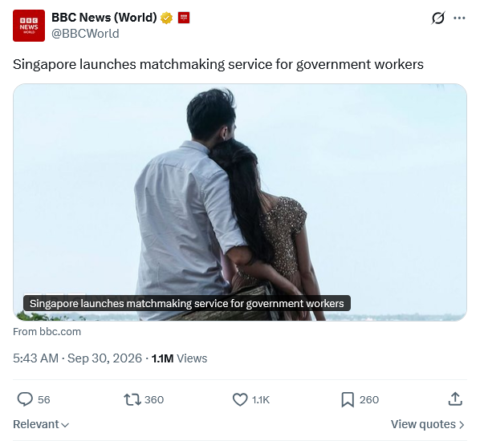
This led to the birth of the Social Development Unit in 1984 — government-sponsored parties, dinners, trips and even “love boat” cruises so that clever people could meet each other and, ideally, produce more clever babies. Locals immediately nicknamed it Single, Desperate and Ugly

There were other politically incorrect fertility policies of the era: the Graduate Mothers’ Scheme (kids of degree moms got priority school places), and higher tax breaks for those who were more educated with more kids. Meanwhile, cash grants were given to the lower educated and lower income parents who got sterilized after one or two kids.

To which Carl Benjamin responded:

Lee Kuan Yew is what happens when an autistic map gamer becomes president.

August 23, 2026

The End of the Battleship Era – Force Z

Filed under: Britain, History, Japan, Military, Pacific, WW2 — Tags: , , , , , — Nicholas @ 04:00

TimeGhost Cartographic and World War Two
Published 22 Aug 2026

In December 1941, Britain is fighting a global war on multiple fronts when Japan enters the conflict in Southeast Asia. At the centre of Britain’s strategy is Singapore, and the arrival of two powerful warships is meant to demonstrate that the Royal Navy can still project its power across the region.

HMS Prince of Wales and HMS Repulse, accompanied by a small destroyer force, form Force Z and sail into increasingly dangerous waters. But without the aircraft carrier originally intended to accompany them, the squadron is operating under a serious disadvantage.

As Japanese forces begin their invasion of Malaya, Force Z sets out to disrupt the landings. What follows becomes one of the most dramatic naval actions of the early Pacific War, as British battleships find themselves facing a threat they were never designed to fight alone.

July 16, 2026

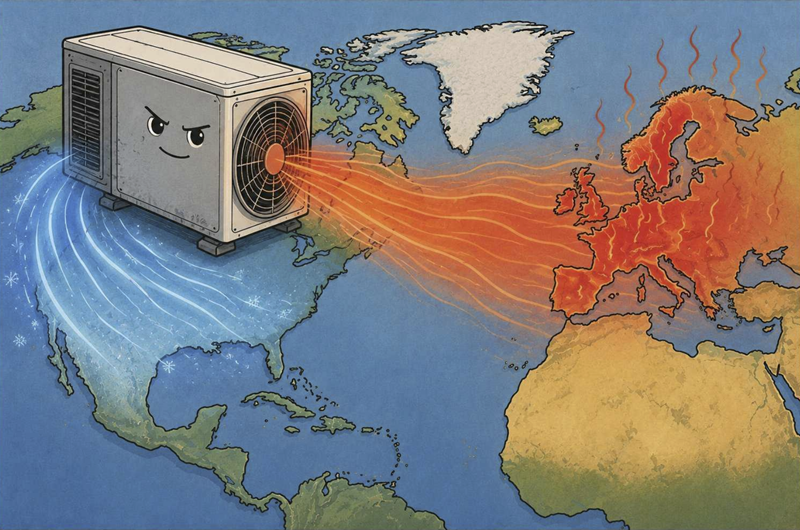
“Only fans – Europe’s approach to air conditioning”

From the free-to-cheapskates portion of Ed West‘s most recent article on his Substack:

The EU may not actually believe this, but they thought you would …

Different climates have enjoyed advantages at different points in time. For most of history, industry and scholarship in southern Europe benefitted from significantly longer hours of sun and daylight much of the year compared to the north, allowing for more hours of work and study. James Belich noted in The World the Plague Made that this all changed with the expansion of the Basque whaling trade in the late medieval period, providing cheap wax for candles.

England and the Netherlands subsequently overtook the south in their levels of literacy, a transformation usually attributed to Protestantism, although this technical solution to a physical disadvantage certainly helped. As the northern countries grew richer, and were able to use more energy, so the climate came to be an advantage. Cooler areas of Europe in particular benefitted from a relative absence of vector-borne disease, dangerous insects and food poisoning, which made hotter regions of the world more lethal.

Yet the biggest curse of the lower latitudes is that heat makes us sluggish — since people struggle to work above 23° centigrade. As Maarten Boudry writes on his substack, “For every degree above 25°C (77°F), our cognitive performance declines by around two percent. And if synapses suffer, so does economic activity. At 30°C, office performance drops by almost 9 percent.”

I see that. I’ve been trying to write this in temperatures of up to 34°, which equates to a production level similar to a moderate hangover. If only there was some sort of technology that could make my home cooler.

Until relatively recently the world was dominated by a handful of relatively cold regions, and Paul Johnson observed in his history of the United States that human industry thrives in what Fahrenheit appreciators would call “the 60s”, a Goldilocks zone that turned New England and Greater Yankeedom into a powerhouse. The southern states, in contrast, were held back by higher mortality and the impossibility of productive work in the sweltering summer months, and until the mid-20th century were about 40 per cent poorer than the Union states.

The northerners were especially known for their work ethic and their inventiveness, a characteristic epitomised by the Boston-born Benjamin Franklin. Then in 1902, New York’s Willis Carrier changed everything with the one of the most world-changing inventions, the air conditioning unit; aircon has notably shifted population and power in the US southwards, but Dixieland is just part of a broader, global “sunshine belt”.

Among the most notable beneficiaries of this technology are the financial powerhouses of Dubai and Singapore. Lee Kuan Yew famously said of air conditioning that it was “perhaps one of the signal inventions of history. It changed the nature of civilization by making development possible in the tropics … The first thing I did upon becoming prime minister was to install air conditioners in buildings where the civil service worked.” Indeed, it has often been noted as characteristic of the city-state that the aircon is usually set to icy levels, reflecting their determination to be on work mode throughout the day.

While Singapore is the most famous beneficiary of Carrier’s invention, Japan has almost universal air conditioning, with 91 per cent of homes equipped, compared to 88 per cent in the US. China is home to more than 500 million aircon units, is the world’s largest manufacturer, and has also seen an economic shift towards the south. Vietnam, also likely to be a major economic power by mid-century, is as dependent on this technology as it is on its people’s ingenuity. The development of aircon, and medical breakthroughs in the treatment of tropical diseases, has shifted the centre of gravity away from the cold regions of the earth — just as the globe is warming up.

This year’s European heat wave, still ongoing, saw temperatures reach 37 last month in England, a June record. Many schools shut early, although one in Kent instead used air raid tunnels to teach children. London’s Central Line hit 39.4c, presenting a real risk of heat stroke.

Across Europe the hot weather has closed down not just schools but factories, offices and rail lines, and led to an estimated 10,000 deaths, with France top of the heat mortality charts. Indeed as Boudry writes, Europe has the worst heat-related excess deaths of any region — while fatalities in the US have declined by 75 per cent since the adoption of air conditioning.

Update, 17 July: Welcome, Instapundit readers! Have a look around at some of my other posts you may find of interest. I send out a daily summary of posts here through my Substack – https://substack.com/@nicholasrusson that you can subscribe to if you’d like to be informed of new posts in the future.

September 3, 2024

The End of World War Two – WW2 – Week 314B – September 2, 1945

Filed under: China, France, History, Japan, Military, Pacific, Russia, USA, WW2 — Tags: , , , , , , , — Nicholas @ 04:00

World War Two
Published 2 Sep 2024

The Japanese sign the official document of surrender and the Second World War is over. There are still some Japanese garrisons yet to surrender, but they begin doing so one after the other. However, war is not over — and there is serious foreboding for future events in places like Vietnam and China — where Mao Zedong is meeting with Chiang Kai-Shek, even as Josef Stalin lurks in the background to secure Soviet interests no matter which Chinese regime comes out on top.

00:00 Intro
00:59 Vietnam Declares Independence
04:04 The Importance Of Manchuria
06:28 Japan’s Surrender
11:22 The Final Surrenders
13:18 Casualties
15:50 The End
(more…)

August 23, 2023

Slovenian SAR80: Sterling Out-Simplifies the AR-180

Filed under: Asia, Britain, Europe, History, Military, Weapons — Tags: , , , , , — Nicholas @ 02:00

Forgotten Weapons
Published 15 May 2023

The British Sterling firm designed the SAR-80 (specifically, their engineer Frank Waters) as a very simple rifle to sell to countries outside the main NATO/Warsaw Pact spheres of influence. Sterling ended up getting a license to produce the AR-18 though, and didn’t put Waters’ design into production.

When the newly formed Chartered Industries of Singapore came looking for a rifle to produce, the SAR-80 design was a chance for Sterling to sell a production license. CIS needed something to produce domestically to equip the Singaporean Army, and the SAR-80 met their needs. After selling the rifles to their own Army, the company went looking for export clients. They found a few, including Croatia, the Central African Republic, and Slovenia. A total of about 80,000 SAR-80 rifles were made, and this is one of the Slovenian-contract examples.
(more…)

November 19, 2022

Prelude to Victory: Burma, 1942

Filed under: Asia, Britain, China, History, India, Japan, Military, USA, WW2 — Tags: , , , , , , — Nicholas @ 02:00

Army University Press
Published 11 Feb 2022

In late 1941 and early 1942 the Imperial Japanese Army swept through the Asia-Pacific region like a wildfire. The Allies appeared powerless to stop them. With the British Army in Asia reeling, and pushed back to the frontier of India, something had to be done to stem the tide. “Prelude to Victory: Burma, 1942” provides context for Field Marshal William J. Slim and the 14th Army’s struggle to retake Burma from the Japanese.

(more…)

October 8, 2022

Tank Chat #155 | Warthog | The Tank Museum

Filed under: Britain, History, Military, Weapons — Tags: , , , — Nicholas @ 02:00

The Tank Museum
Published 3 Jun 2022

David Willey is back with another Tank Chat. This week join David as he chats about the armoured vehicle Warthog — the Viking successor.
(more…)

February 21, 2021

WW2 – 130 – Britain’s Worst Defeat – Singapore Falls – February 20, 1942

World War Two
Published 20 Feb 2021

The most humiliating defeat in British history according to Winston Churchill — 80,000 men lost as prisoners of war! Humiliated by an enemy far less numerous than themselves! There are many ways to describe the fall of Singapore; these are but two of them. The Japanese are also bombing Australia and invading Sumatra, Bali, and Timor this week, so they are certainly not resting on their laurels. Meanwhile in the Soviet Union, thousands of Red Army paratroops are dropping behind German lines.

Join us on Patreon: https://www.patreon.com/TimeGhostHistory
Or join The TimeGhost Army directly at: https://timeghost.tv

Follow WW2 day by day on Instagram @ww2_day_by_day – https://www.instagram.com/ww2_day_by_day
Between 2 Wars: https://www.youtube.com/playlist?list…
Source list: http://bit.ly/WW2sources

Written and Hosted by: Indy Neidell
Director: Astrid Deinhard
Producers: Astrid Deinhard and Spartacus Olsson
Executive Producers: Astrid Deinhard, Indy Neidell, Spartacus Olsson, Bodo Rittenauer
Creative Producer: Maria Kyhle
Post-Production Director: Wieke Kapteijns
Research by: Indy Neidell
Edited by: Iryna Dulka
Sound design: Marek Kamiński
Map animations: Eastory (https://www.youtube.com/c/eastory​)

Colorizations by:
– Norman Stewart – https://oldtimesincolor.blogspot.com/​
– Adrien Fillon – https://www.instagram.com/adrien.colo…​

Sources:
– IWM ART: LD 6042, 15747 12, 15747 139, 15747 14

Soundtracks from the Epidemic Sound:
– Rannar Sillard – “Easy Target”
– Fabien Tell – “Other Sides of Glory”
– Rannar Sillard – “Split Decision”
– Gunnar Johnsen – “Not Safe Yet”
– Farrell Wooten – “Blunt Object”
– Howard Harper-Barnes – “Underlying Truth”
– Jo Wandrini – “Dragon King”
– Fabien Tell – “Break Free”
– Christian Andersen – “Barrel”
– Johan Hynynen – “Dark Beginning”
– David Celeste – “Try and Catch Us Now”
– Farrell Wooten – “Mystery Minutes (STEMS INSTRUMENTS)”

Archive by Screenocean/Reuters https://www.screenocean.com​.

A TimeGhost chronological documentary produced by OnLion Entertainment GmbH.

February 14, 2021

German Army Surrounded: You Did Nazi That Coming! – WW2 – 129- February 13, 1942

Filed under: Britain, Germany, History, Japan, Military, Russia, USA, WW2 — Tags: , , , , , — Nicholas @ 06:00

World War Two
Published 13 Feb 2021

The Soviet Red Army has managed to surround some 100,000 German soldiers in the Demyansk Pocket. The Allies are surrounded in Fortress Singapore and the Japanese spend the week breaking in. The Allies are also unable to supply Malta by ship because of continuous heavy Axis bombing of the island and its surroundings, which bodes ill for Allied operations in North Africa. The Germans also make a bold naval move this week — sending two capital ships right up the English Channel under British noses, making for German ports.

Join us on Patreon: https://www.patreon.com/TimeGhostHistory
Or join The TimeGhost Army directly at: https://timeghost.tv

Follow WW2 day by day on Instagram @ww2_day_by_day – https://www.instagram.com/ww2_day_by_day
Between 2 Wars: https://www.youtube.com/playlist?list…
Source list: http://bit.ly/WW2sources

Written and Hosted by: Indy Neidell
Director: Astrid Deinhard
Producers: Astrid Deinhard and Spartacus Olsson
Executive Producers: Astrid Deinhard, Indy Neidell, Spartacus Olsson, Bodo Rittenauer
Creative Producer: Maria Kyhle
Post-Production Director: Wieke Kapteijns
Research by: Indy Neidell
Edited by: Iryna Dulka
Sound design: Marek Kamiński
Map animations: Eastory (https://www.youtube.com/c/eastory​)

Colorizations by:
– Mikołaj Uchman
– Carlos Ortega Pereira, BlauColorizations – https://www.instagram.com/blaucolorizations
– Norman Stewart – https://oldtimesincolor.blogspot.com/​

Sources:
– National Portrait Gallery
– IWM: FE 218, FE 312, A 9692, A 9694, HU 2765, A 9514, MH 4981, FE 222, FE 583

Soundtracks from the Epidemic Sound:
– Rannar Sillard – “Easy Target”
– Jo Wandrini – “Dragon King”
– Andreas Jamsheree – “Guilty Shadows 4”
– Fabien Tell – “Break Free ”
– Fabien Tell – “Weapon of Choice”
– Wendel Scherer – “Growing Doubt”
– Johan Hynynen – “Dark Beginning”
– Gunnar Johnsen – “Not Safe Yet”
– Wendel Scherer – “Out the Window”
– Howard Harper-Barnes – “Underlying Truth”
– Philip Ayers – “Ominous”
– Johan Hynynen – “One More Thought”

Archive by Screenocean/Reuters https://www.screenocean.com​.

A TimeGhost chronological documentary produced by OnLion Entertainment GmbH.

February 7, 2021

Pearl Harbor Avenged! – WW2 – 128 – February 6, 1942

World War Two
Published 6 Feb 2021

The Japanese advance in Burma and the Dutch East Indies, but they’ve reached the end of the Malayan Campaign- Singapore, which they have under siege. They now prepare for the final assault. The Allies are going on the offensive at sea, though, in the Marshalls-Gilberts Raids, while on land in the Soviet Union the Red Army launches another series of offensives against the Germans.

Join us on Patreon: https://www.patreon.com/TimeGhostHistory
Or join The TimeGhost Army directly at: https://timeghost.tv

Follow WW2 day by day on Instagram @ww2_day_by_day – https://www.instagram.com/ww2_day_by_day
Between 2 Wars: https://www.youtube.com/playlist?list…
Source list: http://bit.ly/WW2sources

Written and Hosted by: Indy Neidell
Director: Astrid Deinhard
Producers: Astrid Deinhard and Spartacus Olsson
Executive Producers: Astrid Deinhard, Indy Neidell, Spartacus Olsson, Bodo Rittenauer
Creative Producer: Maria Kyhle
Post-Production Director: Wieke Kapteijns
Research by: Indy Neidell
Edited by: Iryna Dulka
Sound design: Marek Kamiński
Map animations: Eastory (https://www.youtube.com/c/eastory​)

Colorizations by:
– Mikołaj Uchman
– Julius Jääskeläinen – https://www.facebook.com/JJcolorization/​
– Dememorabilia – https://www.instagram.com/dememorabilia/​
– Norman Stewart – https://oldtimesincolor.blogspot.com/​

Sources:
– National Portrait Gallery
– Ministerie van Defensie
– Arrow by 4B Icons from the Noun Project
– Yad Vashem: 76BO2, 4331_21

Soundtracks from the Epidemic Sound:
– Rannar Sillard – “Easy Target”
– Jo Wandrini – “Dragon King”
– Fabien Tell – “Last Point of Safe Return”
– Howard Harper-Barnes – “Sailing for Gold”
– Craft Case – “Secret Cargo”
– Rannar Sillard – “Split Decision”
– Flouw – “A Far Cry”
– Johannes Bornlöf – “The Inspector 4”
– Johan Hynynen – “Dark Beginning”
– Edward Karl Hanson – “Spellbound”
– Howard Harper-Barnes- “Underlying Truth”

Archive by Screenocean/Reuters https://www.screenocean.com​.

A TimeGhost chronological documentary produced by OnLion Entertainment GmbH.

January 31, 2021

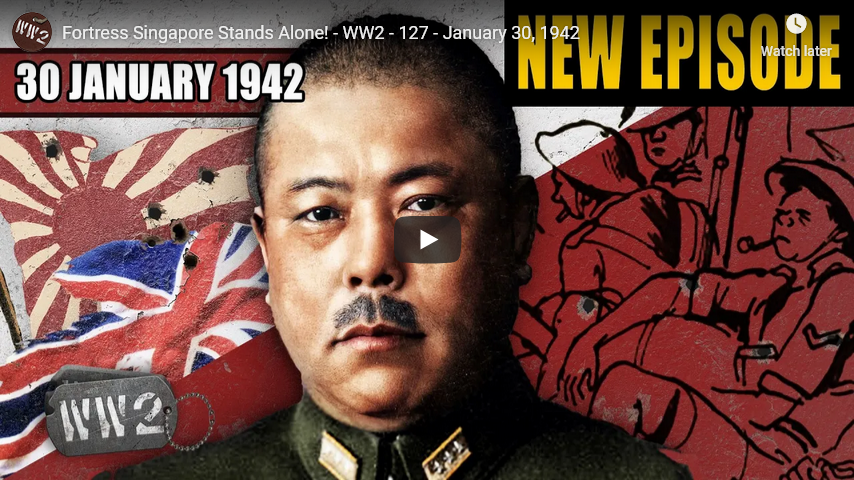
Fortress Singapore Stands Alone! – WW2 – 127 – January 30, 1942

World War Two
Published 30 Jan 2021

The Japanese advance on Singapore has gotten close enough that the British have destroyed the causeway to Singapore Island. The Japanese are also making attacks in the Solomon Islands, Burma, the Philippines, and the Dutch East Indies — their threat to Australia is real. Erwin Rommel’s surprise spoiler offensive in North Africa takes Benghazi, and on the eastern front the Soviets break a hole in the German lines in the north even as the temperature drops to the -50s.

Join us on Patreon: https://www.patreon.com/TimeGhostHistory
Or join The TimeGhost Army directly at: https://timeghost.tv

Follow WW2 day by day on Instagram @ww2_day_by_day – https://www.instagram.com/ww2_day_by_day
Between 2 Wars: https://www.youtube.com/playlist?list…
Source list: http://bit.ly/WW2sources

Written and Hosted by: Indy Neidell
Director: Astrid Deinhard
Producers: Astrid Deinhard and Spartacus Olsson
Executive Producers: Astrid Deinhard, Indy Neidell, Spartacus Olsson, Bodo Rittenauer
Creative Producer: Maria Kyhle
Post-Production Director: Wieke Kapteijns
Research by: Indy Neidell
Edited by: Iryna Dulka
Sound design: Marek Kamiński
Map animations: Eastory (https://www.youtube.com/c/eastory)

Colorizations by:
– Mikołaj Uchman
– Jaris Almazani (Artistic Man) – https://instagram.com/artistic.man
– Norman Stewart – https://oldtimesincolor.blogspot.com/

Sources:
– JoJan, Berserker276 – from Wikimedia Commons
– National Portrait Gallery
– Termometer by Andi Nur Abdillah from the Noun Project
– Bundesarchiv – Bild 101I-811-1881-33
– Mil.ru

Soundtracks from the Epidemic Sound:
– Rannar Sillard – “Easy Target”
– Jo Wandrini – “Dragon King”
– Rannar Sillard – “Split Decision”
– Craft Case – “Secret Cargo”
– Reynard Seidel – “Rush of Blood”
– Flouw – “A Far Cry”
– Fabien Tell – “Weapon of Choice”
– Johan Hynynen – “Dark Beginning”
– Gunnar Johnsen – “Not Safe Yet”
– Fabien Tell – “Last Point of Safe Return”

Archive by Screenocean/Reuters https://www.screenocean.com.

A TimeGhost chronological documentary produced by OnLion Entertainment GmbH.

December 27, 2020

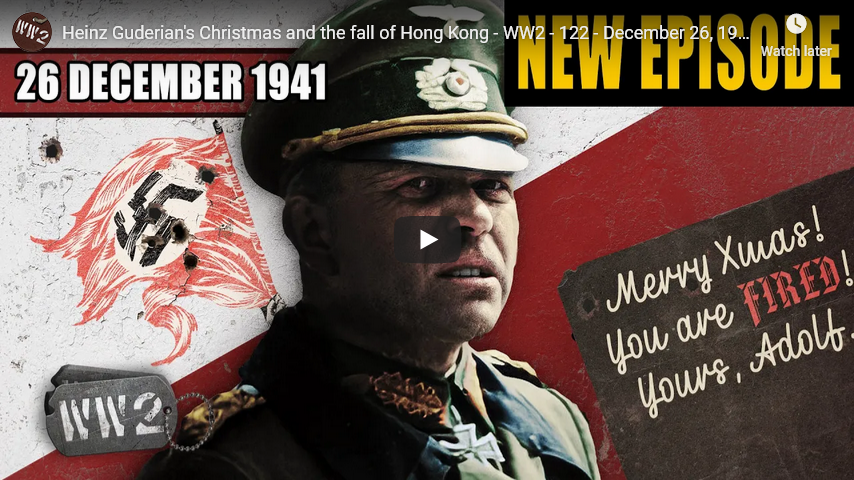
Heinz Guderian’s Christmas and the fall of Hong Kong – WW2 – 122 – December 26, 1941

World War Two
Published 26 Dec 2020

The Japanese offensives and advances in Southeast Asia and the Pacific continue unabated and both Hong Kong and Wake Island fall. British and American leaders begin the Arcadia Conference to decide just how they are going to fight this war together, and there are more changes made in the German High Command on the Eastern Front, even as the Soviets make advances there.

Check out Jean Paul’s museum here: https://www.romagne14-18.com/english-…

Join us on Patreon: https://www.patreon.com/TimeGhostHistory
Or join The TimeGhost Army directly at: https://timeghost.tv

Follow WW2 day by day on Instagram @ww2_day_by_day – https://www.instagram.com/ww2_day_by_day
Between 2 Wars: https://www.youtube.com/playlist?list…
Source list: http://bit.ly/WW2sources
—

Written and Hosted by: Indy Neidell
Director: Astrid Deinhard
Producers: Astrid Deinhard and Spartacus Olsson
Executive Producers: Astrid Deinhard, Indy Neidell, Spartacus Olsson, Bodo Rittenauer
Creative Producer: Maria Kyhle
Post-Production Director: Wieke Kapteijns
Research by: Indy Neidell
Edited by: Iryna Dulka
Sound design: Marek Kamiński
Map animations: Eastory (https://www.youtube.com/c/eastory)

Colorizations by:
– Dememorabilia – https://www.instagram.com/dememorabilia/
– Carlos Ortega Pereira, BlauColorizations – https://www.instagram.com/blaucolorizations
– Norman Stewart – https://oldtimesincolor.blogspot.com/

Sources:
– IWM: FE 203
– Battleship by Anand Prahlad from the Noun Project
– Man by Milinda Courey from the Noun Project
– prisoner by Luis Prado from the Noun Project
– bockelsound from freesound.org

Archive by Screenocean/Reuters https://www.screenocean.com.

A TimeGhost chronological documentary produced by OnLion Entertainment GmbH.

Older Posts »

Powered by WordPress