Quotulatiousness

October 10, 2026

Denouncing great art of the past as “high-class pornography” and “hate speech”

Filed under: Britain, History, Media, Politics — Tags: , , , — Nicholas @ 05:00

Not content with reading history backwards to find fault with historic figures based on the most progressive views of the modern world, the same approach is now taken with fine art:
For a discipline devoted to art, contemporary art history can seem remarkably contemptuous about the object of its study. In the 1970s “new art history” began to revolutionise a discipline that was hitherto focused on the connoisseurship of the Western canon.

It became instead a subject that used artworks as artefacts for social and political critique. John Berger, the pioneer of the new approach, questioned the very permissibility of having a “love of art”, dismissing it as “a useful concept to the European ruling classes”.

New art historians have since continued this crusade, with different “lenses”, each now well known, encompassing such topics as the “feminist turn”, the “de-colonialist turn”, the “LGBTQ+ turn”, and so on.

As critics such as Lola Salem and Pierre d’Alancaisez have argued in this magazine, this tendency now extends beyond academic fashion: the assumptions through which art is studied have migrated into museums, funding bodies and cultural institutions, where they shape what is exhibited, how it should be interpreted, and what socioeconomic purposes art is expected to serve.

The old question, “Is this good art, and what does it tell us about the civilisation that made it?” has acquired a formidable set of competitors: “What makes this work and its creator suspect, what depravity does is its supposed beauty trying to hide?”

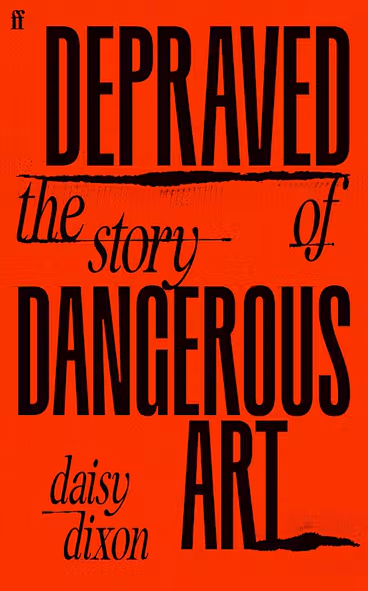
In Depraved: The Story of Dangerous Art, Daisy Dixon’s sense of contempt is made plain in the very first line: “When I was a teenager, I hated the painter Paul Gauguin.” As assistant professor of Philosophy at Cardiff, Dr Dixon has built a social media platform as an outspoken critic of historical and contemporary visual media. Not even Miriam Margolyes is spared her rancour.

In a world now dominated by AI, Dixon tackled the very real issue of deepfake pornography, where this new technology was abused by perverts to create pornographic images of victims (mostly women) without their consent. Whilst Dixon’s criticism of this sinister practice was laudable and justified, the extension of her criticism to art is misguided and regrettable.

The indignant chapter titles of her book — Obscenity, Criminality, Oppression, Malevolence, Cruelty, Iconoclasm, Reparation — read more like the call-to-arms of the culture wars than a work of fair and rigorous academic analysis. At the heart of her book lies the accusation that art with an erotic element by the likes of Titian, Velázquez or Giulio Romano should be considered “high-class pornography” and “hate speech”.

To support her argument, Dixon begins outside the confines of art with a work of literature: Marquis de Sade’s The 120 Days of Sodom. Using the indisputable “depravity” of De Sade, she aims to justify her accusation that those paintings were motivated by the same male and depraved roots in Western culture.

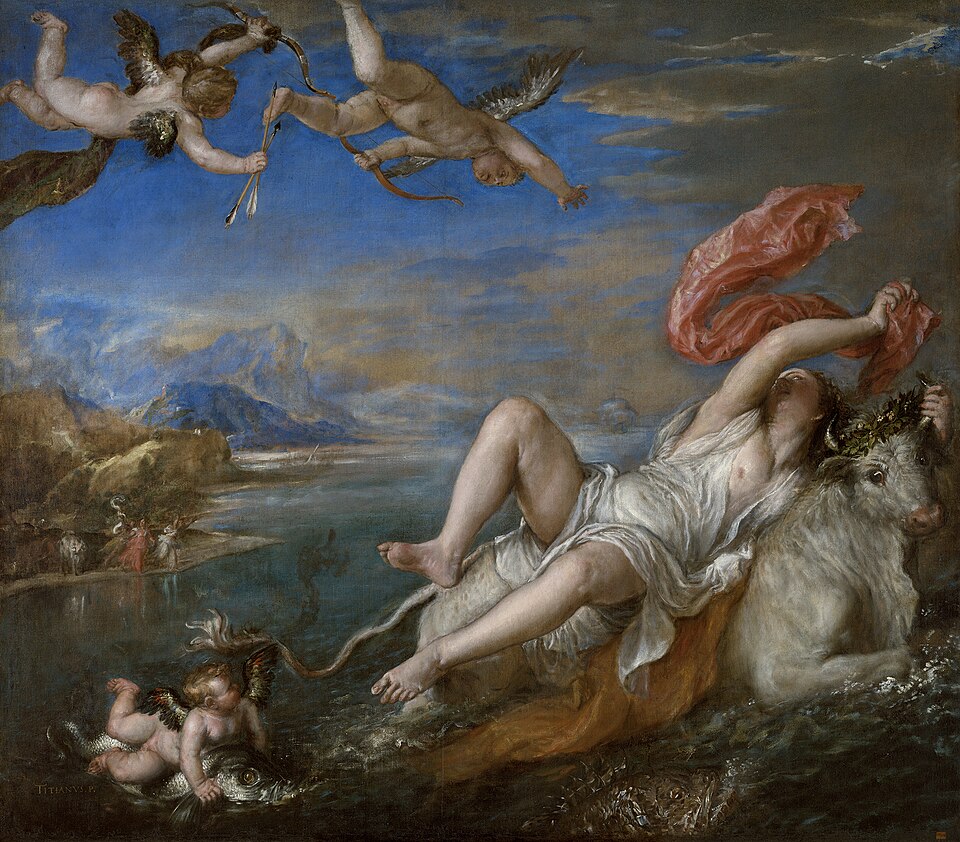
Her greatest ire however is reserved for Titian’s Rape of Europa, which she considers “just a portrayal of an immoral act”. The failure to consider any alternative meaning to the picture is indicative of the reductive and misleading nature of her approach.

Titian’s The Rape of Europa, c. 1560-62.

Wikimedia Commons.

Without delving further into the many other readings of the Rape of Europa, suffice it to say that the reductive conclusions drawn by Dixon impede us from a deeper understanding that might call her assumptions into question.

Although I read Art History at one of the most renowned institutes in Britain, I can confirm that students are taught this superficial understanding and contempt. I remember a senior lecturer singling out the experience of finding a group of Oxford postgrads discussing Titian’s Diana and Actaeon as a scene worthy of ridicule. “I was shocked,” the lecturer opined, “how they were so busily discussing which translation of Ovid that Titian consulted, when they completely ignored that there was a black slave girl in the picture.”

The girl depicted was one of the handmaidens of Diana, something the lecturer would have known had she even the most elementary knowledge of the story. More distressing was the sight of a senior academic masquerading assumptions as fact.
“The Catholic Church has always struggled with its relationship to nation-states”

Filed under: Europe, Politics, Religion — Tags: , , , , — Nicholas @ 04:00

In the New English Review, Bruce Gilley wonders when — or even whether — Pope Leo XIV will realize his pastoral duties extend to defending western civilization:

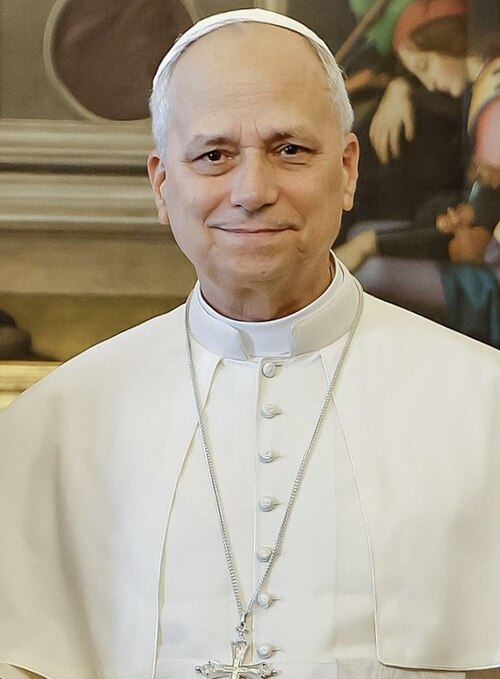
Pope Leo XIV in the library of the Vatican, 13 October, 2025.
Photo by Ricardo Stuckert via Wikimedia Commons.

    In the Middle Ages, they would have kicked a few cardinals in the ass, elected a new pope, and declared this one an anti-pope.

So says the French president in Jean Raspail’s apocalyptic 1973 novel The Camp of the Saints, in which a fleet of 100 ships carrying 1 million illegal migrants from Calcutta disgorges its wretched cargo onto the beaches of the Côte d’Azur.

The outburst is occasioned by the insistence of the pope in the novel that Europe should open its borders to all Third-World migrants in the name of charity and solidarity, beginning with this Calcutta fleet. In the novel, His Holiness has sold off all the Vatican art and treasures to raise funds for the migrants, and he is badgering the French president to similarly raise funds to pay for needs of this influx.

“What else can you expect from a Brazilian pope?” the president asks an aide. “The cardinals wanted an innovator as pope, in the name of the universal church, and they certainly got one.”

This fictional scene has obvious parallels to real-life events we’re all experiencing under the current and previous pope, both drawn from service in Latin America, in weakening rather than strengthening the defenses of Europe against a migrant invasion and other anti-Western ills.

During a day trip to the Italian island of Lampedusa in July, Pope Leo took a page out of The Camp of the Saints in requesting European governments create a “a long-term strategic plan capable of receiving, protecting, supporting and integrating migrants”. He also praised the locals “for the solidarity that so many of you have shown”. The United States, he said, should likewise be “welcoming, protecting, and assisting immigrants” as “an act of charity”.

In 2025, before he was chosen as pope, then-Cardinal Prevost had taken up a similar cudgel by openly rejecting U.S. Vice President JD Vance’s invocation of St. Augustine’s concept of ordo amoris (the ordering of love) which allows that human limits mean we must prioritize those closest to us first and those afar second. To be frank, the hillbilly has a better grasp of Augustine than the man who became pope.

Leo’s predecessor Pope Francis was even more radical, calling for “open humanitarian corridors” for all and sundry who felt they had a right to waltz into the West. People should be “free to choose whether to migrate or stay” and national borders should be transformed into “privileged places of encounter”. Anyone who resisted, according to that logic, was a racist.

In 2023, the former editor of a Vatican newsletter insert, Lucetta Scaraffia, said that Francis “hates the values of the West” and was more interested in climate change than he was in condemning anti-Semitism or defending Christians from persecution around the globe. “He forgets that the West is the lone part of the world that’s tried, even in limited and insufficient ways, to realize the values of the Church”, she said.

The uncanny similarities between this outlook of Francis, an Argentinian, and that of Leo, whose career was spent in Peru, to the fictional Latin American pope in The Camp of the Saints is tragedy more than farce. Because if the Catholic Church cannot understand the problem that mass Third-World migration poses for Christendom, then the game — for Europe, at least — is surely up.

Tim Worstall argues that the BC drug decision was correct

Filed under: Cancon, Health, Law, Liberty — Tags: , , , , — Nicholas @ 03:00

I don’t always agree with Tim Worstall‘s takes, but he’s quite convinced that the recent decision in British Columbia to create a new human right to buy and sell drugs is correct and will lead to better outcomes than the existing law:

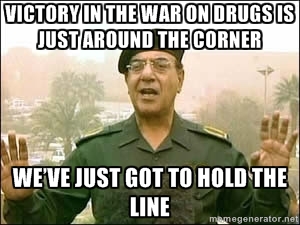
Image courtesy of Meme Generator

Drug dealing — branded drug dealing — is now legal. Or it will be once the 6 month stay expires or the Canadian Parliament changes the law.

The change in the law that should — won’t, but should — is that branded drug dealing should be legal.

That humans like to get blitzed is true. That humans like to get blitzed so much that every time anywhere tries to stop it — short of immediate execution for users and dealers — means that whatever the law says there’s always that market in ways to get blitzed. There are two arguments for making it legal to get blitzed. One is the simple liberal point that it’s our own life to waste and we each get to chart our own path — whether sooner or later — to the inevitable grave. The other is that for most drugs the consumption of the pure stuff doesn’t do much harm.

Sure, sure, cocaine turns people into obnoxious wankers but decent heroin has few physical problems and users tend to spend their time contemplating the joys of an enhanced reality. Not my thing but, you know, Meh.

The illegal stuff kills at least tens of thousands to get to us and then tens, if not hundreds, of thousands more through being stepped upon, cut, polluted and then the basic public health problems of AIDS ridden whores — of both, or any, sex — tricking to pay for the next dirty needle full.

We have a solution to this. A known solution. Capitalism. Capitalism in the full light of day and under the rule of law. We don’t just want we positively lust after corporations to make pure junk. Branded, pure, junk. Their brand dependent upon how good the highs are at the price of how few deaths. Their profit depends upon maintaining the value of that brand.

That is, turn that always present human greed into our purity guarantee. Same thing that keeps the rats out of our bread supply — WonderLoaf finding that rat bits in the sandwich reduce their sales.

So, Marlboro branded heroin, that’s the thing. And, yes, Marlboro, they’ve already got that association with horse, haven’t they?

FN’s New ARKA: Revamping the SCAR for Military Tenders

Filed under: Europe, Military, Weapons — Tags: , , , — Nicholas @ 02:00

Forgotten Weapons
Published 10 Jun 2026

The ARKA is essentially FN’s SCAR rifle on the inside but with more AR-style controls and handling. It was developed in response to a number of military and security service tenders which required specifically an AR-style top charging handle and AR-compatible buttstock. It is made in 11.25″ and 14.5″ barrel lengths, with long and short handguards. It will be interesting to see how this iteration of the rifle fares in international competitions.
(more…)

QotD: JFK’s soft coup to destroy Diefenbaker and install Pearson

In the winter of 1963, an American crossed into Canada travelling under a passport that was not his own.

His name was Lou Harris. He was John F. Kennedy’s personal pollster, one of the handful of men who had just put a president in the White House, and he was moving under a false identity because the job he had come north to do could never be seen to be done. He had come to take down the Government of Canada.

It worked. Within months, John Diefenbaker’s nationalist Conservative government was gone, and the Liberal campaign that replaced it had been quietly run on American polling, American media tactics, and American psychological warfare, with Harris directing from the shadows. No shots were fired. No tanks crossed the border. Most Canadians lived out their lives never knowing it happened at all.

That is not a theory. This is documented history, laid out in painstaking detail in John Boyko’s Cold Fire: Kennedy’s Northern Front, and once you know it, you cannot look at this country the same way again. Because here is the question nobody has had the nerve to ask in the sixty years since: if Washington toppled a Canadian government in 1963 and paid no price of any kind, why on earth would it have stopped?

It didn’t stop. That is the argument of this essay, and I intend to prove it with receipts. What began as a Kennedy operation against one stubborn prime minister became the permanent condition of Canadian politics. Blue America captured our governing party, its money, its methods, its personnel, and eventually its policy. Red America, more quietly, built our opposition, supplying the ideas, the operatives, and the reflexes of what now calls itself Canadian conservatism. Two parties, two foreign patrons, one country in between, and not one law against any of it. By the end, you will understand why every election feels like choosing between American factions. Because it is. And you will have, in plain terms, the only program that can end it.

Start where the occupation started: with the prime minister who said no.

Diefenbaker’s crime, in Washington’s eyes, was sovereignty. JFK despised him for defending Canadian autonomy, and teamed up with Lester B. Pearson’s Liberals to permanently rewire this country’s trajectory. Harris and his fake passport were only the covert half. The overt half played out in public, and it is somehow more shocking. The breaking point was Diefenbaker’s refusal to accept American nuclear warheads for the Bomarc missiles Washington had parked on our soil, and refusing to put our forces on alert on Washington’s schedule during the Cuban Missile Crisis. He insisted a Canadian government would decide these things in Ottawa. For this, on January 30, 1963, the United States State Department did something no ally had ever done to another: it issued a press release publicly calling the Prime Minister of Canada a liar about the state of defence negotiations. A foreign power’s foreign ministry, openly contradicting our head of government, in writing, to force his hand. Within a week, Diefenbaker’s government fell on a non-confidence vote. Within months, Kennedy’s friend Ben Bradlee put Diefenbaker on the cover of Newsweek in a hit piece so vicious it read like an obituary. The pollster in the shadows, the press release in the open, the friendly magazine on the newsstand. Every layer of American power, aimed at one Canadian who said no.

What happened to Canada was not an isolated incident. It was one front in a global campaign of regime change Washington ran throughout the 1960s. The same decade they were meddling in Ottawa, they were toppling governments worldwide to secure their sphere of influence. In 1960, the Eisenhower administration laid the groundwork for the overthrow of Patrice Lumumba in the Congo, finalized in Mobutu Sese Seko’s military coup. In 1961, the Kennedy administration financed race riots and engineered an electoral coup in British Guiana to depose the democratically elected Cheddi Jagan. By 1963, Washington was backing the violent coup against South Vietnamese President Ngo Dinh Diem. A year later, the Johnson administration ran Operation Brother Sam, providing military backing to the coup in Brazil that replaced President João Goulart with a military dictatorship.

By installing Pearson, Washington broke Canada’s nationalist resistance using the exact playbook it deployed on developing nations, locking us permanently into a continentalist framework.

And look at what the new management delivered, and how fast. Within two years of taking office, Pearson gave Washington the warheads Diefenbaker had refused. In 1965 he signed the Auto Pact, integrating the commanding heights of Canadian manufacturing into the American industrial system, the economic annexation the National Policy had been built to prevent, accomplished with a signature. And in the same year came the new flag. Understand what that meant to the men who fought it. The Red Ensign, the banner Canadians had carried up Vimy Ridge and across the beaches of Normandy, was struck, and with it the visible sign that this country belonged to a British inheritance rather than an American continent. Diefenbaker fought the flag change with everything he had left, and he was mocked for it as a relic, because the men mocking him understood exactly what he understood: a country’s symbols are its memory, and a country stripped of its memory will accept a new identity from whoever supplies one. The supplier was already chosen.

That 1963 intervention laid the structural tracks for Pierre Trudeau to dismantle our traditional British and Loyalist inheritance entirely, replacing it with official multiculturalism, a weaponized Charter, and a hyper-progressive legal order. The horrors you see today are not random accidents. They are the long-term realization of the colony Kennedy and Pearson engineered decades ago.

But here is what even the people who know the Diefenbaker story get wrong. They think 1963 was a coup against Canada’s right. It was bigger than that. It was a proof of concept. Washington learned that Canadian politics could be run from outside, cheaply, legally, and without consequence. And in the sixty years since, both American political tribes have taken the lesson. Blue America perfected the Pearson playbook and used it to capture our government. Red America ran a quieter operation and captured the opposition. Not two conspiracies. One condition. A satellite country whose entire political spectrum, left flank and right flank, answers to a foreign capital’s internal quarrels.

Upper Canadian Cavalier, “The Occupied Dominion”, Upper Canadian Cavalier, 2026-07-06.

Powered by WordPress