At Fainting in Coils, Gawain Towler reports back after having forced himself to read a new report from Policy Exchange, from which the Times distilled the headline “Pass civic test before getting a vote, say half of professionals”:
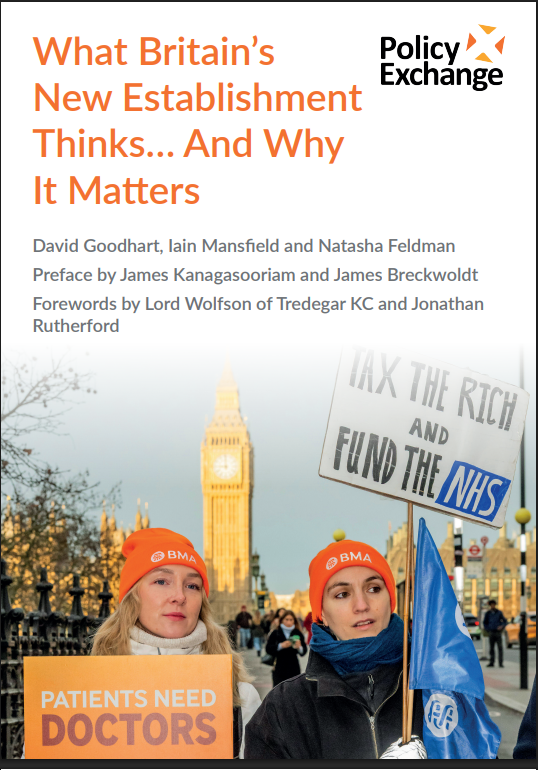
Oliver Wright’s report in the Times was of a new Policy Exchange paper by David Goodhart, “What Britain’s New Establishment Thinks … And Why It Matters“, with polling by James Kanagasooriam’s Focaldata. They questioned 1,928 teachers, doctors, lawyers, accountants, engineers, civil servants and senior managers, and set them beside 883 of the rest of us, the pollster’s placebo.
The Times led on the civic test. Seventy pages later I had found two details that matter more.
Nearly 40% of senior public sector leaders told Focaldata that the Civil Service should aim to maximise global welfare, with the national sort coming second. To be fair, 54% still put the nation first, but among professionals as a whole the split was 69% to 24%, so the officials are the outliers in their own class. In the event of a Reform-led government these are the people charged (and paid) to do that government’s bidding, which adds much power to Danny Kruger’s elbow.
Then the judges. Focaldata put a scenario to the professionals. A government wins an election on a pledge, then passes it into law. Should the courts block it? Where the pledge was the deportation of all illegal immigrants, 44% said they should. That is no hypothetical to me. I sit on the board of the party that proposes it.
Now the headline. Of the professionals, 49% agreed that people should have to pass a “civic responsibility test” before they are allowed to vote. Only 18% disagreed. Some 61% think judges should be able to overrule decisions made by MPs, and 49% would hand the country’s most important decisions to experts, against 44% who would leave them with the people we elect. In the run-up to the Brexit Referendum Michael Gove told Faisal Islam that the country had “had enough of experts“. Ten years on the experts have had enough of the country.
Depending on experts in their area of specialty is a sensible thing, although you are taking advice, not orders. Far too many experts with deep-but-narrow specialized knowledge believe that their opinions should matter on things very far afield from their specialization. And they want to have the power to enforce their opinions over us plebs.